
Article: Kiyomizu-yaki: Kyōto ceramics
Kiyomizu-yaki: Kyōto ceramics
In Kyoto, ceramics have held a unique place for several centuries. As a former imperial capital and a major center for the arts and tea culture, the city has brought together artisans, artists, and patrons whose tastes and customs have profoundly influenced its production.
Kiyomizu-yaki developed in this particularly fertile environment. From the first workshops of the Edo period to the pottery districts of Higashiyama, and from the great ceramicists who renewed forms and decorative styles to the workshops still in operation today, it has accompanied the transformations of Kyoto and its culture. An object produced as Kiyomizu-yaki can be made of earthenware or porcelain, sober or richly decorated, painted with a few strokes, or covered in colors and gold. There is no single clay, specific glaze, or repertoire of forms that would allow for its immediate recognition, and that is precisely what makes it unique.
Its history is inseparable from that of Kyoto and the exceptional environment that the former capital has offered for centuries to the creation of objects.
Kyoto, a capital and a culture of the object
When Heian-kyo (modern-day Kyoto) became the imperial capital in 794, the city welcomed the court and the aristocracy. Over the centuries, powerful Buddhist institutions, warrior and urban elites, great merchants, tea masters, artists, and artisans have also flourished there.
This concentration is essential to understanding the development of ceramics in Kyoto. Objects serve for the table, tea, incense, or flowers. Some belong to daily life, while others take their place in highly codified practices. Artisans thus work for extremely diverse uses and tastes, in a city where patrons are capable of appreciating very fine differences in form, material, and decoration.
The imperial court participates in this culture, but it is neither its sole origin nor its only recipient. The development of Kyo-yaki is the product of a much broader environment in which aristocracy, temples, tea culture, urban elites, and artisanal traditions meet.
A ceramic that is not defined by a single clay
Many great ceramic centers developed around a natural resource that gave their objects a part of their identity, but the history of Kyoto is more complex.
Local clays have indeed been used, but they are not abundant, and Kyo-yaki was never built around a single material that would have imposed a recognizable appearance on its entire production. Today, workshops source their raw materials from other regions of Japan, notably Shigaraki, Iga, or Amakusa.
In addition to this circulation of materials, there is also the circulation of techniques and forms. Kyoto has drawn from the ceramic traditions of other regions of Japan, but also from the cultures of China and the Korean Peninsula. The identity of Kiyomizu-yaki therefore does not reside in the repetition of a formula.
At the origins of Kyo-yaki and Kiyomizu-yaki
The manufacture of ceramics in Kyoto is ancient, but it is from the end of the 16th century and especially the 17th century that what we call Kyo-yaki today was truly established.
The spread of chanoyu, the way of tea, played a considerable role at that time. Potters worked in Awata and Otowa, while other kilns appeared in different parts of the city, and artisans from other regions brought their knowledge and techniques.
Kiyomizu-yaki appeared in this context at the beginning of the Edo period, around Kiyomizu, on the eastern slopes of Kyoto. By the 18th century, Gojozaka was already an important production site and would gradually become one of the city's main ceramic districts.
Kyo-yaki and Kiyomizu-yaki were therefore not perfectly synonymous at the beginning: Kyo-yaki has a broader geographical meaning, while Kiyomizu-yaki historically designates one of its production centers. The importance acquired by Kiyomizu and Gojozaka explains why the two terms are now united under the name Kyo-yaki / Kiyomizu-yaki.
Tea, Ninsei Nonomura, and Kenzan Ogata
In the 17th century, the ceramicist Ninsei Nonomura left a deep mark on Kyoto ceramics. Towards the middle of the century, he established his kiln in Omuro, in front of the Ninna-ji temple, and developed a remarkable production featuring polychrome decor, using colors that could be complemented by gold and silver.
The relationship between ceramics and the other arts of Kyoto became particularly visible then: the seasons, plants, and landscapes provided a vast decorative repertoire that borrowed notably from painting.
Kenzan Ogata pushed this dialogue between disciplines even further. Brother of the painter Korin Ogata, he developed a body of work at the turn of the 18th century in which painting, calligraphy, poetry, and ceramics meet with great freedom.
With Ninsei and then Kenzan, an essential characteristic of Kyo-yaki was affirmed: ceramics did not evolve in isolation, but in contact with the other arts of the capital.
A tradition made of transformations
At the end of the 18th century, Eisen Okuda played a major role in the development of porcelain in Kyoto. At the beginning of the 19th century, Mokubei Aoki, Dohachi Nin’ami, and Hozen Eiraku continued and renewed this history.
Among the great lineages of Kyoto potters, the Kiyomizu family occupies a special place. Established in Gojozaka since the end of the 18th century with Rokubei Kiyomizu I, it has passed down the name Rokubei from generation to generation while evolving its production over the eras. The lineage continues today with Rokubei Kiyomizu VIII.
China exerted an important influence at that time. The development of sencha, tea made from infused leaves, was accompanied by a taste for objects and references stemming from Chinese literati culture. Forms, porcelains, decorations, and techniques were studied, interpreted, and adapted by Kyoto workshops.
The history of Kiyomizu-yaki is thus made as much of transmission as of borrowing, experimentation, and renewal, and its tradition has never consisted of reproducing a model that remained unchanged.
Gojozaka, the potters' district
To the east of Kyoto, Gojozaka rises toward the hills of Higashiyama and Kiyomizu-dera. As early as the Edo period, ceramics were present in this area, and workshops multiplied there.
The slope specifically favored the installation of noborigama, large climbing kilns composed of several chambers arranged successively on inclined ground. At the end of the 19th century and during part of the 20th century, Gojozaka became a true ceramics district, where workshops, merchants, and kilns were concentrated. In 1896, the city also installed its experimental center dedicated to ceramics there.
The proximity of Kiyomizu-dera contributed to giving its name to Kiyomizu-yaki, but this proximity does not mean that the ceramics were created by the temple or placed under its patronage; its history is that of a much larger artisanal district.
When the kilns left Gojozaka
In the 20th century, the growth of Kyoto and urbanization gradually made the operation of large kilns difficult in the heart of the city. In the early 1960s, sixteen noborigama were still operating in Gojozaka, but a portion of the production soon began to relocate.
In Yamashina, on the other side of the Higashiyama hills, the Kiyomizuyaki Danchi was developed, intended to house ceramic-related activities. Gas and electric kilns gradually replaced the traditional large climbing kilns.
Gojozaka thus gradually transitioned from a district where ceramics were manufactured and sold to one where production sites are fewer in number and where the traces of its artisanal past have taken on a new importance.
What is a Kiyomizu-yaki today?
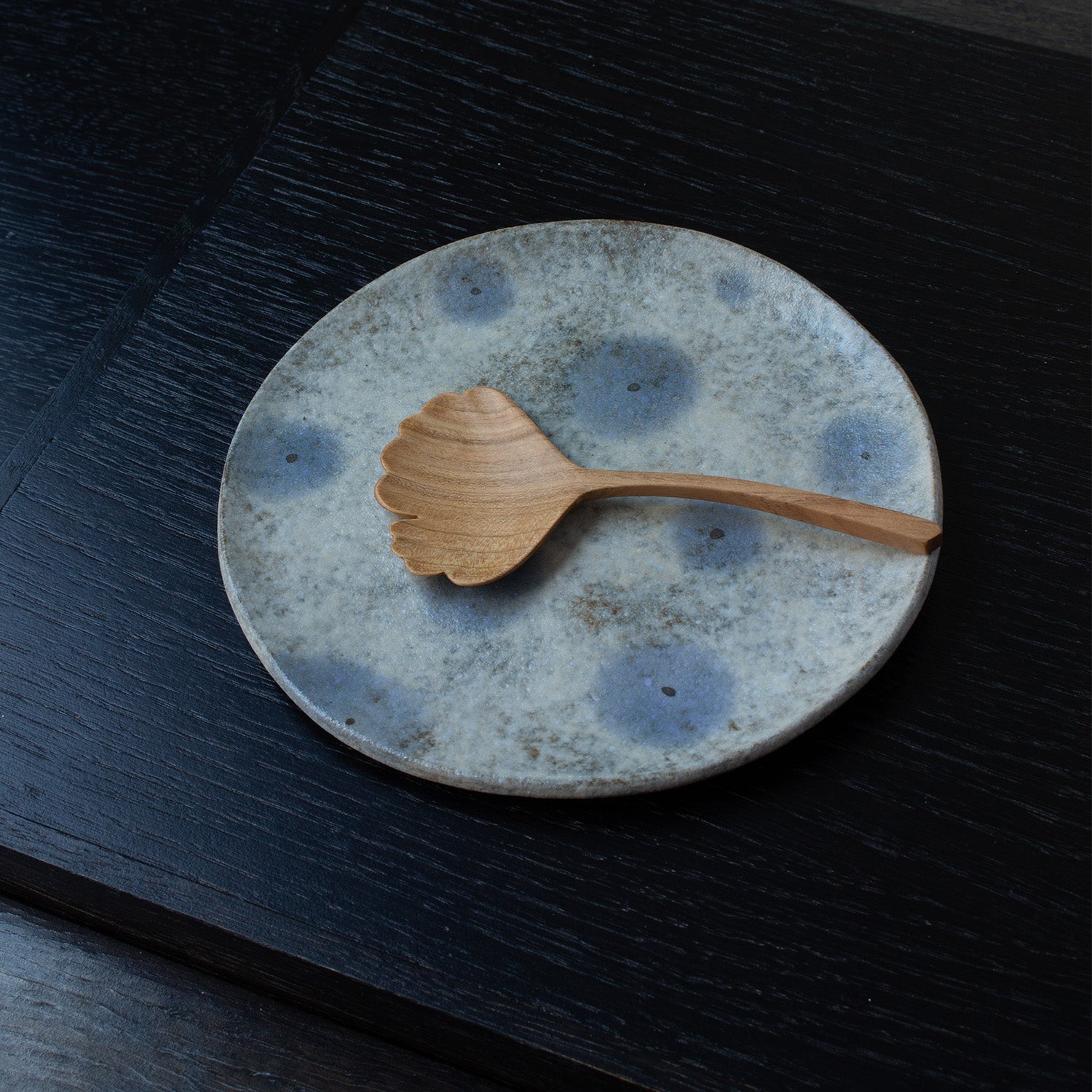
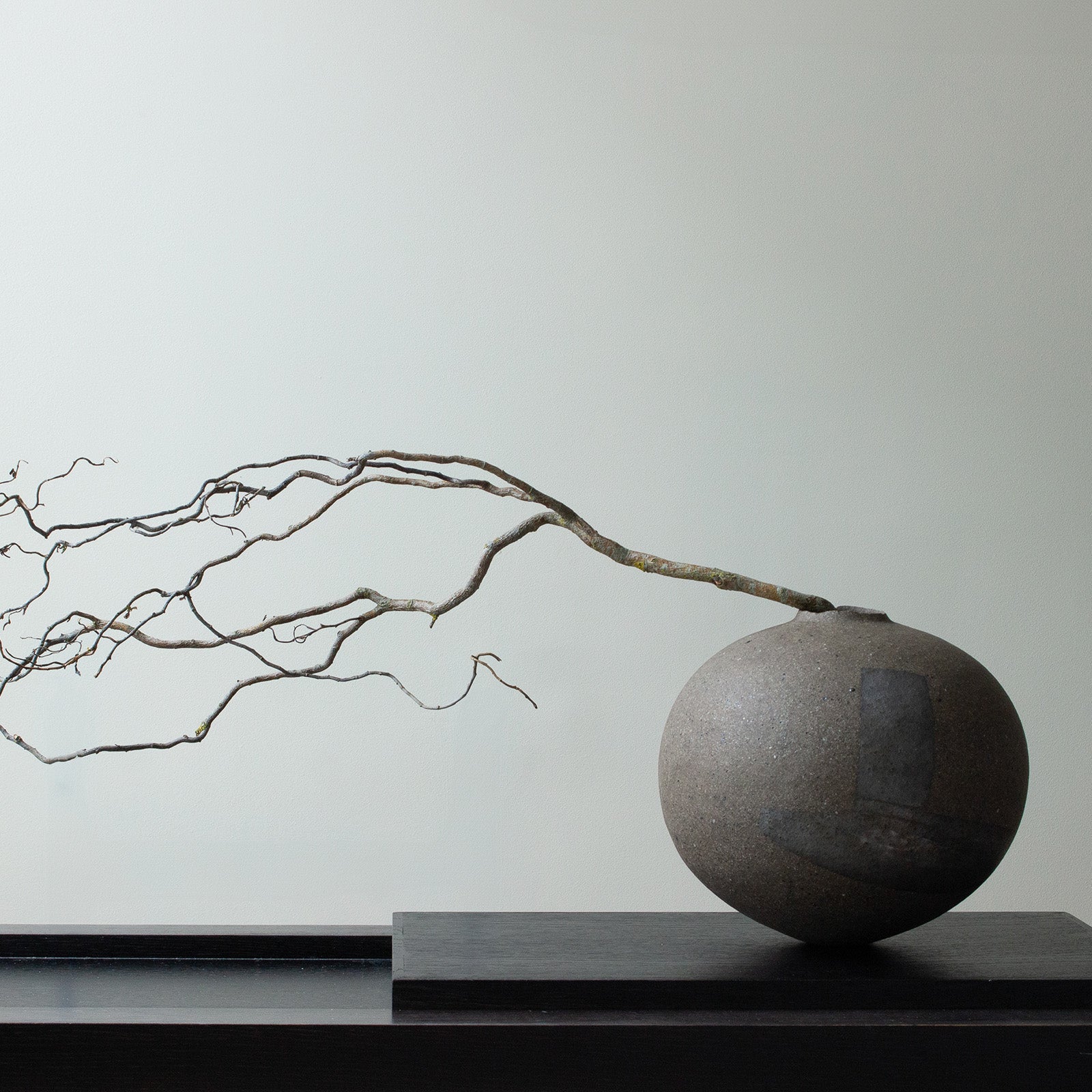
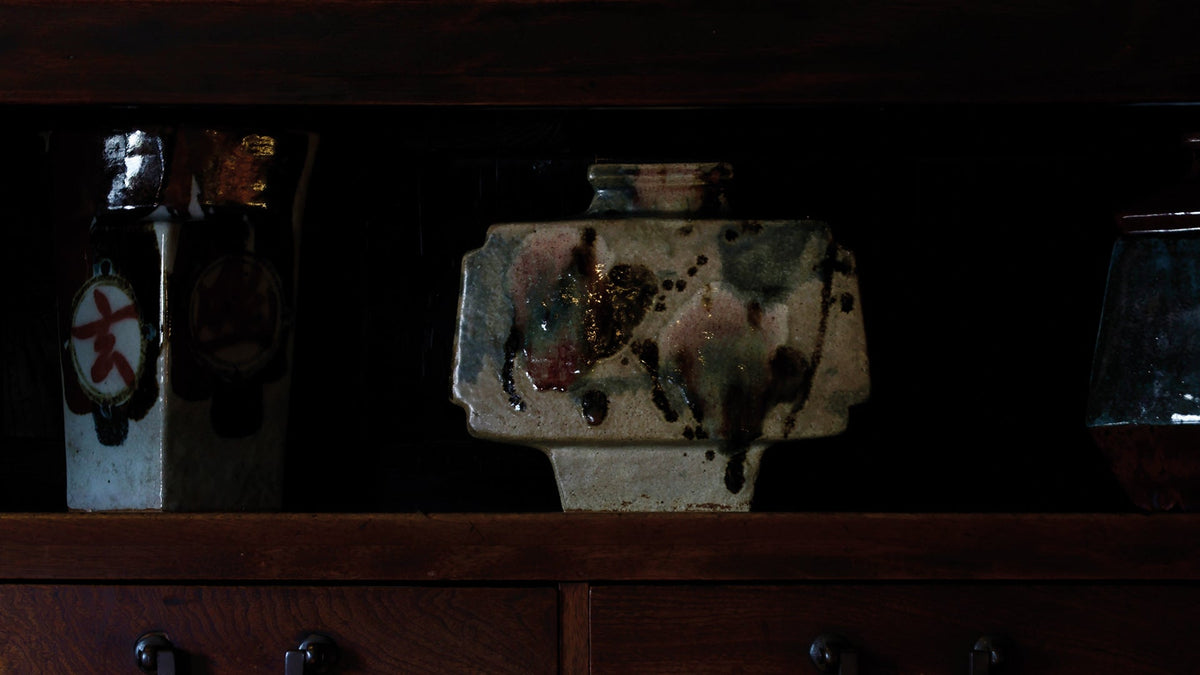
There is no simple visual answer to this question. Kyo-yaki / Kiyomizu-yaki includes both ceramics and porcelains. Pieces can be thrown, molded, or shaped according to different methods, receive decorations painted under or over the glaze, colored enamels, gold, or, conversely, present a very sober surface.
Two pieces genuinely derived from this tradition can therefore seem to have almost nothing in common. Each workshop develops its own vocabulary, and the organizations in charge of preserving this craft define Kyo-yaki / Kiyomizu-yaki themselves by a great diversity of techniques rather than by a common appearance.
Its coherence lies elsewhere: in a history of manufacturing in Kyoto, in the transmission of know-how, and in the ancient ability of its workshops to work with very different materials, techniques, and decorative repertoires.
On the trail of Kiyomizu-yaki in Kyoto
To discover this history in Kyoto, the best starting point remains Gojozaka and Chawanzaka, the two streets that lead up toward Kiyomizu-dera and around which a large part of the production developed. At the foot of Gojozaka, the Kyoto Ceramic Center presents pieces of Kyo-yaki and Kiyomizu-yaki, from recognized masters to contemporary ceramicists, allowing one to take the measure of the diversity of this tradition before continuing on foot through the district.
A few minutes away, the Kanjiro Kawai Memorial Museum is undoubtedly the most evocative stop. Housed in the home and workshop of the great 20th-century ceramicist, it notably preserves an imposing noborigama, an eight-chamber climbing kiln acquired in 1920 from the Rokubei Kiyomizu family. The house, workspaces, and kiln allow one to understand very concretely how ceramics once fit into the very fabric of Gojozaka.
Other traces remain in the district. The former Tohei kiln, now owned by the city of Kyoto, preserves a nine-chamber noborigama and constitutes one of the most important witnesses to the era when dozens of kilns were still operating at the foot of Higashiyama. The Bunsai Ogawa house, for its part, retains at the back of its property a climbing kiln dating back to the beginning of the Meiji era. The workshop also offers ceramic-making experiences, by reservation. These historic sites are not all permanently open to the public: it is best to check visiting possibilities before going there.
Walking through Gojozaka allows one to still read the geography of the former potters' district. To understand what became of Kiyomizu-yaki after the departure of the large kilns, one must then cross the Higashiyama hills to Yamashina, where the Kiyomizuyaki Danchi still gathers workshops and businesses linked to ceramics today.
A culture that is still alive
Contemporary Kiyomizu-yaki reflects its history: it is multiple. Some workshops perpetuate ancient techniques, others develop a contemporary language. Some work with porcelain, others with earth. Pieces may be intended for tea, the table, flowers, or simply the pleasure of living with an object shaped and decorated by hand.
For several centuries, the potters of Kyoto have observed, borrowed, experimented, and transformed. The tradition does not rely on the reproduction of a single model, but on the transmission of know-how capable of continuing to evolve.
This is perhaps how one should view a piece of Kiyomizu-yaki: not as the expression of an immutable style, but as an object belonging to a history of ceramics that has never ceased to reinvent itself.
Discover the selection of Japanese ceramics, Exceptional Objects or Objects for Living, offered by Atelier Ikiwa, which includes pieces from the Kiyomizu-yaki tradition.
Sources and references
City of Kyoto, historical study dedicated to Kyo-yaki, Kiyomizu-yaki, and the development of ceramic production in Gojozaka.
City of Kyoto, Board of Education, study on the former Tohei climbing kiln and the ceramic heritage of Gojozaka.
Agency for Cultural Affairs, national database of Japanese cultural heritage, documentation dedicated to the climbing kiln of the Kawai Kanjiro Memorial Museum.
Kyoto National Museum, research and collections dedicated to Nonomura Ninsei, the Omuro kiln, and the history of Kyo-yaki.
Kyoto Ceramic Center, documentation dedicated to Gojozaka, Chawanzaka, and Kyo-yaki / Kiyomizu-yaki.