

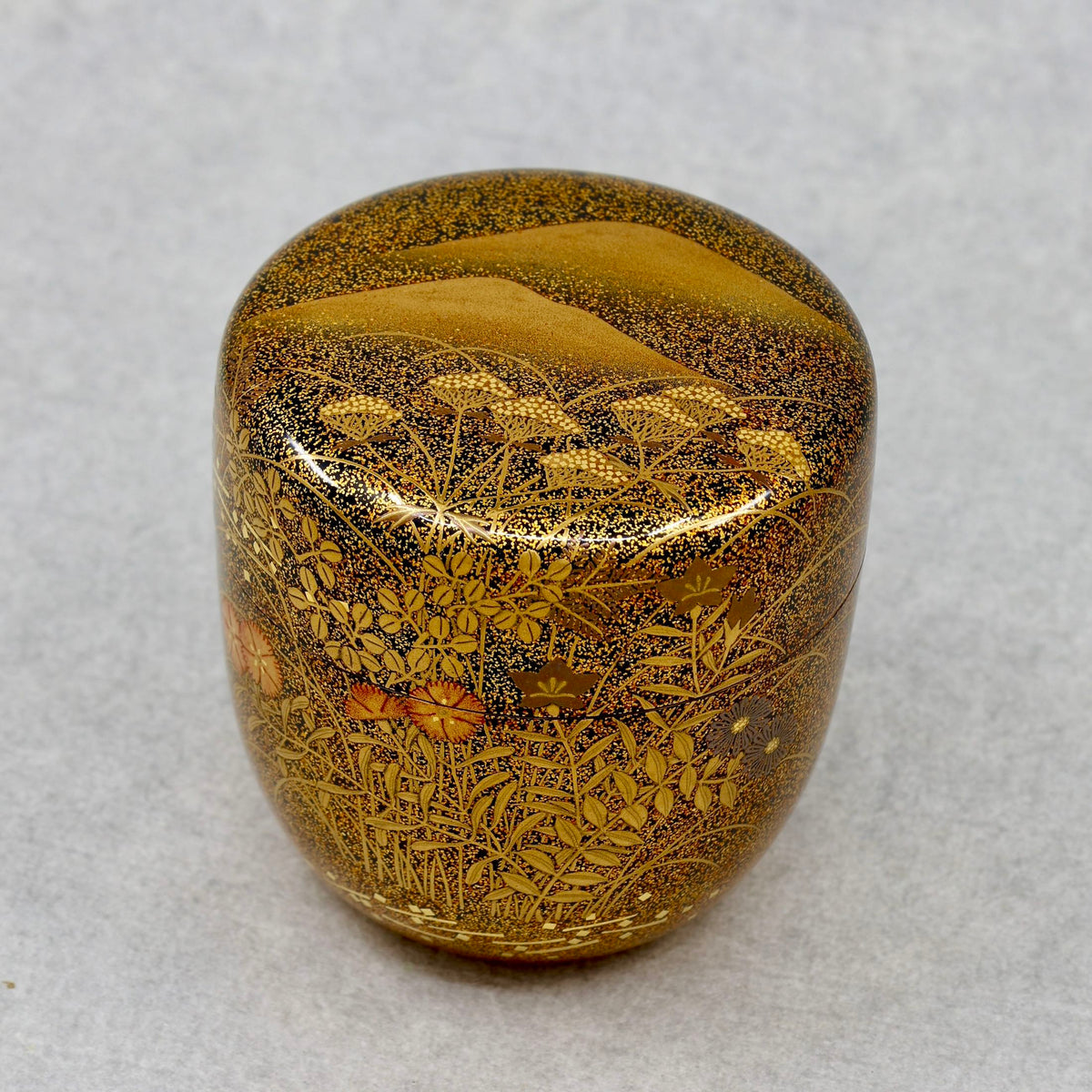
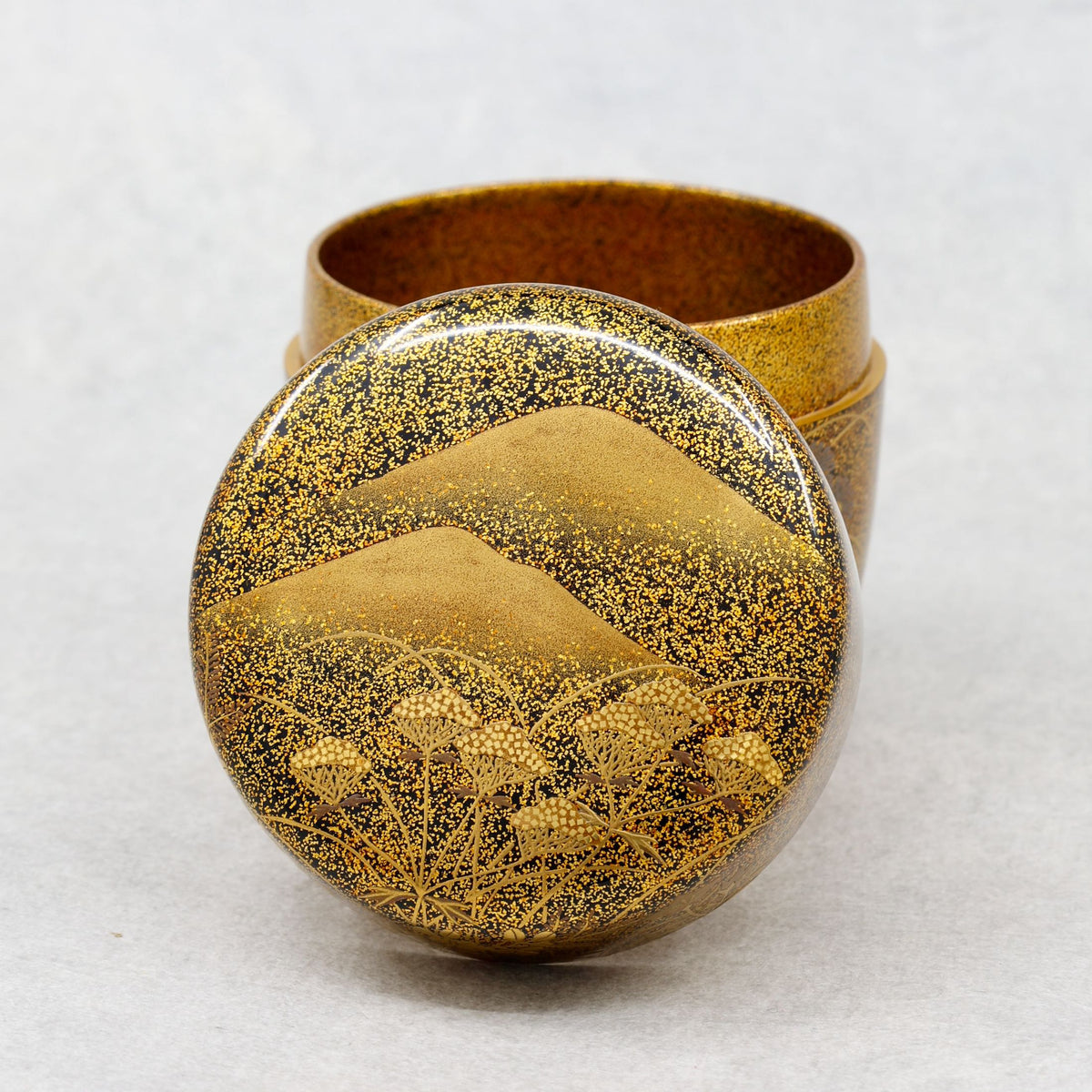
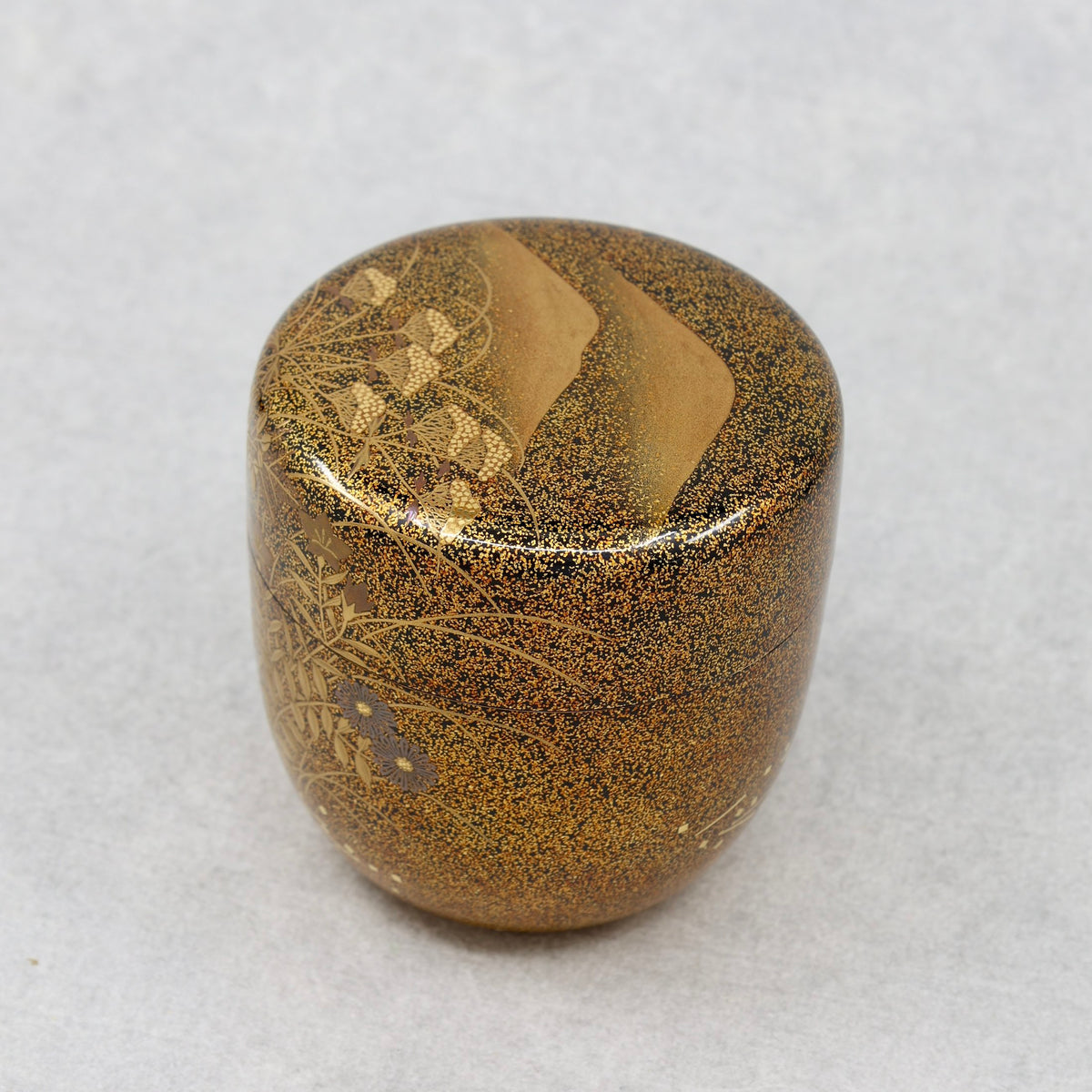
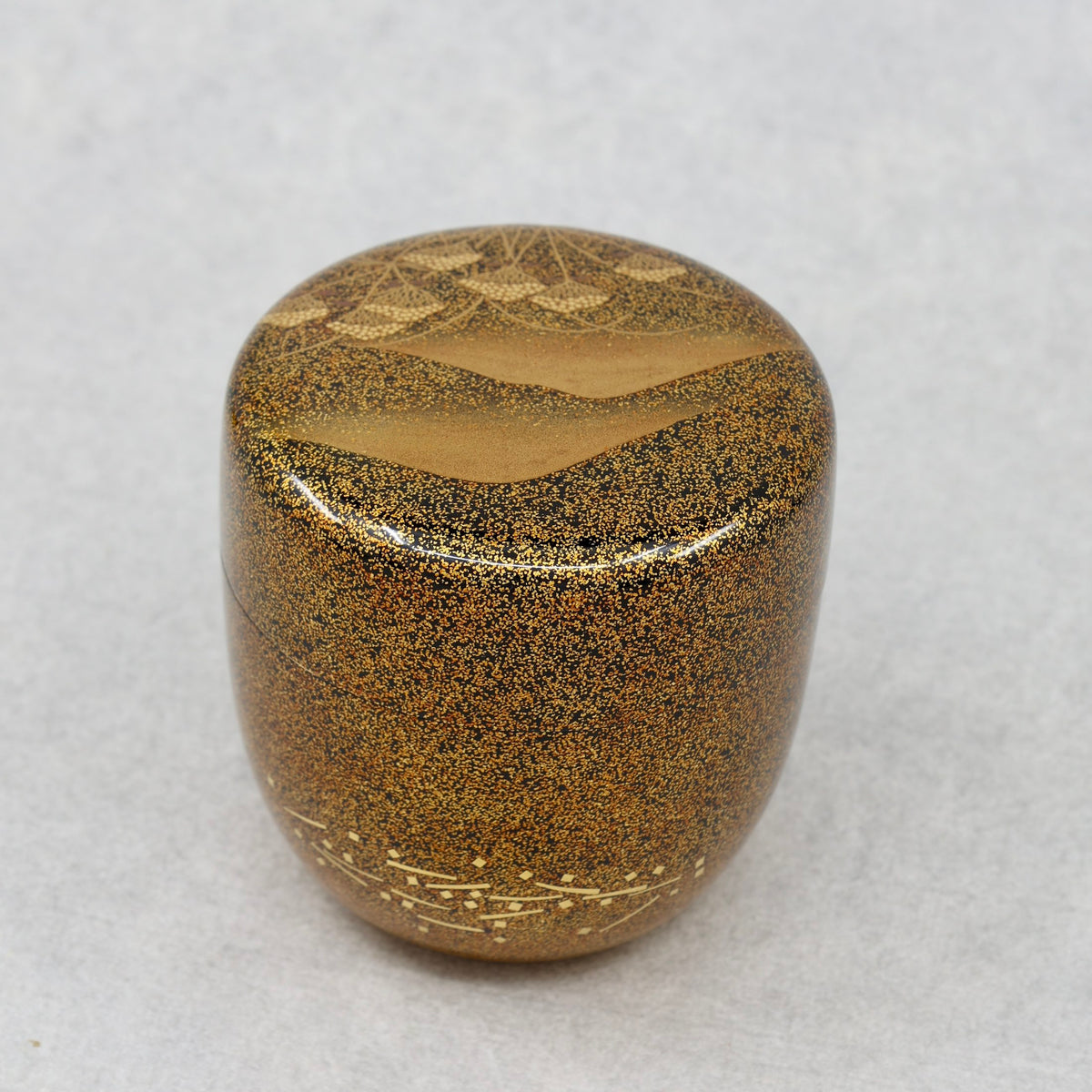
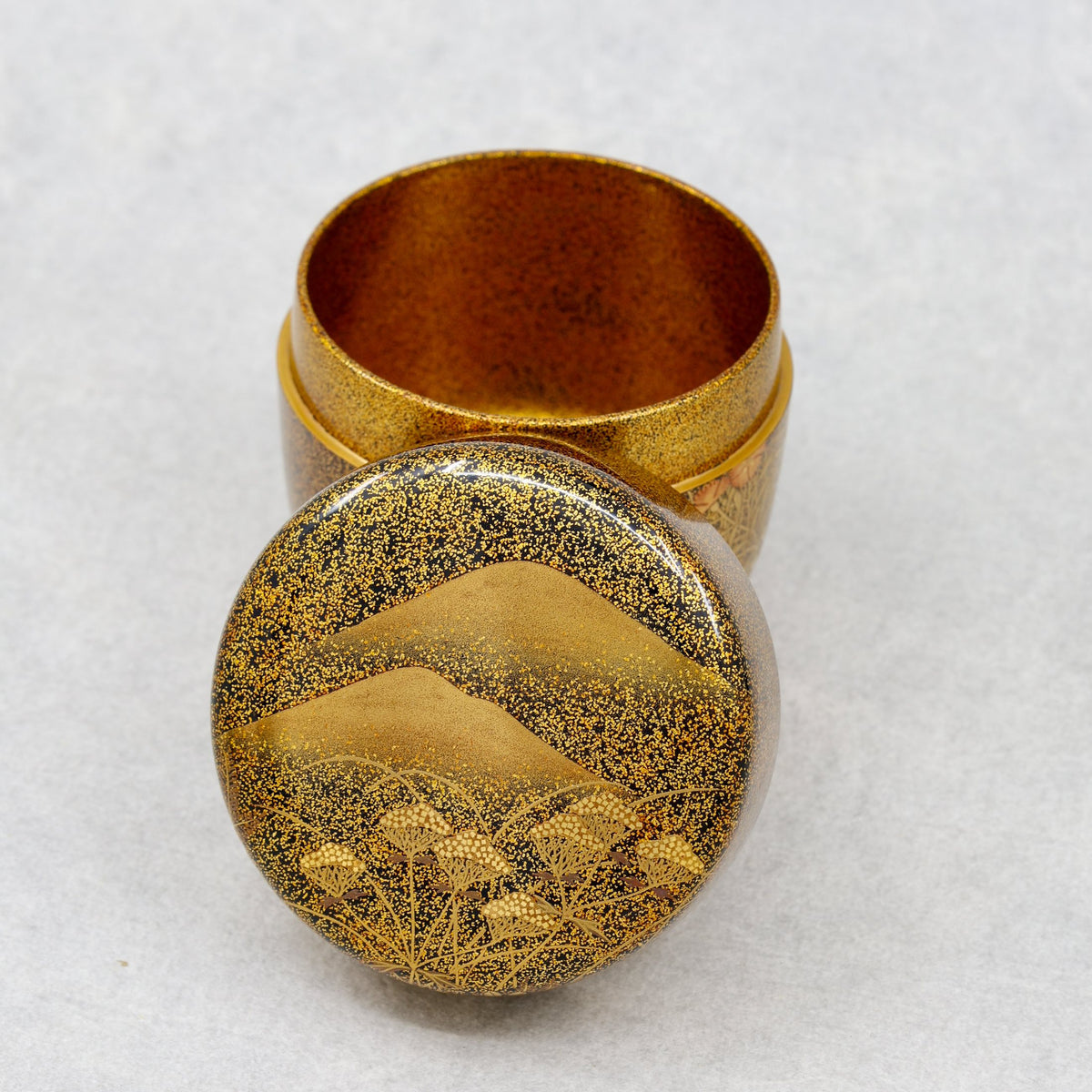
Natsume (Japanese tea caddy) in lacquer and gold, akigusa (autumn grasses) design by Kazue Fukushima
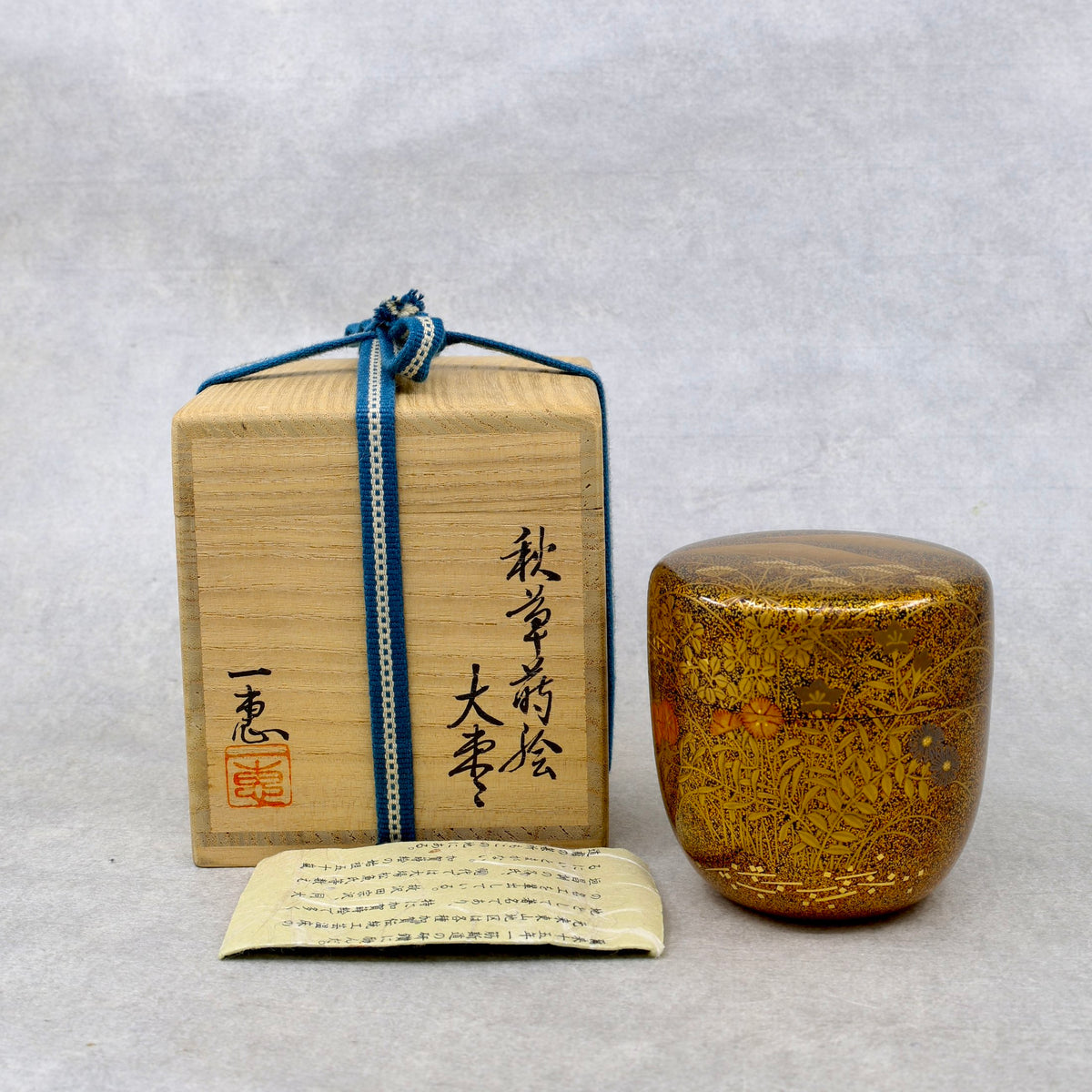
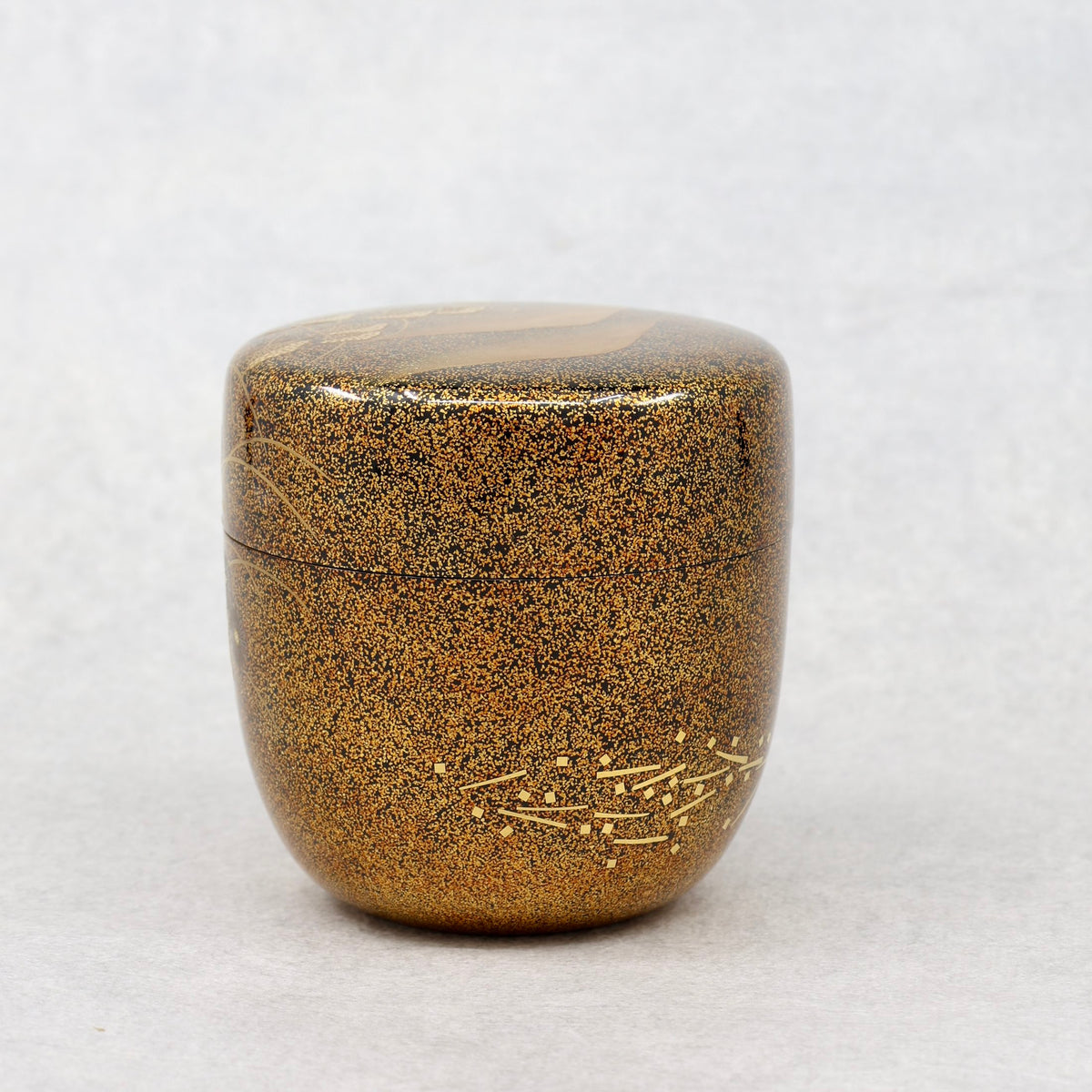
This natsume (the box in which matcha powder is placed during the Japanese tea ceremony) is the work of Kazue Fukushima, a Kanazawa lacquer master from a prominent lineage of maki-e artisans. Entirely covered in black urushi lacquer sprinkled with gold, it displays a sumptuous design of autumn grasses and flowers, whose fine drawing and colorful nuances harmonize with the sparkling brilliance of the background. A piece of great decorative richness, representative of the Kaga maki-e tradition.
The artisan
Kazue Fukushima, born in 1952 in the Higashiyama district of Kanazawa, is the grandson of the first Ikkō Kiyose (1901-1986), a renowned Kanazawa lacquer master, under whom he was trained after completing his secondary education. He thus inherited a particularly demanding family expertise, rooted in the great tradition of Kaga maki-e, renowned for the richness of its designs and the mastery of complex techniques. His talent and rigor were notably praised by Kaishū Takahashi (1905-2004), a renowned artist, former director of the Ishikawa Prefectural Museum of Art, and a figure of the Nitten (Japan's major fine arts exhibition), who wrote an appreciative text about him.
Design and techniques
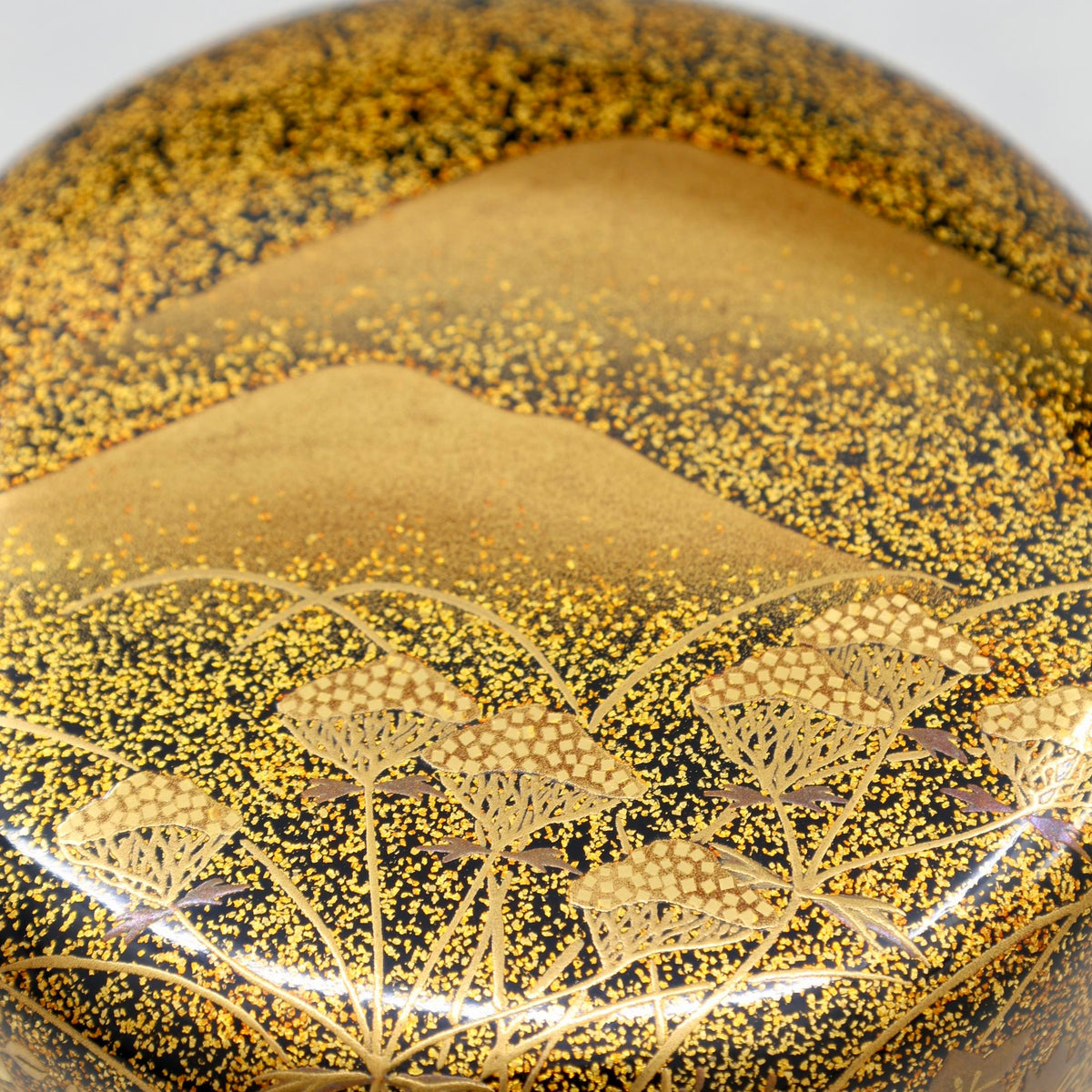
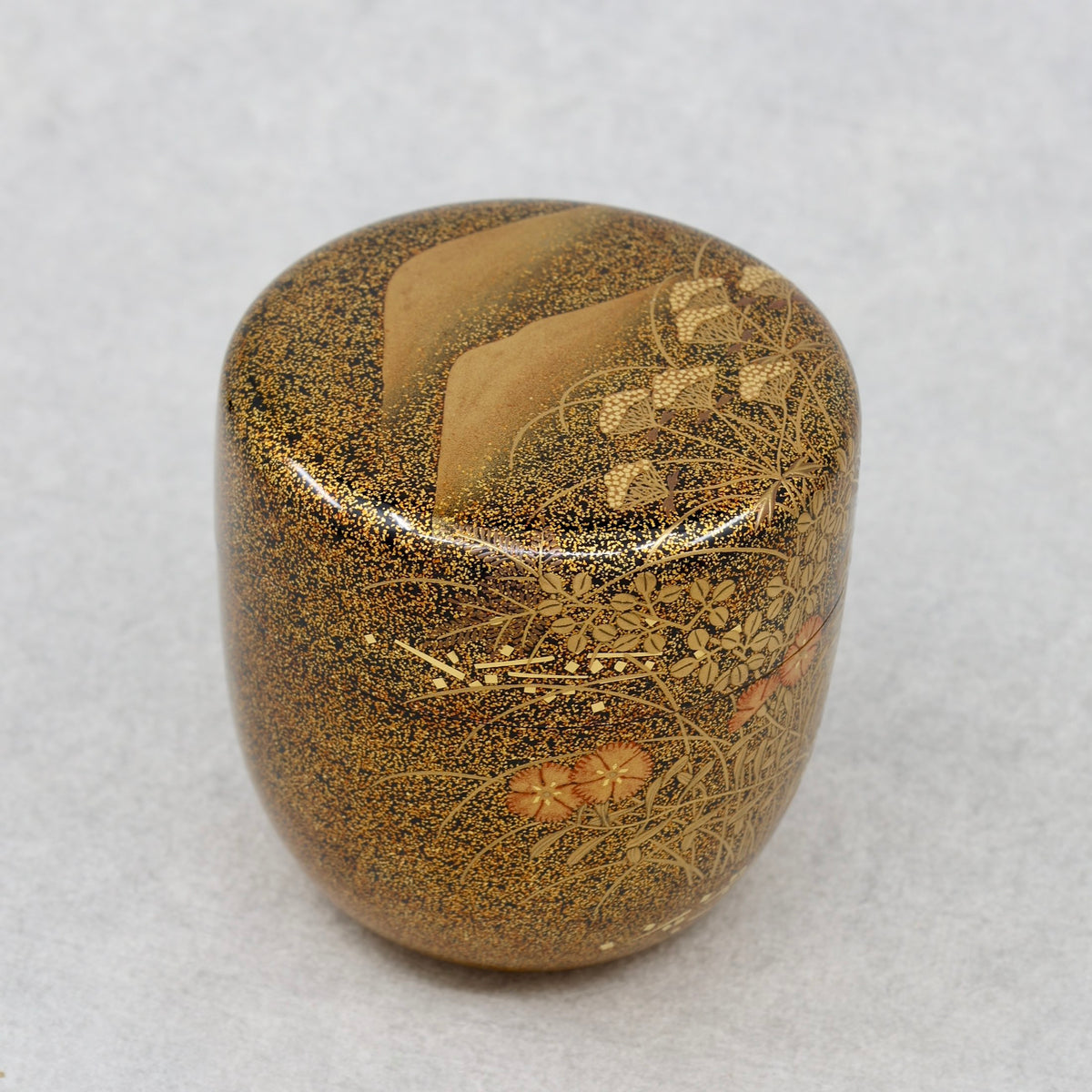
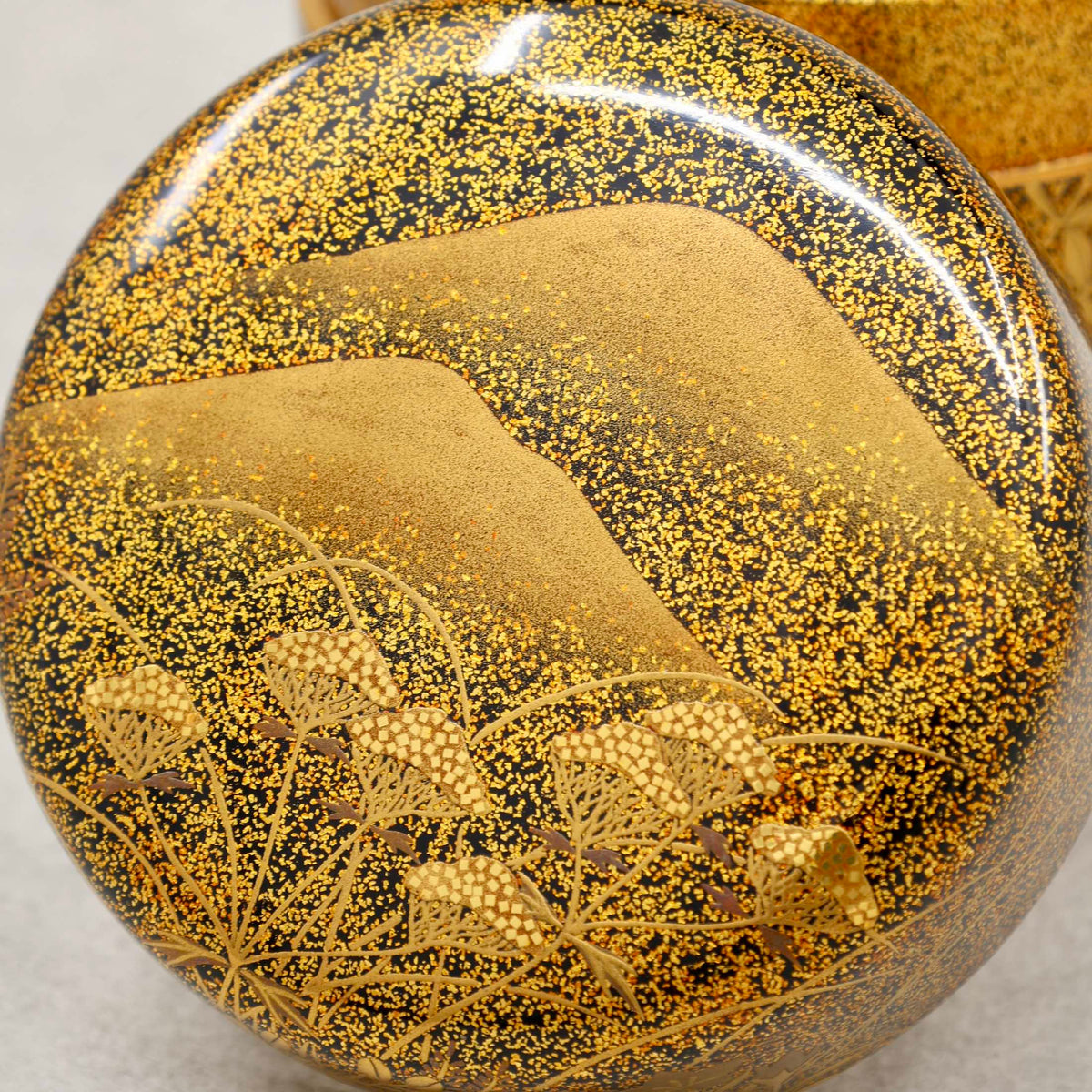
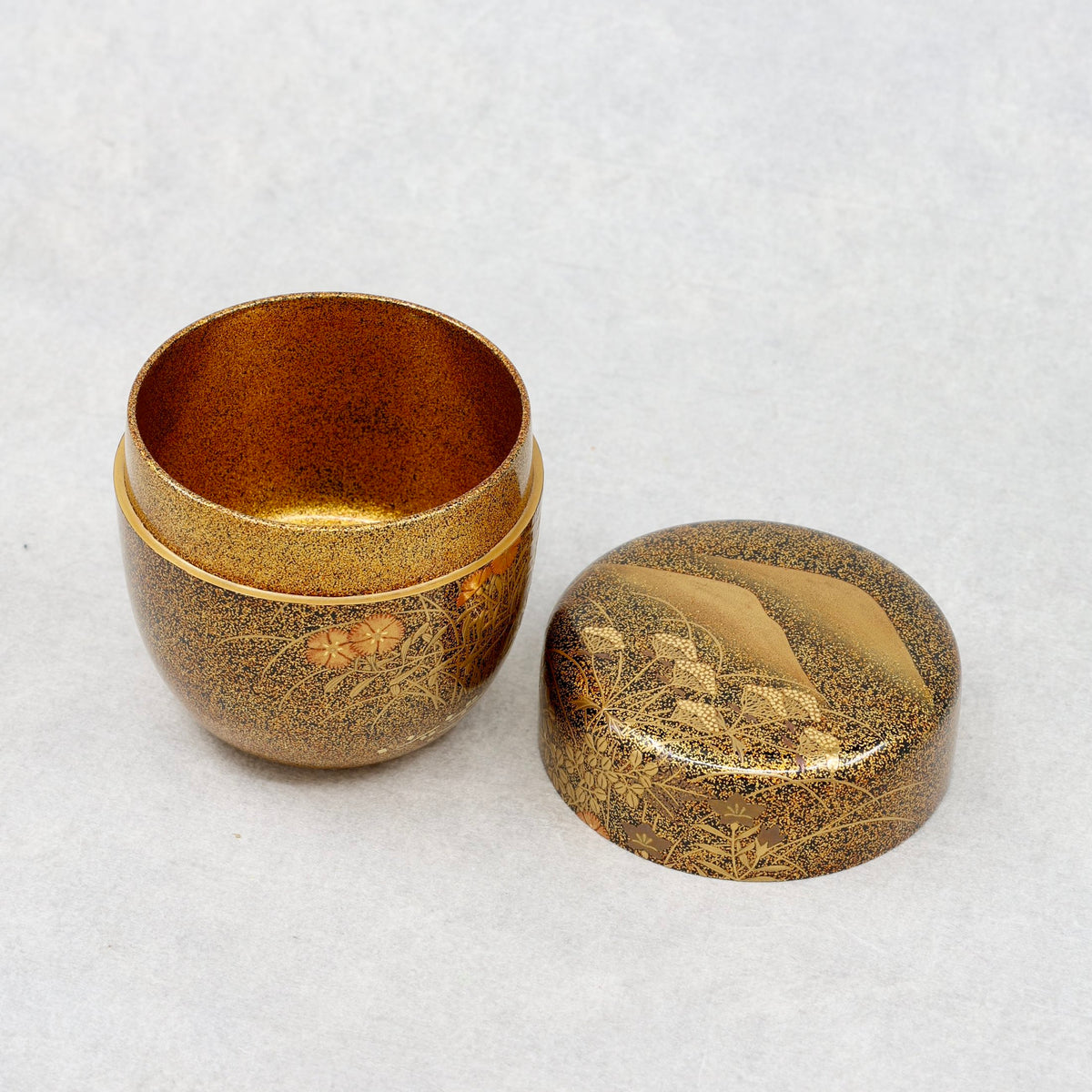
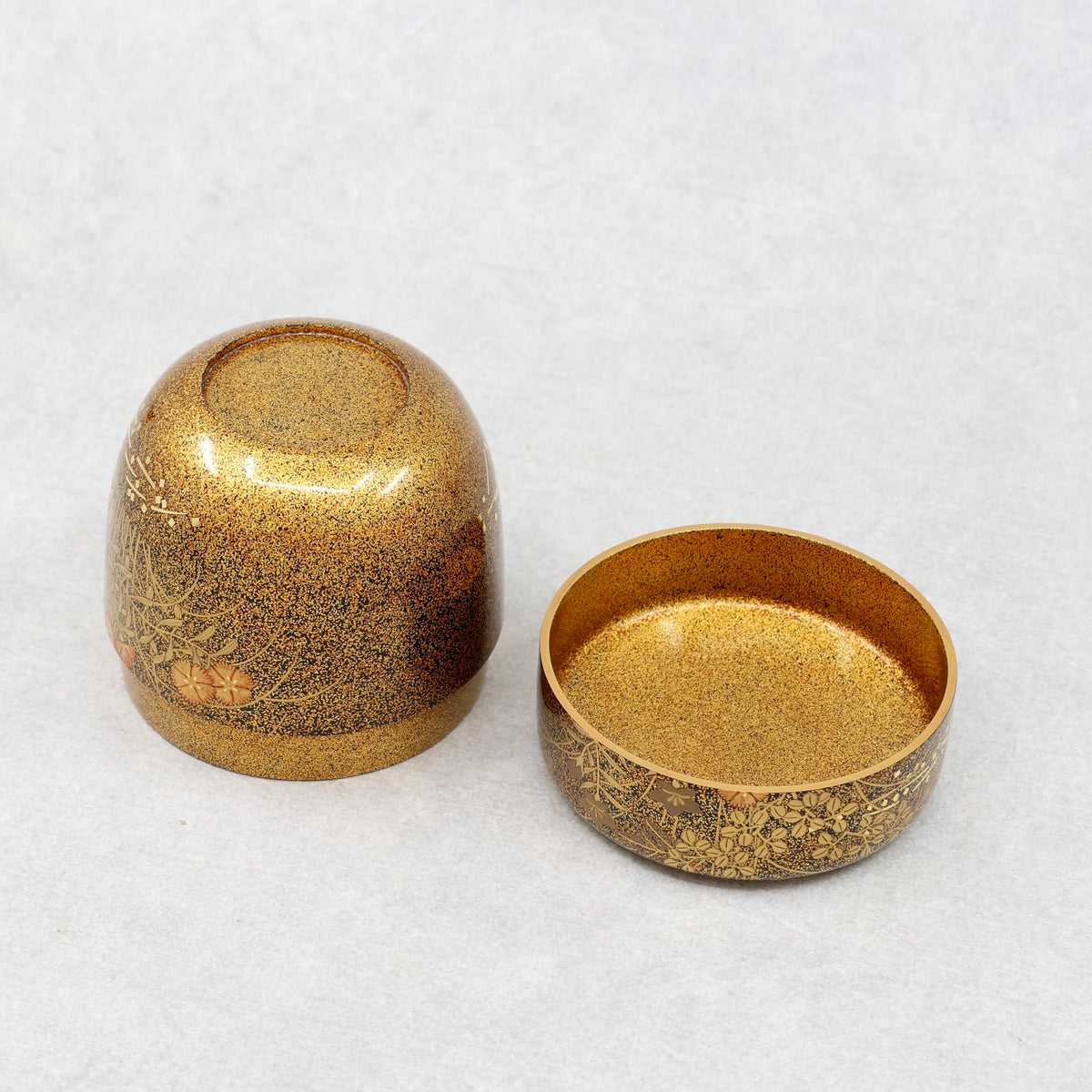
The natsume is entirely covered in black urushi lacquer worked in nashiji (a background sprinkled with gold), upon which a maki-e design (a drawing made with gold powder on the lacquer) unfolds. The particularly luminous exterior powdering reveals the depth of the black lacquer in places, creating a subtle contrast between the two materials. Small hills with soft contours occupy the top of the lid, while a profuse composition of autumn plants extends along its sides and onto the body of the natsume.
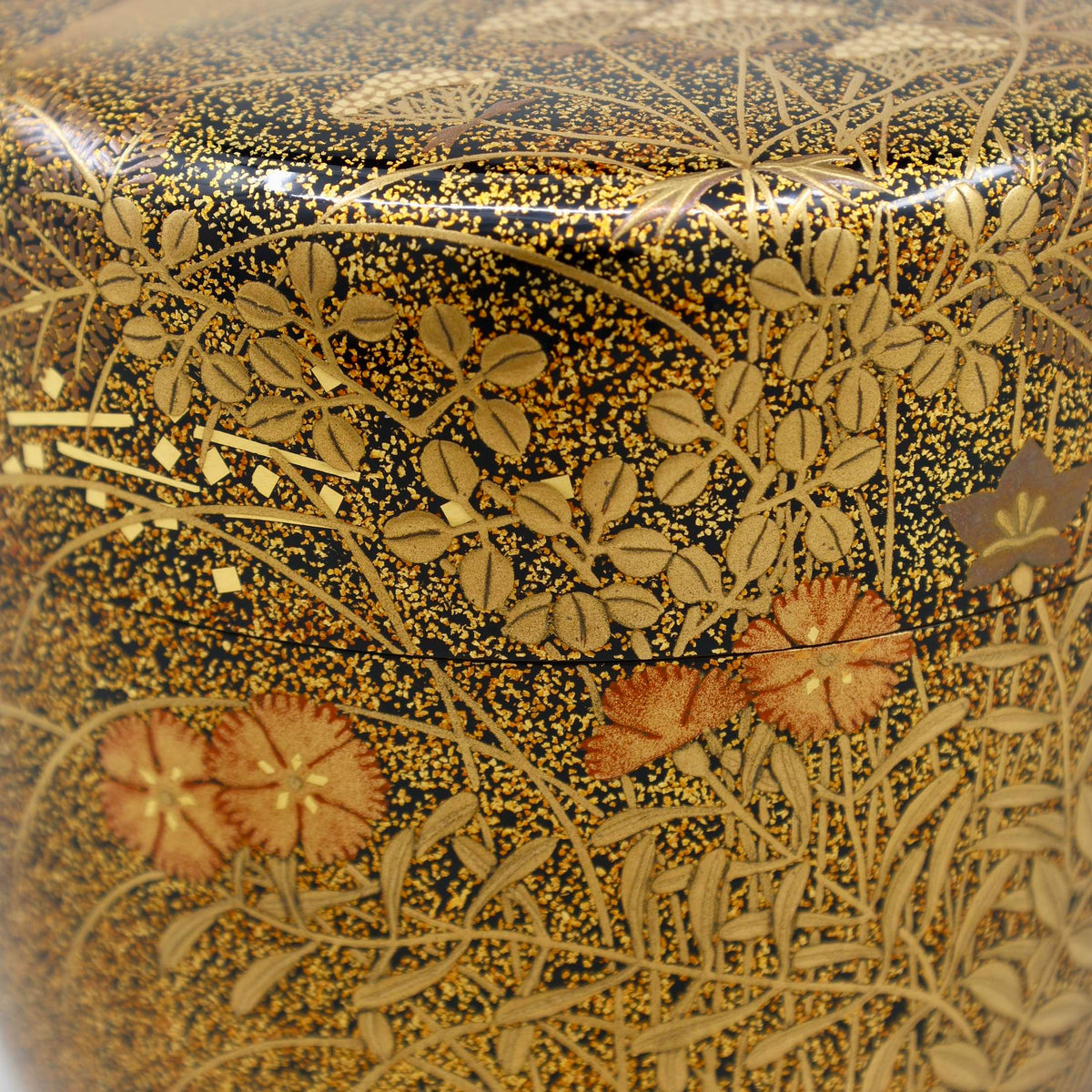
The akigusa (autumn grasses) design notably brings together hagi (Japanese knapweed), nadeshiko (Japanese carnations), and kikyō (Japanese bellflowers). The flowers and plants are worked in different shades of gold, with touches of colored lacquer. Small geometric inlays of kirikane (fine gold leaves cut into squares and rectangles) punctuate the composition. The precision of the plant motifs, the diversity of textures, and the alternation between gold powders and colors give the design a superb depth and visual richness.
The interior of the natsume is also finished in nashiji, with a denser concentration of golden particles than on the exterior surfaces. This finish envelops the interior in a warm, uniform glow, contrasting with the play of transparency of the black exterior background.
Autumn grasses hold an important place in Japanese aesthetics and classical poetry. They evoke the beauty of the seasons, the delicacy of nature, and the passage of time, themes particularly appreciated in the chanoyu (way of tea) tradition.
Form and use
This ōnatsume (large natsume) is used in the Japanese tea ceremony to hold the matcha powder intended for the preparation of usucha (light tea). Its traditional shape and balanced proportions highlight the richness of the design that unfolds over its entire surface.
Presentation
This natsume is accompanied by its tomobako (original wooden box), bearing the name of the work, the signature, and the seal of the artisan. It is also accompanied by a shiori (information document) containing a text of recommendation dedicated to Kazue Fukushima, signed by Kaishū Takahashi.
Place of manufacture
Japan, Kanazawa, Ishikawa Prefecture
Period
Heisei era (1989 - 2019)
Dimensions
Diameter 7.5 cm - Height 7.8 cm
Weight
Natsume alone: 72 g
Natsume with boxes: 214 g
Materials
Wood, urushi lacquer, gold powders, colored lacquers, cut gold leaves
Condition
Very good condition
The reflections of the lacquer and the design can create misleading visual effects in photographs. Any actual defect, if it exists, is systematically reported in the product sheet (under the "Condition" section) so that you can make your decision with complete confidence.
© Atelier Ikiwa – Laurence Corteggiani. All photographs and text are protected. Reproduction without permission is prohibited.
KNOW-HOW
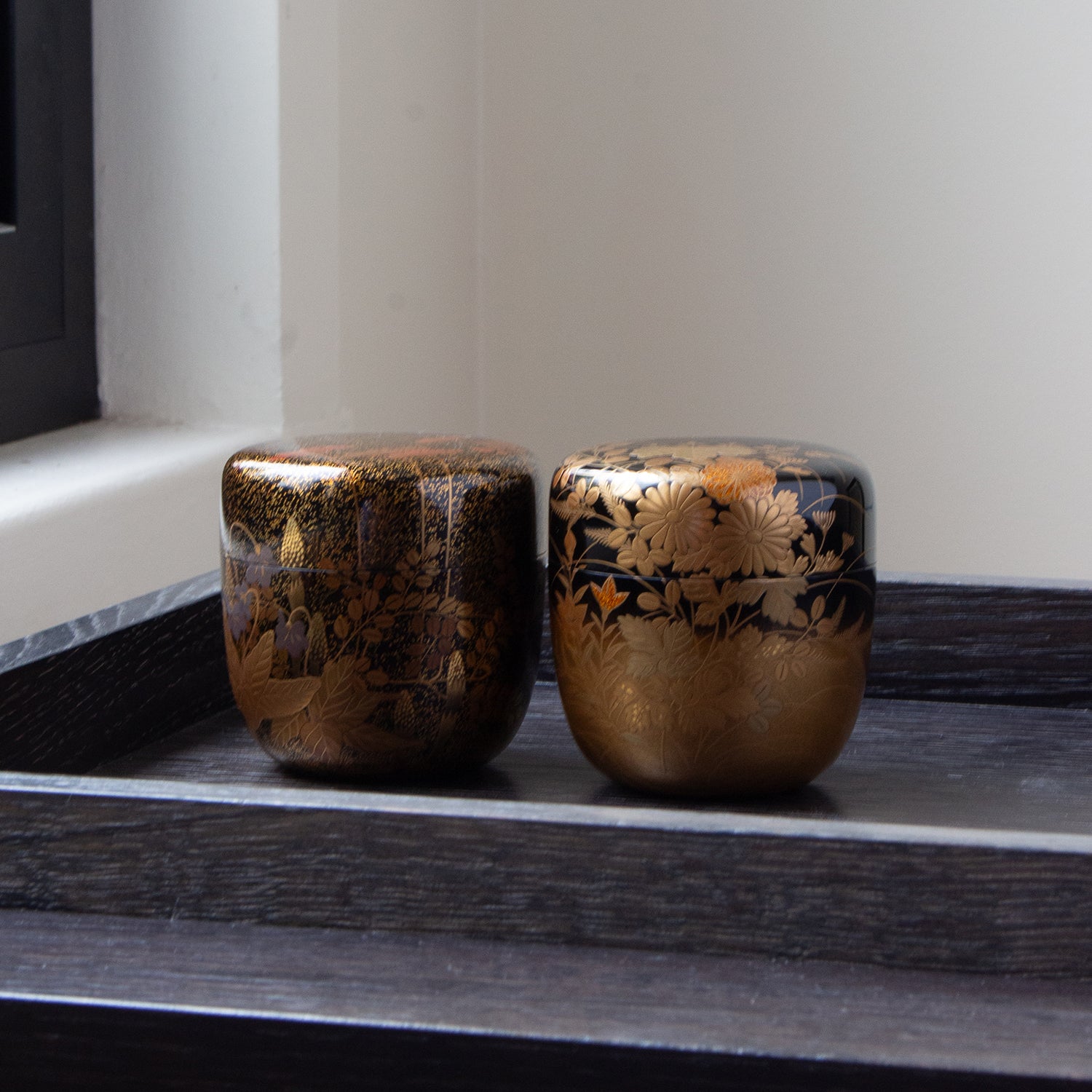
Natsume (棗) are small boxes with few variations in shape and dimensions (which are codified), and which are made of Japanese urushi lacquer, welcoming the matcha tea powder during the traditional Japanese tea ceremony (chanoyu and sadō). They are magnificent objects that can be used for tea or superb decorative pieces to collect and to position individually or grouped on a pretty tray or in a display case. Modern productions are more often made of resin and not lacquer, and of molded wood powder or plastic. We only offer authentic traditional natsume in real Japanese urushi lacquer made according to the rules of the art. These objects are rare and precious, they are likely to increase in value. Read our article on natsume >
Traditional Japanese lacquer, urushi, comes from the sap of the lacquer tree (Rhus Verniciflua), which flows after incision of the bark. It is a very precious material, a tree will give a maximum of 200ml of sap in its life, which is worked by specialized craftsmen. It takes many operations, slow and meticulous, and several months of work to bring real lacquer objects to life. It is the oldest craft in Japan! Initially used to protect and waterproof objects, this immutable craft has become an art of extreme sophistication. If you want to know more about the art of Japanese lacquer, you can read our dedicated article > .
DELIVERY AND PAYMENT OPTIONS
Shipping
Free shipping in metropolitan France for purchases over €200. Shipping with Colissimo, choice of home delivery or relay point, parcel delivered against signature or unique code for valuable items. Orders are generally dispatched within 2 business days, except for fine art photographs, which are printed on demand, and special cases which will be announced in the banner at the top of the site (e.g., in case of absence). Learn more >
Payment options
Secure card payment with Shopify Payments and 3D Secure technology.
Visa, MasterCard, American Express, Bank Cards, PayPal, Apple Pay, Shop Pay, and Klarna.
Klarna: Pay in 3 interest-free installments or within 30 days for purchases up to €1,500, subject to Klarna's approval. You will be redirected to Klarna to log in or create an account and confirm your payment.
PayPal: You will be redirected to PayPal to log in and confirm payment. New users can create an account during checkout.
Your invoice will be sent with your order.
Returns and exchanges
14 days to change your mind. Learn more >
CARE INSTRUCTIONS
Clean with a very soft cloth to avoid scratches, soaked in a little warm water if necessary (never soak your lacquer objects). No microwave, dishwasher, dryer. Do not expose to direct sunlight for a long time (risk of discoloration). If the atmosphere is very dry and very hot, and to avoid the risk of cracking, you can place a glass filled with water next to your lacquer object.
Choose options
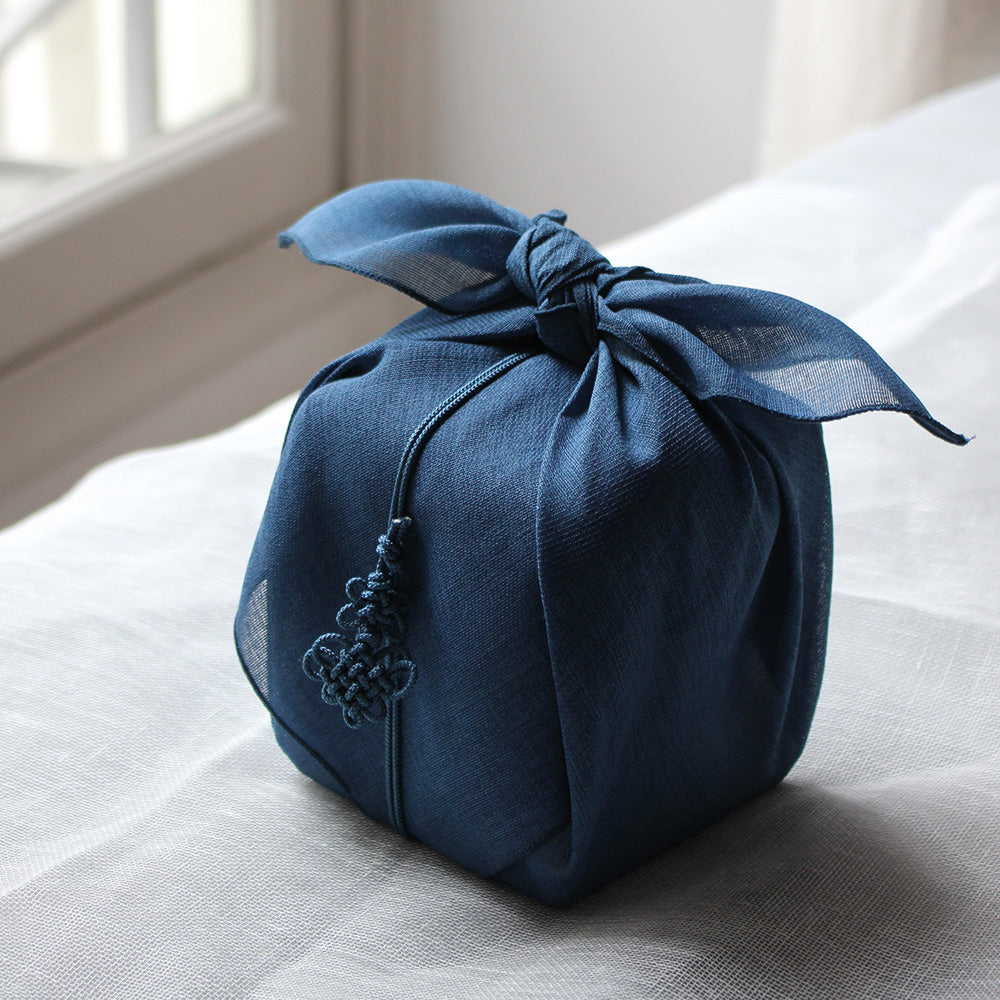
The art of wrapping
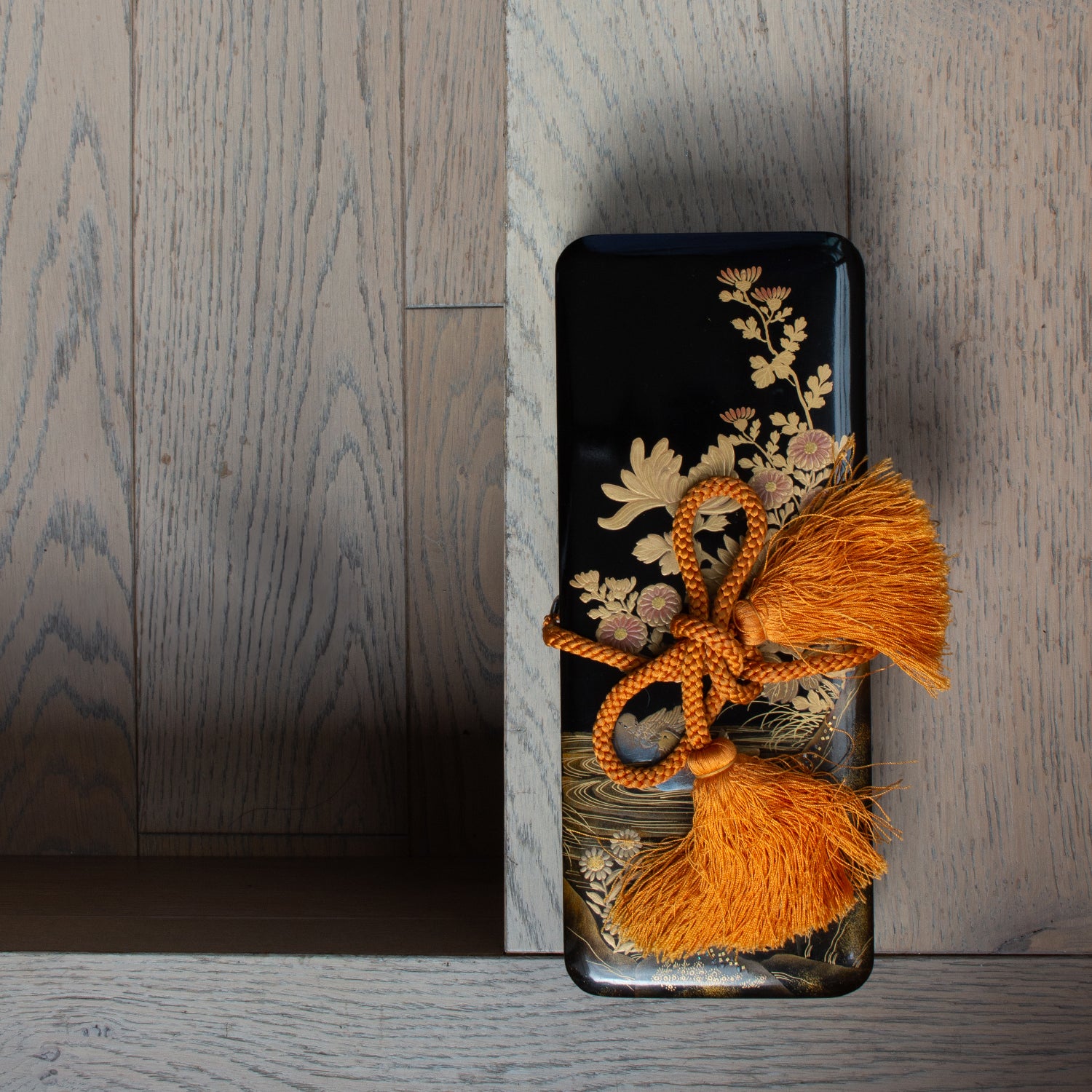
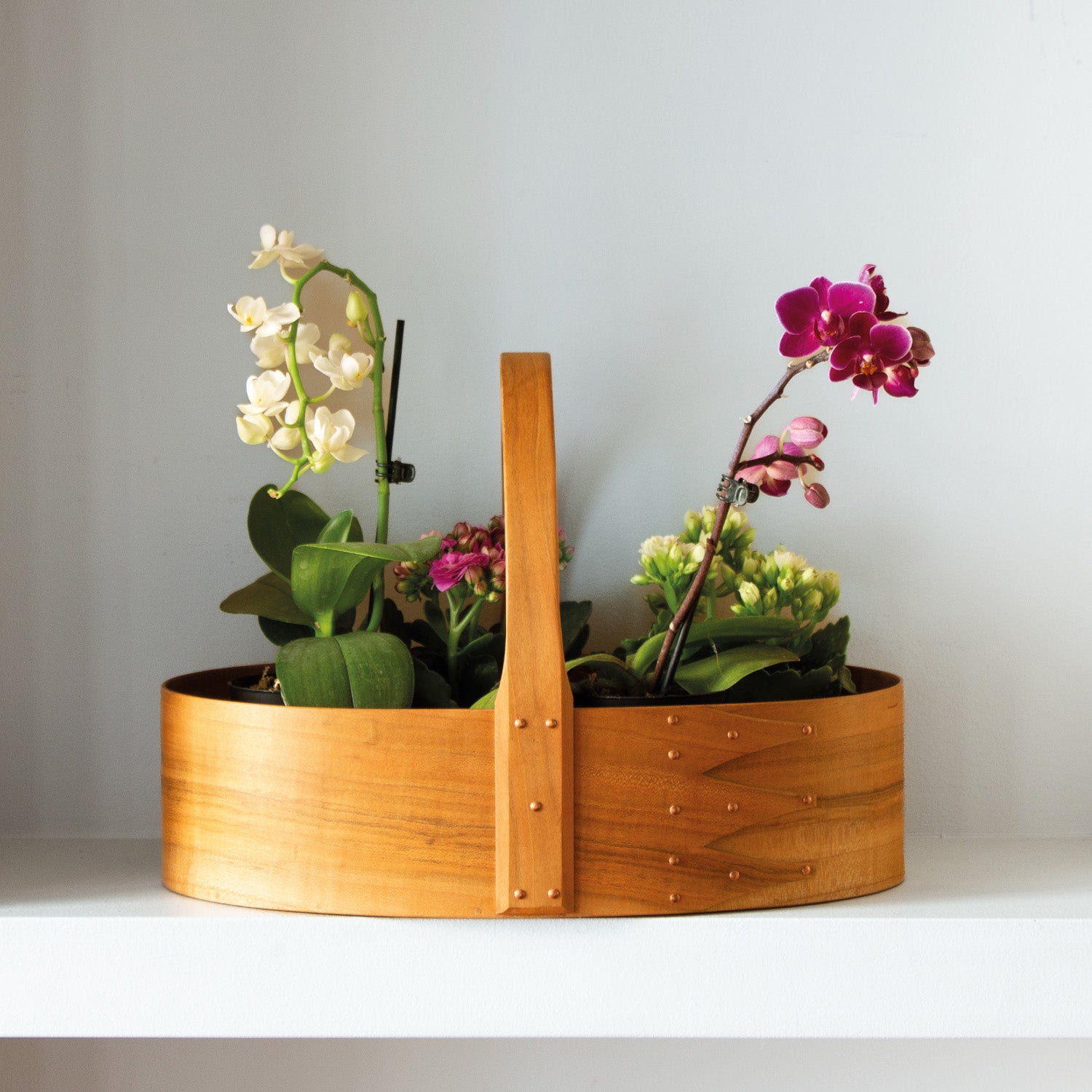
The exceptional items are wrapped in a beautiful fabric beautifully knotted using the little-known art of Korean pojagi and decorated with a delightful maedup (Korean ornamental knot). Details and conditions >
WRAPPING
Exceptional items are wrapped in textiles tied according to the Korean pojagi art