
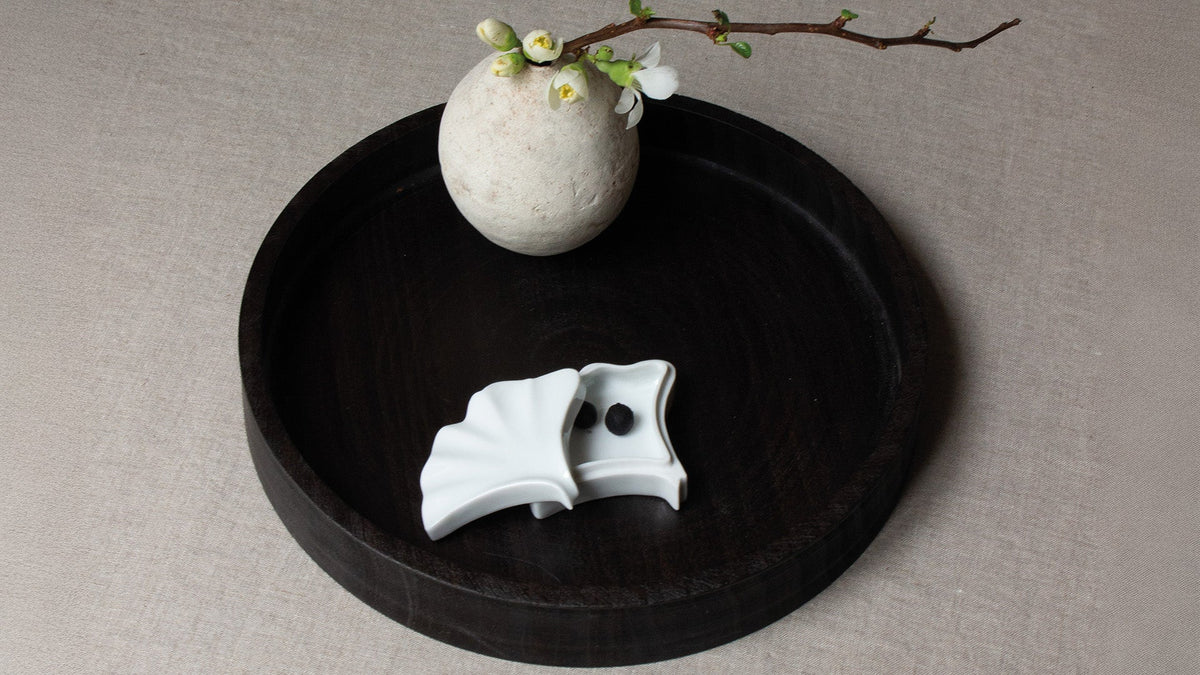
Kōgō and nerikō: the meeting between ceramics and Japanese incense
In Japan, incense is an impalpable presence, a breath that travels through time and space, awakening the senses with infinite gentleness, manifesting in the silence of temples and the dimness of machiya. More than just a fragrance, it accompanies meditation, tea, and the passing of seasons, revealing multiple personalities that slowly unfold before blending into the air. This art of the fleeting is met with delicate objects, crafted by artisan hands that, from generation to generation, continue to keep traditions alive, traditions often unknown in our latitudes.
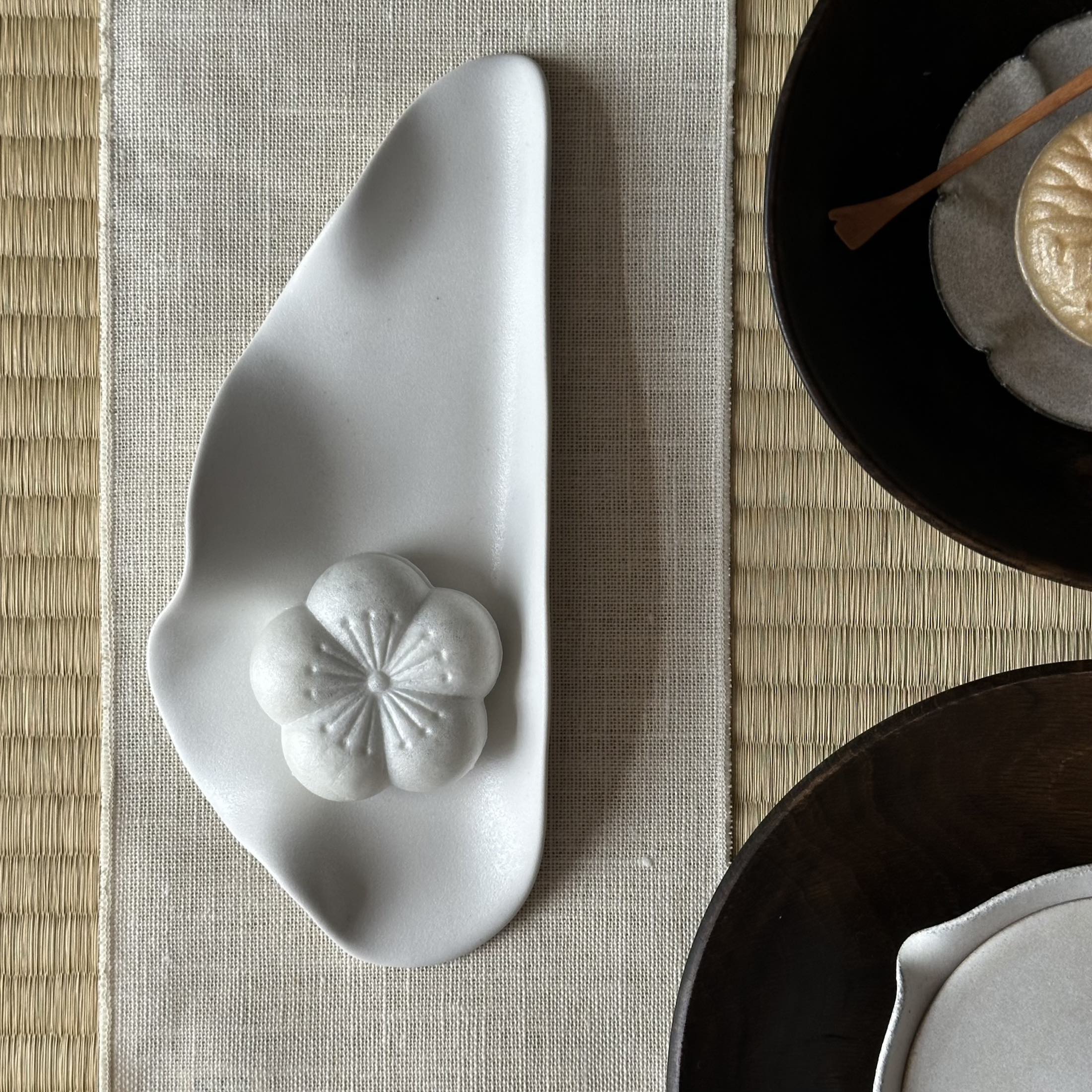
To house these precious fragrances, kōgō (香合), charming small ceramic boxes, become cases to preserve and reveal nerikō (練香), these incense pellets crafted in the secret of ancestral recipes, both little-known treasures of Japanese incense art. Kōgō and nerikō: a fascinating balance between material and fragrance, for a ritual of rare elegance.
Incense in Japan: a millennial tradition and its role in the tea ceremony
The use of incense in Japan dates back over a millennium, introduced from China and developed over time through various spiritual and aesthetic practices. In Buddhist temples, it accompanies meditation, while in elegant homes, it is at the heart of kōdō (香道, "the way of incense"), an olfactory and playful journey where incense reveals its soul in tranquility.
It is particularly in the tea ceremony (chanoyu, 茶の湯) that kōgō and nerikō play a special role. The fragrance of the nerikō selected for the occasion is discreetly introduced to accompany the atmosphere of the moment, in perfect harmony with the unfolding of the tea ritual. The choice of kōgō and the incense it contains reflects not only the season but also the intention of the tea master, who seeks to offer a complete sensory experience.
For one does not merely smell a fragrance, one listens to it. Monkō (聞香), literally "listening to incense," is a term used in kōdō to describe the act of perceiving an aroma with attention and sensitivity. Unlike perfumes that impose themselves, Japanese incense reveals itself in small touches, which require a very meditative slowness to apprehend, as one would listen to the teachings of the Buddha, with attention and intention.
In the tea ceremony, the kōgō precedes the olfactory ritual; the object itself plays a role even before the perception of the fragrance. When it is opened after contemplation, a discreet breath escapes, offering a fragment of the invisible to both sight and smell. The nerikō contained within does not burn: it exhales, letting a fragrant memory float in the air, a sensation that is "listened to" as much as it is breathed.
Ceramic kōgō: scent cases and art objects
The kōgō is not just a container: it is a work of art in itself. Made of porcelain or stoneware, it can be simple or adorned with evocative motifs, varying according to the season and desired ambiance.
Styles of ceramic kōgō
- Porcelain kōgō (磁器香合, jiki-gōgō): refined and often decorated with colored enamels, they are particularly appreciated in summer for their fresh and luminous appearance.
- Stoneware kōgō: their rougher texture and deep glazes are more in tune with winter aesthetics.
- Nature-inspired kōgō: shaped like flowers, fruits, or animals, they evoke the cycle of seasons and are chosen according to the time of year.
- Kōgō by renowned ceramists: some pieces, made by famous ceramists, become true collector's items, just like other Japanese ceramic objects, prized for their fine craftsmanship and the beauty of their glazes.
The importance of choosing kōgō and nerikō according to seasons and ambiance
In a formal tea ceremony, the quality of the kōgō is as important as that of the nerikō themselves. Their selection reflects the tea master's intention and the spirit of the gathering. In winter, nerikō with warm and spicy notes are favored, while in summer, lighter compositions with floral or woody accents are preferred. Similarly, a luminous porcelain kōgō will be chosen for its summer freshness, while a stoneware model with more subdued tones will harmonize better with winter austerity.
Nerikō: the alchemy of scents
Nerikō are incense pellets made using ancestral know-how. Unlike sticks, they do not burn but slowly release their aromas under the effect of heat or open air.
Making nerikō: an art of patience and harmony
Nerikō are made from a precise blend of fragrant woods (such as jinkō, agarwood, and byakudan, sandalwood), precious spices (cloves, cinnamon, camphor), and binding ingredients like honey or fermented plum. This mixture is carefully kneaded and rolled into small pellets before being left to mature for several months, sometimes several years, under controlled conditions. This maturation allows the different essences to blend and develop complex, evolving notes, thus offering a refined and subtle olfactory experience.
Using nerikō and kōgō in the art of incense
Presentation in the kōgō
During the tea ceremony or other moments of contemplation, the tea master opens the kōgō and reveals the nerikō to their guests, who appreciate their appearance and fragrance before they are used. Simply leaving the kōgō open discreetly diffuses the scent of the nerikō throughout the room.
Heating on a mica plate
The traditional method involves placing the nerikō on a thin mica plate (unmo), placed on a bed of hot ashes in the hearth or brazier. The gentle heat slowly releases the aromas of the pellets, creating an enveloping and soothing atmosphere.
Simple diffusion in the open air
On some more informal occasions, nerikō are simply left in the kōgō with the lid open, allowing their fragrances to naturally evaporate without combustion. This method is suitable for times when a subtle scent is desired, without heat intervention.
The preservation of nerikō: the key role of the ceramic kōgō
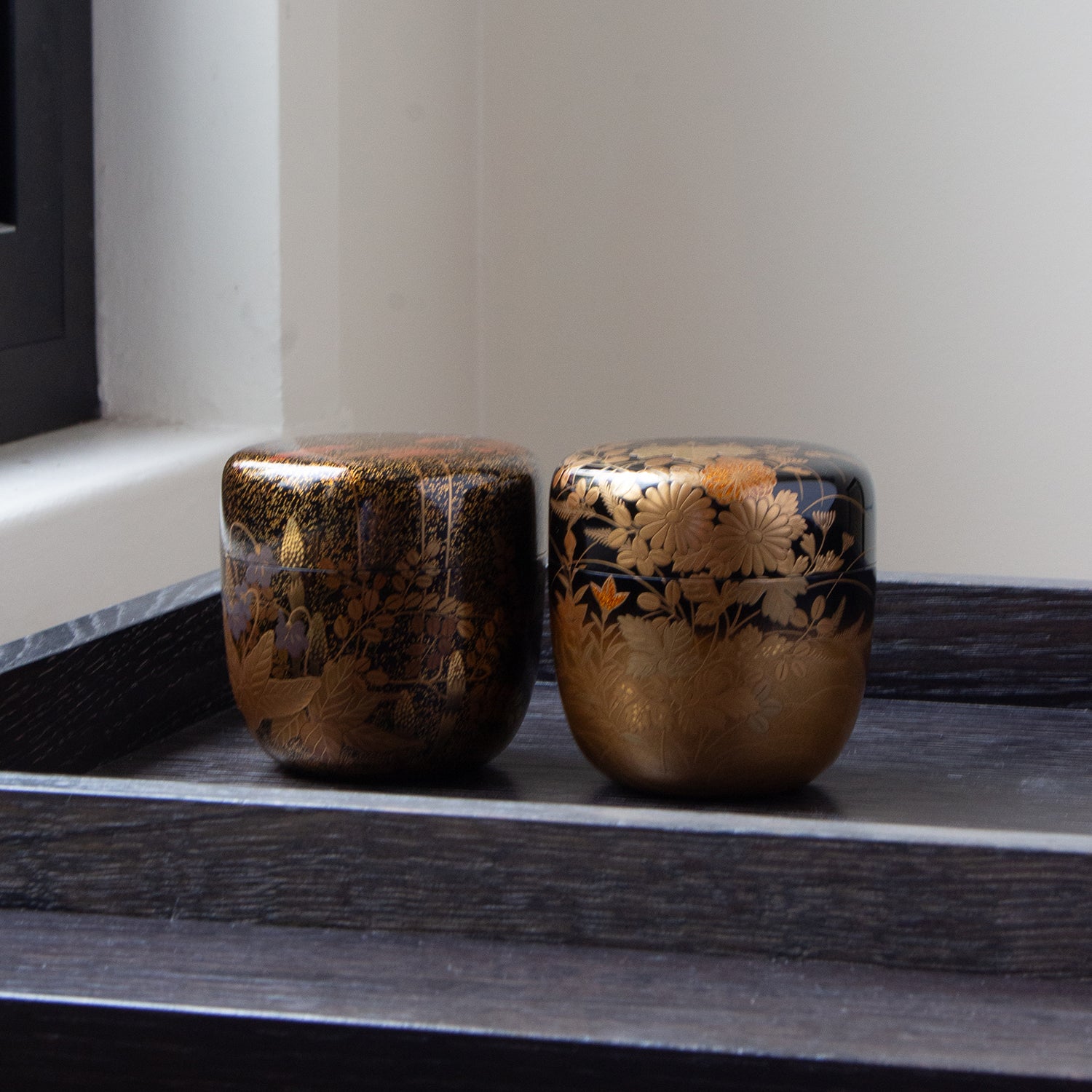
One of the major advantages of the ceramic kōgō is its ability to preserve the freshness and integrity of the nerikō. Unlike lacquered wood, which can absorb certain aromas, ceramic effectively protects the incense pellets from humidity and external alterations. Thanks to its non-porous nature, it ensures that the fragrances remain intact until use, thus guaranteeing a faithful and harmonious olfactory diffusion.
The art of collecting ceramic kōgō
Ceramic kōgō are objects of refinement and contemplation, carefully chosen to match the season and the mood of the moment. Collecting them allows each tea gathering to be adapted to the spirit of the moment, by varying shapes, textures, and glazes. It is a subtle art, where attention to the smallest details reflects a deep respect for the ephemeral beauty of the moment.
Thus, whether filled with delicately aged nerikō or simply displayed as collector's items to admire, ceramic kōgō embody the very essence of Japanese refinement. Discover our exclusive selection of kōgō, each accompanied by a box of nerikō chosen with the utmost care, by following this link.
© Atelier Ikiwa – Laurence Corteggiani. Photographs and texts protected. All reproduction prohibited without authorization.