
Article: The Kiso Valley, in the heart of Japan’s forests and woodworking craftsmanship
The Kiso Valley, in the heart of Japan’s forests and woodworking craftsmanship
In central Japan, in the mountains of Nagano Prefecture, the Kiso Valley stretches along the river of the same name, between the Central Japanese Alps and the Ontake mountain range. Its landscapes are dominated by vast forests whose resources have profoundly shaped the region's history and culture.
Renowned for centuries for the quality of its timber, the valley has supplied materials for the construction of shrines, temples, and residences, while developing remarkable craft traditions. From solid wood craftsmanship to urushi lacquerware, Kiso possesses a rich heritage, which can also be discovered by exploring the old villages of the Nakasendō, a historic route that once crossed the mountains of Japan.

Kiso's Forests, an Exceptional Heritage
In Japan, wood plays an essential role in architecture, the arts, and daily life. For centuries, it has been the preferred material for carpenters, woodworkers, and many artisans, who have developed a remarkable knowledge of wood species and their properties. In the Kiso Valley, this relationship with wood takes on a special dimension, as the forests have contributed to the region's prosperity and the transmission of its expertise.
Among the most iconic species are hinoki, or Japanese cypress, and sugi, Japanese cedar. The former, renowned for its delicate fragrance, fine grain, and exceptional durability, has long been sought after for the construction of shrines and temples. It is also used in traditional baths, interior fittings, and many handcrafted objects. The latter, lighter and easier to work with, has accompanied Japanese domestic life for centuries, from wooden houses to boxes, containers, and everyday utensils. Two species with different qualities, whose uses reflect the considerable place of wood in Japanese material culture, but which share a divinely pleasant scent and inspire an increasing number of perfumers.
Kiso's forest wealth was for a long time a major economic and political issue. During the Edo period (1603 to 1868), the region's forests were under the authority of the Owari domain, ruled by a branch of the Tokugawa family. After several decades of intensive exploitation, particularly strict protection measures were introduced in the 17th century. The felling of five precious species, including hinoki, was severely regulated. This forestry policy helped preserve a portion of the ancient woodlands that give Kiso its reputation today.

The link between Kiso's forests and Japanese sacred architecture is particularly remarkable. Ise Jingū, the Grand Shrine of Ise in Mie Prefecture, is rebuilt according to a twenty-year cycle during a ceremony called Shikinen Sengū. This tradition, whose origins date back to the 7th century, draws on carpentry expertise passed down through generations.
Kiso hinoki holds an important historical place in this supply. When the forests near Ise were no longer sufficient to provide the necessary timber, Kiso's large cypress trees became an essential resource for the reconstructions. Even today, the region continues to supply wood for this exceptional construction project, alongside efforts to replenish the shrine's own forest resources.
Woodworking, from Houses to Everyday Objects
In the Kiso Valley, the abundance of forest resources fostered the development of trades related to construction and the manufacture of household objects. Frameworks, woodwork, sliding doors, furniture, and chests bear witness to the importance of wood in traditional Japanese homes.
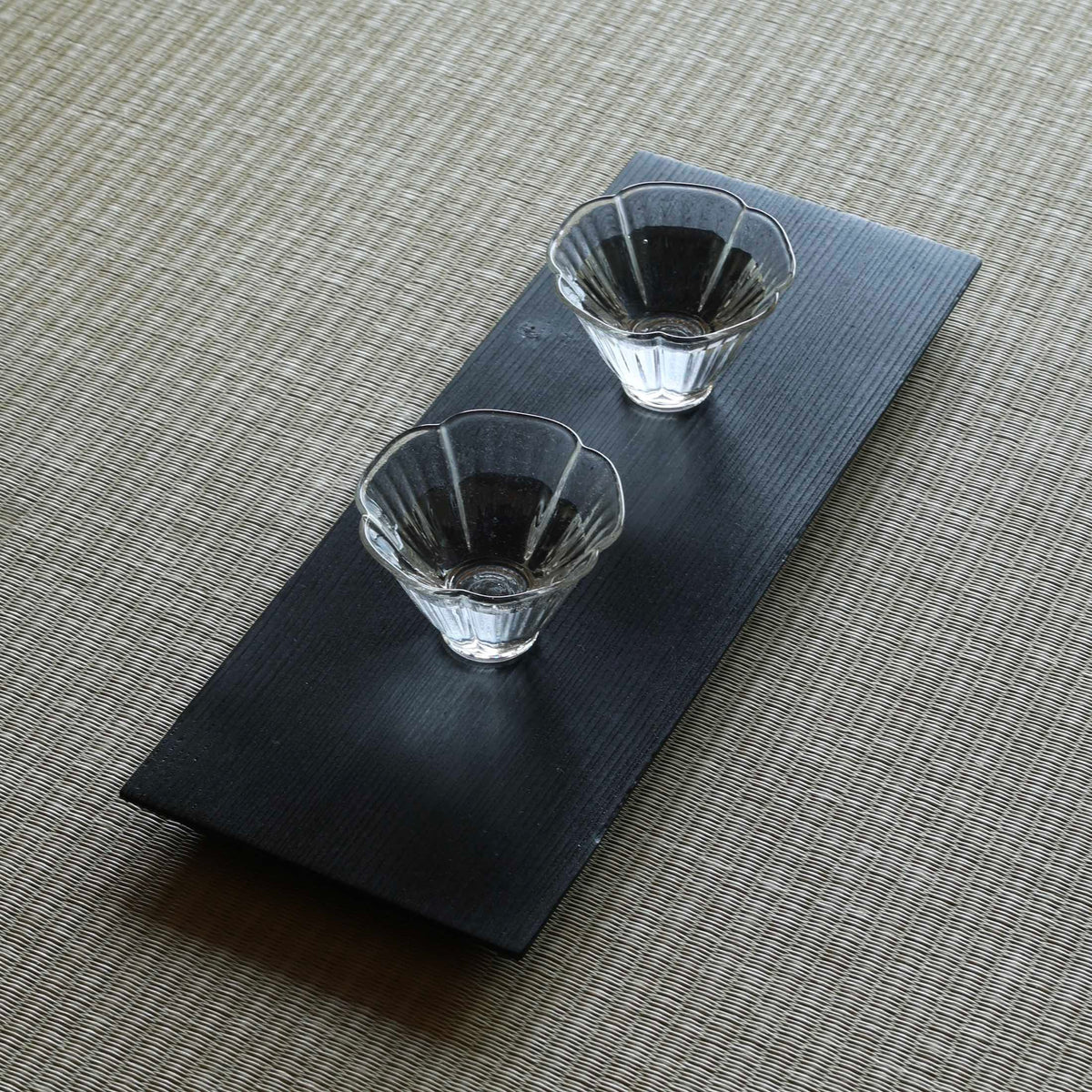
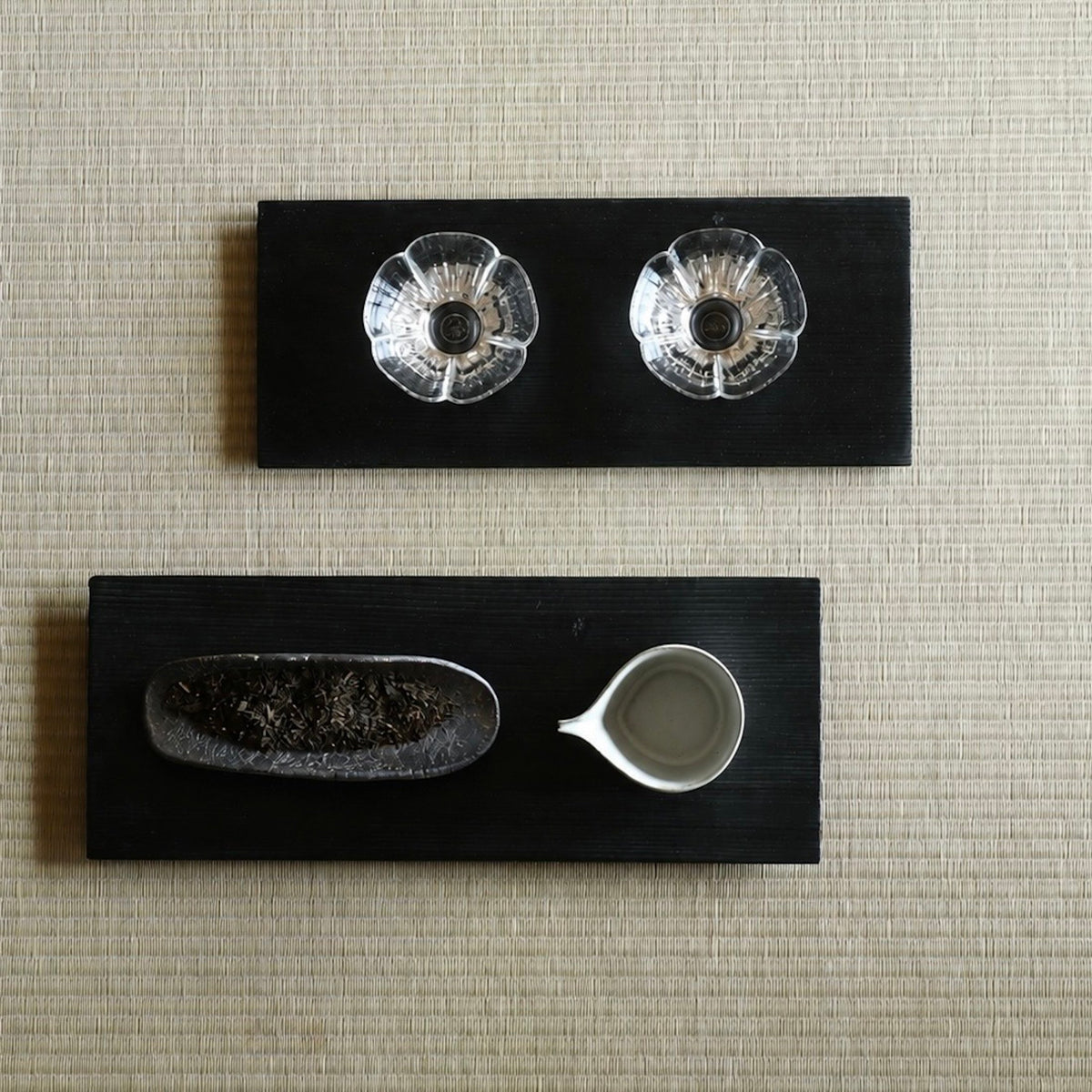
Artisans in the region also make a wide variety of small objects: bowls, trays, boxes, cups, food containers, or utensils for the tea ceremony. Their manufacture relies on several techniques that exploit the unique qualities of each wood species.
Woodturning, called rokuro zaiku, is one of the region's traditions. Using a lathe, the artisan shapes a piece of solid wood to create circular forms, gradually controlling its thickness and proportions. This technique is notably used for bowls, cups, and certain trays. It makes use of different species, including tochi, keyaki, and katsura, chosen for their mechanical properties and the beauty of their grain.

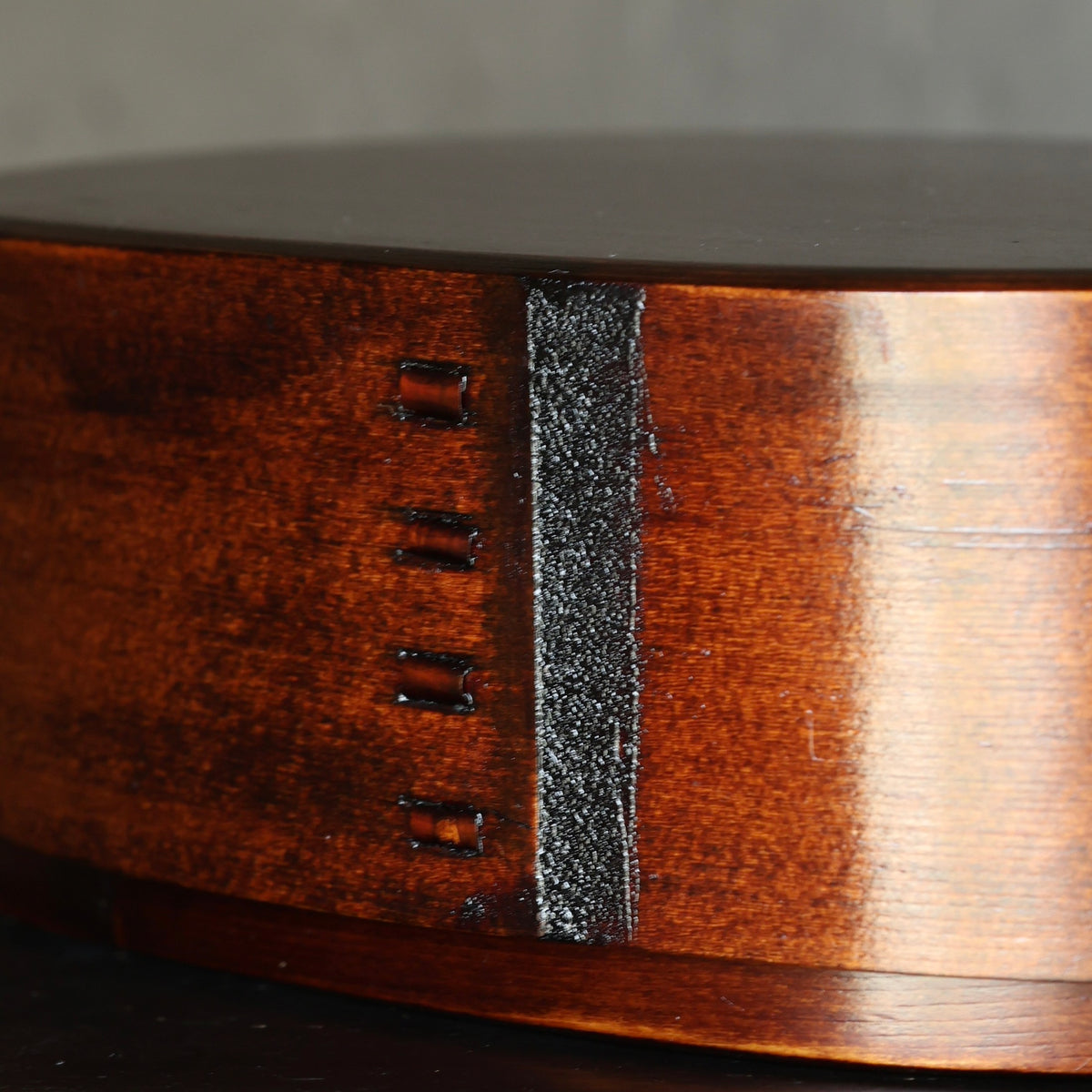
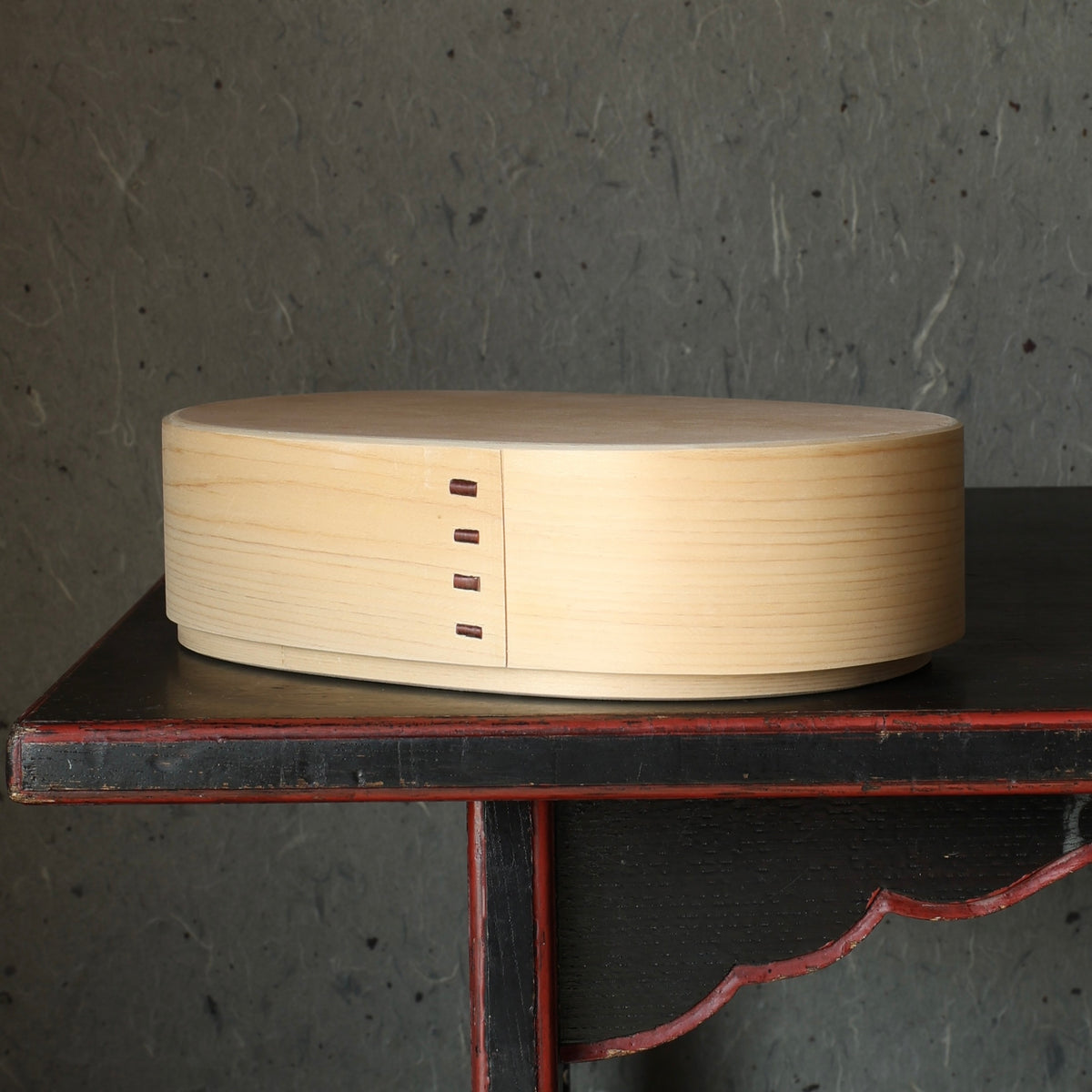
Another technique, magemono, consists of bending thin strips of wood, generally after softening them with heat, to form the walls of cylindrical or oval containers. The ends are then assembled and secured, traditionally using ties or seams made with plant materials. This process allows for the manufacture of particularly lightweight boxes and containers, whose clean shapes highlight the natural material.

Traditional joinery, meanwhile, calls for highly precise cutting, planing, and assembly techniques. In the manufacture of boxes and chests, the choice of wood, the orientation of the fibers, and the quality of the fit play an essential role, both for the object's strength and its final appearance.
Some objects preserve the wood in its natural state, simply planed or polished, while others receive a protective finish. Among these, urushi lacquer holds a particularly important place in Kiso's craft history.
Kiso Lacquerware, a Craft with Many Expressions
The Kiso Valley has a major lacquer tradition known as Kiso shikki. Its development is closely linked to the presence of abundant forest resources, which encouraged the manufacture of wooden supports intended to be lacquered. The flow of travelers and goods along the Nakasendō also helped spread these objects far beyond the region.
For centuries, artisans have made bowls, trays, boxes, and containers for everyday life. This production places great importance on the strength of the objects and their resistance to repeated use. In 1975, Kiso lacquerware received official designation as a traditional Japanese craft.

Urushi lacquer is a natural resin extracted from the lacquer tree, Toxicodendron vernicifluum. Applied in successive layers over a carefully prepared support, it forms a protective coating after hardening that is resistant to water and wear. Its application requires great technical mastery, as each layer must harden under suitable temperature and humidity conditions before the next steps.

One of Kiso's distinctive features lies in the diversity of finishes developed by the artisans. Three techniques are particularly representative of this tradition.
Kiso Shunkei emphasizes the natural beauty of the wood. After preparing the support, applications of lacquer create a translucent finish that reveals the grain and nuances of the material. This technique, particularly suited to woods with a regular grain, gives rise to objects whose apparent simplicity rests on meticulous execution.
Kiso Tsuishu, also known as Kiso Kawari-nuri, relies on a different process. The artisans first prepare a resistant undercoat, notably using raw lacquer mixed with a local iron-rich soil called sabi-tsuchi. Several layers of colored lacquer are then applied using specific processes. Sanding and polishing gradually reveal the different colors and patterns created by their layering. Unlike sculpted tsuishu, this Kiso technique owes its characteristic appearance to the working of the lacquer layers and their surface.
Finally, Nuriwake Roiro-nuri consists of applying different colors of lacquer to distinct areas of the same object. Particularly careful polishing then creates a smooth, shiny surface whose colored contrasts highlight the shapes.

These techniques are complemented by other finishes, such as suri-urushi, which involves working thin layers of lacquer into the wood while preserving its visible grain, or tame-nuri, characterized by translucent lacquer applied over a colored background.
This diversity explains the variety of objects produced by Kiso workshops. Some retain the natural appearance of the wood, while others play with the depth of colors or the shine of the surfaces. All rely on a succession of operations that combine woodworking, support preparation, lacquer application, and polishing.

The Nakasendō, Discovering the Villages of Kiso
The Kiso Valley is crossed by the Nakasendō, one of the five major routes developed during the Edo period to connect the shogunal capital with Japan's various provinces. This route of over 500 kilometers connected Edo, modern-day Tokyo, to Kyoto, passing through the mountains of central Japan. All along the road, post towns welcomed travelers, merchants, and samurai with their inns, shops, and tea houses.
Today, the Nakasendō attracts many travelers who wish to discover a more rural Japan, away from the big cities and usual tourist routes. Certain sections of the old road are particularly well suited for hiking, with magnificent paths that cross forests and small villages. The walk between Magome and Tsumago, about eight kilometers long, is undoubtedly the best known. It generally takes between two and a half and three hours, with no major difficulty for experienced walkers.

To explore the valley, I recommend renting a car, which offers great freedom to explore the surroundings and stop as you please. However, it is entirely possible to travel by public transport, thanks to the trains and buses that serve the region's main towns.
During my last trip to Japan, I particularly loved two villages, Narai-juku and Tsumago-juku. Both have preserved much of their traditional architecture, but their atmospheres are quite different.
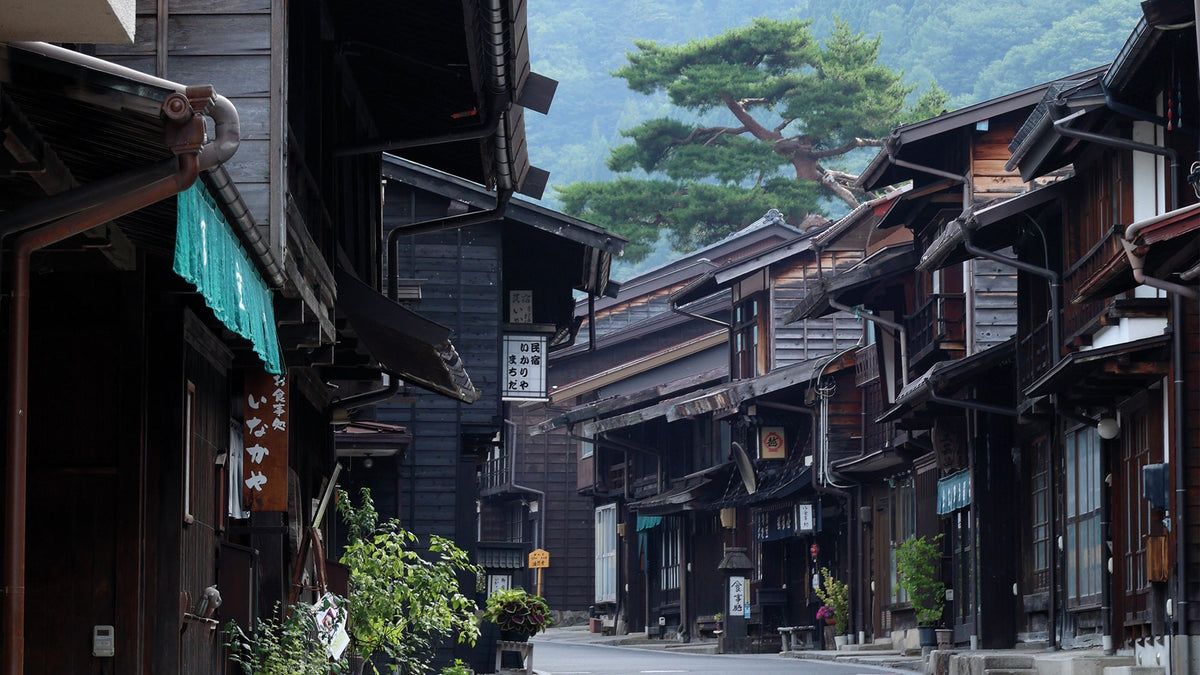
Located in the northern part of the valley, Narai-juku was my real favorite. This village, once one of the most prosperous post towns on the Nakasendō, stretches for nearly a kilometer along a street lined with traditional wooden houses. The whole is remarkably well preserved, with its old facades, roofs, shops, and, all around, the high hills covered in forests. The beauty of this architecture and the harmony of the village with its surroundings particularly touched me.

I chose to spend the night there, and it is an experience I highly recommend. At the end of the day, when visitors leave and the shops close, Narai-juku regains its calm. The next morning, the village was still almost asleep. The streets were deserted, the shops closed, and a few residents were quietly starting their day. I took great pleasure in walking along this long street, observing the houses and their architectural details, with the wooded hills in the background. It is at these hours that one fully appreciates the beauty of Narai-juku, which remains, despite its tourist popularity, a true living place.
Further south, Tsumago-juku offers another experience. The village benefited from an important movement to preserve its architectural heritage as early as the 1960s, at a time when many old neighborhoods were disappearing elsewhere in Japan. Its dark wooden houses, alleys, and traditional buildings have been carefully preserved. Smaller and more compact than Narai-juku, Tsumago has a particularly pleasant atmosphere, set in a landscape of wooded mountains.
I also visited Magome-juku, another famous post town on the Nakasendō, but I was less charmed by this village, which I found far too crowded. Narai-juku and Tsumago-juku are obviously no longer secret destinations, but it is still possible to enjoy very beautiful moments of tranquility there.
My advice is therefore to arrive early in the morning, before the first groups of tourists, or, even better, to plan an overnight stay. In the evening and early morning, when the streets regain their calm, these villages take on a completely different dimension. One can then fully appreciate their architecture, their natural surroundings, and this very special presence of wood, which has accompanied the history of the Kiso Valley for centuries.

Continue the Discovery at Atelier Ikiwa
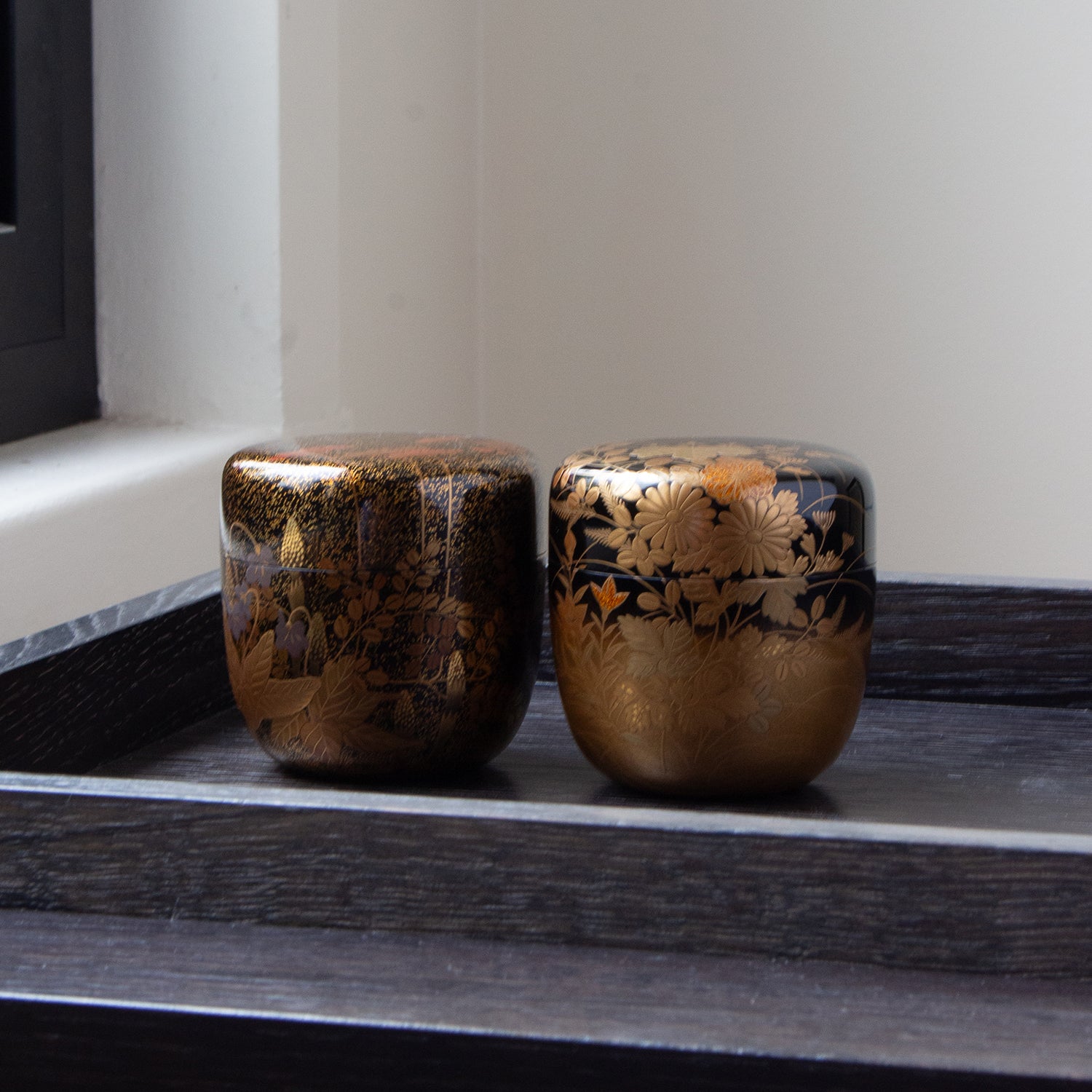
The Kiso Valley still preserves a rich craft heritage today, where woodworking and lacquerware continue to hold an essential place. To continue this discovery, I invite you to explore the collection of Japanese and Korean wooden objects from Atelier Ikiwa, which includes a selection of wooden and lacquer boxes coming directly from the Kiso Valley.

Sources and References
- Japan Forestry Agency, Ministry of Agriculture, Forestry and Fisheries.
- Ise Jingū, official site of the Grand Shrine of Ise.
- Association for the Promotion of Traditional Japanese Craft Industries (Densan Association).
- Traditional Crafts Aoyama Square.
- KOGEI JAPAN.
- Japan National Tourism Organization (JNTO).
- Shiojiri Tourism Office.