




Shino yaki ceramic box by Misaki Andō
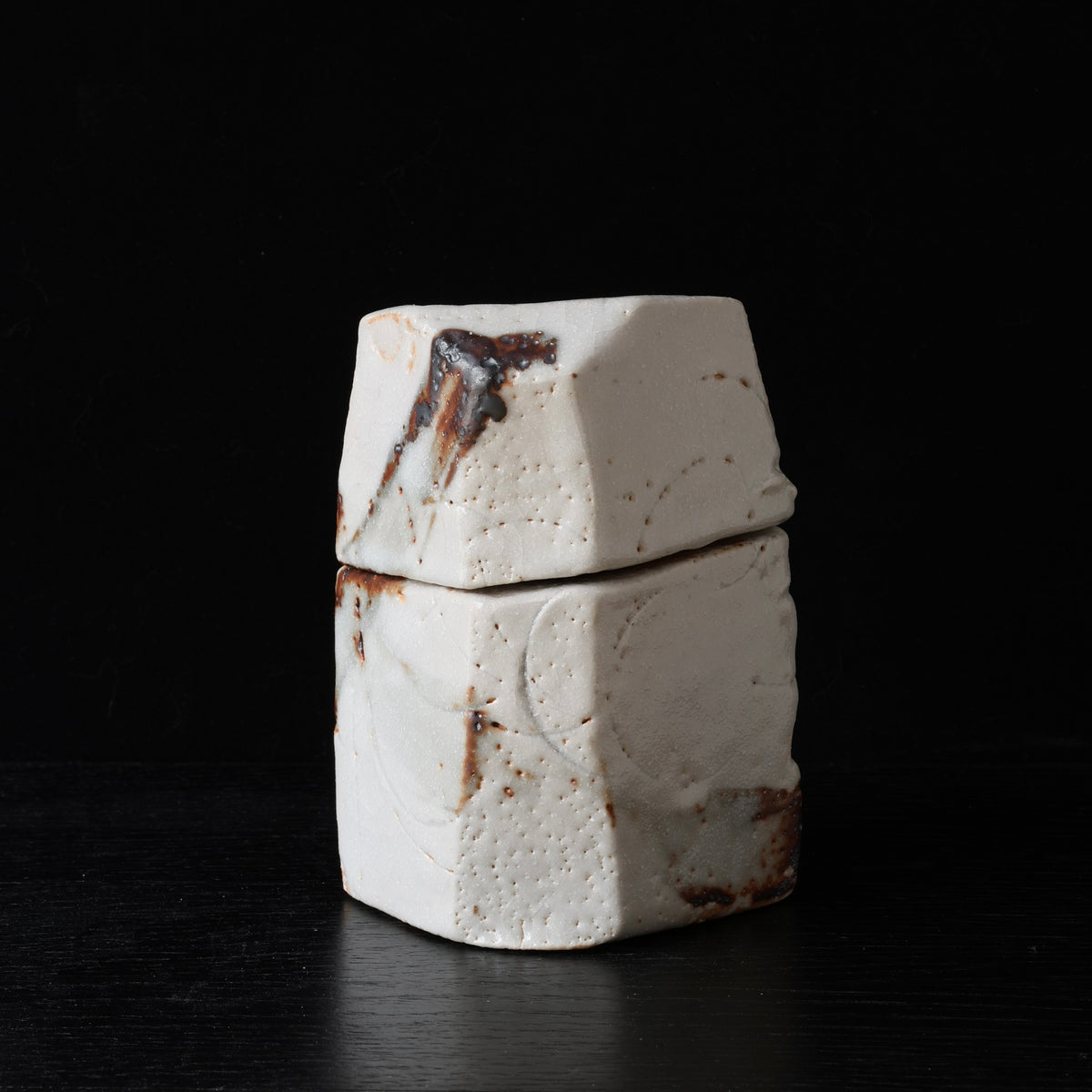
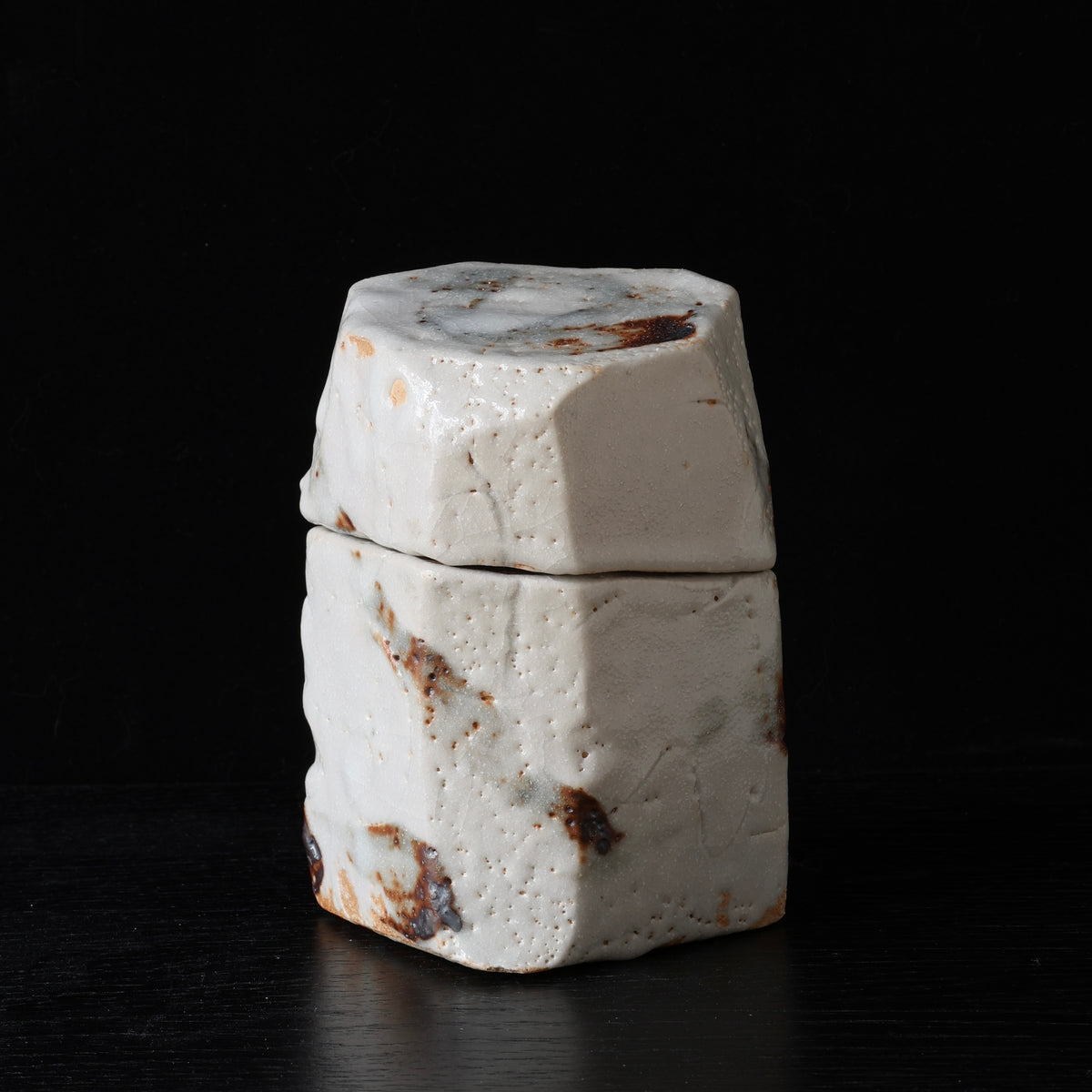
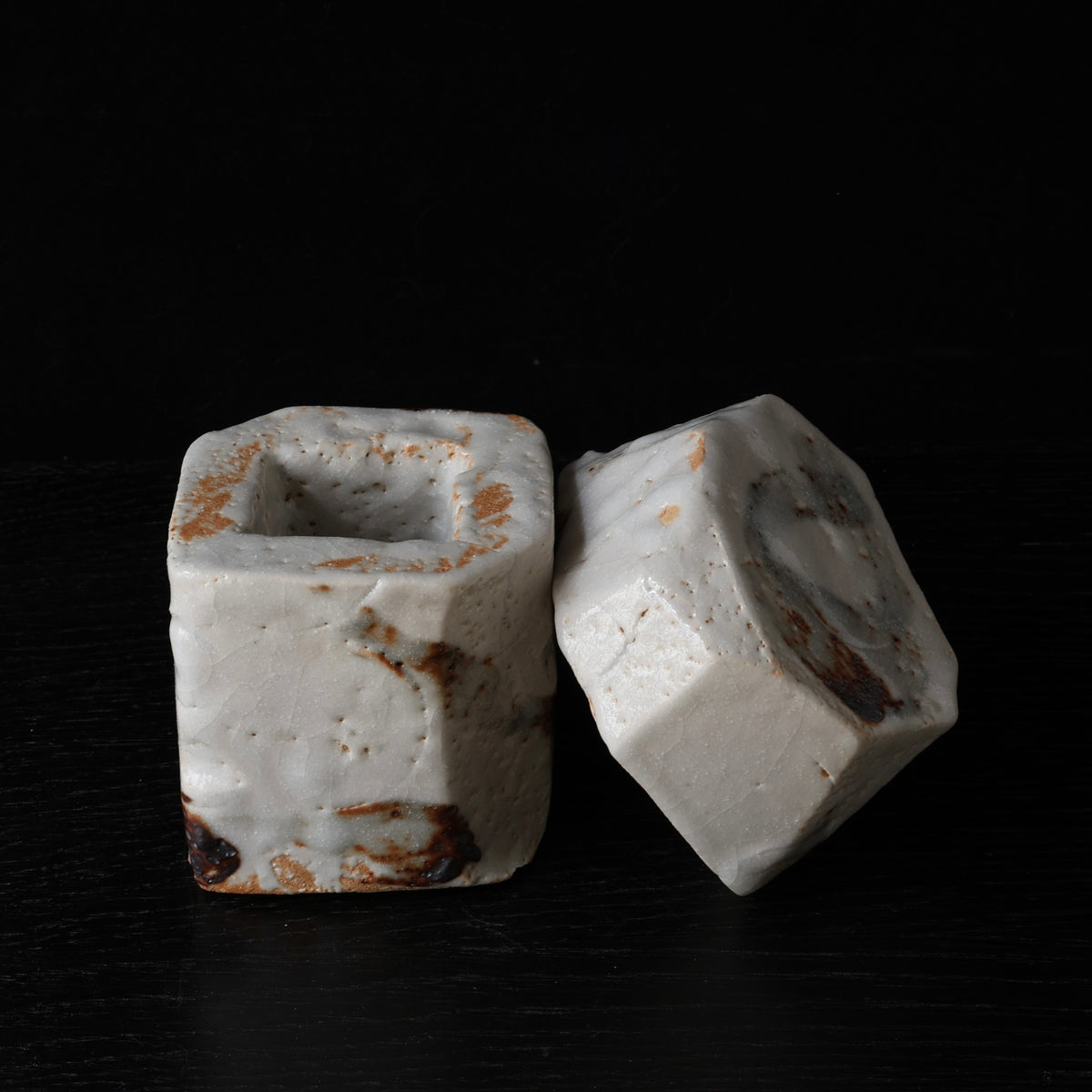
This ceramic box by Misaki Andō, a Japanese artist whose practice combines painting, sculpture, and ceramics, offers a resolutely contemporary interpretation of Shino yaki (Shino ware). Inheriting a tradition born in the Mino region in the 16th century, she combines an architectural form with the irregularities of the material and the nuances of a thick white glaze. At the boundary between sculpture and functional object, this creation asserts a singular presence, where the apparent simplicity of the composition gives way to a particularly expressive treatment of volumes and surfaces.
The ceramicist
Misaki Andō, born in 1943 in Ōsaka, is a multidisciplinary Japanese artist who is a painter, sculptor, calligrapher, and ceramicist. She studied ceramics in Japan as well as in Paris and London, developing an artistic practice that transcends the traditional boundaries between disciplines.
Her work notably explores the plastic possibilities of clay through free forms and compositions that bring the ceramic object closer to sculpture. Her career reflects an international outlook, notably through a solo exhibition organized in 1991 at the Elysium Arts gallery in New York. Her creations include both objects intended for use and works of experimental form, in which research into material and volume plays a central role.
Technique and decoration
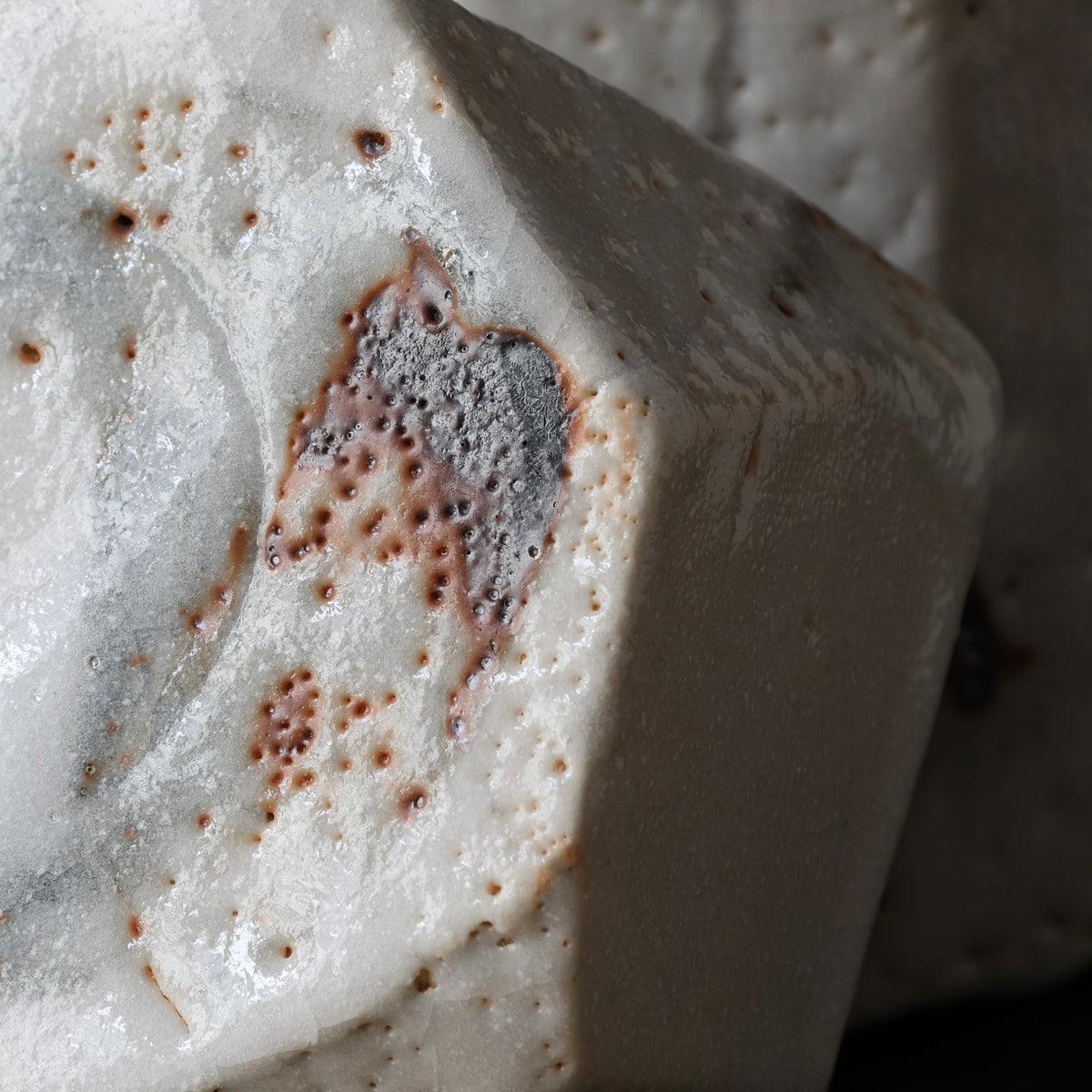
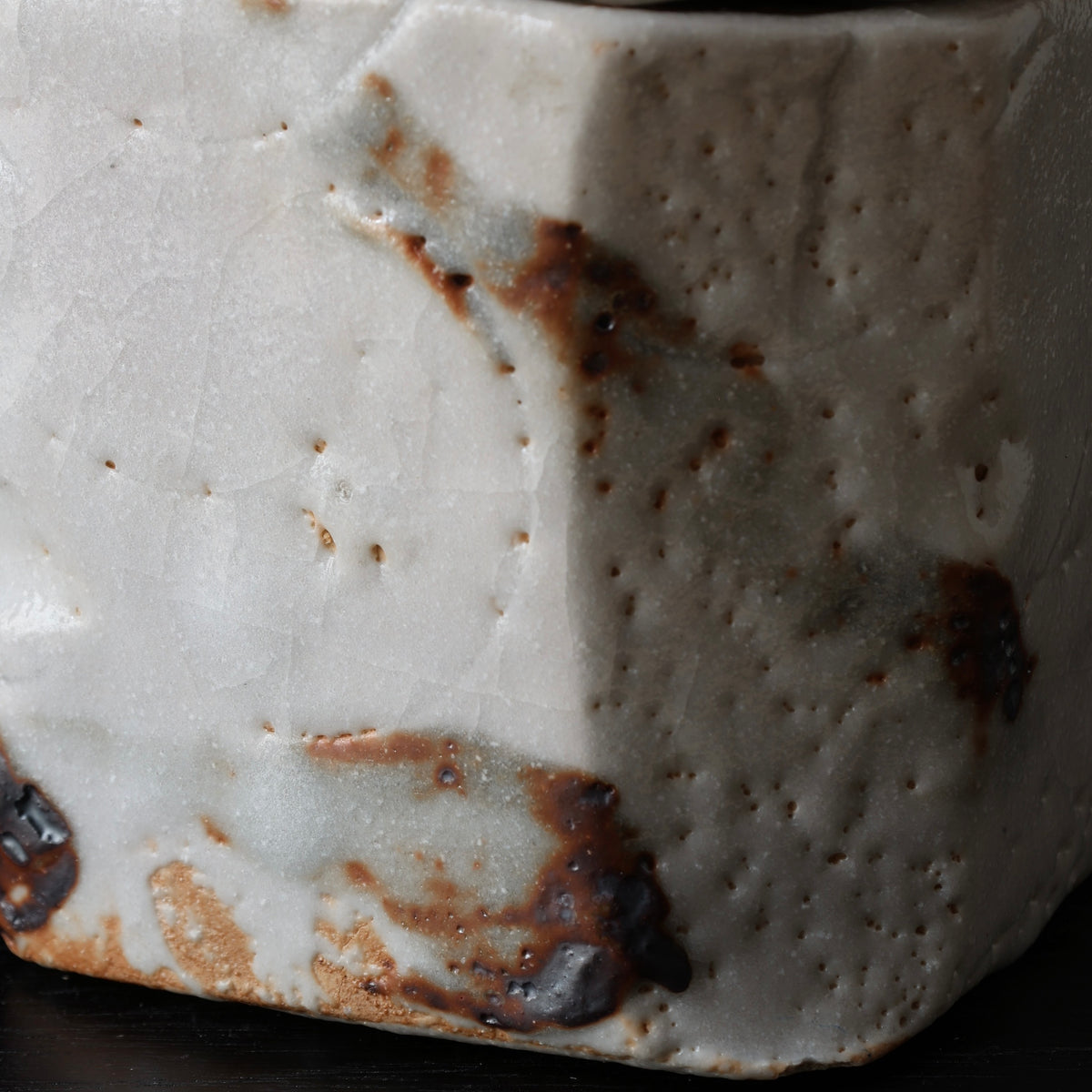
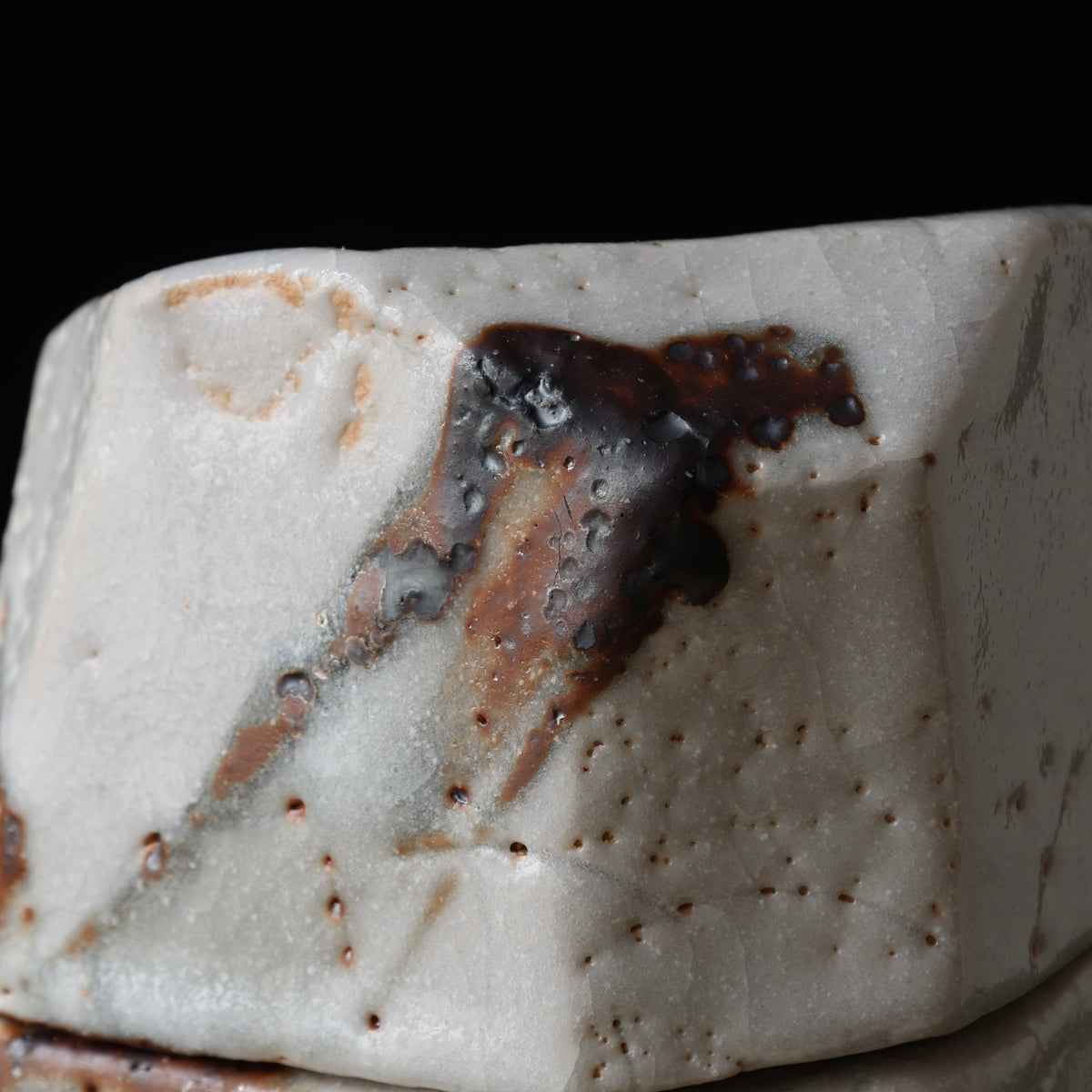
Shino yaki is a ceramic tradition developed in the Mino region of Japan at the end of the 16th century, closely linked to the rise of the tea ceremony. Its essential characteristic lies in the application of a feldspathic glaze, generally white and relatively thick, over shaped clay. Firing causes variations in texture and color, with slightly translucent areas, speckles, fine cavities, and nuances ranging from milky white to orange or reddish-brown tones.
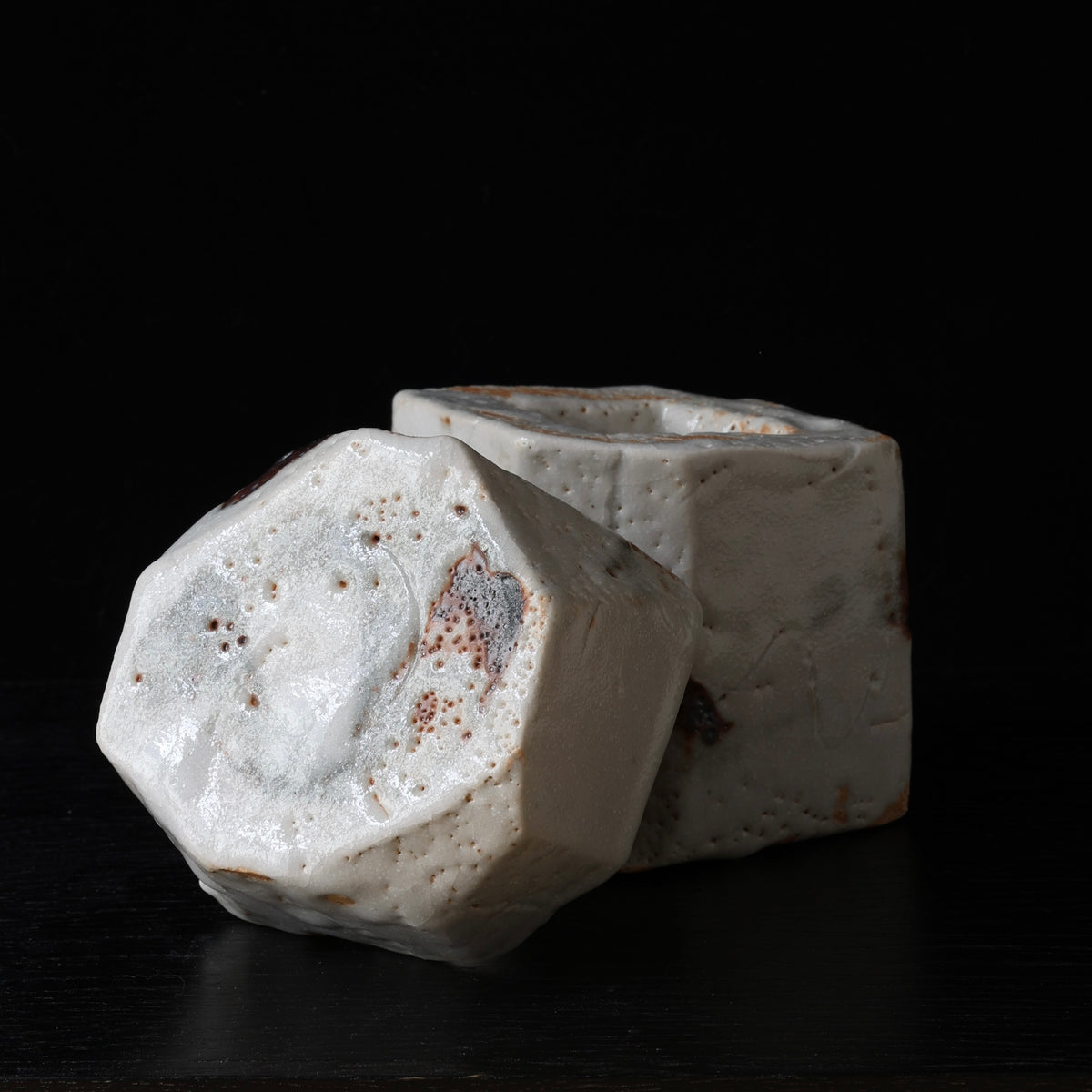
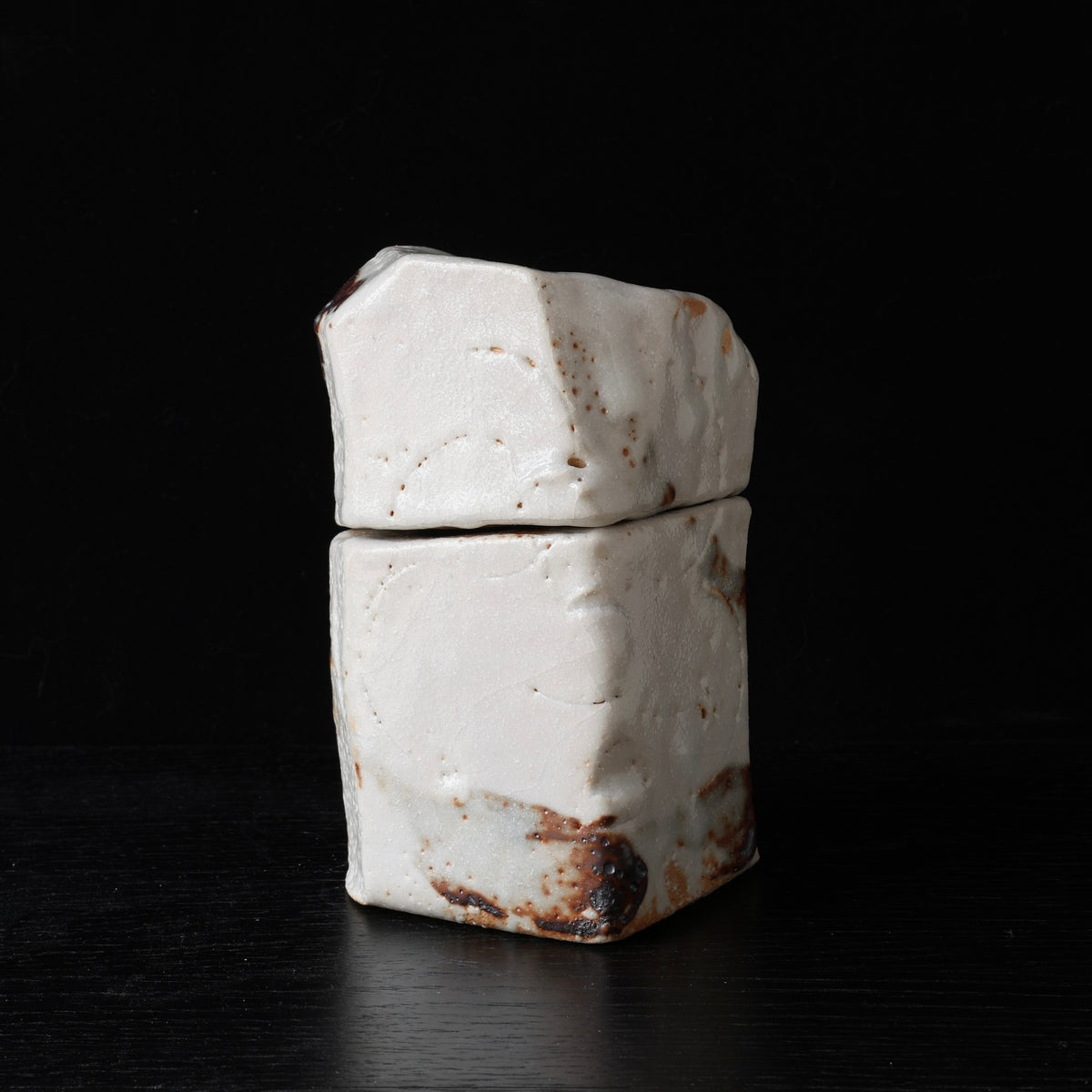
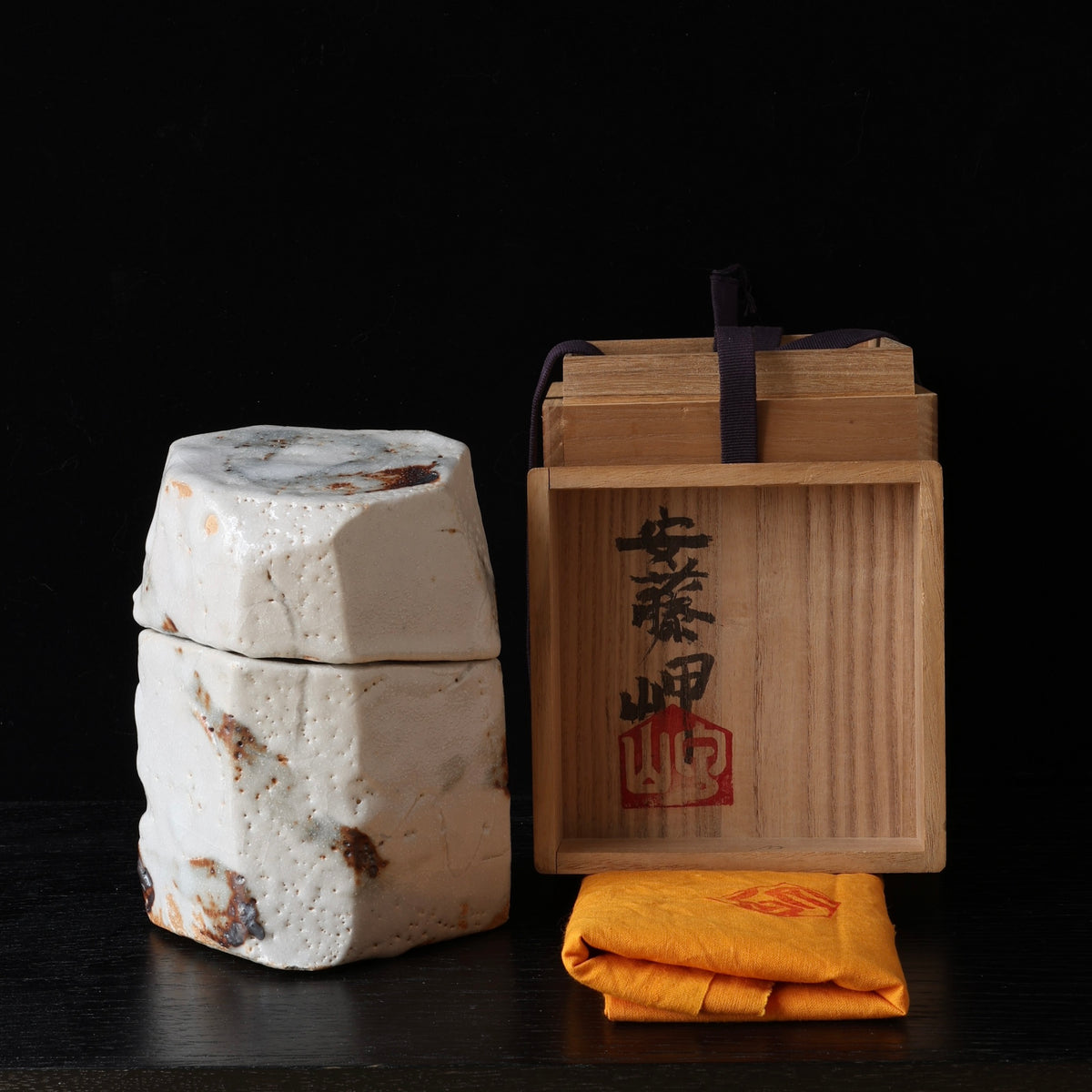
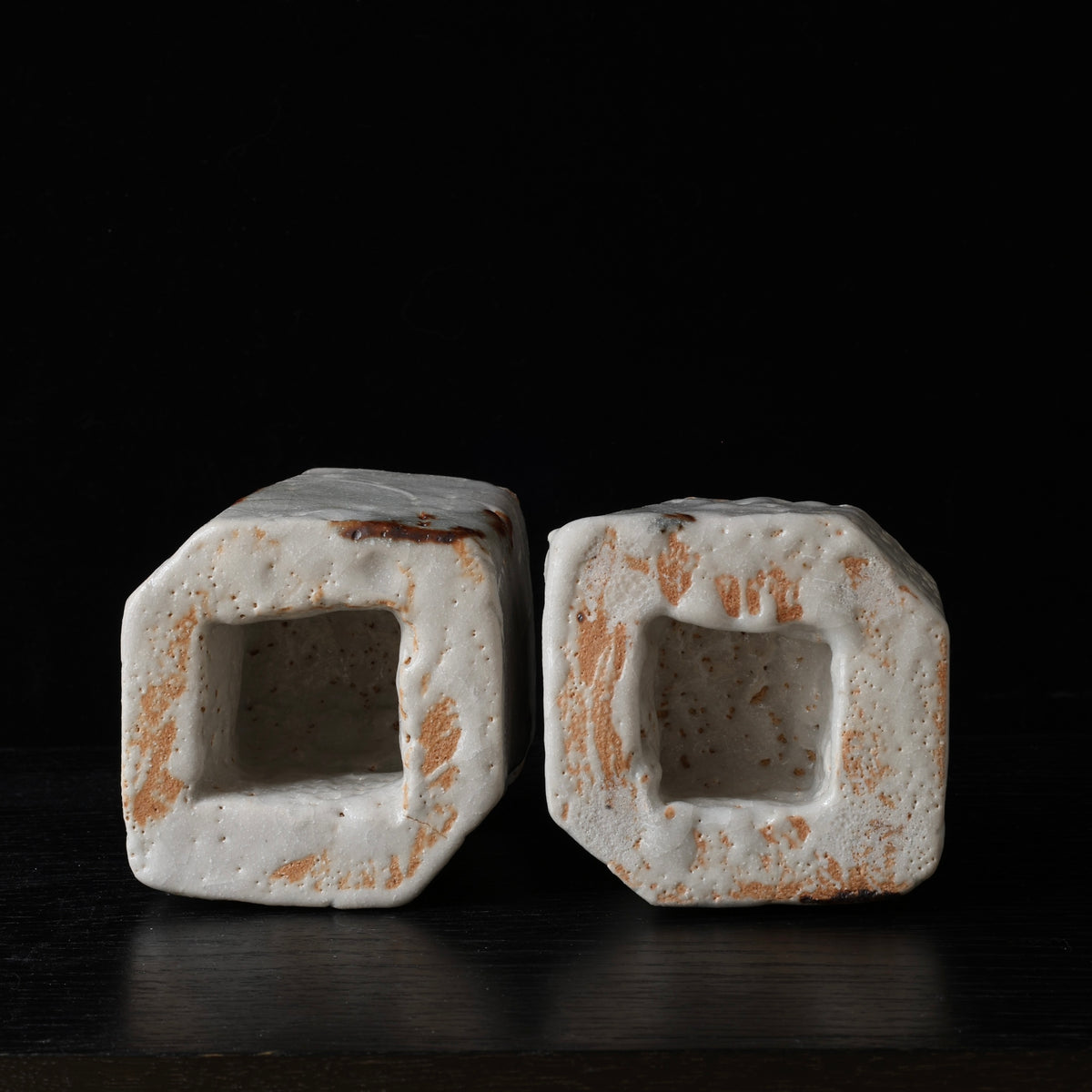
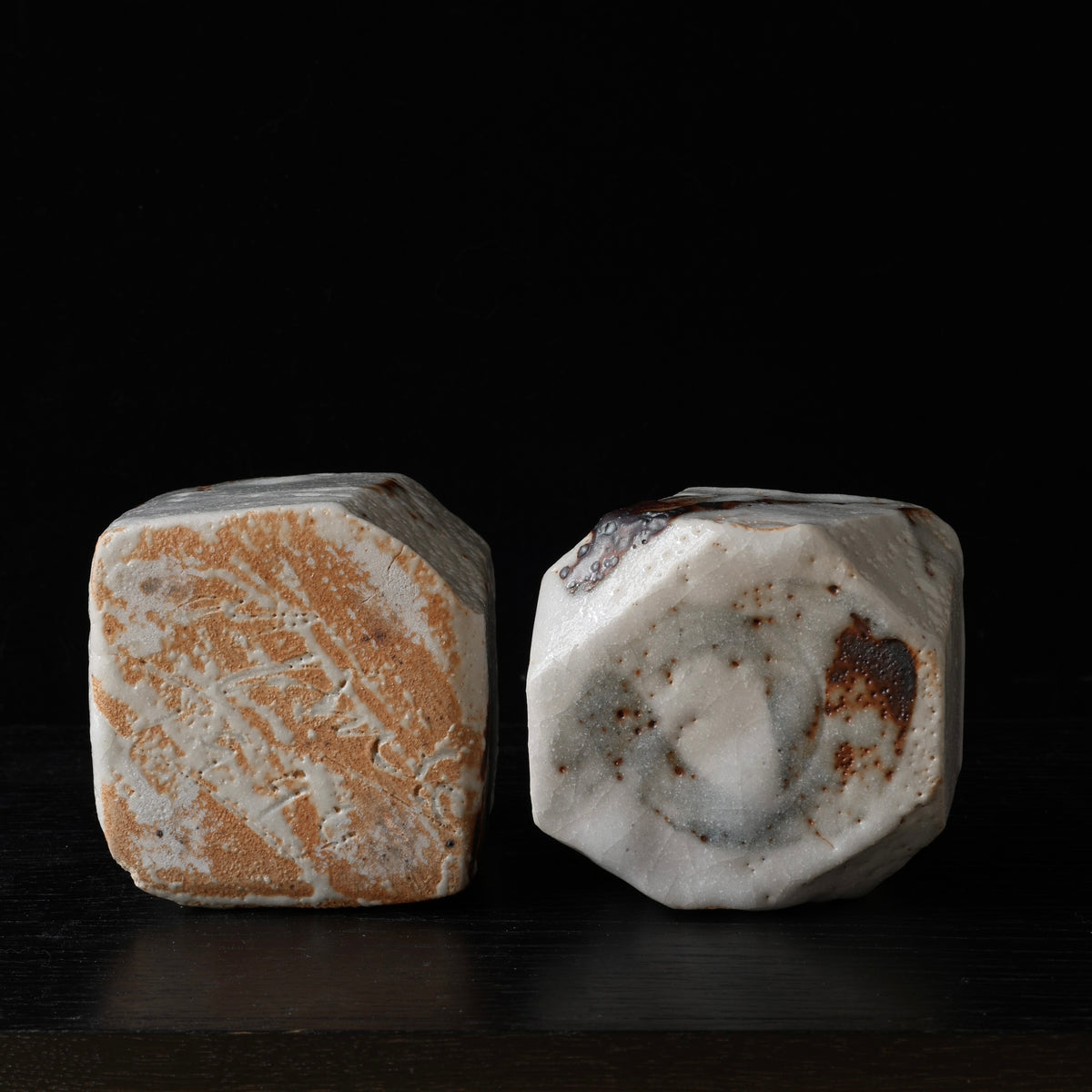
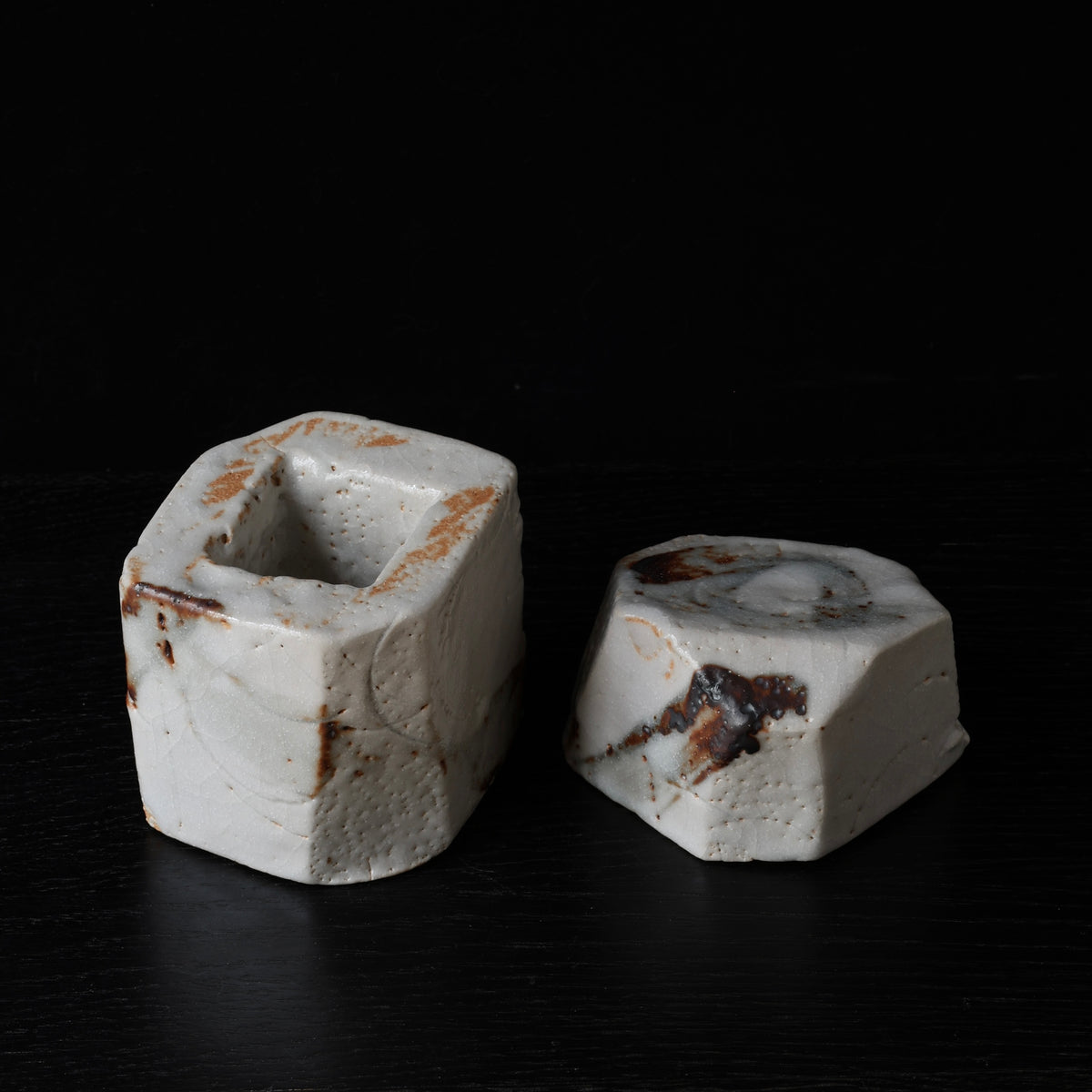
For this box, Misaki Andō designed two volumes with irregular contours, whose faces and angles retain the traces of direct work on the material. The body, deeply hollowed out, forms a receptacle with thick walls. The lid constitutes a second, independent volume that simply rests on the lower part. Their superposition relies on a precise fit of the forms, creating a deliberately asymmetrical composition. The two elements evoke sculpted clay blocks, with their softened angles and worked surfaces.
The white glaze largely envelops the surfaces without erasing their irregularities. Its thickness varies across the faces and reliefs, revealing small cavities, fine lines, and material effects characteristic of Shino. In places, the clay takes on orange hues, while dark brown, almost black concentrations punctuate the angles and certain edges. These variations arise from the interactions between the clay, the glaze, and the firing.
The deliberately irregular geometry of the box contrasts with the mineral softness of its glaze. The whole composes an object whose appeal extends beyond its function as a container, and which can be appreciated as a sculpture in its own right.
Presentation
This ceramic box is signed by the ceramicist beneath its base, where the date of creation, 1994, is also engraved into the material. It is accompanied by its tomobako (wooden storage box), bearing the name of the work, the signature, and the seal of the ceramicist. A tomonuno (protective cloth) marked with the artist's seal completes the set.
Place of manufacture
Japan
Dimensions
Height 17.5 cm - Width 13 cm - Depth 11.5 cm
Weight
3 kg (with box)
Materials
Ceramic
Period
Heisei era (1989-2019), date of creation: 1994
Condition
Very good condition
© Atelier Ikiwa – Laurence Corteggiani. Photos and text protected. All reproduction prohibited without authorization.
KNOW-HOW
Japanese ceramics, born more than 10,000 years ago, are a dialogue between earth and fire, a quest for harmony through imperfection.
With a wide variety of high-quality raw materials, such as rich clays and natural glazes, each region has developed its own techniques, reflecting the identity of its terroir.
Hand-crafted, these vases, made using the most precious Japanese ceramic techniques, bear the imprint of a master craftsman who is the heir to a thousand-year-old tradition. This living art embodies the essence of Japan, where history and nature unite in beauty.
Although deeply rooted in tradition, these exceptional Japanese ceramic vases, signed by very big names, have a resolutely contemporary spirit while preserving their authenticity, incredibly decorative and wonderfully timeless sculptural pieces.
DELIVERY AND PAYMENT OPTIONS
Shipping
Free shipping in mainland France for purchases over €200. Shipping with Colissimo, choice of Home delivery or Relay Point, package delivered against signature or unique code for valuable items. Orders are generally sent within 2 business days, except for art photographs which are printed on demand and special cases which will be announced in the banner at the top of the site (e.g., in case of absence). Learn more >
Payment Options
Secure card payment with Shopify Payments and 3D Secure technology.
Visa, MasterCard, American Express, Cartes Bancaires, PayPal, Apple Pay, Shop Pay and Klarna.
Klarna: pay in 3 interest-free installments or within 30 days, for purchases up to €1,500, subject to Klarna's approval. You will be redirected to Klarna to log in or create an account and confirm your payment.
PayPal: You will be redirected to PayPal to log in and confirm the payment. New users can create an account during checkout.
Your invoice will be sent with your order
Returns and Exchanges
14 days to change your mind. Learn more >
CARE INSTRUCTIONS
Handle with care. Rub gently with a soft cloth. Do not place near a heat source.
Choose options
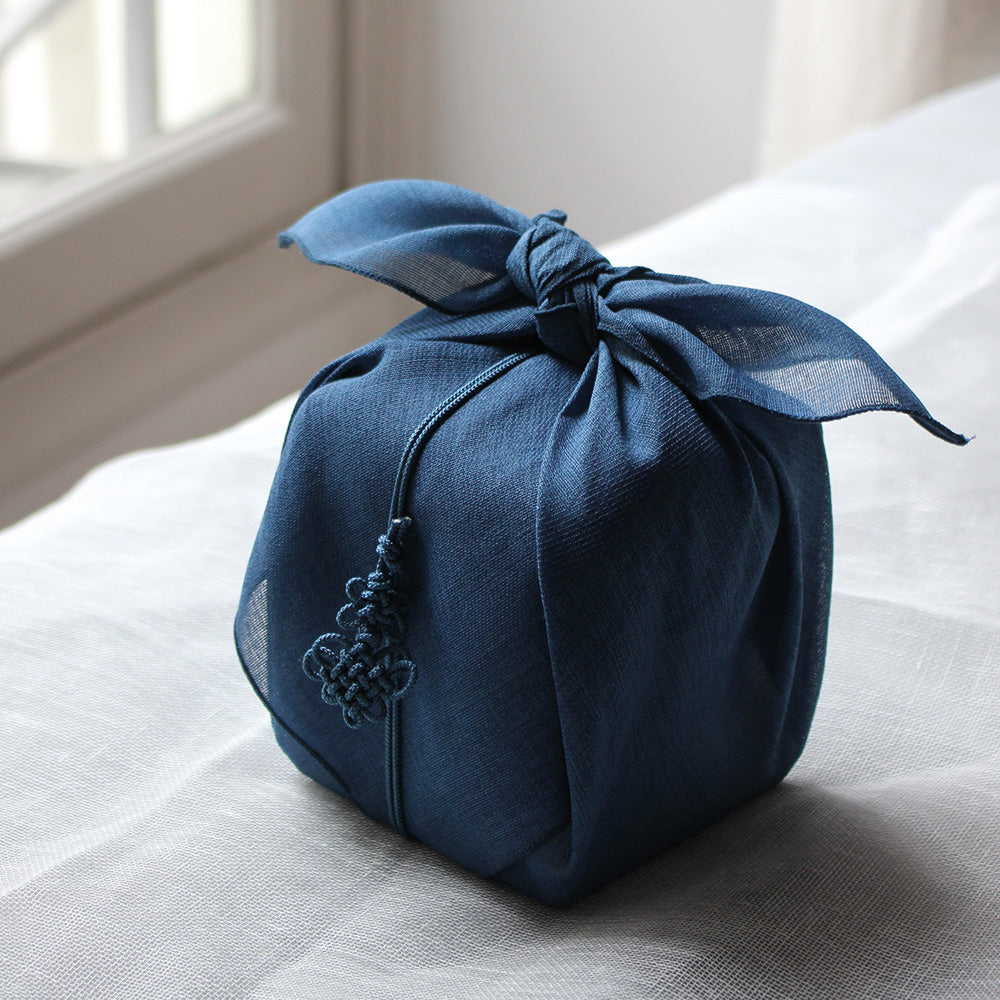
The art of wrapping
The exceptional items are wrapped in a beautiful fabric beautifully knotted using the little-known art of Korean pojagi and decorated with a delightful maedup (Korean ornamental knot). Details and conditions >

WRAPPING
Exceptional items are wrapped in textiles tied according to the Korean pojagi art