
Decoration and Techniques
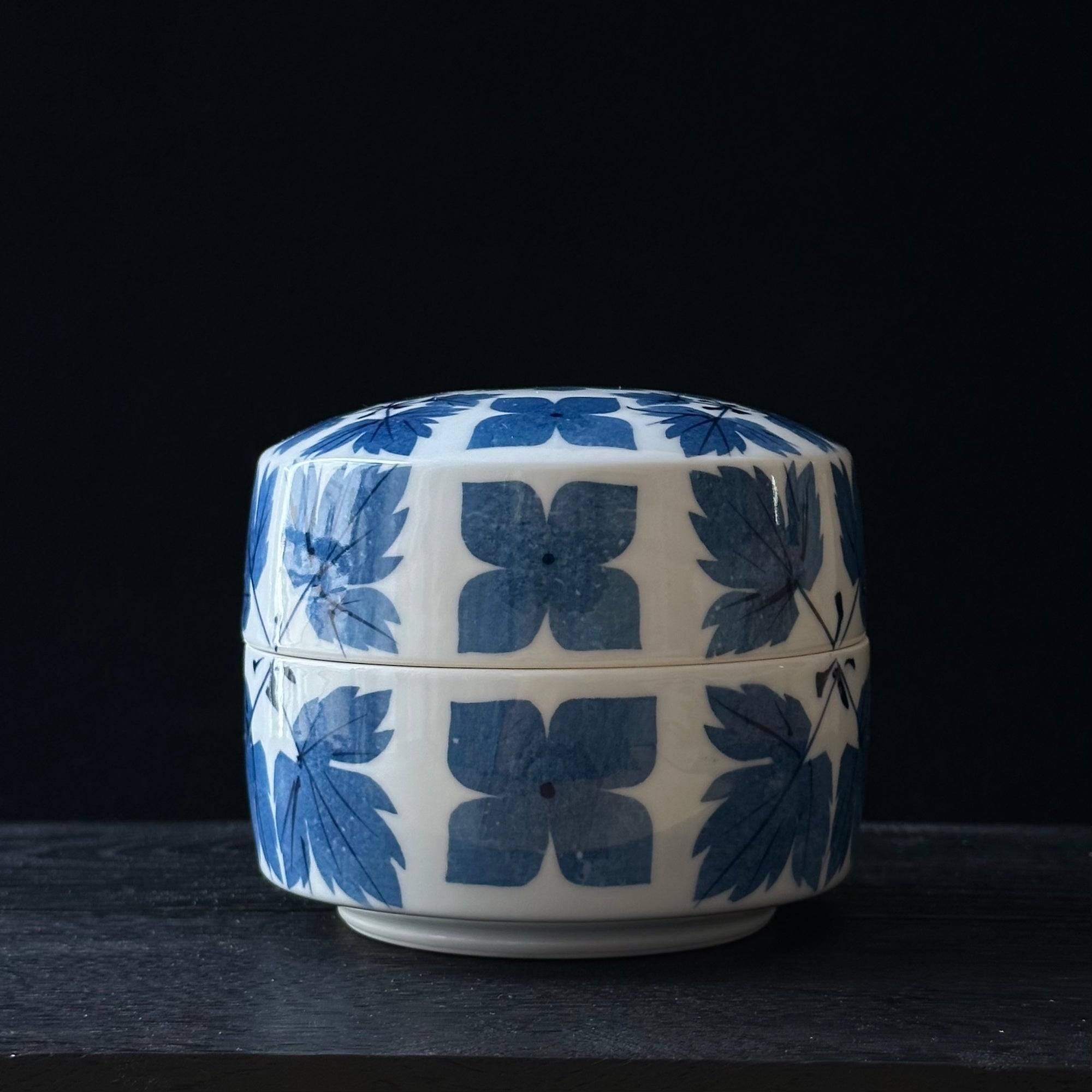
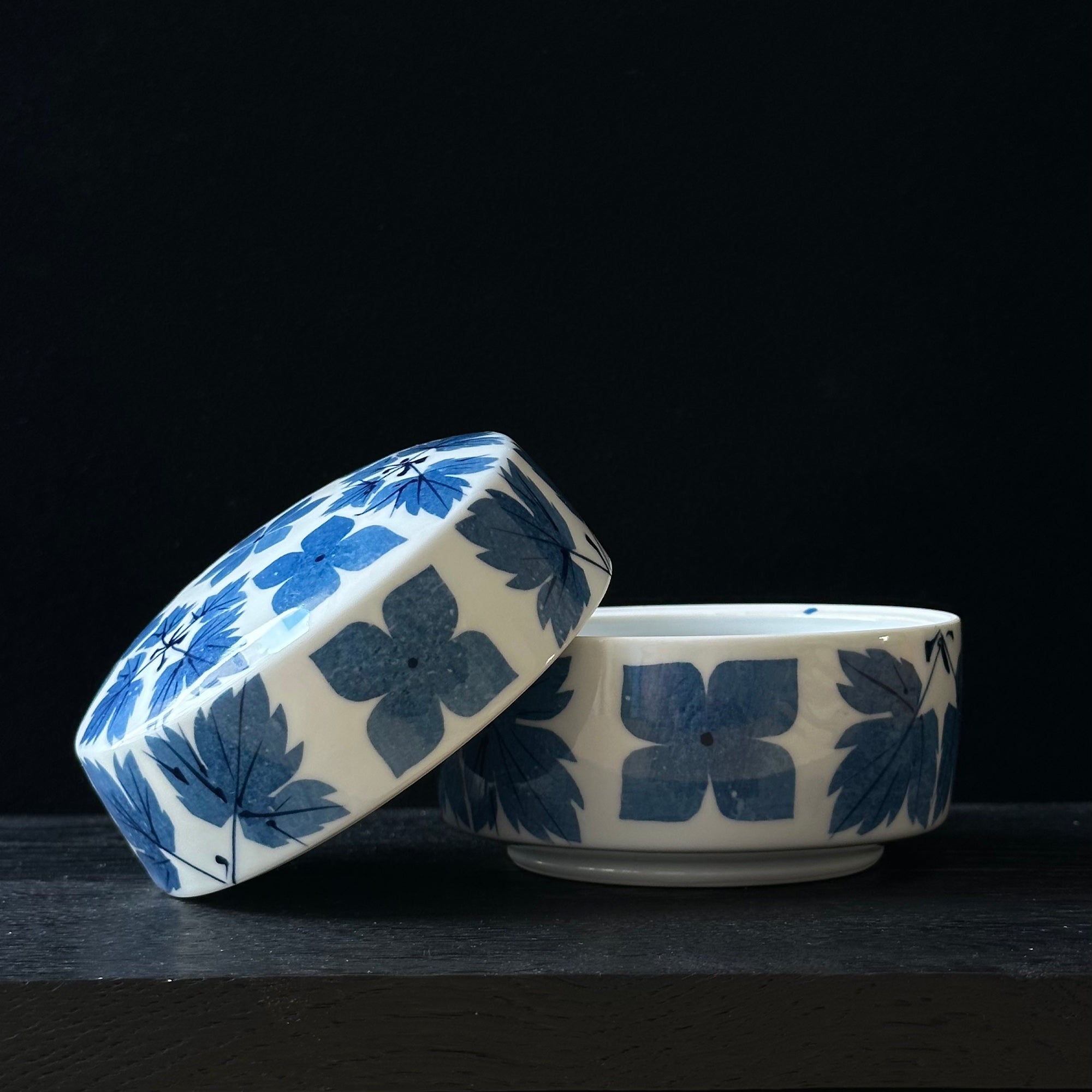
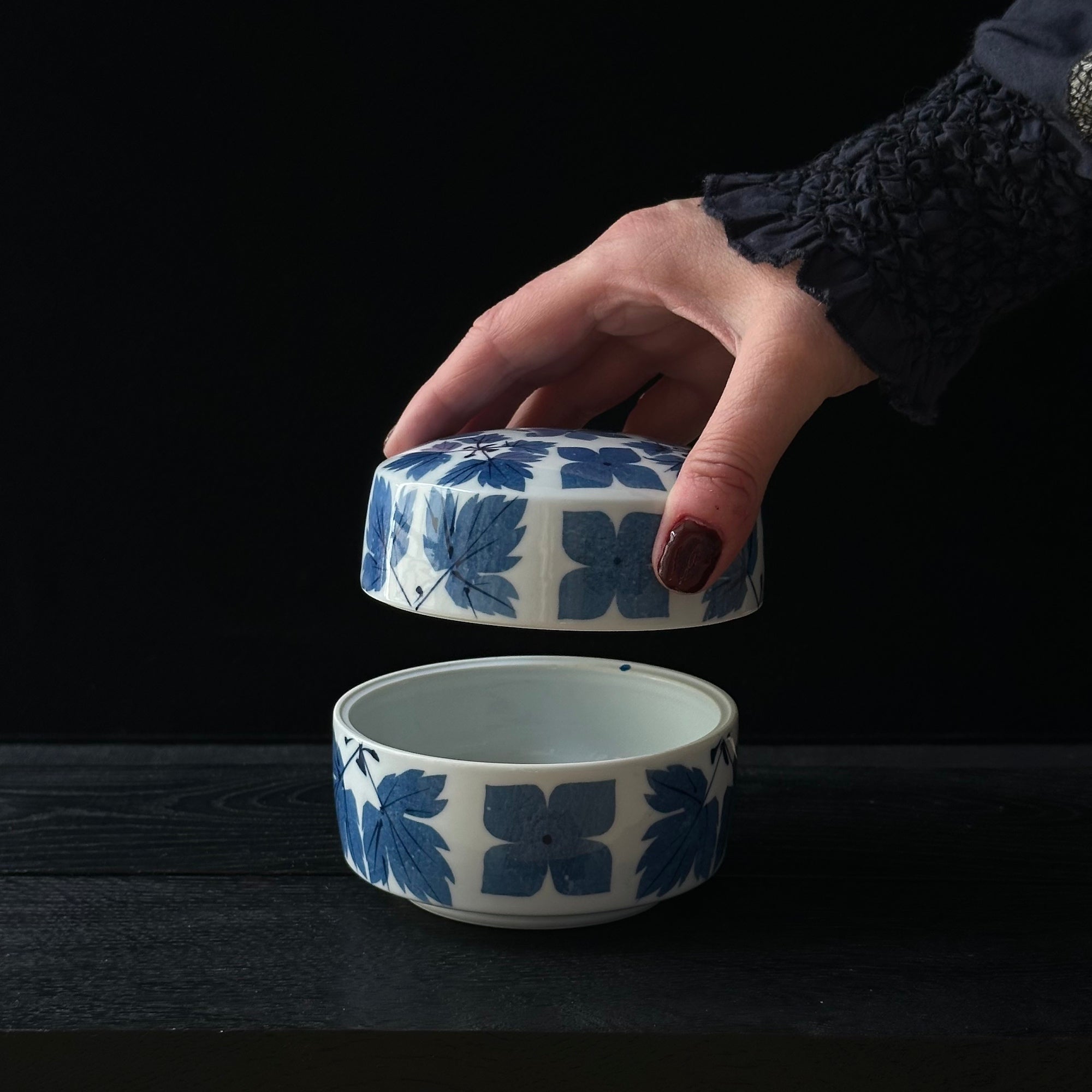
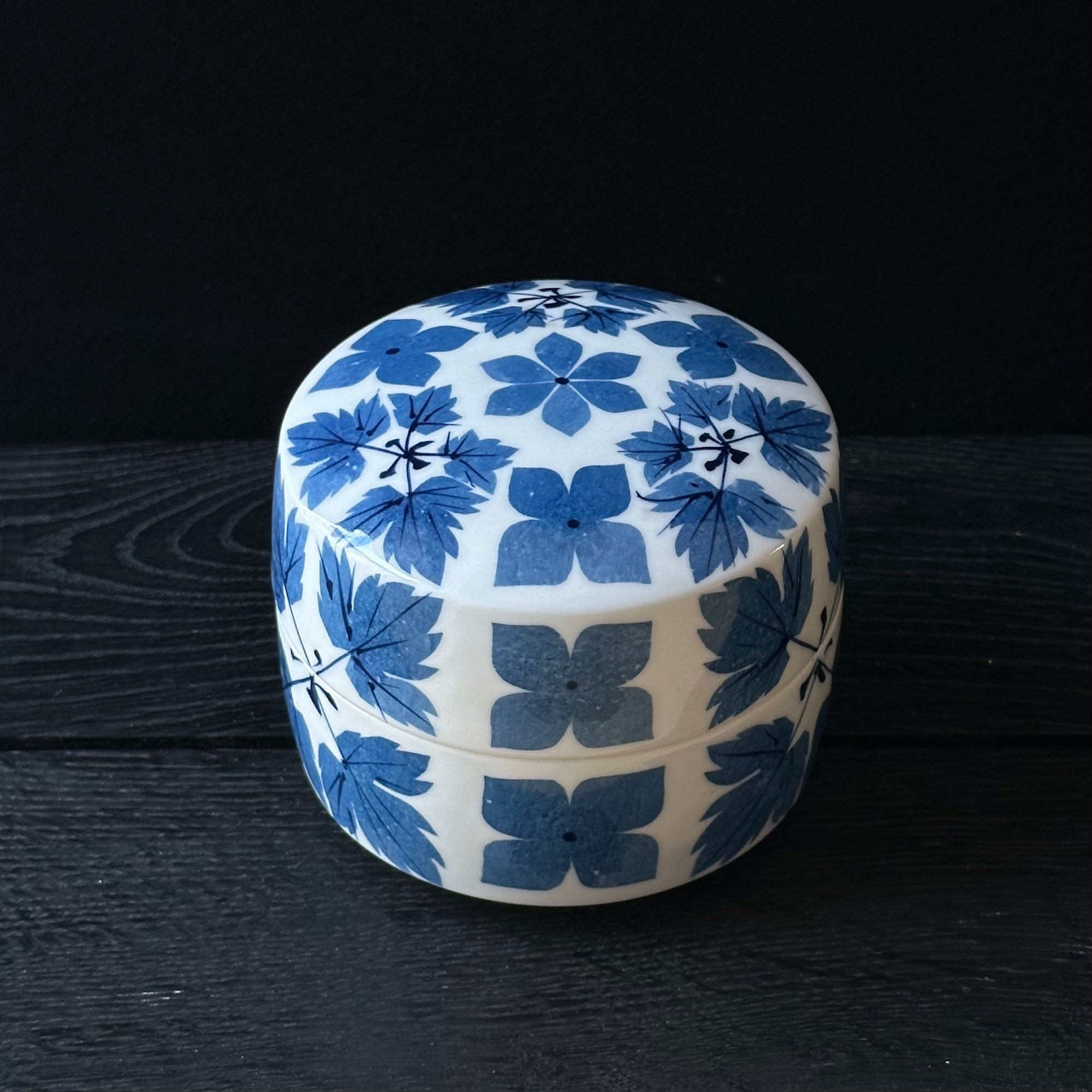
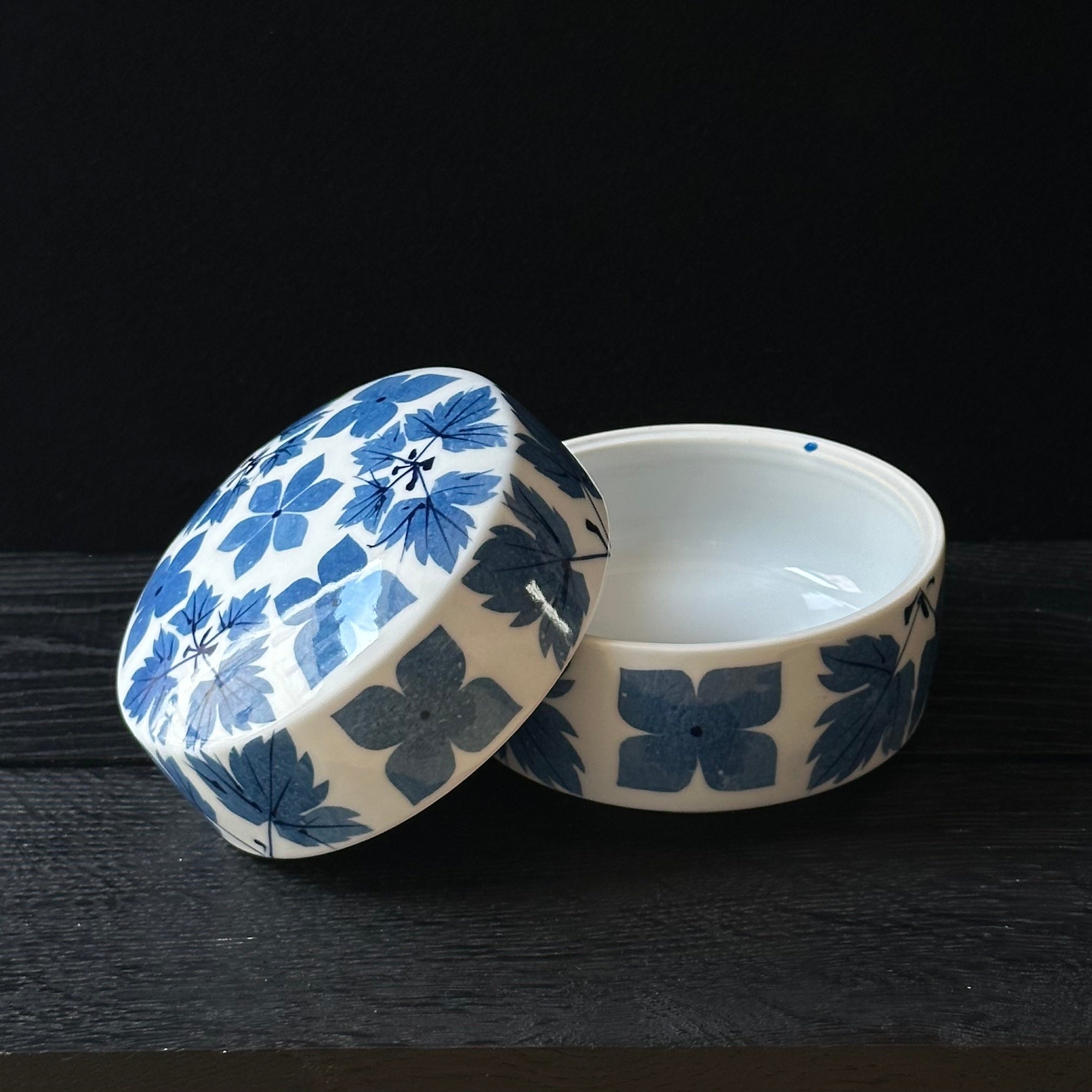
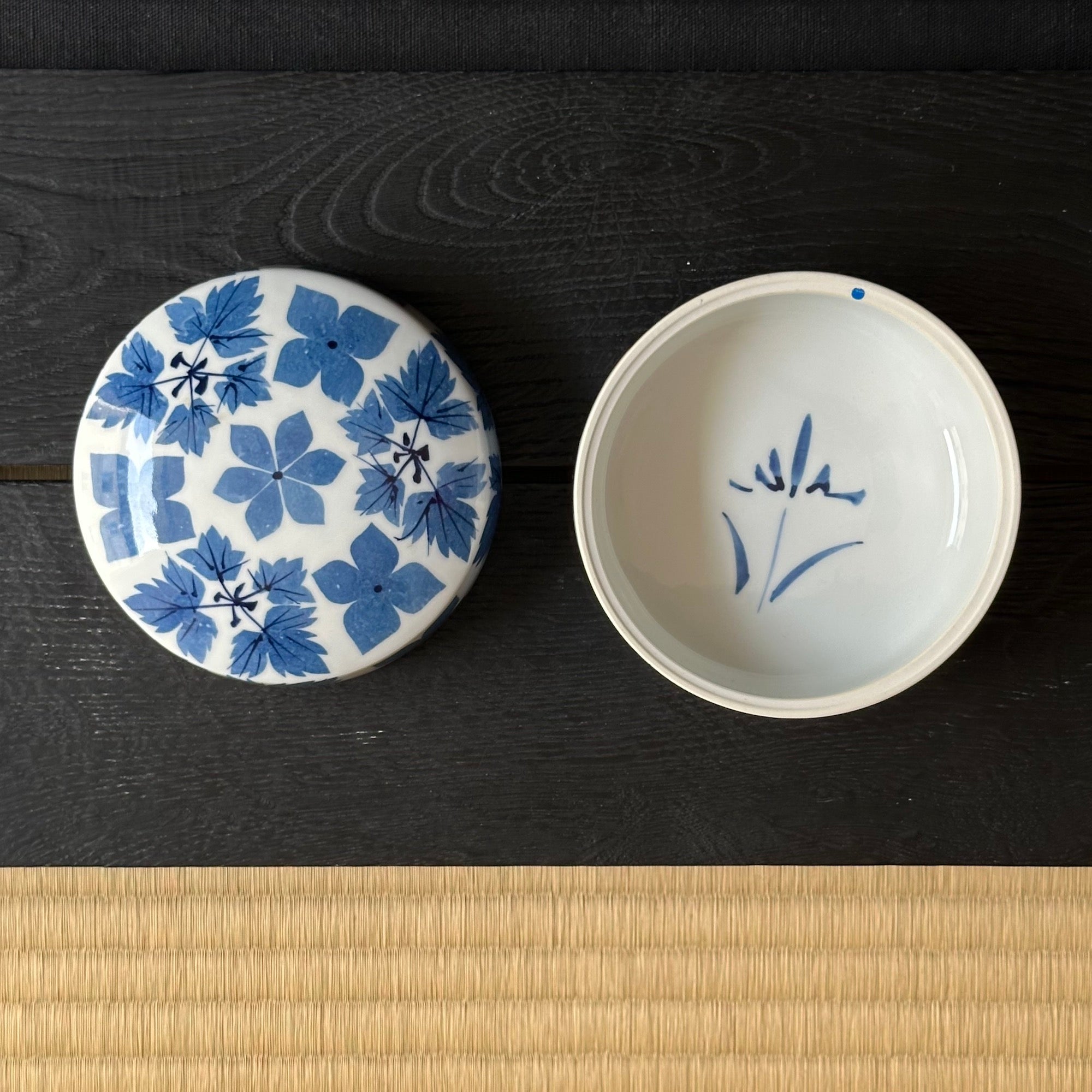
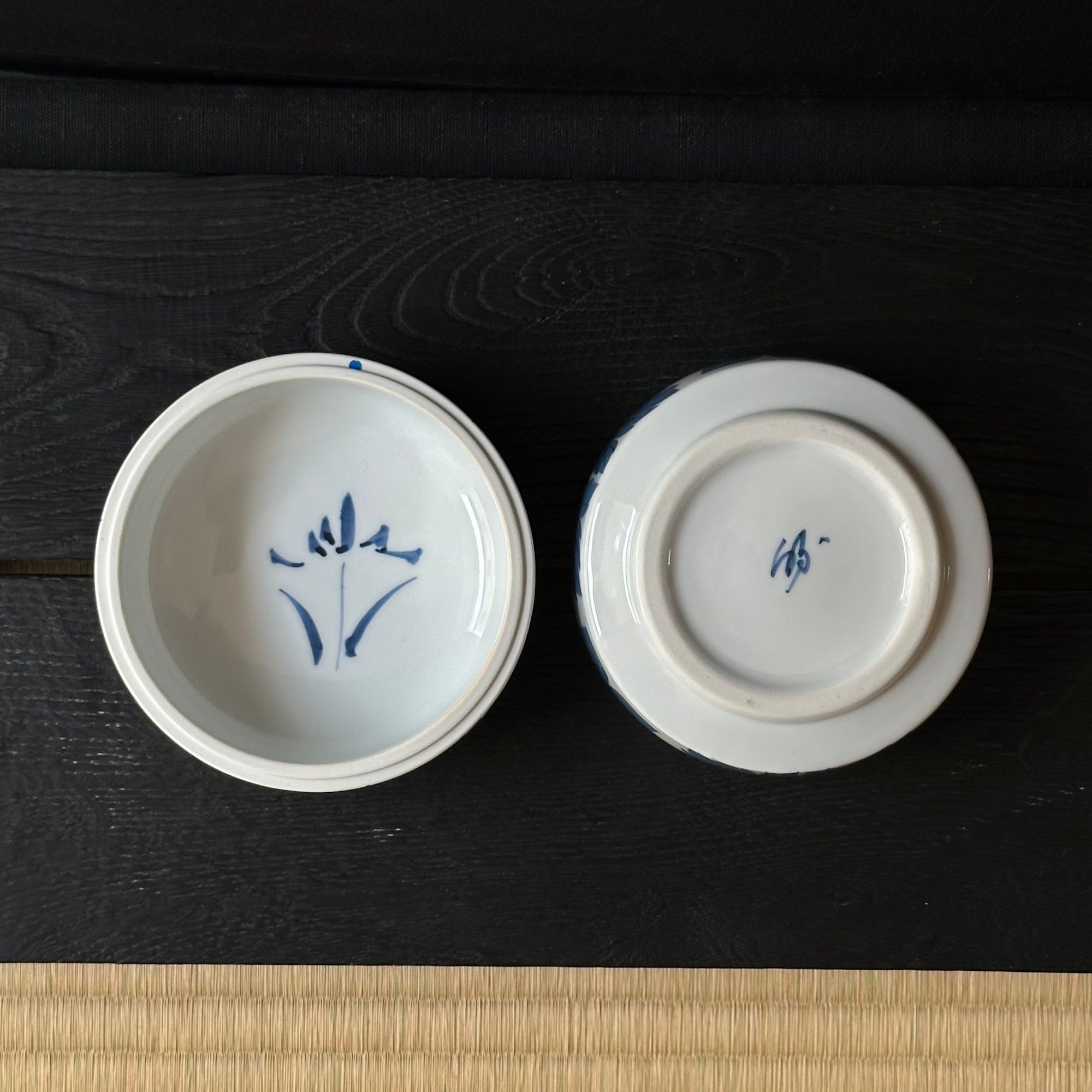
The form is created through a precisely executed kurinuki (carving): the volume is first carved out of a solid block, then patiently hollowed out, so that the walls retain substance while the lid fits perfectly (a blue dot inside each part indicates proper alignment). Next comes the washi zome (stenciling), applied to the almost dry clay: washi paper masks guide the application of gosu (cobalt) according to the sometsuke principle (underglaze blue), which gives the petals and leaves their velvety, flat areas with edges naturally softened by the fibers; the veins and centers of the flowers, enhanced with a stronger brushstroke, add extra density to the decoration. A translucent glaze unifies the whole, preserves the clarity of the white, and gives depth to the blue.
Form and Use
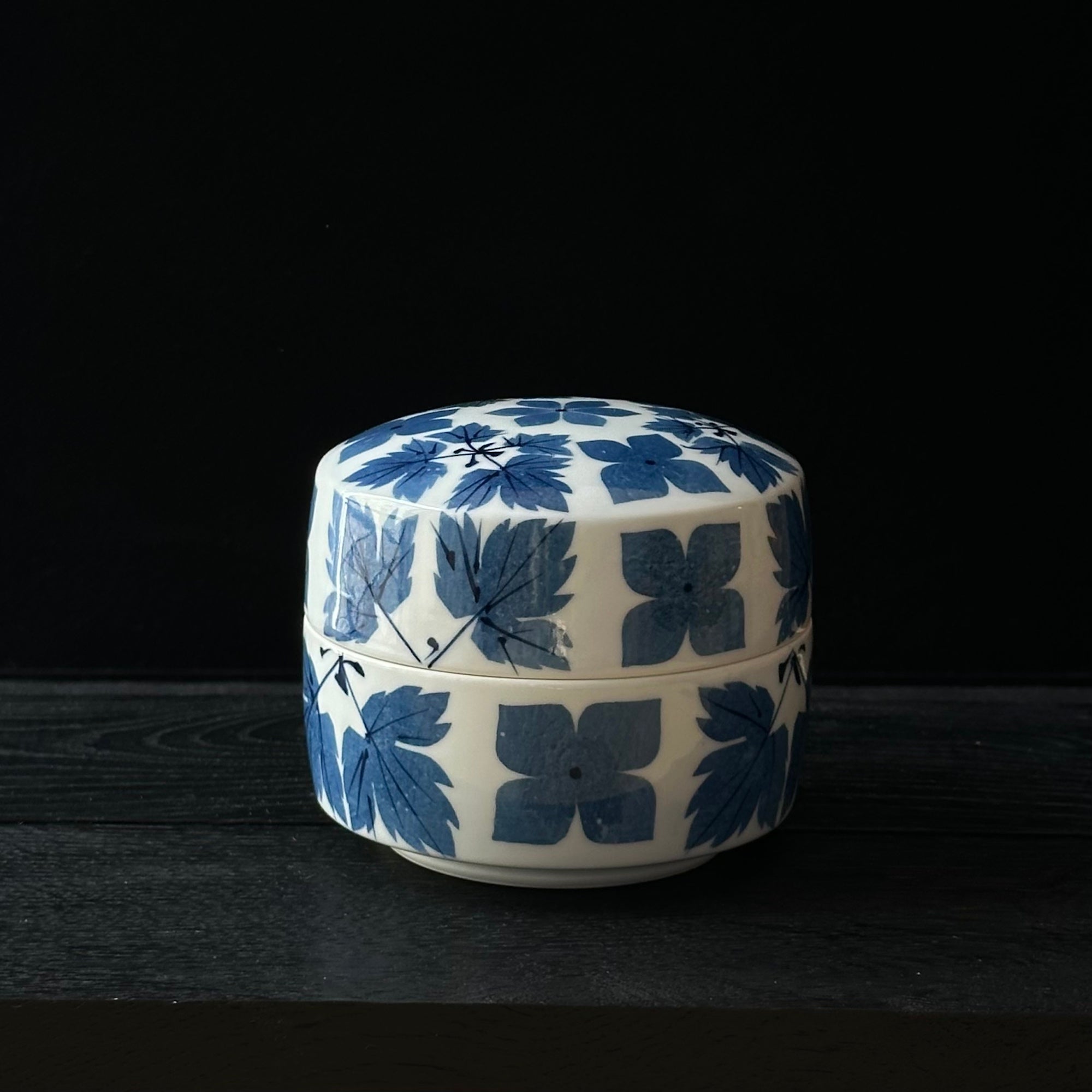
The box is round, with softened angles, and a very slightly domed lid whose line complements the volume. Designed for serving wagashi (confections) during the tea ceremony, it highlights the regularity of the pattern that crosses the junction between the lid and the body. Its proportions give it a strong visual presence, and it is perfectly suited for contemporary decorative and practical use.
The Artisan
Katsumi Eguchi (Saga, Kyūshu, 1936), a full member of the Japan Kōgei Association, formalized the use of washi zome in ceramics while developing pieces using kurinuki; his work, particularly on porcelain, was recognized in 1994 by Saga Prefecture as an Important Intangible Cultural Property for "washi dyeing for ceramic decoration." Regularly selected and awarded at the Japan Traditional Craft Exhibition, he received the Asahi Award, the Prime Minister's Award at the West Japan Ceramic Art Exhibition, and the Japan Ceramic Society Award (1985). In May 2024, the Kyūshū Ceramic Museum (Arita) dedicated a special exhibition to him for his 88th birthday, retracing seventy years of creation; his workshop is located in Takeo, Saga.
Presentation
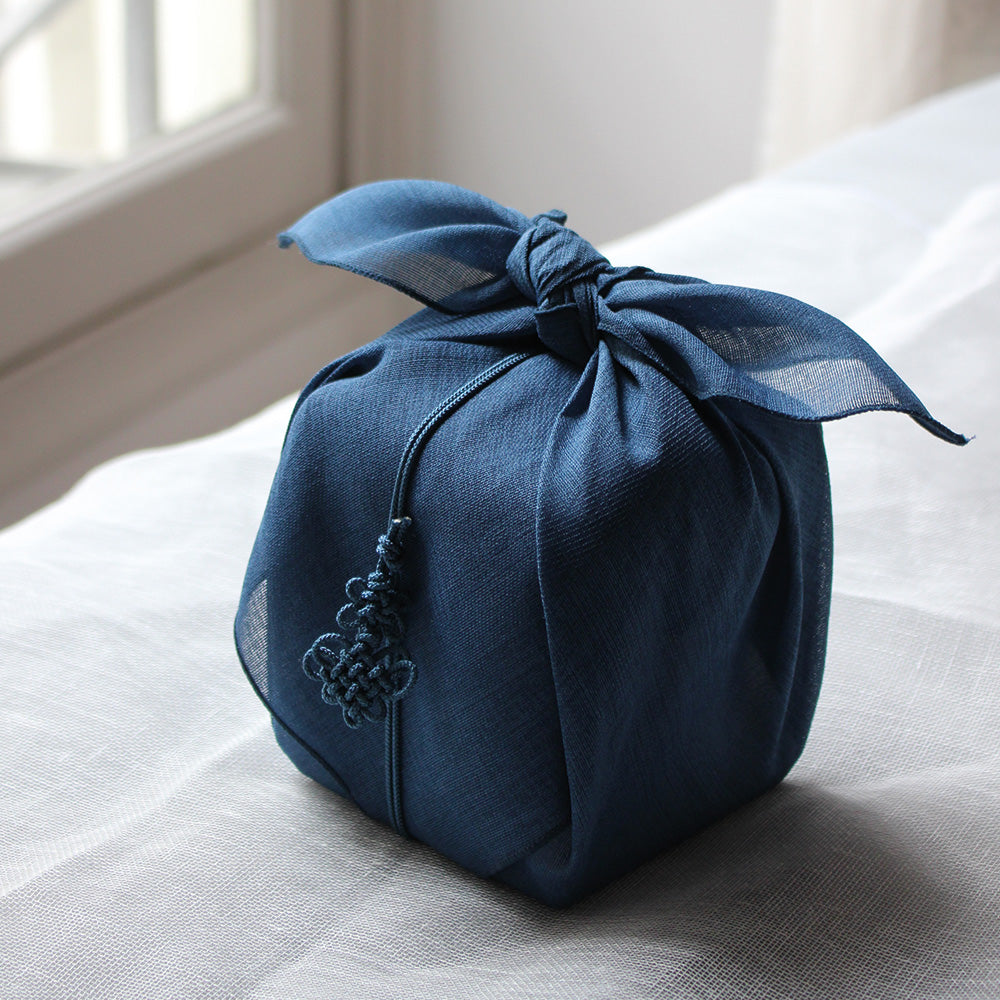
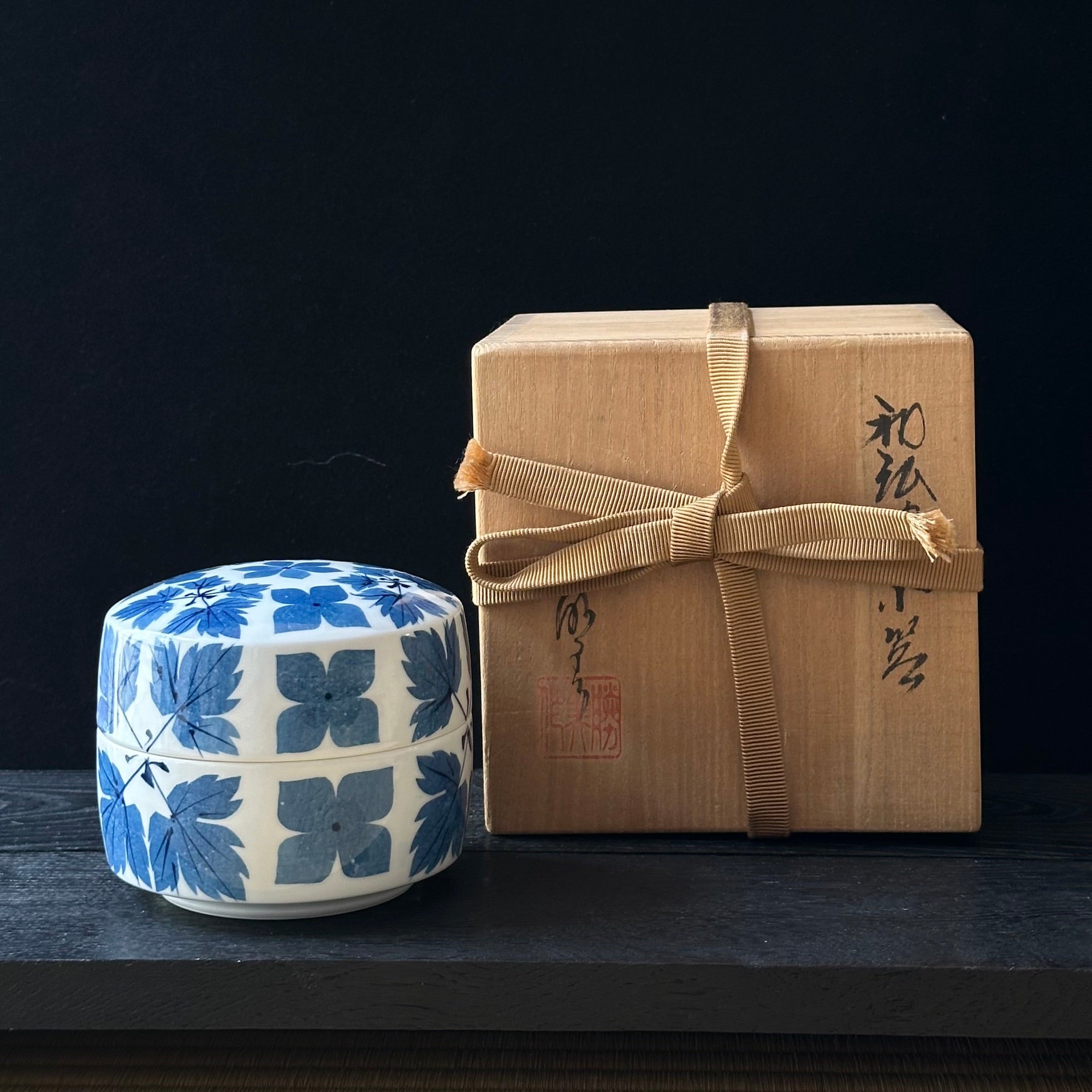
The piece is signed by the artisan on the base. It is presented with its protective tomobako box bearing the name of the work, the artisan's signature, and seal, and closed with a sanadahimo.
Place of Manufacture
Japan, Saga Prefecture, Takeo City
Period
Shōwa Era (1926 - 1989)
Dimensions
Diameter 10.5 cm - Height 8 cm
Weight
Total 0.9 kg.
Materials
Porcelain, cobalt gosu, translucent glaze
Condition
Good condition.