
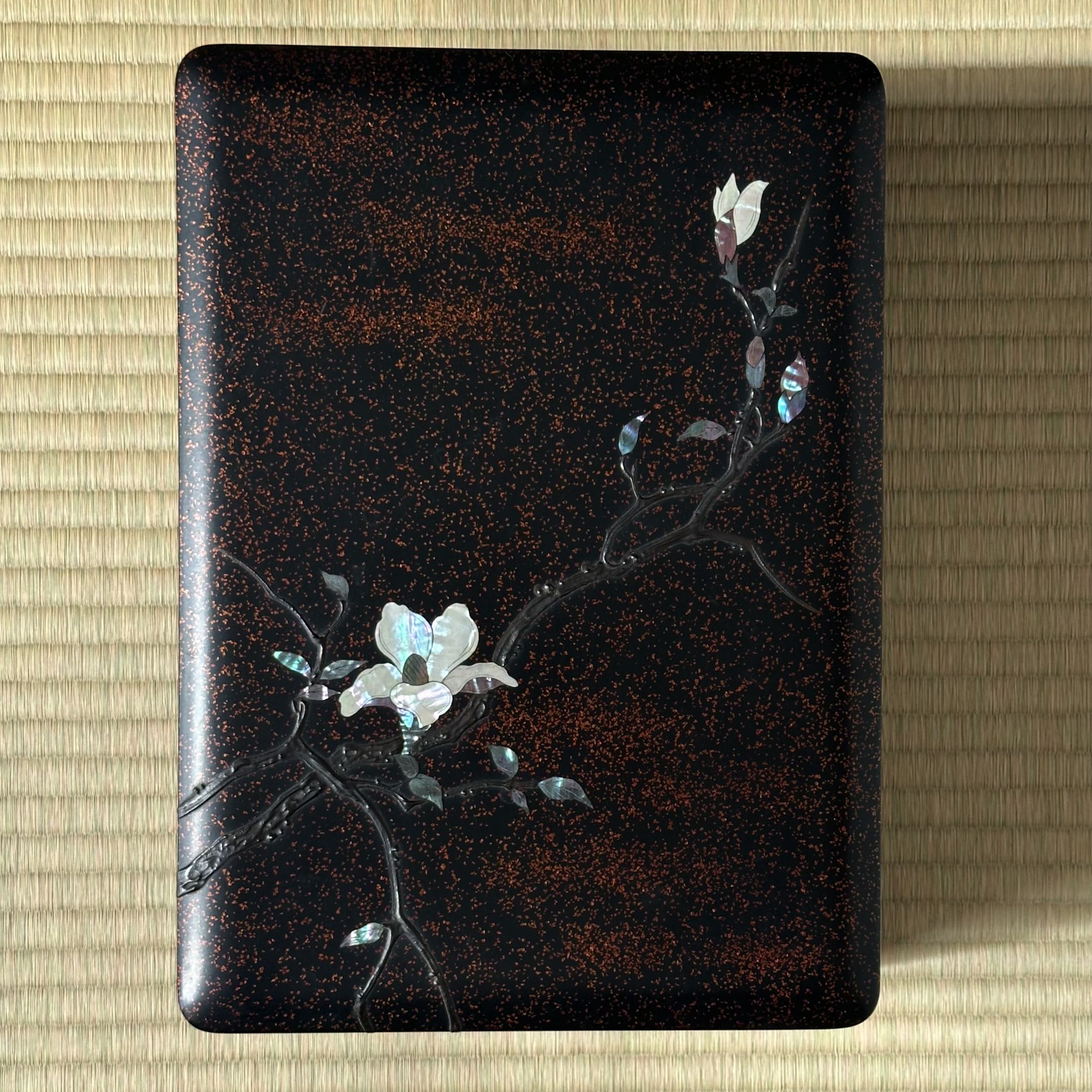
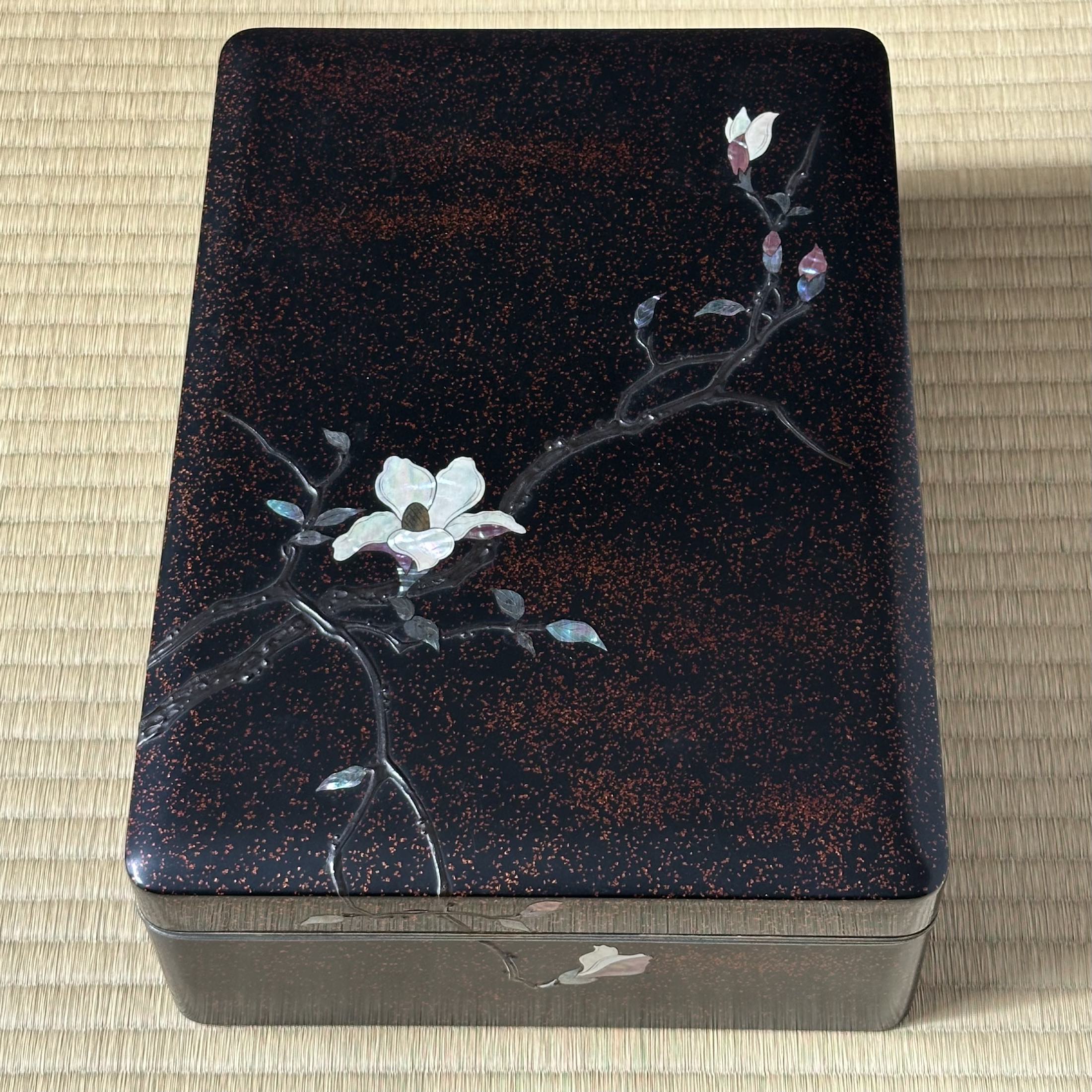
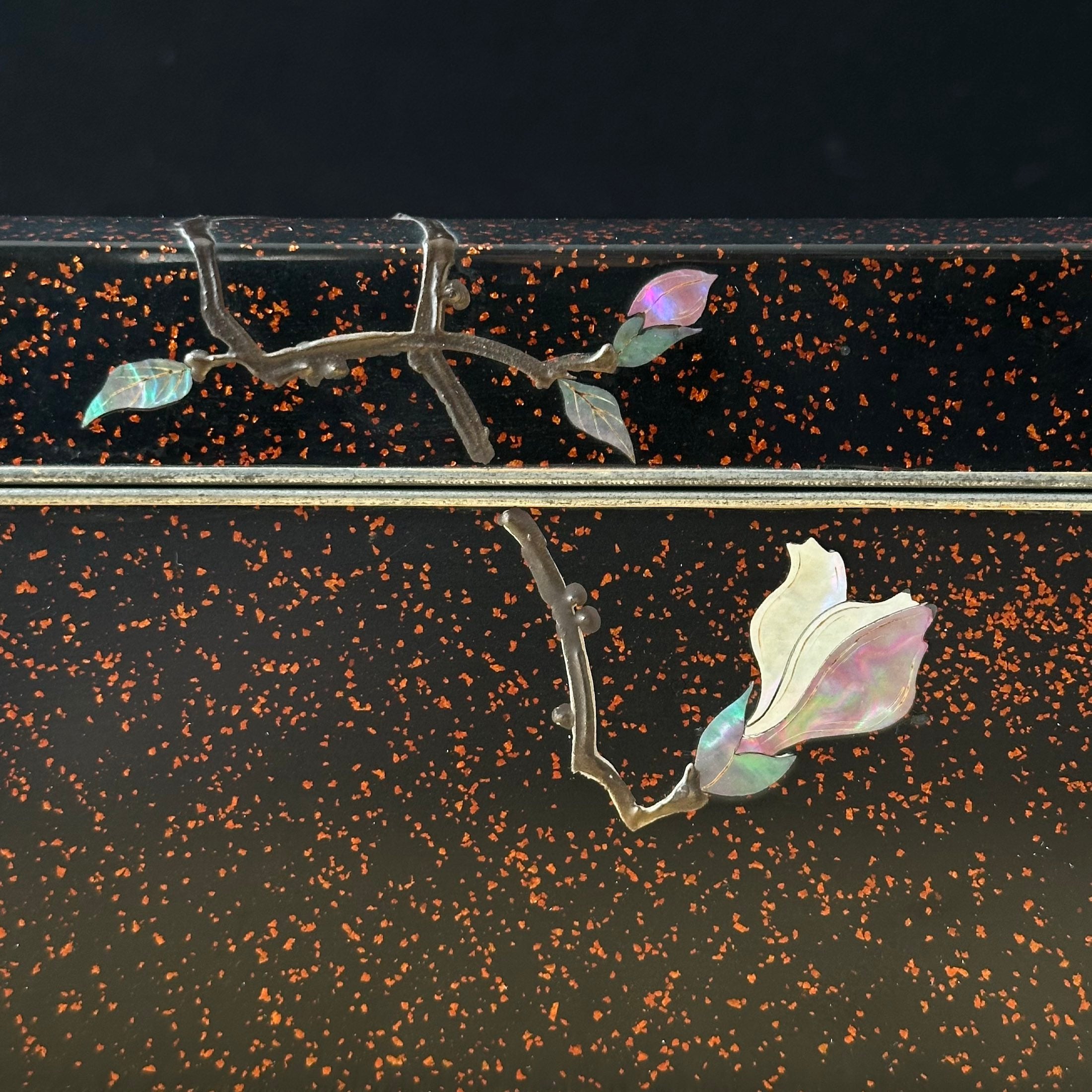
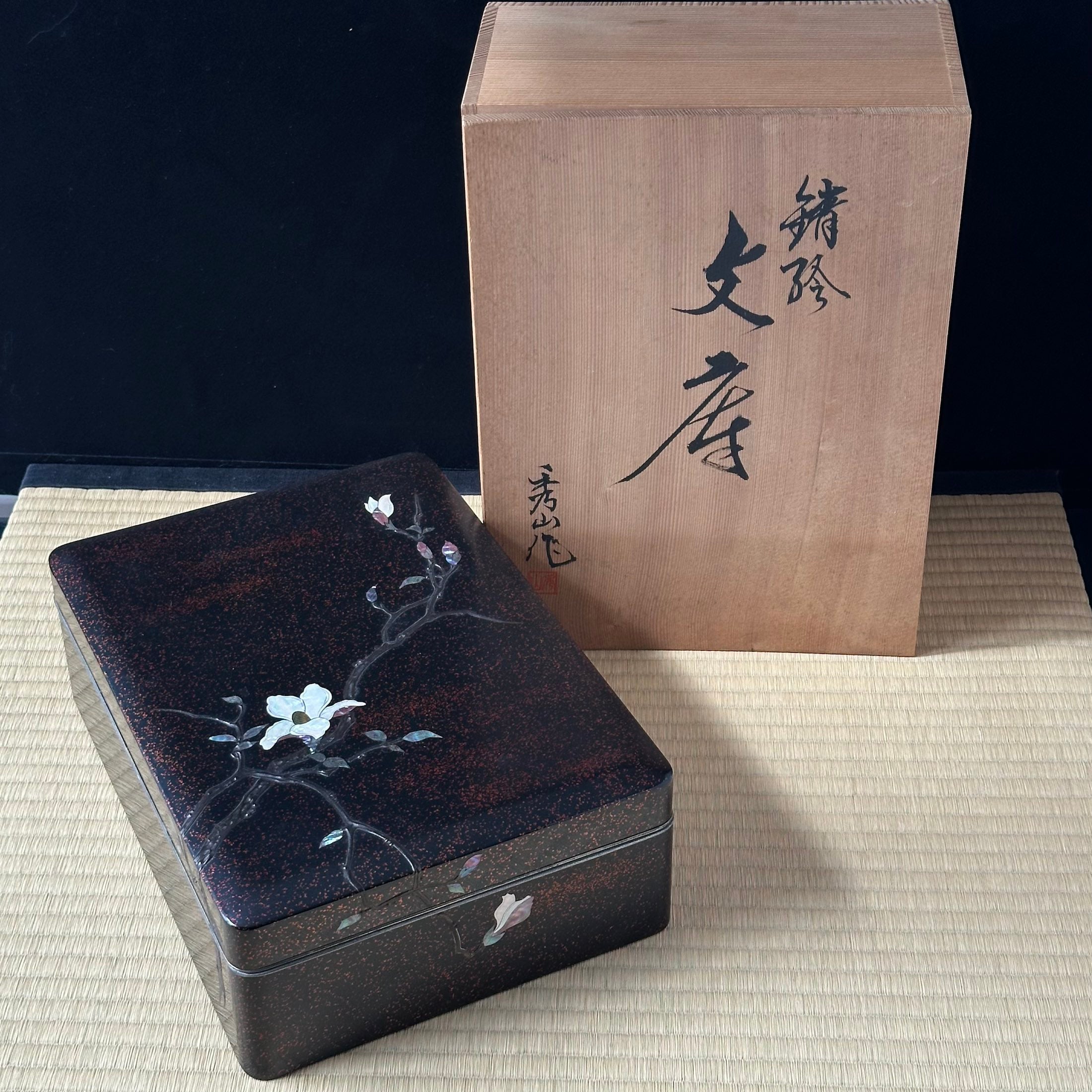
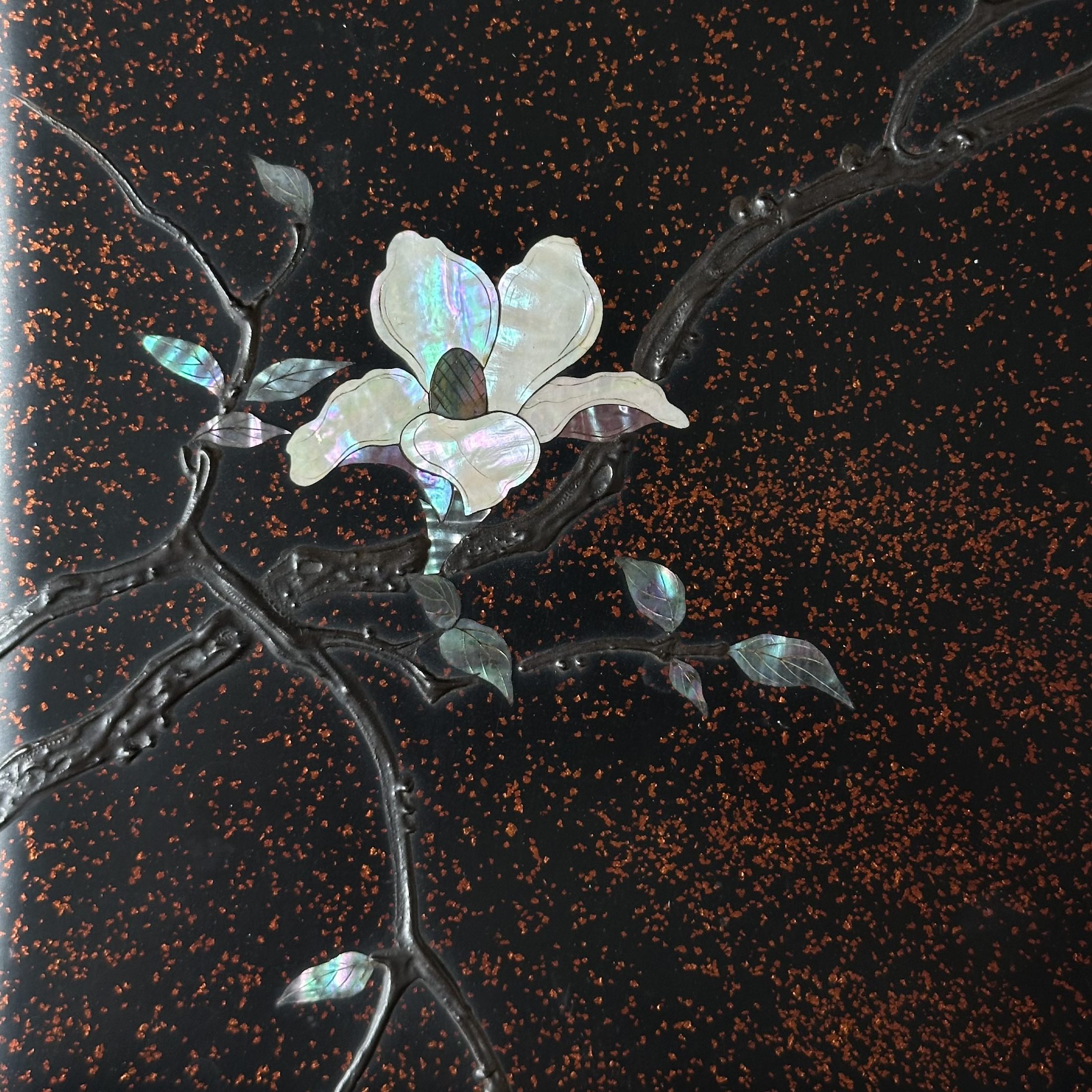
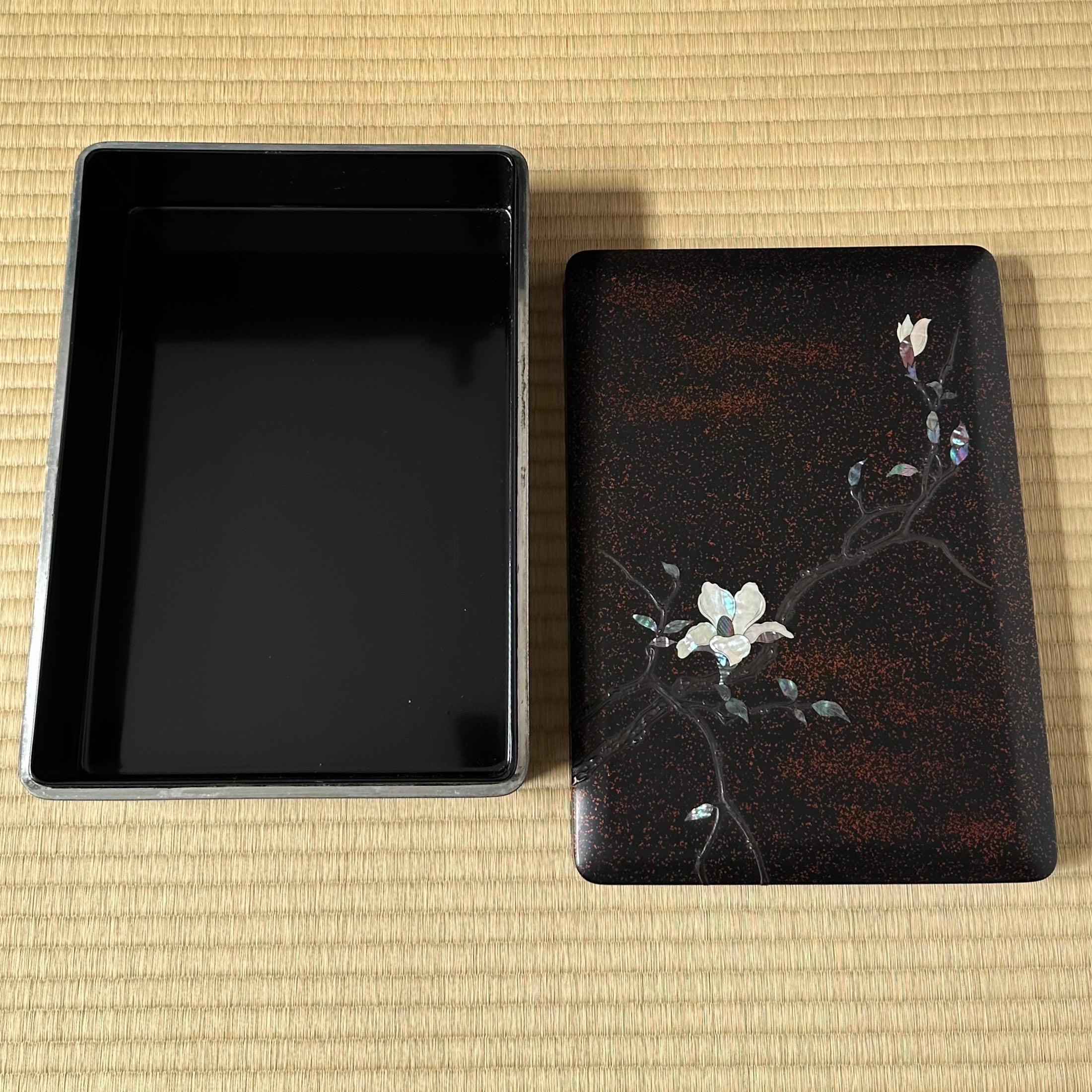
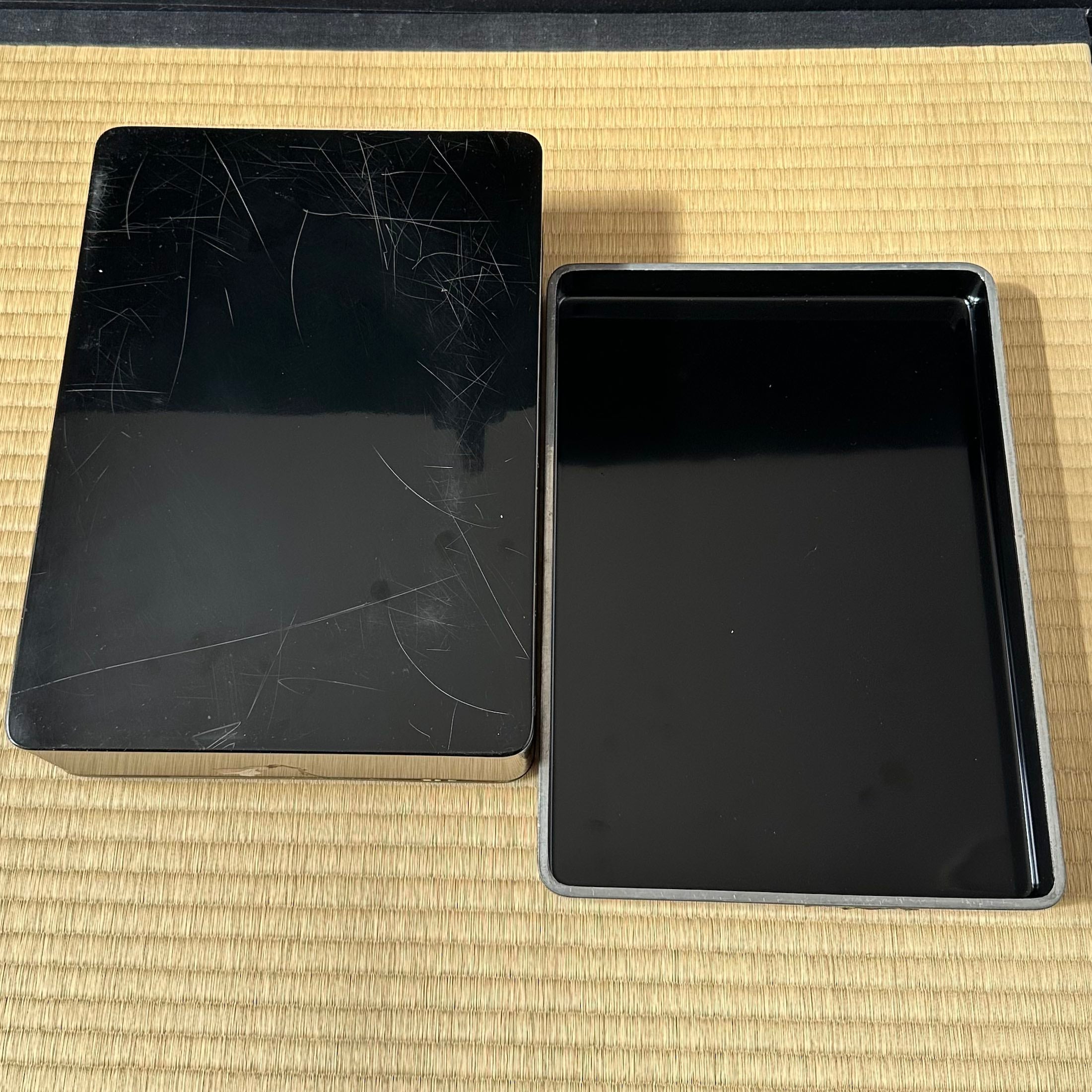
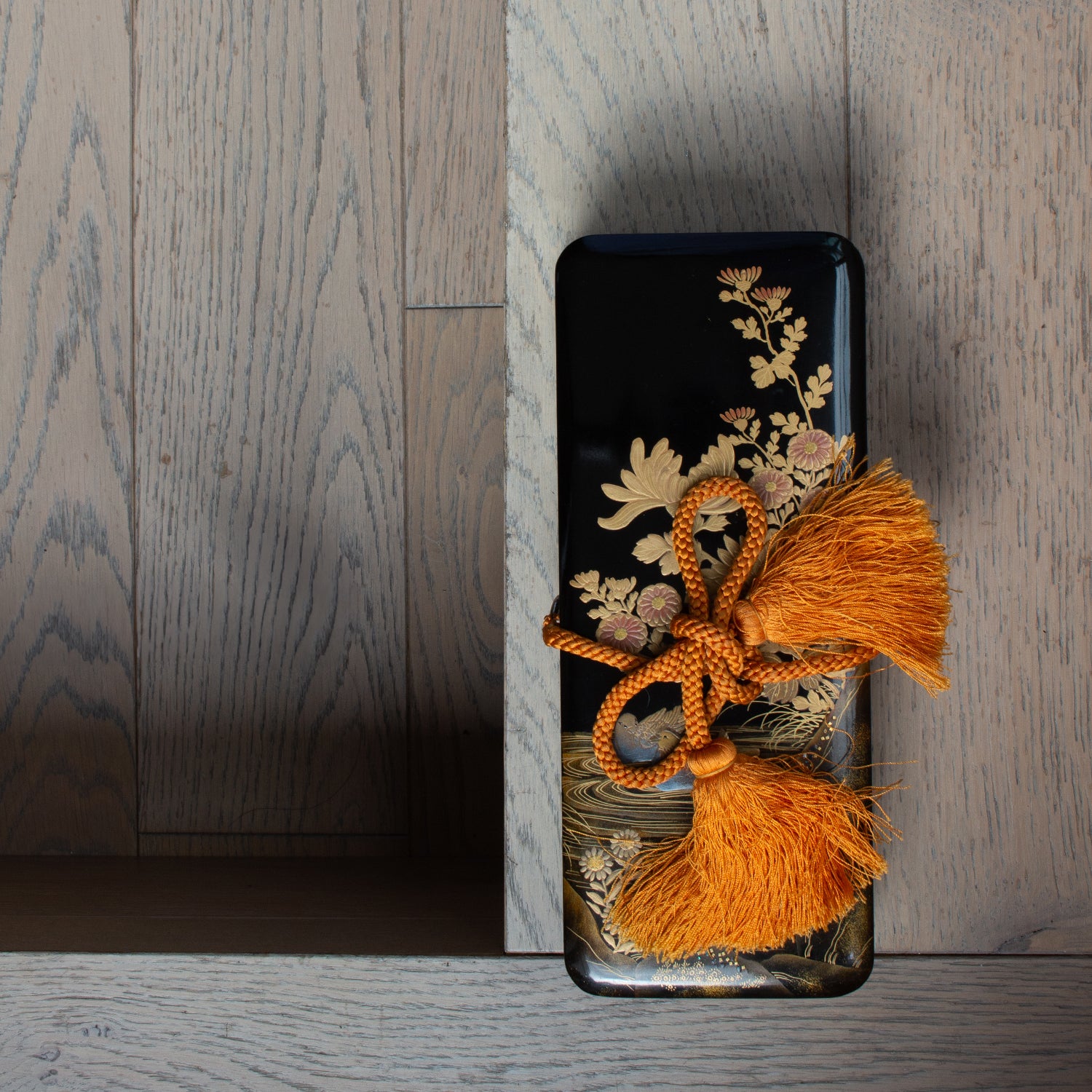
Urushi lacquer bunkobako (Japanese document box) with kin hirame (gold powder) and aogai nuri (mother-of-pearl) decoration of kobushi (magnolia) by Musashigawa Shūzan
This bunkobako (a large Japanese box used to store papers and precious objects) by Musashigawa Shūzan, a Takaoka lacquer artisan renowned for his mother-of-pearl work, illustrates a particularly rich approach to urushi lacquer. On a black background adorned with kin hirame (flat gold powder), a superb kobushi (magnolia) decoration unfolds, combining fine mother-of-pearl and sculpted reliefs, where light constantly plays with the surface. The quality of execution and the masterful combination of techniques give this piece a presence that is at once dense, luminous, and highly characteristic of contemporary Takaoka production.
The Artisan
This box was created by Musashigawa Shūzan, the artist name of Musashigawa Yoshinori, born in 1949 in Takaoka. In 1972, he joined the family workshop and specialized in mother-of-pearl work, developing a practice combining aogai nuri, raden, and maki-e. Recognized as a traditional artisan in 1996, he subsequently received several distinctions for the quality of his work. The city of Takaoka, in Toyama Prefecture, is historically renowned for its artisanal know-how, particularly metalwork and lacquerware, and constitutes an important production center, though less known than other major regions of Japanese lacquer. This piece is part of this tradition, with particular attention paid to the effects of material and light.
Technique and Decoration
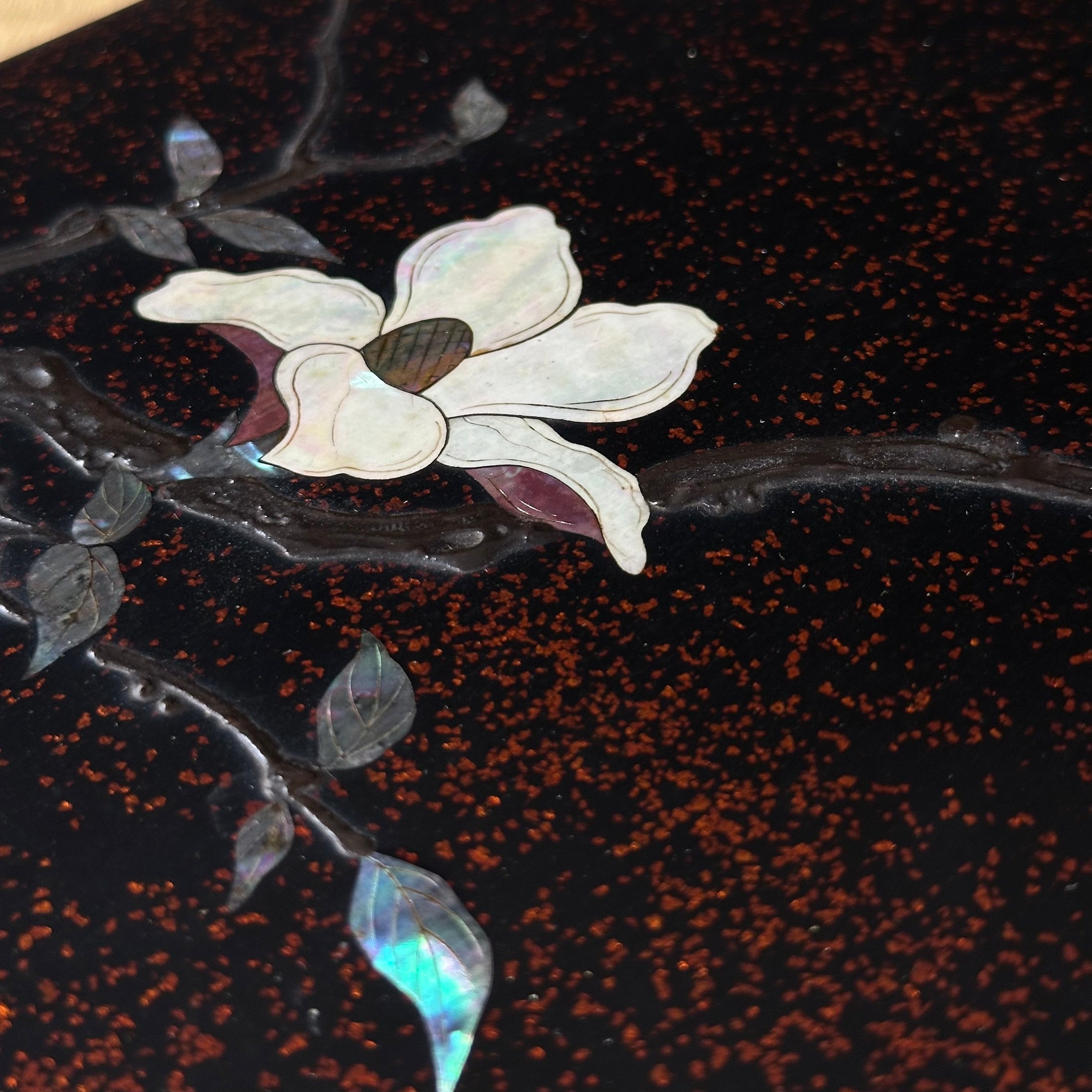
The background is made with kin hirame (flat gold powder), a technique consisting of dispersing fine gold particles evenly in the lacquer, producing a very fine luminous sprinkle that reveals the depth of the black. Unlike a denser nashiji, this treatment remains airy and creates a visual space in which the pattern can unfold with clarity.
The kobushi (magnolia) decoration is composed using several complementary techniques. The open flowers are made of white mother-of-pearl, while the buds and leaves use iridescent mother-of-pearl. The term aogai nuri here refers to particularly fine mother-of-pearl work, using very thinned fragments that allow light to play through the material, producing subtle and changing reflections.
The branches are executed in sabi-e, a technique that involves mixing lacquer with mineral powder to create a modeled material directly on the surface. This process allows the gnarled and irregular character of the wood to be rendered with a perceptible relief. This treatment, left without gold powdering, reinforces the contrast with the hirame background and highlights the luminosity of the mother-of-pearl. The inside of the box is black urushi lacquer.
The entire decoration thus relies on a balance between smooth surface and relief elements, between shine and matte, giving the composition great visual richness.
Presentation
This bunkobako comes with its wooden protective box signed by the artisan, along with his official seal and the name of the artwork.
Practical Information
Place of Manufacture
Japan, Takaoka
Dimensions
Length 31.3 cm - Width 21.9 cm - Height 7.6 cm
Weight
2.2kg
Materials
Wood, urushi lacquer, kin hirame (flat gold powder), aogai nuri (fine mother-of-pearl), sabi e (relief)
Period
Heisei era (1989 - 2019)
Condition
Good condition, wear consistent with age and use; scratches are present on the outer bottom of the box, invisible to the eye when the box is placed down.
© Atelier Ikiwa – Laurence Corteggiani. Photos and texts protected. All reproduction forbidden without authorization.
KNOW-HOW
Traditional Japanese lacquer, urushi, comes from the sap of the lacquer tree (Rhus Verniciflua), which flows after incision of the bark. It is a very precious material, a tree will give a maximum of 200ml of sap in its life, which is worked by specialized craftsmen. It takes many operations, slow and meticulous, and several months of work to bring real lacquer objects to life. It is the oldest craft in Japan! Initially used to protect and waterproof objects, this immutable craft has become an art of extreme sophistication. If you want to know more about the art of Japanese lacquer, you can read our dedicated article > .
SHIPPING AND PAYMENT OPTIONS
Shipping
Free shipping in mainland France for purchases over €200. Shipping with Colissimo, delivery to your home or a pick-up point, package delivered against signature or unique code for valuable items. Orders are generally dispatched within 2 business days, except for fine art photographs, which are printed on demand, and special cases that will be announced in the banner at the top of the site (e.g., in case of absence). Learn more >
Payment options
Secure card payment with Shopify Payments and 3D Secure technology.
Visa, MasterCard, American Express, Cartes Bancaires, PayPal, Apple Pay, Shop Pay, and Klarna.
Klarna: Pay in 3 interest-free installments or within 30 days, for purchases up to €1,500, subject to Klarna's approval. You will be redirected to Klarna to log in or create an account and confirm your payment.
PayPal: You will be redirected to PayPal to log in and confirm payment. New users can create an account during checkout.
Your invoice will be sent with your order.
Returns and exchanges
14 days to change your mind. Learn more >
CARE INSTRUCTIONS
Clean with a very soft cloth to avoid scratches, soaked in a little warm water if necessary (never soak your lacquer objects). No microwave, dishwasher, dryer. Do not expose to direct sunlight for a long time (risk of discoloration). If the atmosphere is very dry and very hot, and to avoid the risk of cracking, you can place a glass filled with water next to your lacquer object.
Choose options
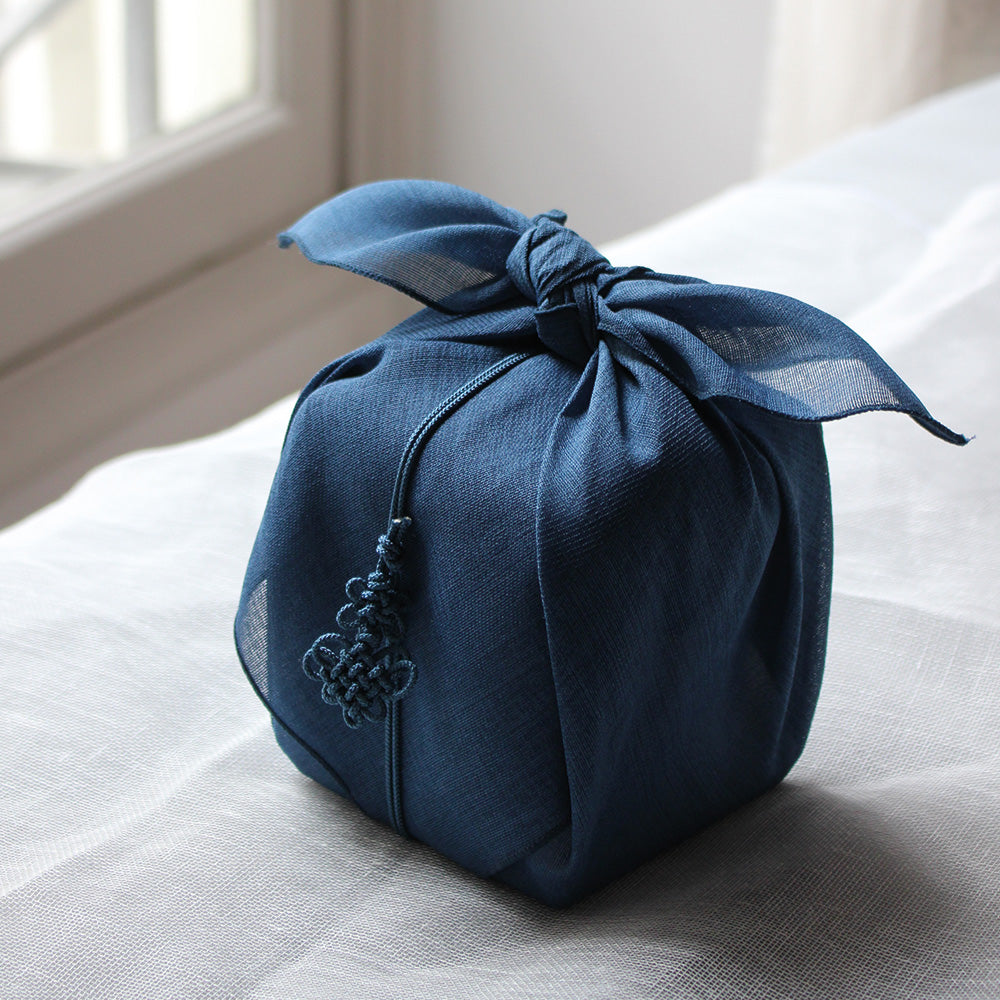
The art of wrapping
The exceptional items are wrapped in a beautiful fabric beautifully knotted using the little-known art of Korean pojagi and decorated with a delightful maedup (Korean ornamental knot). Details and conditions >
WRAPPING
Exceptional items are wrapped in textiles tied according to the Korean pojagi art