

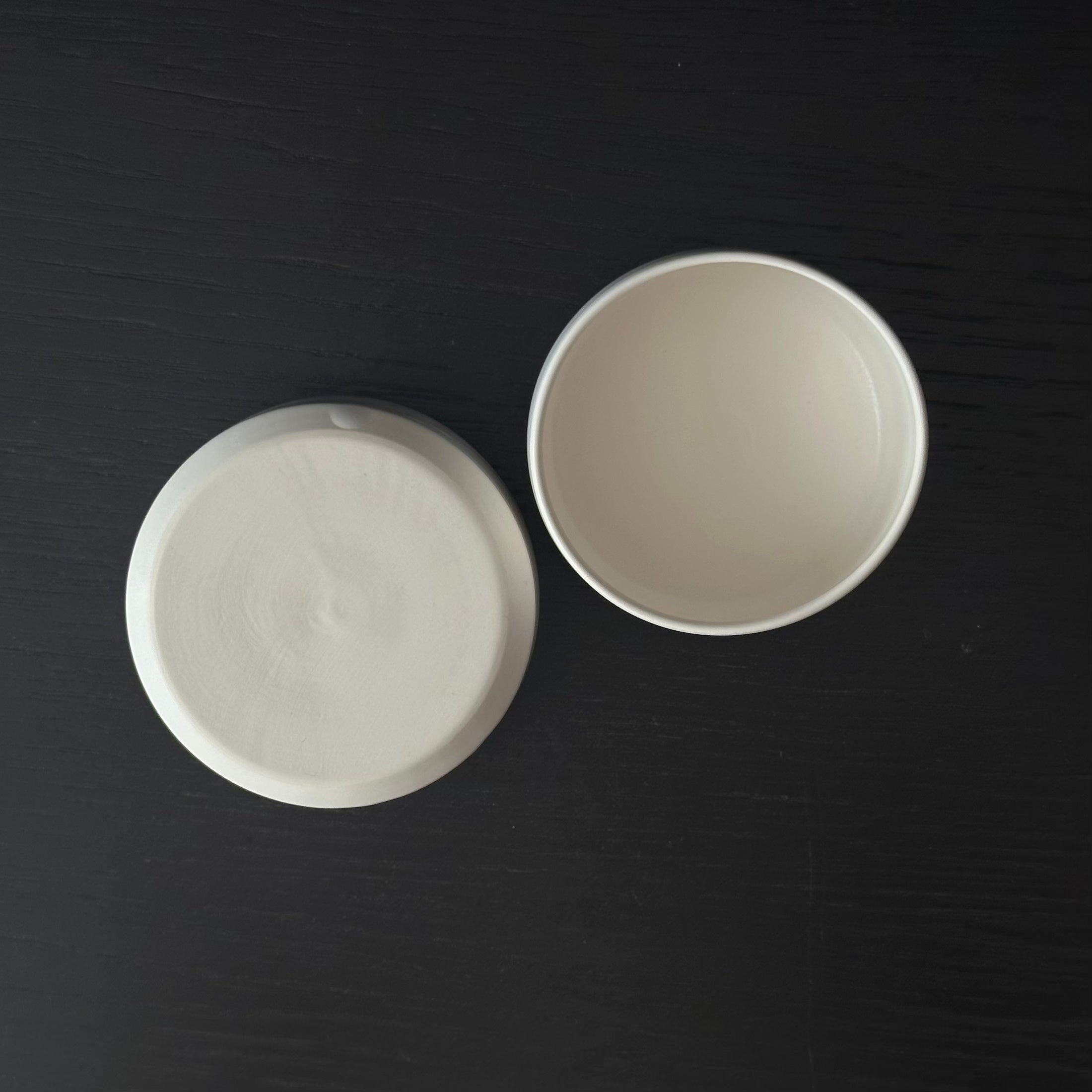
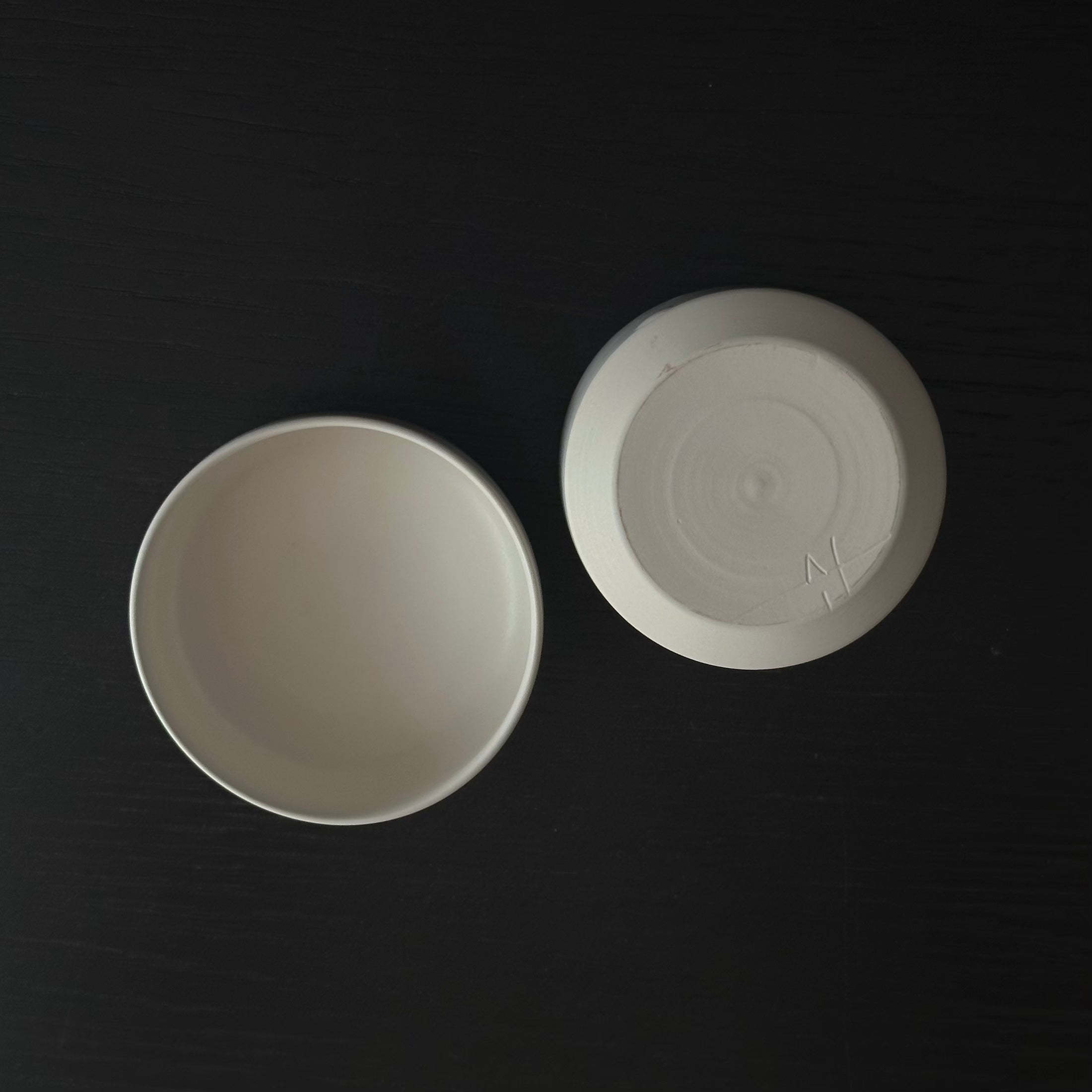
Two nesting white porcelain cups by Yuji Murakami
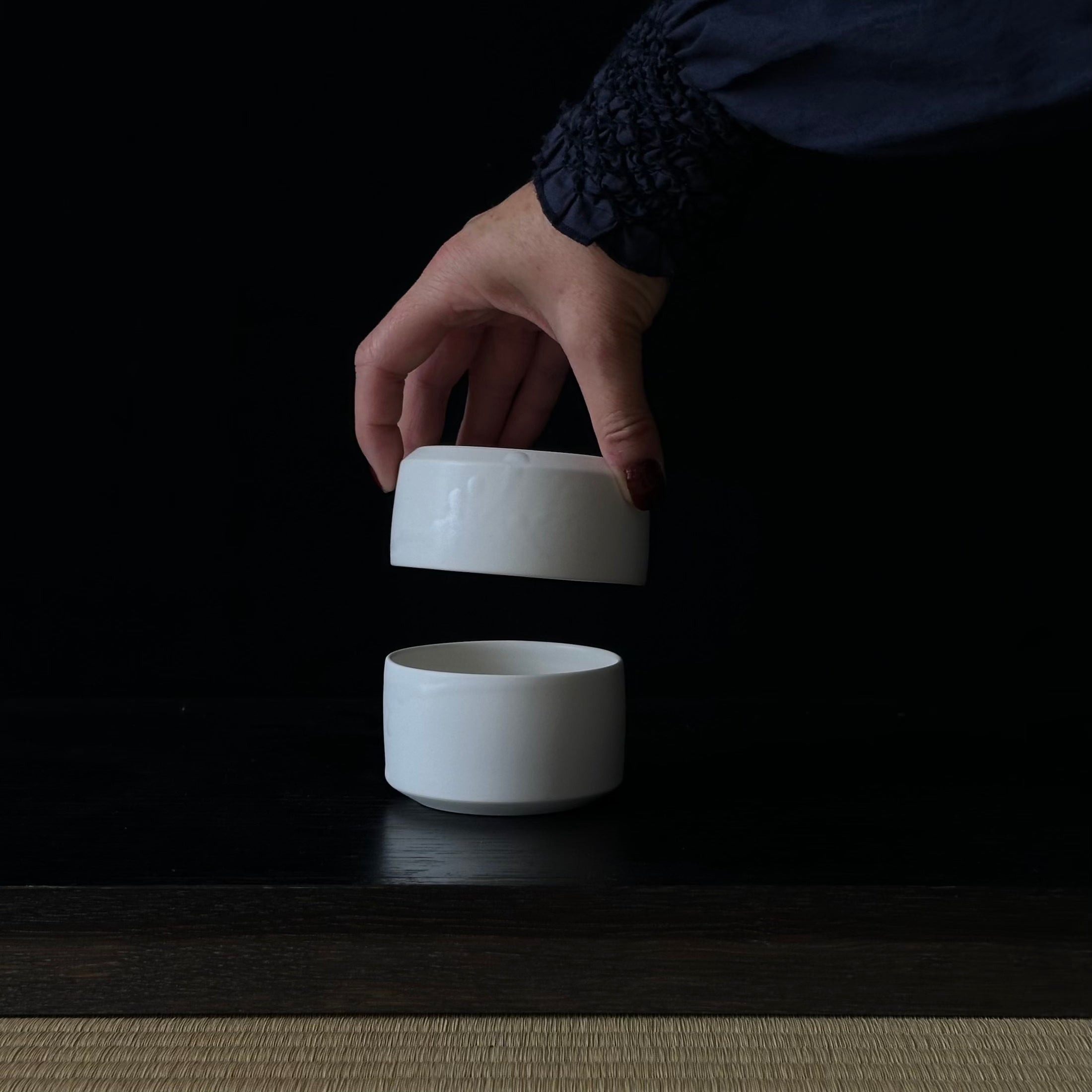
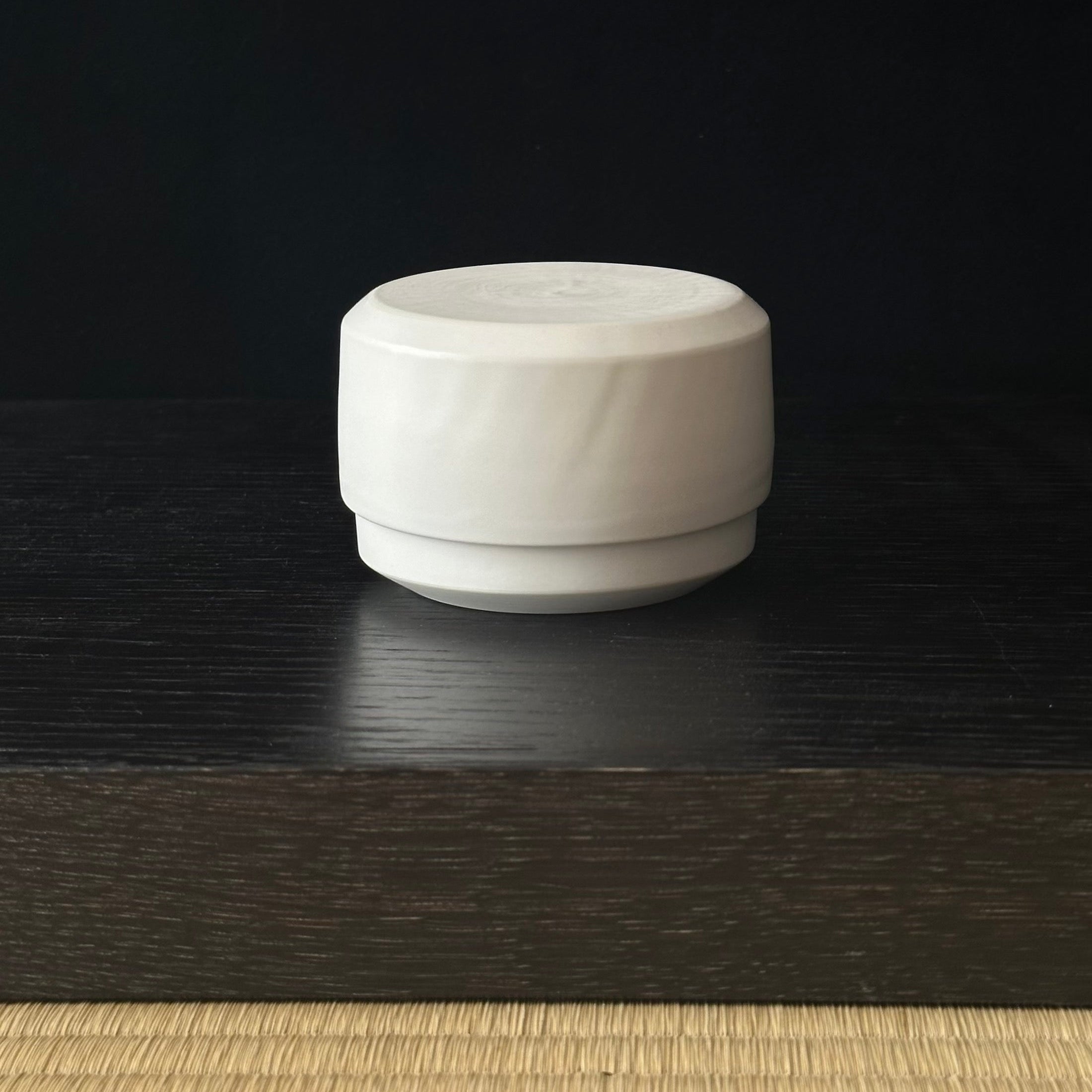
These two Japanese porcelain cups nest together to form a small box, an object that is both useful and unique. The almost ceremonial gesture of opening and closing them reveals a refined design where the gentle curves and the whiteness of the material create a serene presence. A delicate, hybrid duo, designed for both the table and decoration, that will find its place naturally in a contemporary interior.
The ceramist
Yuji Murakami was born in 1985 in Fukuoka. He studied at the Tajimi City Pottery Design Institute, became Ryota Aoki's assistant, and then established his own studio in Gifu. Since 2015, he has lived and worked in Okubo, a mountain hamlet in Fujieda, Shizuoka Prefecture, where he opened his studio, Oyama no Dōguten. He exhibits regularly in Japan and abroad.
His approach prioritizes simplicity of volumes, softness of textures, and sensitive precision, in service of objects for living.
The technique and the decor
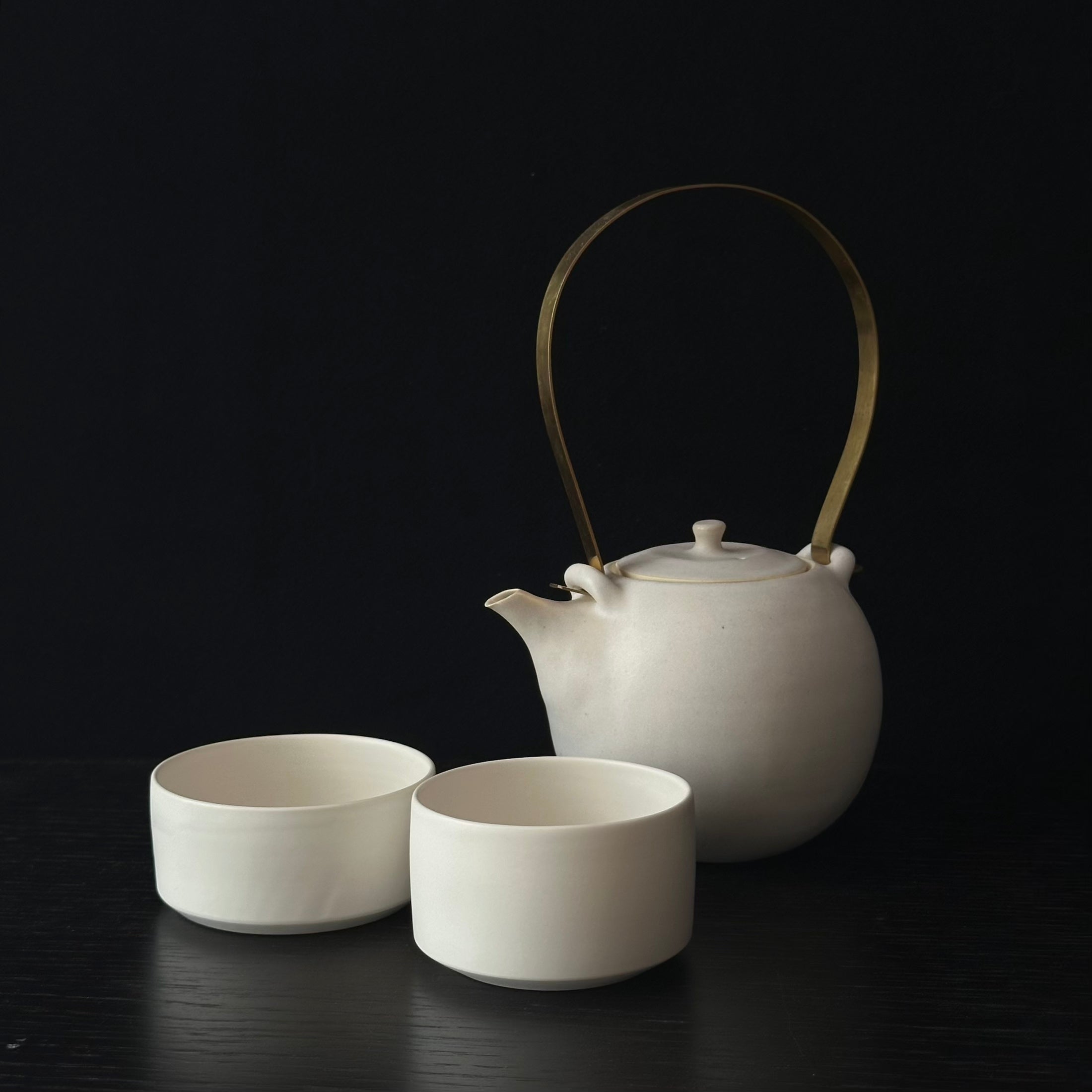
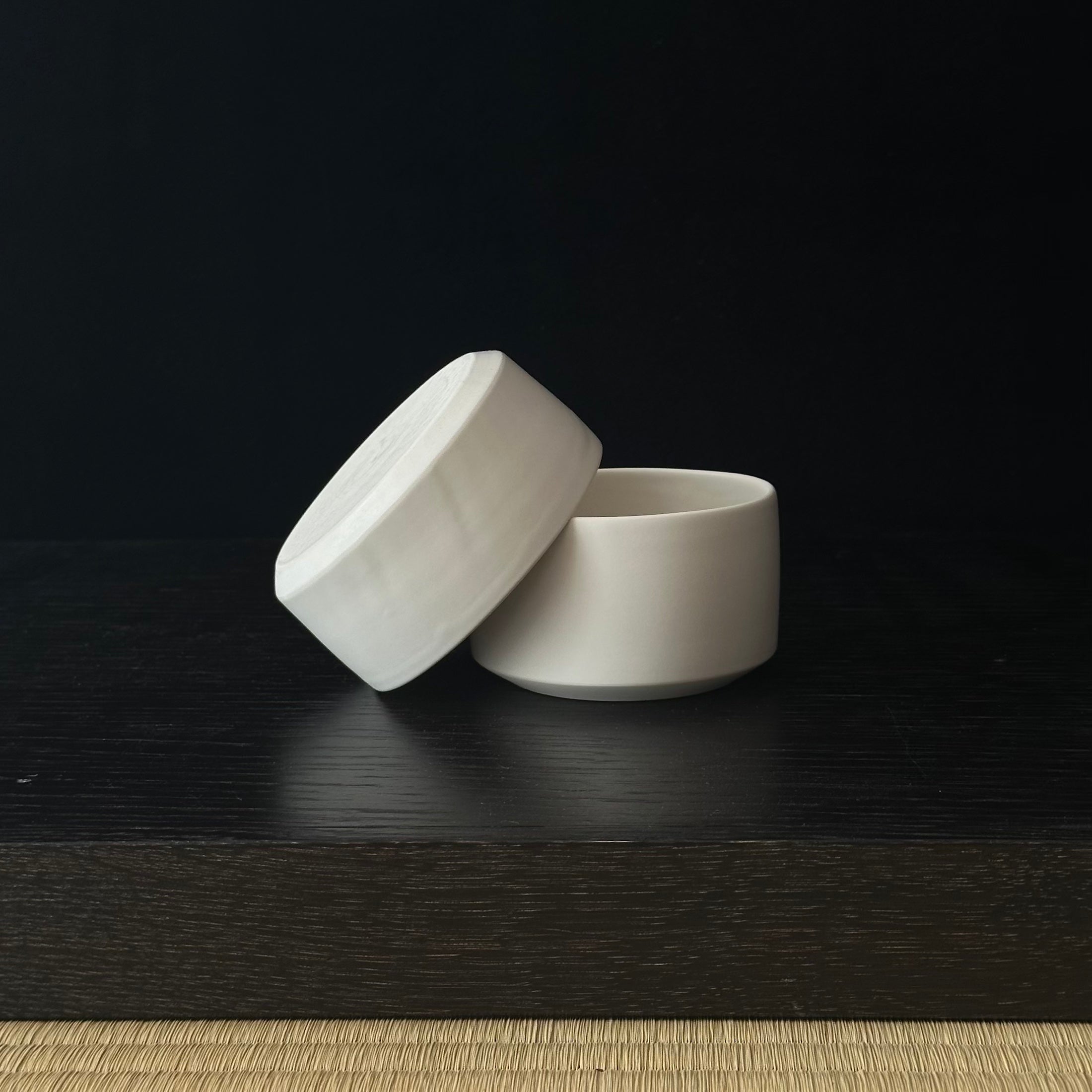
Each cup has a smooth, cylindrical shape with a gently rounded rim for a comfortable grip. The surface is covered with a white glaze, subtly enlivening the porcelain's texture. The nesting design transforms the cups into small boxes, with the base of one cup becoming the lid of the other—an ingenious solution that makes the object portable and adaptable. The smallest cup bears the ceramist's signature engraved on its base.
Practical information
Place of manufacture
Japan, Fujieda, Shizuoka Prefecture
Dimensions
Upper cup used as a lid: Diameter 8.8 cm - Height 4 cm
Bottom cup: Diameter 8 cm - Height 4.5 cm
Total height in box format: 5.7 cm
Weight
228 gr
Materials
Semi-porcelain
Period
Contemporary
Maintenance tips
After use, empty the water and allow to air dry. Avoid thermal shock and abrasive products. Wipe with a soft cloth. Dishwasher and microwave safe.
© Atelier Ikiwa – Laurence Corteggiani. Photos and texts protected. All reproduction prohibited without permission.
DELIVERY AND PAYMENT OPTIONS
Shipping
Free shipping in mainland France for purchases of €200 or more. Shipped with Colissimo, you can choose home delivery or a pickup point. Parcels are delivered against signature or a unique code for valuable items. Orders are generally dispatched within 2 business days, except for fine art photographs, which are printed on demand, and special cases, which will be announced in the banner at the top of the website (e.g., in case of absence). Learn more >
Payment Options
Secure card payment with Shopify Payments and 3D Secure technology.
Visa, MasterCard, American Express, Cartes Bancaires, PayPal, Apple Pay, Shop Pay, and Klarna.
Klarna: Pay in 3 interest-free installments or within 30 days, for purchases up to €1,500, subject to Klarna's acceptance. You will be redirected to Klarna to log in or create an account and confirm your payment.
PayPal: You will be redirected to PayPal to log in and confirm payment. New users can create an account during checkout.
Your invoice will be sent with your order.
Returns and Exchanges
14 days to change your mind. Learn more >
Choose options

WRAPPING
Exceptional items are wrapped in textiles tied according to the Korean pojagi art