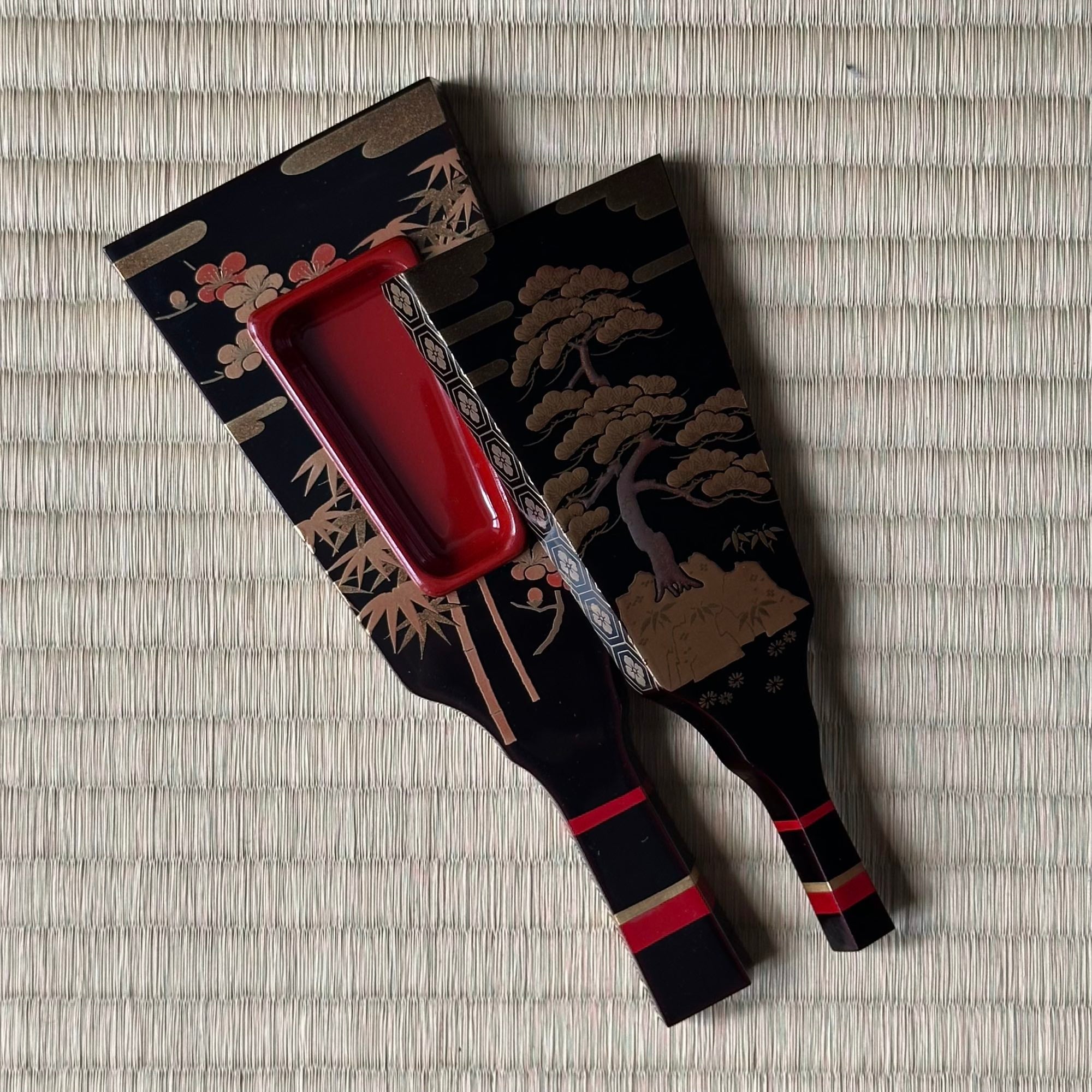
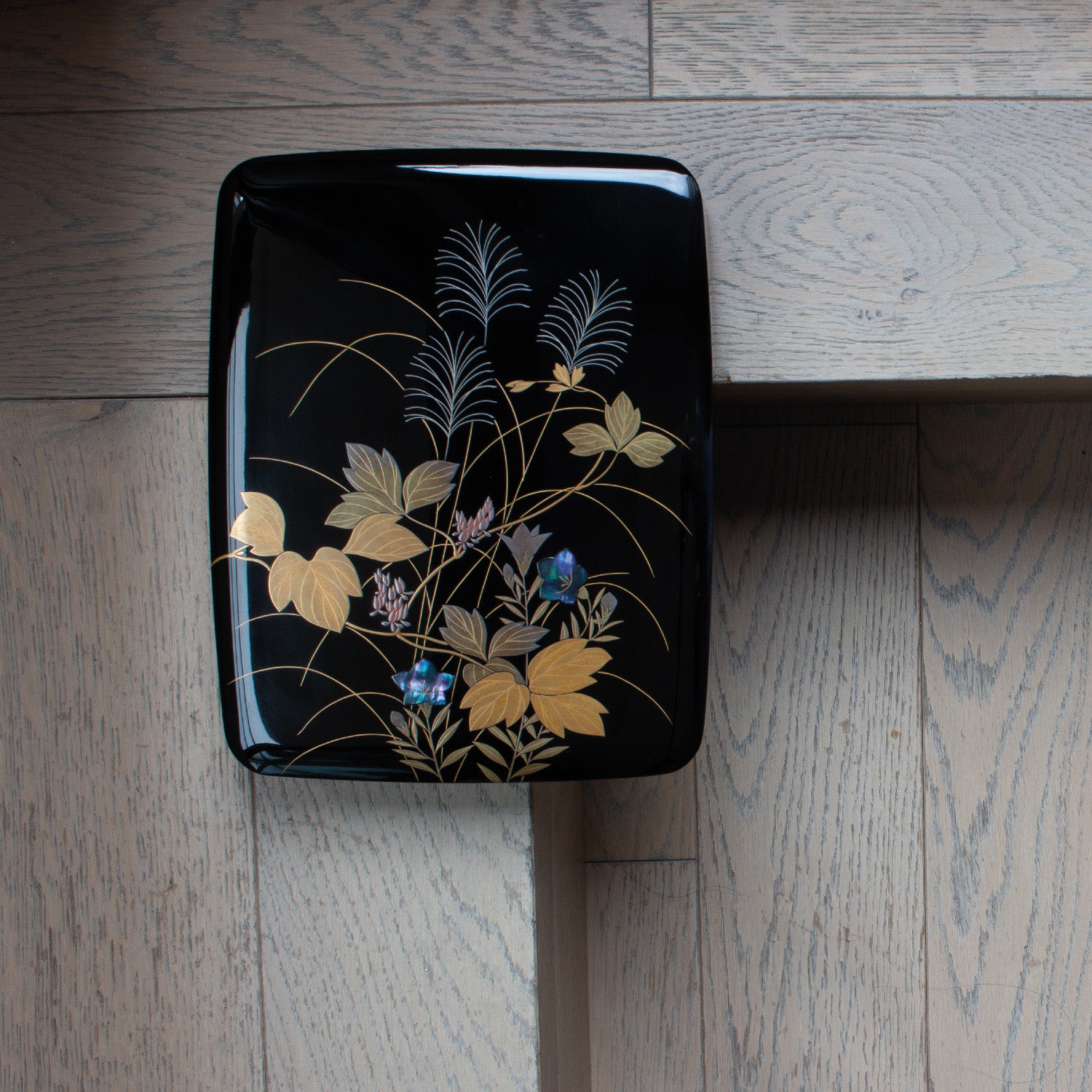
In the art of Japanese incense, the kōgō is a precious small box that preserves and enhances nerikō, refined incense pellets made from precious woods and spices. Together, they embody a sensory tradition rooted in elegant gestures and subtle fragrances, which Atelier Ikiwa was keen to celebrate by offering a rigorous selection of superb kōgō, here signed by the lacquer master Kōunsai Ōi, accompanied by their box of nerikō to introduce this little-known art.
The artisan
Kōunsai Ōi, born in 1930, is a Japanese lacquer master associated with the Kaga maki-e (gold dust decoration) tradition, one of the great expressions of Japanese urushi lacquer. He trained under Matsuda Gonroku, a major figure in 20th-century lacquer art and a Living National Treasure of Japan, from whom he received instruction in traditional maki-e techniques. His work continues the Kaga savoir-faire, renowned for its precise design, controlled richness of metallic powders, and balance between decorative elegance and rigorous execution. His tea pieces, especially natsume and kōgō, are sought after for the finesse of their decorations, often inspired by classic Japanese vocabulary.
Technique and decoration
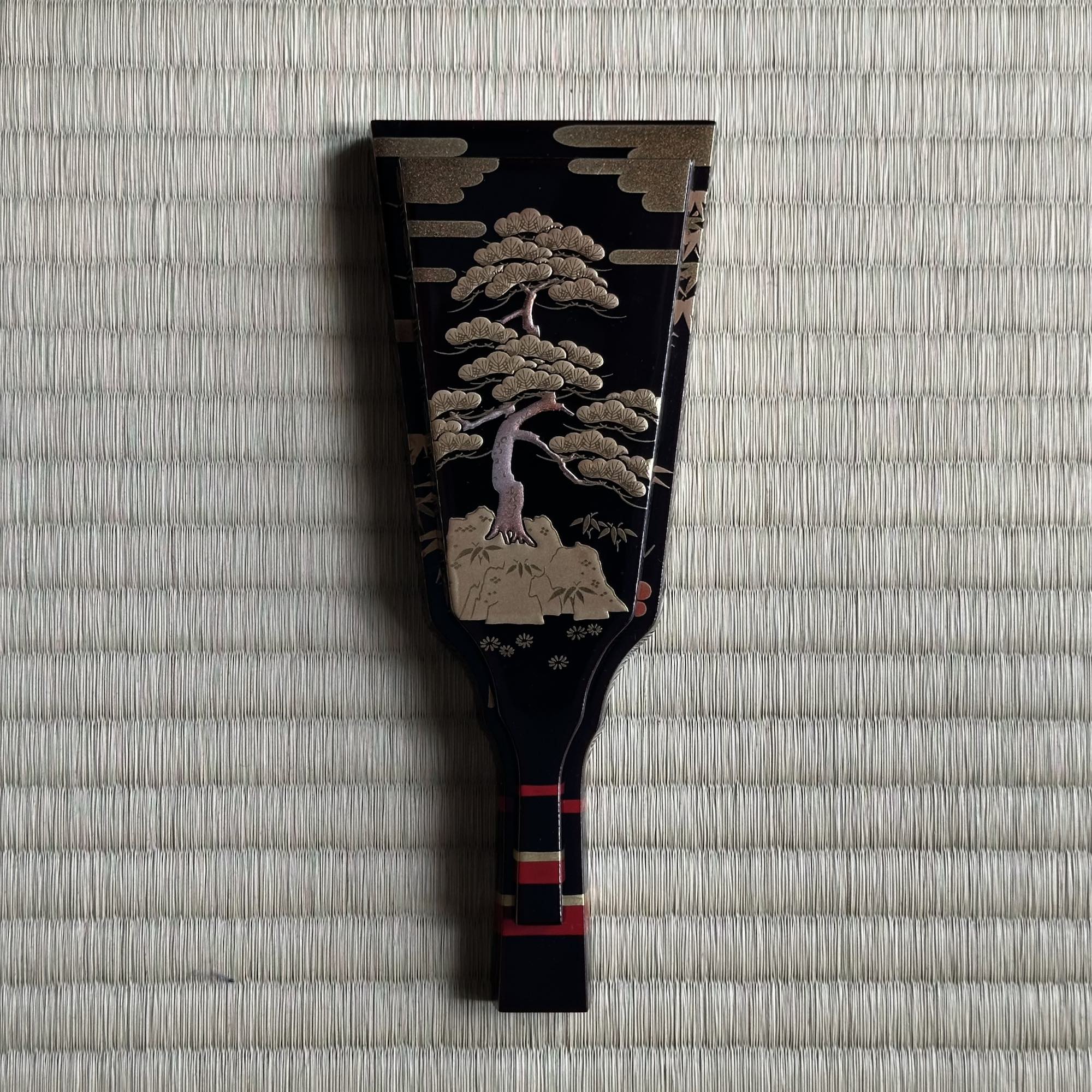
This superb large kōgō takes the form of a hagoita (racket), a traditional object associated with Japanese New Year and the ancient game of hanetsuki. In tea arts, this shape evokes the first days of the year, auspicious wishes, and lucky charms that accompany winter celebrations.
The decoration represents the shōchikubai (pine, bamboo, plum), an auspicious motif combining three plants capable of enduring winter. The pine symbolizes longevity, bamboo represents uprightness and resilience, while the plum announces renewal with its early blooming.
On a lightweight wooden container carved to shape and a deep black background resulting from multiple layers of Japanese urushi lacquer, the decoration is made using maki-e, a technique in which fine gold powders are applied to fresh lacquer to create luminous patterns. The pine, bamboo, plum blossoms, rocks, and stylized clouds compose a refined landscape, animated by gold fields and colored pigments.
The sides feature a traditional kikkō hanabishi motif, composed of hexagons inspired by a turtle shell enclosing stylized water chestnut flowers (hanabishi). Very common in Japanese decorative arts, this motif is associated with longevity, protection, and elegance.
The nerikō
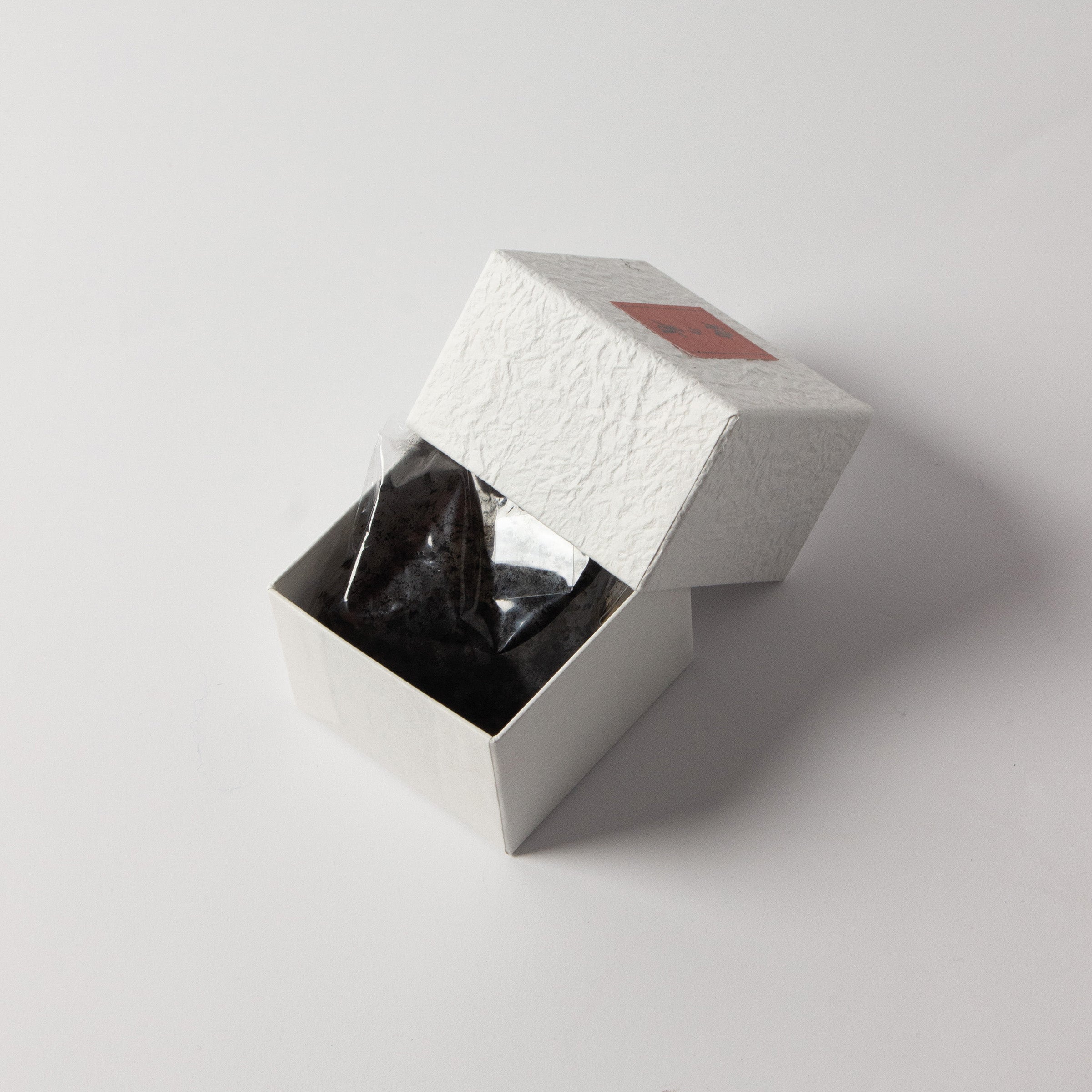
To enjoy the kōgō as intended, a box of nerikō is also included. This box contains thirty-six nerikō pellets, each made of a delicately fragrant sandalwood-based mixture crafted by one of Kyoto's oldest incense houses. To use them, place two or three in the kōgō, and leave the lid slightly ajar. To stop the diffusion of the fragrance, simply close the lid. The nerikō pellets should be replaced when they become dry. It is important to store unused nerikō in the hermetically sealed plastic bag to prevent them from drying out.
To discover the art of Japanese kōgō and nerikō, we invite you to read the article we wrote on the subject, available via this link. Other kōgō are available on the site; feel free to browse our selection.
Presentation
For the kōgō: a protective paulownia wood box (tomobako) bearing the inscription of the work, the artisan's signature and seal, also accompanied by an information document (shiori).
For the nerikō: a box containing thirty-six nerikō pellets.
The kōgō and nerikō will be packaged together in a beautifully and skillfully tied textile, making it an original, unique, and very elegant ready-to-offer gift.
Practical Information
Place of manufacture
Japan, Kaga
Dimensions
Width 19.4cm - Depth 7.8cm - Height 2.7cm
Weight (with box)
358gr
Materials
Wood, Japanese urushi lacquer, gold powders and pigments
Period
Early Heisei era (circa 1990)
Condition
In very good condition
Usage tips
Place two or three nerikō pellets in the kōgō, leave the lid slightly ajar to diffuse the fragrance or closed to stop diffusion, replace the pellets when they become dry, and store unused pellets in their airtight bag. Keep out of reach of children and pets. Do not ingest. Avoid prolonged contact with skin. In case of discomfort or olfactory sensitivity, discontinue use. Store away from heat, humidity, and direct light.
Lacquer object care: Clean with a very soft cloth to avoid scratches, dampened with a little lukewarm water if necessary (never soak lacquer objects). No microwave, dishwasher, dryer. Do not expose to direct sunlight for a long time (risk of discoloration). If the atmosphere is very dry and very hot, and to avoid the risk of cracking, a glass filled with water can be placed next to the lacquer object.