

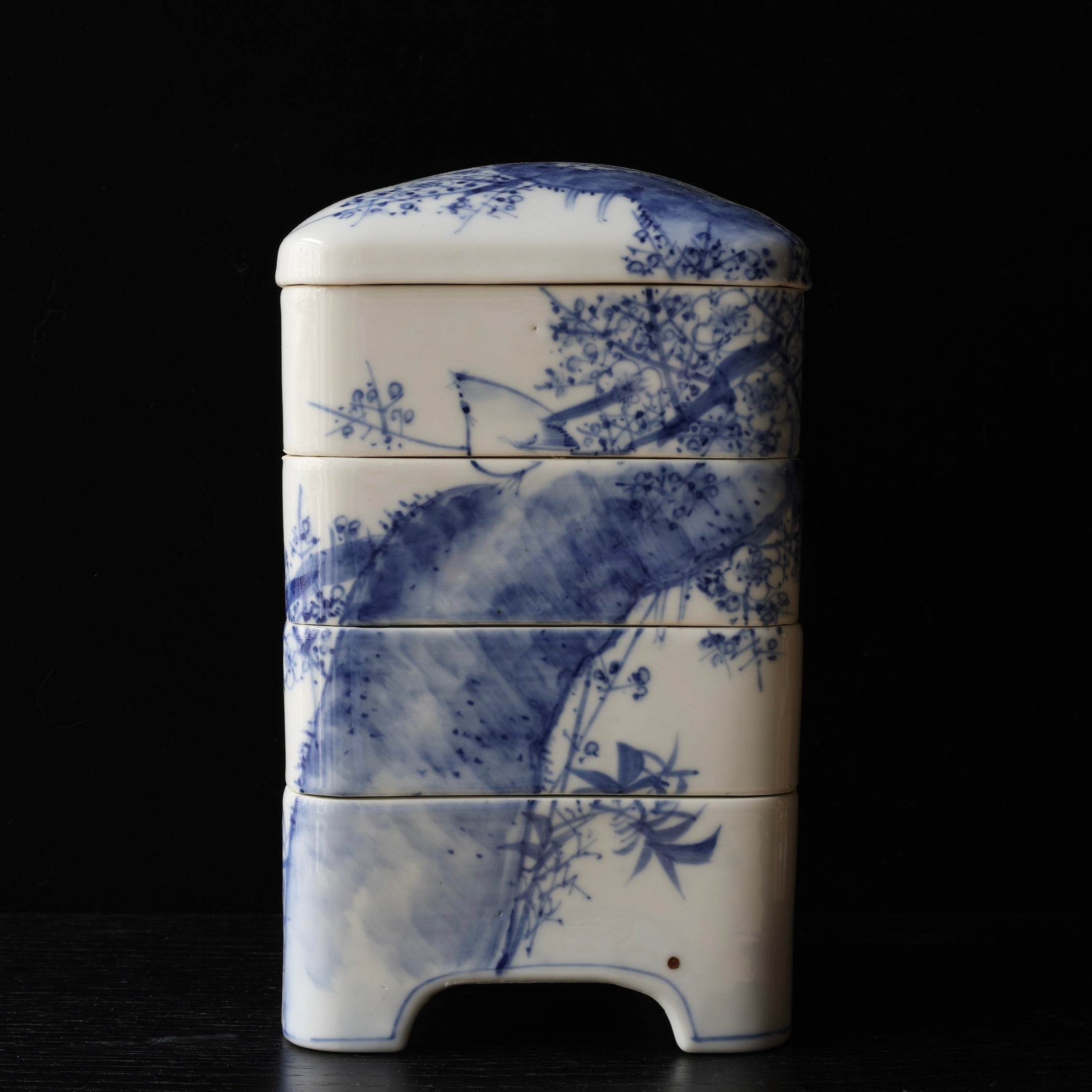
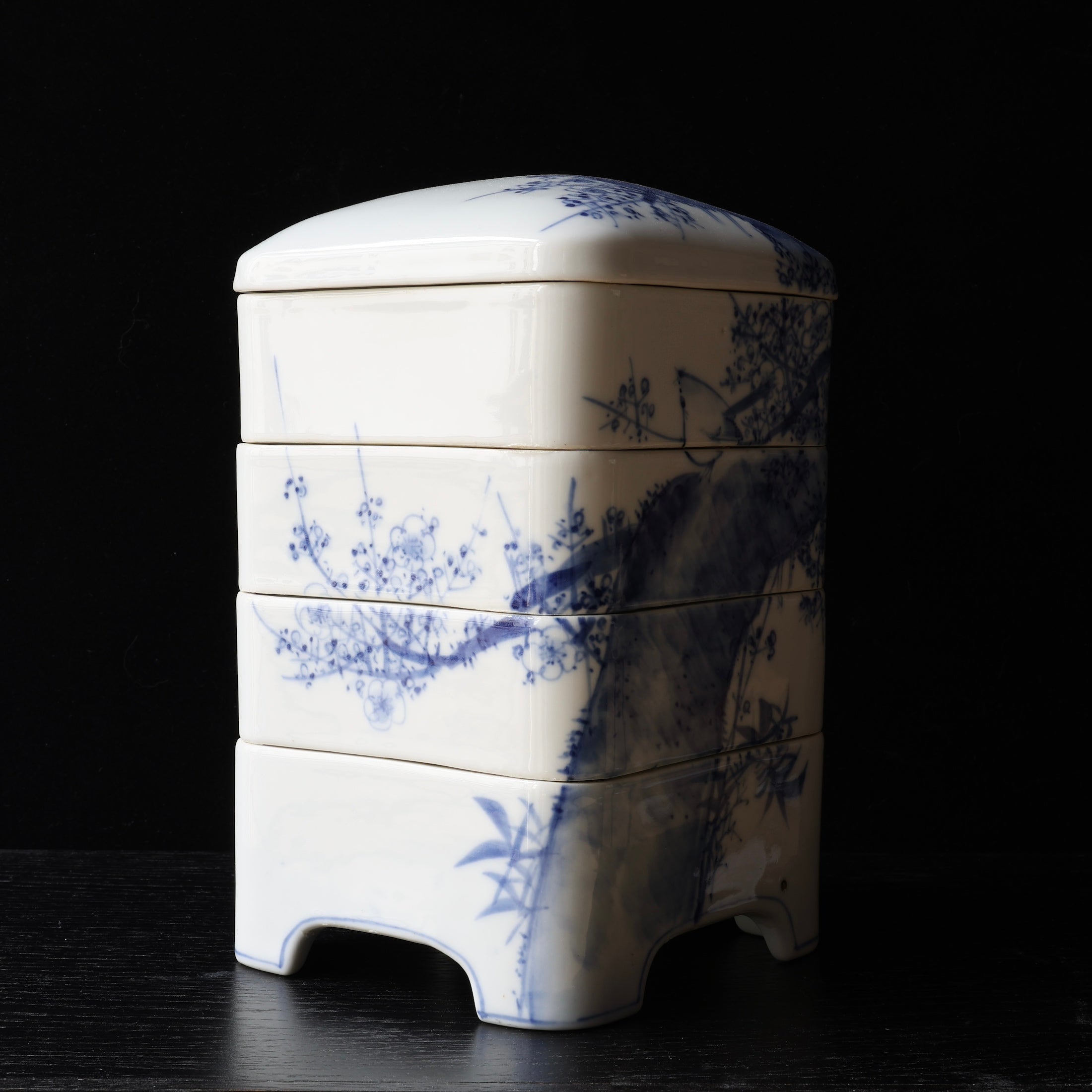
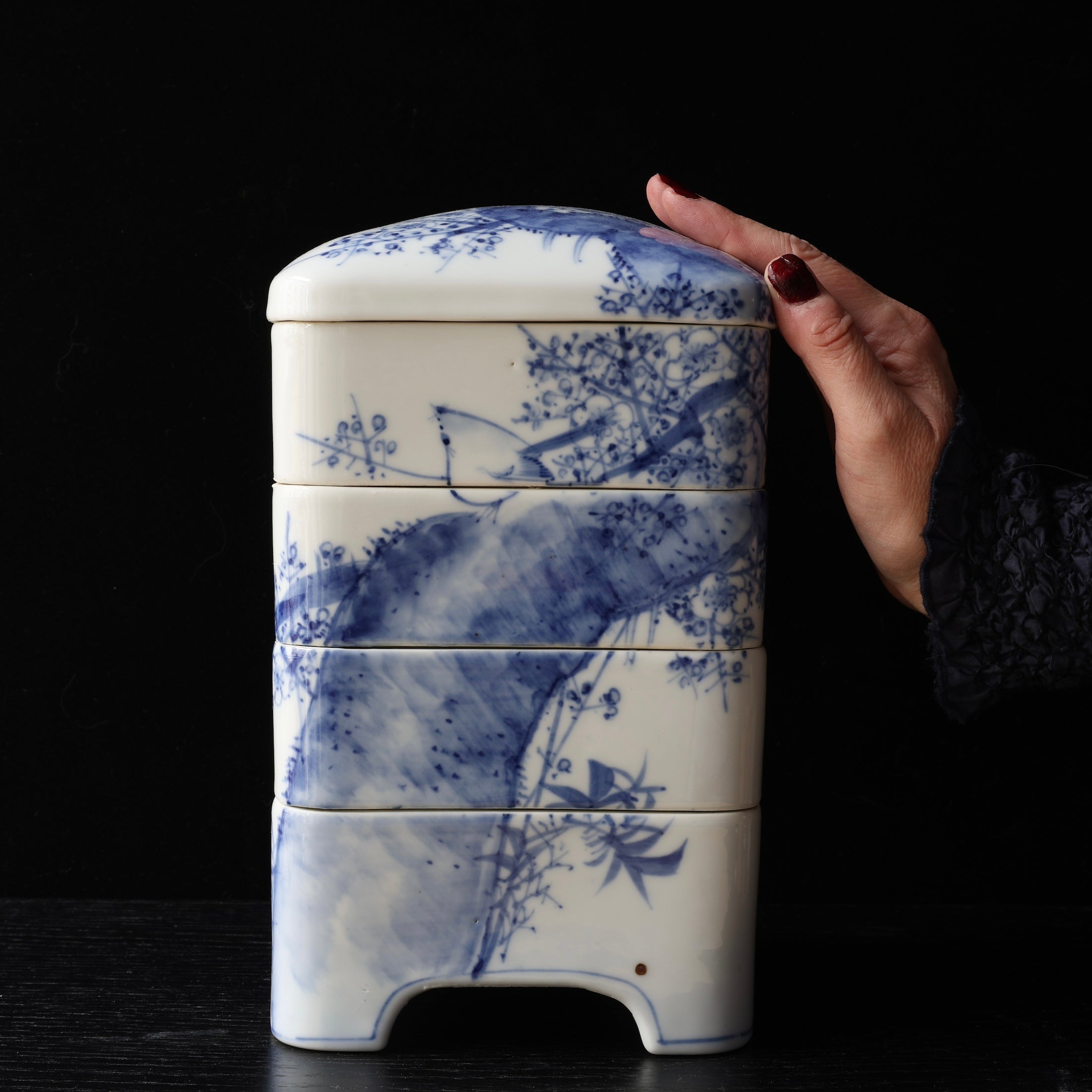
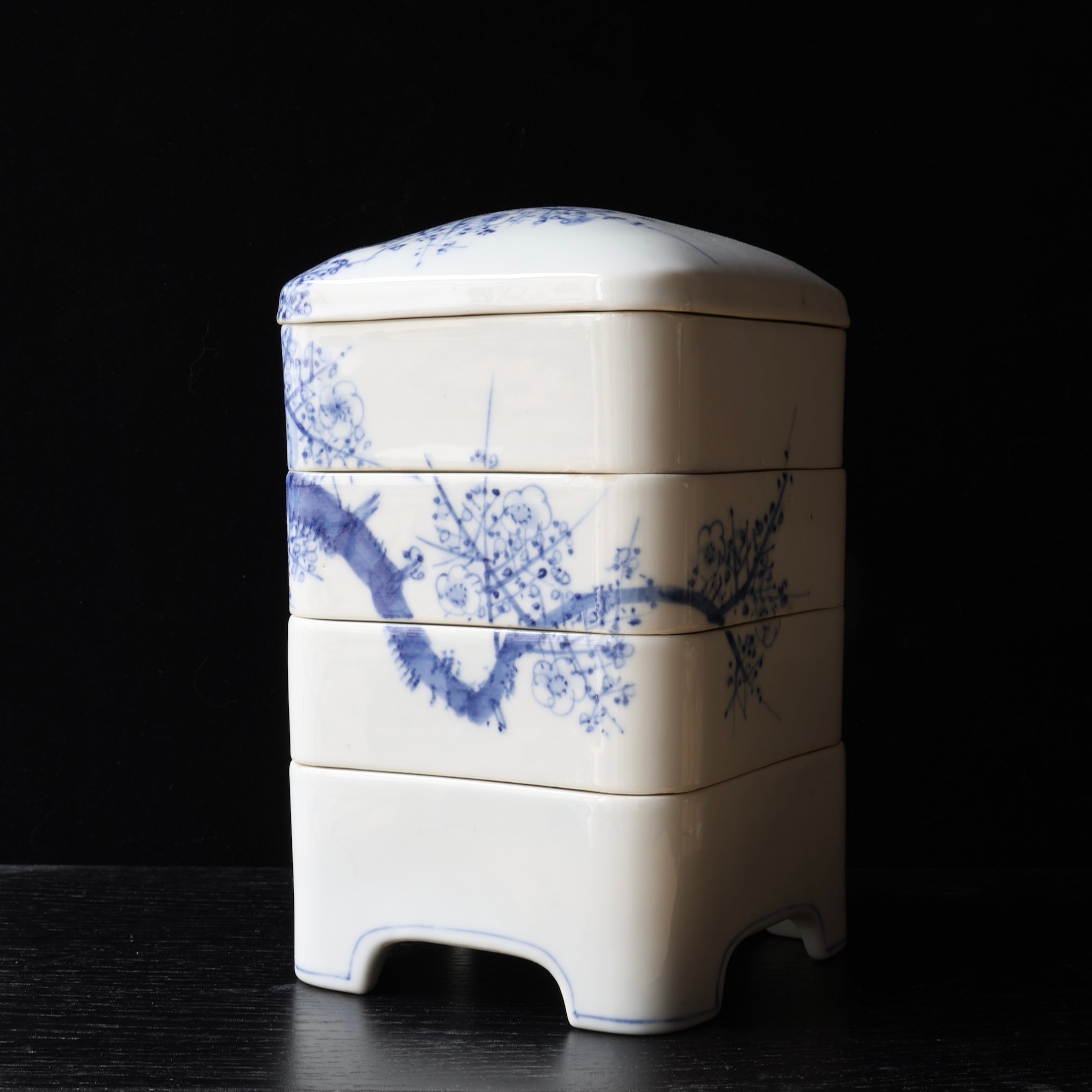
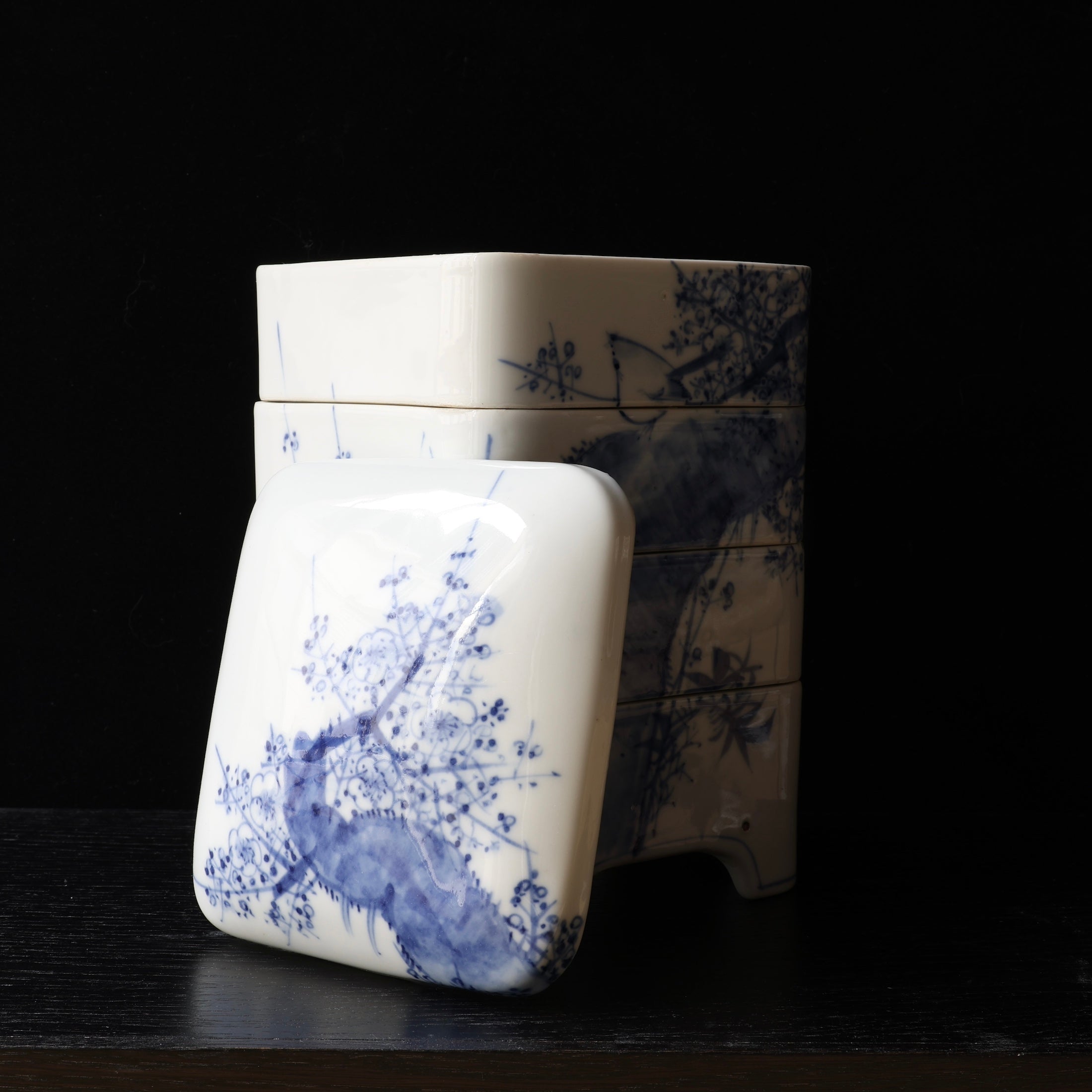
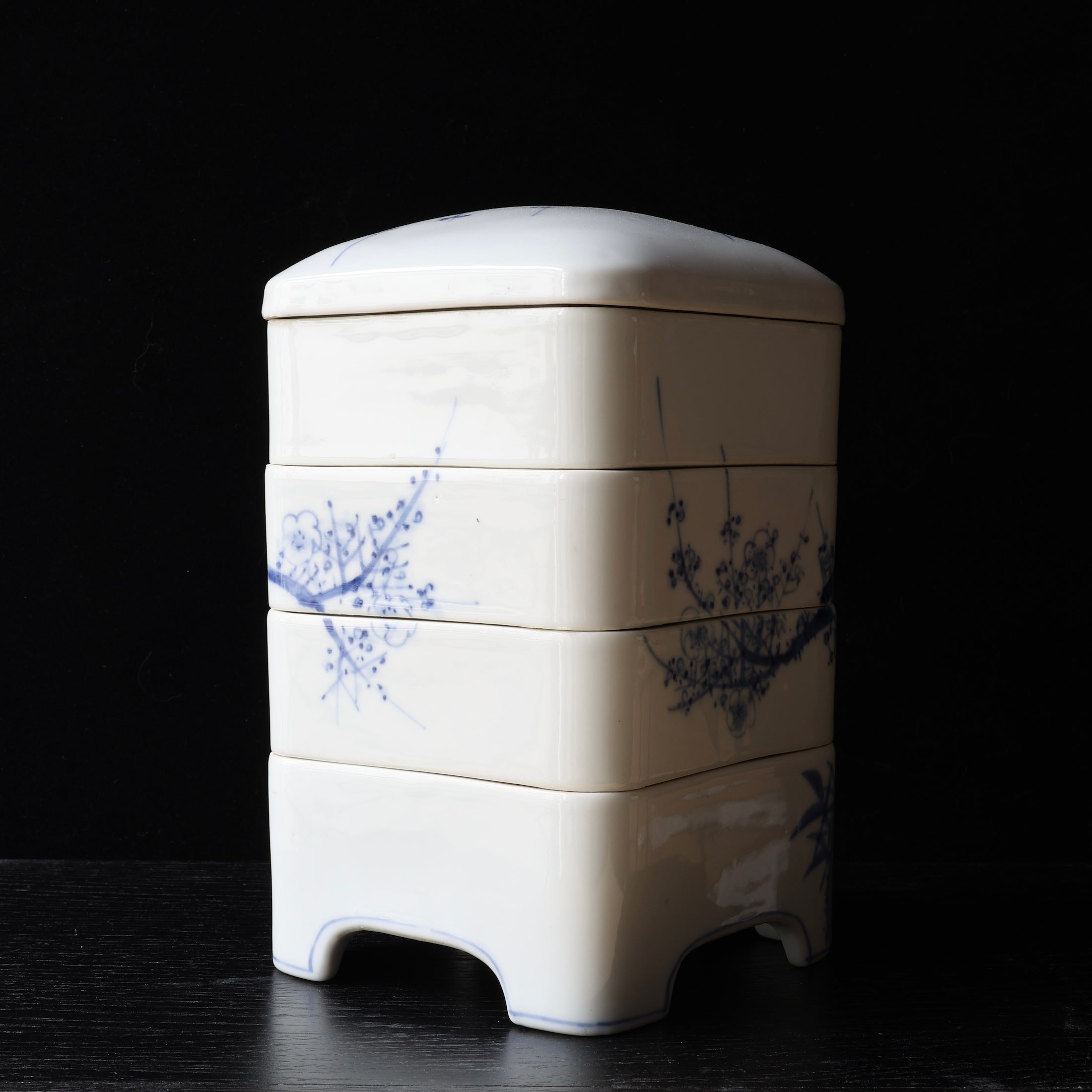
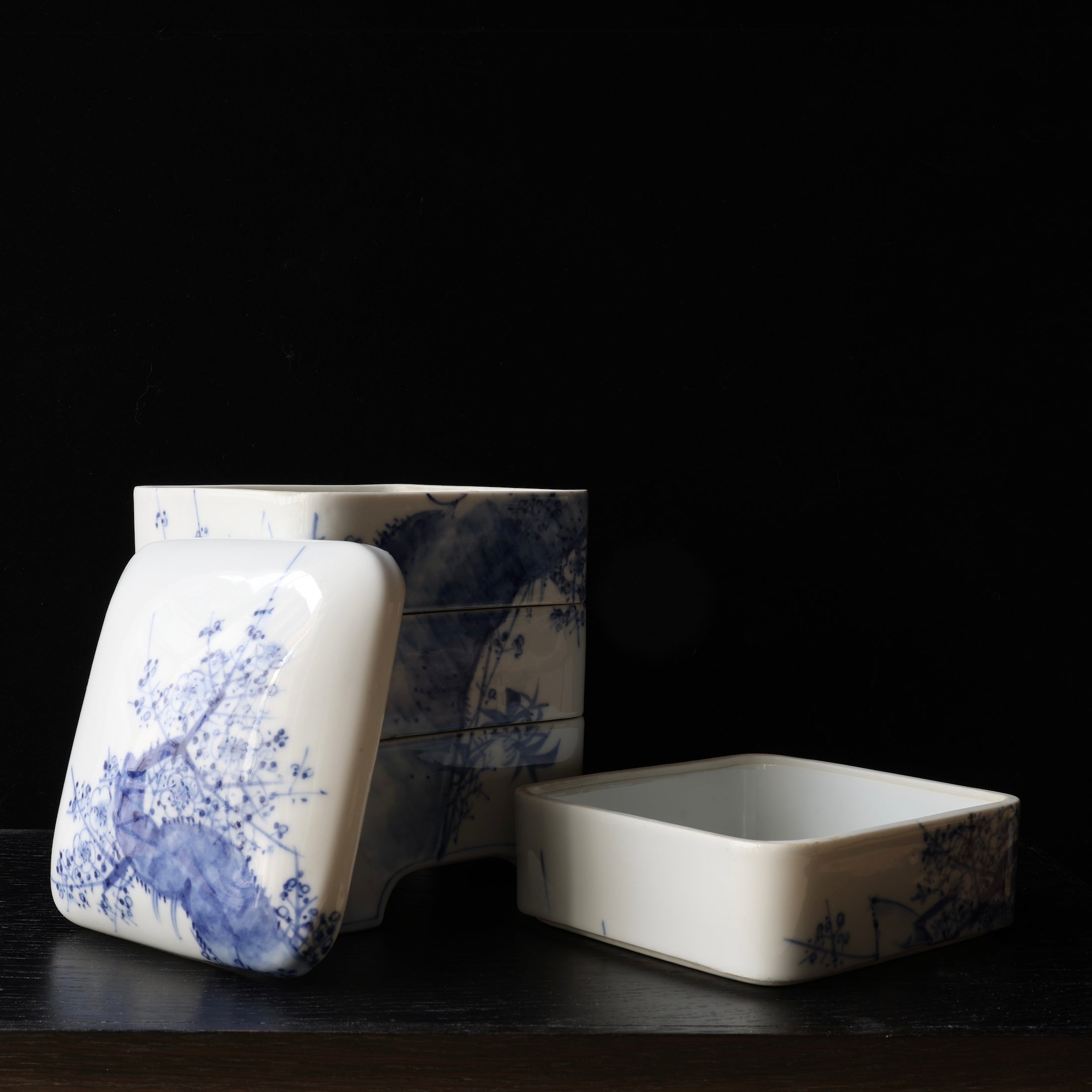
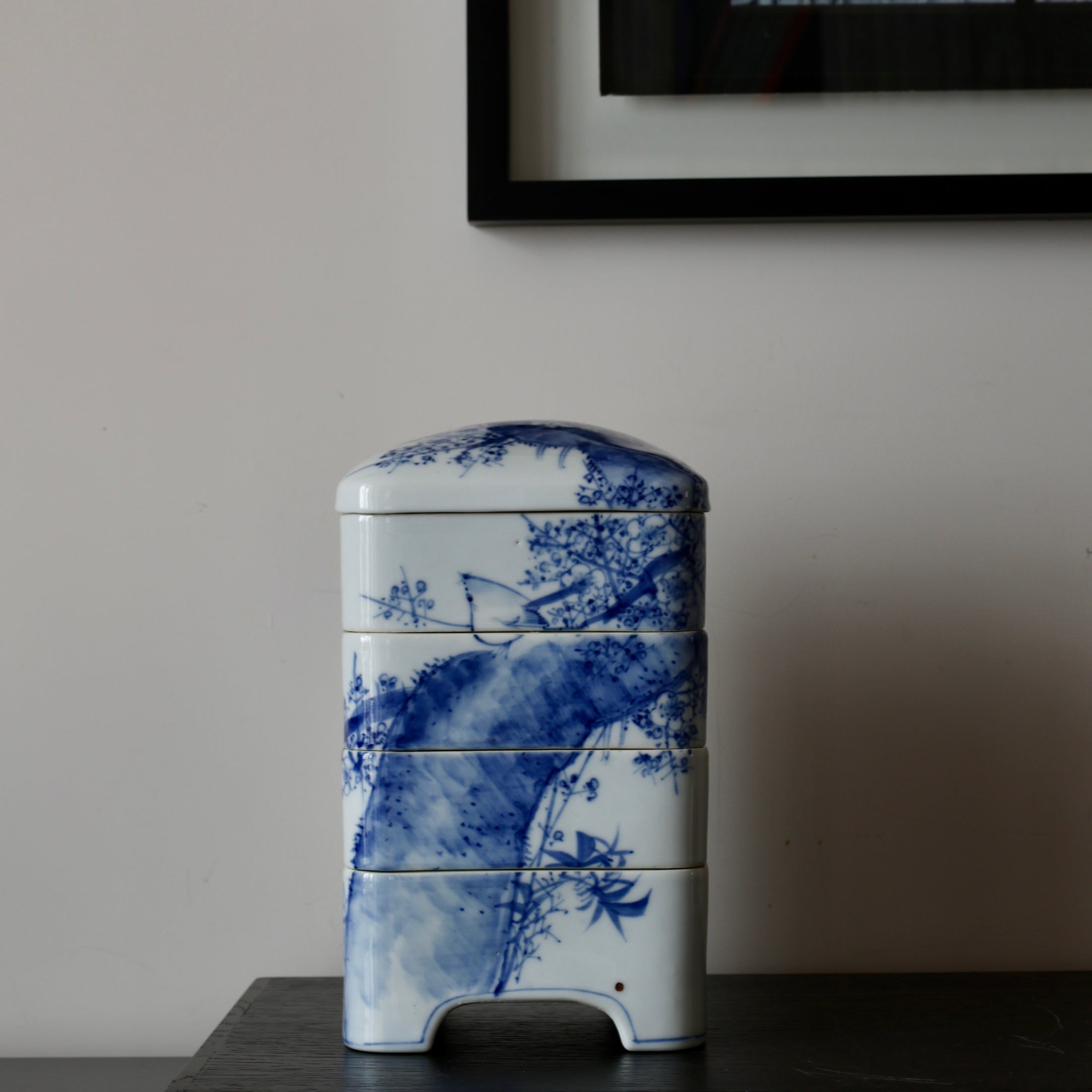
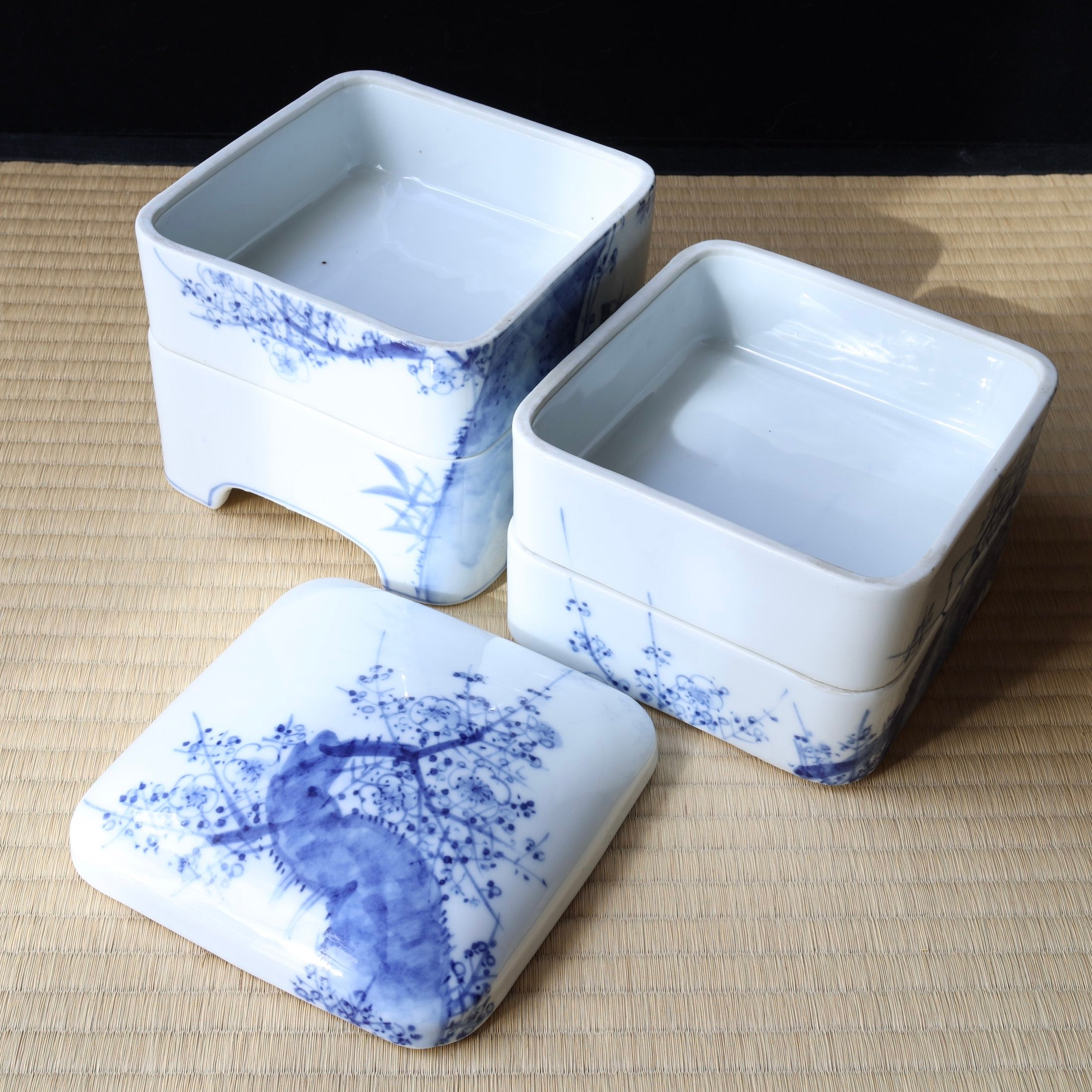
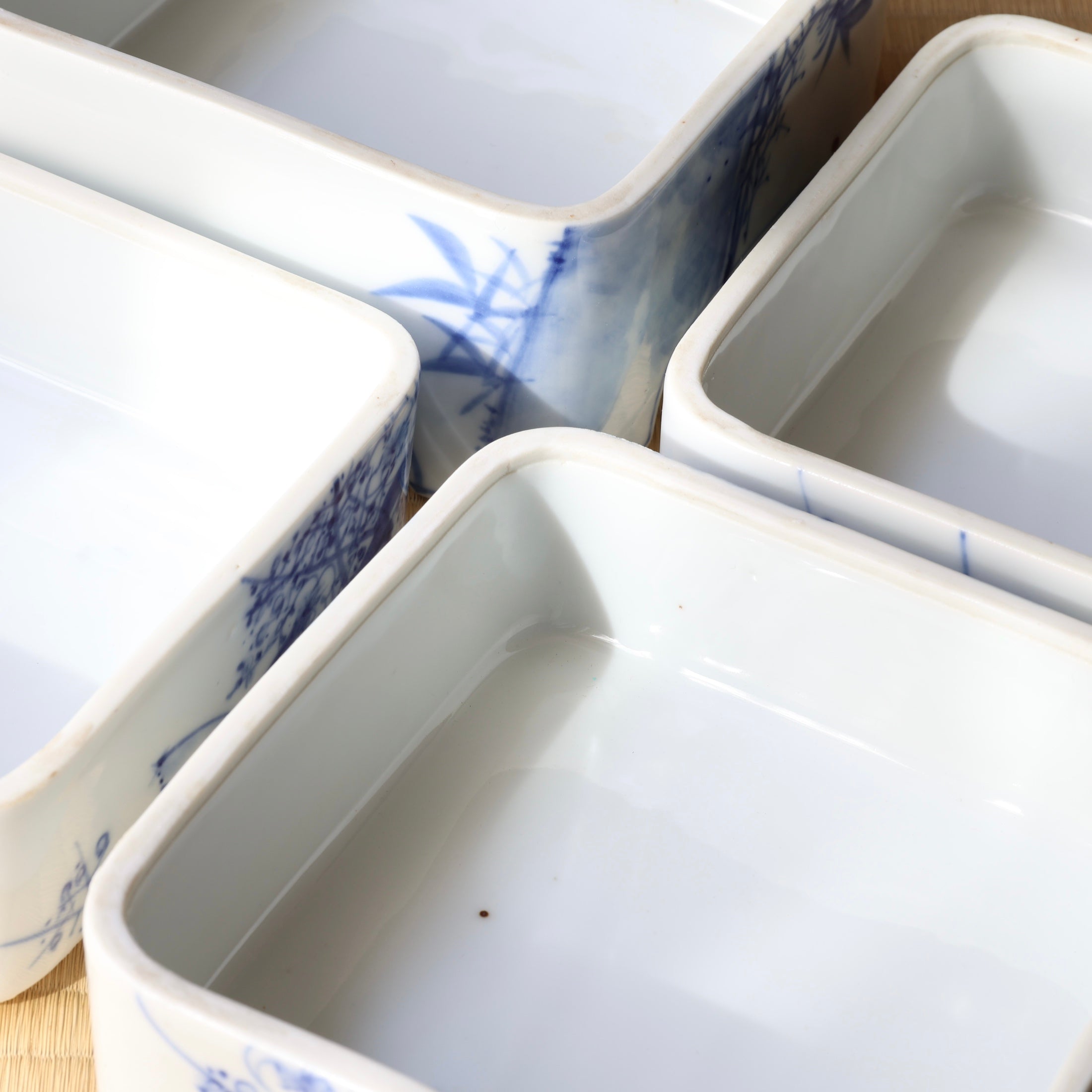
Jubako (stackable boxes) in sometsuke (underglaze blue) porcelain, with bird and plum blossom decoration, Meiji era
This remarkable 1883 piece (Meiji era, 1868 - 1912) illustrates the refinement of Japanese decorative arts at the end of the 19th century. Made of Imari porcelain and decorated using the sometsuke technique (underglaze blue), this four-compartment jubako (stackable Japanese box) with a lid combines the elegance of its decoration with the sobriety of its blue and white palette. Both a collector's item and a decorative piece, it retains a surprisingly contemporary presence today, while bearing witness to the expertise of the great Japanese porcelain workshops of that period.
Technique and Decoration
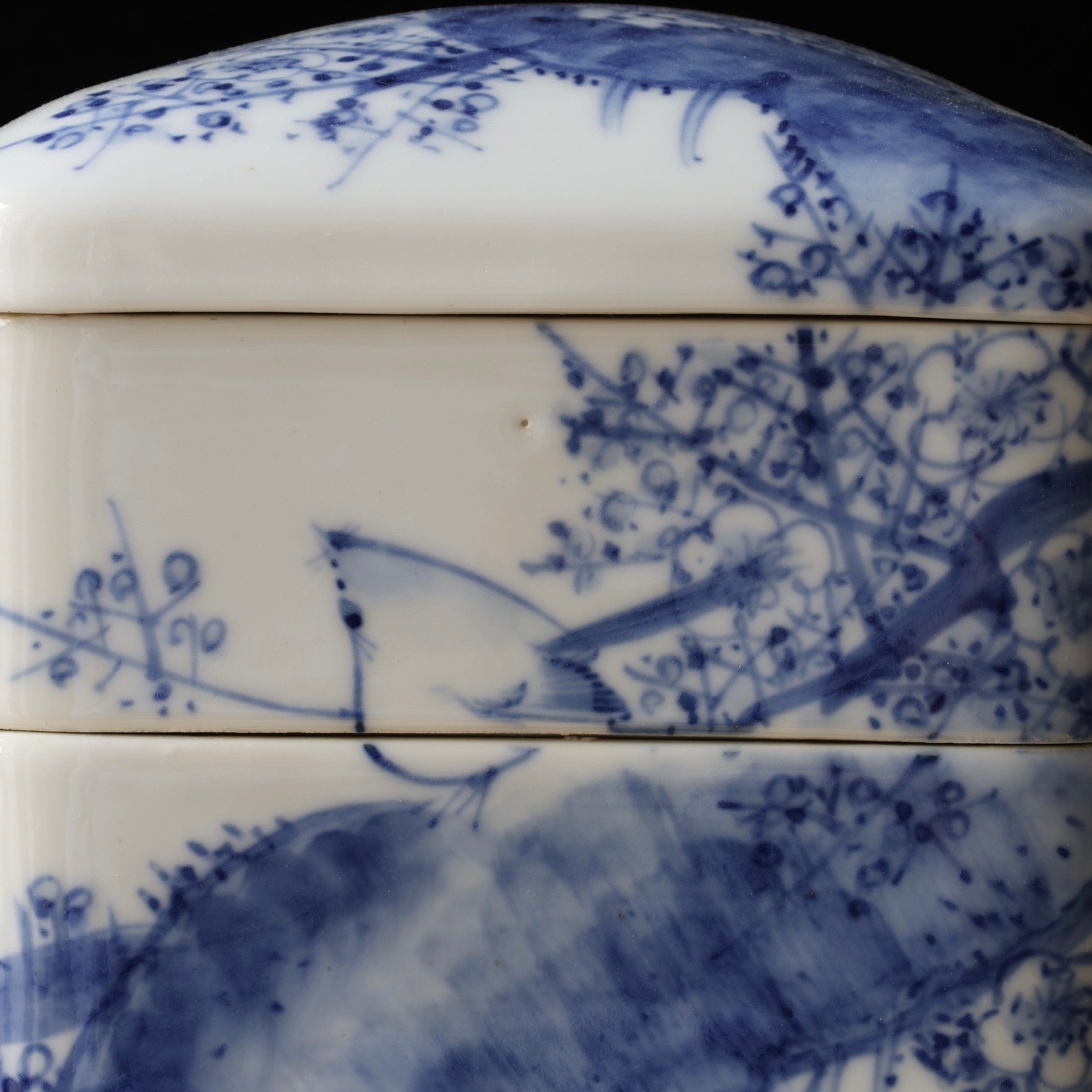
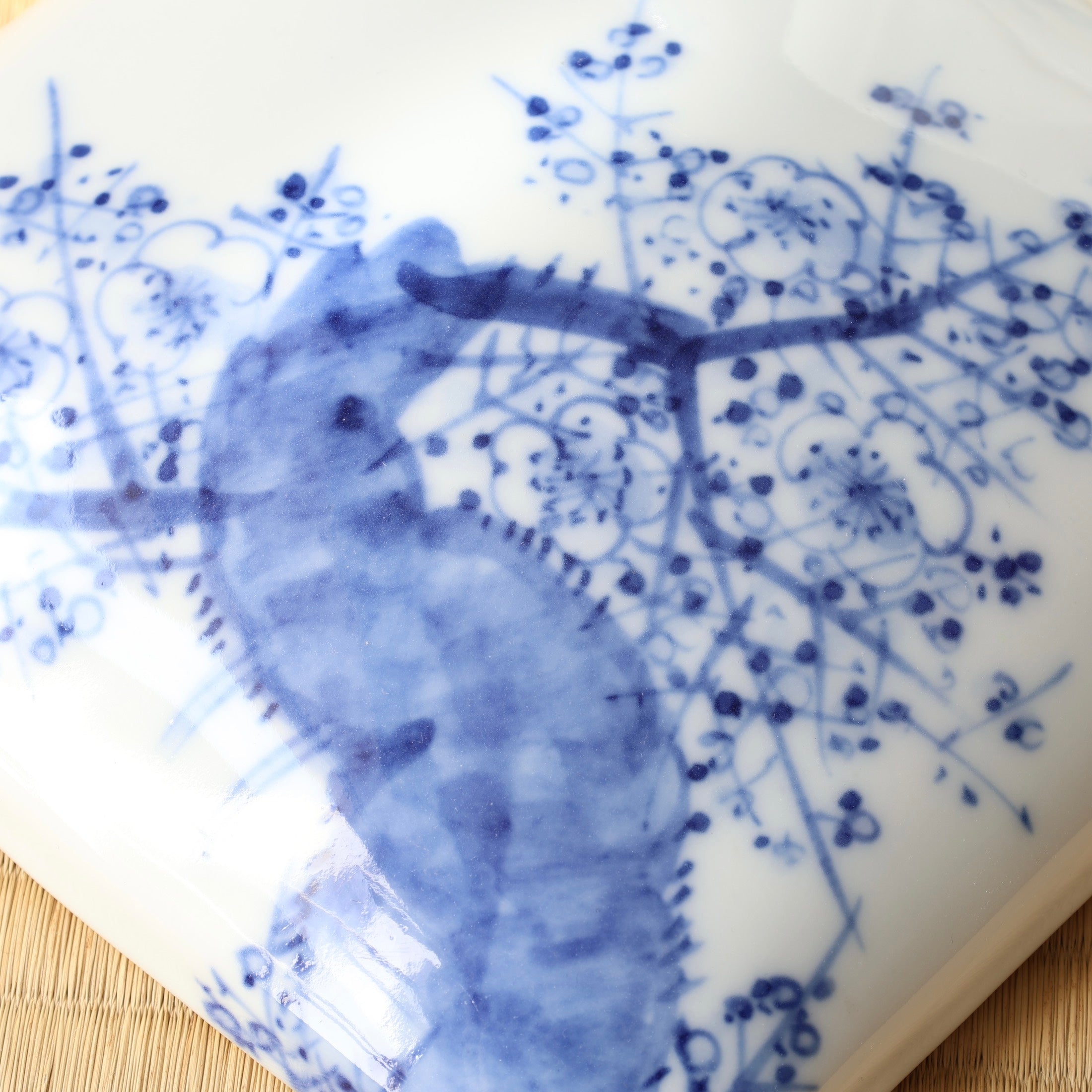
This piece is made of Imari porcelain decorated using the sometsuke technique (underglaze blue), one of the most emblematic processes in Japanese ceramics. The decoration is applied with cobalt directly onto the unfired porcelain before being covered with a transparent glaze and then fired at high temperature. The firing then reveals the different shades of blue, ranging from almost translucent washes to more intense accents.
The term Imari refers to porcelains produced in the Arita region, in the current Saga prefecture, and historically shipped from the port of Imari, which gave them their name. During the Meiji era (1868-1912), this porcelain tradition remained one of the great markers of Japanese ceramic expertise, both for the domestic market and for collectors. Decorations executed solely in cobalt blue on a white background are among the most appreciated expressions of this production, combining virtuosity of design and elegance of composition.
During the Meiji era, Japanese porcelain workshops perpetuated an already ancient tradition while developing high-quality pieces intended for both daily use and more prestigious commissions. The mastery of underglaze drawing was then a particularly sought-after sign of savoir-faire. The execution of this jubako perfectly illustrates this quest for precision and balance.
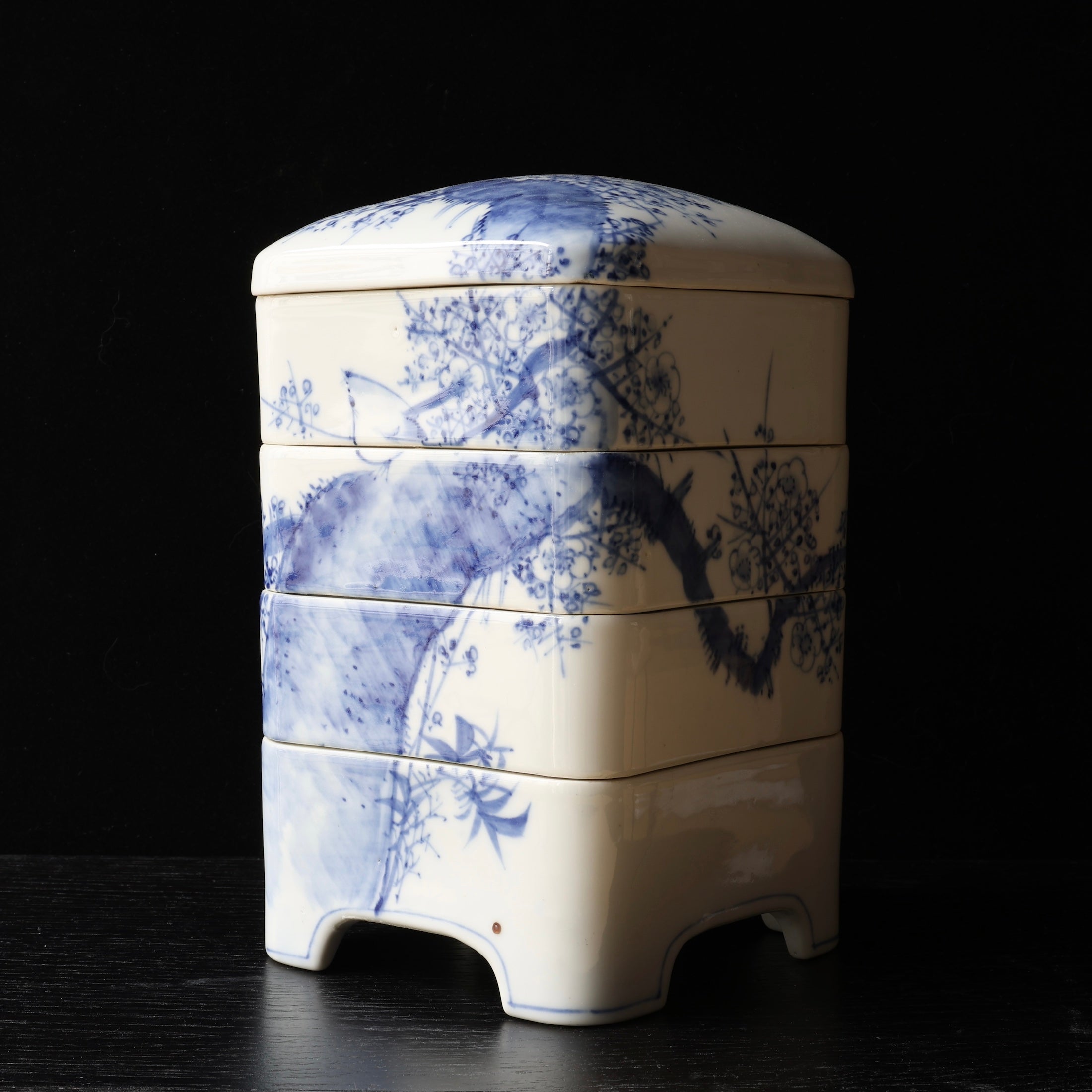
The decoration unfolds continuously over the four compartments and the lid, forming a unique composition that is fully revealed when the jubako is assembled. A bird appears among the branches of a flowering plum tree (ume). In Japanese culture, the ume is associated with spring, perseverance, and renewal. The design skillfully utilizes the different intensities of cobalt, alternating broad passages of nuanced blue with more delicate strokes for the branches, flowers, and foliage. This mastery of decoration gives the whole depth, movement, and visual coherence.
The form itself contributes to the visual strength of the object, which is also heavy. The four compartments are topped with a strongly curved lid whose curve follows the development of the decoration. The lower compartment rests on four integrated feet that provide stability and elevation while reinforcing the architectural silhouette of the piece.
Traditionally, a jubako (stacked compartment box) is used during festive meals to present different culinary preparations divided into several compartments. Today, this antique piece is primarily a remarkable collector's item. Its blue and white decoration, of great sobriety, gives it a visual presence that is both very Japanese and surprisingly contemporary. It can naturally be presented as a decorative work in its own right, but also find daily use as a storage box for various objects.
Presentation
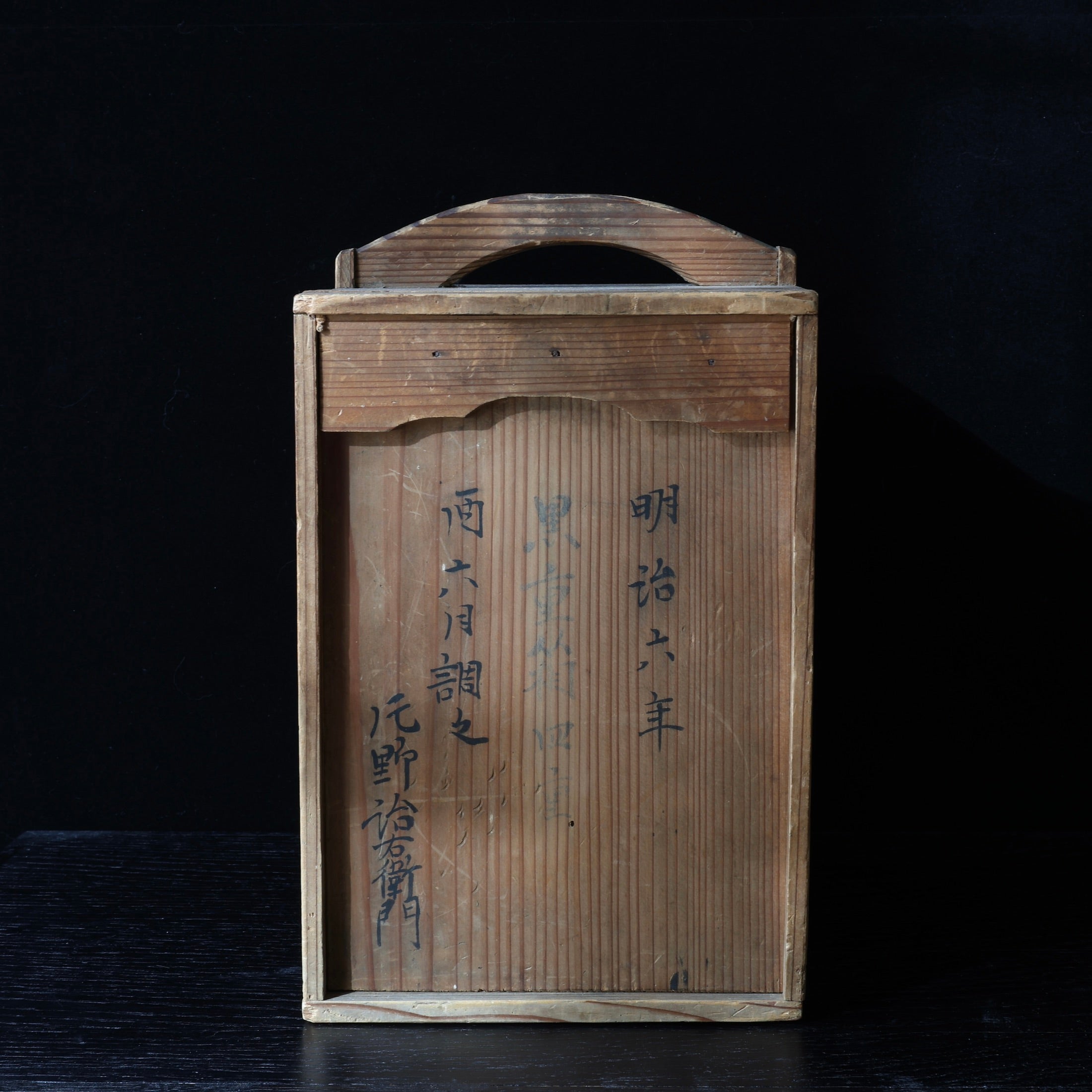
This heavy piece is accompanied by its beautiful custom-made jidaibako (period box). The inscription on the box indicates the Meiji 16 dating, which corresponds to 1883.
Practical information
Place of manufacture
Japan
Dimensions
Height 26.8 cm - Width 16.4 cm - Depth 16.4 cm
Weight
Jubako and protective box: 5.1kg
Materials
Imari porcelain
Period
1883 - Meiji Era (1868-1912)
Condition
In good condition but showing some age-appropriate marks, which fully contribute to its character (small stains and scratches). This jubako can be presented in Paris by appointment for acquisition (contact@atelierikiwa.com).
KNOW-HOW
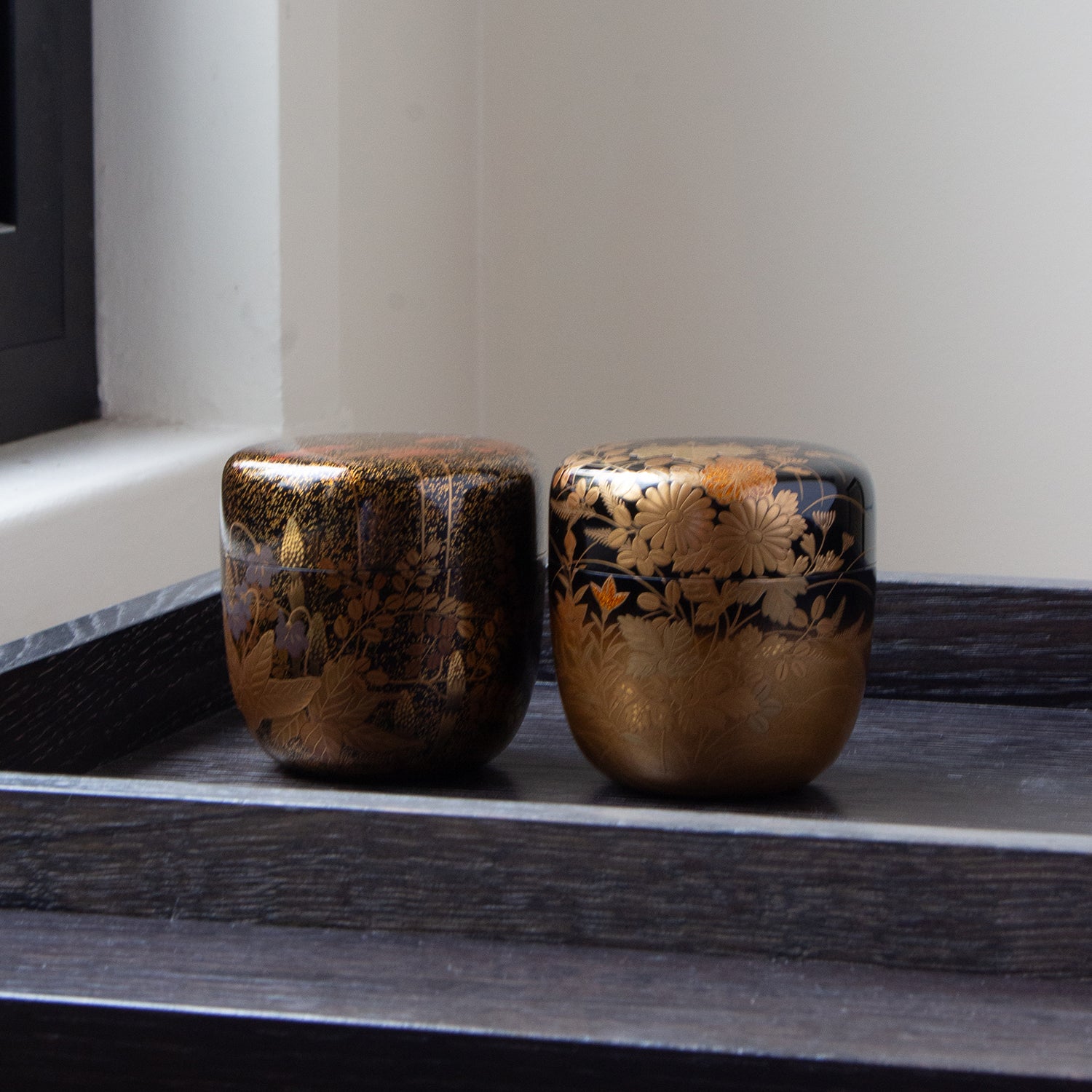
Traditional Japanese lacquer, urushi, comes from the sap of the lacquer tree (Rhus Verniciflua), which flows after incision of the bark. It is a very precious material, a tree will give a maximum of 200ml of sap in its life, which is worked by specialized craftsmen. It takes many operations, slow and meticulous, and several months of work to bring real lacquer objects to life. It is the oldest craft in Japan! Initially used to protect and waterproof objects, this immutable craft has become an art of extreme sophistication. If you want to know more about the art of Japanese lacquer, you can read our dedicated article > .
DELIVERY
Delivery
Free delivery in mainland France for purchases over €200. Orders are generally dispatched within 2 working days, except in special cases, as indicated in the banner at the top of the website.
Precious items are wrapped in beautiful fabric, beautifully knotted according to the precious Korean art of pojagi. Some exceptions apply, especially if the items are large. Learn more >
Detailed delivery information is available via this link >
Your invoice will be sent by email
Payment methods
By card (Stripe operator): Visa, MasterCard, Discover, American Express.
Secure card payment with 3D Secure.
By PayPal, Apple Pay, Google Pay and Shop Pay
Returns and exchanges
14 days to change your mind.
CARE INSTRUCTIONS
Clean with a very soft cloth to avoid scratches, soaked in a little warm water if necessary (never soak your lacquer objects). No microwave, dishwasher, dryer. Do not expose to direct sunlight for a long time (risk of discoloration). If the atmosphere is very dry and very hot, and to avoid the risk of cracking, you can place a glass filled with water next to your lacquer object.
Choose options
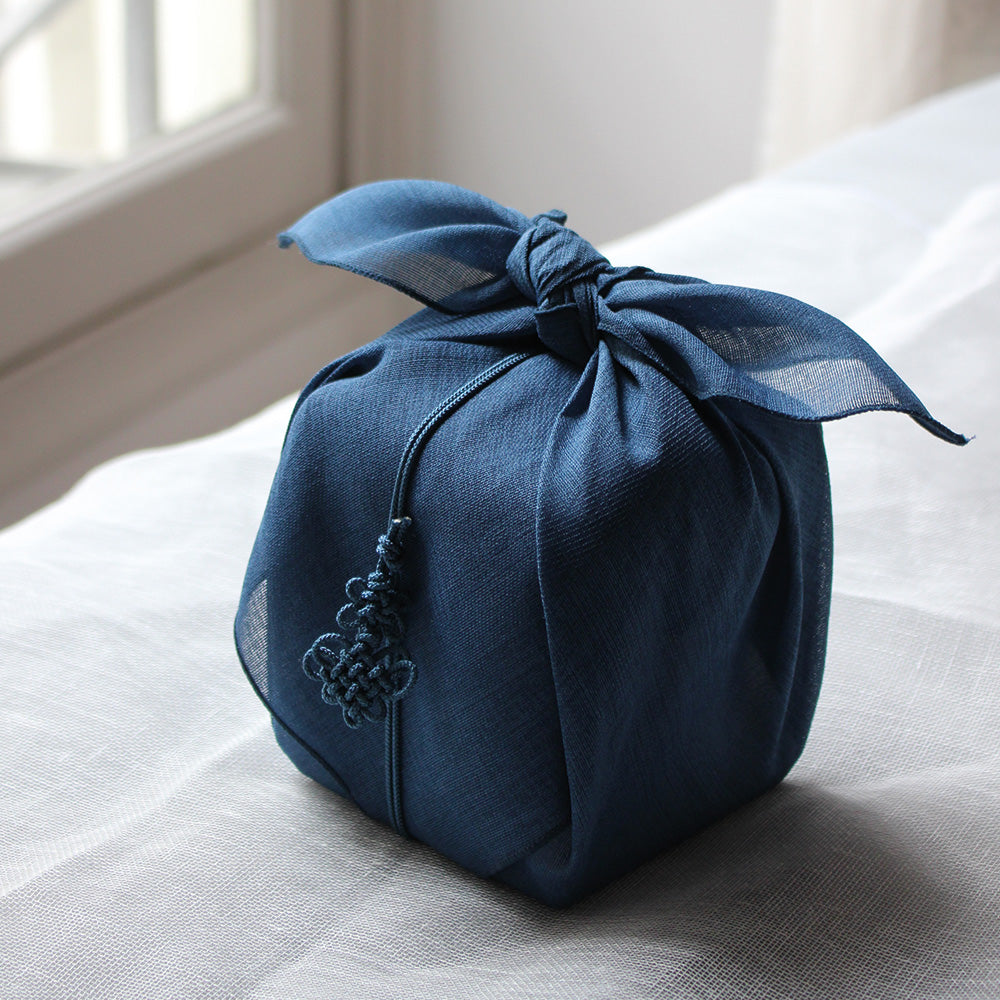
The art of wrapping
The exceptional items are wrapped in a beautiful fabric beautifully knotted using the little-known art of Korean pojagi and decorated with a delightful maedup (Korean ornamental knot). Details and conditions >

WRAPPING
Precious objects are wrapped in textiles tied using the Korean art of pojagi.