

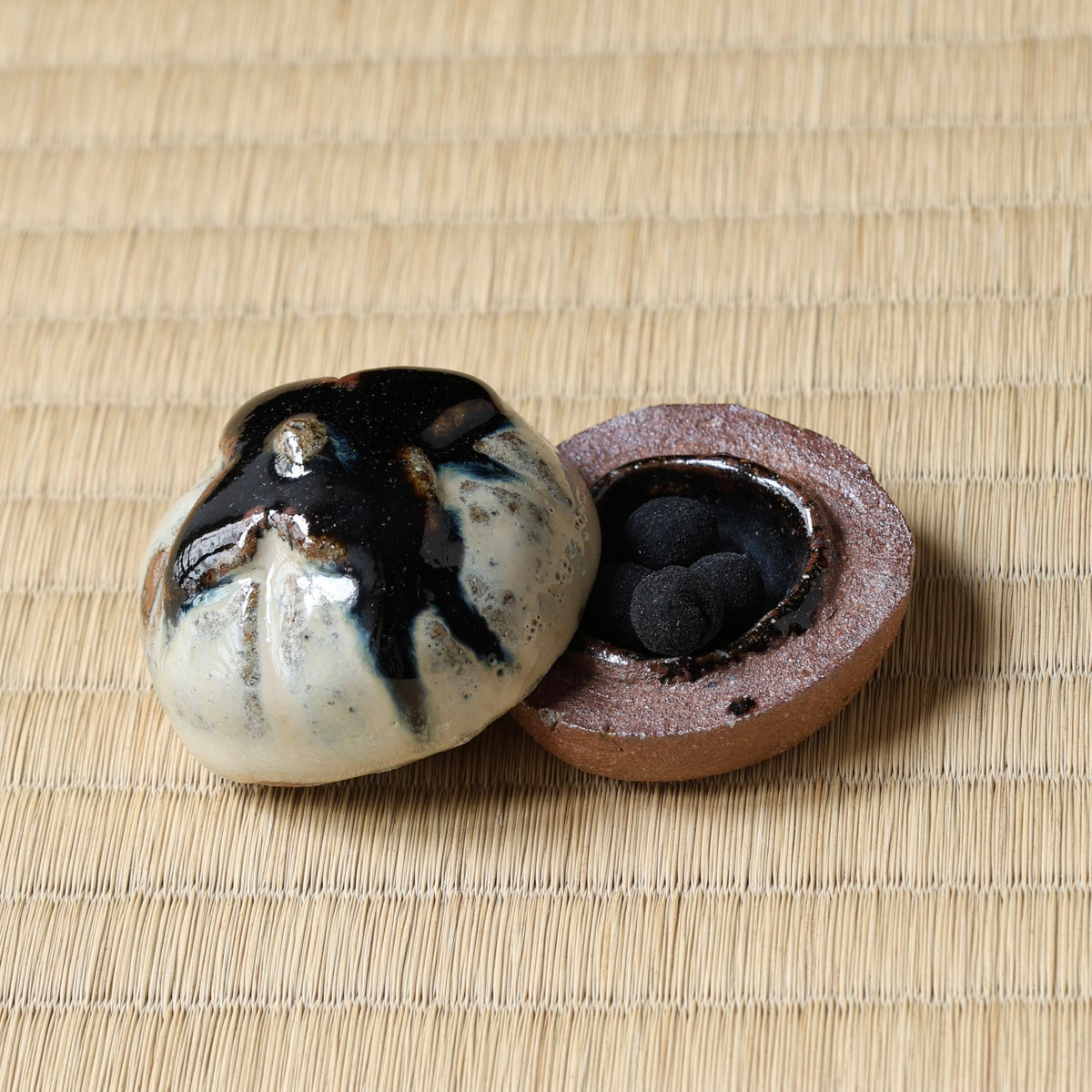
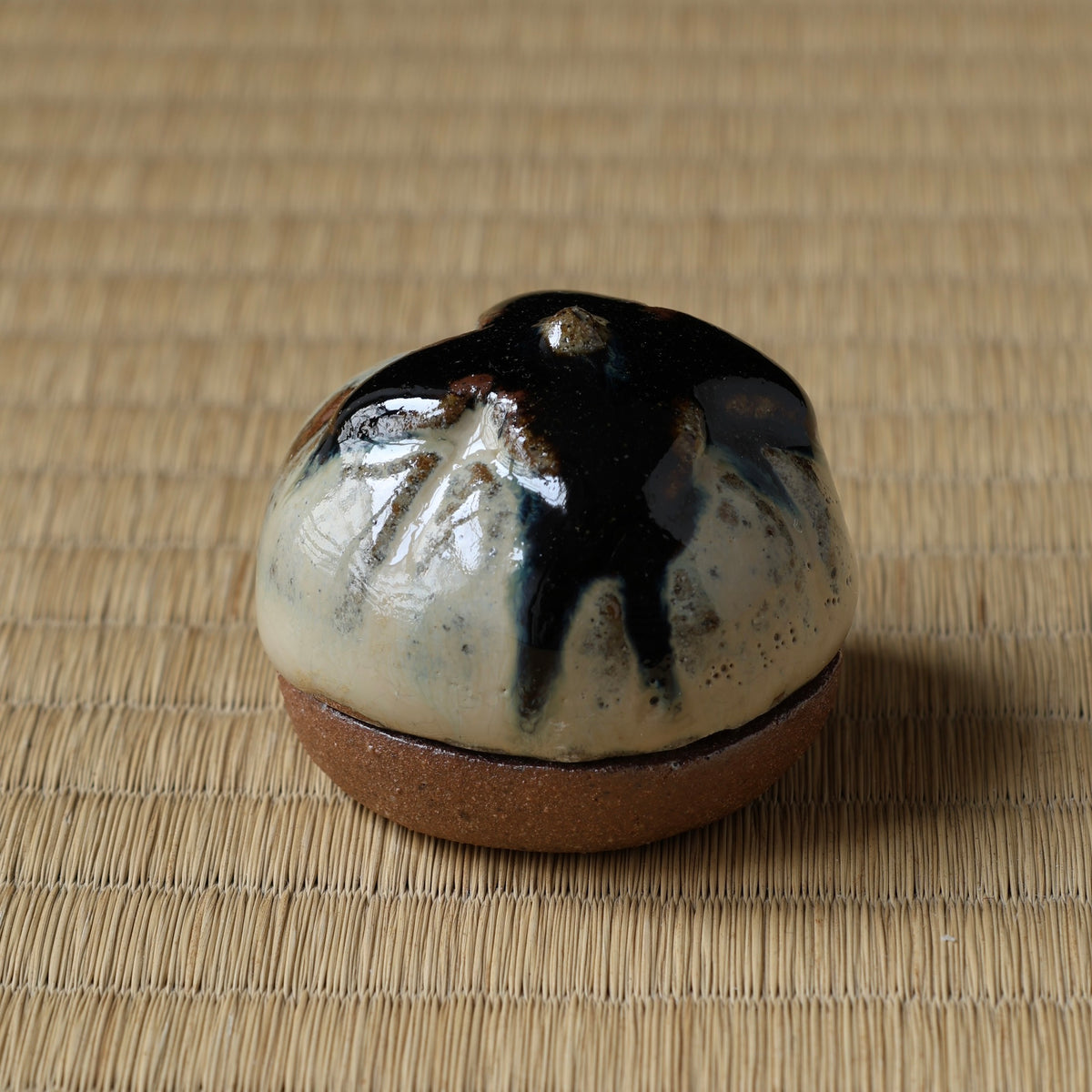
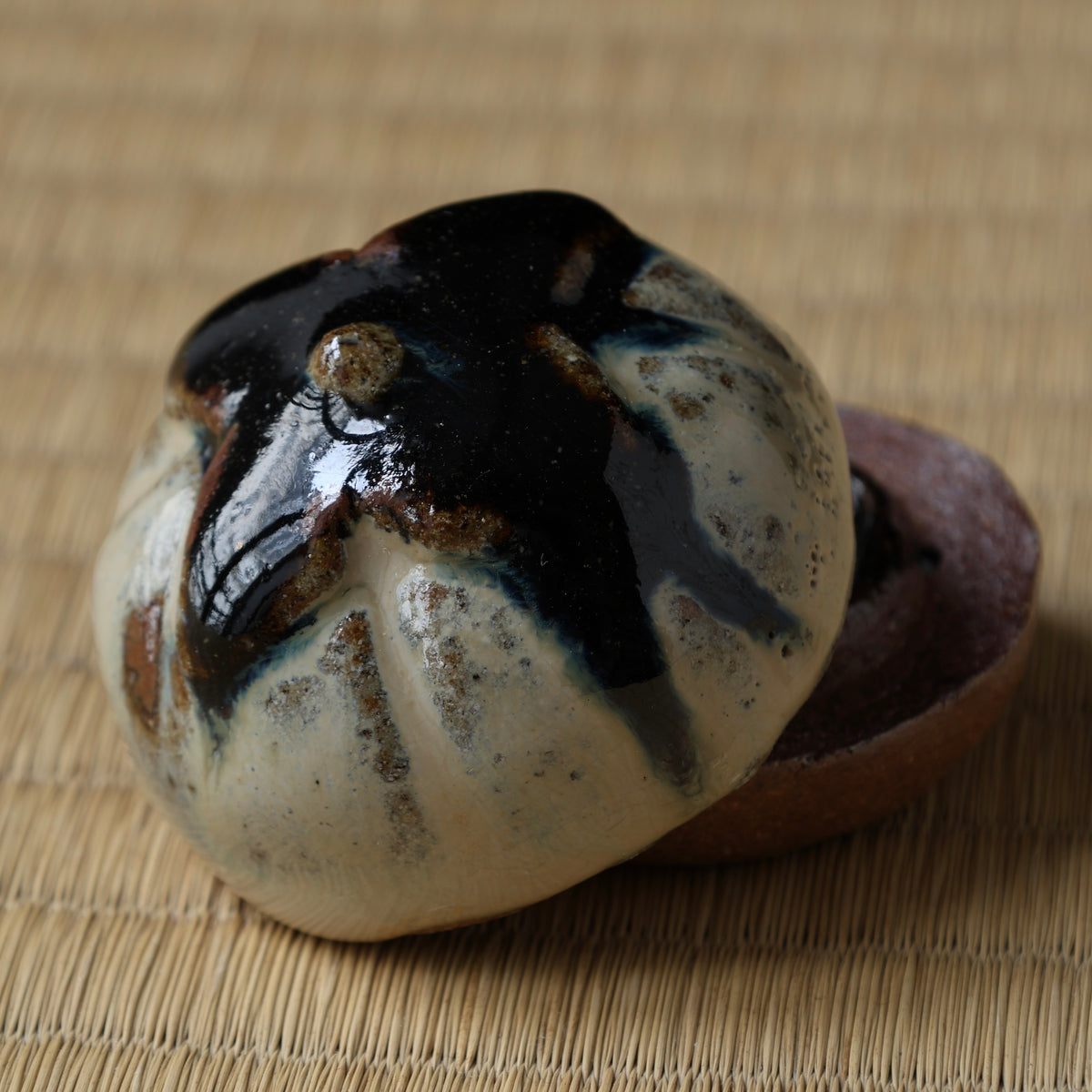
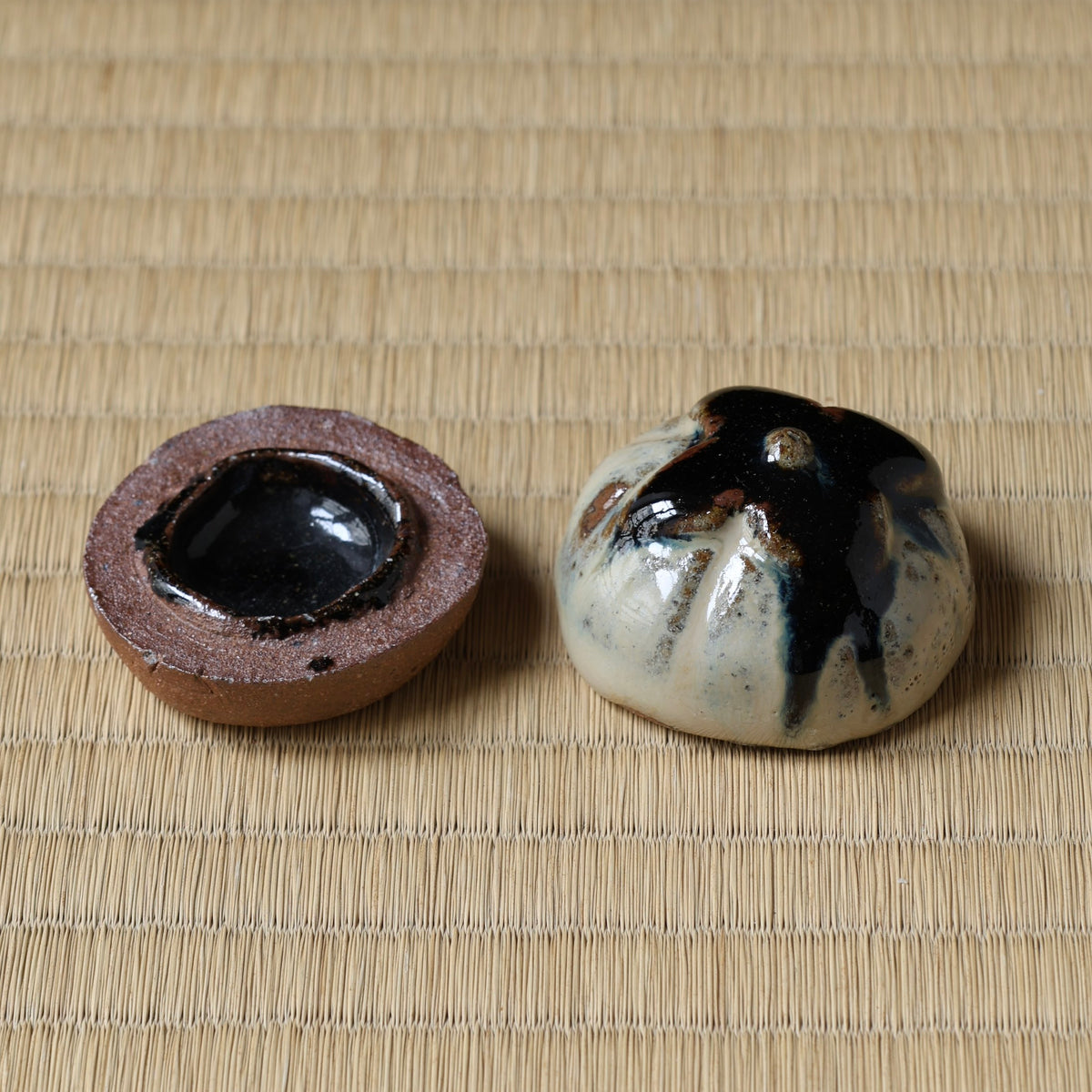
Karatsu ceramic kōgō by Yoshiaki Kojima and Japanese nerikō (incense balls)
In the art of Japanese incense, the kōgō is a small, precious box that preserves and enhances nerikō, refined incense pellets made from precious woods and spices.
Together, they embody a sensory tradition characterized by elegant gestures and subtle fragrances, which Atelier Ikiwa was keen to celebrate by offering a carefully curated selection of superb kōgō to collect, including this one by ceramicist Yoshiaki Kojima, accompanied by its box of nerikō to introduce this little-known art.
The artisan
Yoshiaki Kojima is a Japanese ceramicist who founded the Sōgen-gama kiln in 1980 within the grounds of Ennichiji Temple in Karatsu, Saga Prefecture. He has dedicated his work to rediscovering the techniques of ancient Karatsu, a ceramic tradition particularly esteemed in the world of the tea ceremony.
Passionate about ancient ceramics, he visits historic production sites in search of pottery fragments, clays, and raw materials that will allow him to recreate the methods used by potters in centuries past. His research focuses in particular on clay composition, glazes, and firing effects, with the aim of restoring the natural character and aesthetic qualities of ancient Karatsu ceramics.
This approach is part of the 20th-century movement to rediscover ancient Karatsu. His son, Naoki Kojima, born in 1962, continues this tradition at the Sōgen-gama kiln.
Technique and decoration
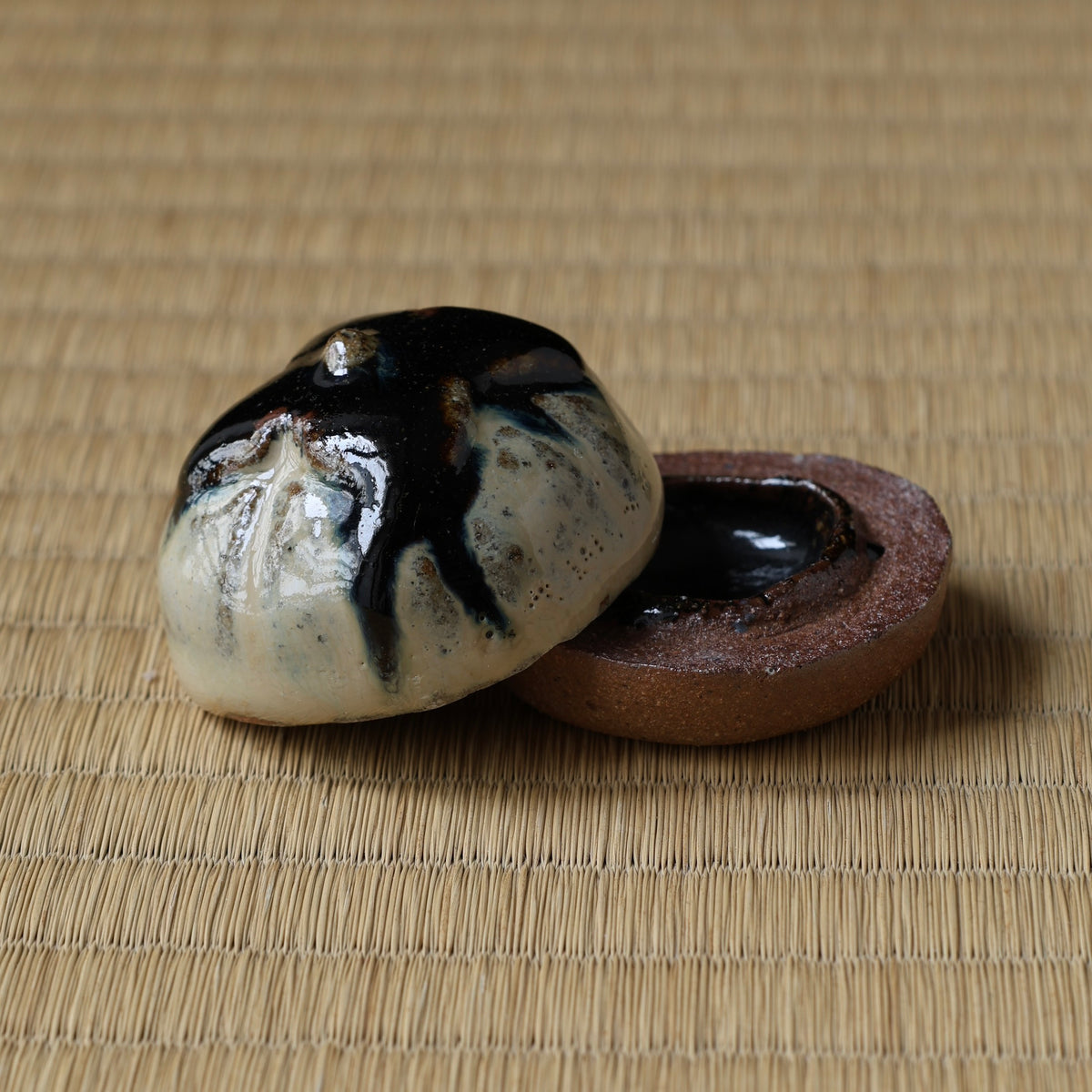
This small Karatsu ceramic kōgō takes the form of a persimmon, its rounded volumes and contours modeled in the clay before firing. Its creation combines the sculptural shaping of the form with a traditional glazing technique particularly prized in Karatsu ceramics.
Korean Karatsu (Chōsen Karatsu) is based on the combination of two glazes: a light, ash-based glaze and a dark, iron-rich glaze. During high-temperature firing, the glazes melt, meet, and produce drips in varying shades, their distribution depending on their thickness, the shape of the piece, and the firing conditions.
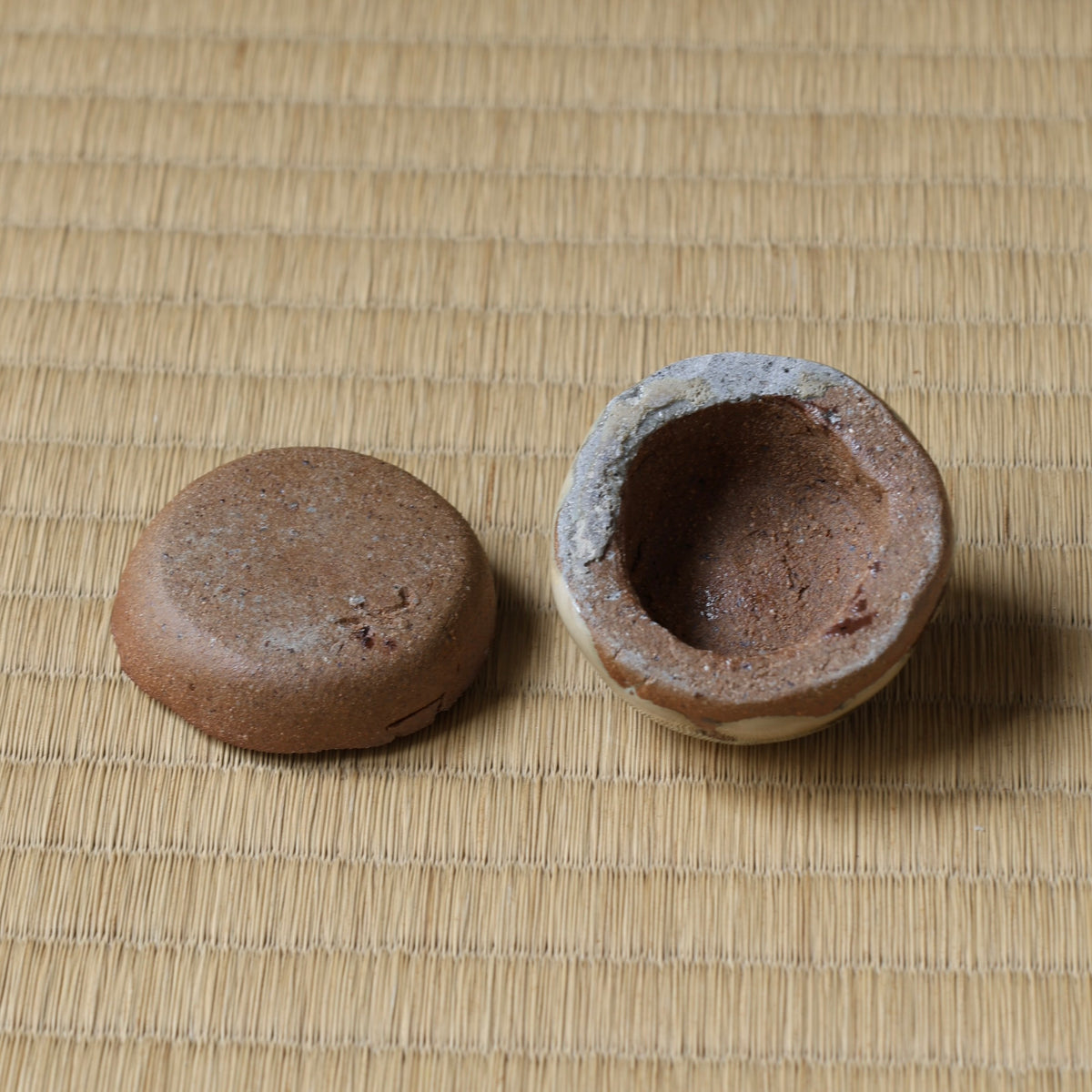
On this kōgō, the glossy black glaze runs down from the top of the fruit over a cream background, creating deep contrasts with the reddish-brown clay left exposed on the lower part. These effects of material and firing give this piece its full richness, faithful to the spirit of ancient Karatsu ceramics.
The ceramicist has signed the kōgō at its base, and it is available as a single piece.
The nerikō
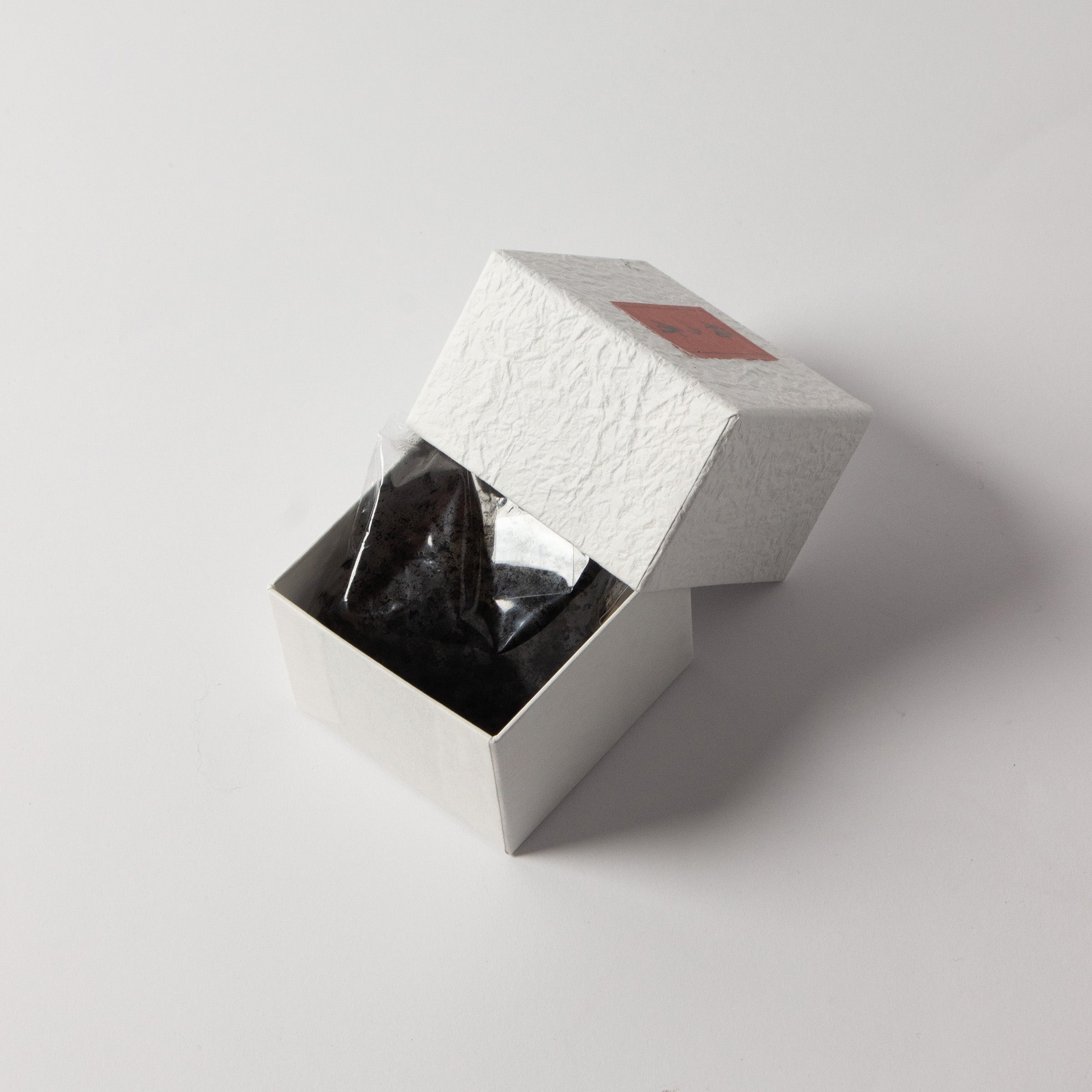
To enjoy the kōgō as intended, a box of nerikō is also included. This box contains thirty-six nerikō pellets, each made from a delicately scented blend based on sandalwood, created by one of Kyoto’s oldest incense houses. To use them, place two or three in the kōgō and leave the lid slightly ajar. To stop the fragrance from spreading, simply close the lid.
The nerikō pellets should be replaced when they become dry. It is important to keep unused nerikō in their hermetically sealed plastic bag so that they do not dry out.
To discover the art of Japanese kōgō and nerikō, we invite you to read the article we have written on the subject, available via this link. Other kōgō are available on the website; please feel free to browse our selection.
Beyond their traditional use with nerikō, kōgō are also valuable decorative and collectible objects. The richness of this Japanese tradition, the diversity of forms and decorations, and the expertise of renowned ceramicists and artisans make it a fascinating collection to build over time. Collecting kōgō also offers a way to enter the world of great Japanese ceramicists through more intimate creations. Atelier Ikiwa offers a selection of kōgō carefully chosen for their artistic quality and uniqueness.
Practical information
Place of manufacture
Karatsu, Saga Prefecture, Japan
Dimensions
Diameter 4.8 cm - Height 4 cm
Weight (with box)
178 g
Materials
Karatsu ceramic
Accessories
For the kōgō:
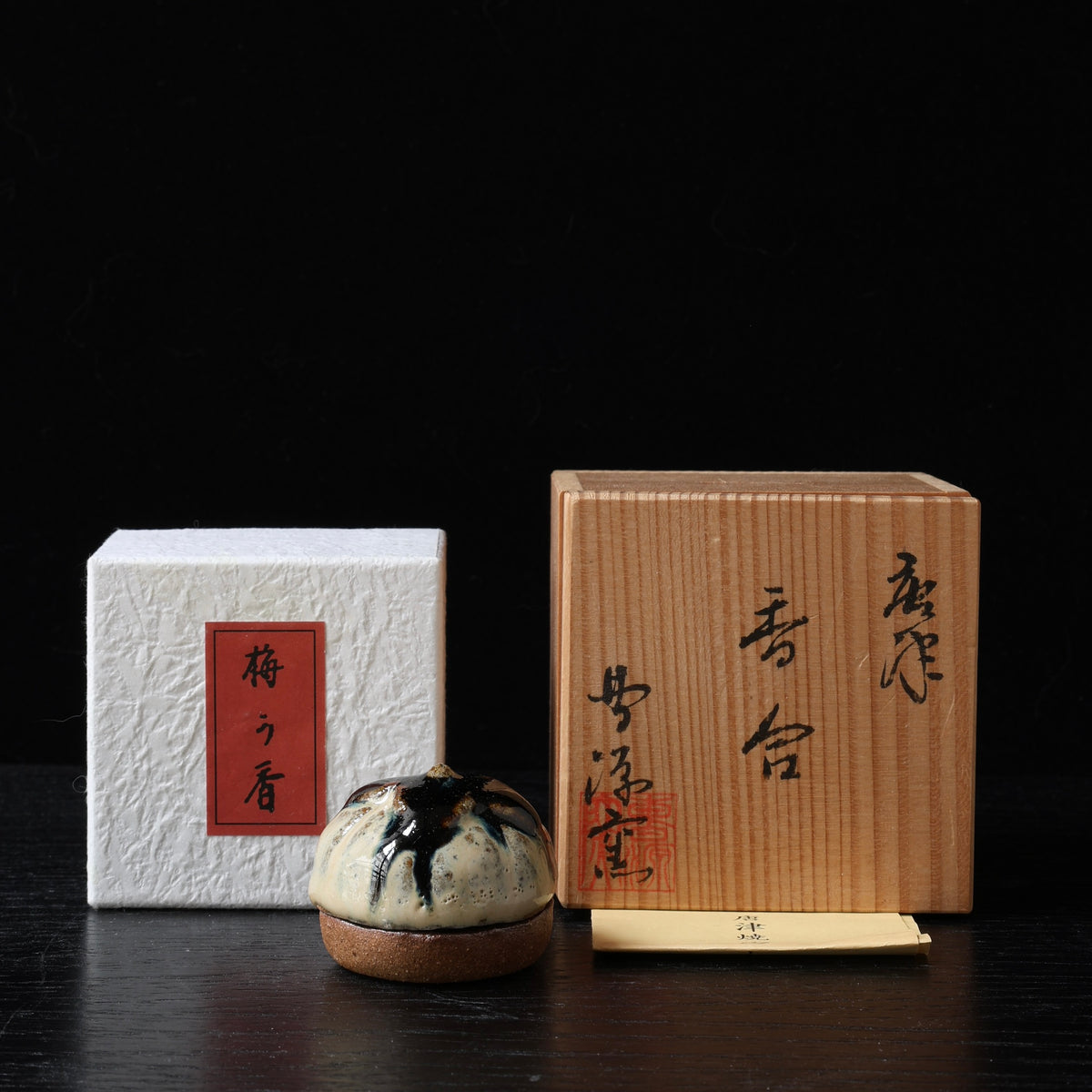
Paulownia box (tomobako) signed and bearing the ceramicist’s seal, accompanied by an information sheet (shiori).
For the nerikō:
Box containing thirty-six nerikō pellets.
The kōgō and nerikō will be packaged together in an elegant box with an embossed paper band featuring plum blossoms, specially designed by Atelier Ikiwa and finished by hand. A descriptive sheet about the kōgō and the use of nerikō accompanies the set, making it an original and elegant gift ready to give.
Directions for use
Place two or three nerikō pellets in the kōgō, leave the lid slightly ajar to release the fragrance, or close it to stop the fragrance from spreading. Replace the pellets when they become dry and keep unused pellets in their airtight bag.
Keep out of reach of children and animals. Do not ingest. Avoid prolonged contact with the skin. If discomfort or olfactory sensitivity occurs, discontinue use. Store away from heat, moisture, and direct light.
© Atelier Ikiwa – Laurence Corteggiani. Photos and texts protected. All reproduction prohibited without permission.
DELIVERY AND PAYMENT OPTIONS
Shipping
Free shipping in mainland France for purchases of €200 or more. Shipped with Colissimo, you can choose home delivery or a pickup point. Parcels are delivered against signature or a unique code for valuable items. Orders are generally dispatched within 2 business days, except for fine art photographs, which are printed on demand, and special cases, which will be announced in the banner at the top of the website (e.g., in case of absence). Learn more >
Payment Options
Secure card payment with Shopify Payments and 3D Secure technology.
Visa, MasterCard, American Express, Cartes Bancaires, PayPal, Apple Pay, Shop Pay, and Klarna.
Klarna: Pay in 3 interest-free installments or within 30 days, for purchases up to €1,500, subject to Klarna's acceptance. You will be redirected to Klarna to log in or create an account and confirm your payment.
PayPal: You will be redirected to PayPal to log in and confirm payment. New users can create an account during checkout.
Your invoice will be sent with your order.
Returns and Exchanges
14 days to change your mind. Learn more >
Choose options
WRAPPING
Exceptional items are wrapped in textiles tied according to the Korean pojagi art