

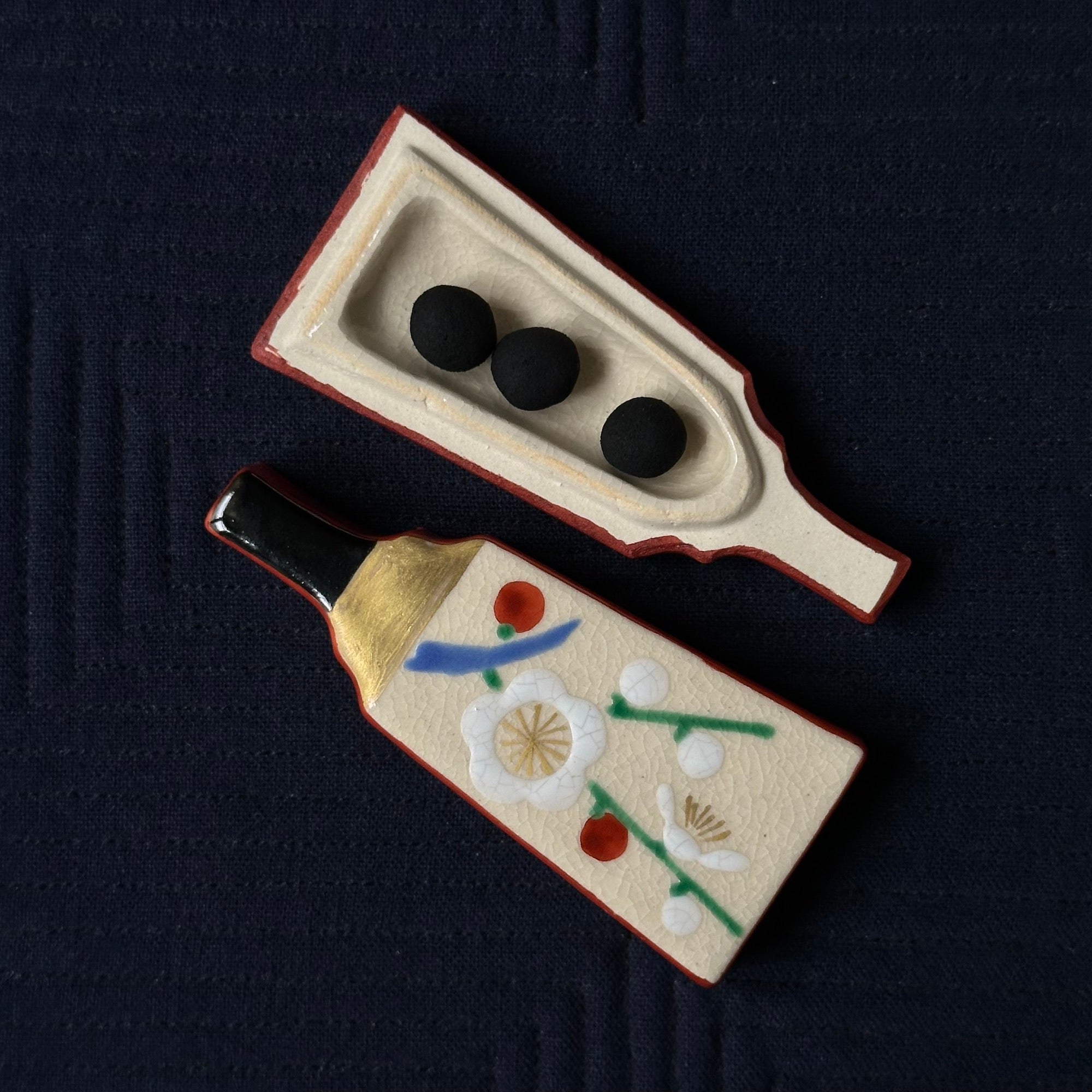
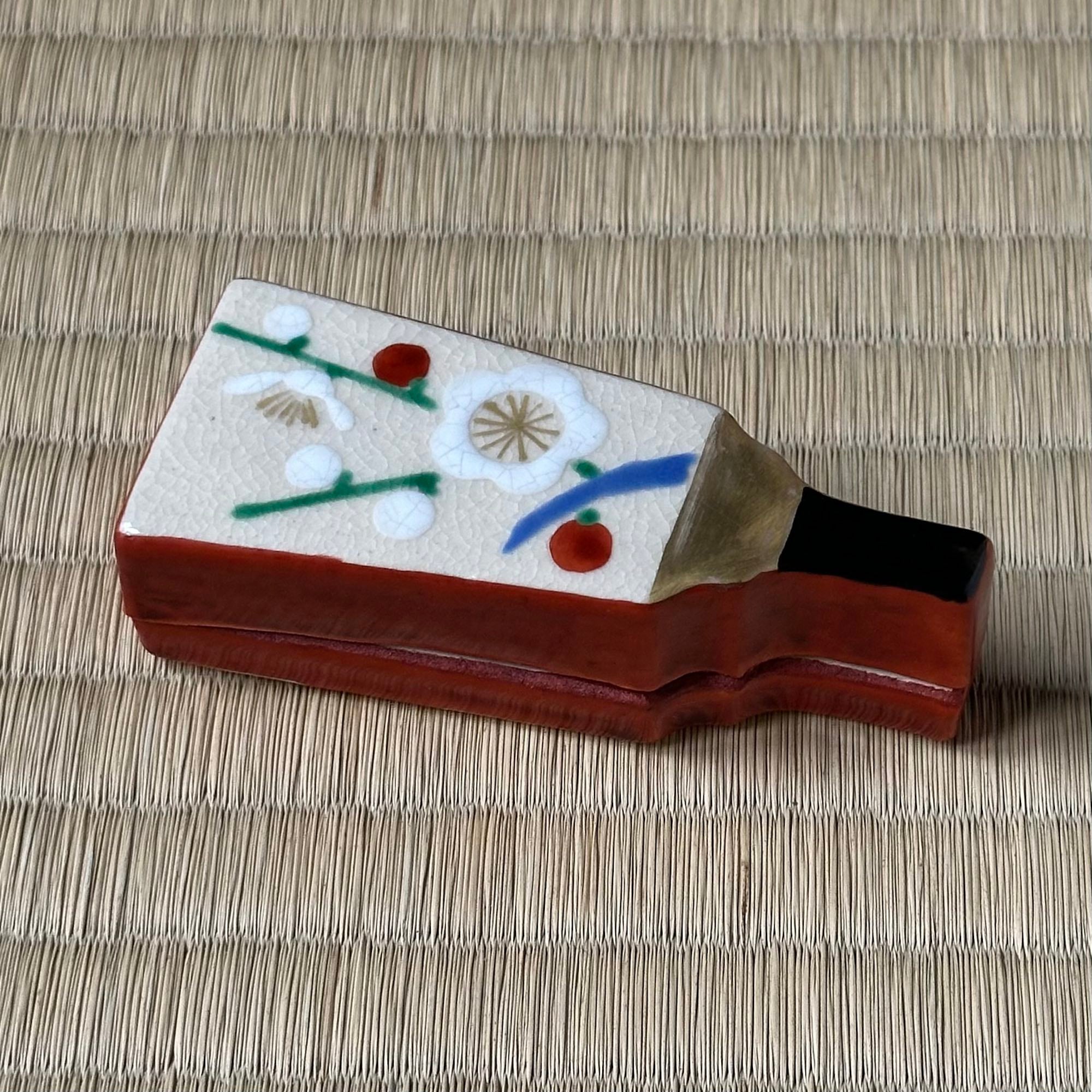
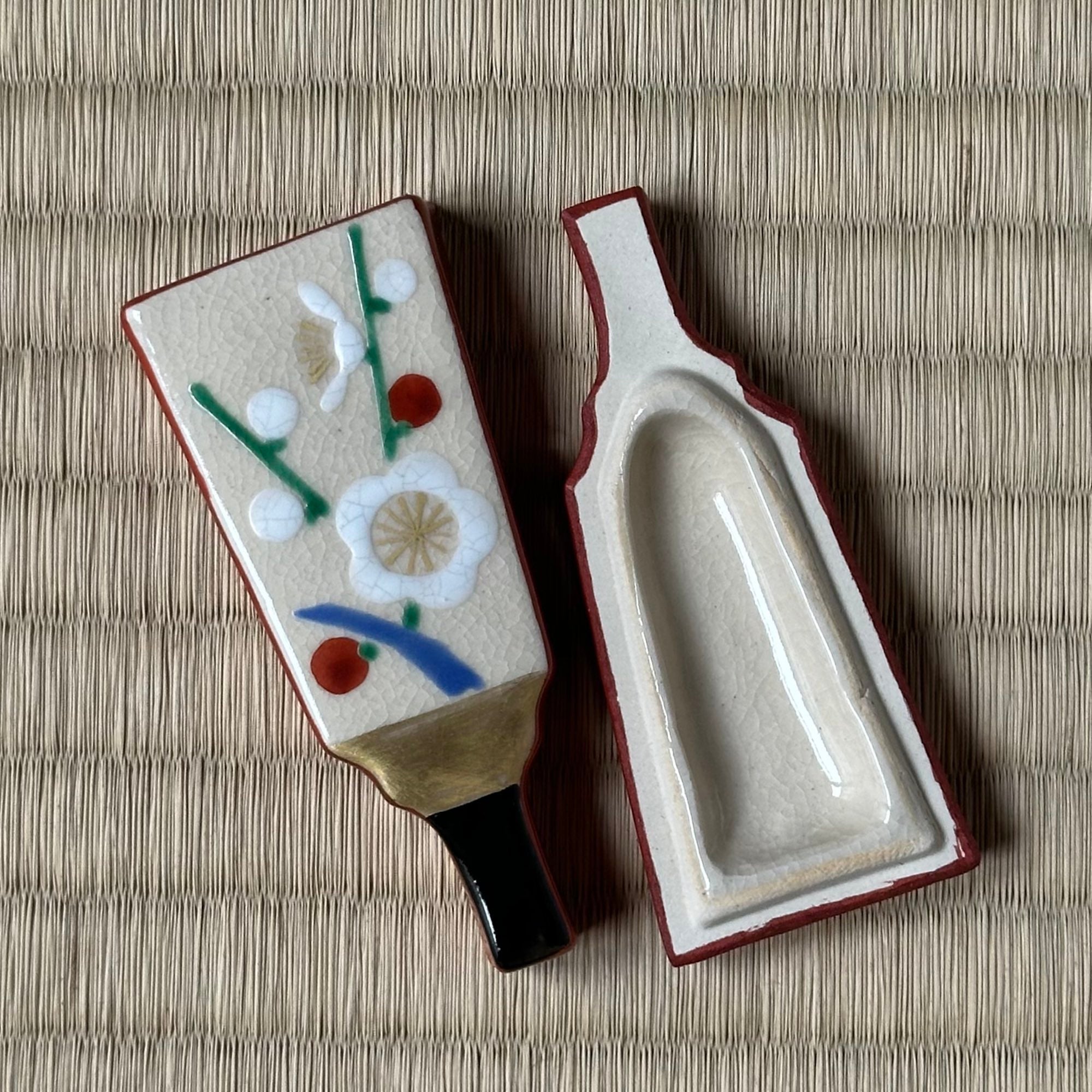
Kutani ceramic kogo with kōhaku bai (red and white plum trees) decoration by Tachikichi and Japanese nerikō (incense balls)
In the art of Japanese incense, the kōgō is a precious small box that preserves and enhances nerikō, refined incense pellets made from precious woods and spices. Together, they embody a sensory tradition rooted in elegant gestures and subtle fragrances, which Atelier Ikiwa was keen to celebrate by offering a meticulous selection of superb kōgō, here signed by the Tachikichi ceramics house, accompanied by their box of nerikō to introduce this little-known art.
The artisan
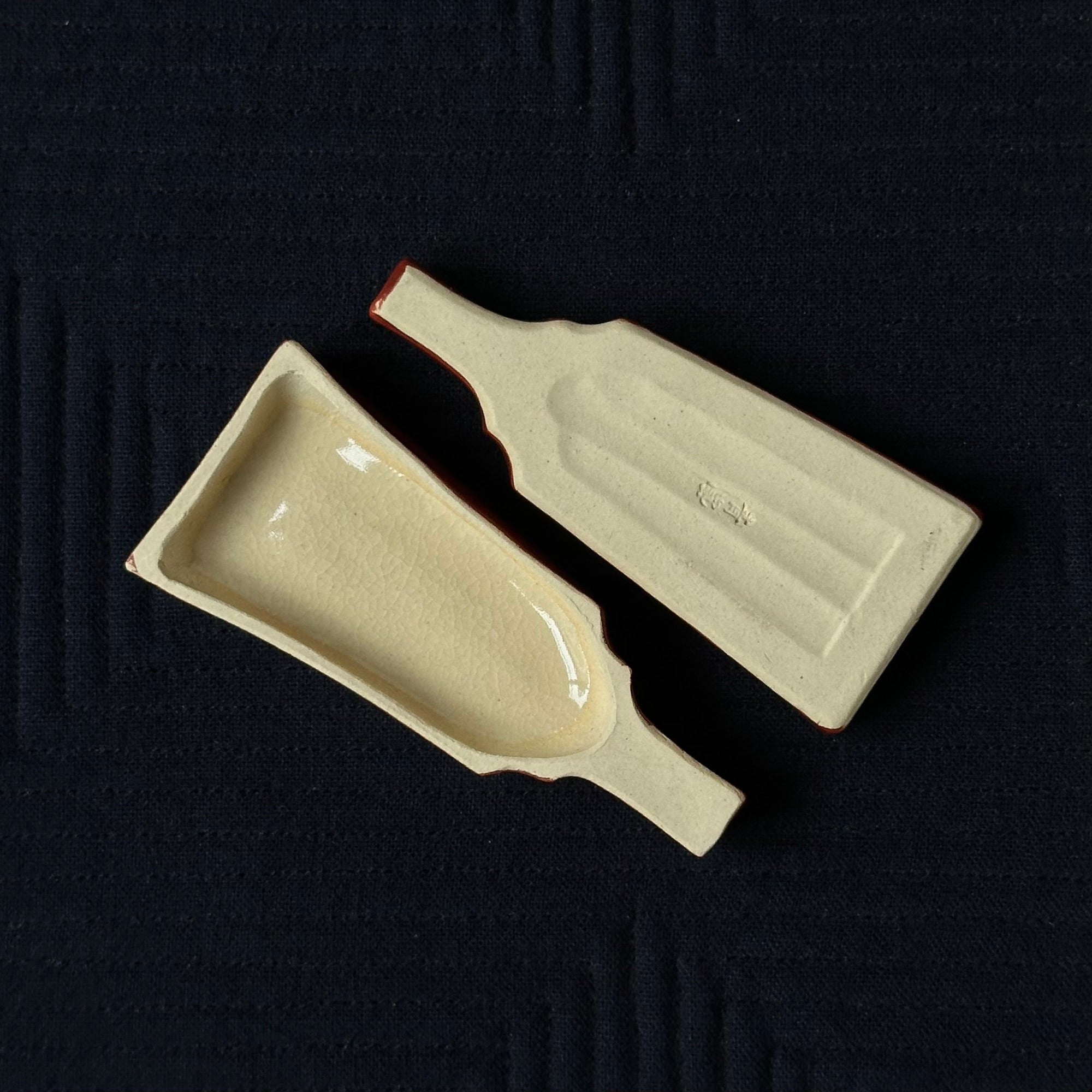
Tachikichi is an important Kyoto ceramics house founded in the 18th century and still active today. During the 20th century, it collaborated with many workshops and ceramists in Kyoto to produce pieces for chanoyu (the Way of Tea) and Japanese tableware. The mention Seiran-gama here refers to the workshop that made this piece. Productions associated with Tachikichi are particularly sought after for the fineness of their painted decorations, the quality of their glazes, and their elegant interpretation of traditional Japanese motifs.
Technique and decoration
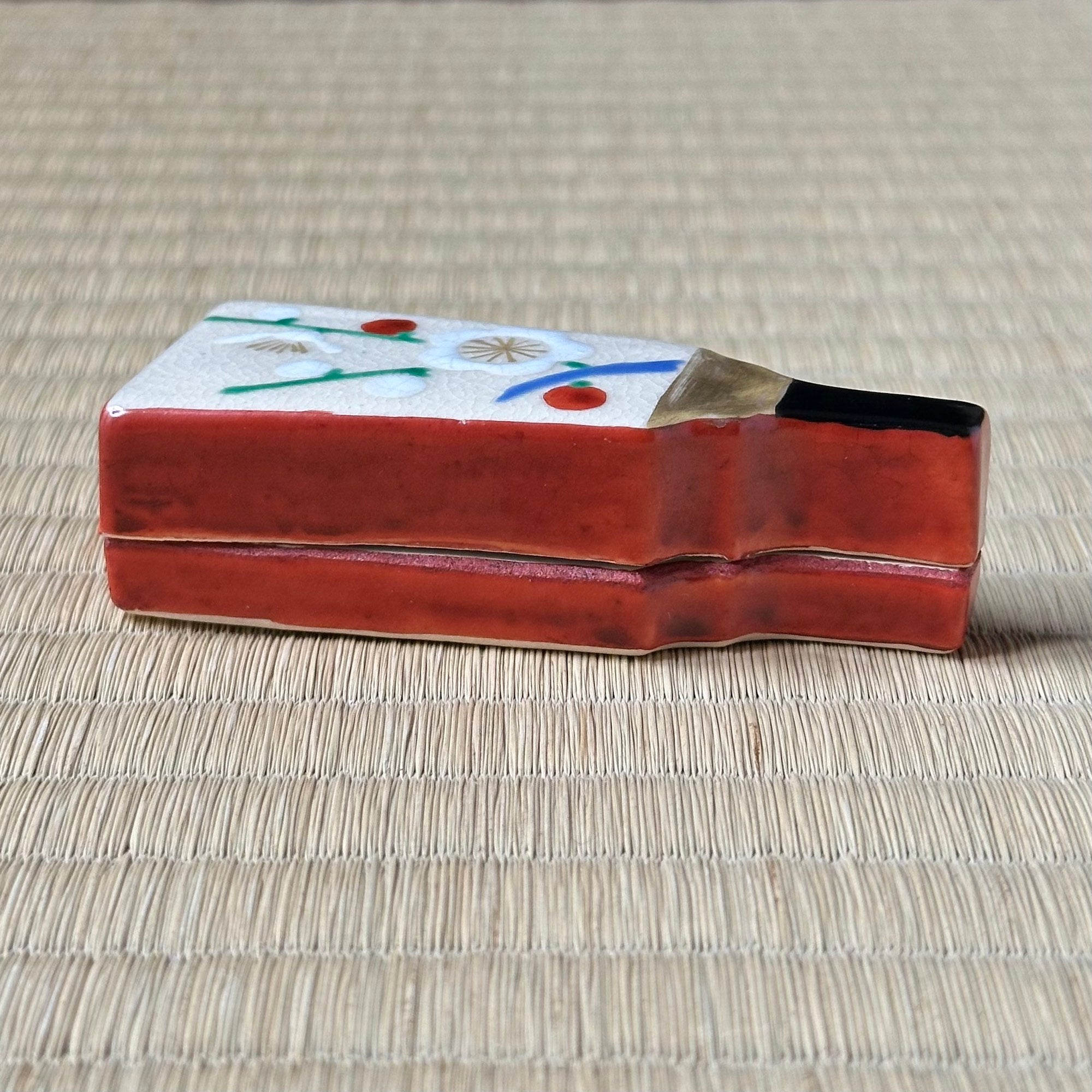
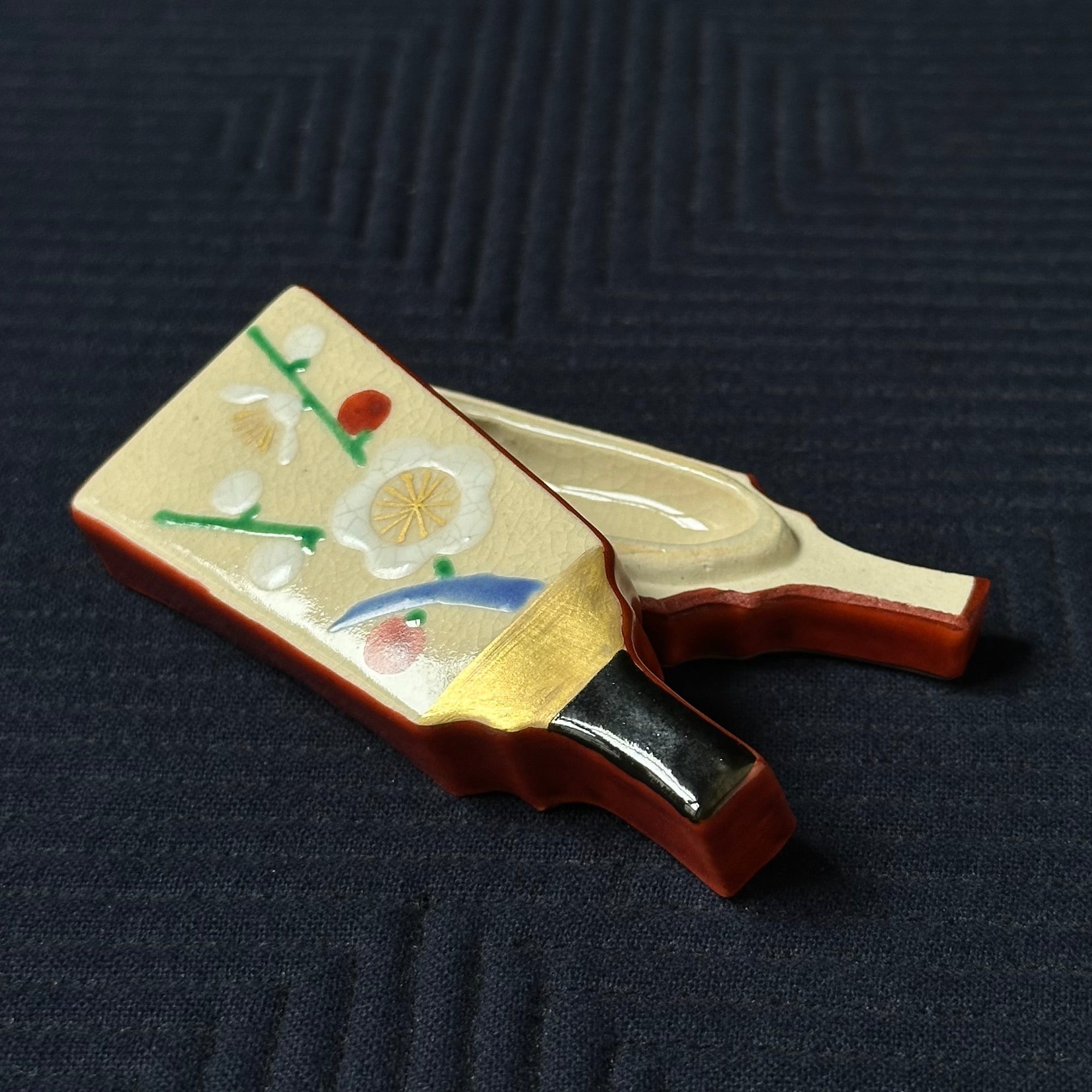
This kōgō takes the form of a hagoita, a traditional Japanese racket associated with New Year celebrations. In Japan, the hagoita is considered a good luck charm and a protective symbol, which reinforces the auspicious dimension of this piece.
The decoration depicts kōhaku bai (red and white plum trees), a traditional motif associated with New Year and the arrival of spring in Japan. The flowers, buds, and branches were painted using an iroe (colored enamels) technique on a clear glaze featuring a fine network of natural crazing. Some areas are enhanced with delicate kinzai (gold decoration).
The vibrancy of the colors contrasts sharply with the light background and with the sides covered in a deep red typical of certain decorative productions from Kyoto. The decoration, very meticulous despite the small size of the piece, combines precision of drawing with simplicity of composition.
The nerikō
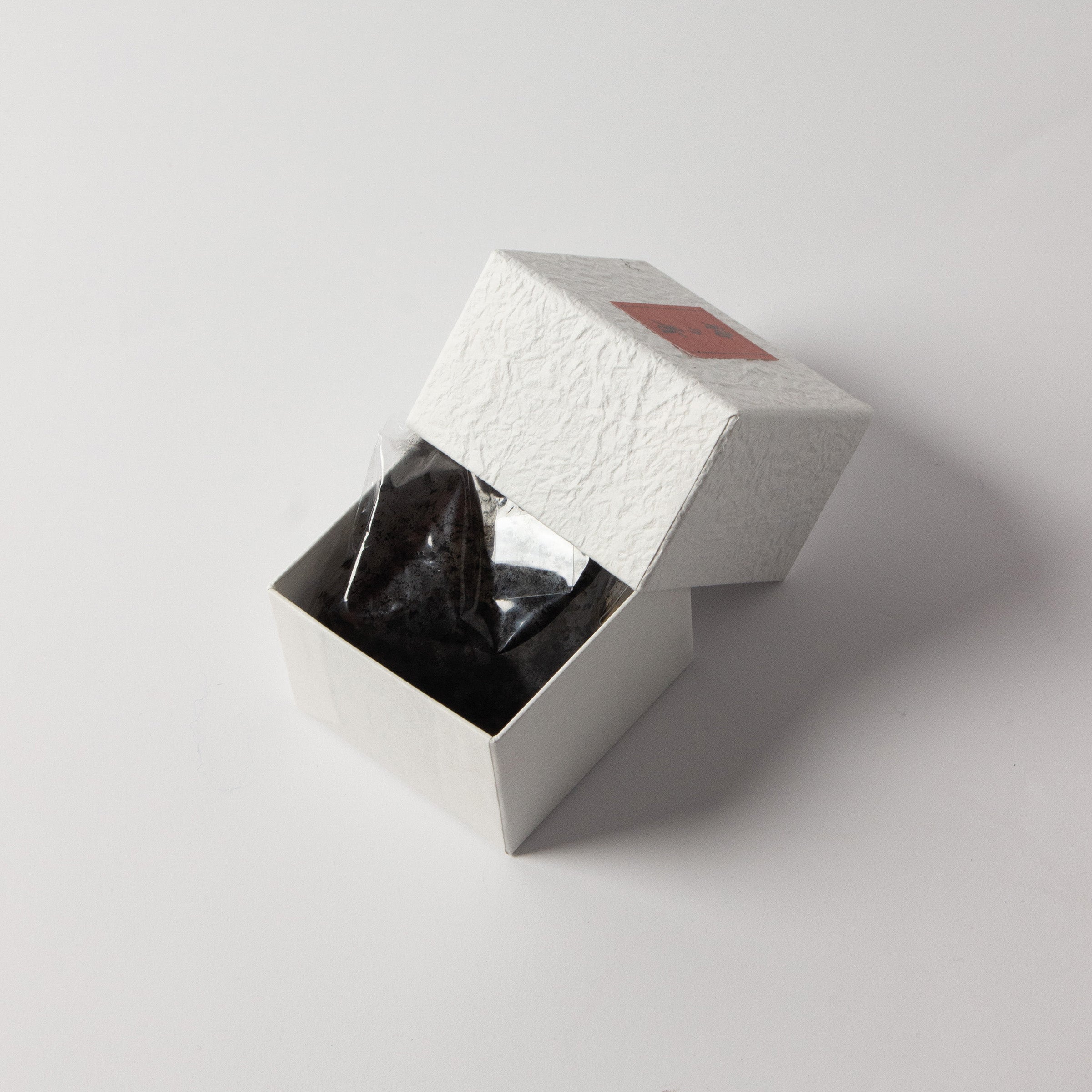
To enjoy the kōgō as intended, a box of nerikō is also included. This box contains thirty-six nerikō balls, each made from a delicately fragrant blend with a sandalwood base, created by one of Kyoto's oldest incense houses. To use them, place two or three in the kōgō, and leave the lid slightly ajar. If you want to stop the diffusion of the scent, simply close the lid. Nerikō balls should be replaced when they become dry. It is important to keep unused nerikō in the hermetically sealed plastic bag to prevent them from drying out.
To discover the art of Japanese kōgō and nerikō, we invite you to read the article we wrote on the subject, available via this link. Other kōgō are available on the site, feel free to browse our selection.
Presentation
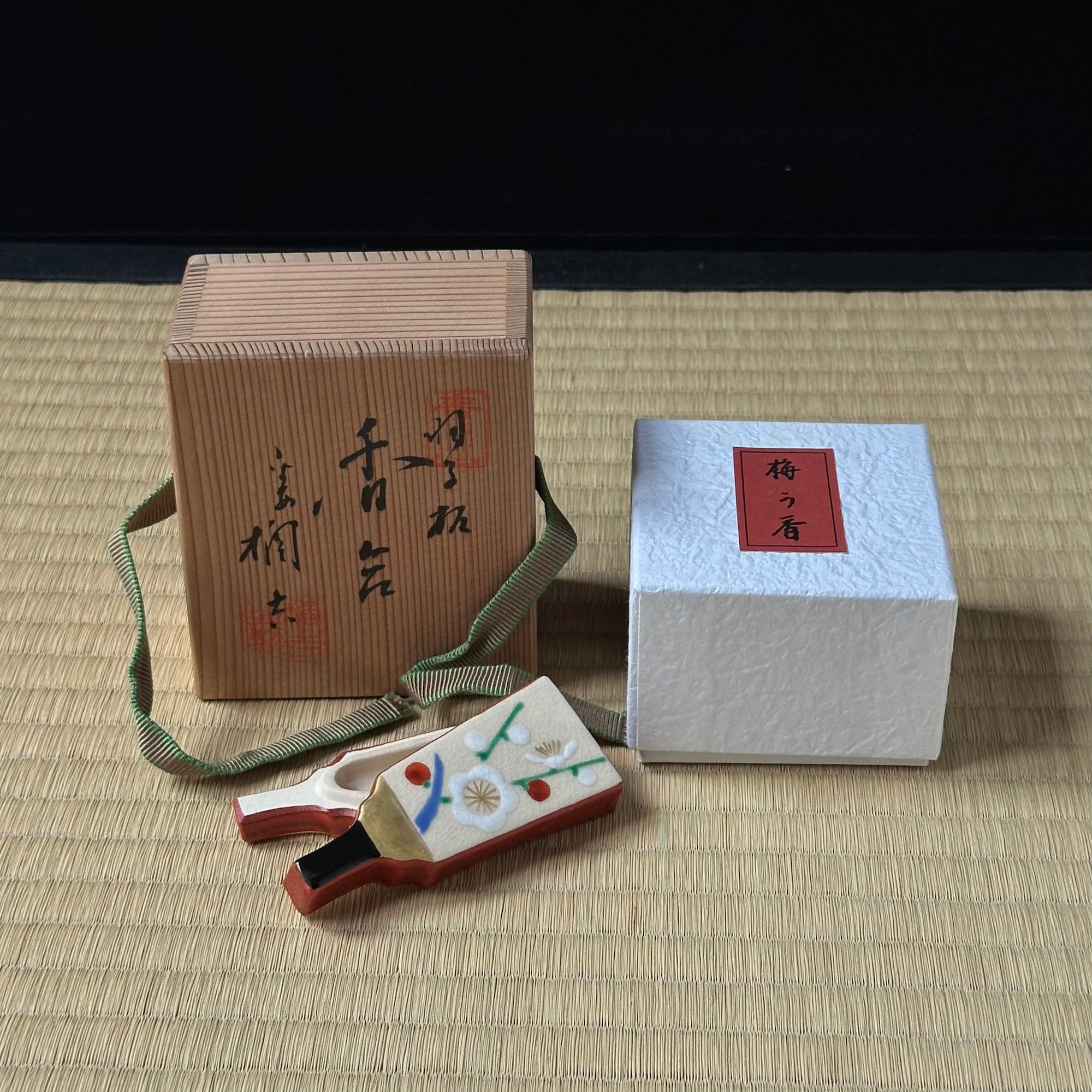
For the kōgō: tomobako protective box made of paulownia wood bearing the inscription of the work, the signature, and the seal of the workshop.
For the nerikō: box containing thirty-six nerikō balls.
The kōgō and nerikō will be packaged together in a white cardboard box wrapped in a beautifully tied textile, making it an original, unique, and very elegant gift ready to offer.
Practical Information
Place of manufacture
Kyōto, Japan
Dimensions
Width 3.1cm - Height 2.3cm - Depth 8cm
Weight (with box)
147g
Materials
Kutani ceramic
Period
Heisei era (1989 - 2019)
Condition
Very good condition
Instructions for use
Place two or three nerikō balls in the kōgō, leave the lid slightly ajar to diffuse the scent or closed to stop diffusion, replace the balls when they become dry and keep unused balls in their airtight bag. Keep out of reach of children and animals. Do not ingest. Avoid prolonged contact with skin. In case of discomfort or olfactory sensitivity, discontinue use. Store away from heat, humidity and direct light.
© Atelier Ikiwa – Laurence Corteggiani. Photos and texts protected. All reproduction prohibited without permission.
DELIVERY AND PAYMENT OPTIONS
Shipping
Free shipping in mainland France for purchases of €200 or more. Shipped with Colissimo, you can choose home delivery or a pickup point. Parcels are delivered against signature or a unique code for valuable items. Orders are generally dispatched within 2 business days, except for fine art photographs, which are printed on demand, and special cases, which will be announced in the banner at the top of the website (e.g., in case of absence). Learn more >
Payment Options
Secure card payment with Shopify Payments and 3D Secure technology.
Visa, MasterCard, American Express, Cartes Bancaires, PayPal, Apple Pay, Shop Pay, and Klarna.
Klarna: Pay in 3 interest-free installments or within 30 days, for purchases up to €1,500, subject to Klarna's acceptance. You will be redirected to Klarna to log in or create an account and confirm your payment.
PayPal: You will be redirected to PayPal to log in and confirm payment. New users can create an account during checkout.
Your invoice will be sent with your order.
Returns and Exchanges
14 days to change your mind. Learn more >
Choose options

WRAPPING
Exceptional items are wrapped in textiles tied according to the Korean pojagi art