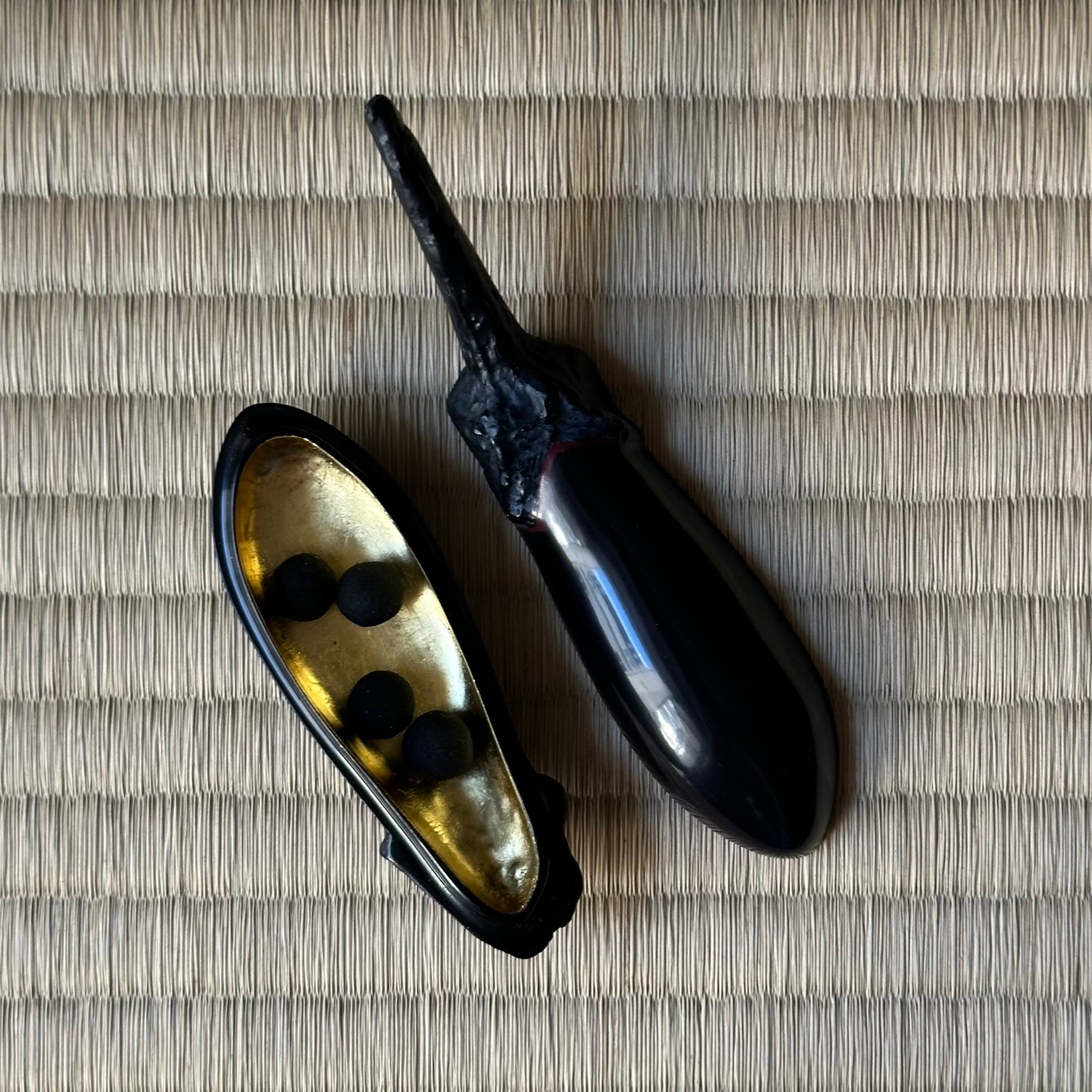
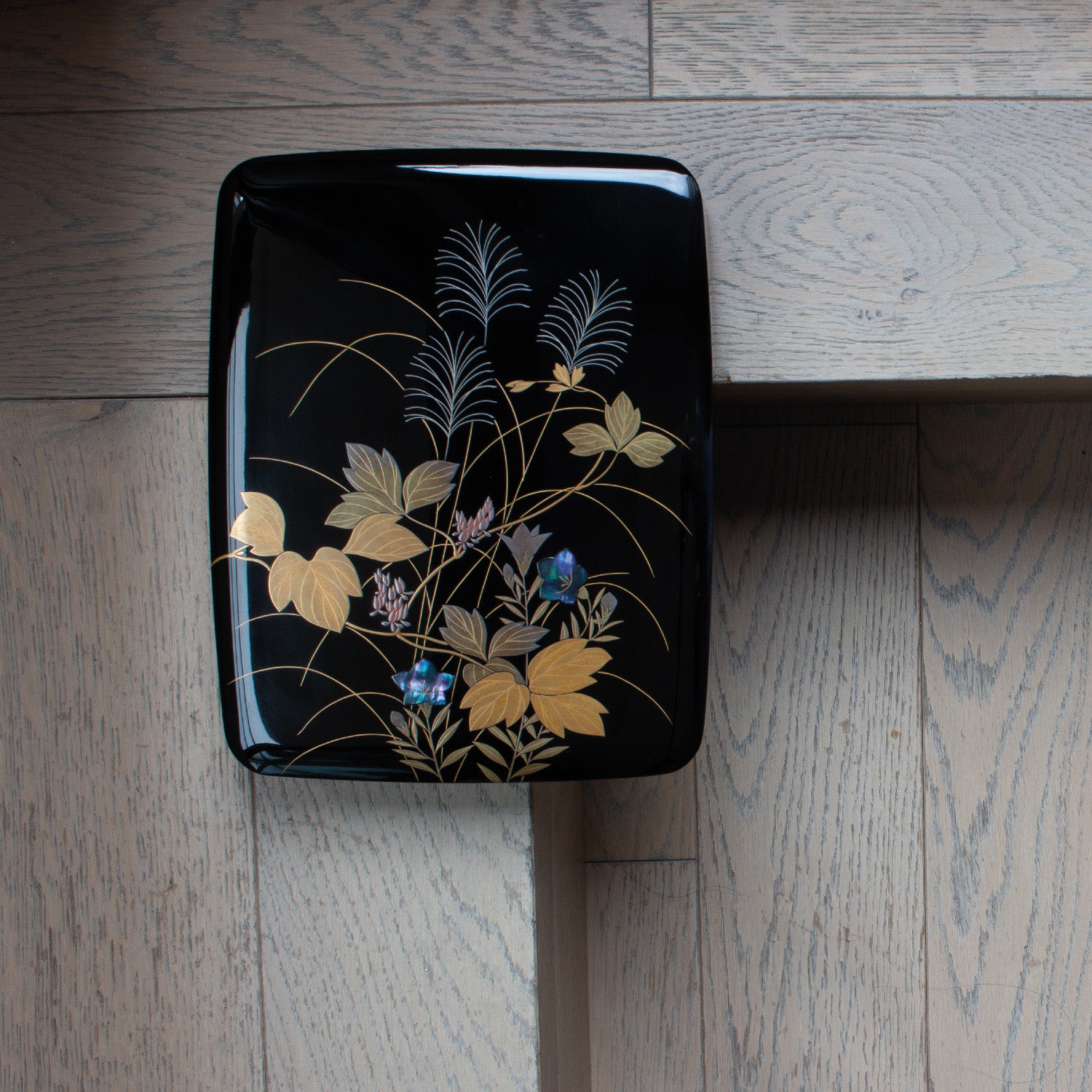
In the art of Japanese incense, the kōgō is a precious small box that preserves and showcases nerikō, refined incense pellets made from precious woods and spices. Together, they embody a sensory tradition rooted in the elegance of gestures and the subtlety of fragrances, which Atelier Ikiwa was keen to celebrate by offering a rigorous selection of superb kōgō, here signed by the lacquer master Sōkō Dōjō, accompanied by their box of nerikō to introduce this little-known art.
The artisan
Sōkō Dōjō is a Japanese lacquer master associated with the Yamanaka-nuri tradition, lacquerware production from the Yamanaka Onsen region (Ishikawa Prefecture). Active during the 20th century, he belongs to a generation of artisans who worked primarily for tea ceremonies and chanoyu utensils. Born into a family linked to lacquer arts, he learned the craft from his father and worked for over thirty years on objects for tea arts. His work is part of the Kaga and Yamanaka lacquer traditions, renowned for the precision of woodworking, the quality of lacquer layers, and the care given to interior finishes.
Technique and decoration
This kōgō takes the shape of a long Japanese eggplant (nasu), a particularly auspicious motif in Japanese culture. The eggplant is among the images associated with good fortune wishes for the New Year, notably in the expression ichi Fuji, ni taka, san nasubi, where Mount Fuji, the falcon, and the eggplant are considered happy omens when they appear in the first dream of the year.
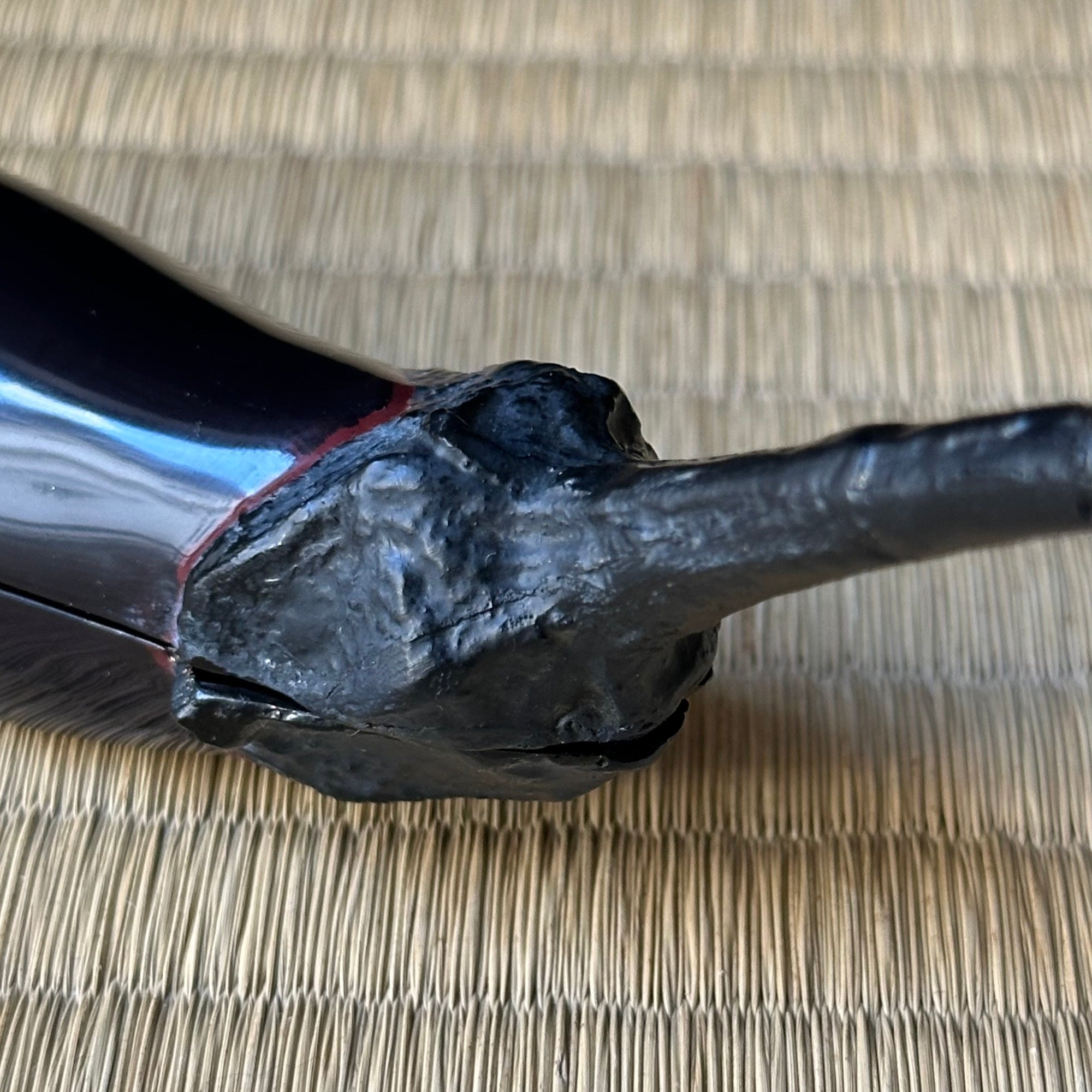
The piece is made using kanshitsu (dry lacquer), a technique allowing for the creation of light, resistant, and highly sculptural forms from layers of cloth or paper impregnated with urushi lacquer. The exterior surface alternates the deep, glossy black of urushi lacquer with a more matte and textured treatment at the stem, whose irregular reliefs evoke the rough texture of a real eggplant. The long, thin, and slightly curved silhouette gives the object a very naturalistic presence while maintaining the elegance of a tea utensil.
The interior is entirely covered with gold leaf, applied to create a luminous and slightly vibrant surface. This contrast between the black, almost austere exterior, and the gilded interior gives the piece its full strength: when closed, it evokes a simple, familiar vegetable; when opened, it reveals a precious space intended to hold the nerikō.
The nerikō
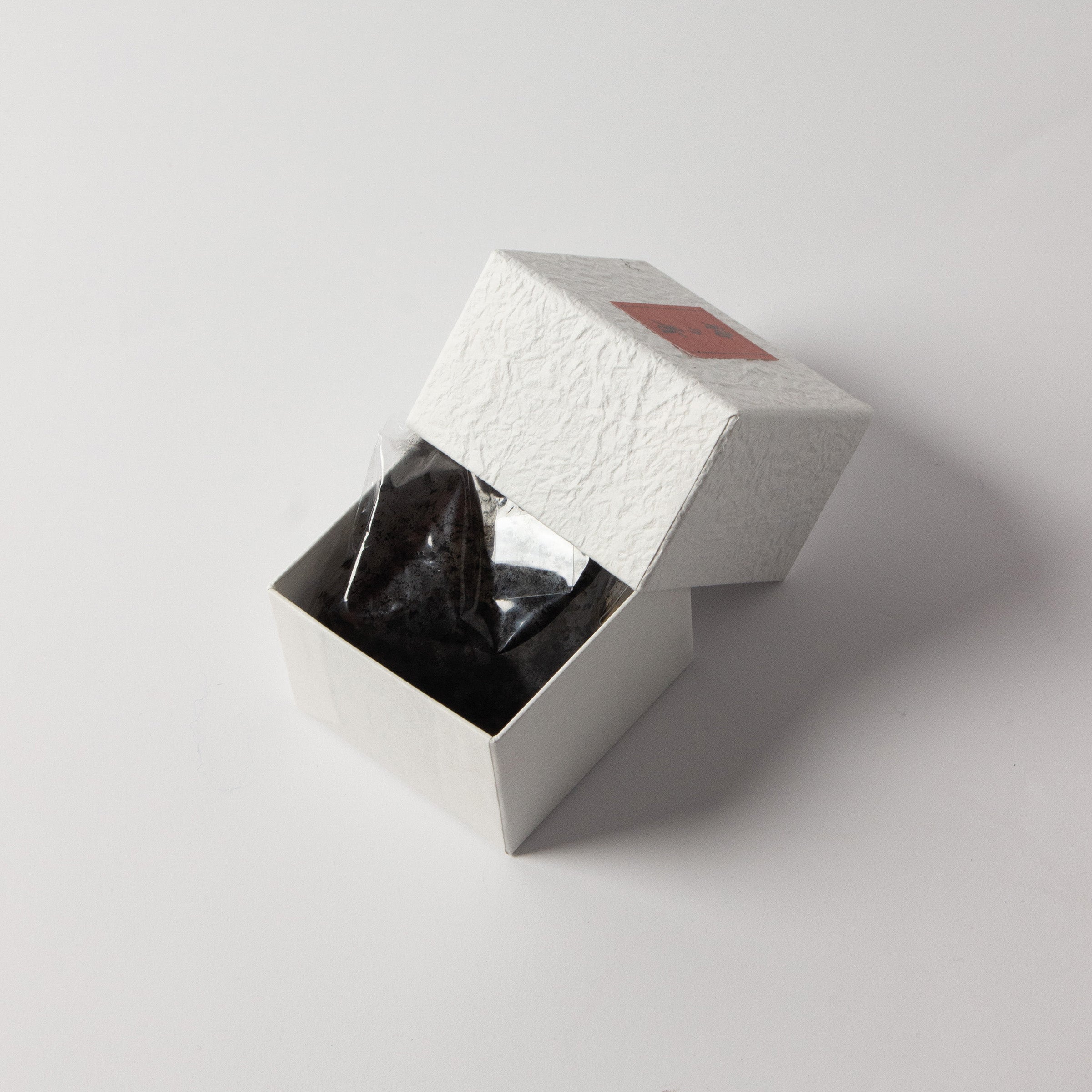
To enjoy the kōgō as intended, a box of nerikō is also included. This box contains thirty-six nerikō pellets, each composed of a delicately fragrant blend with a sandalwood base, created by one of Kyoto's oldest incense houses. To use them, place two or three in the kōgō, and leave the lid slightly ajar. If you wish to stop the diffusion of the fragrance, simply close the lid. The nerikō pellets should be replaced when they become dry. It is important to keep unused nerikō in their airtight plastic bag to prevent them from drying out.
To discover the art of Japanese kōgō and nerikō, we invite you to read the article we wrote on the subject, available via this link. Other kōgō are available on the website, feel free to browse our selection.
Presentation
For the kōgō: tomobako protective box made of paulownia wood bearing the inscription of the work, the artisan's signature, and seal.
For the nerikō: box containing thirty-six nerikō pellets.
The kōgō and nerikō will be packaged together in a white cardboard box wrapped in a beautifully knotted textile, making it an original, unique, and very elegant ready-to-give gift.
Practical information
Place of manufacture
Japan, Yamanaka Onsen, Ishikawa Prefecture
Dimensions
Length 12 cm - Width 3cm - Height 5cm
Weight (with box)
61gr
Materials
Paper (or fabric), Japanese urushi lacquer, gold leaf
Period
Shōwa Era (1926 - 1989)
Condition
Very good condition
Care instructions
Place two or three nerikō pellets in the kōgō, leave the lid slightly ajar to diffuse the fragrance or closed to stop diffusion, replace pellets when they become dry, and store unused pellets in their airtight bag. Keep out of reach of children and animals. Do not ingest. Avoid prolonged skin contact. In case of discomfort or olfactory sensitivity, discontinue use. Store away from heat, humidity, and direct light.