In the art of Japanese incense, the kōgō is a small, precious box that preserves and enhances nerikō, these refined incense pastilles made from precious woods and spices. Together, they embody a sensory tradition that fits into the elegance of gestures and the subtlety of fragrances, which Atelier Ikiwa was keen to celebrate by offering a rigorous selection of superb kōgō, here signed by the famous Kōbeigama kiln, accompanied by their box of nerikō to introduce this little-known art.
The artisan
This large kōgō was made by Kōbeigama, an important Mino kiln founded in the early 19th century in what is now Gifu Prefecture. The Kato Kōbee lineage holds an important place in the history of Japanese ceramics and particularly excelled in sometsuke porcelains, celadons, and research into glazes inspired by ancient Asian ceramics. Over the generations, the kiln developed a body of work renowned for the quality of its glazes and the finesse of its painted decorations, while maintaining an activity closely linked to major Japanese national exhibitions. The name Kōbeigama remains today a very reputable name in Mino ceramics, thanks in particular to the international renown acquired by several generations of the Kato family during the 20th century.
Technique and decoration
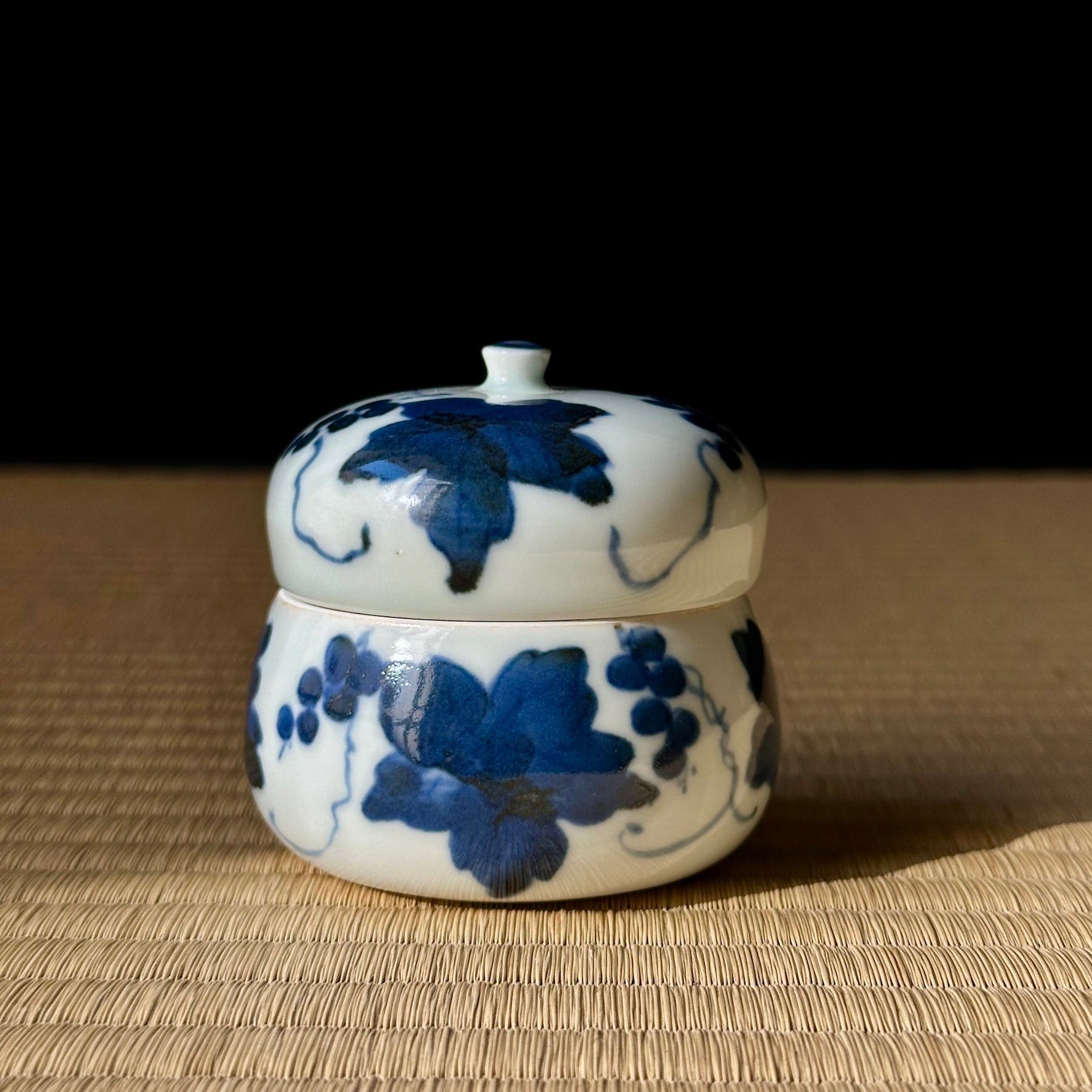
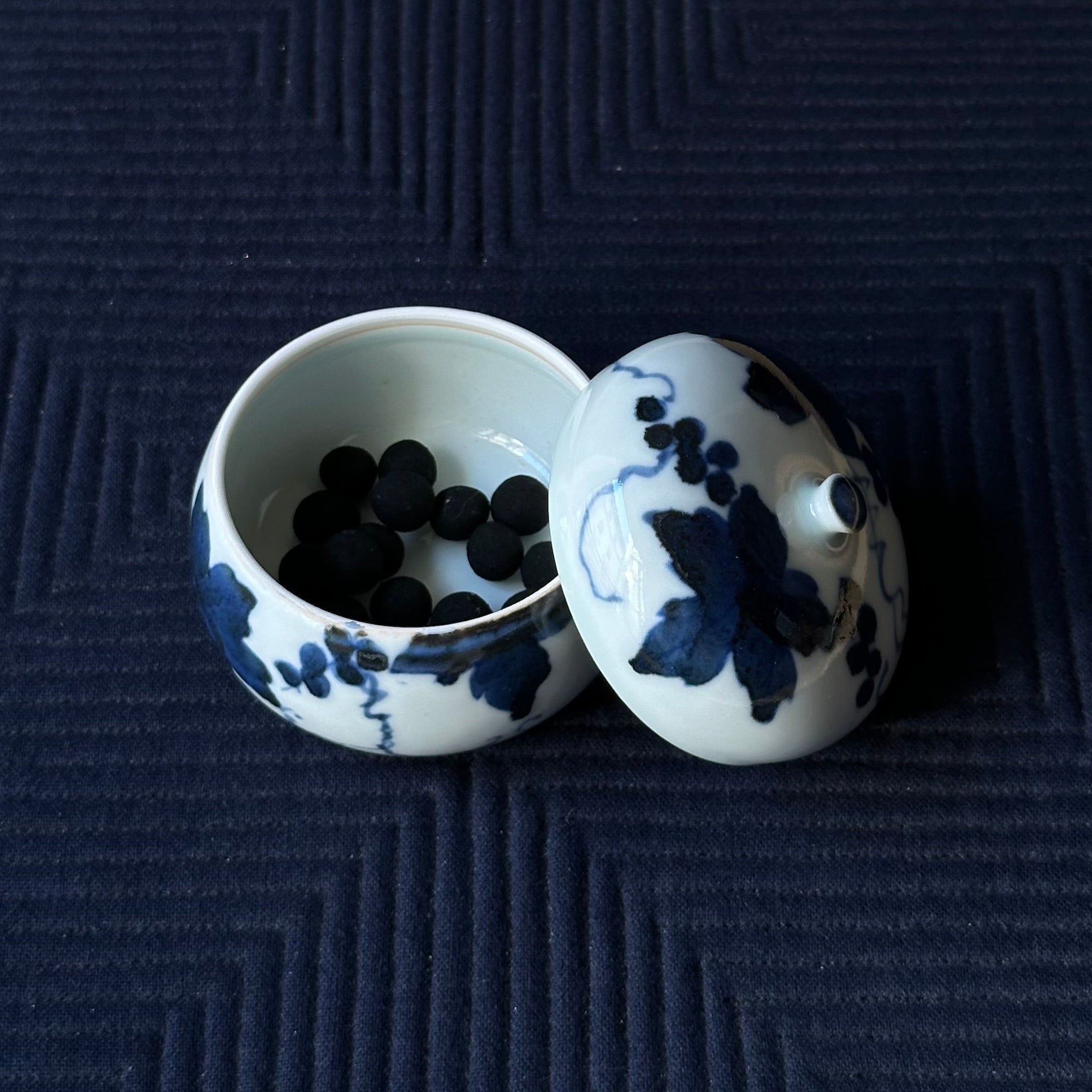
This porcelain kōgō features a budōmon grape decoration made using sometsuke, an underglaze painting technique using cobalt oxide applied directly to the porcelain before firing. Large vine leaves with soft outlines alternate with grape clusters and delicate tendrils that gracefully run across the surface of the lid and body of the kōgō.
Very present in Japanese decorative arts, the grape motif is associated with abundance, prosperity, and continuity due to its generous clusters and numerous seeds. The deep blue of the cobalt contrasts with the luminous whiteness of the porcelain and highlights the highly refined modeling of the piece, whose sober and balanced silhouette particularly complements the discreet aesthetic of kōdō, the Japanese art of incense.
The nerikō
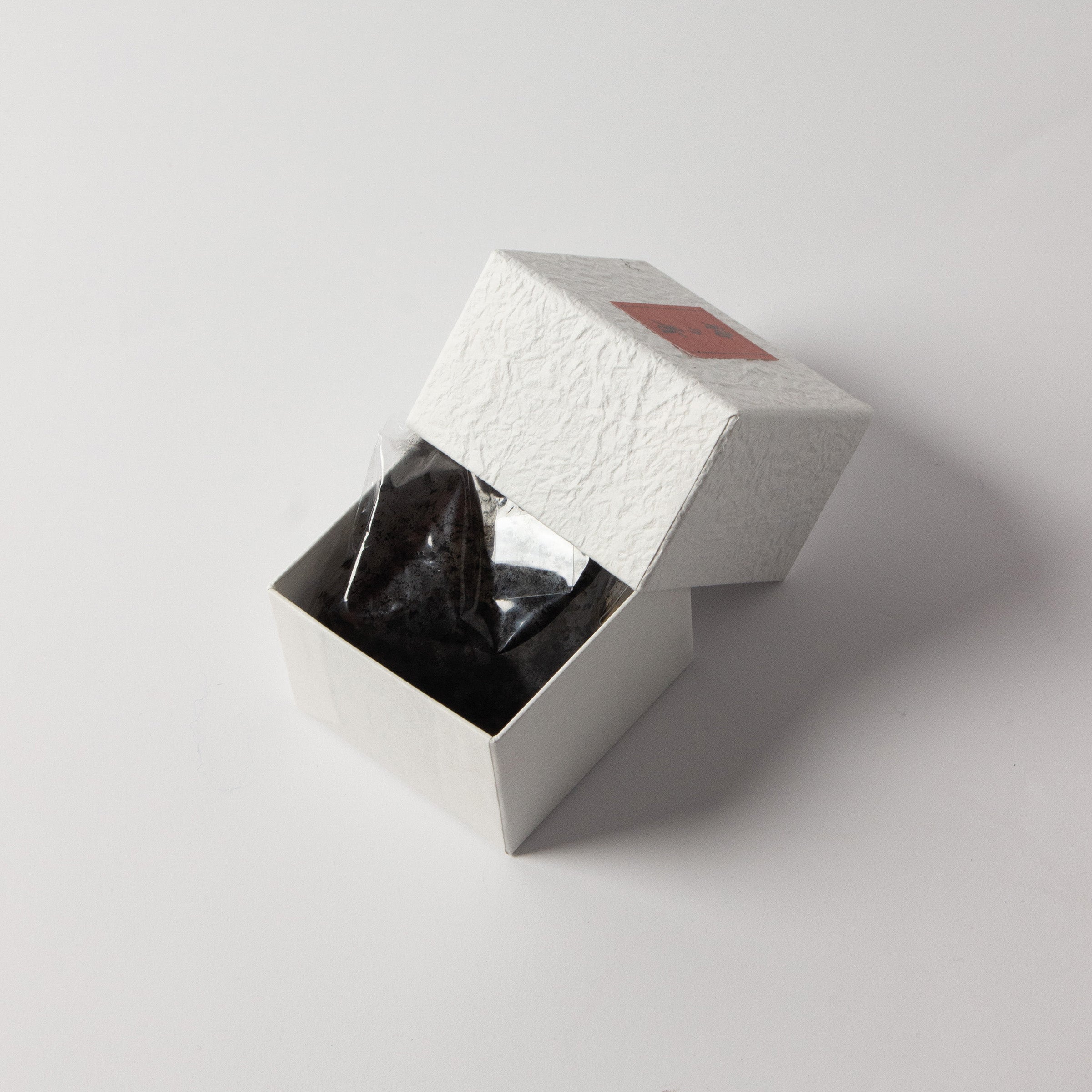
To enjoy the kōgō as intended, a box of nerikō is also included. This box contains thirty-six nerikō balls, each made of a delicately fragrant blend with a sandalwood base, created by one of Kyoto's oldest incense houses. To use them, place two or three in the kōgō, and leave the lid ajar. If you wish to stop the diffusion of the fragrance, simply close the lid. The nerikō balls should be replaced when they become dry. It is important to keep unused nerikō in the hermetically sealed plastic bag to prevent them from drying out.
To discover the art of Japanese kōgō and nerikō, we invite you to read the article we wrote on the subject, available via this link. Other kōgō are available on the site, feel free to browse our selection.
Practical information
Place of manufacture
Japan, Mino
Dimensions
Width 7.1cm - Height 6.9cm
Weight (with box)
229gr
Materials
Sometsuke porcelain
Period
Heisei era (1989-2019)
Accessories
For the kōgō: a paulownia wood tomobako protective box bearing the inscription of the work, the signature and seal of the Kōbeigama kiln, as well as a tomonuno protective cloth bearing the workshop's seal, accompanied by an information document about the kiln.
For the nerikō: a box containing thirty-six nerikō balls.
The kōgō and nerikō will be packaged together in a white cardboard box wrapped in a beautiful textile expertly tied, making it an original, unique, and very elegant ready-to-give gift.
Usage tips
Place two or three nerikō balls in the kōgō, leave the lid ajar to diffuse the fragrance or closed to stop diffusion, replace the balls when they become dry, and keep unused balls in their airtight bag. Keep out of reach of children and animals. Do not ingest. Avoid prolonged contact with skin. In case of discomfort or olfactory sensitivity, discontinue use. Store away from heat, humidity, and direct light.