

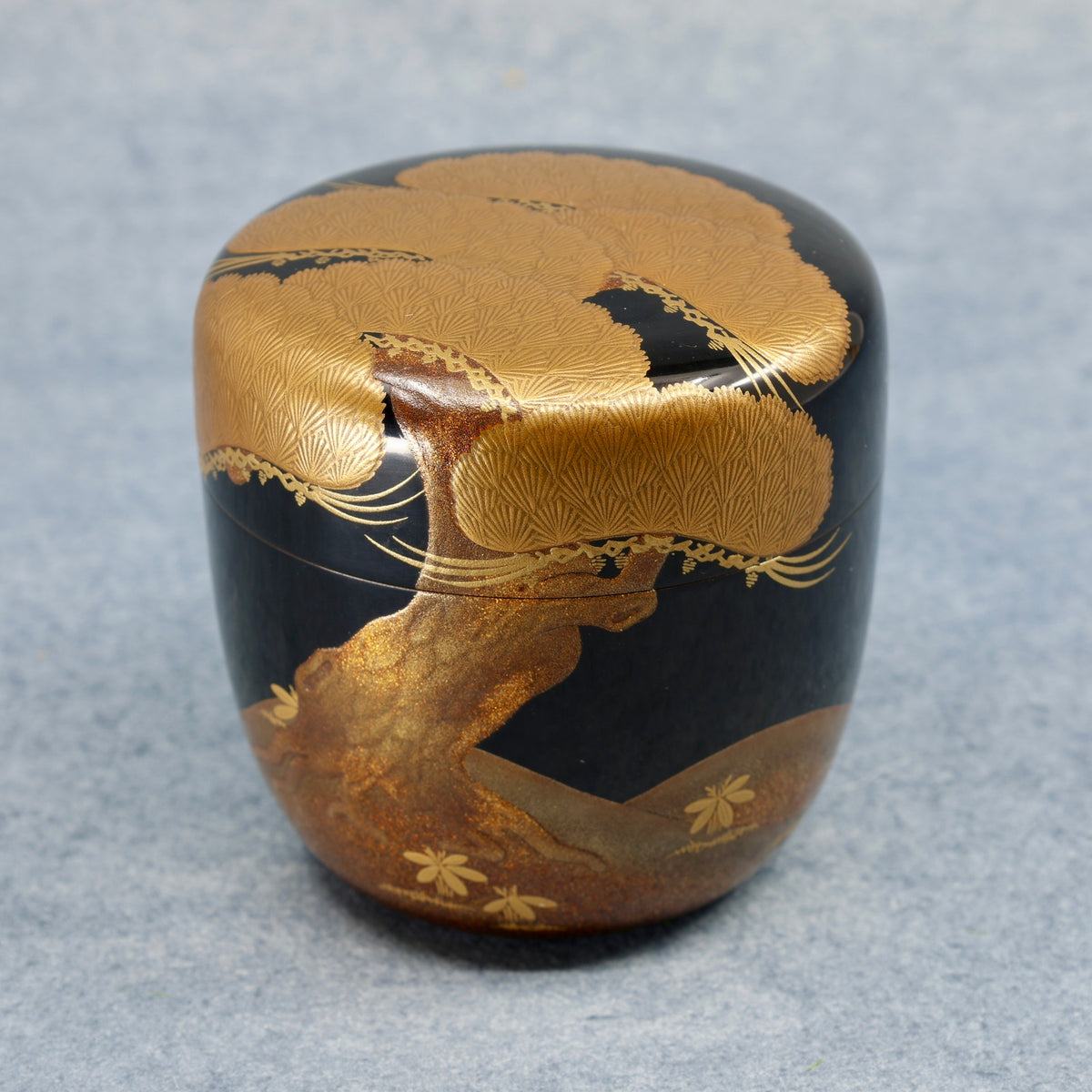
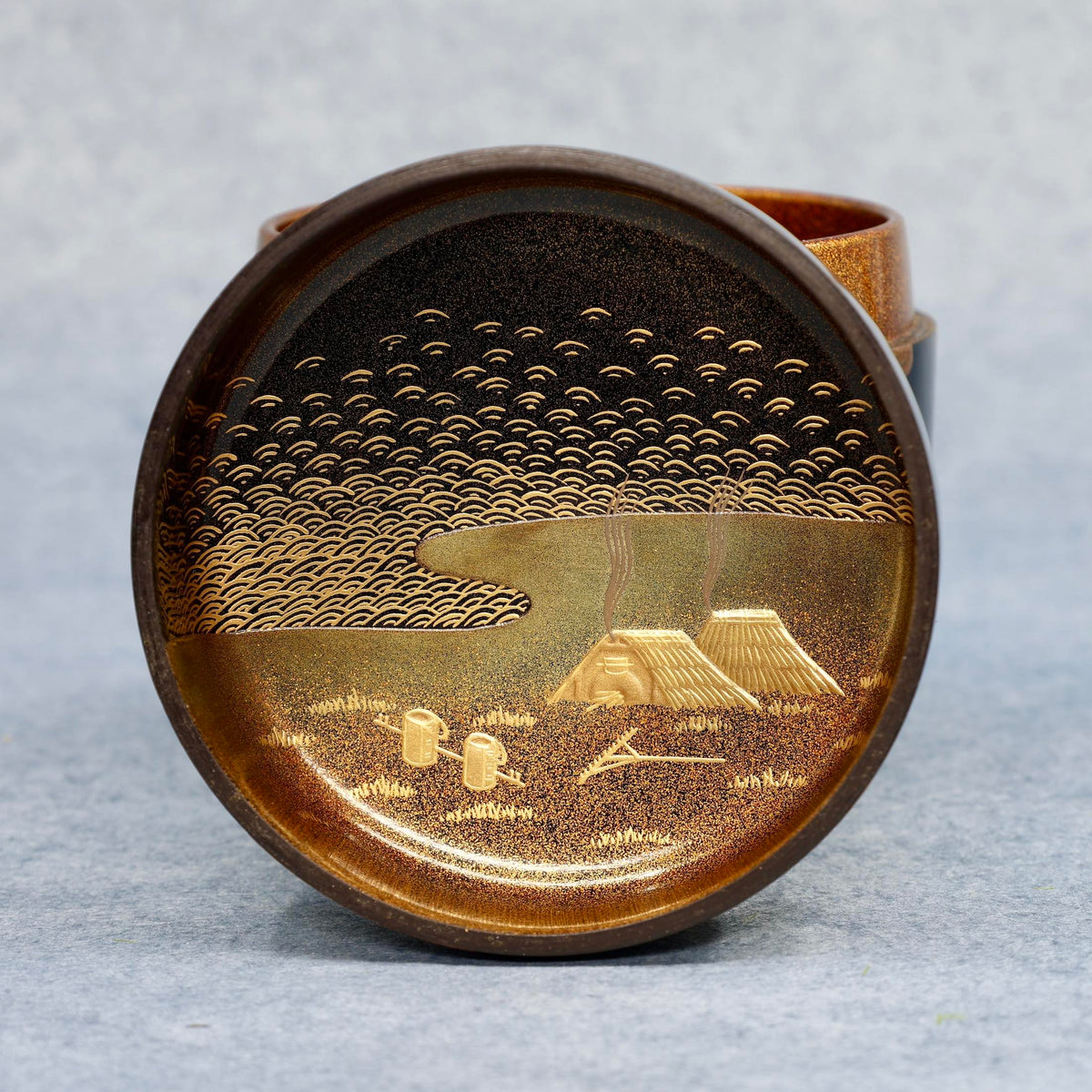
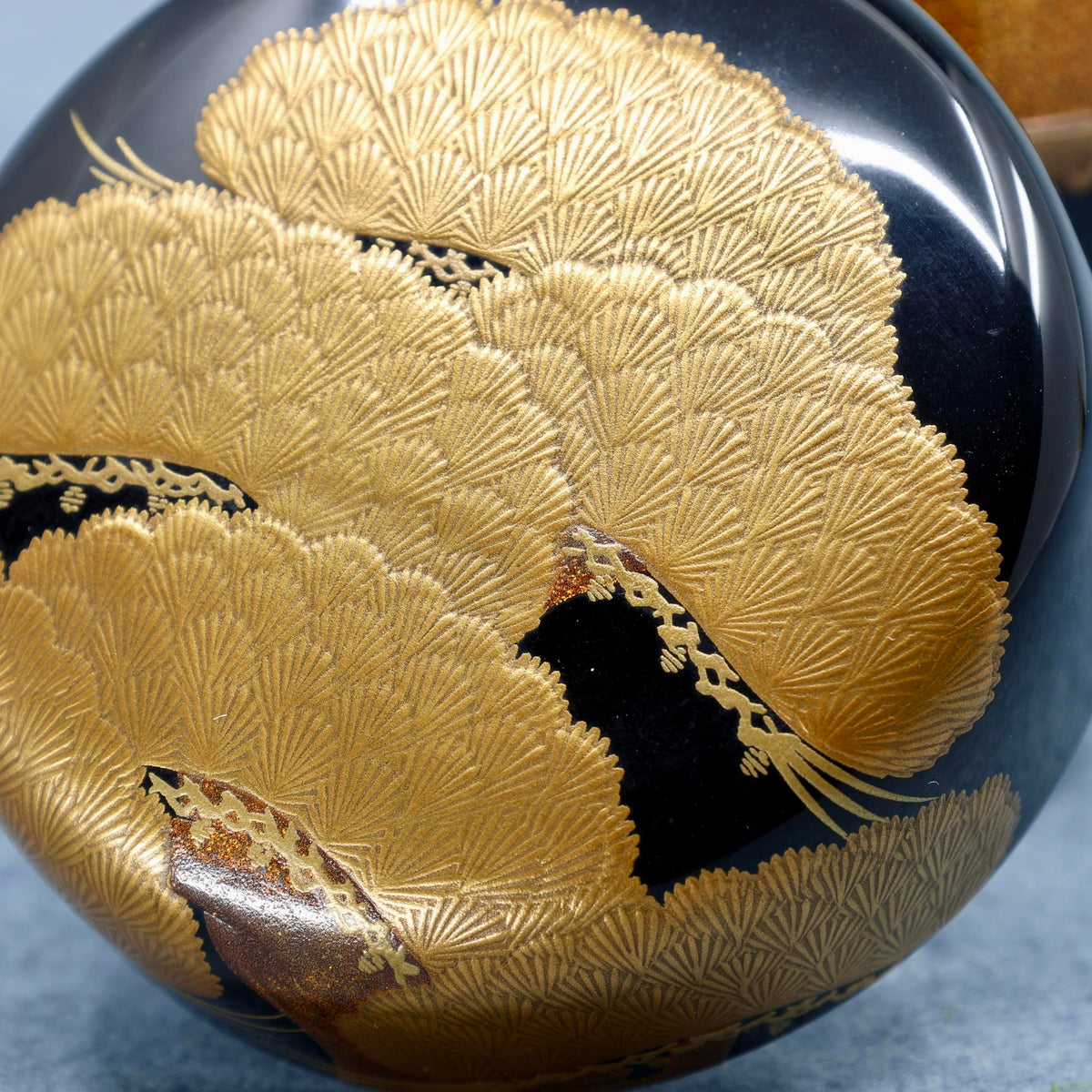
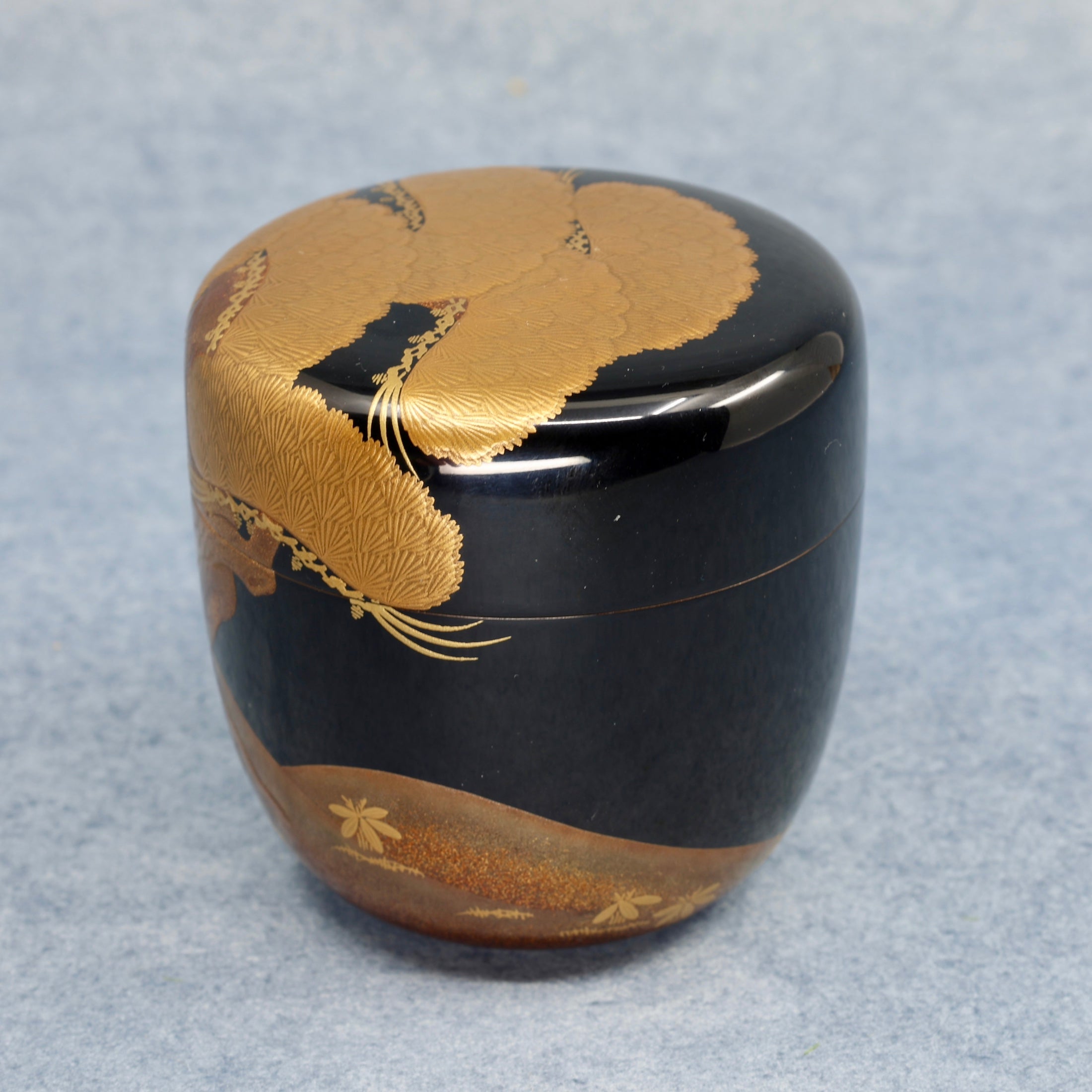
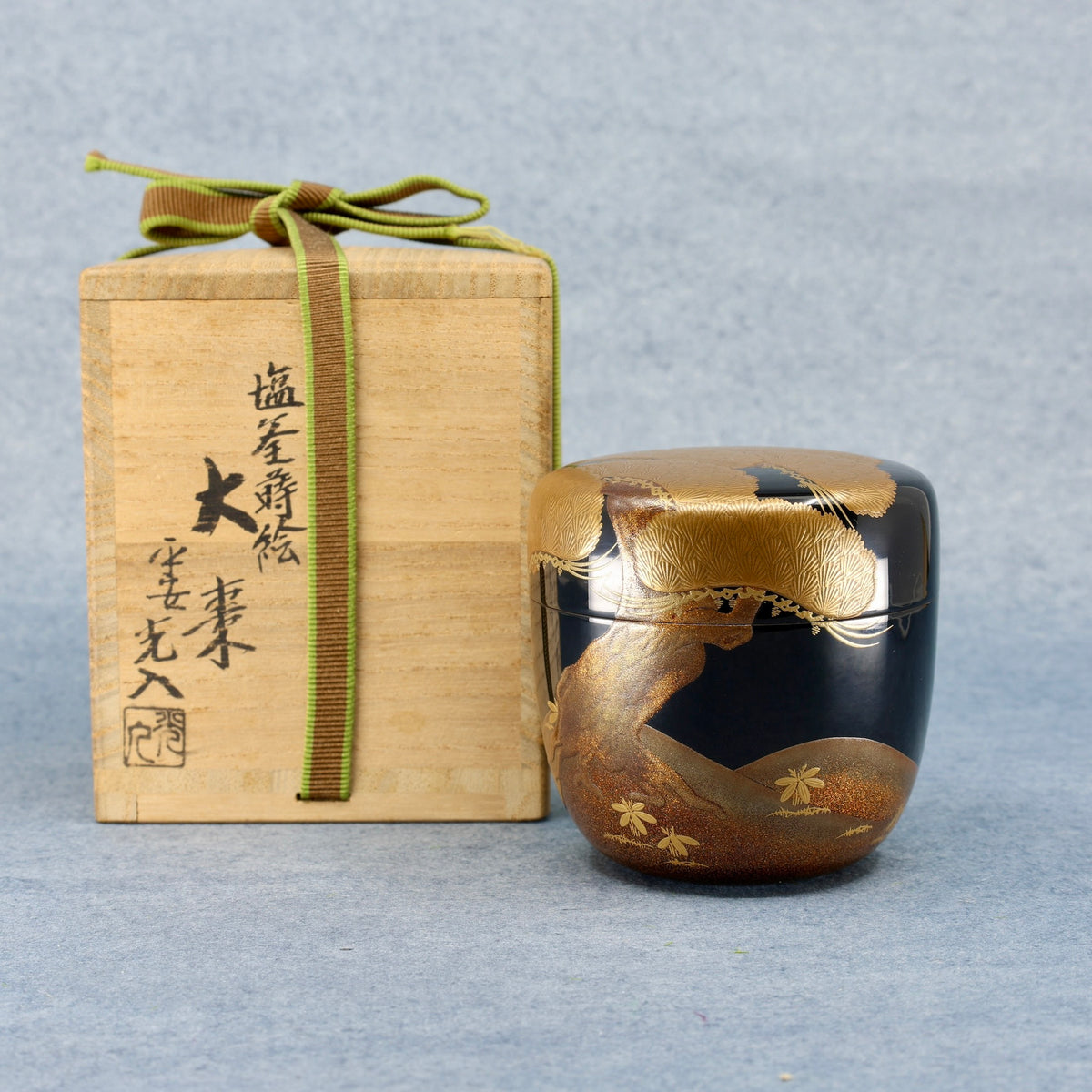
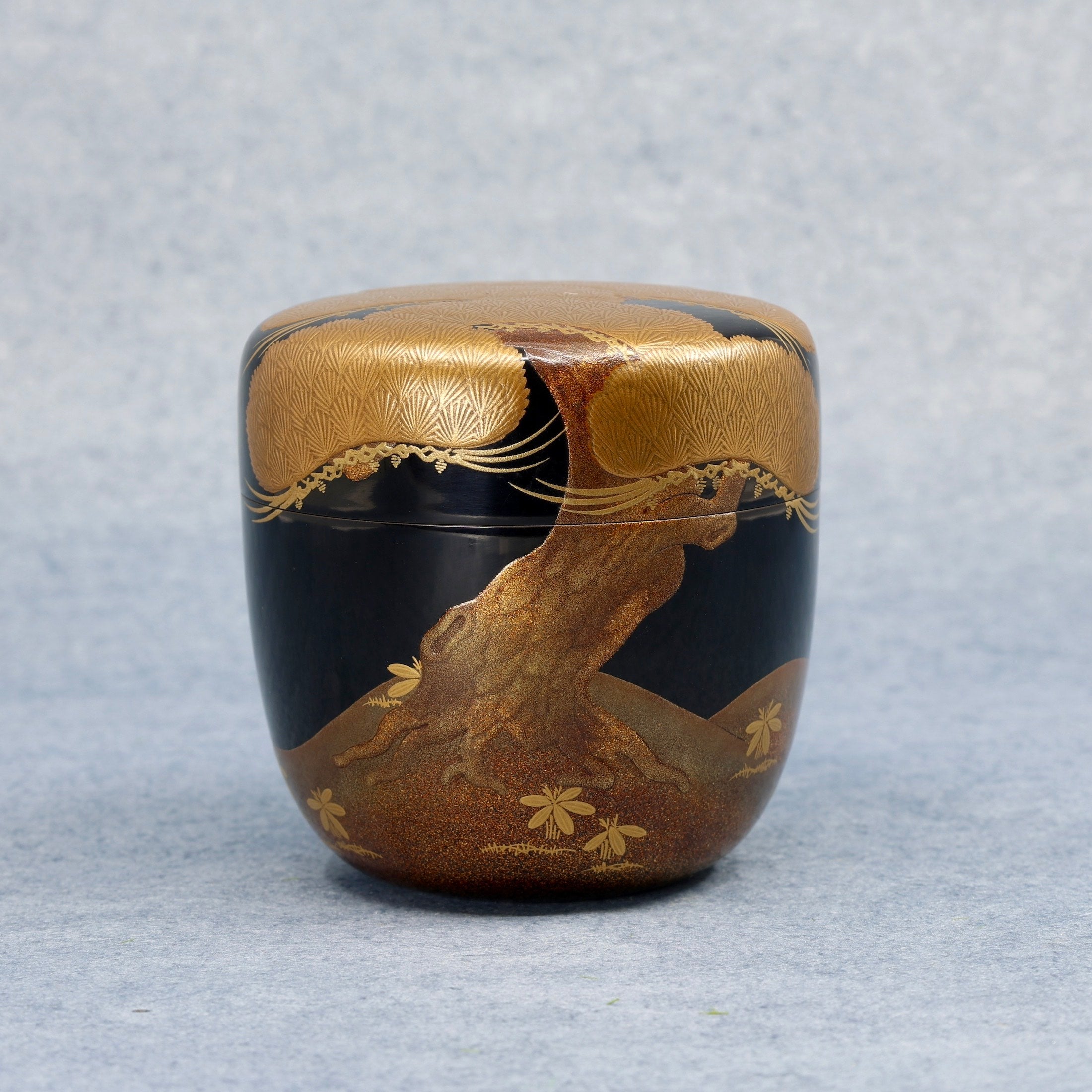
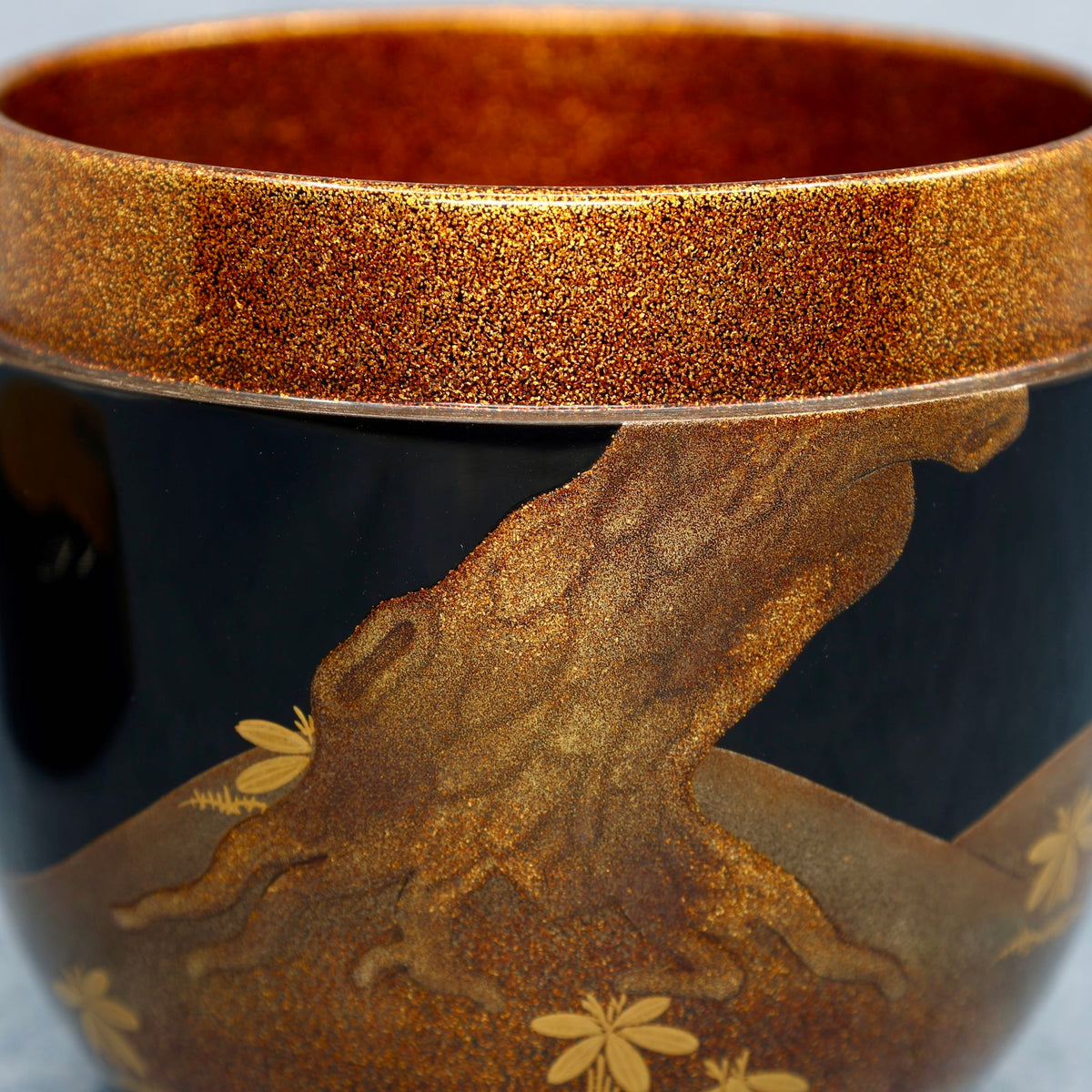
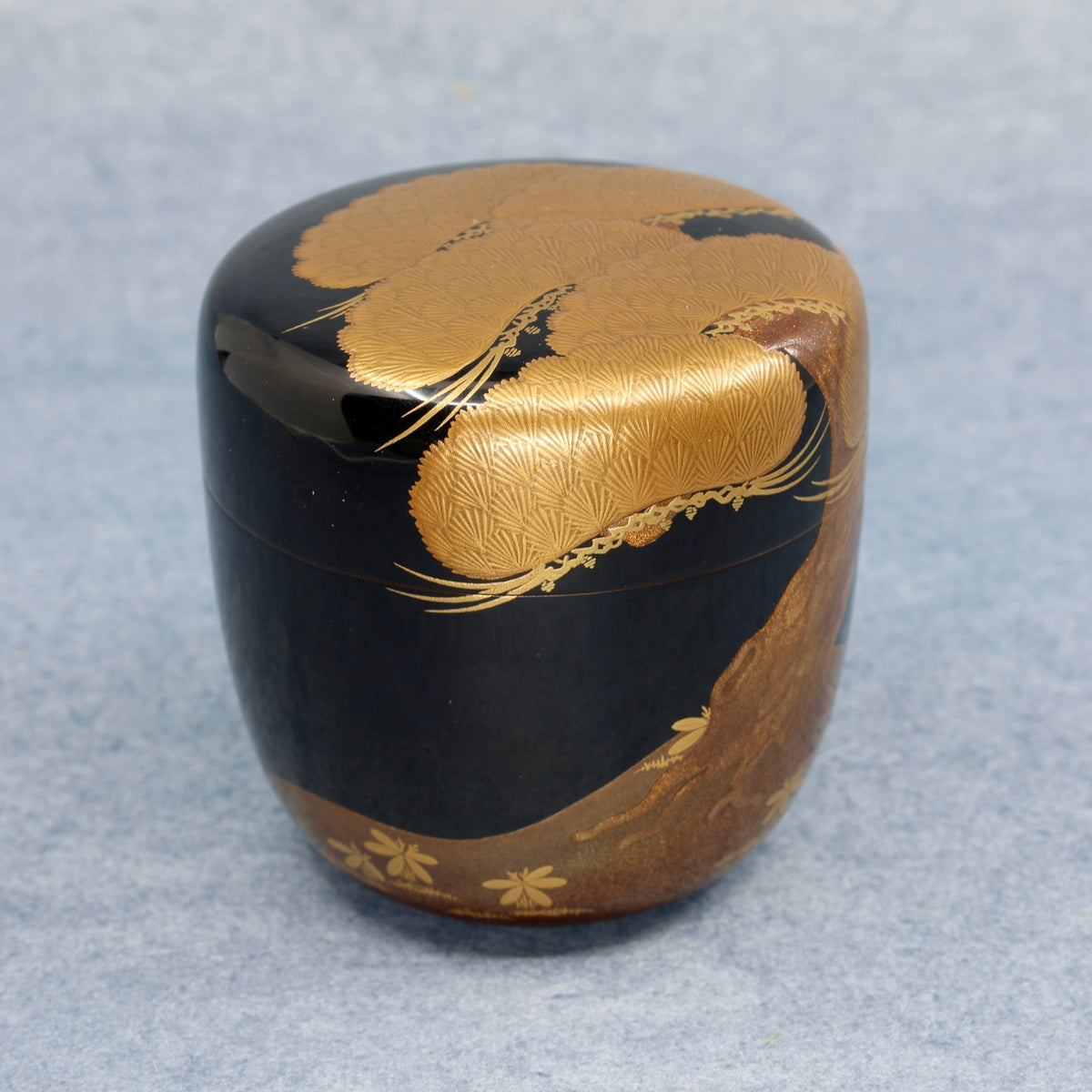
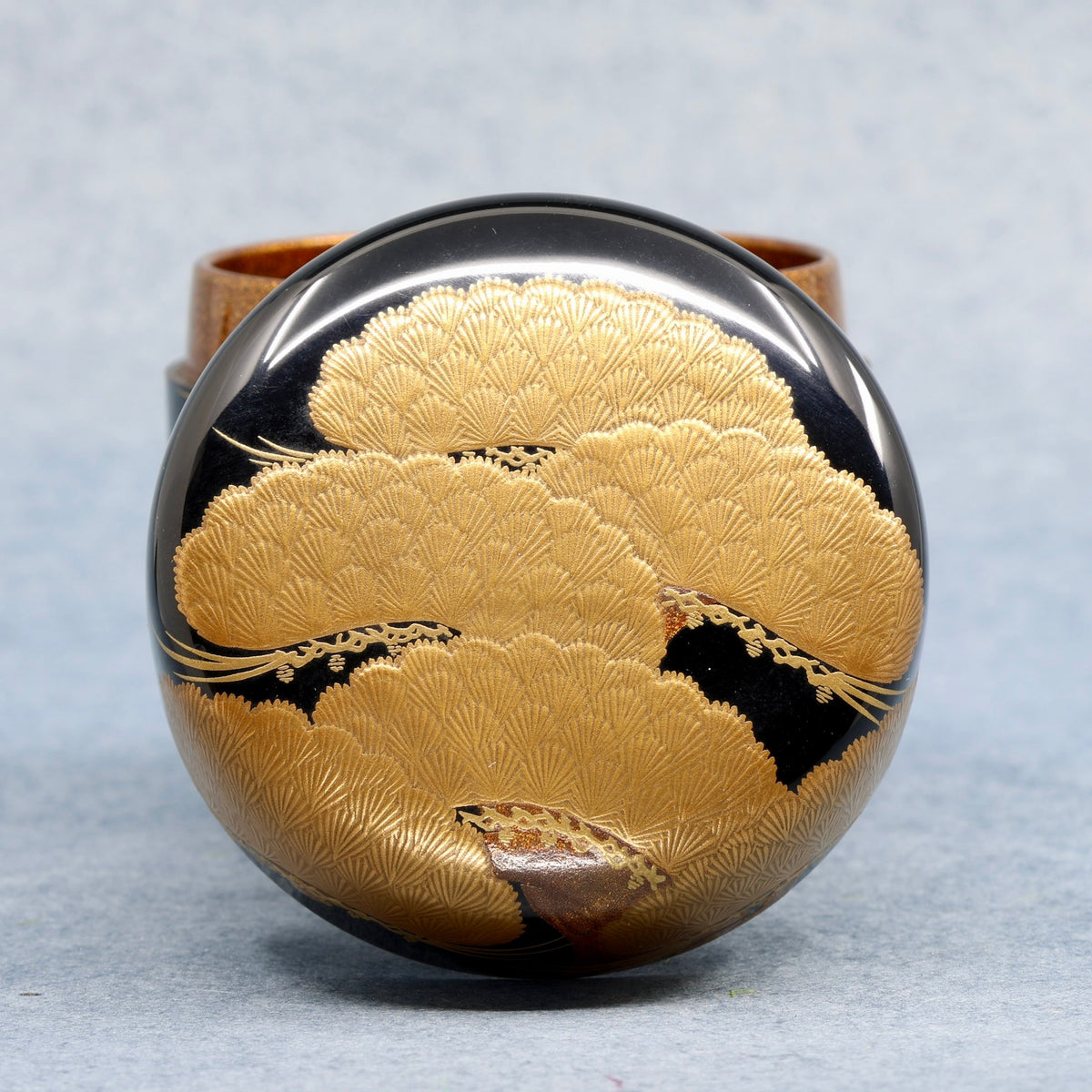
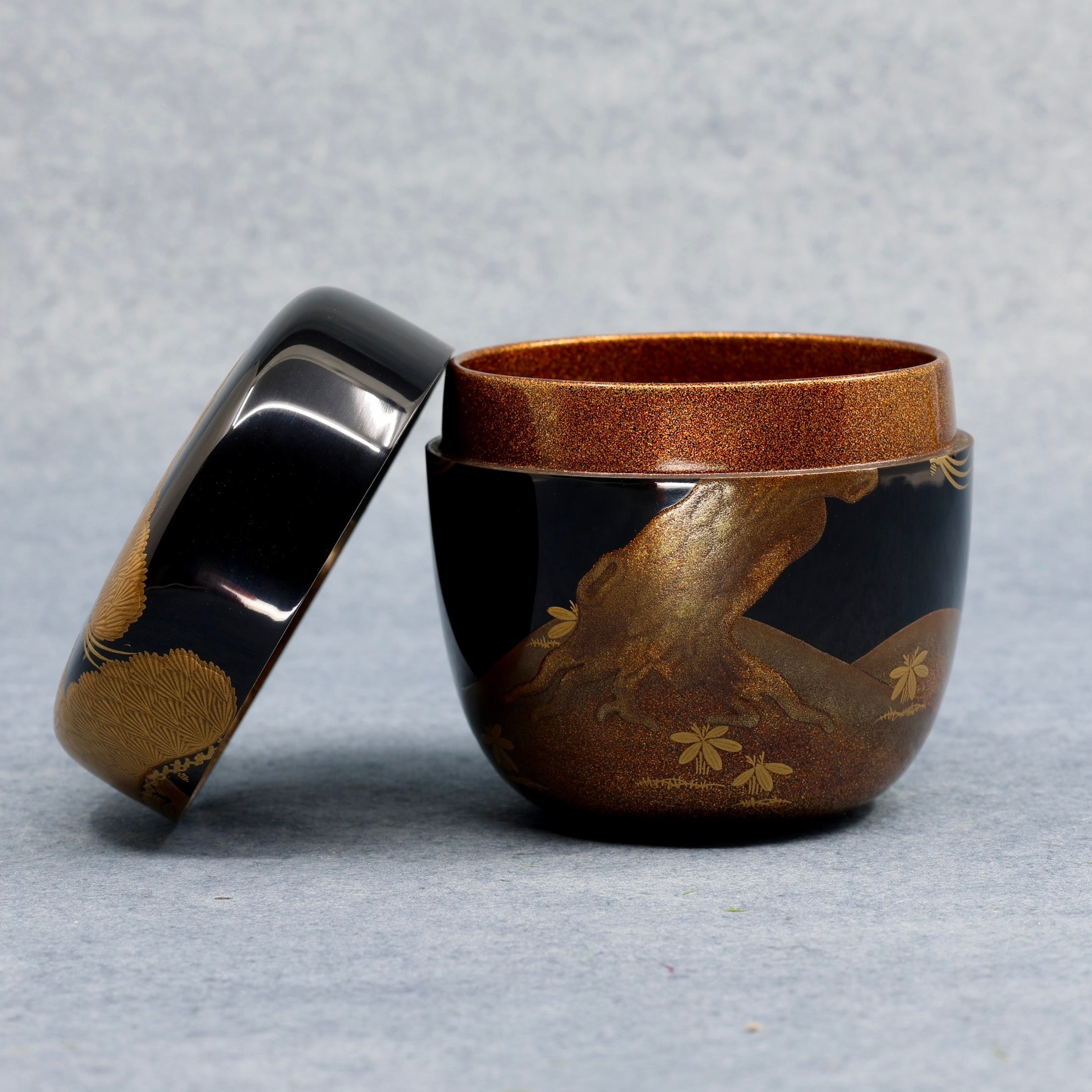
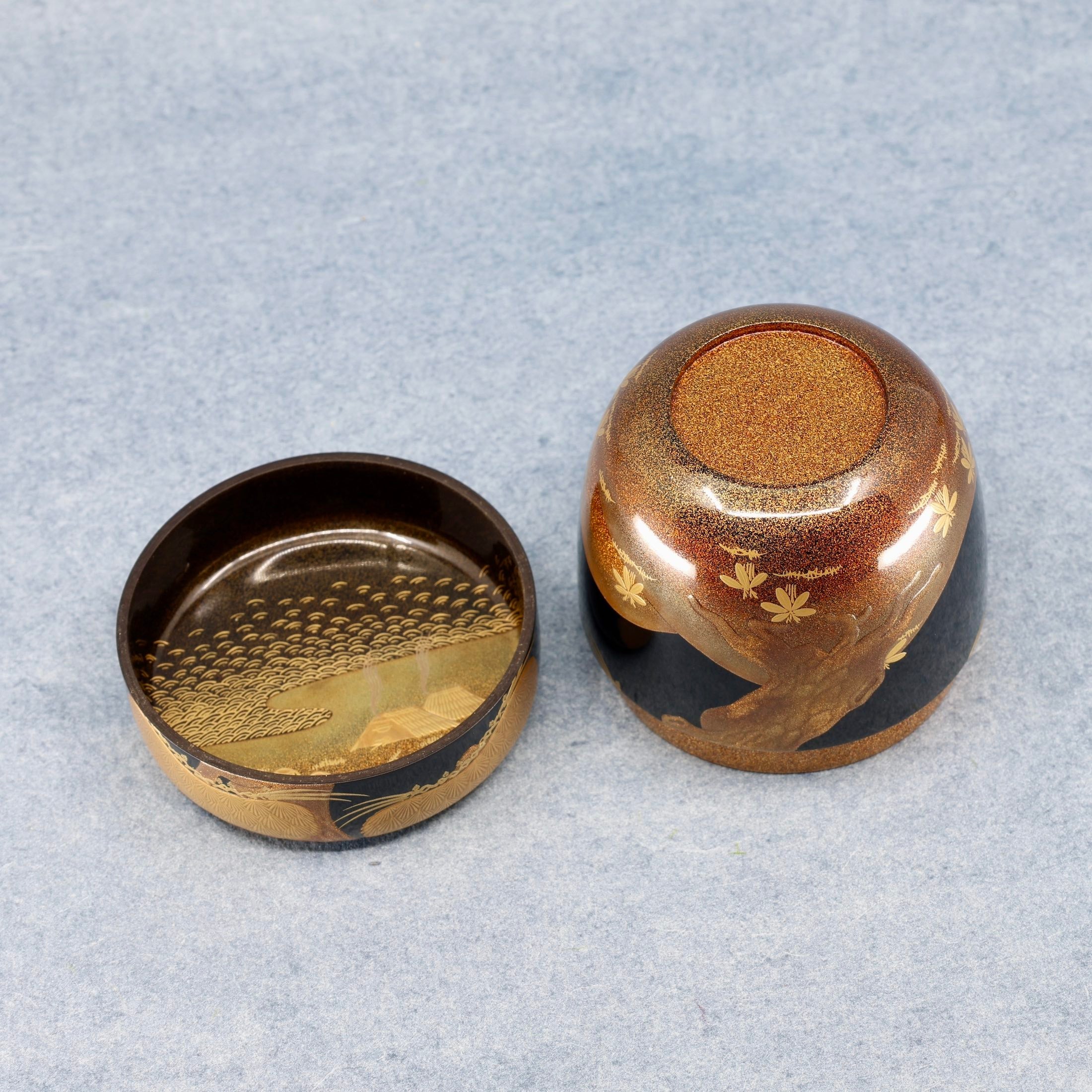
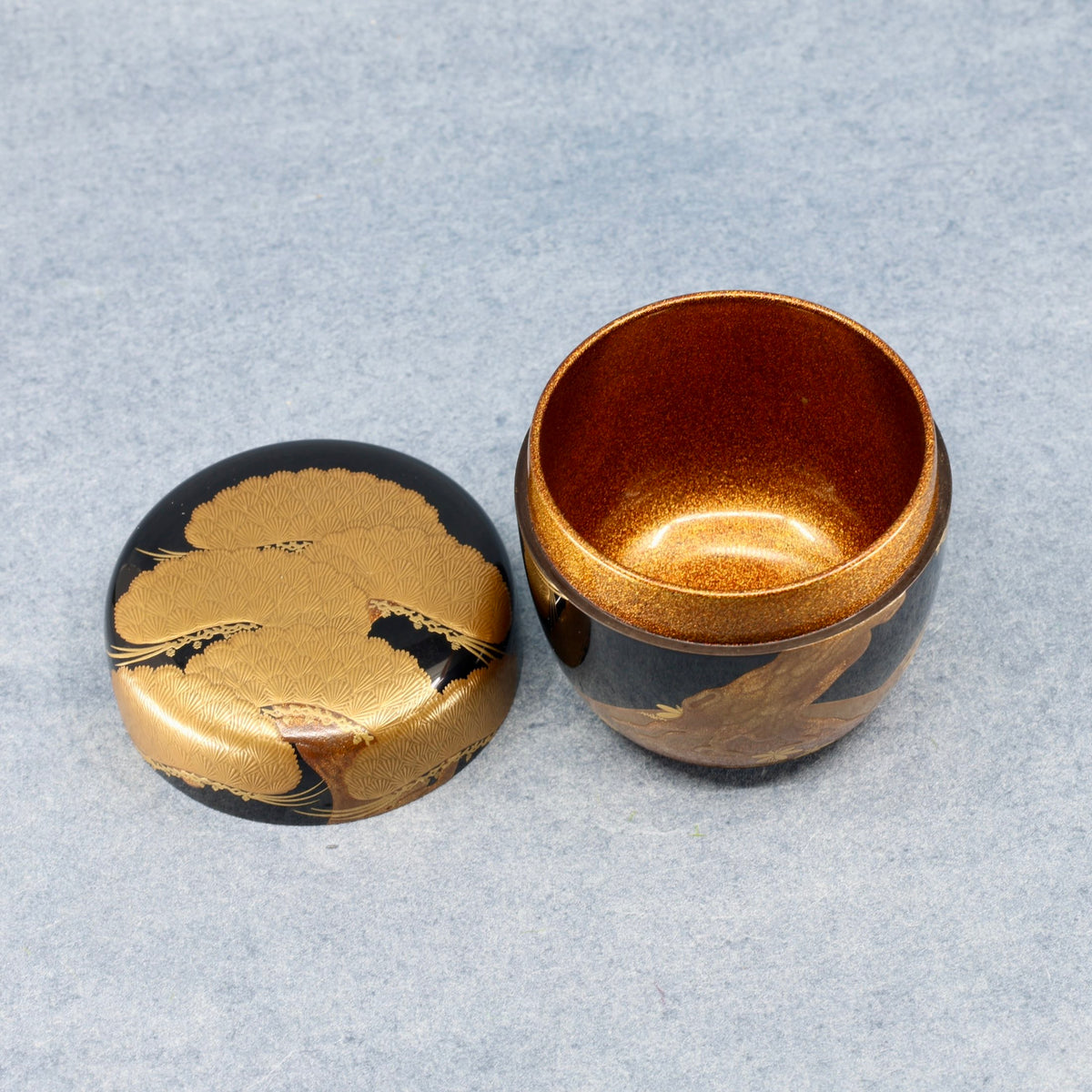
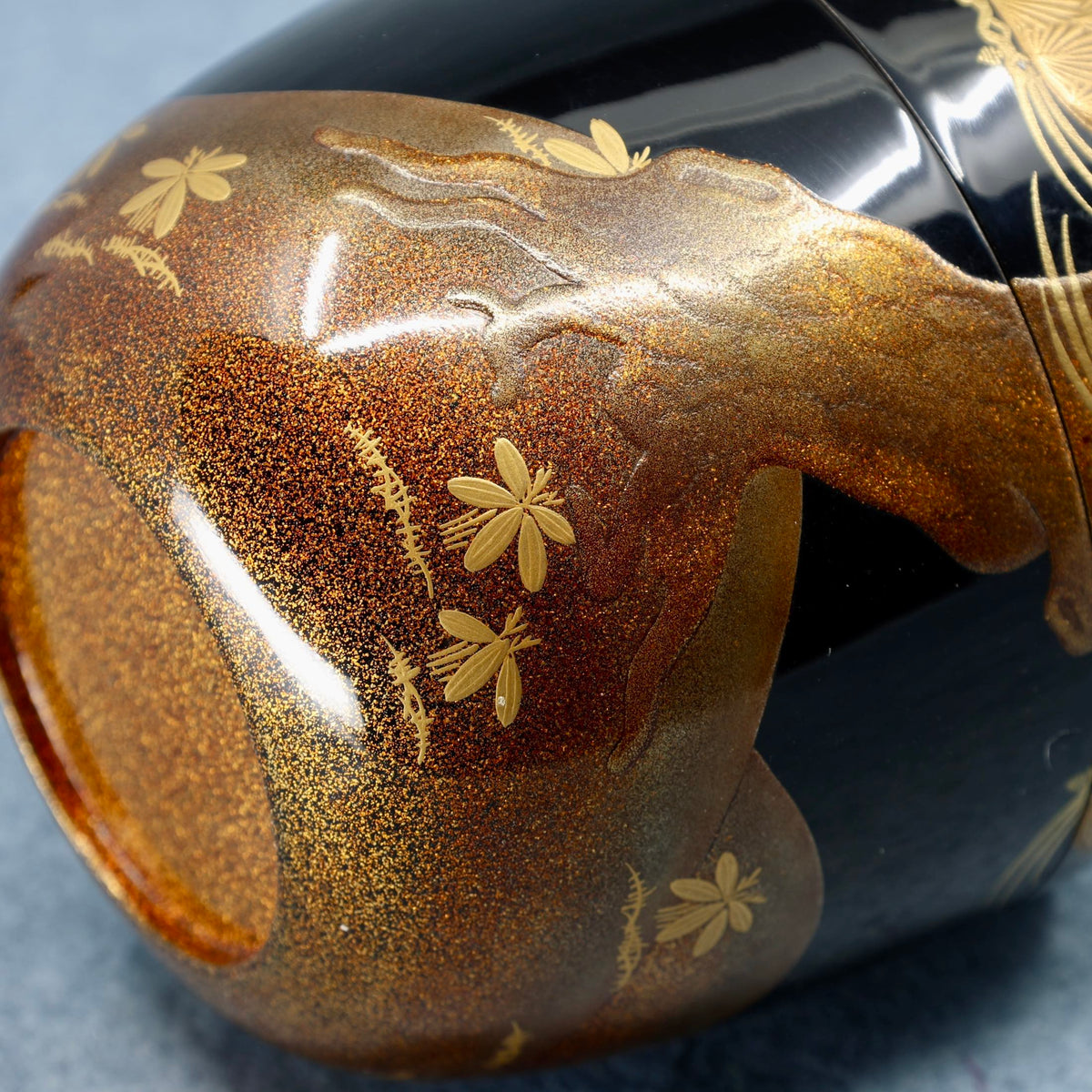
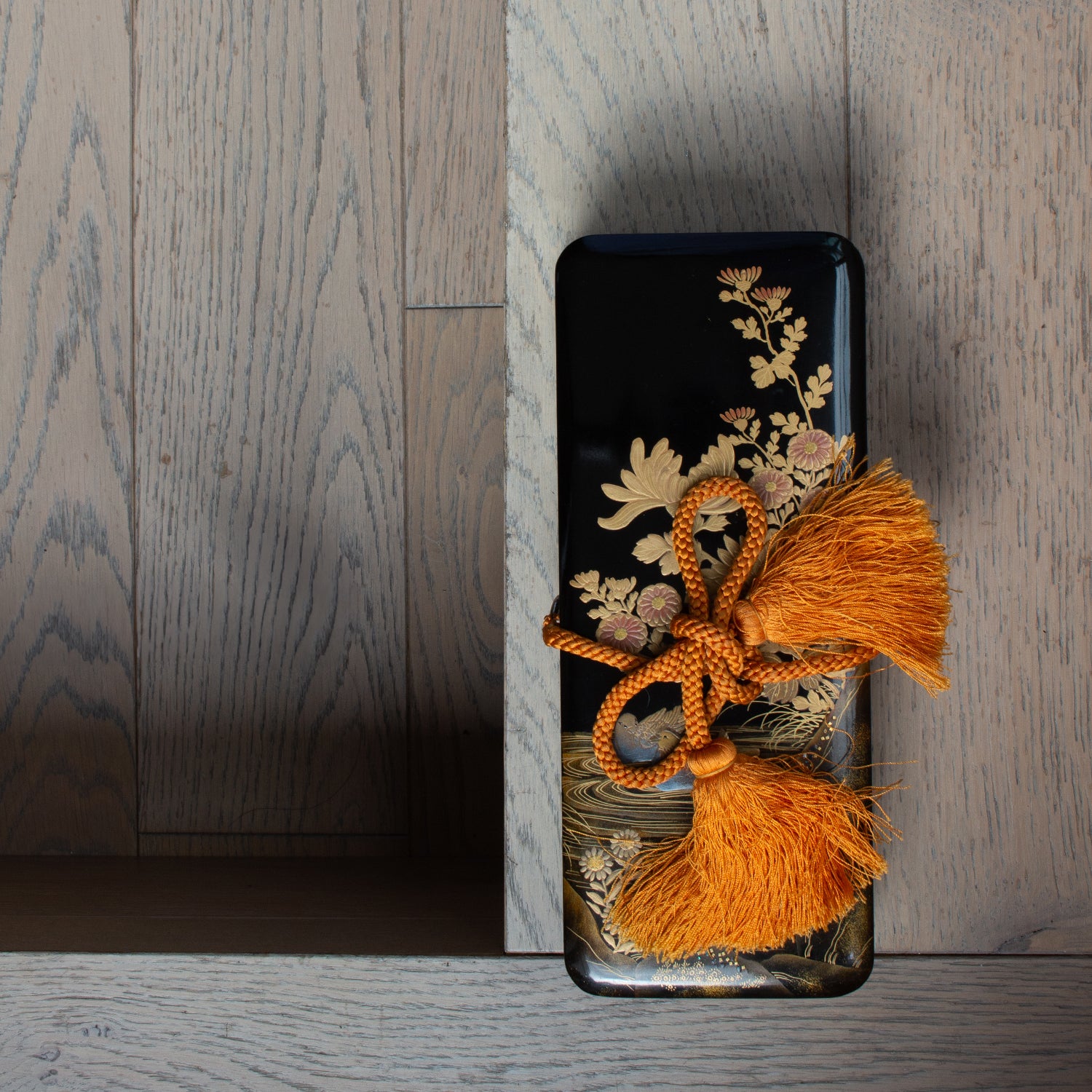
Natsume (Japanese tea caddy) in urushi lacquer and gold, decorated with oimatsu (old pine) and a Shiogama landscape by Suzuki Kōnyū
KNOW-HOW
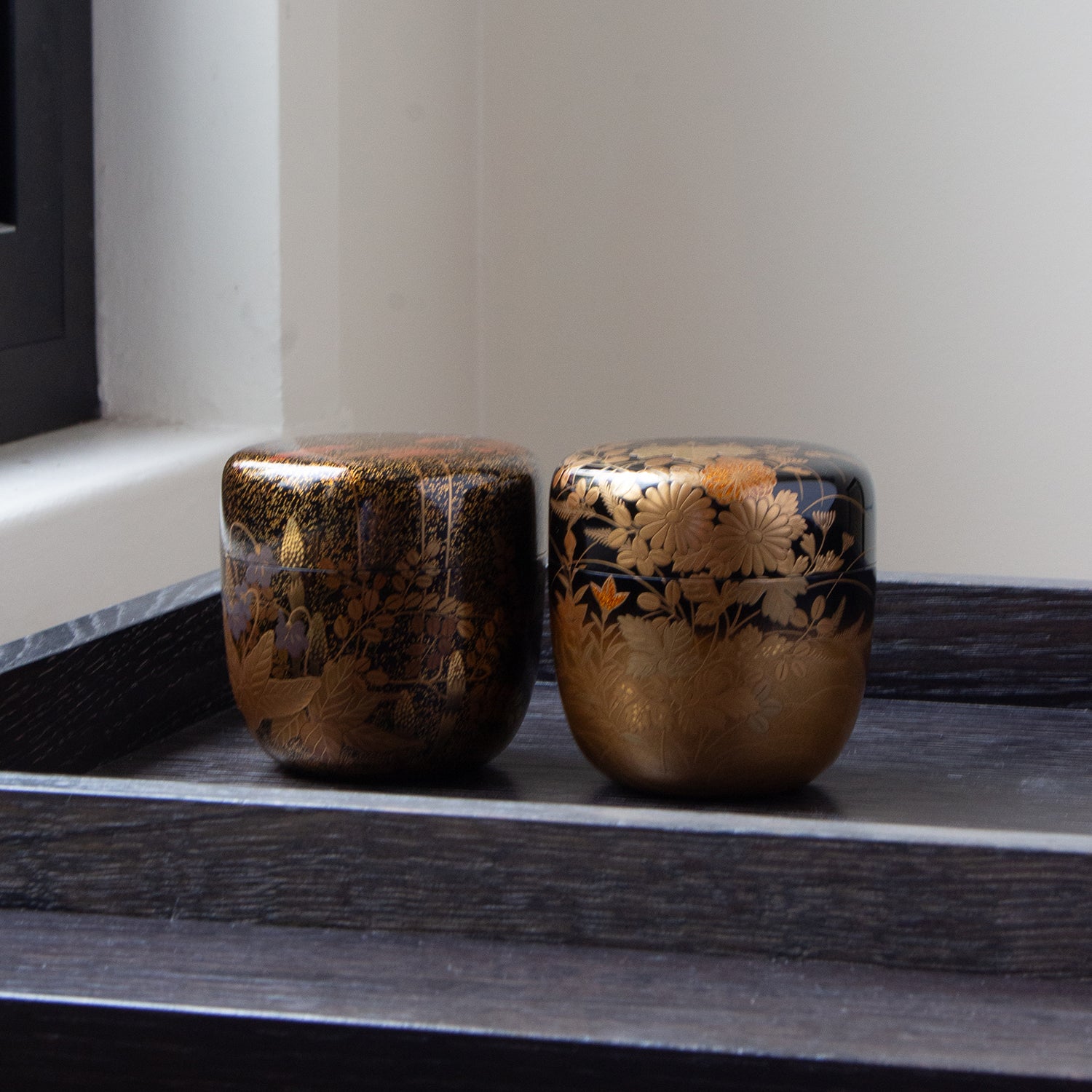
Natsume (棗) are small boxes with few variations in shape and dimensions (which are codified), and which are made of Japanese urushi lacquer, welcoming the matcha tea powder during the traditional Japanese tea ceremony (chanoyu and sadō). They are magnificent objects that can be used for tea or superb decorative pieces to collect and to position individually or grouped on a pretty tray or in a display case. Modern productions are more often made of resin and not lacquer, and of molded wood powder or plastic. We only offer authentic traditional natsume in real Japanese urushi lacquer made according to the rules of the art. These objects are rare and precious, they are likely to increase in value. Read our article on natsume >
Traditional Japanese lacquer, urushi, comes from the sap of the lacquer tree (Rhus Verniciflua), which flows after incision of the bark. It is a very precious material, a tree will give a maximum of 200ml of sap in its life, which is worked by specialized craftsmen. It takes many operations, slow and meticulous, and several months of work to bring real lacquer objects to life. It is the oldest craft in Japan! Initially used to protect and waterproof objects, this immutable craft has become an art of extreme sophistication. If you want to know more about the art of Japanese lacquer, you can read our dedicated article > .
DELIVERY
Delivery
Free delivery in mainland France for purchases over €200. Orders are generally dispatched within 2 working days, except in special cases, as indicated in the banner at the top of the website.
Precious items are wrapped in beautiful fabric, beautifully knotted according to the precious Korean art of pojagi. Some exceptions apply, especially if the items are large. Learn more >
Detailed delivery information is available via this link >
Your invoice will be sent by email
Payment methods
By card (Stripe operator): Visa, MasterCard, Discover, American Express.
Secure card payment with 3D Secure.
By PayPal, Apple Pay, Google Pay and Shop Pay
Returns and exchanges
14 days to change your mind.
CARE INSTRUCTIONS
Clean with a very soft cloth to avoid scratches, soaked in a little warm water if necessary (never soak your lacquer objects). No microwave, dishwasher, dryer. Do not expose to direct sunlight for a long time (risk of discoloration). If the atmosphere is very dry and very hot, and to avoid the risk of cracking, you can place a glass filled with water next to your lacquer object.
Choose options
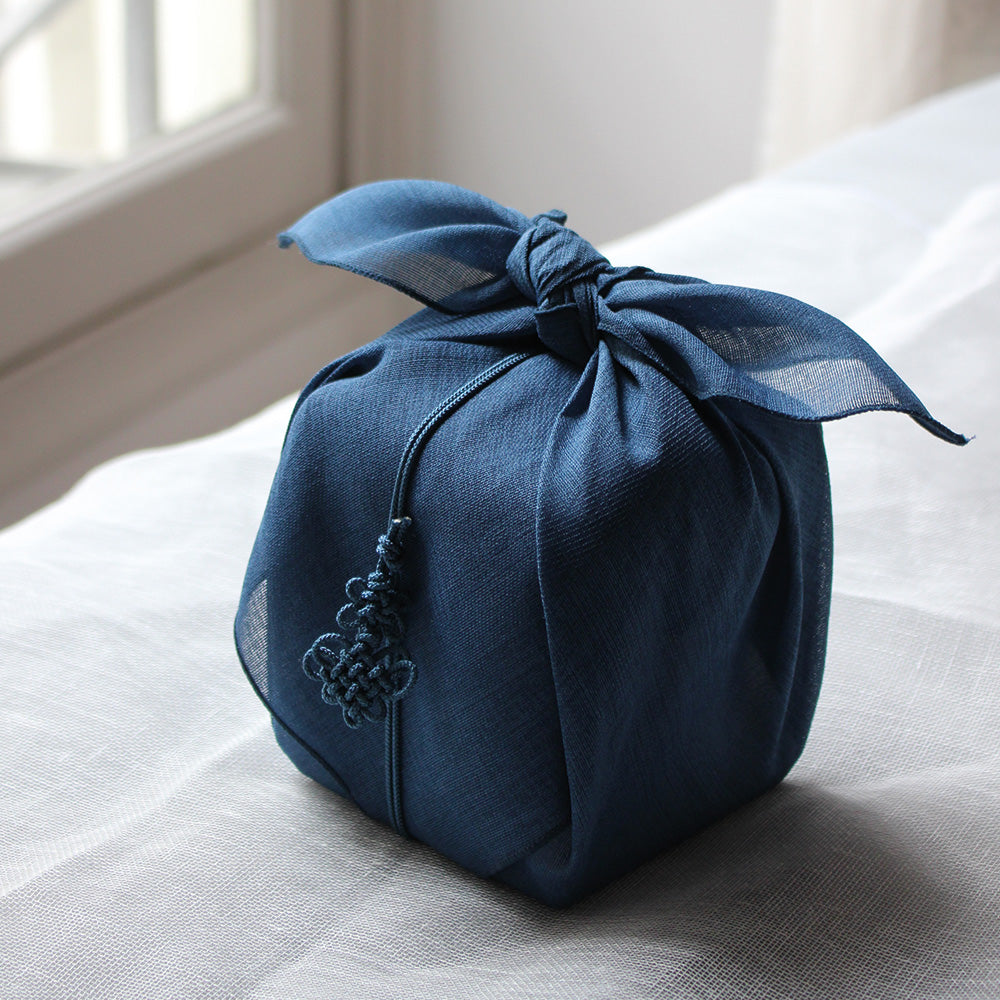
The art of wrapping
The exceptional items are wrapped in a beautiful fabric beautifully knotted using the little-known art of Korean pojagi and decorated with a delightful maedup (Korean ornamental knot). Details and conditions >
WRAPPING
Exceptional items are wrapped in textiles tied according to the Korean pojagi art