



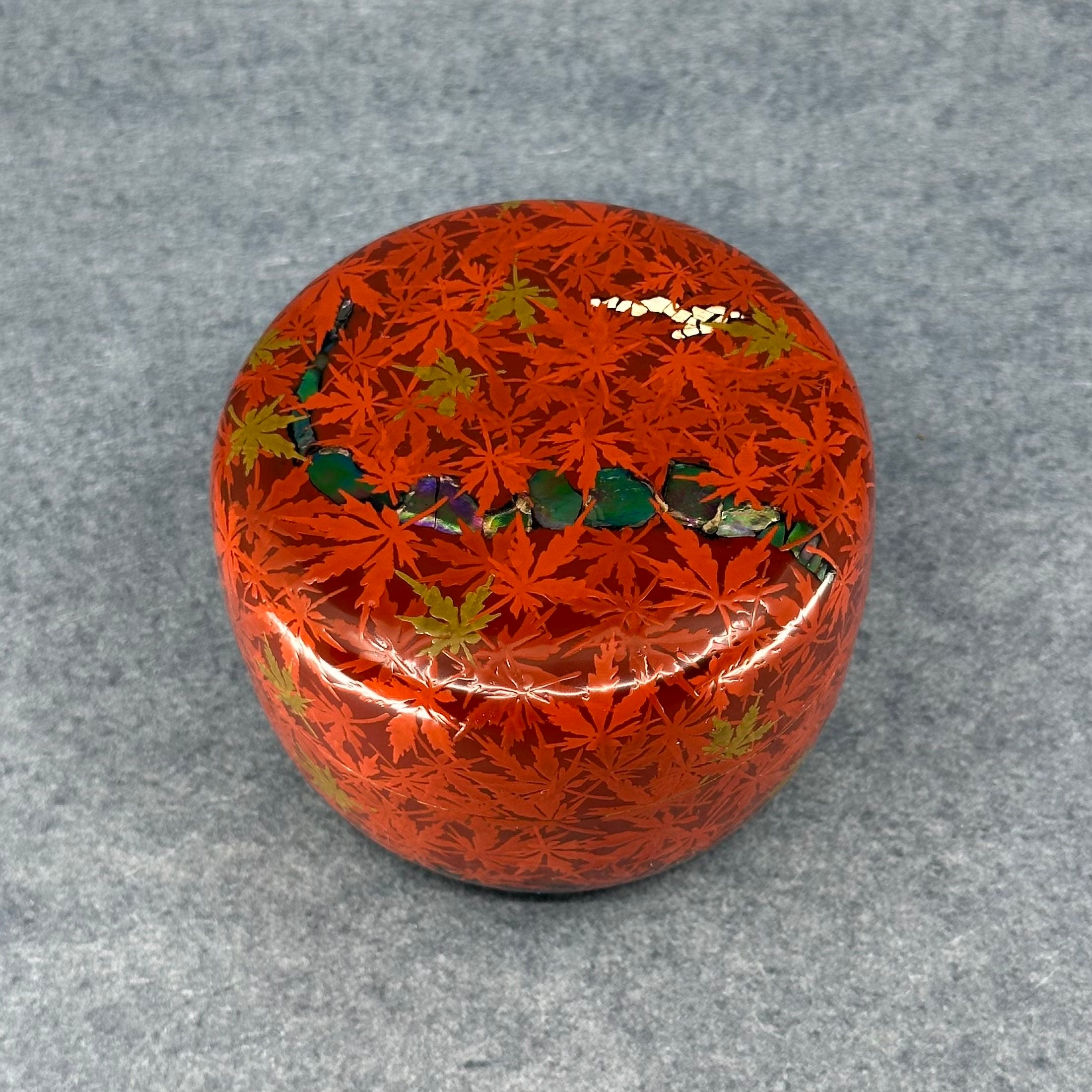
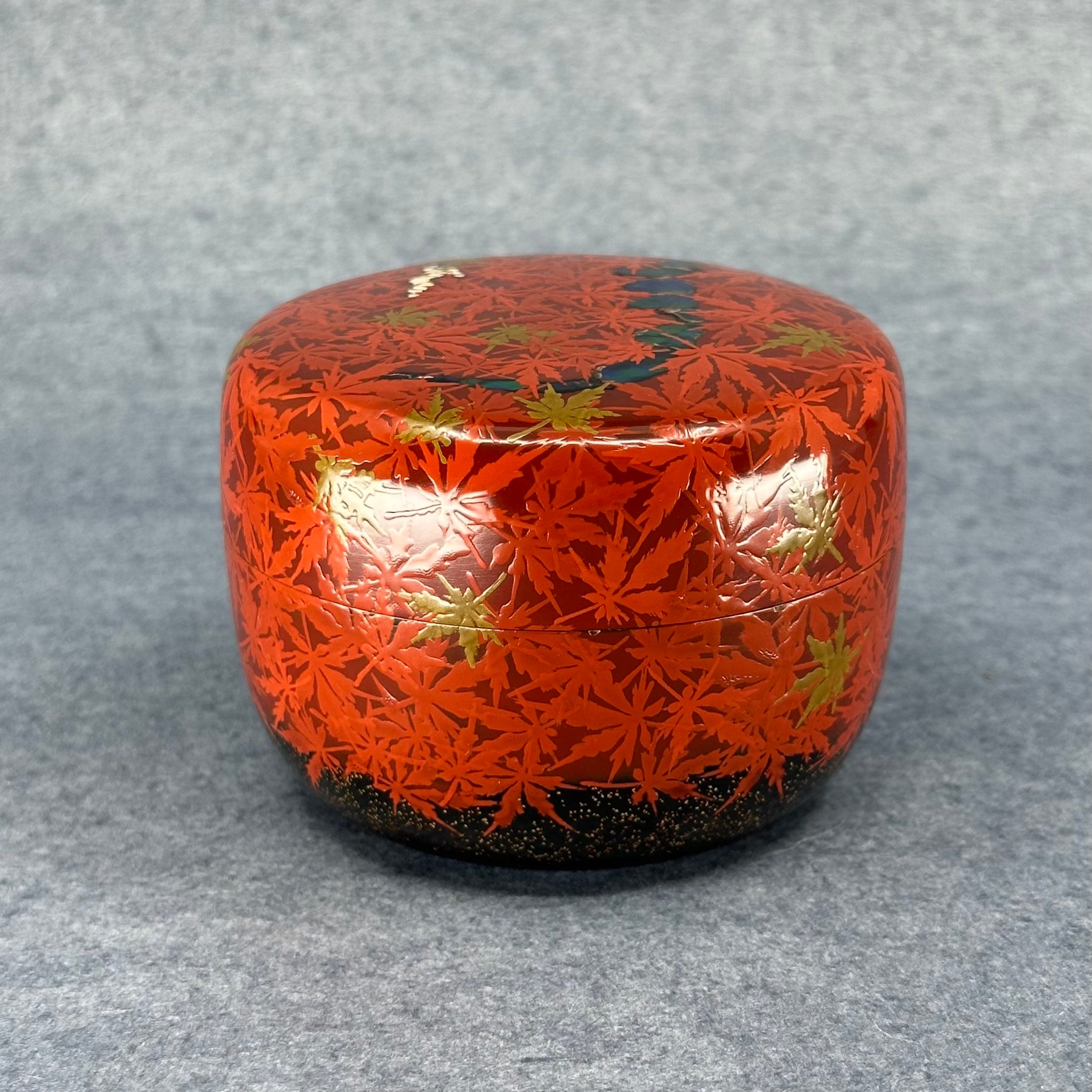
Natsume (Japanese tea caddy) in lacquer, gold and mother-of-pearl, decorated with Kurenai Tatsuta (red maples) by Takada Ryusai
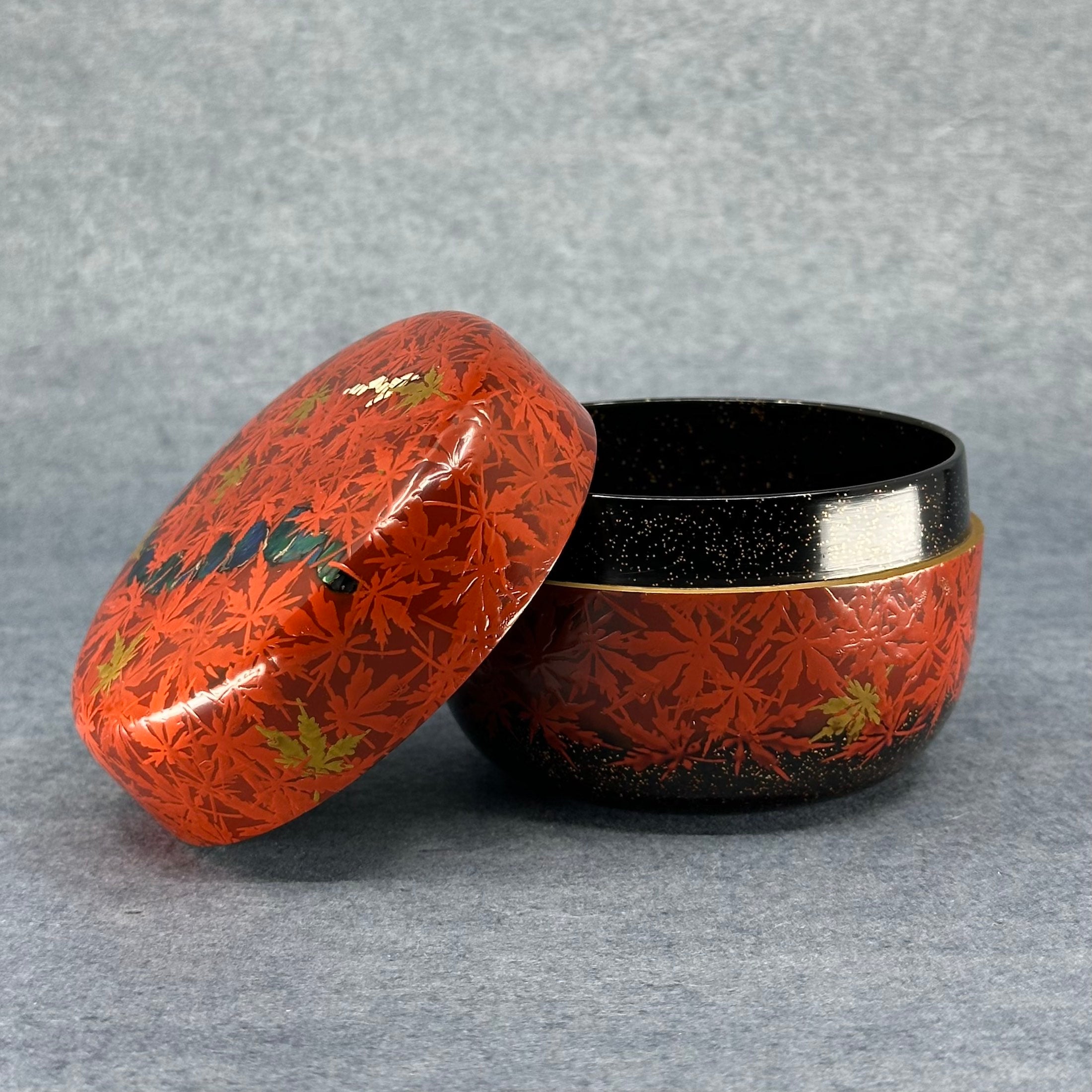
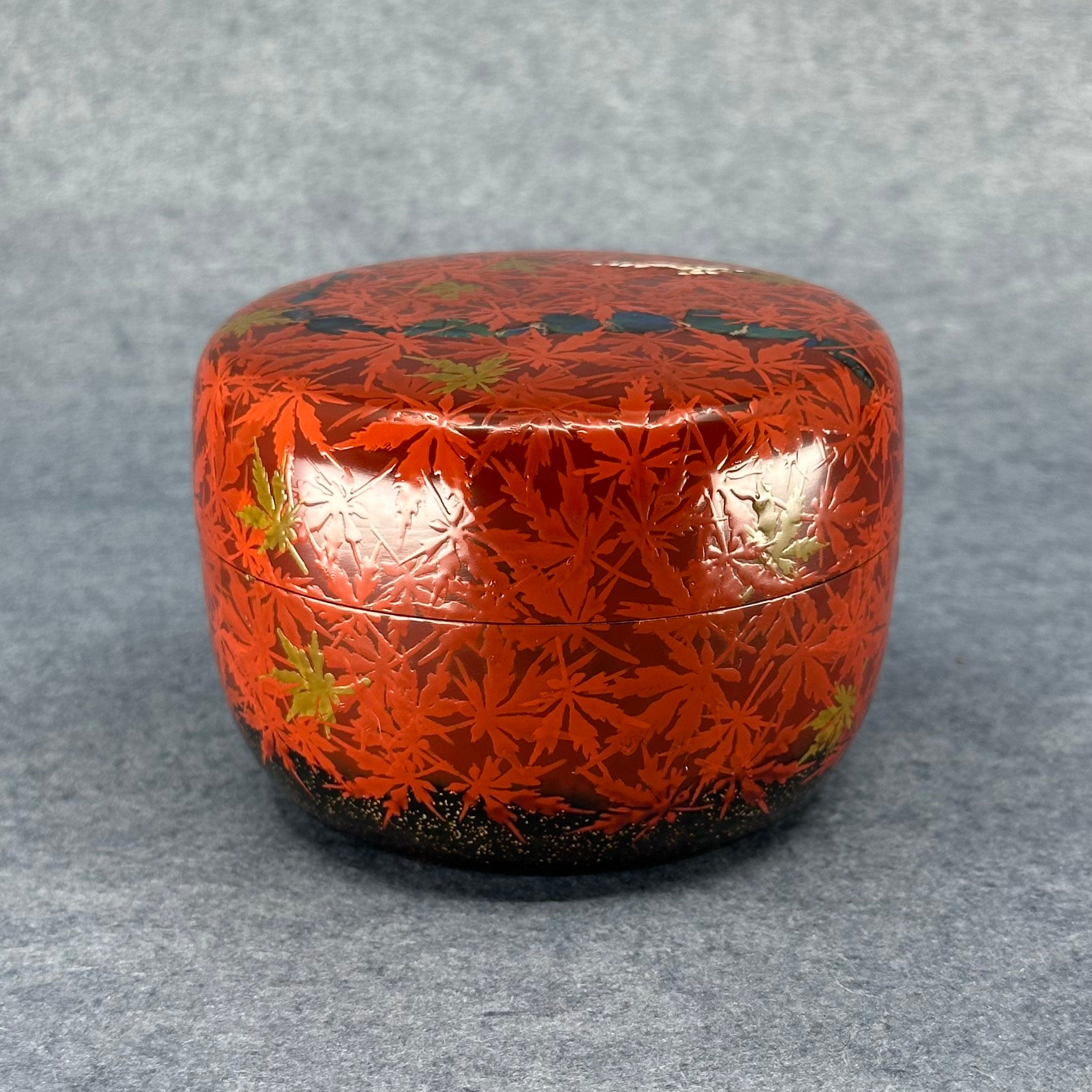
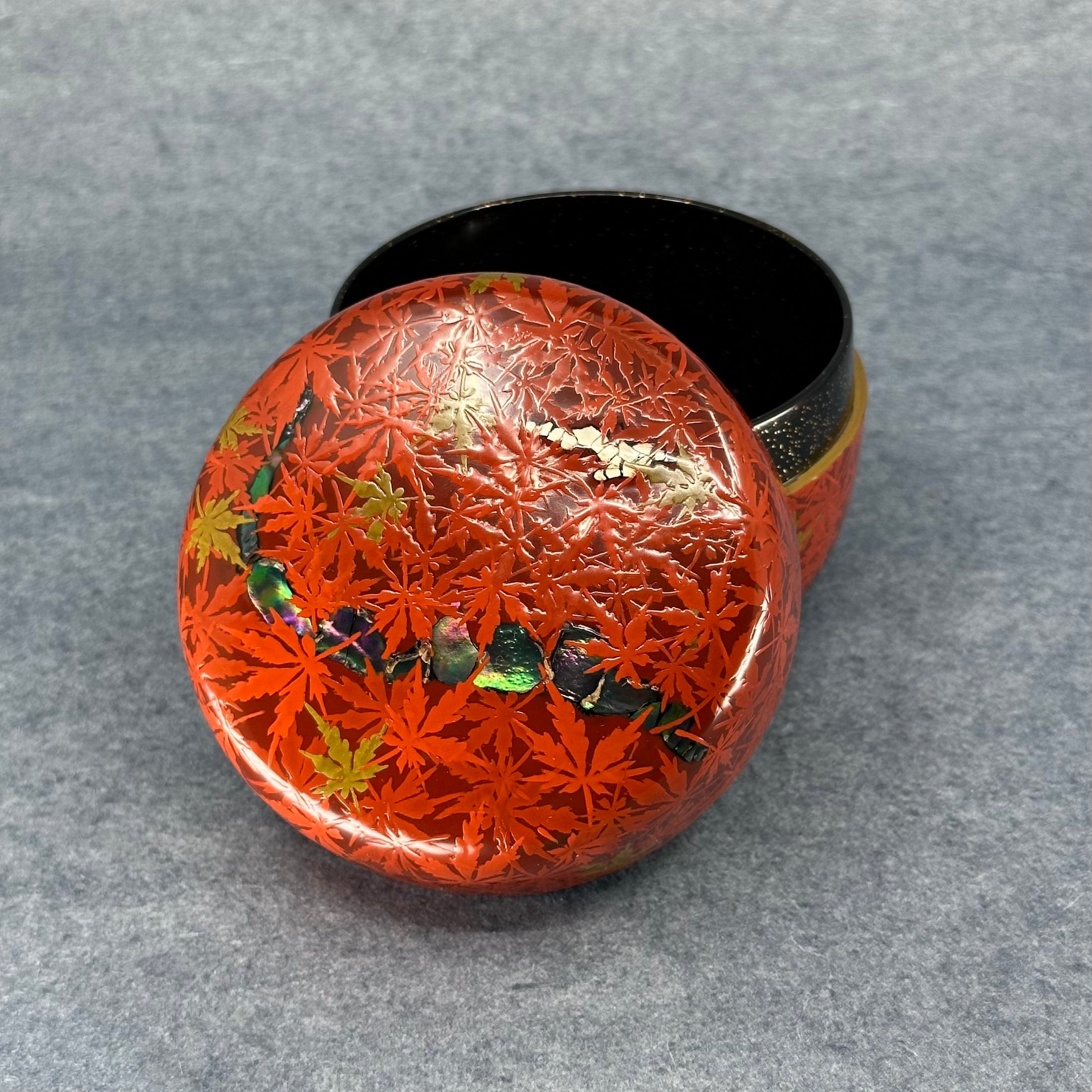
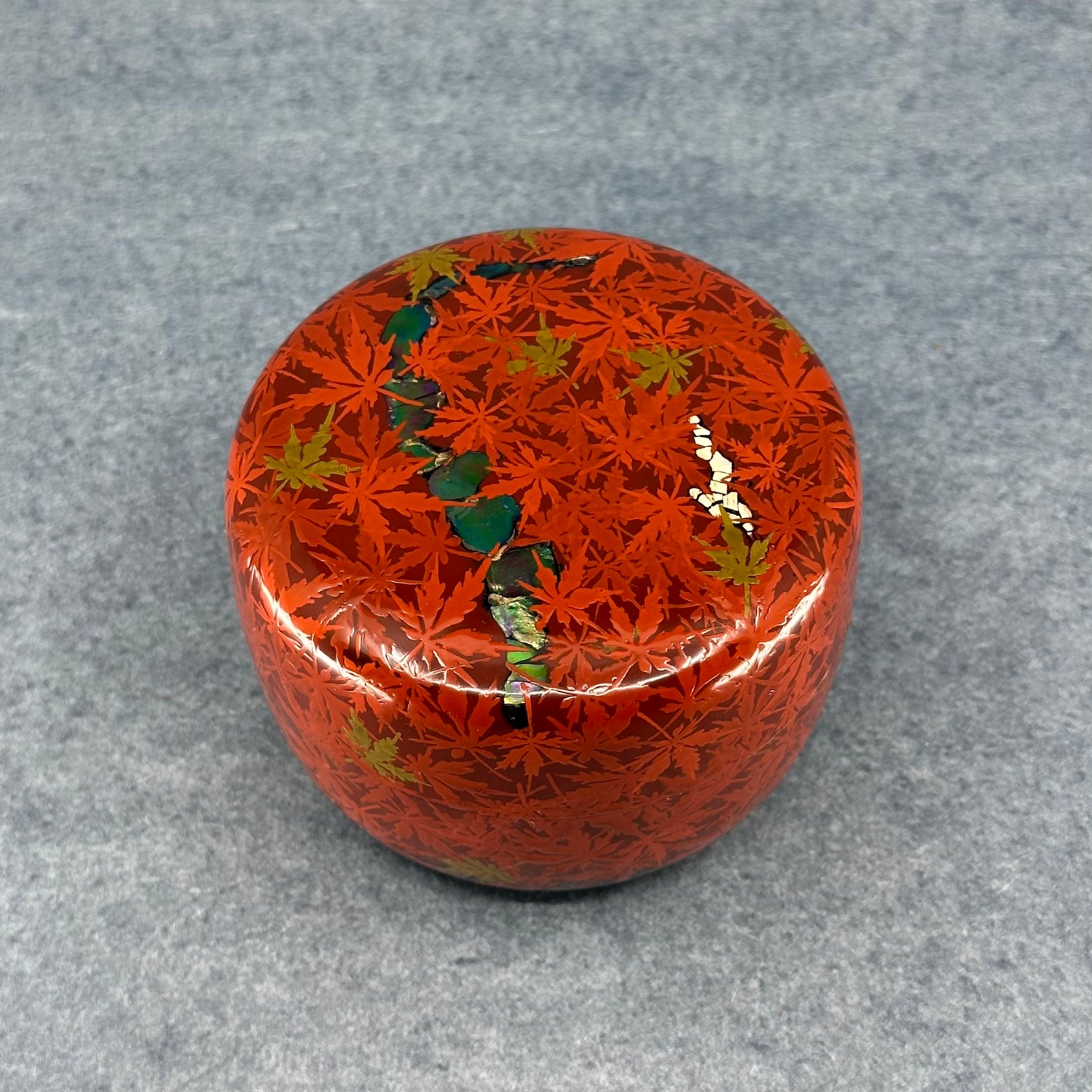
This natsume (the tin in which matcha powder is placed during the Japanese tea ceremony) by Takada Ryusai is a piece with a strong character, inspired by the poetic theme Kurenai Tatsuta, a classic evocation of the red autumn maples along the Tatsuta River near Nara. On a light wooden container entirely covered in a deep red Japanese urushi lacquer, unfolds a stylized landscape of maple leaves as if laid upon the ground, traversed by a luminous line of mother-of-pearl suggesting the river. The intensity of the red, punctuated by golden leaves and enlivened by the changing gleam of the raden, composes a vibrant and refined autumn scene, where matter and light converse with great sensitivity.
Decor and techniques
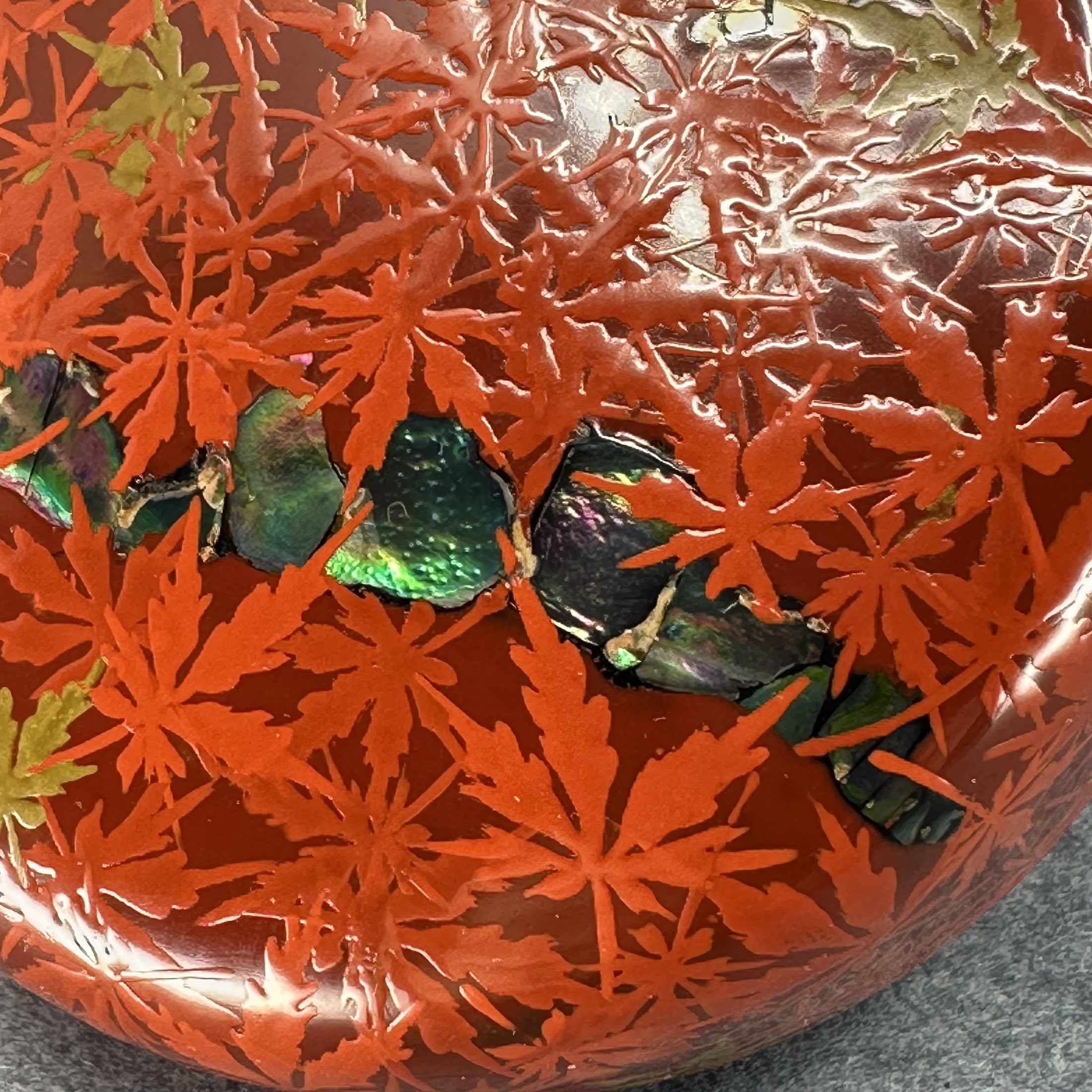
The decoration combines maki-e (gold powder) and mother-of-pearl (raden) inlays in a composition inspired by the poetic theme of Kurenai Tatsuta, traditionally linked to the red autumn maples along the Tatsuta River in Nara Prefecture, Famous since classical times for its autumn maples and a recurring inspiration for waka poetry and the chanoyu genre. The maple leaves are rendered primarily in hiramaki-e with very slight relief, in a precise and repetitive design on a red lacquer background, giving a subtle vibrancy to the surface.
The Tatsuta River is suggested by a succession of raden fragments carefully inserted into the lacquered surface and then polished, forming a shimmering line that lies just below the surface of the lacquer. Small touches of white mother-of-pearl enrich this trajectory, enhancing the effect of light and movement. At the base of the natsume, where the line of leaves ends, nashiji (sprinkles of gold) scattered across the black lacquer creates an elegant transition between the red decoration and the dark background.
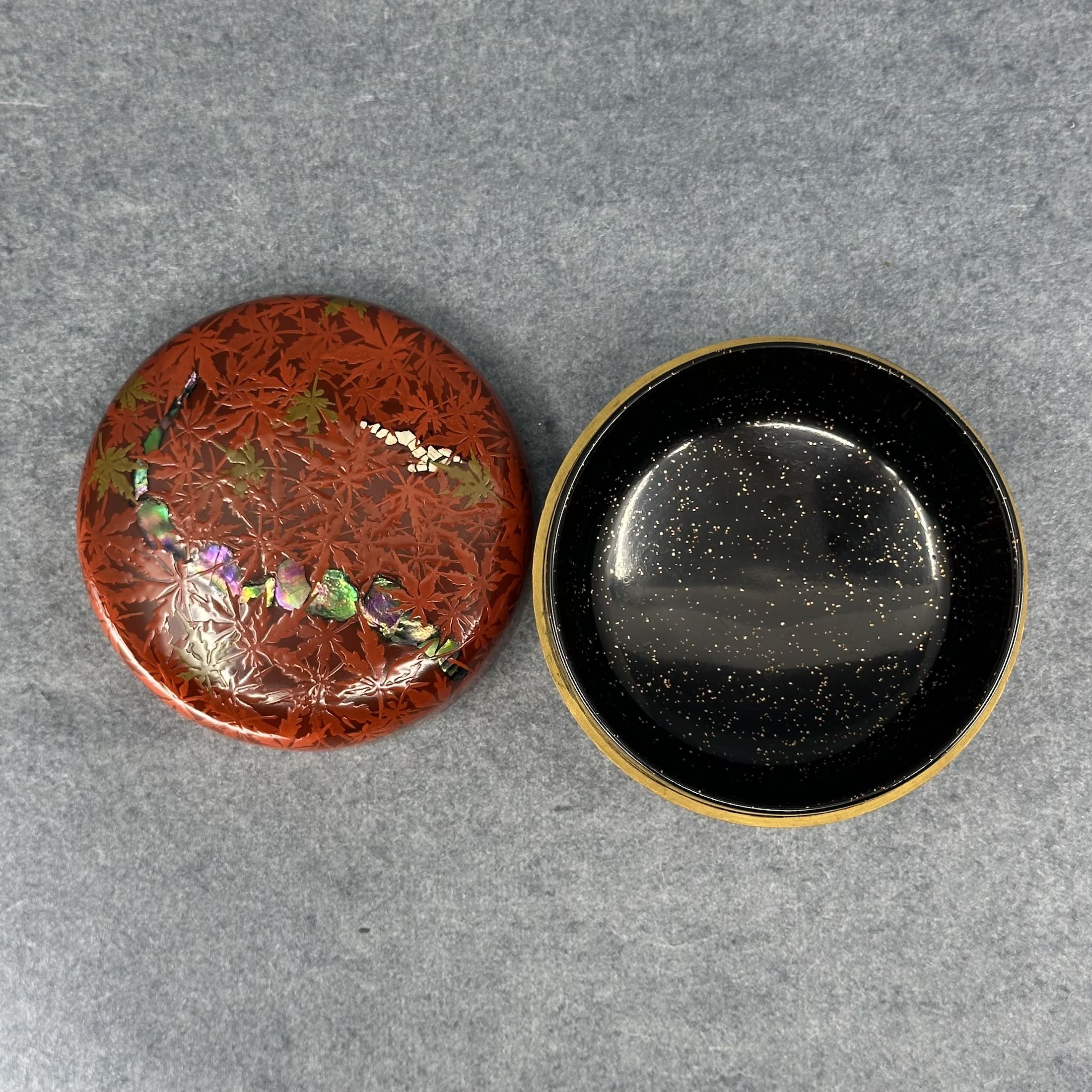
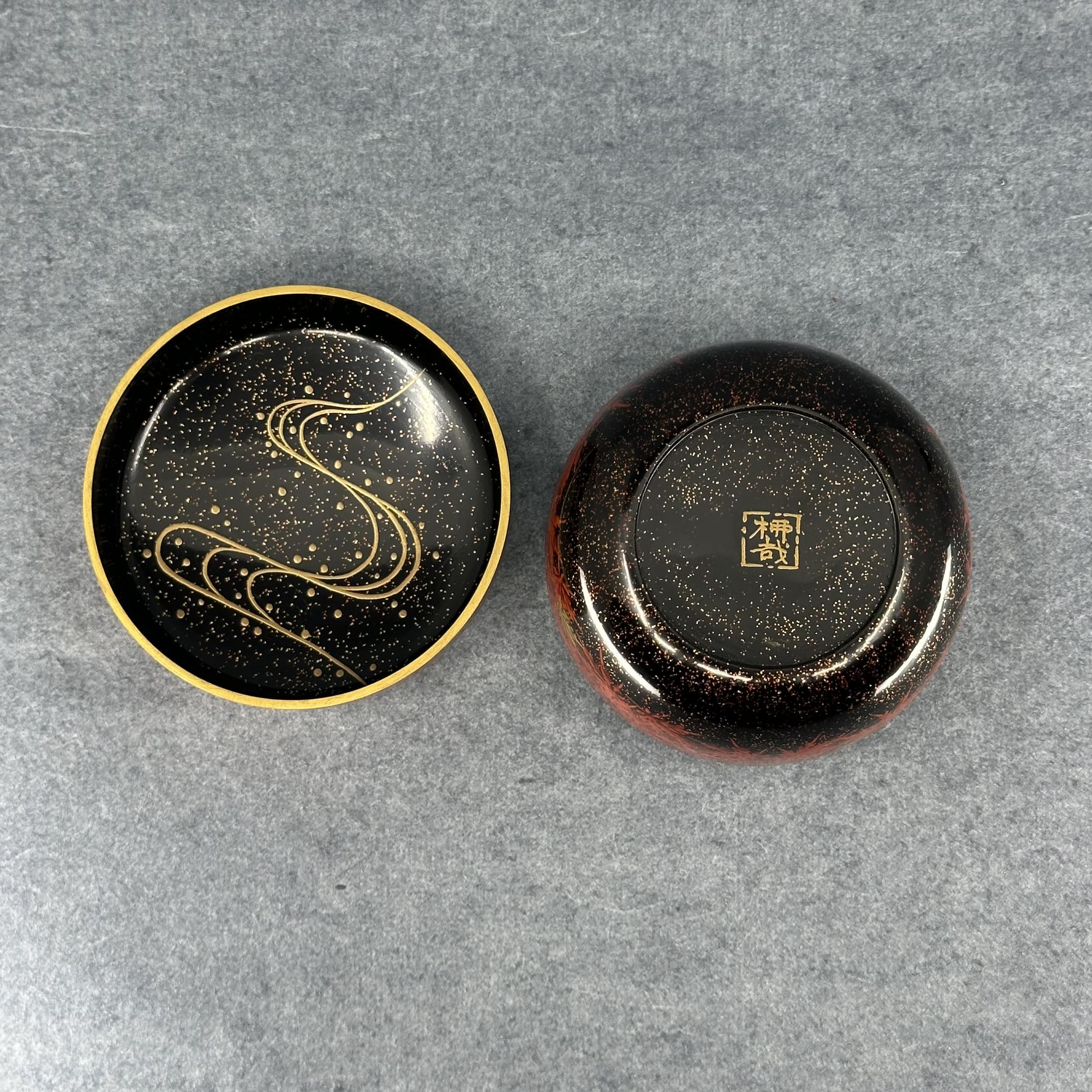
The interior, lid and bowl, is finished with very fine nashiji on black lacquer, revealing a delicate scattering of gold. The inside of the lid is decorated with lines of gilded maki-e evoking a stream, a subtle motif echoing the mother-of-pearl river visible on the exterior. The whole piece demonstrates a precise mastery of powdering, inlay, and the balance of materials.
Form and use
This hira-natsume (low natsume, whose shape resembles the box for go stones) is traditionally used in the tea ceremony for koicha, the thick tea.
The craftsman
This natsume was created by Takada Ryusai (1926–2013), a Japanese lacquer artist who signed his work with the name Ryusai. He is known for his objects intended for chanoyu (tea ceremony), particularly natsume and other tea utensils, characterized by highly elaborate decorations blending maki-e and raden styles. His works are included in Japanese public collections and have been featured in institutional exhibitions, attesting to his significant recognition in the field of lacquerware. His work is distinguished by a strong graphic approach and an expressive use of mother-of-pearl, integrated as a structural element of the decoration.
Presentation
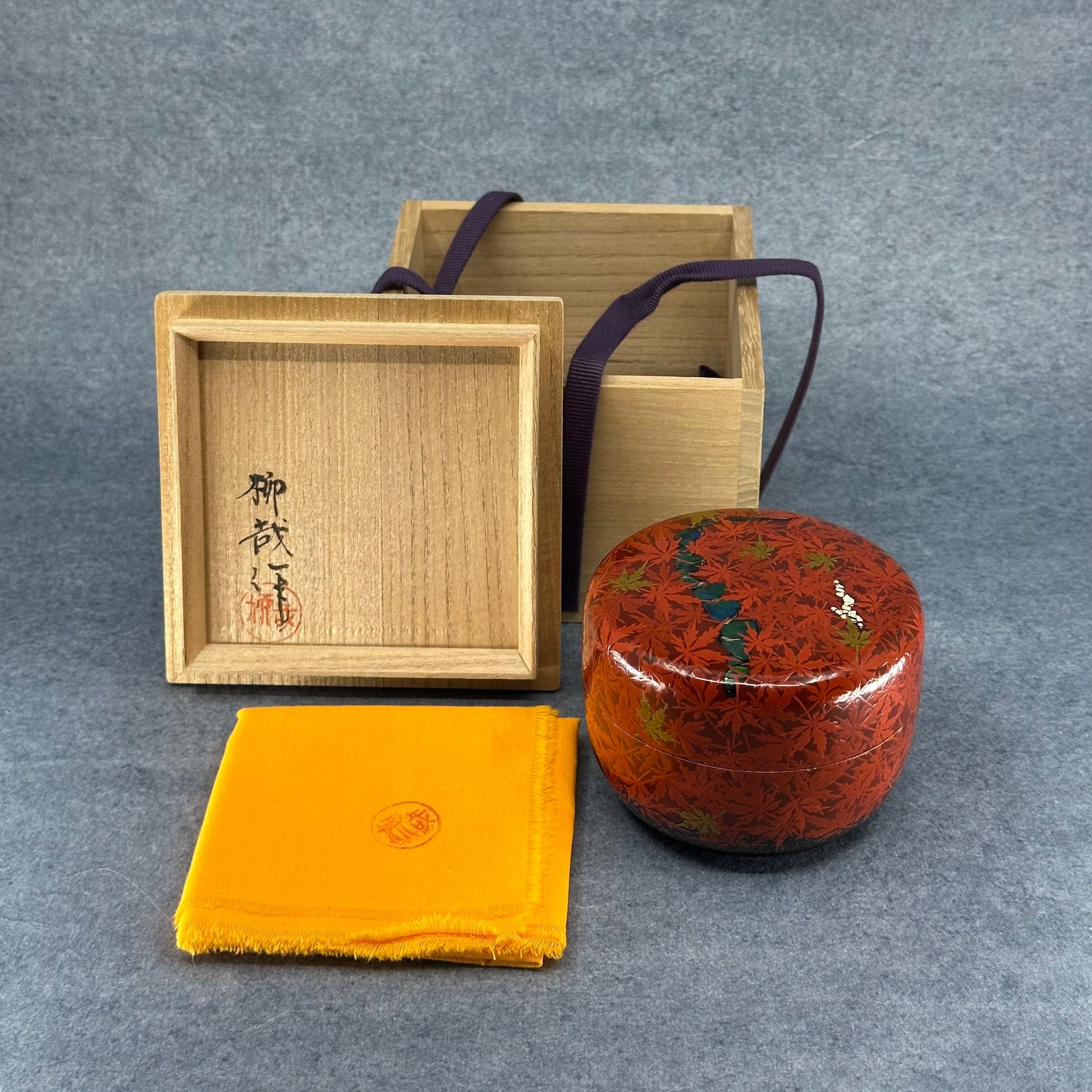
This unique piece dates from the Heisei era (1989–2019). It comes with a protective paulownia wood box (tomobako) tied with a cord (sanadahimo), bearing the artist's name, official seal, and the title of the work, as well as a protective cloth (tomonuno) bearing the artist's seal. The natsume is also signed at its base by the craftsman.
Place of manufacture
Japan
Dimensions
Diameter 8.6 cm - Height 6.2 cm
Weight
Natsume alone: 88 g
Natsume with boxes: 226 g
Materials
Wood, Japanese urushi lacquer, maki-e (gold powder), mother-of-pearl (raden) inlays
Condition
Very good condition
© Atelier Ikiwa – Laurence Corteggiani. All photographs and text are protected. Reproduction without permission is prohibited.
KNOW-HOW
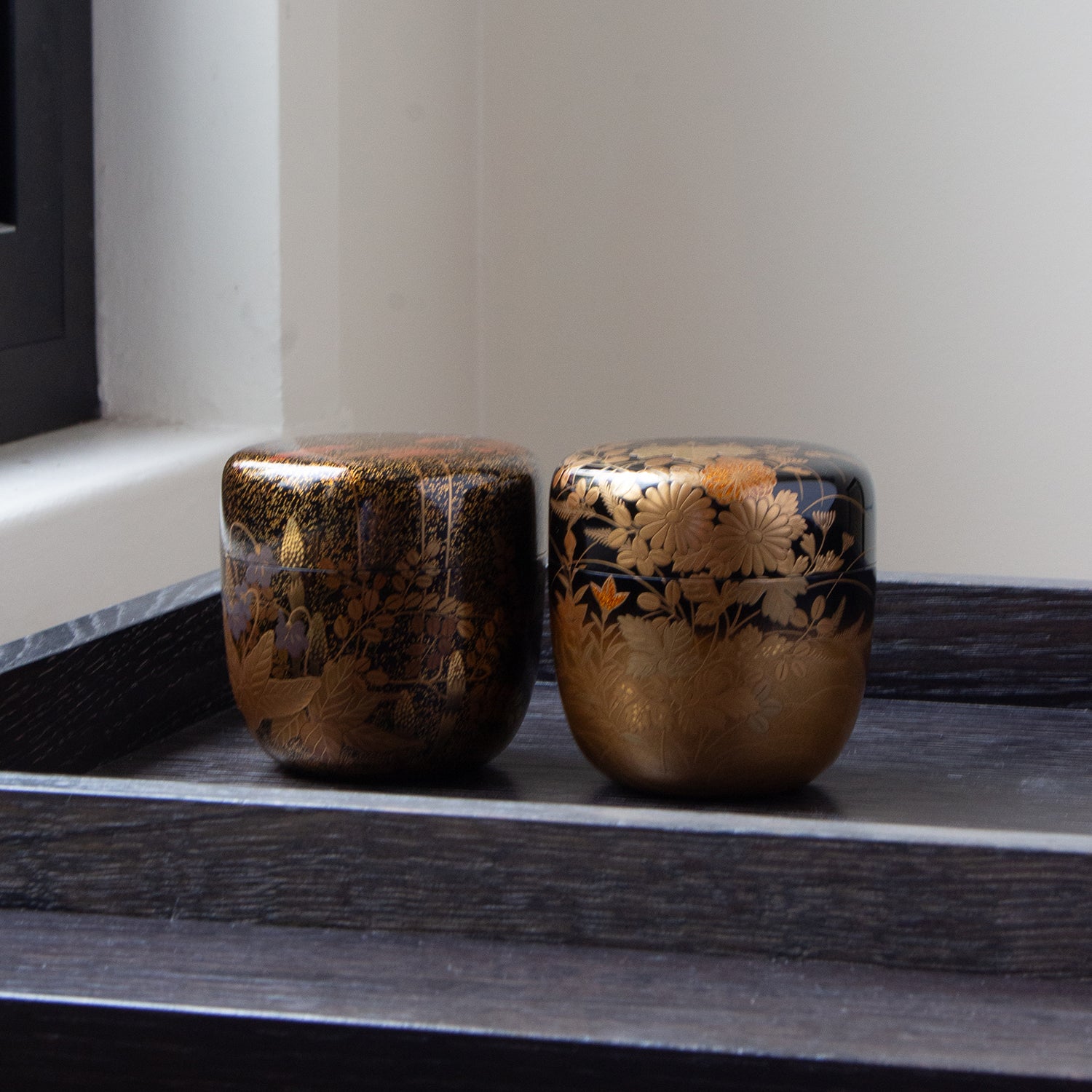
Natsume (棗) are small boxes with few variations in shape and dimensions (which are codified), and which are made of Japanese urushi lacquer, welcoming the matcha tea powder during the traditional Japanese tea ceremony (chanoyu and sadō). They are magnificent objects that can be used for tea or superb decorative pieces to collect and to position individually or grouped on a pretty tray or in a display case. Modern productions are more often made of resin and not lacquer, and of molded wood powder or plastic. We only offer authentic traditional natsume in real Japanese urushi lacquer made according to the rules of the art. These objects are rare and precious, they are likely to increase in value. Read our article on natsume >
Traditional Japanese lacquer, urushi, comes from the sap of the lacquer tree (Rhus Verniciflua), which flows after incision of the bark. It is a very precious material, a tree will give a maximum of 200ml of sap in its life, which is worked by specialized craftsmen. It takes many operations, slow and meticulous, and several months of work to bring real lacquer objects to life. It is the oldest craft in Japan! Initially used to protect and waterproof objects, this immutable craft has become an art of extreme sophistication. If you want to know more about the art of Japanese lacquer, you can read our dedicated article > .
DELIVERY AND PAYMENT OPTIONS
Shipping
Free shipping in metropolitan France for purchases over €200. Shipping with Colissimo, choice of home delivery or relay point, parcel delivered against signature or unique code for valuable items. Orders are generally dispatched within 2 business days, except for fine art photographs, which are printed on demand, and special cases which will be announced in the banner at the top of the site (e.g., in case of absence). Learn more >
Payment options
Secure card payment with Shopify Payments and 3D Secure technology.
Visa, MasterCard, American Express, Bank Cards, PayPal, Apple Pay, Shop Pay, and Klarna.
Klarna: Pay in 3 interest-free installments or within 30 days for purchases up to €1,500, subject to Klarna's approval. You will be redirected to Klarna to log in or create an account and confirm your payment.
PayPal: You will be redirected to PayPal to log in and confirm payment. New users can create an account during checkout.
Your invoice will be sent with your order.
Returns and exchanges
14 days to change your mind. Learn more >
CARE INSTRUCTIONS
Clean with a very soft cloth to avoid scratches, soaked in a little warm water if necessary (never soak your lacquer objects). No microwave, dishwasher, dryer. Do not expose to direct sunlight for a long time (risk of discoloration). If the atmosphere is very dry and very hot, and to avoid the risk of cracking, you can place a glass filled with water next to your lacquer object.
Choose options
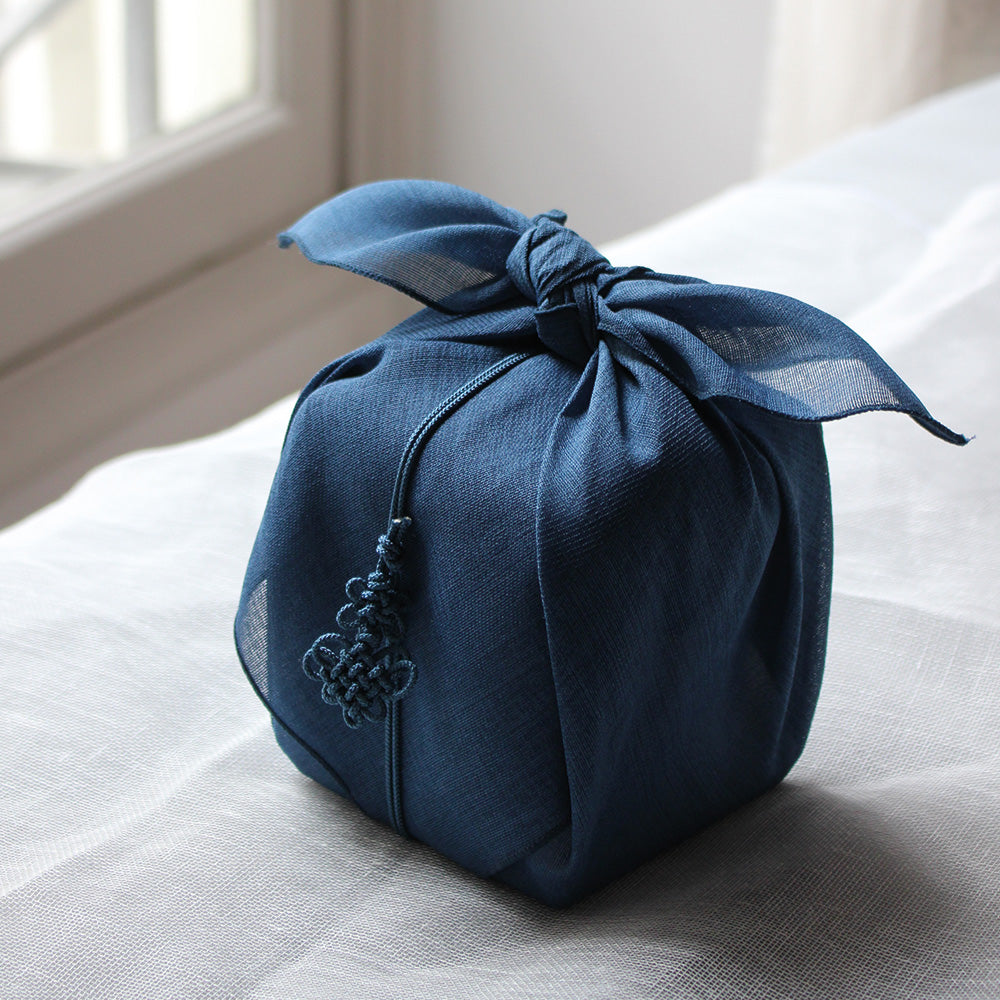
The art of wrapping
The exceptional items are wrapped in a beautiful fabric beautifully knotted using the little-known art of Korean pojagi and decorated with a delightful maedup (Korean ornamental knot). Details and conditions >
WRAPPING
Exceptional items are wrapped in textiles tied according to the Korean pojagi art