
Suzuribako (Japanese writing box) in urushi lacquer, gold and silver, tsuru (crane) decoration
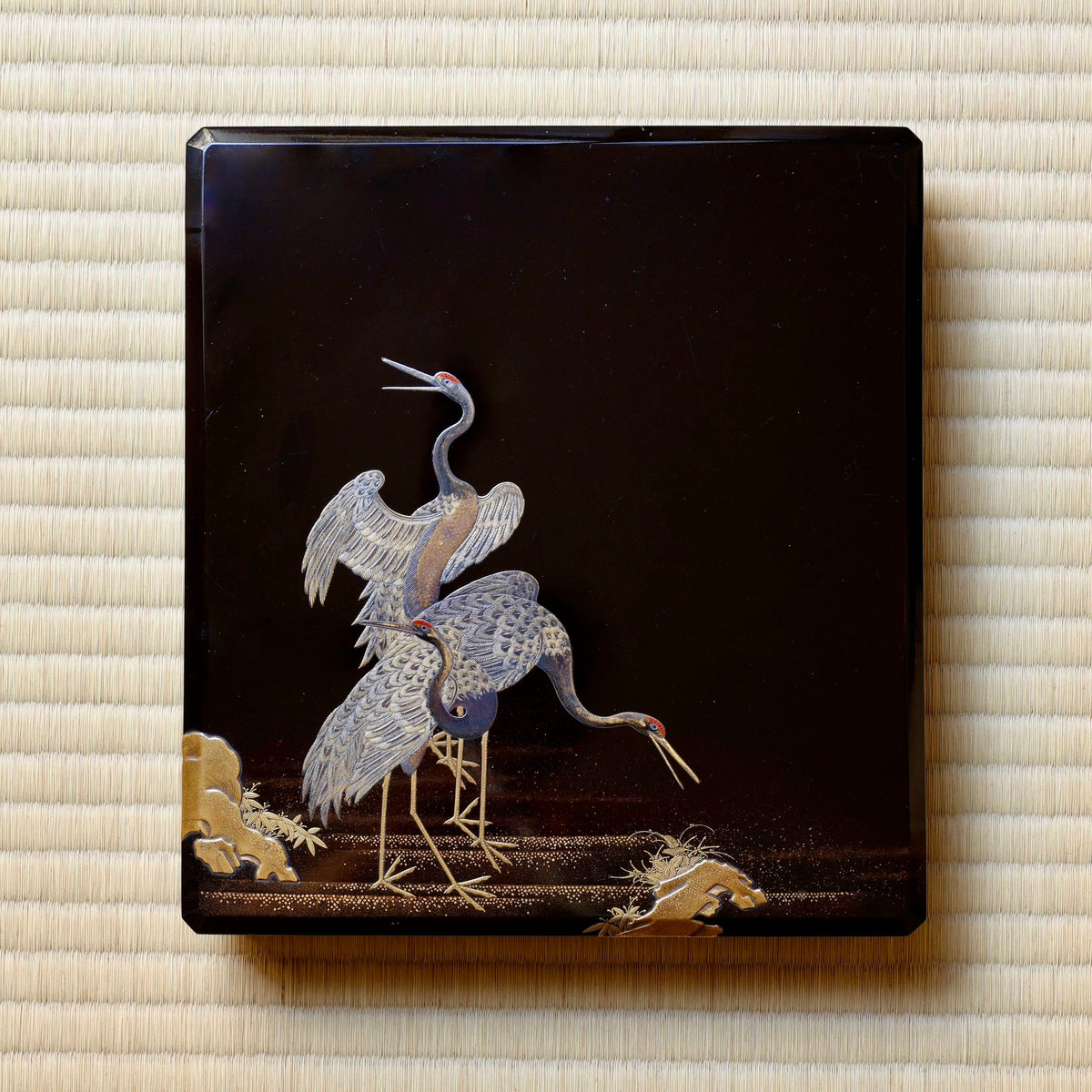
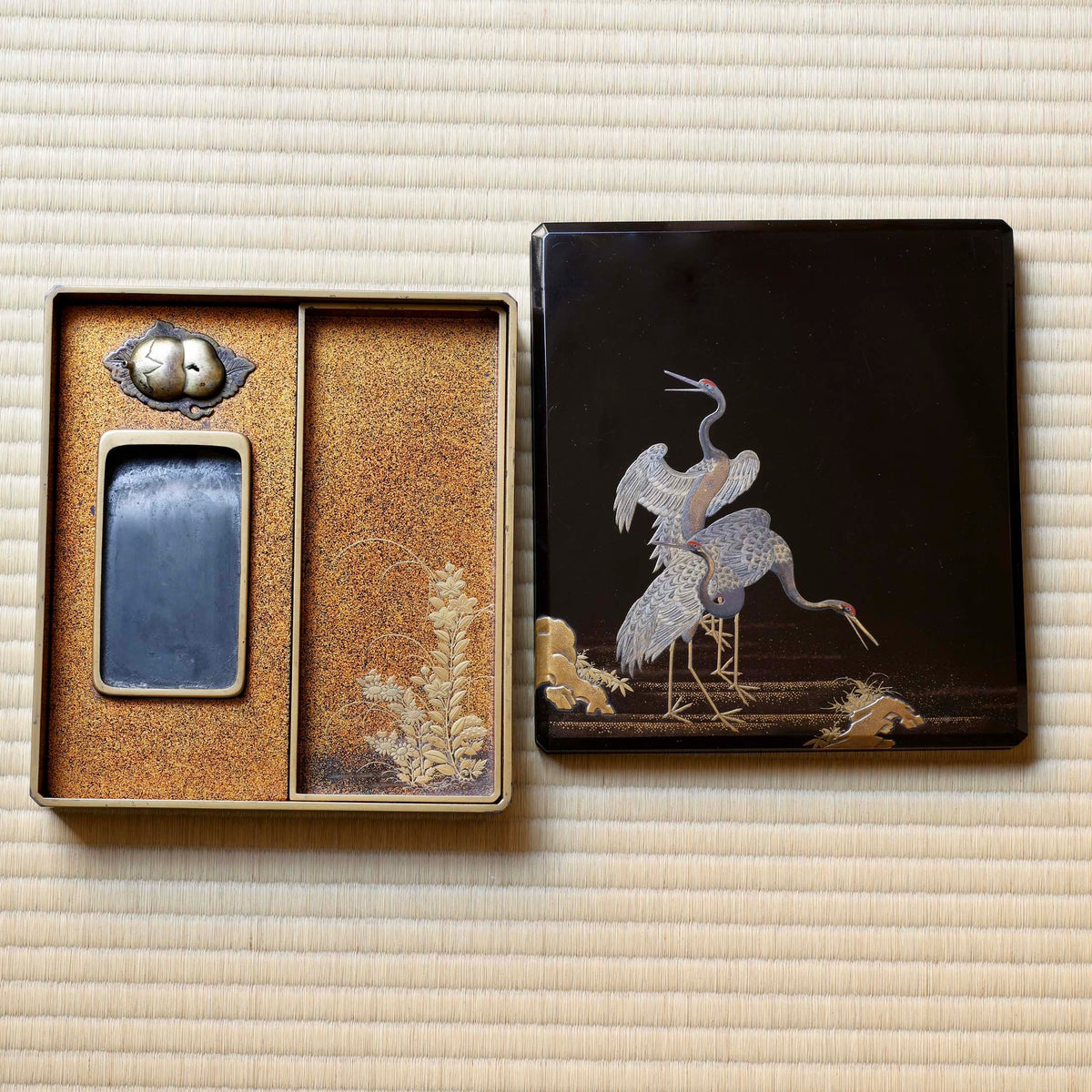
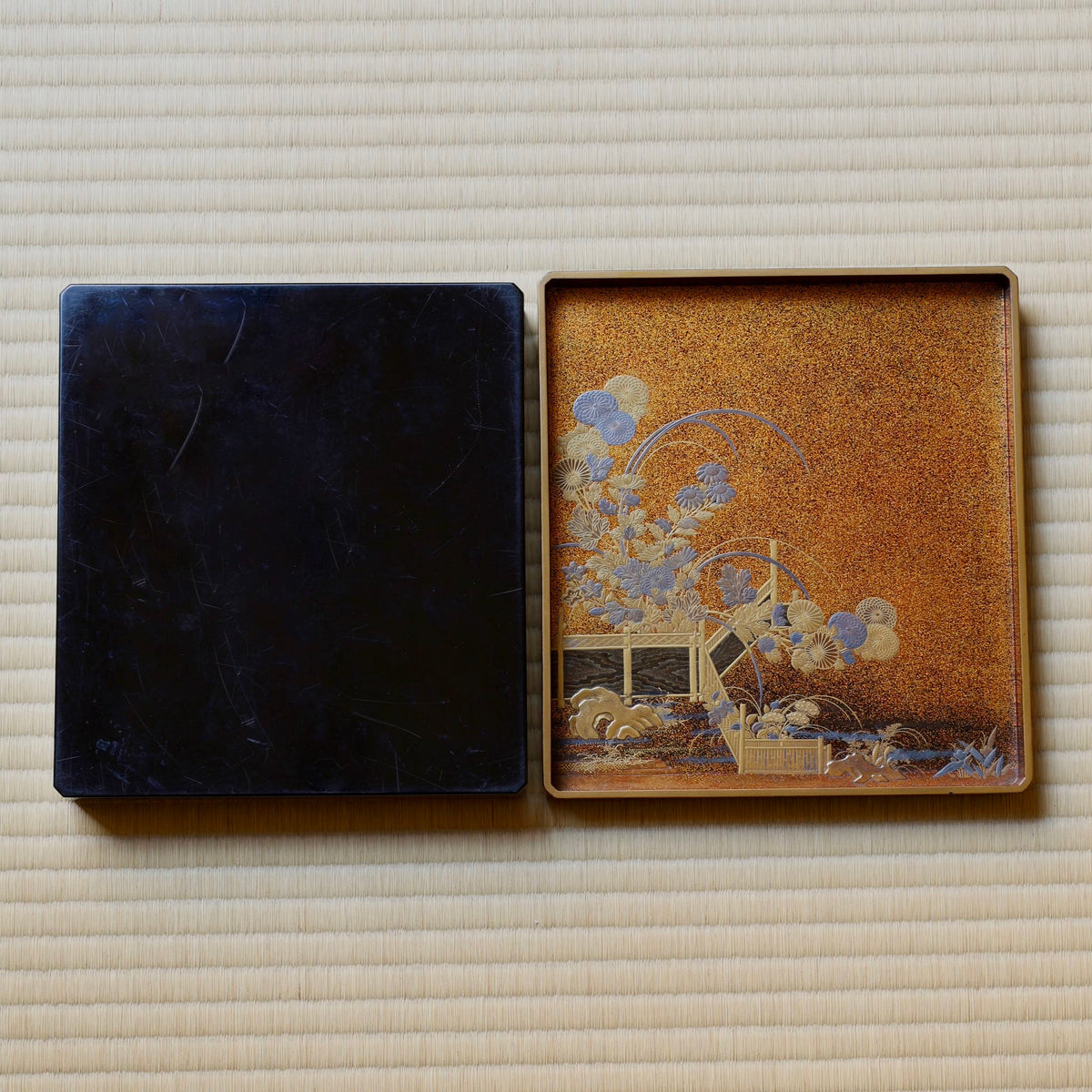
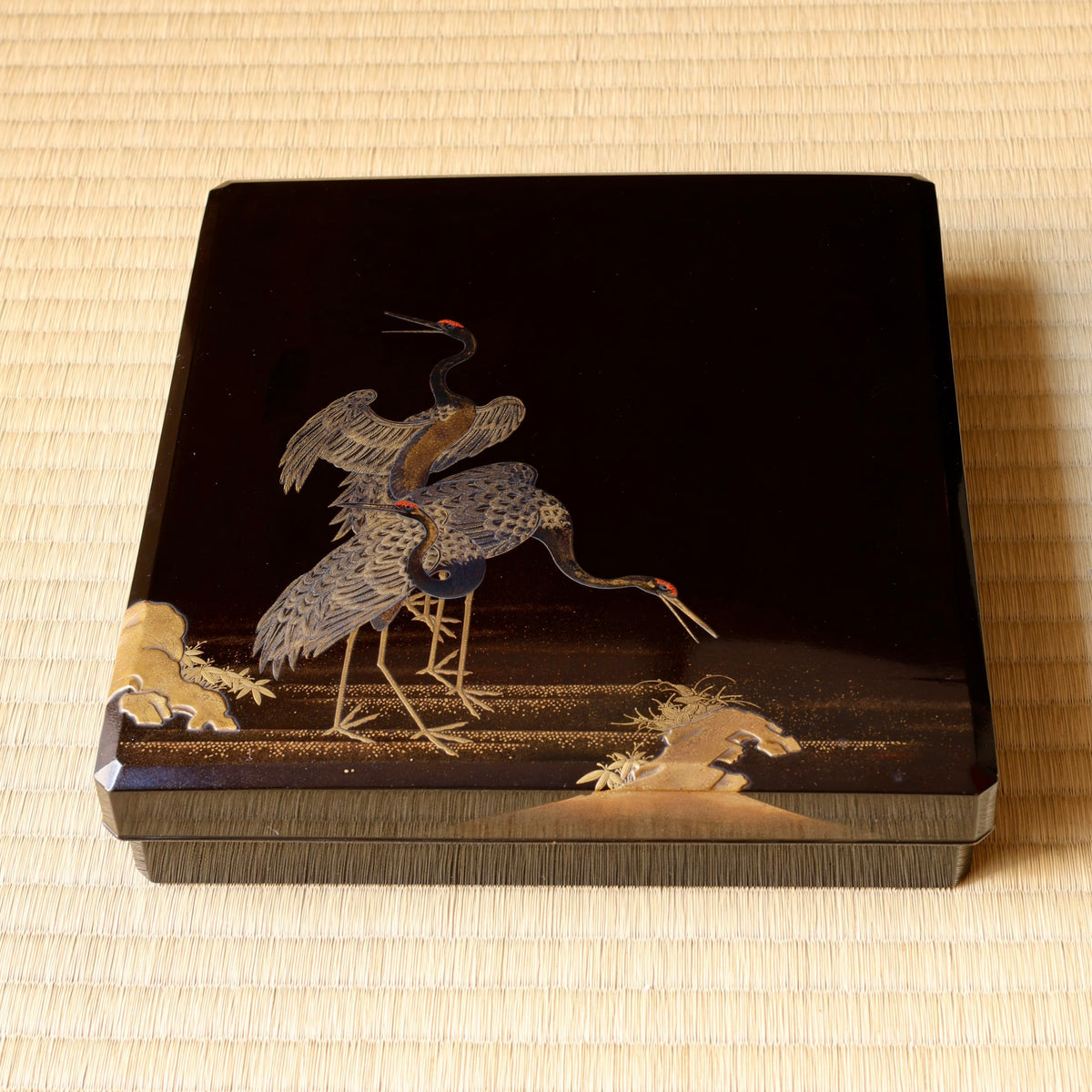
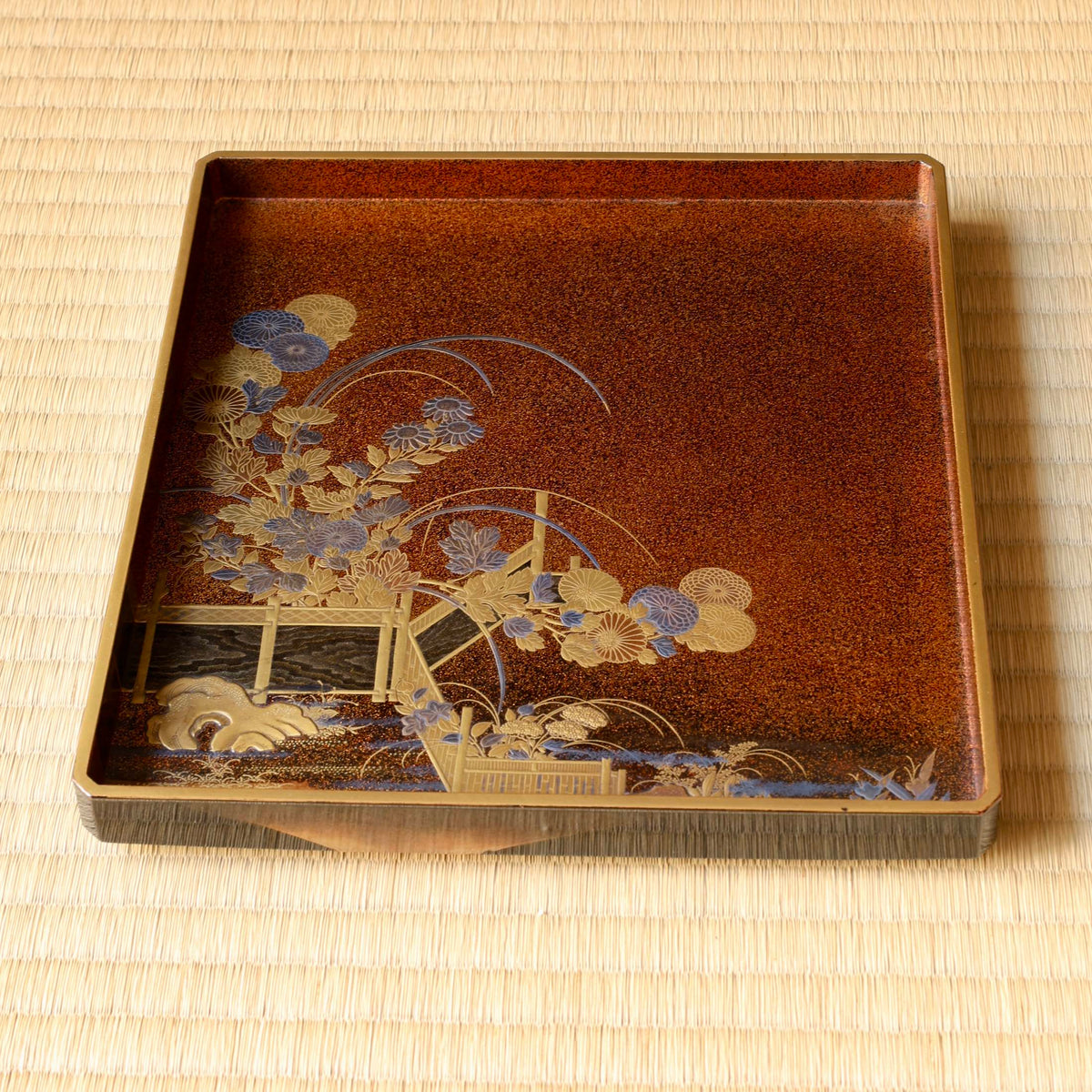
This Meiji-period suzuribako (Japanese writing box) is striking for the richness of its decoration and the remarkable finesse of its maki-e. On the glossy black lacquer of the lid, three cranes are depicted in raised gold and silver powders with exceptional precision, while the interior, finished entirely in nashiji (sprinkled gold ground), reveals a second, particularly lavish scene of kiku (chrysanthemums). The alternation of dark surfaces and gold grounds, the variety of reliefs, and the extreme meticulousness of the details make this a beautiful expression of the maki-e art of the Meiji era.
Decoration and techniques
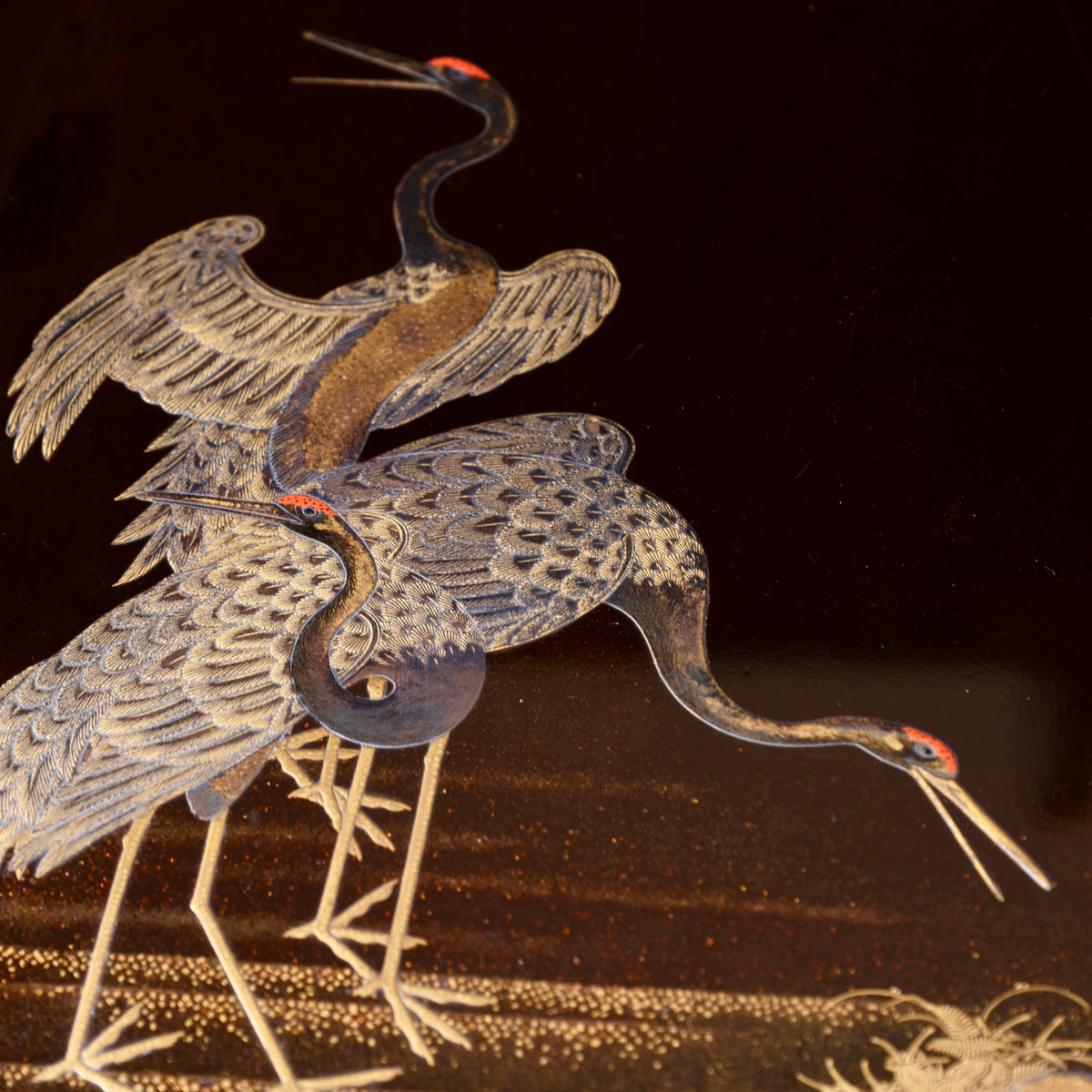
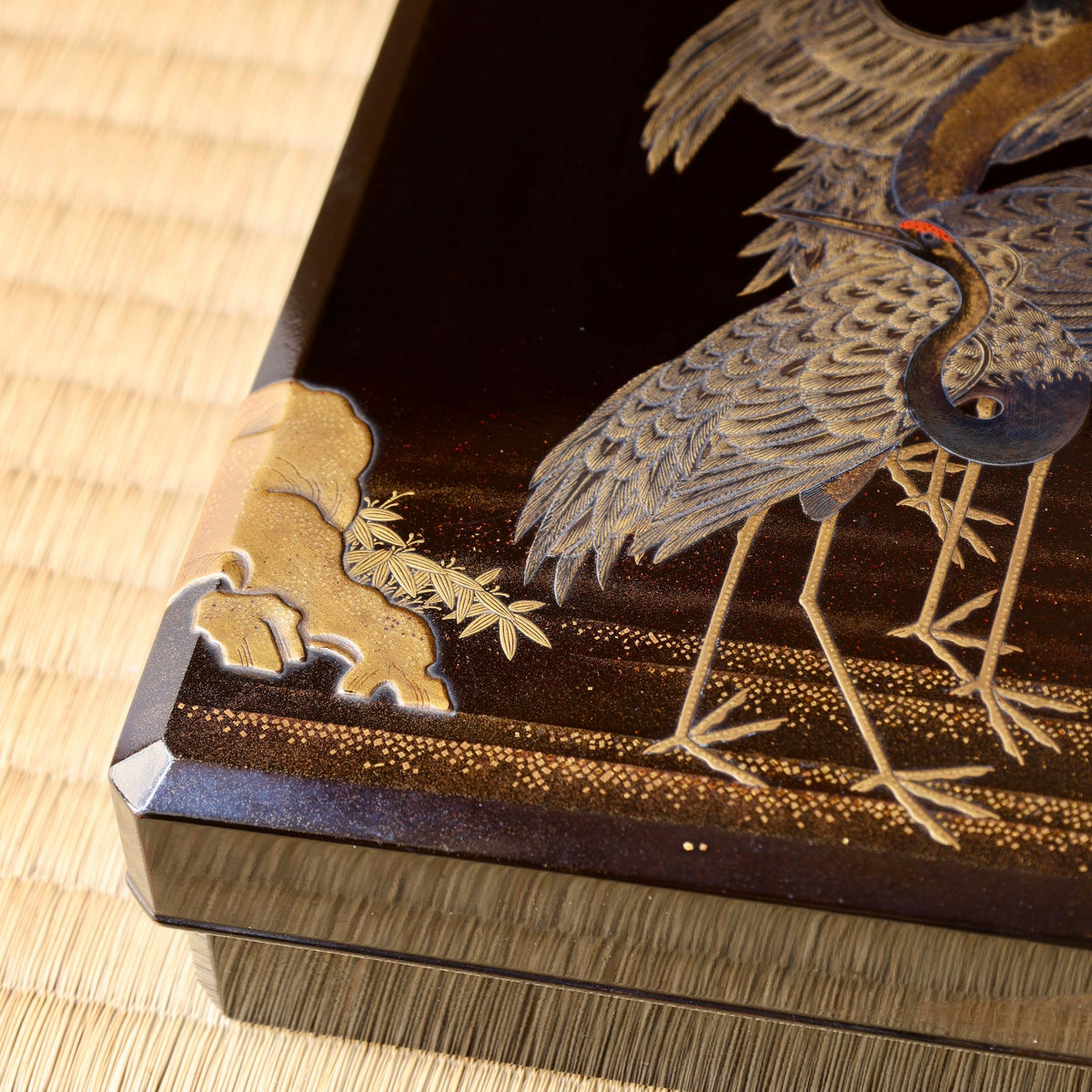
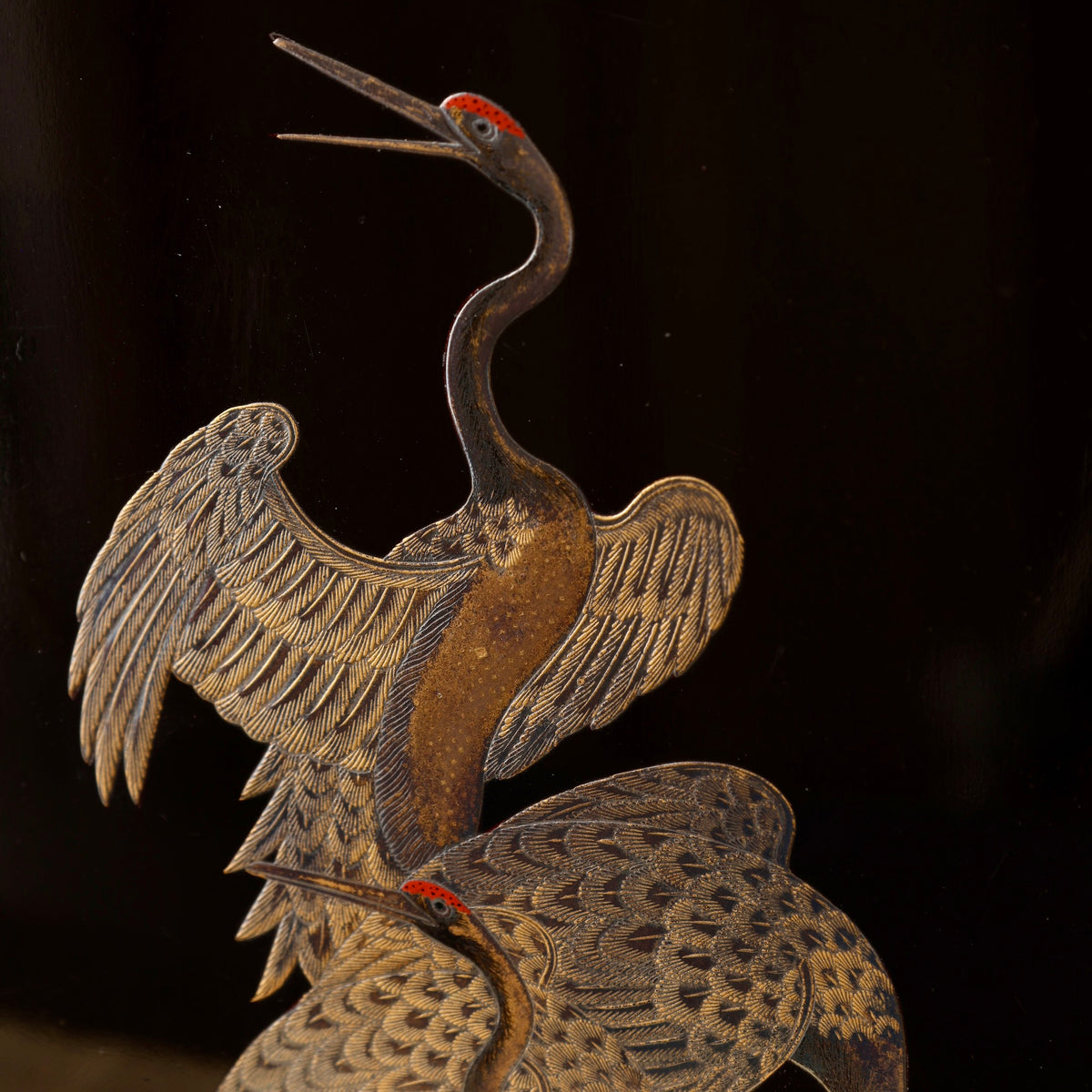
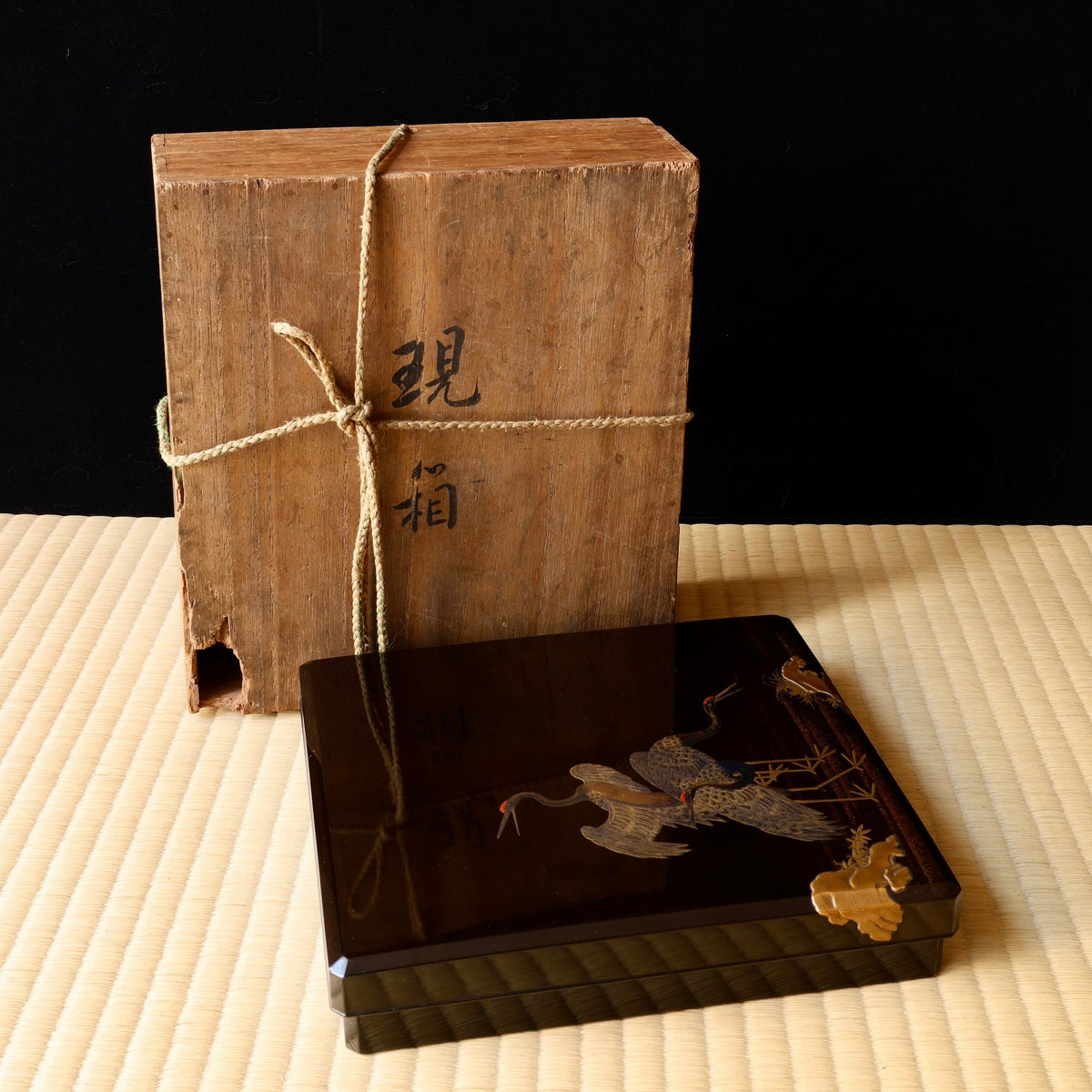
The outer lid features three tsuru (cranes) standing out against a deep, glossy black ro-iro urushi lacquer. The design combines gold and silver powders in a remarkable piece of taka maki-e (raised relief decoration). This technique consists of building up the thickness of the motifs through successive layers before applying the metallic powders. The different levels of relief give volume to the bodies and wings, while the extremely precise drawing of the feathers restores their structure down to the smallest detail. The red touches marking the tops of the cranes' heads introduce an elegant colorful punctuation to this composition dominated by black, gold, and silver.
The three birds are arranged in different poses, a dynamic composition that leaves ample space for the black background and gives the decor a surprising modernity despite its traditional vocabulary. The landscape is suggested by a few rocks, vegetation, and fine lines of metallic powder. Kirikane (small cut metal foils) are applied to certain parts of the decor, notably the rocks and the cranes' legs, bringing small flecks of gold to the surface.
The crane holds a privileged place in Japanese iconography. Associated with longevity and good fortune, it is a particularly frequent auspicious motif in the decorative arts.
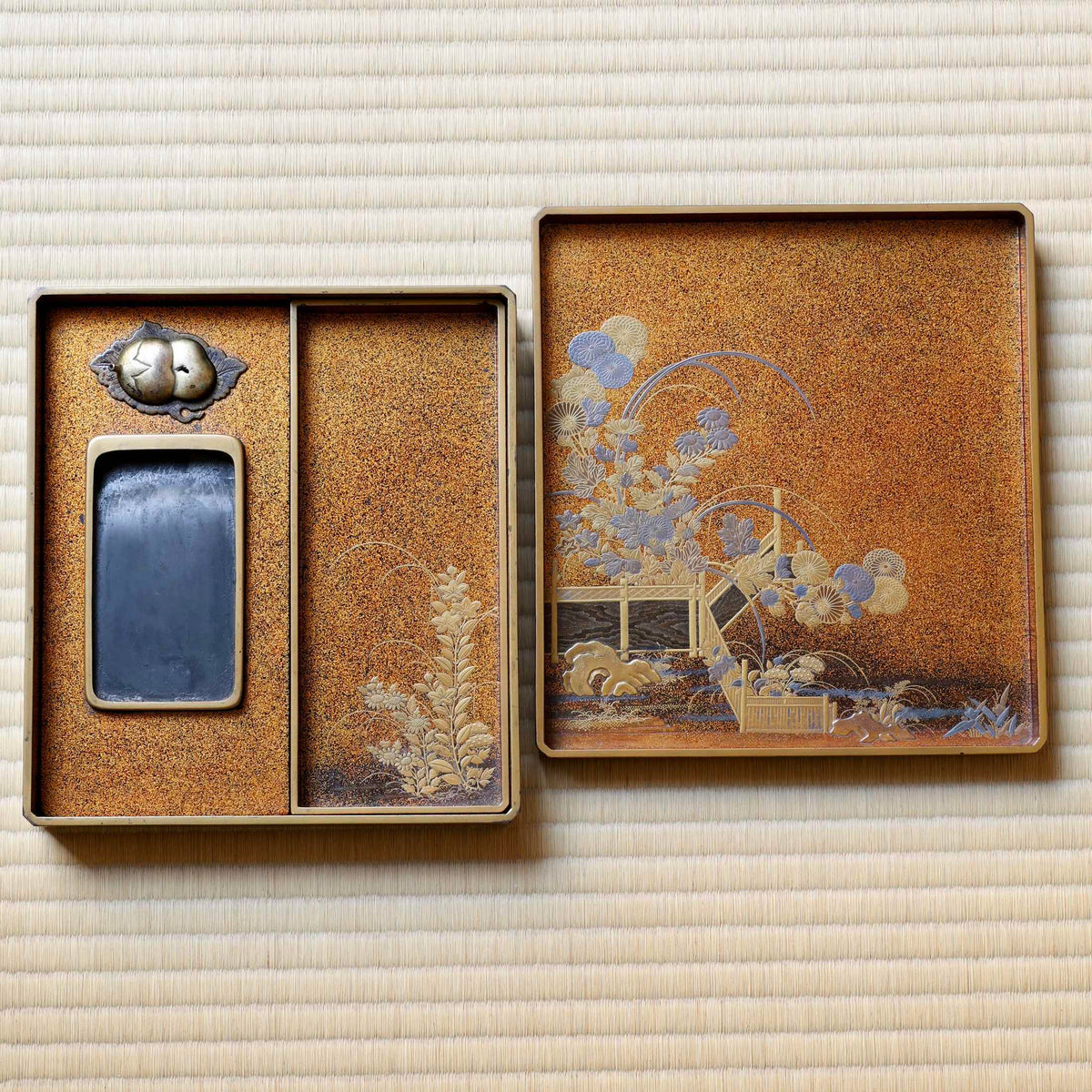
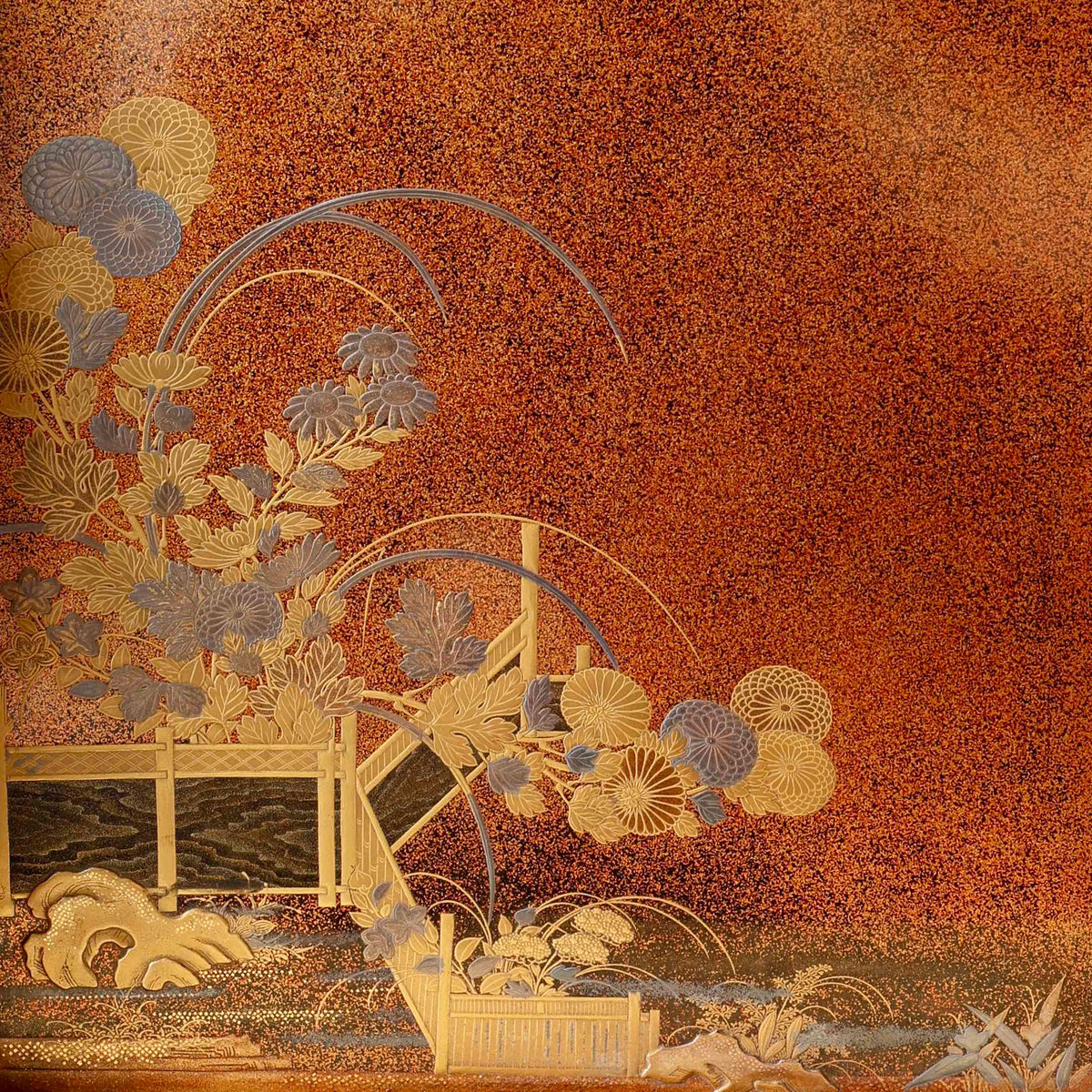
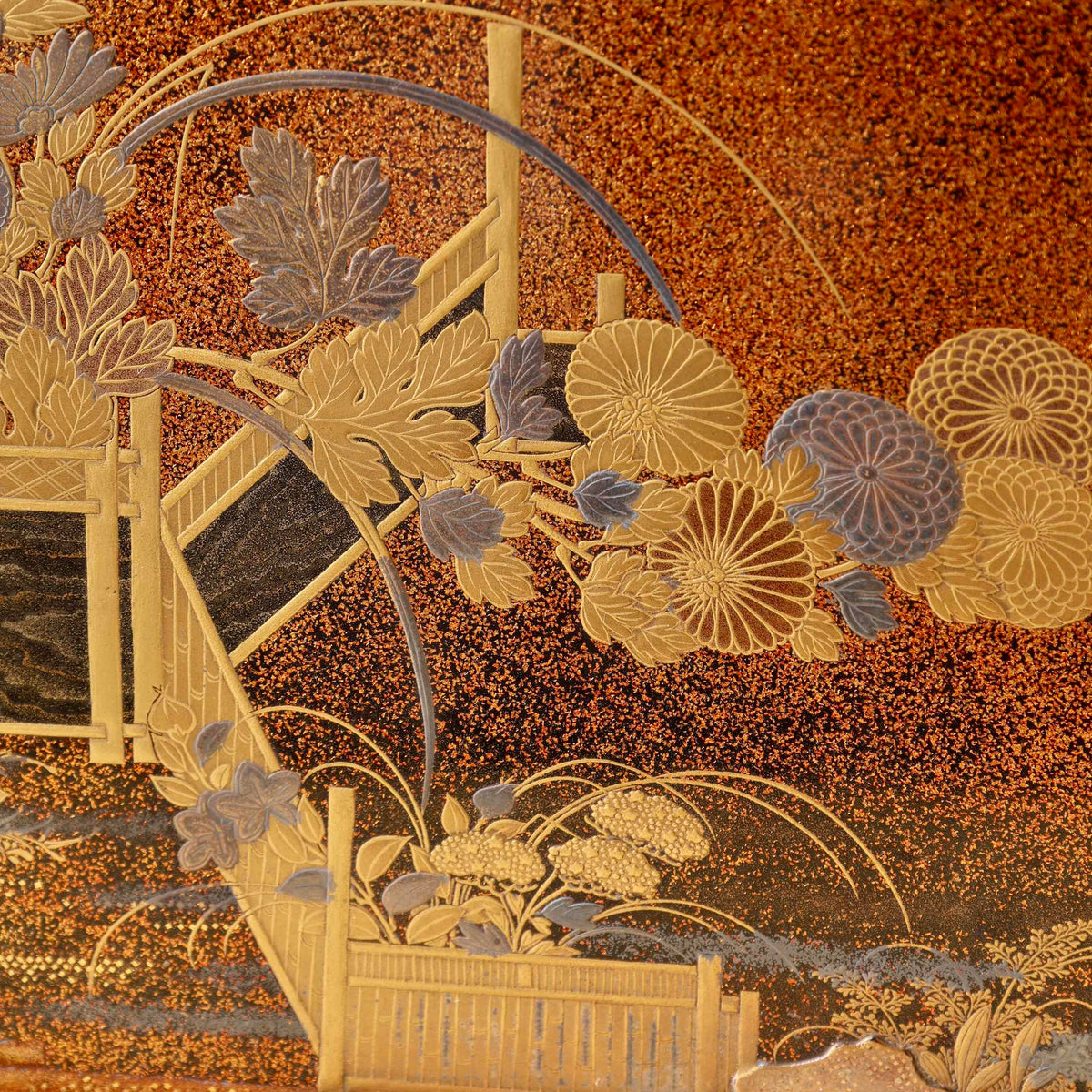
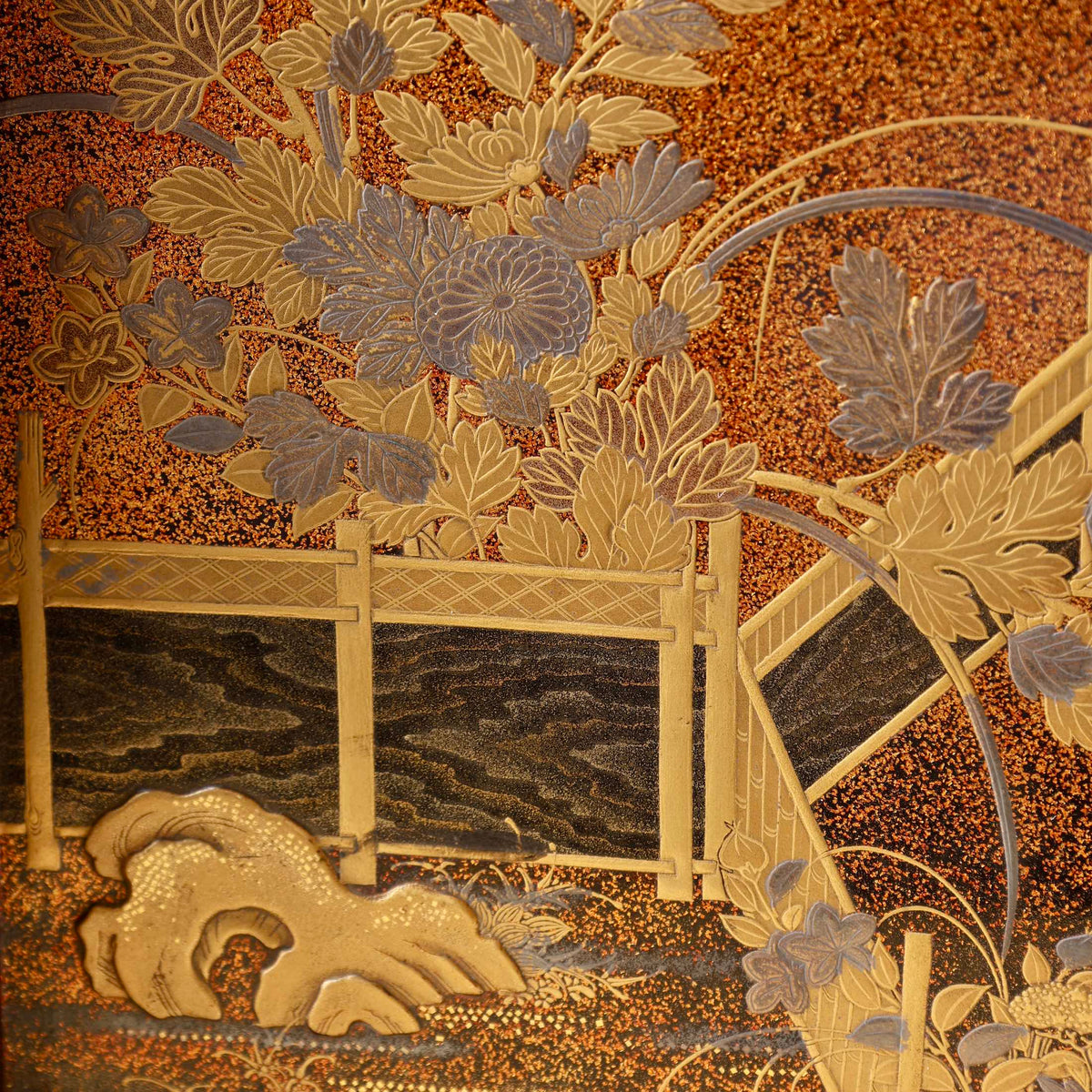
Upon opening, the contrast is spectacular. The interior of the lid and the box itself are entirely covered with a dense kin nashiji (sprinkled gold ground), whose luminous depth answers the sobriety of the black lacquer exterior. The underside of the lid presents a rich landscape centered around kiku (chrysanthemums). The chrysanthemums and the various elements of the landscape are executed in maki-e, combining taka maki-e and hira maki-e, along with parts treated more finely on the surface of the nashiji. The variation in relief heights, metallic powders, and motif density gives this composition a particularly rich depth.
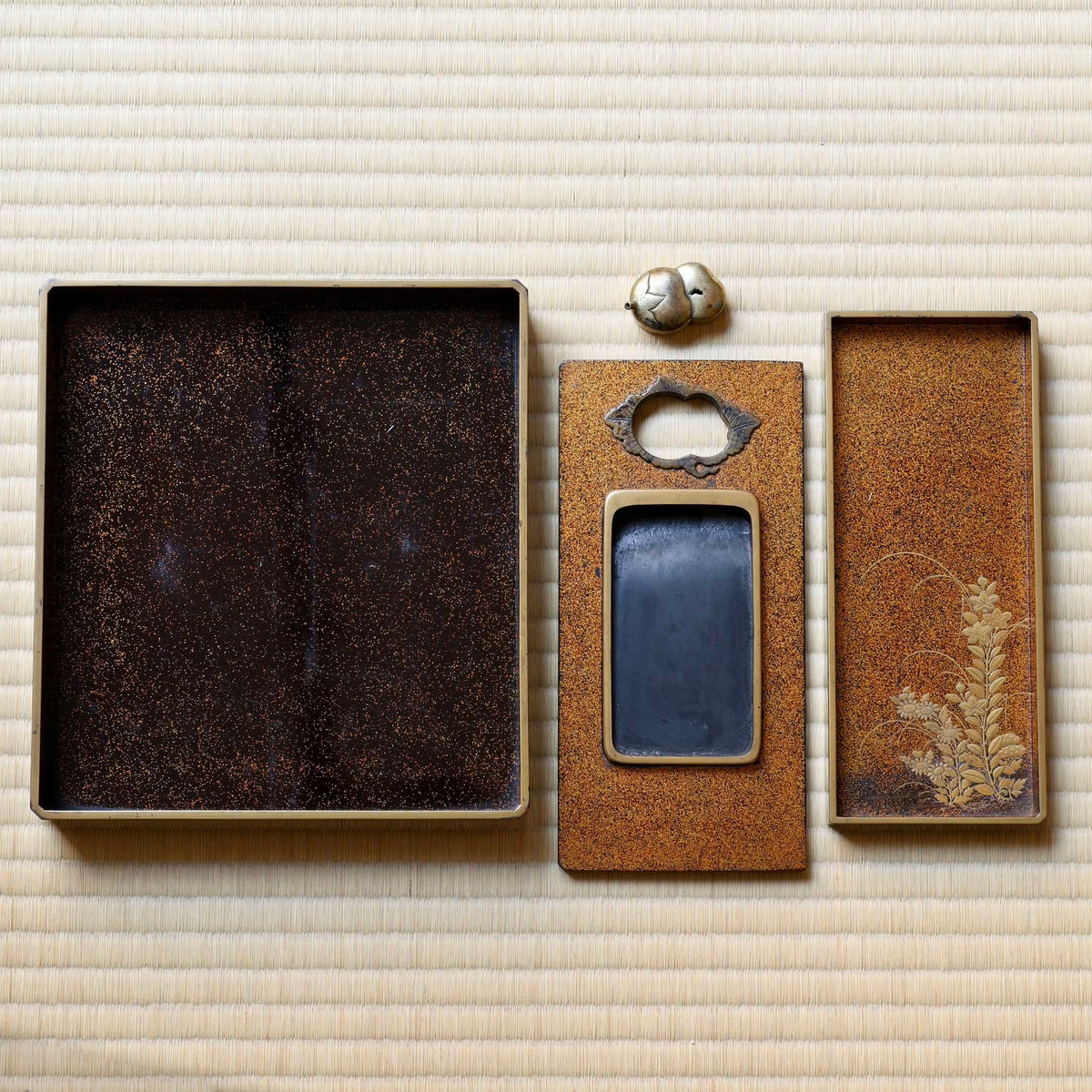
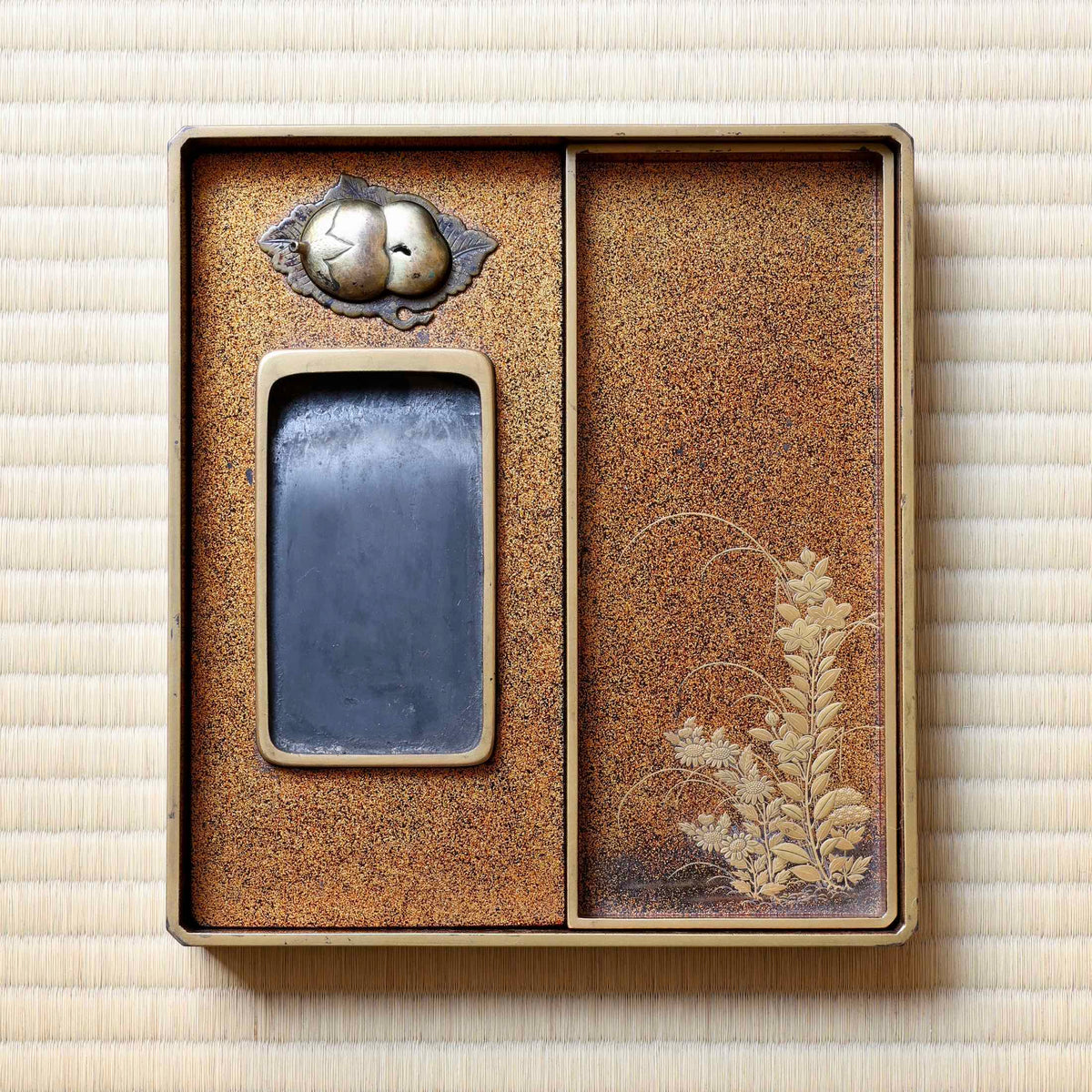
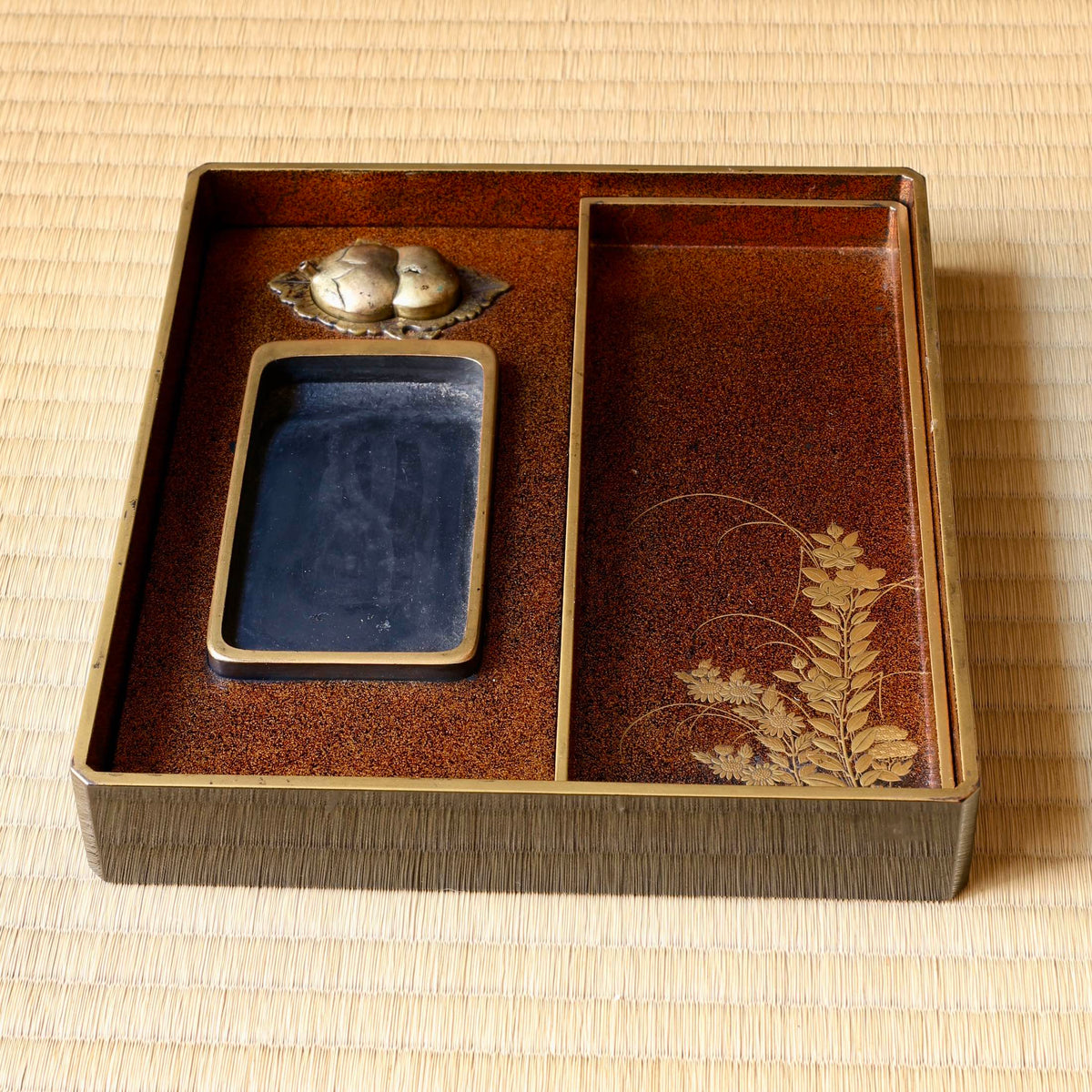
The same kin nashiji ground covers the removable interior elements. A narrow side tray is decorated with chrysanthemums and other plants in maki-e, thus extending the landscape from the underside of the lid into the body of the box. This continuity of the decor, even on items intended to be handled and removed, bears witness to the care lavished on the entire piece.
The suzuribako also retains its suzuri (inkstone) and its suiteki (water dropper), both installed in a removable interior element.
Form and use
This suzuribako is a box intended for the practice of Japanese calligraphy. It allows for the gathering of the necessary instruments for writing, notably the inkstone, the water dropper, brushes, and other small accessories used to prepare the ink.
Its interior layout is composed of several removable elements. The section housing the suzuri and suiteki can be completely removed, as can the long side tray. This organization allows for access to the various instruments while maintaining a particularly orderly interior. Its lid is of the Kabusebuta (overlapping lid) style.
Presentation
This piece is accompanied by its original antique tomobako (wooden storage box), bearing the inscription "suzuribako." The box shows marks and alterations related to its age and has fully fulfilled its function of protecting the piece.
Place of manufacture
Japan
Period
Meiji era (1868 - 1912)
Dimensions
Length 23 cm - Width 21 cm - Height 4.5 cm
Weight
Suzuribako + tomobako: 1043 g
Materials
Wood, urushi lacquer, gold and silver powders
Condition
Very good condition given its age. Some fine scratches related to use and time are visible on the exterior bottom, as well as very slight micro-scratches on the lid and inside. They remain discreet and do not affect the beauty of the piece. The decor, lacquer surfaces, and nashiji grounds have retained a remarkable luster.
© Atelier Ikiwa – Laurence Corteggiani. Photos and texts protected. All reproduction forbidden without authorization.
KNOW-HOW
Traditional Japanese lacquer, urushi, comes from the sap of the lacquer tree (Rhus Verniciflua), which flows after incision of the bark. It is a very precious material, a tree will give a maximum of 200ml of sap in its life, which is worked by specialized craftsmen. It takes many operations, slow and meticulous, and several months of work to bring real lacquer objects to life. It is the oldest craft in Japan! Initially used to protect and waterproof objects, this immutable craft has become an art of extreme sophistication. If you want to know more about the art of Japanese lacquer, you can read our dedicated article > .
SHIPPING AND PAYMENT OPTIONS
Shipping
Free shipping in mainland France for purchases over €200. Shipping with Colissimo, delivery to your home or a pick-up point, package delivered against signature or unique code for valuable items. Orders are generally dispatched within 2 business days, except for fine art photographs, which are printed on demand, and special cases that will be announced in the banner at the top of the site (e.g., in case of absence). Learn more >
Payment options
Secure card payment with Shopify Payments and 3D Secure technology.
Visa, MasterCard, American Express, Cartes Bancaires, PayPal, Apple Pay, Shop Pay, and Klarna.
Klarna: Pay in 3 interest-free installments or within 30 days, for purchases up to €1,500, subject to Klarna's approval. You will be redirected to Klarna to log in or create an account and confirm your payment.
PayPal: You will be redirected to PayPal to log in and confirm payment. New users can create an account during checkout.
Your invoice will be sent with your order.
Returns and exchanges
14 days to change your mind. Learn more >
CARE INSTRUCTIONS
Clean with a very soft cloth to avoid scratches, soaked in a little warm water if necessary (never soak your lacquer objects). No microwave, dishwasher, dryer. Do not expose to direct sunlight for a long time (risk of discoloration). If the atmosphere is very dry and very hot, and to avoid the risk of cracking, you can place a glass filled with water next to your lacquer object.
Choose options
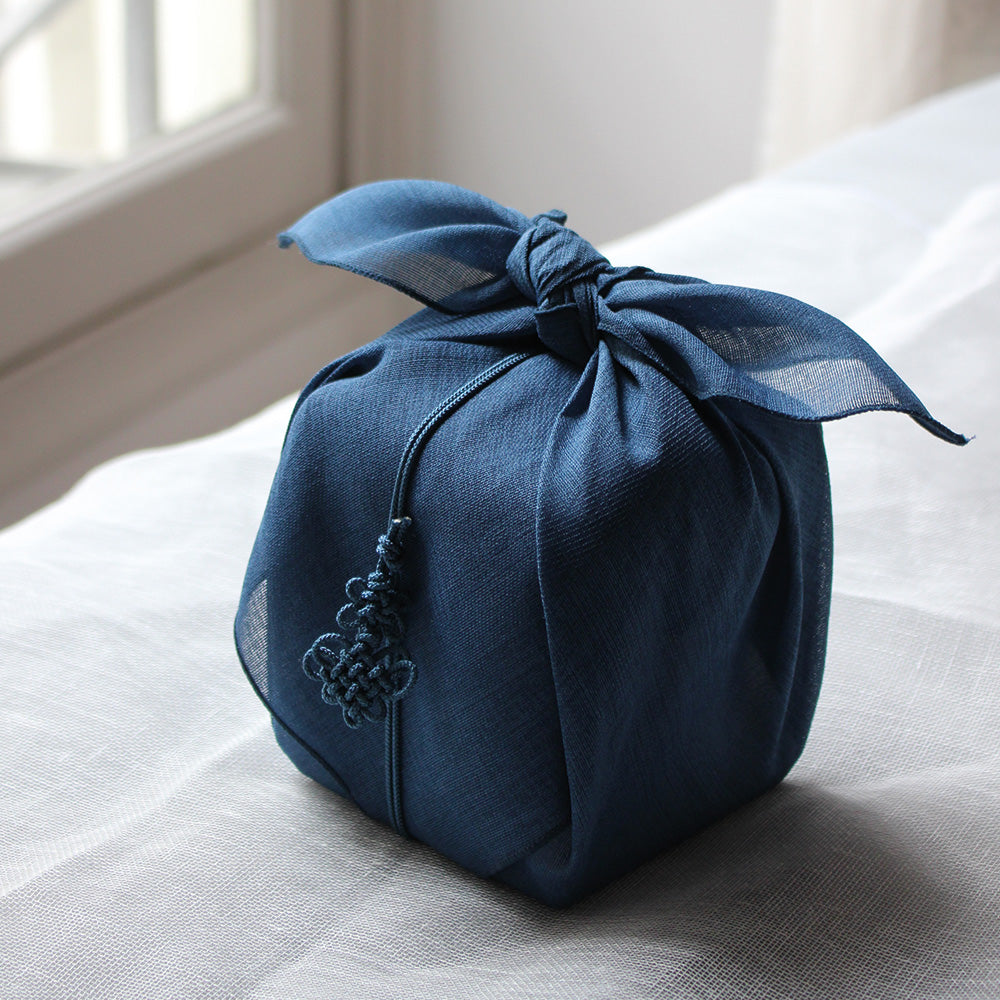
The art of wrapping
The exceptional items are wrapped in a beautiful fabric beautifully knotted using the little-known art of Korean pojagi and decorated with a delightful maedup (Korean ornamental knot). Details and conditions >
WRAPPING
Exceptional items are wrapped in textiles tied according to the Korean pojagi art