

Suzuribako (Japanese writing box) in lacquer and gold, kōbai fuyō (red plum and hibiscus) decoration by Ichiryō Sakurai
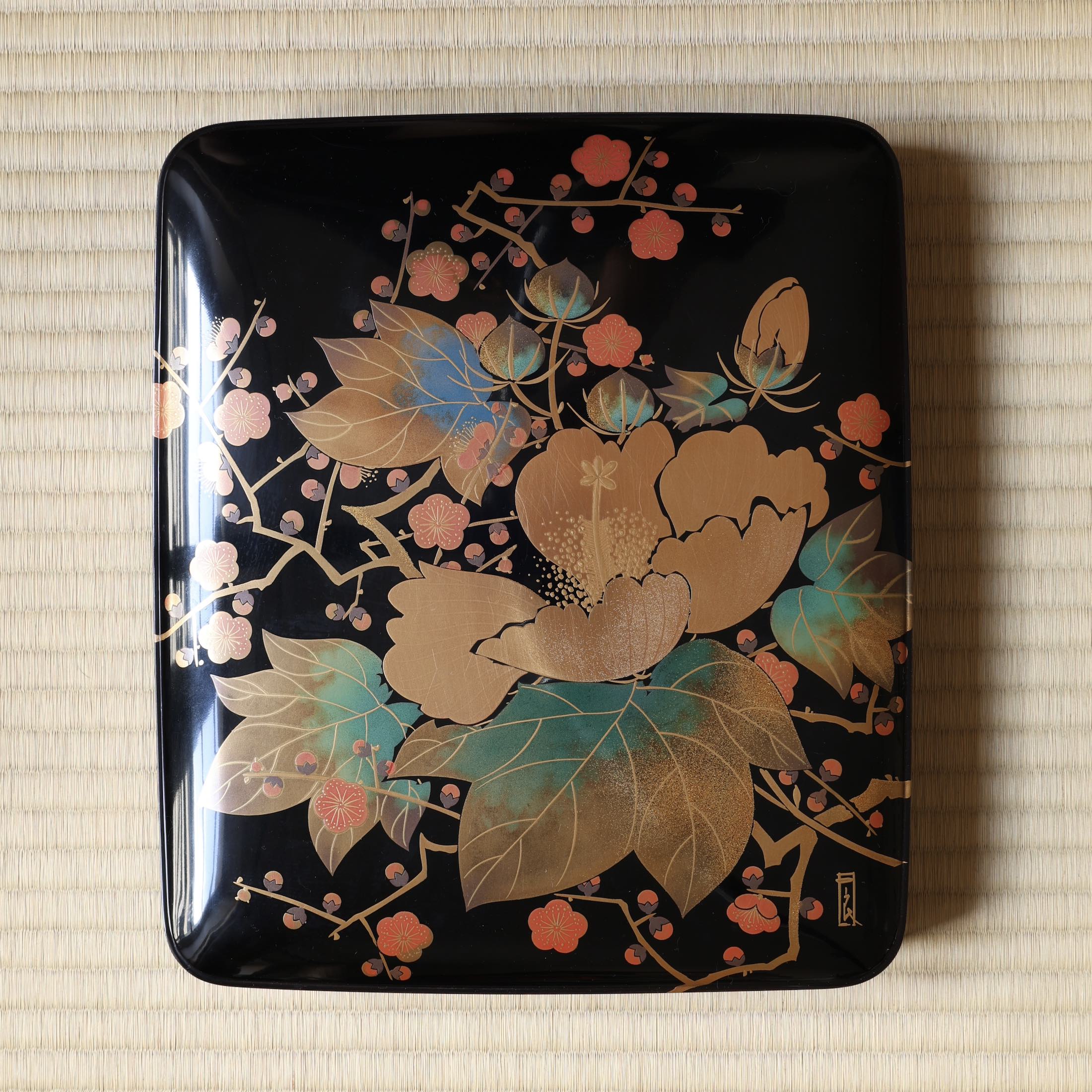
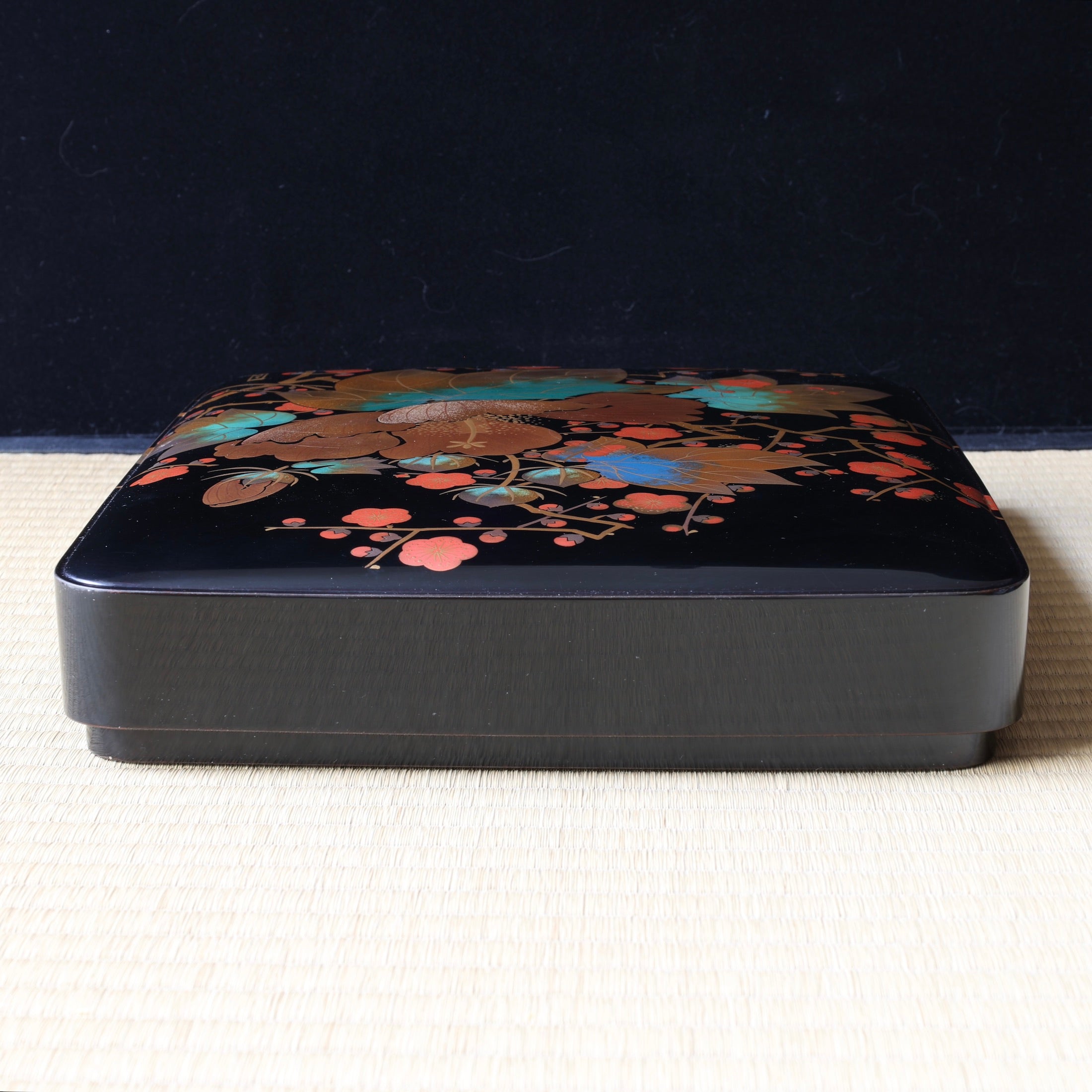
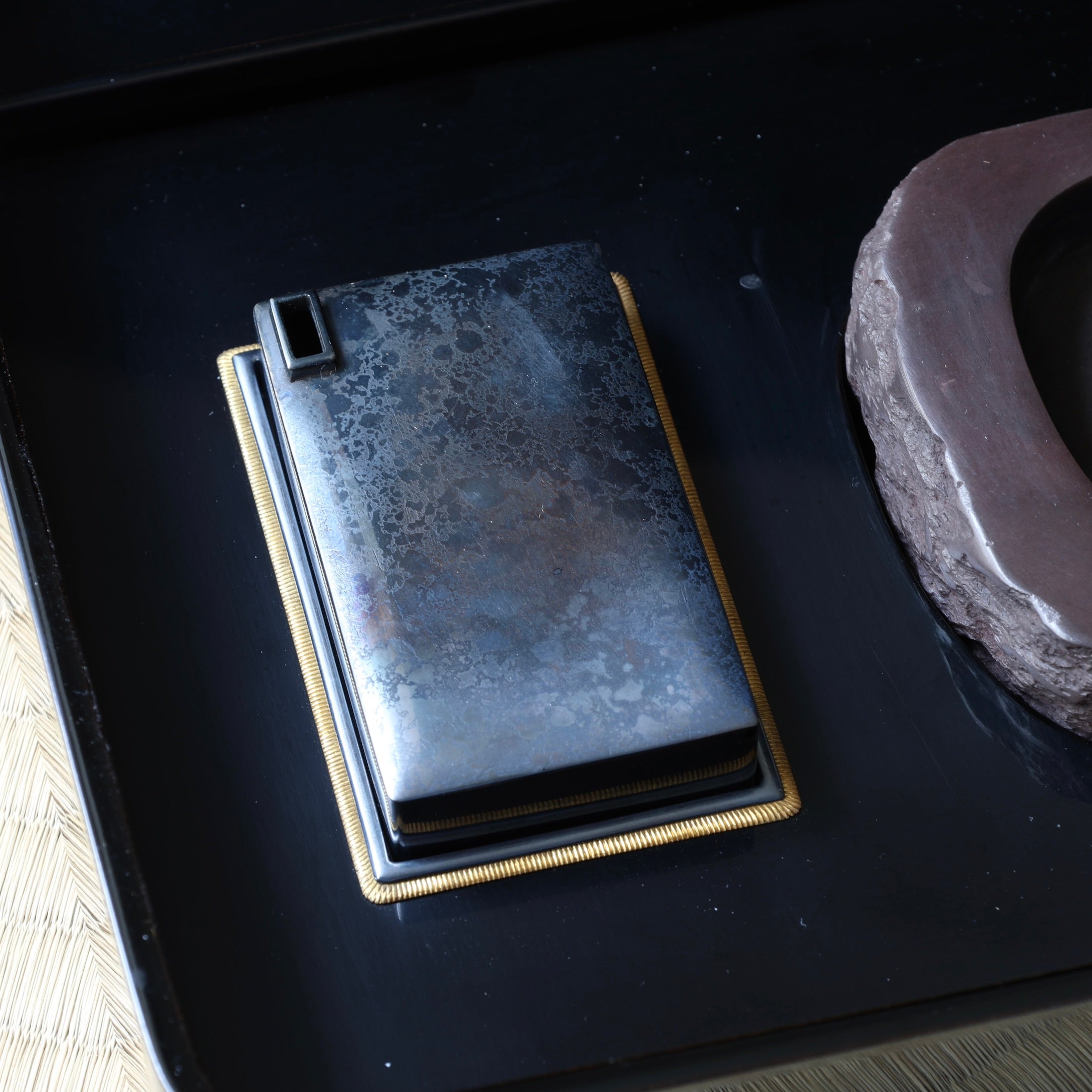
This remarkable Wajima urushi lacquer suzuribako (Japanese writing box) is the work of Ichiryō Sakurai, a maki-e master and an important figure in Wajima lacquerware in the 20th century. On a superbly lustrous black lacquer background unfolds a spectacular kōbai fuyō (red plum and hibiscus) design, combining gold with turquoise blue, green, and red pigments. The expansive composition, the almost pictorial treatment of color, and the luminous variations of the design are characteristic of Sakurai's highly personal work and his interpretation of the Rimpa aesthetic. Accompanied by its inkstone and pure silver suiteki (water dropper), this set constitutes a particularly accomplished example of modern Japanese lacquerware.
The artisan
Ichiryō Sakurai, born in 1919 and now deceased, was an important maki-eshi (maki-e master) from Wajima, where he began his lacquer apprenticeship in 1934. He was selected eleven times for the Nitten, one of Japan's main art exhibitions, and participated in the Japanese Craft Exhibition organized on the occasion of the re-establishment of diplomatic relations between Japan and the Soviet Union, where one of his works was acquired by the Soviet Ministry of Culture. He also received several awards at the Ishikawa Contemporary Art Exhibitions, where he also served as a jury member, and was a member of the Ishikawa Art and Culture Association as well as the Wajima Contemporary Artists Association. These recognitions place him among the important figures of Wajima lacquerware of his generation.
His work is distinguished by its bold floral compositions, the particularly developed use of color, and a pictorial conception of maki-e inspired by the Rimpa aesthetic, particularly the painting of Hōitsu Sakai. In particular, he developed iro togidashi maki-e (polished colored maki-e), a technique in which colored lacquers and metallic powders are superimposed and then polished together to bring out both color and metal simultaneously.
Design and techniques
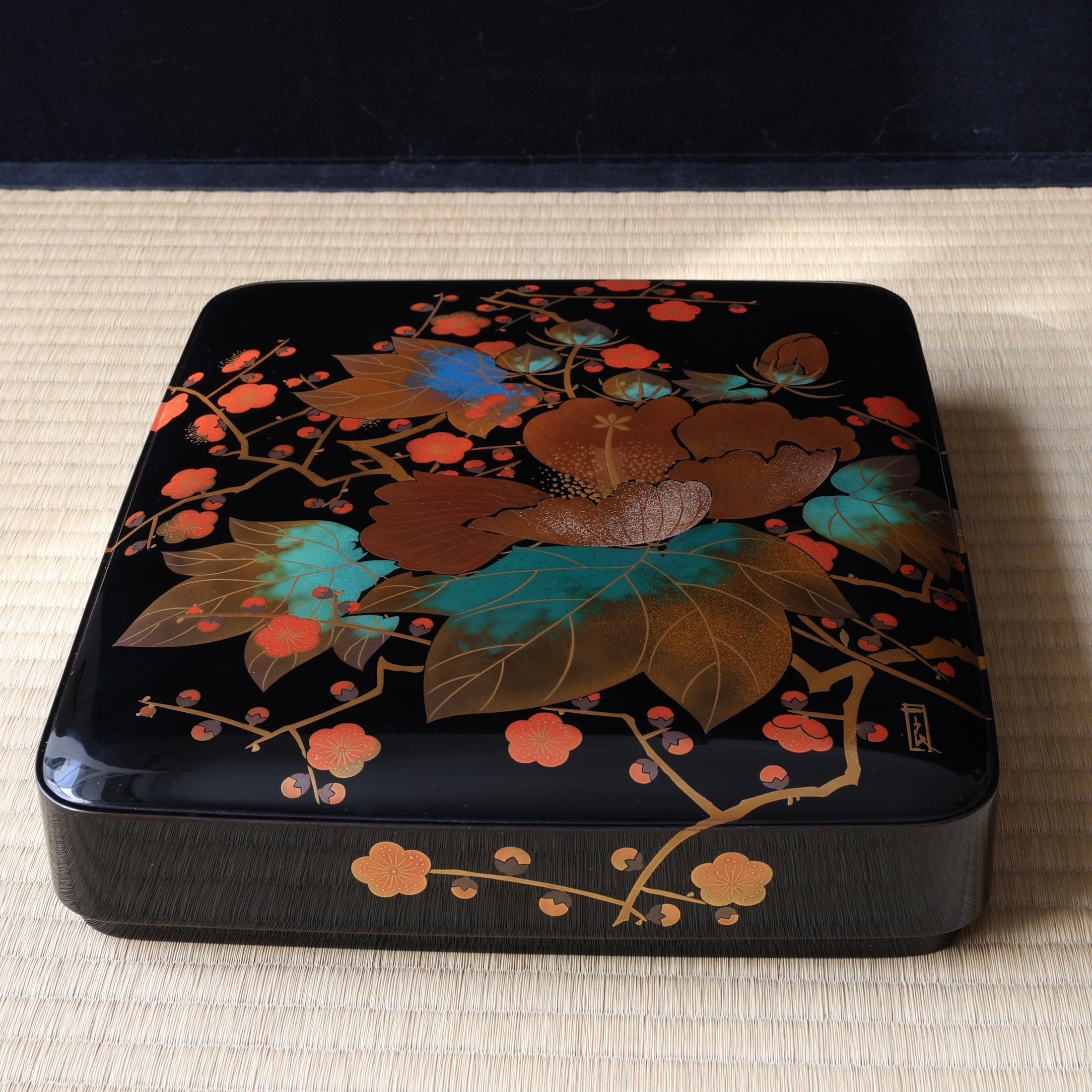
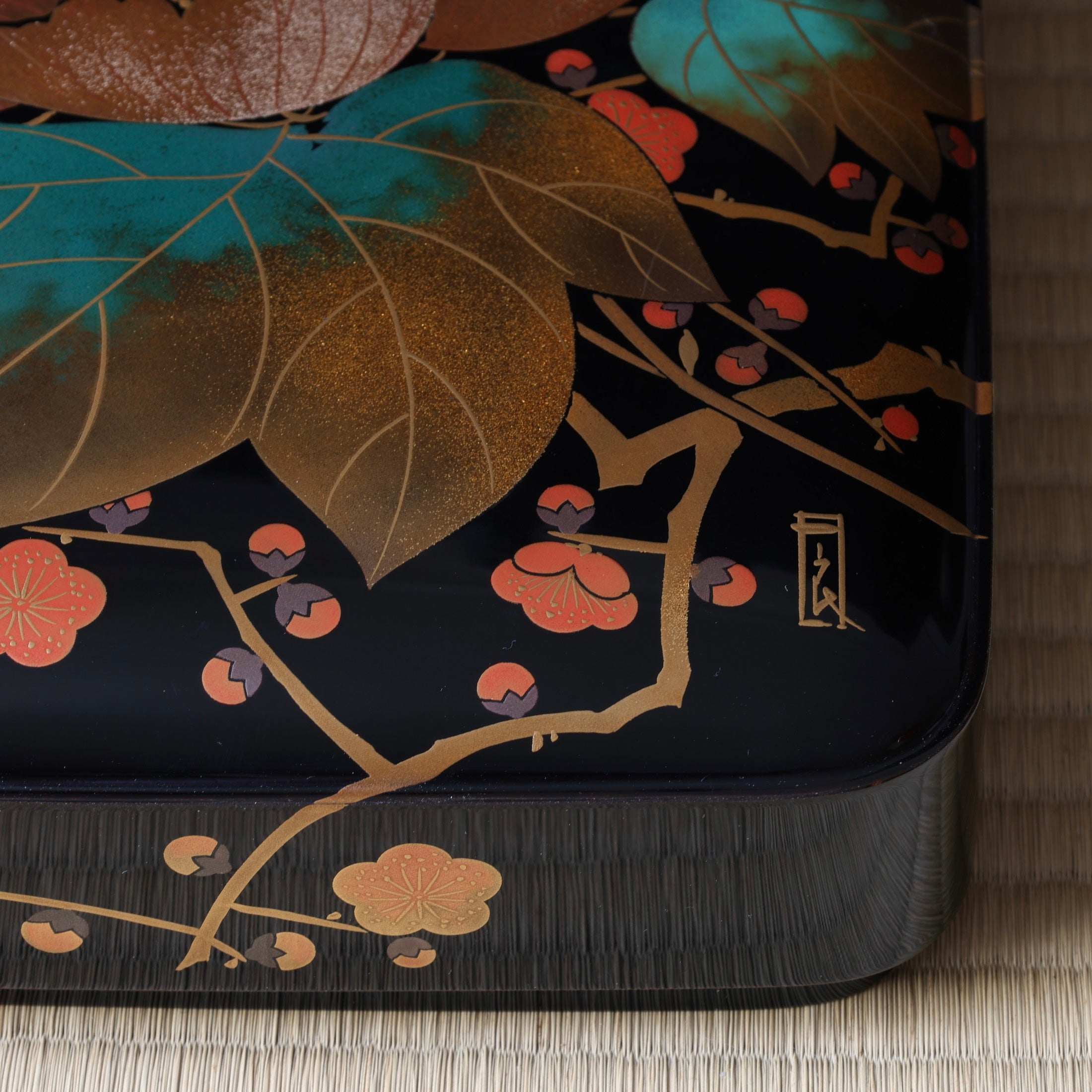
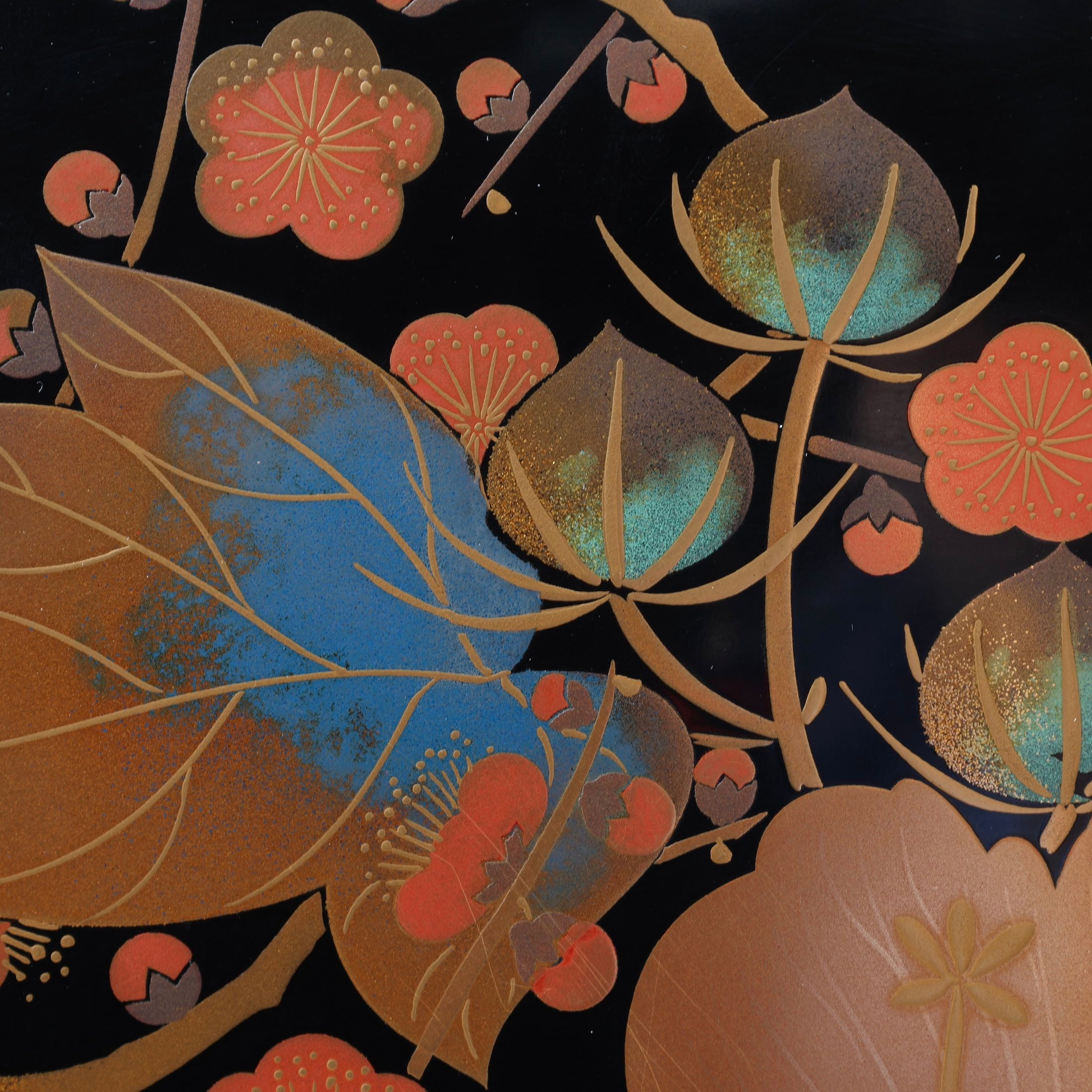
This suzuribako features, on a deep and extremely lustrous black urushi lacquer background, a kōbai fuyō design combining large hibiscus flowers and their broad leaves with branches laden with flowers and buds of the kōbai (red-flowered plum). The very large central flower occupies the heart of the composition, while the leaves and branches spread freely to the edges of the lid and extend onto the sides of the box. This method of allowing the motif to overflow the frame, combined with enlarged and highly stylized plant forms, is characteristic of the Rimpa influence in Sakurai's work.
Rimpa is one of the great Japanese artistic and decorative movements, which appeared at the beginning of the 17th century and is notably characterized by the stylization of nature, asymmetrical compositions, the importance of color and gold, and a very graphic conception of forms. Sakurai is particularly inspired by Hōitsu Sakai, one of its great representatives during the Edo period (An article on Rimpa is available on the Atelier Ikiwa website to delve deeper into this artistic movement, to be found via this link).
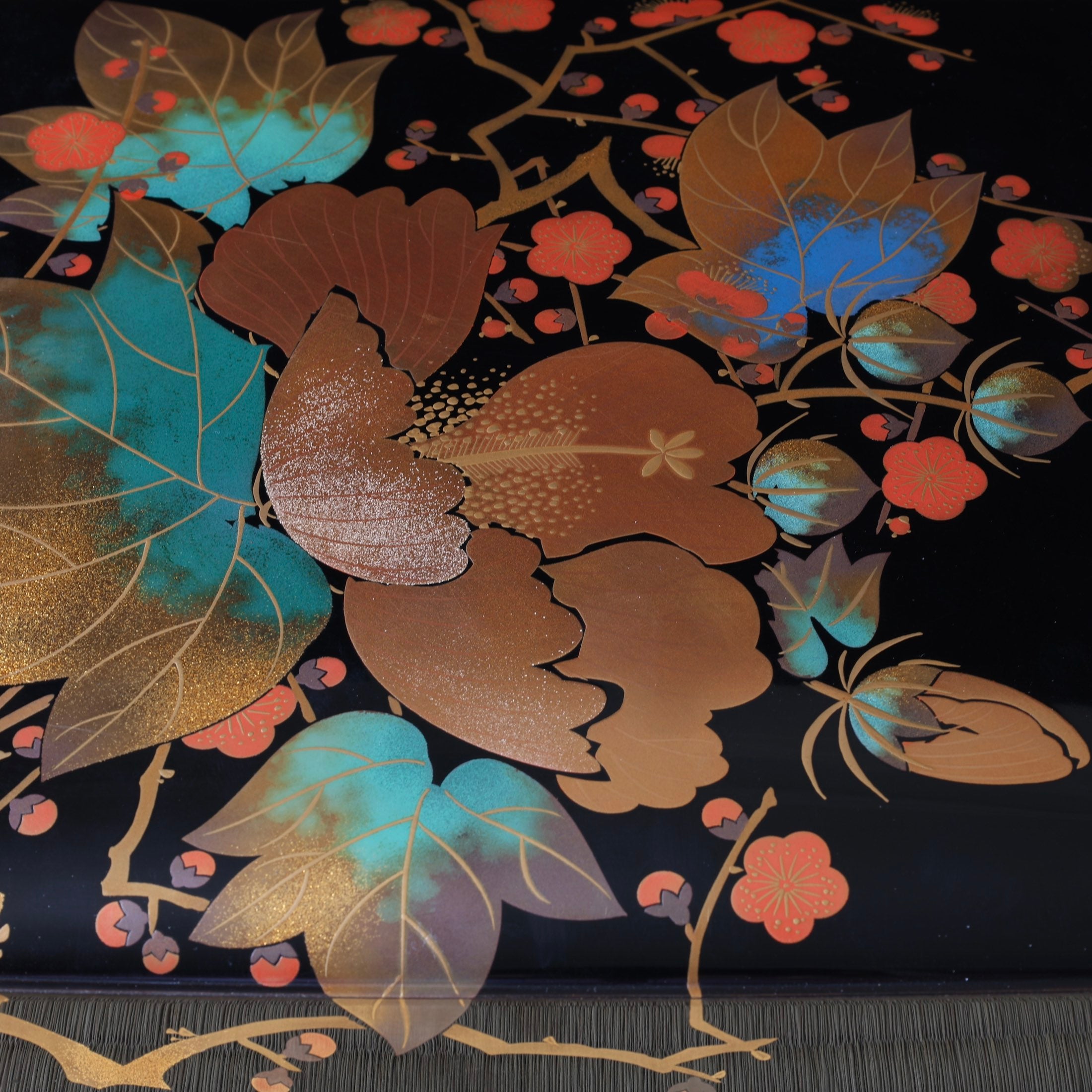
The entire design is made in maki-e (metal powder decoration on lacquer) and has a slight relief. The petals, leaves, branches, and veins combine different densities of gold powder and lacquer, with particularly precise detailing.
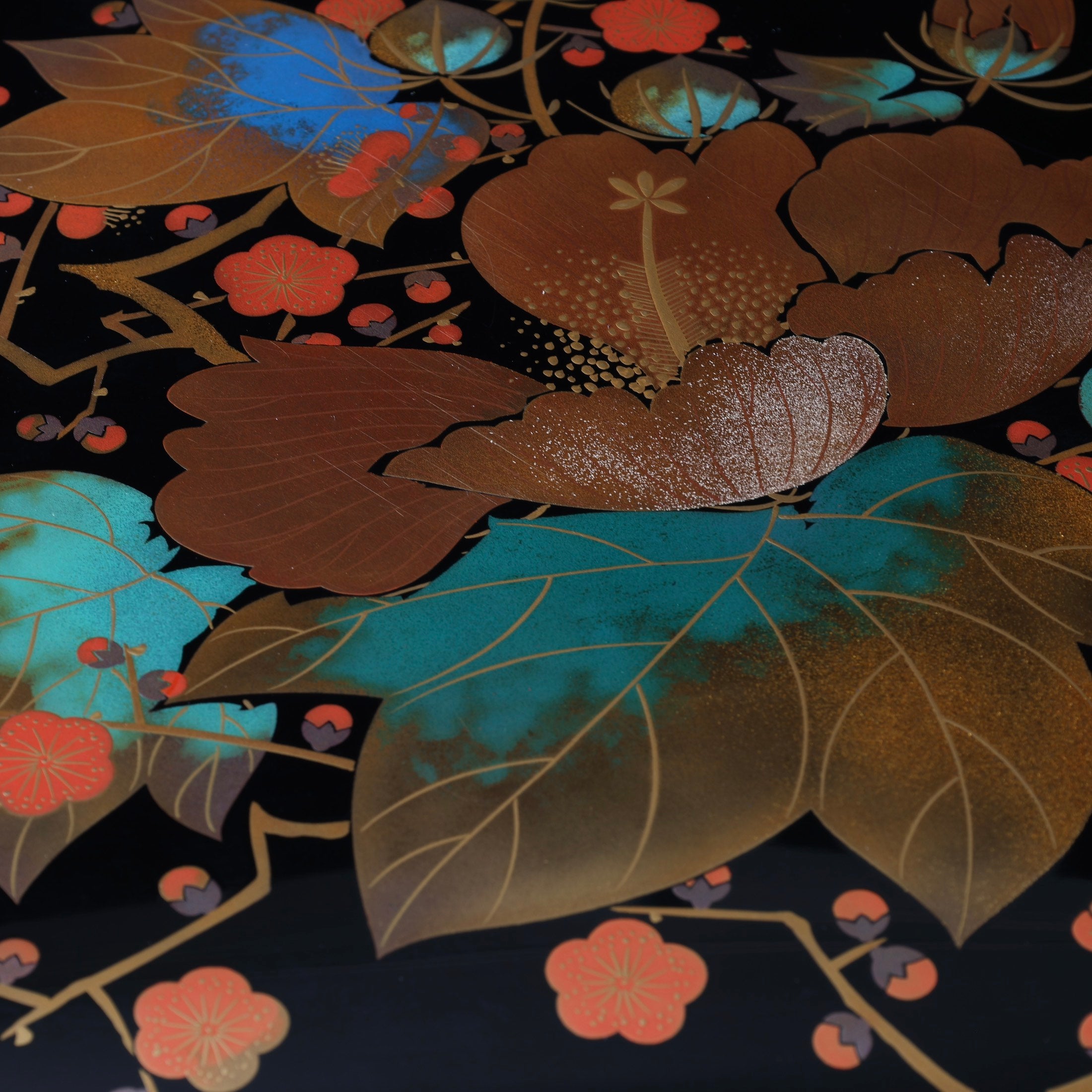
Color plays as important a role here as gold. Intense blue, red, and green pigments are dispersed on certain leaves and flower buds in diffuse and irregular areas. This treatment corresponds to iro togidashi maki-e (polished colored maki-e), one of Ichiryō Sakurai's characteristic techniques. The motif is first drawn in lacquer, then sprinkled with gold powder. A colored lacquer is then applied over the gold, in place of the semi-transparent lacquer usually used in togidashi maki-e. After hardening, the surface is gradually polished to reveal some of the gold through the color.
This particularly delicate process explains the variations that characterize the design: depending on the incidence of light and the viewing angle, the same surface may appear more golden, green, or blue. On the leaves, Sakurai goes even further by first creating the colored surface using this technique, then, after the lacquer has hardened, separately drawing the veins in lacquer before applying gold again. The buds are worked on using the same principle. The superposition of these different interventions gives the design its particularly detailed and shimmering character, while creating the effects of diffused colored pigments that seem to pass through certain leaves like clouds.
Other parts exhibit a nashiji effect, obtained by irregular dispersion of gold powder on the lacquer layer. Sakurai does not use it here as a uniform background: he integrates it locally into the flowers and leaves, with varying concentrations of gold powder. These shimmering areas gradually blend into the colored flat areas and contribute to the impression of pigment clouds that permeate the design.
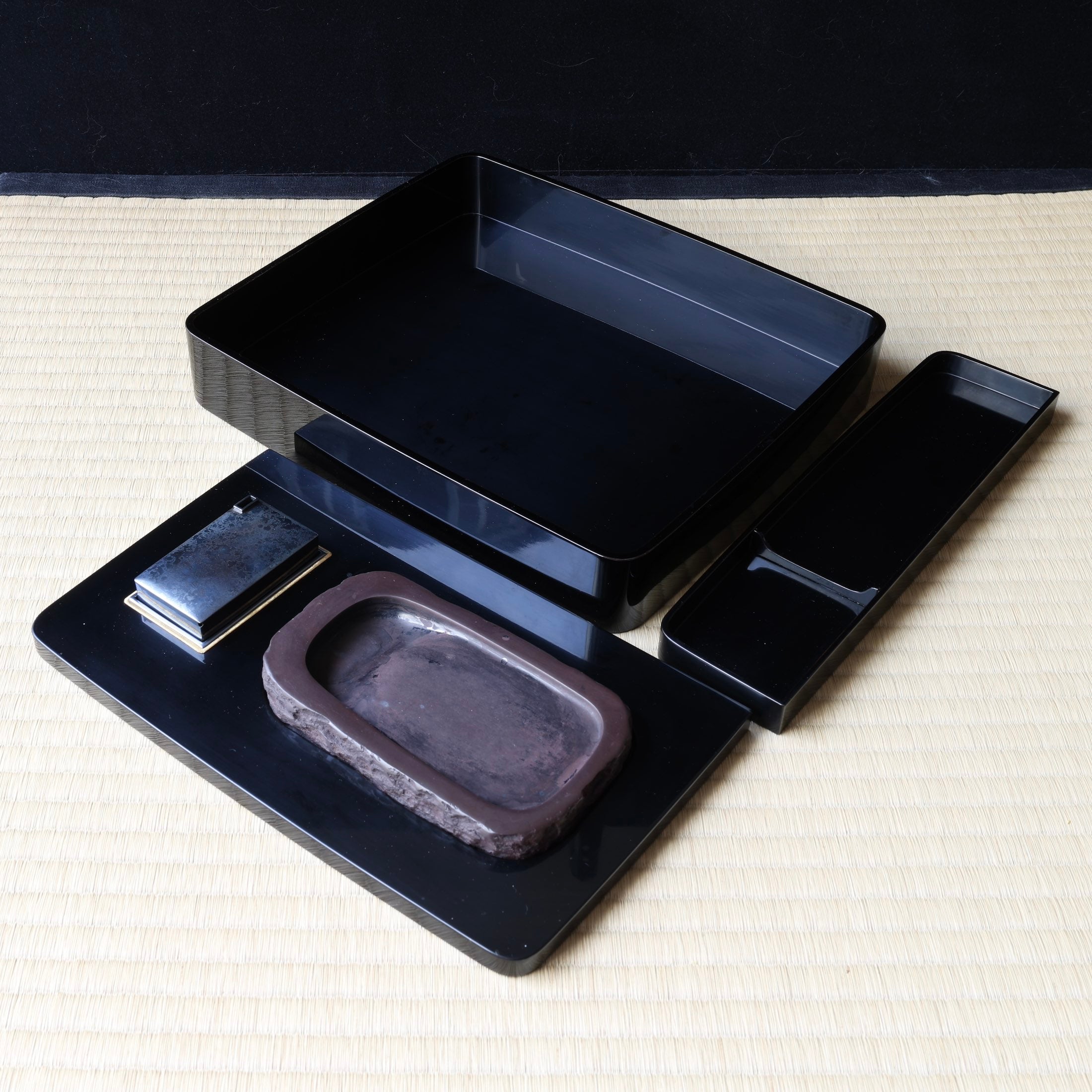
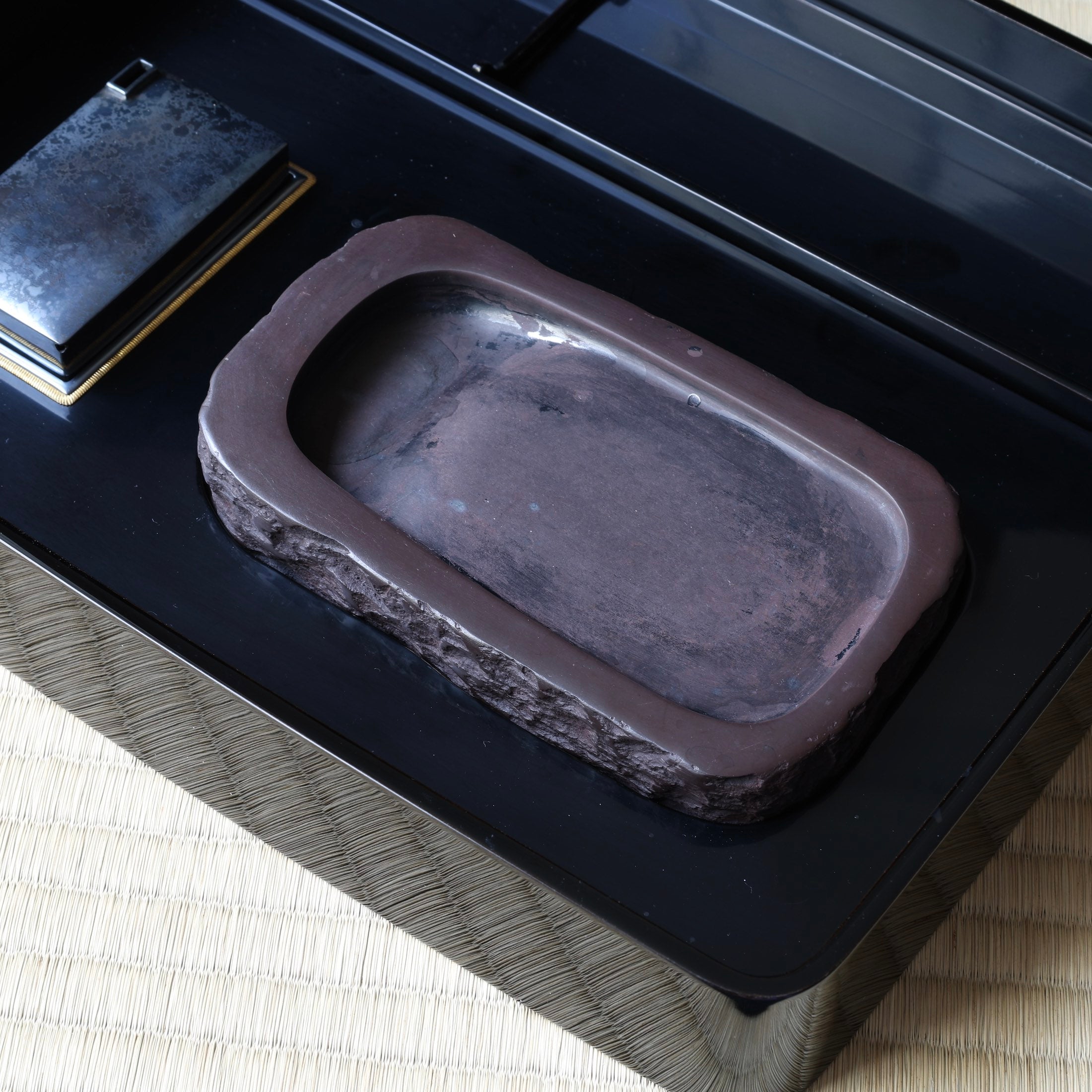
The interior of the suzuribako is entirely treated with glossy black lacquer.
Form and use
A suzuribako is a box intended to gather and preserve the instruments necessary for Japanese calligraphy. With its dimensions of 30 × 26 cm, this piece belongs to the category of large suzuribako.
The piece includes a heavy suzuri (inkstone) as well as a suiteki (water dropper) made of pure silver, used to apply water to the stone during ink preparation.
Presentation
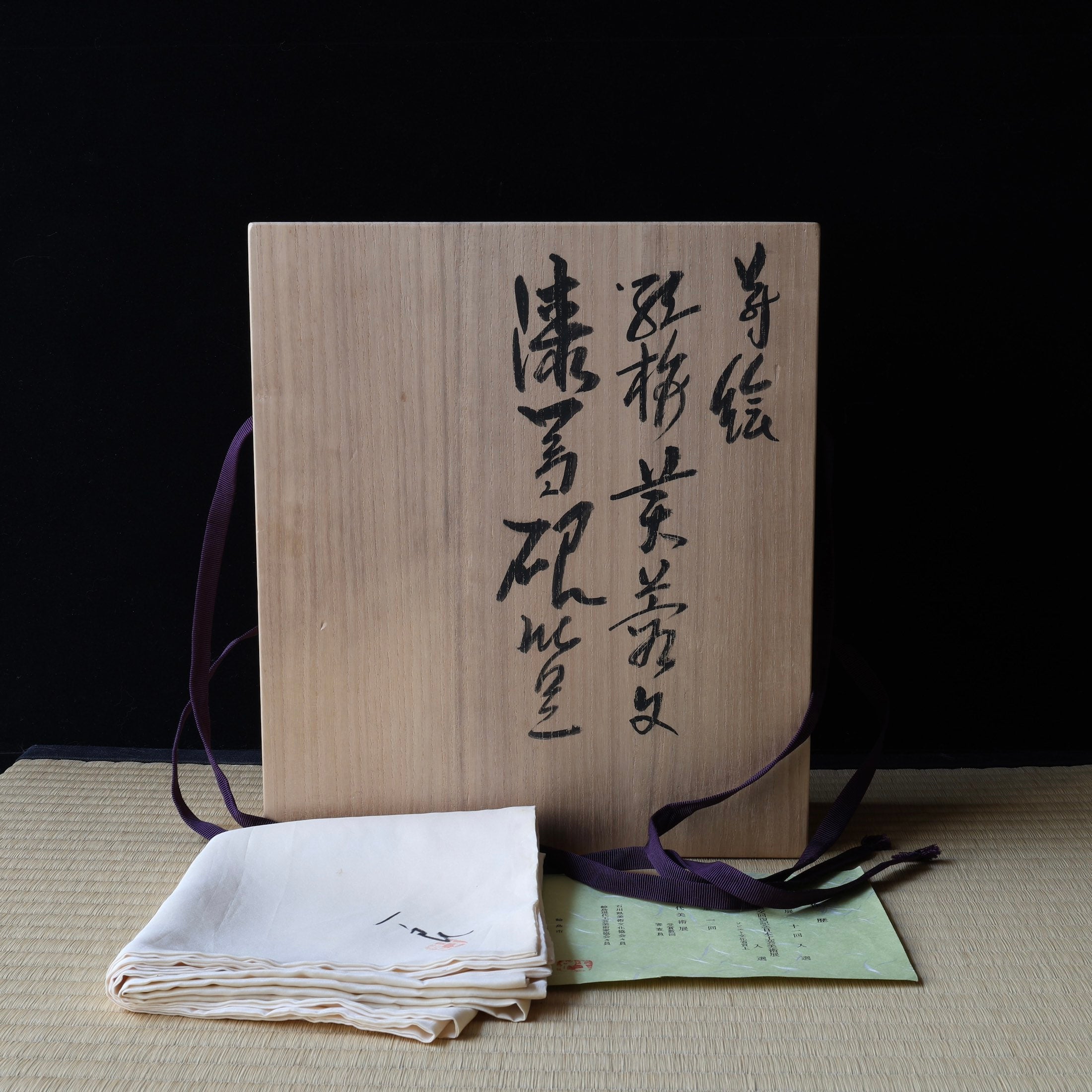
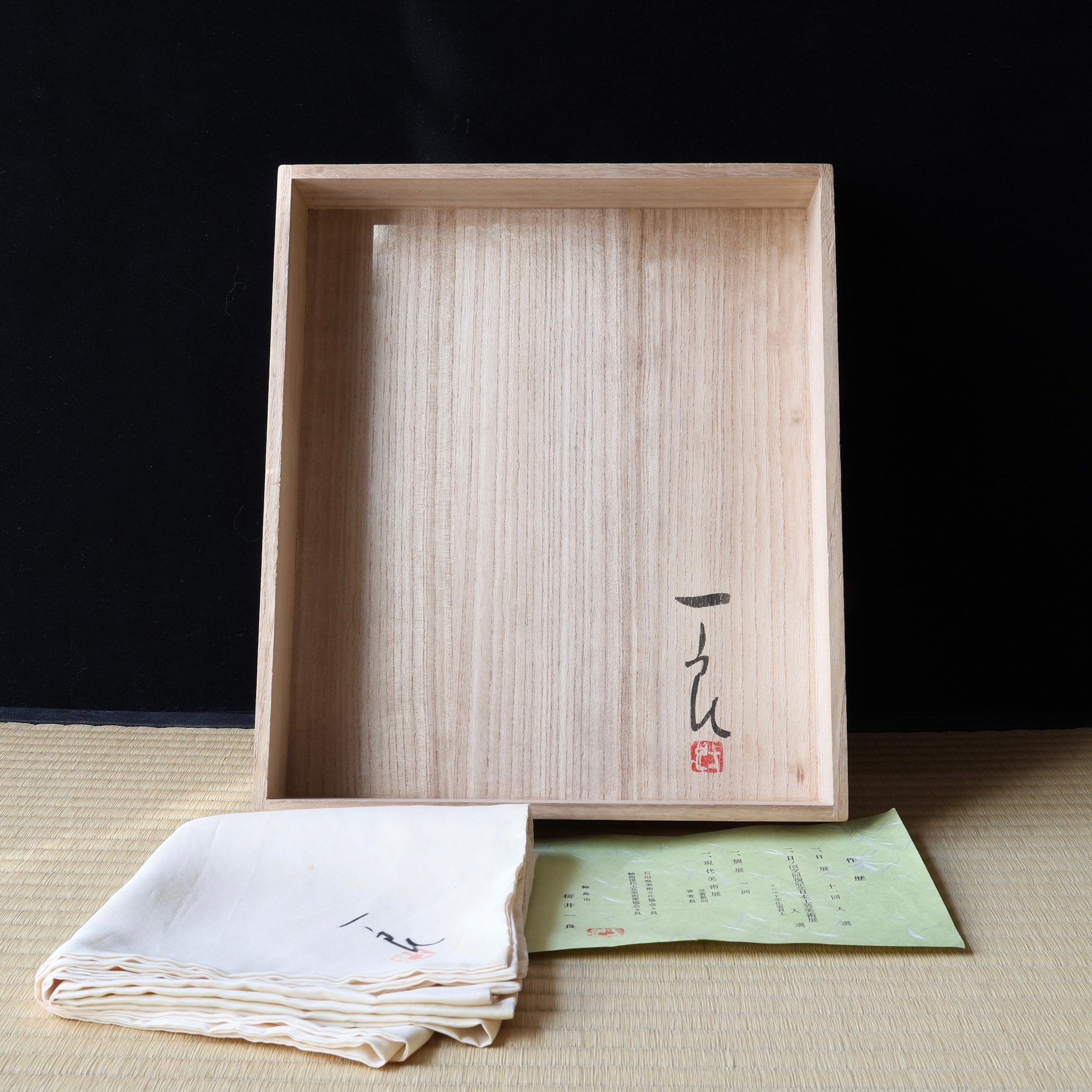
This piece is accompanied by its tomobako (paulownia wood protective box), bearing Ichiryō Sakurai's signature and seal, as well as the name of the work. It is also accompanied by a tomonuno (protective cloth) marked with the artisan's seal and a shiori (information document).
Ichiryō Sakurai's gold powder seal also appears on the lid of the suzuribako.
Place of manufacture
Japan, Wajima, Ishikawa Prefecture
Period
Late Shōwa era (1926-1989)
Dimensions
Length 30 cm - Width 26 cm - Height 6 cm
Weight
Box with presentation elements: 2.6kg
Materials
Wood, urushi lacquer, gold powder, colored pigments
Condition
Very good condition. Some superficial micro-scratches, without affecting the overall quality.
KNOW-HOW
Traditional Japanese lacquer, urushi, comes from the sap of the lacquer tree (Rhus Verniciflua), which flows after incision of the bark. It is a very precious material, a tree will give a maximum of 200ml of sap in its life, which is worked by specialized craftsmen. It takes many operations, slow and meticulous, and several months of work to bring real lacquer objects to life. It is the oldest craft in Japan! Initially used to protect and waterproof objects, this immutable craft has become an art of extreme sophistication. If you want to know more about the art of Japanese lacquer, you can read our dedicated article > .
DELIVERY
Delivery
Free delivery in mainland France for purchases over €200. Orders are generally dispatched within 2 working days, except in special cases, as indicated in the banner at the top of the website.
Precious items are wrapped in beautiful fabric, beautifully knotted according to the precious Korean art of pojagi. Some exceptions apply, especially if the items are large. Learn more >
Detailed delivery information is available via this link >
Your invoice will be sent by email
Payment methods
By card (Stripe operator): Visa, MasterCard, Discover, American Express.
Secure card payment with 3D Secure.
By PayPal, Apple Pay, Google Pay and Shop Pay
Returns and exchanges
14 days to change your mind.
CARE INSTRUCTIONS
Clean with a very soft cloth to avoid scratches, soaked in a little warm water if necessary (never soak your lacquer objects). No microwave, dishwasher, dryer. Do not expose to direct sunlight for a long time (risk of discoloration). If the atmosphere is very dry and very hot, and to avoid the risk of cracking, you can place a glass filled with water next to your lacquer object.
Choose options
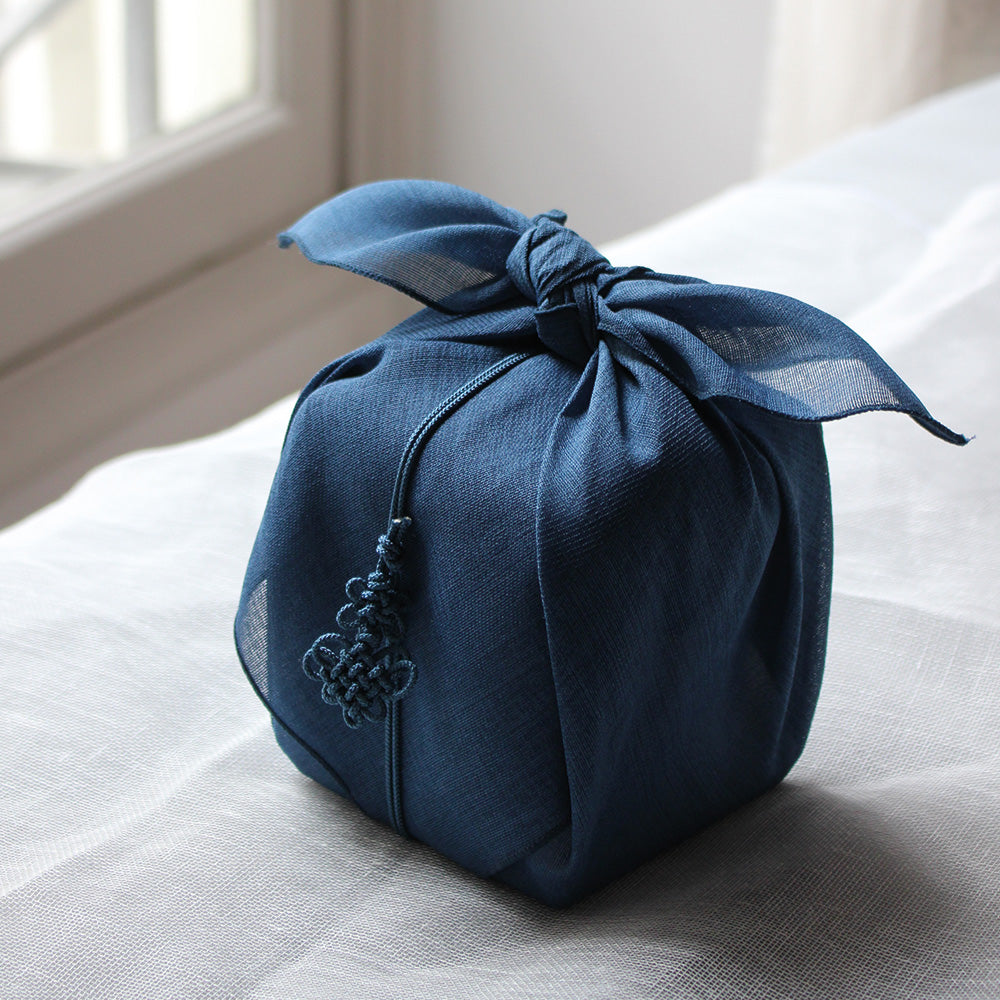
The art of wrapping
The exceptional items are wrapped in a beautiful fabric beautifully knotted using the little-known art of Korean pojagi and decorated with a delightful maedup (Korean ornamental knot). Details and conditions >
WRAPPING
Precious objects are wrapped in textiles tied using the Korean art of pojagi.