
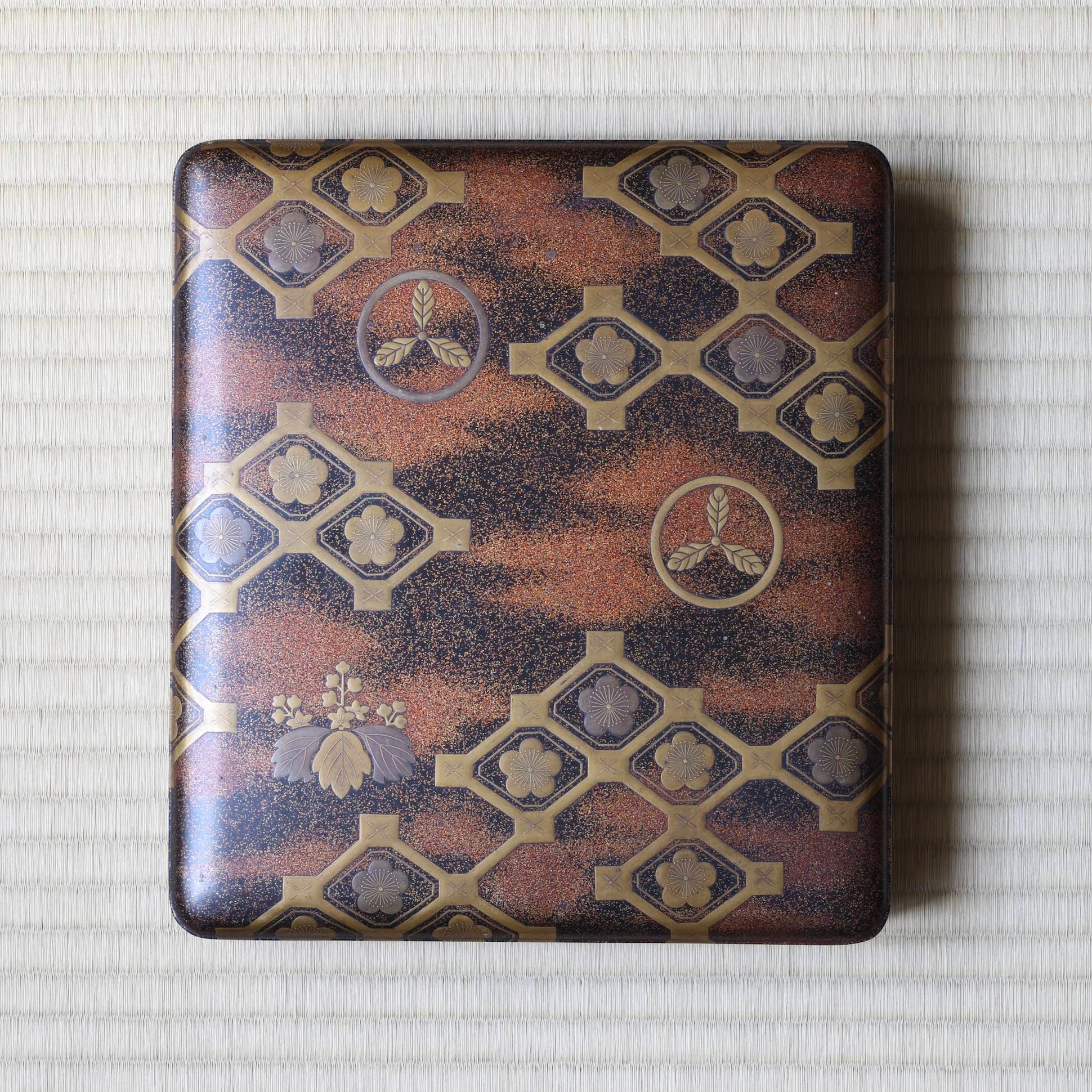
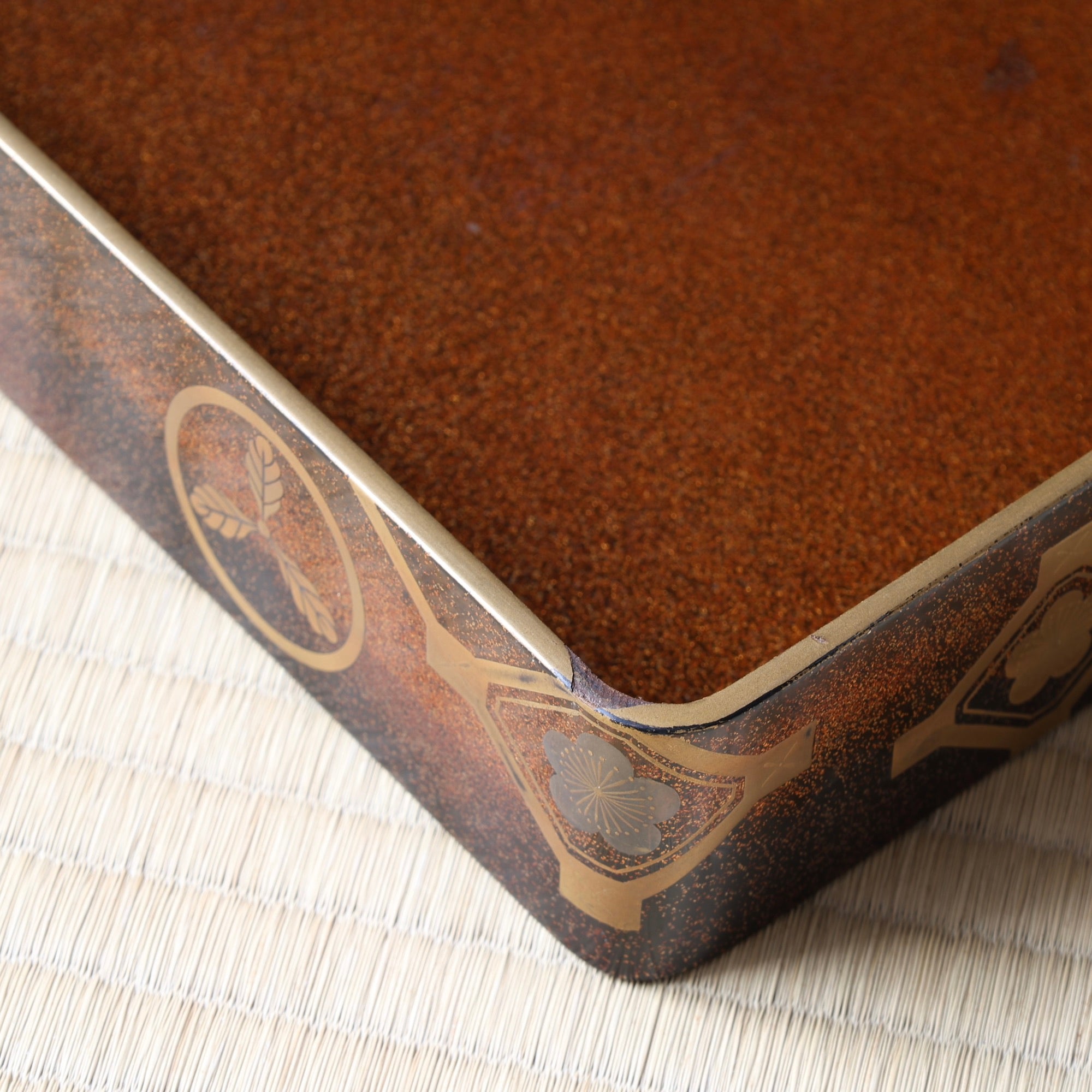
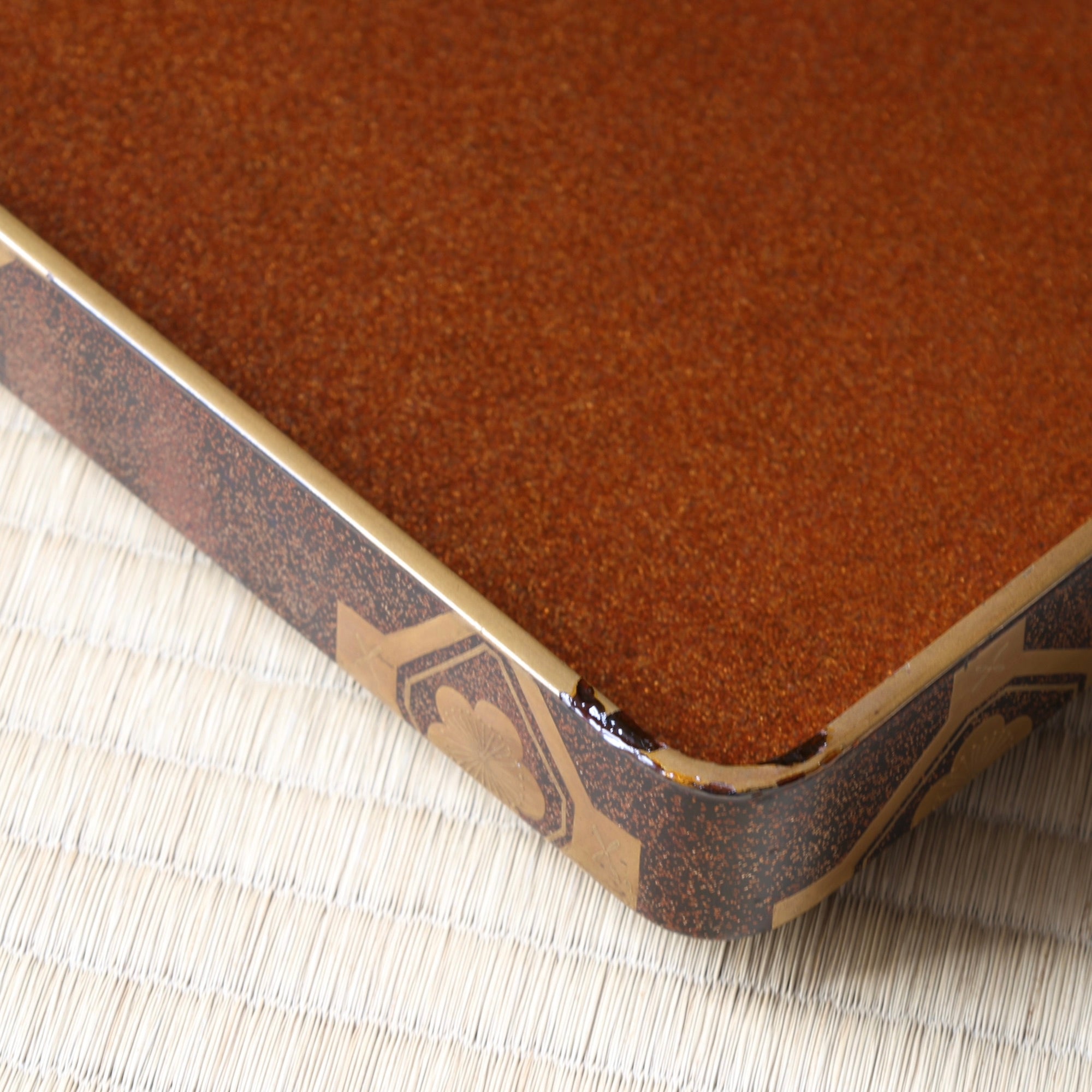
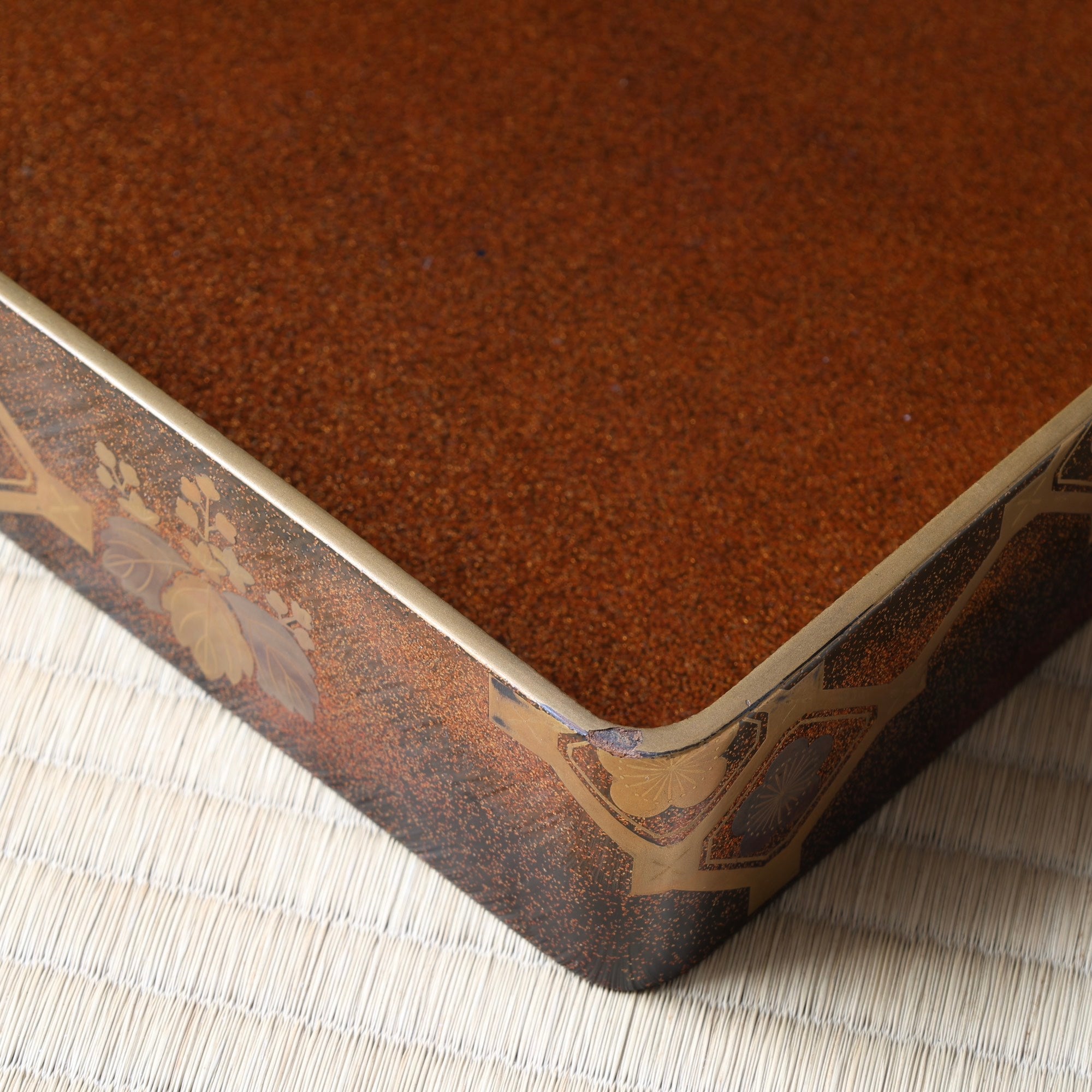
Tosa domain suzuribako (Japanese writing box) in urushi lacquer and gold, kikkō ume (hexagon and plum tree) and kamon (family emblems) decoration
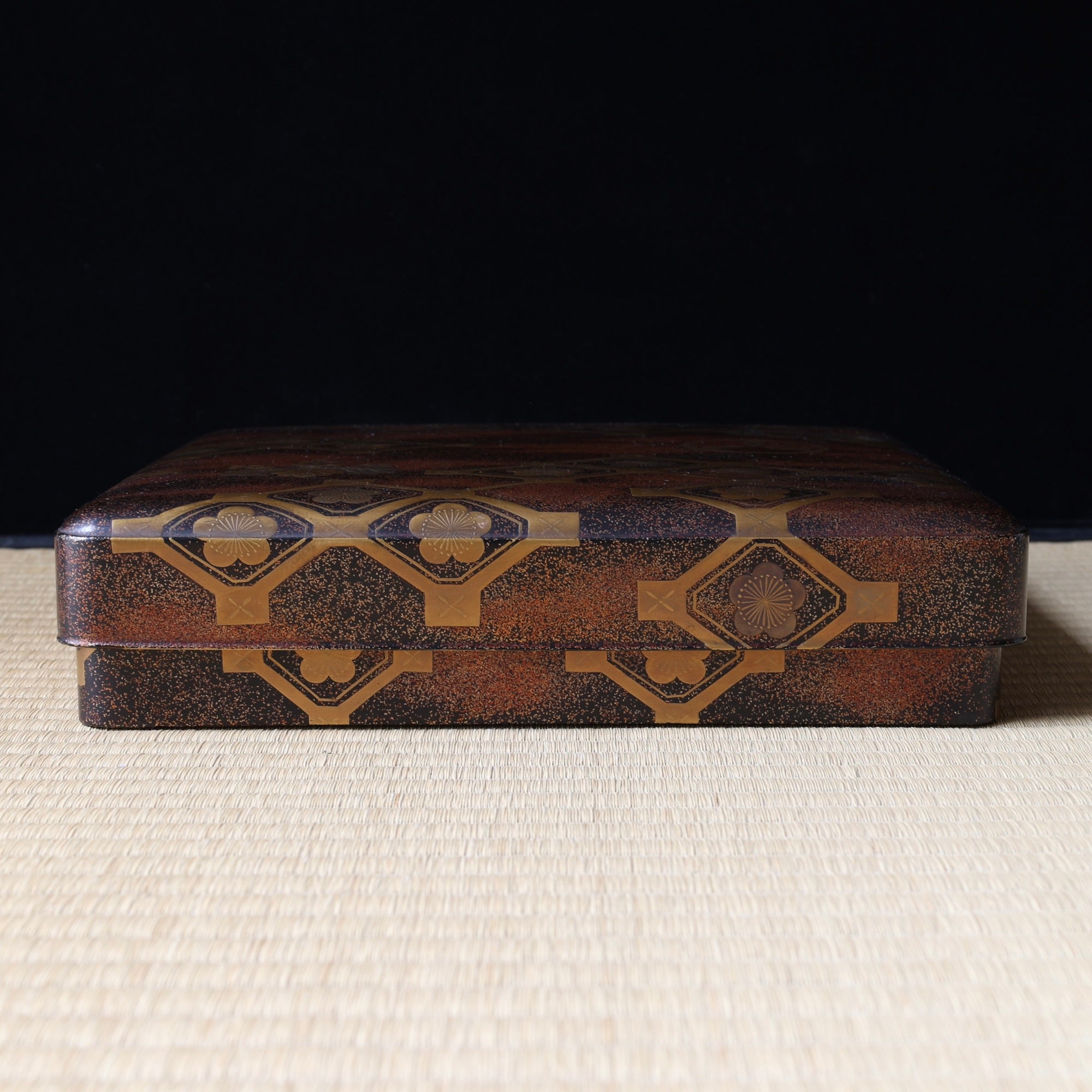
This urushi lacquer suzuribako (Japanese writing box) features remarkable kikkō ume (hexagonal plum blossom pattern) decoration, executed in maki-e with gold powder on a rich nashiji (gold powder ground). Made for a member connected to the Yamauchi family, a former daimyō (feudal lord) family of the Tosa domain, this piece combines historical kamon (family crests), geometric motifs, and ume (plum) blossoms in a particularly refined composition. The ensemble attests to a high level of craftsmanship, characteristic of aristocratic objects made at the end of the Edo period.
Historical Context
This piece belonged to the Yamauchi family, who governed the Tosa domain during the Edo period and until the abolition of the feudal system (in 1871).
The Tosa domain corresponds to the present-day Kōchi Prefecture, located on Shikoku Island. Governed during the Edo period by the Yamauchi family, this domain held an important place in the Japanese feudal aristocracy. The Yamauchi were notably known for their political role at the end of the Tokugawa shogunate and during the Meiji Restoration.
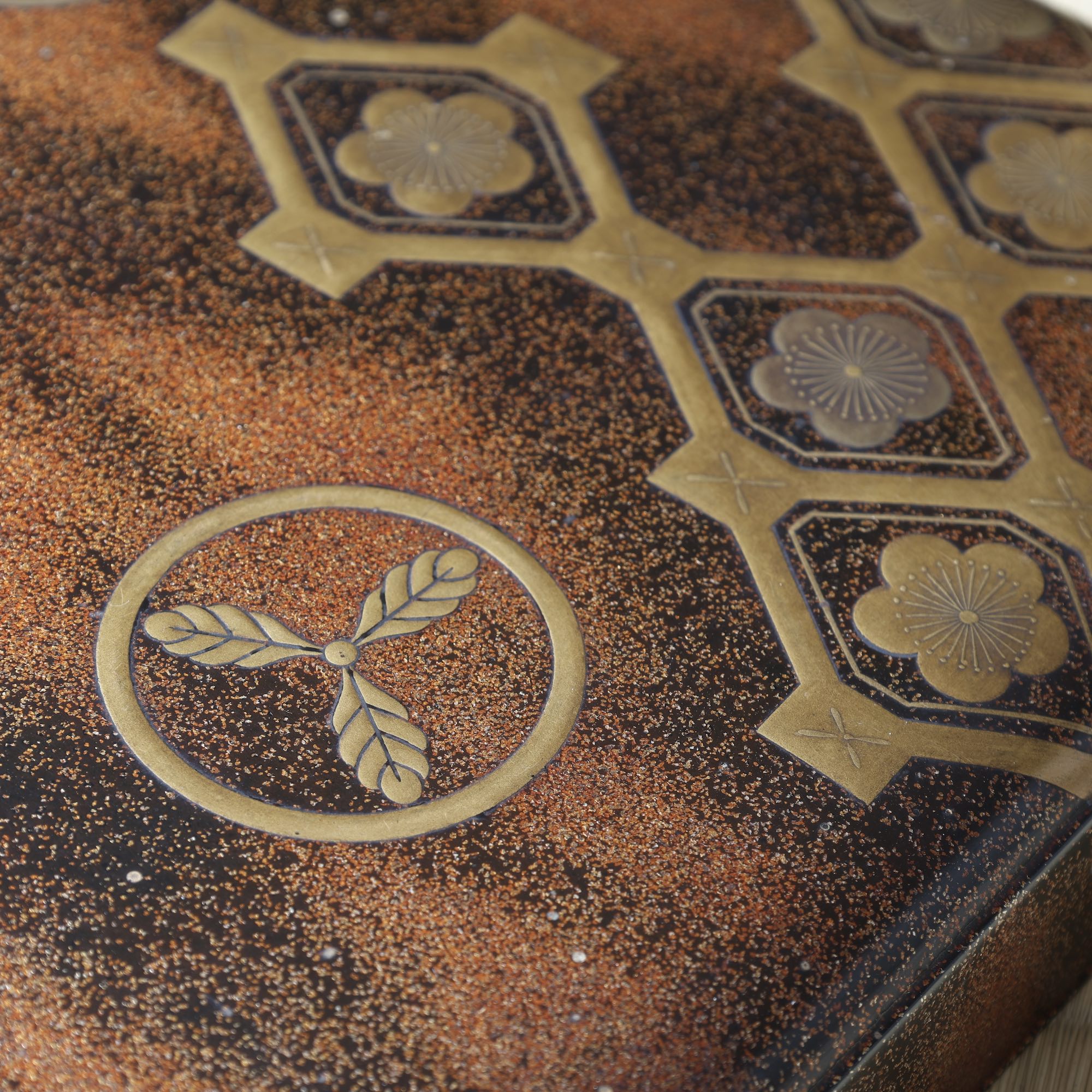
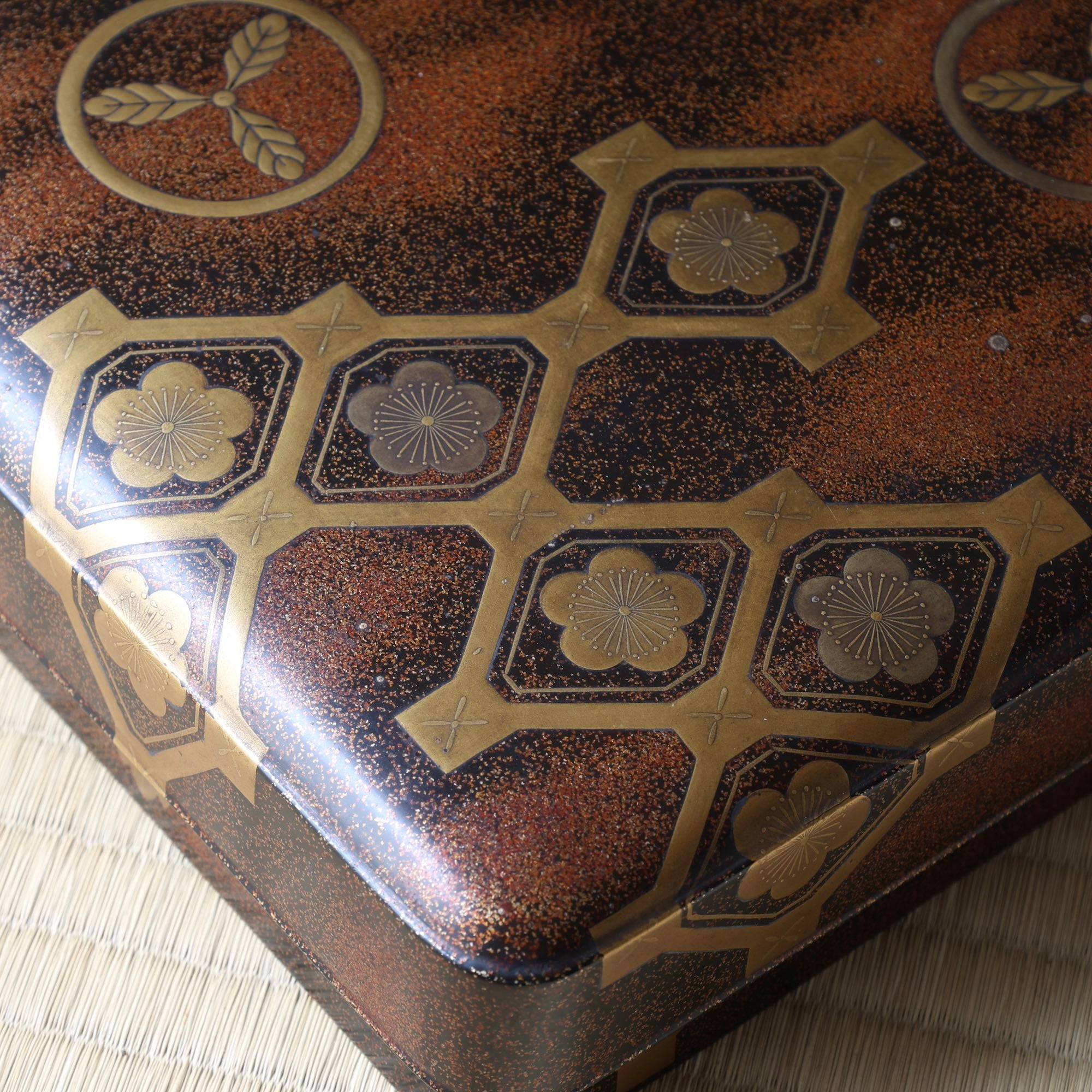
The decoration includes several kamon (family crests) associated with this lineage. Notably, the Tosa gashiwa mon (Tosa oak leaf emblem), depicted within a circle, as well as a kikkō ume (hexagonal plum pattern) decoration, a traditional Japanese motif associated with longevity, prosperity, and elegance.
The simultaneous presence of these emblems and this provenance gives this suzuribako a particularly interesting heraldic and aristocratic dimension.
Decoration and Techniques
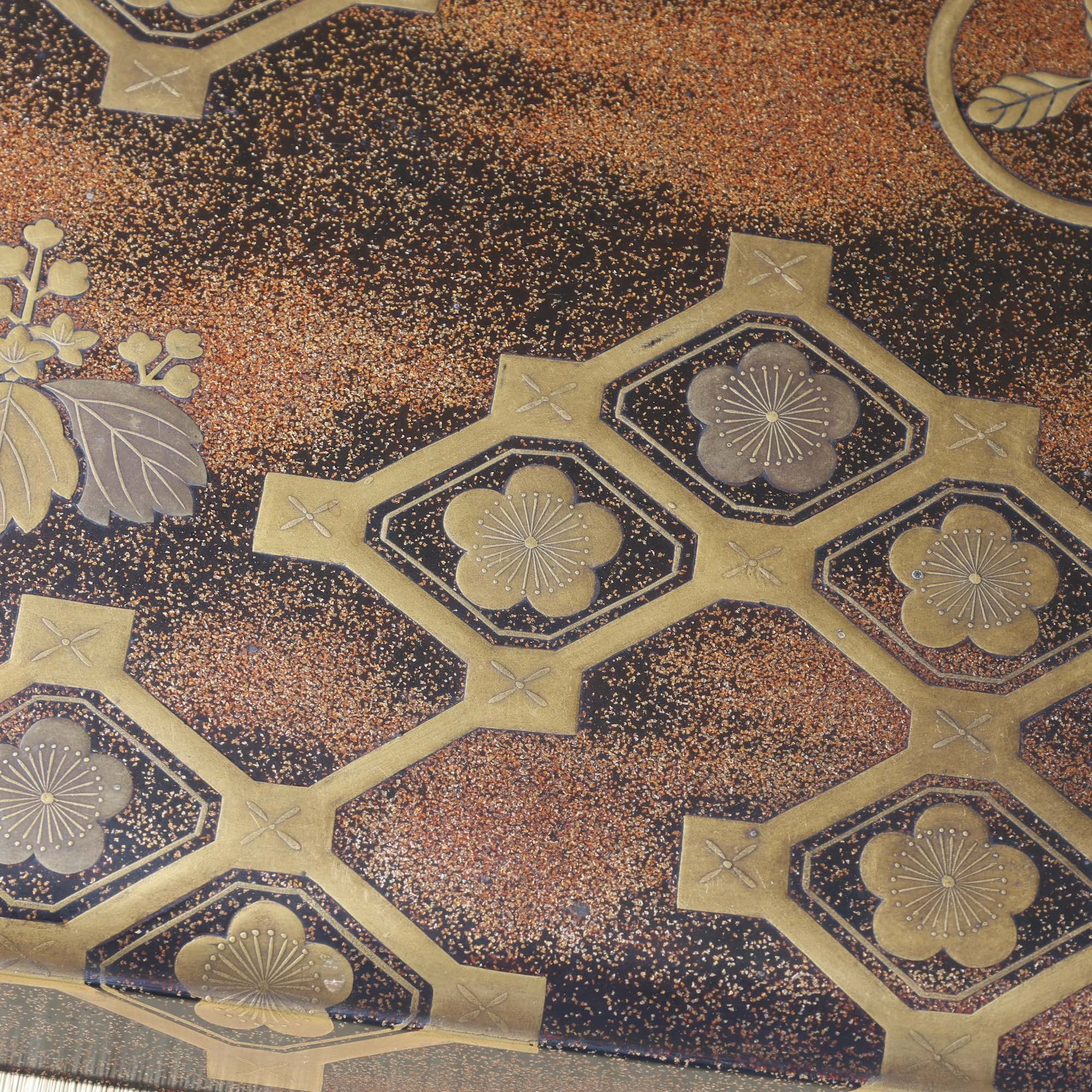
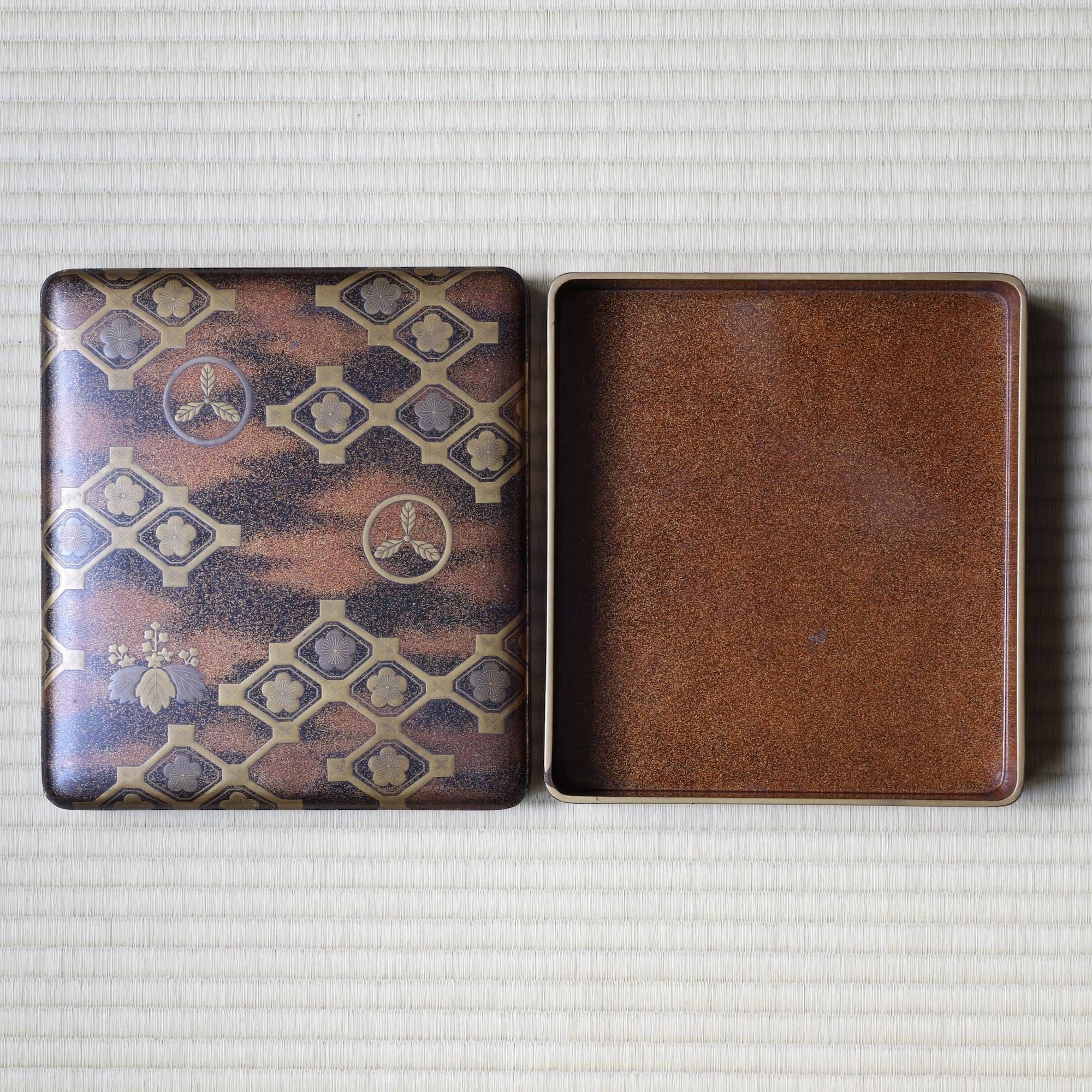
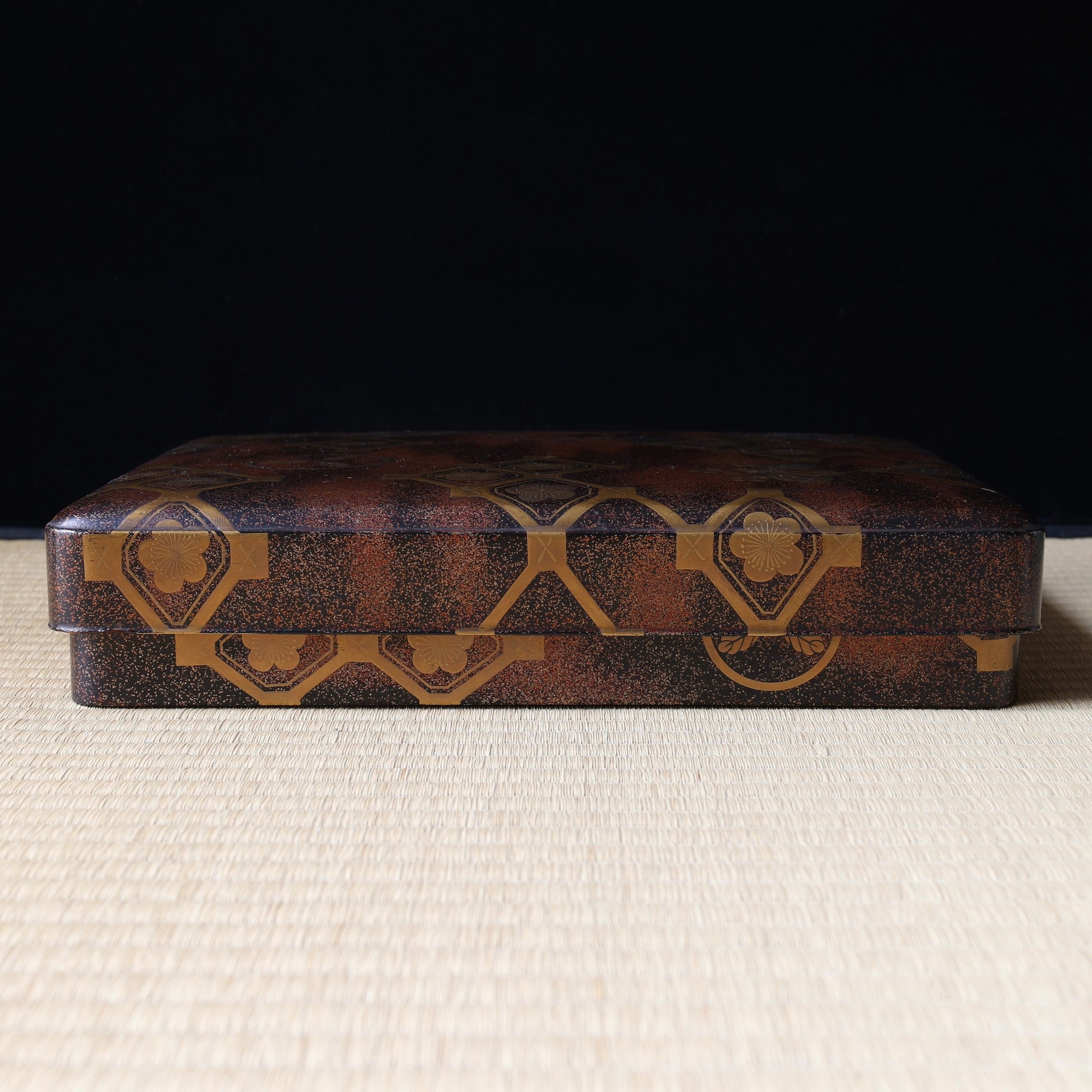
This box is made of wood covered with numerous layers of Japanese urushi lacquer. The entire outer surface is treated with nashiji (gold powder ground), with a very subtle modulation of the powder density. Some areas are heavily laden with gold powder, while others reveal more of the dark depth of the lacquer, this variation creating a beautiful cloud effect.
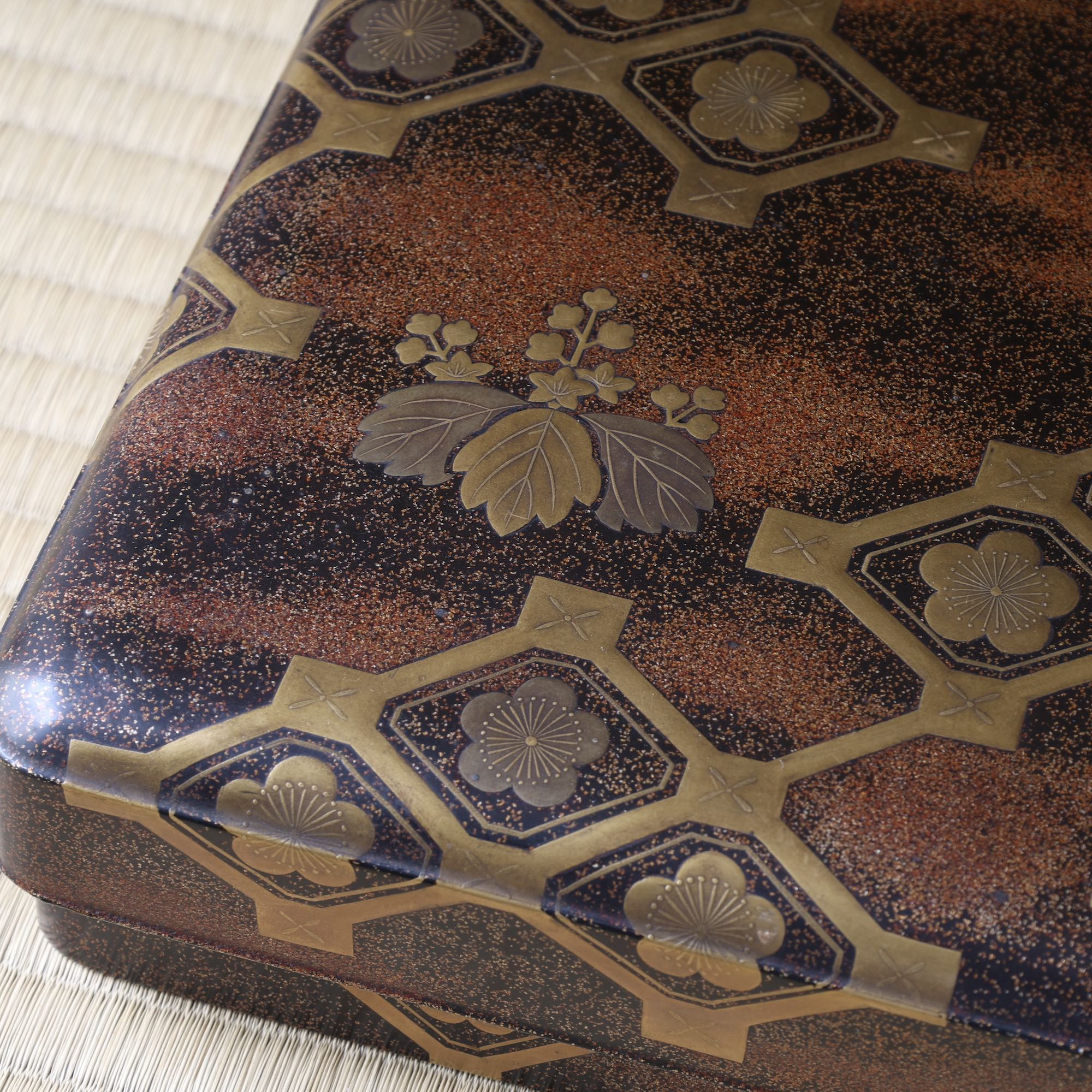
The main decoration consists of a vast network of kikkō (hexagonal patterns inspired by tortoise scales), within which ume (plum) blossoms appear. The motifs are made in maki-e with gold powder, a technique consisting of applying fine metallic powders to the still-fresh lacquer before progressively fixing and polishing the decoration. The whole presents a slight relief obtained by successive superpositions of lacquer and powders, giving the motifs a discreetly modeled presence.
The composition alternates the rigor of geometric motifs with the freer effects of nashiji, creating a refined contrast between decorative structure and the depth of the lacquer.
The kamon (family crests) applied to the lid are executed with great graphic sobriety. Notably, the Tosa gashiwa mon (Tosa oak leaf emblem) as well as the kiri mon (paulownia emblem) can be distinguished.
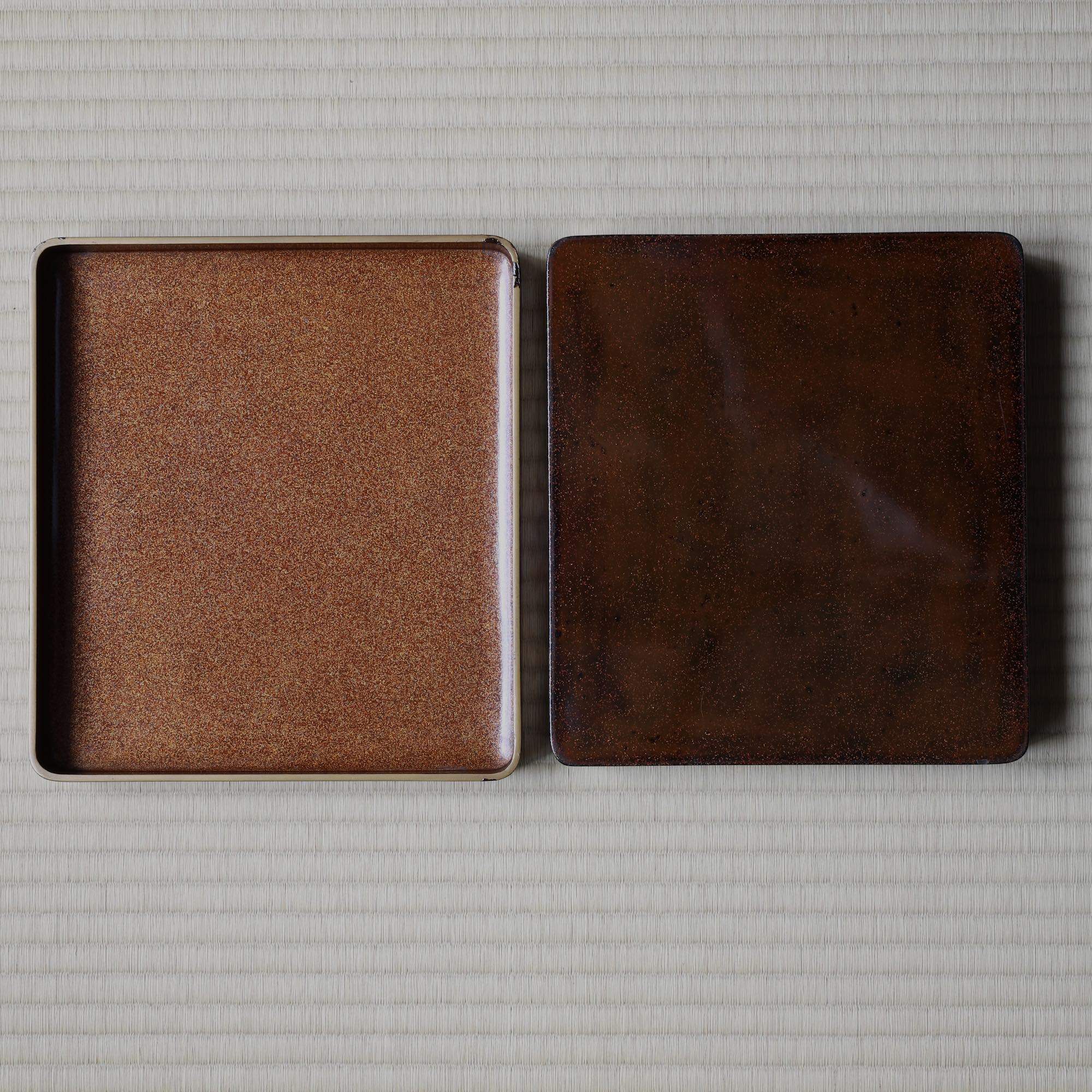
The interior of the suzuribako also features particularly refined nashiji work, covering the entire inner surface with dense gold powder.
Form and Use
The suzuribako is a box intended for the practice of Japanese calligraphy. It allowed for the storage of necessary writing instruments, particularly brushes, solid ink, an inkstone, and accessories related to ink preparation.
High-level suzuribako also constituted prestige objects associated with Japanese aristocratic and scholarly circles.
Presentation
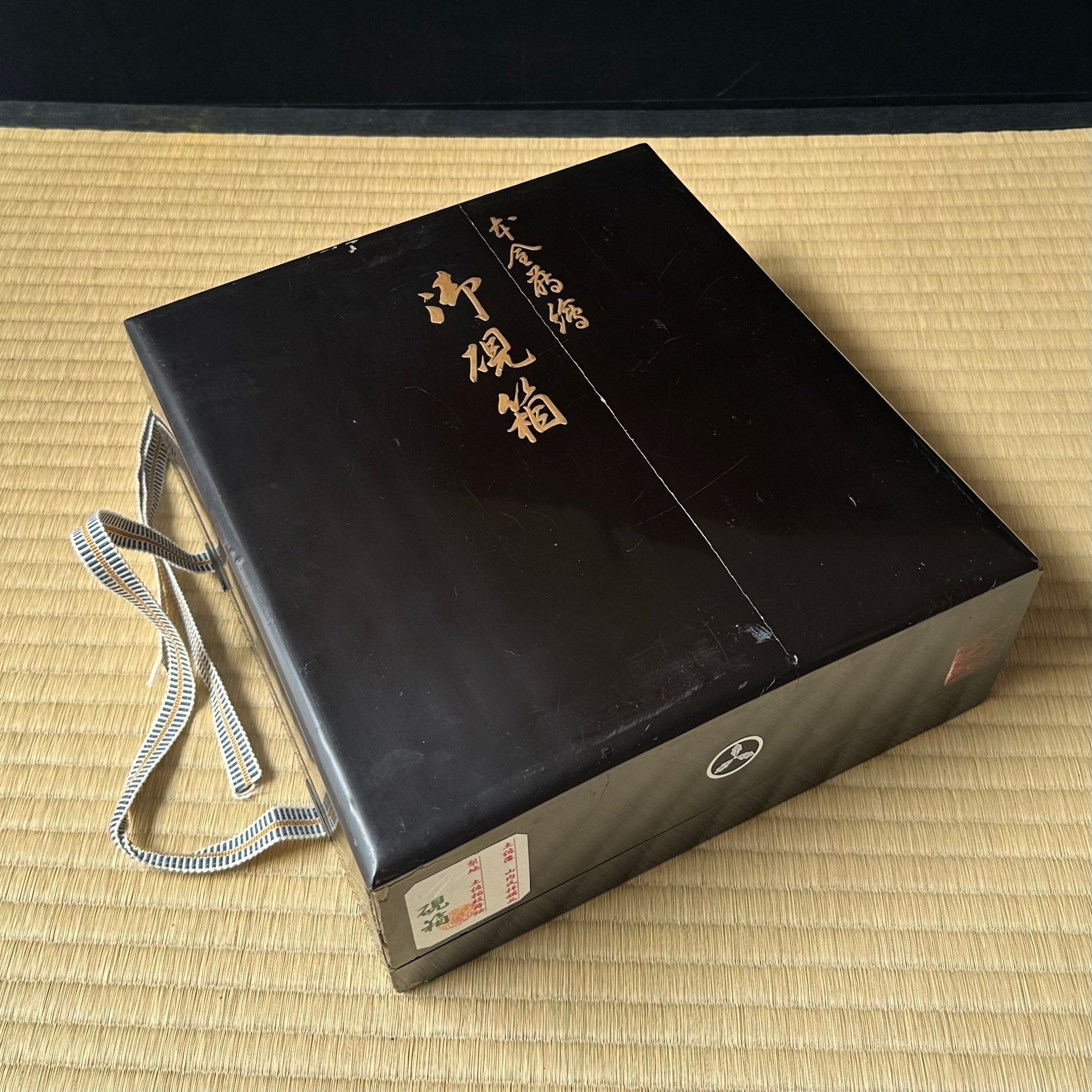
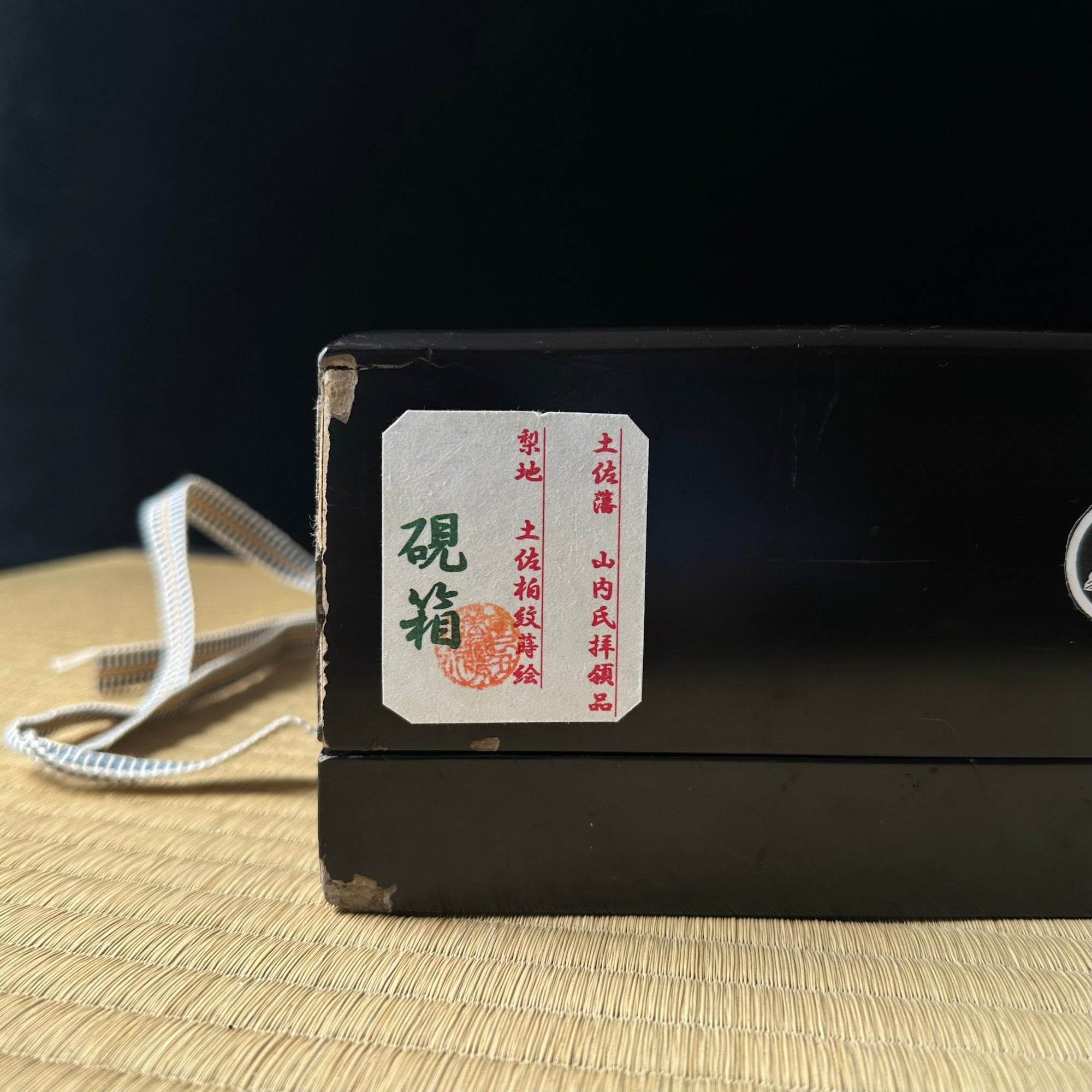
This piece is accompanied by its tomobako (wooden box) bearing the name of the work and a historical inscription mentioning its connection to the Yamauchi family of the Tosa domain.
The sanadahimo (woven cord) accompanying the protective box was added more recently.
Place of Manufacture
Japan
Period
End of the Edo period (1603-1868)
Dimensions
Length 25.5 cm - Width 23 cm - Height 5.6 cm
Weight
Suzuribako + tomobako: 1.7kg
Materials
Wood, urushi lacquer, gold powder
Condition
In very good condition despite its age. Small lacquer repair to an inner corner of the lid, small impacts on 2 body corners and small scratches on the outer bottom, all invisible when the box is closed. This suzuribako can be presented in Paris by appointment for acquisition (contact@atelierikiwa.com).
© Atelier Ikiwa – Laurence Corteggiani. Photos and texts protected. All reproduction forbidden without authorization.
KNOW-HOW
Traditional Japanese lacquer, urushi, comes from the sap of the lacquer tree (Rhus Verniciflua), which flows after incision of the bark. It is a very precious material, a tree will give a maximum of 200ml of sap in its life, which is worked by specialized craftsmen. It takes many operations, slow and meticulous, and several months of work to bring real lacquer objects to life. It is the oldest craft in Japan! Initially used to protect and waterproof objects, this immutable craft has become an art of extreme sophistication. If you want to know more about the art of Japanese lacquer, you can read our dedicated article > .
SHIPPING AND PAYMENT OPTIONS
Shipping
Free shipping in mainland France for purchases over €200. Shipping with Colissimo, delivery to your home or a pick-up point, package delivered against signature or unique code for valuable items. Orders are generally dispatched within 2 business days, except for fine art photographs, which are printed on demand, and special cases that will be announced in the banner at the top of the site (e.g., in case of absence). Learn more >
Payment options
Secure card payment with Shopify Payments and 3D Secure technology.
Visa, MasterCard, American Express, Cartes Bancaires, PayPal, Apple Pay, Shop Pay, and Klarna.
Klarna: Pay in 3 interest-free installments or within 30 days, for purchases up to €1,500, subject to Klarna's approval. You will be redirected to Klarna to log in or create an account and confirm your payment.
PayPal: You will be redirected to PayPal to log in and confirm payment. New users can create an account during checkout.
Your invoice will be sent with your order.
Returns and exchanges
14 days to change your mind. Learn more >
CARE INSTRUCTIONS
Clean with a very soft cloth to avoid scratches, soaked in a little warm water if necessary (never soak your lacquer objects). No microwave, dishwasher, dryer. Do not expose to direct sunlight for a long time (risk of discoloration). If the atmosphere is very dry and very hot, and to avoid the risk of cracking, you can place a glass filled with water next to your lacquer object.
Choose options
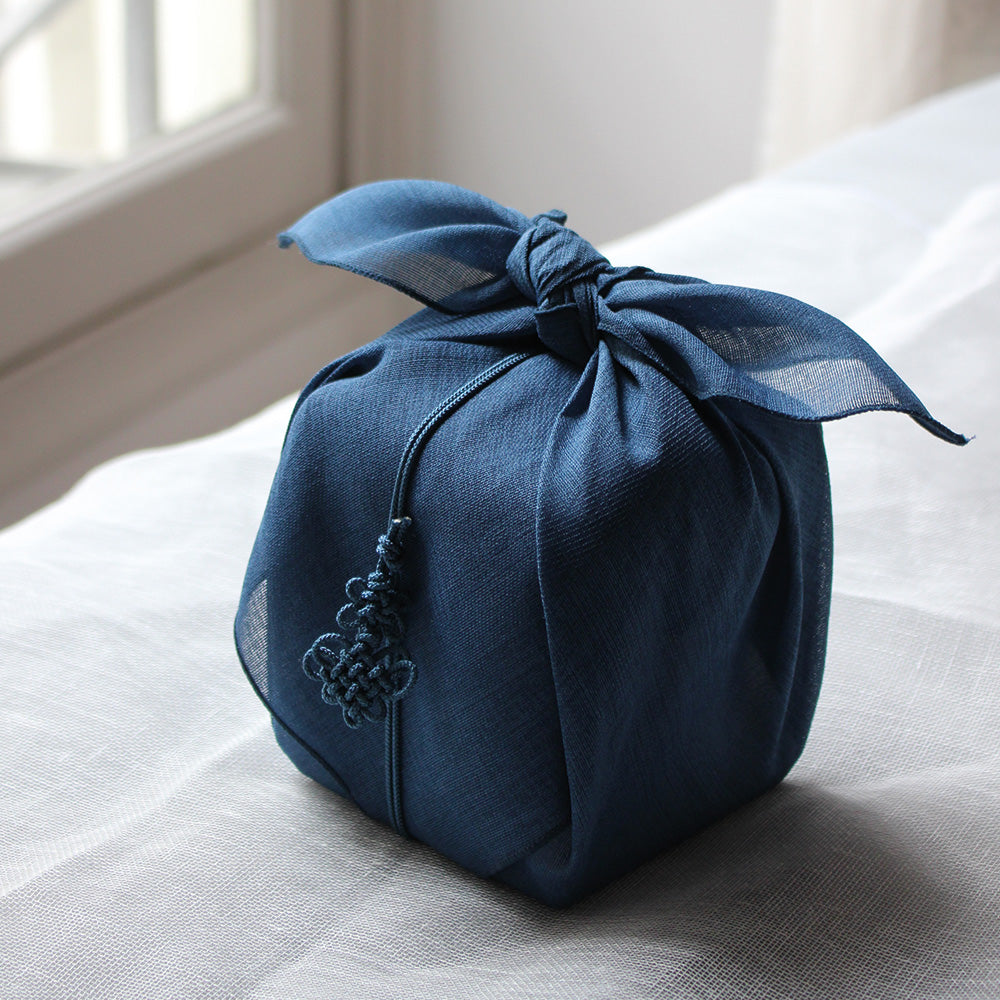
The art of wrapping
The exceptional items are wrapped in a beautiful fabric beautifully knotted using the little-known art of Korean pojagi and decorated with a delightful maedup (Korean ornamental knot). Details and conditions >
WRAPPING
Exceptional items are wrapped in textiles tied according to the Korean pojagi art