
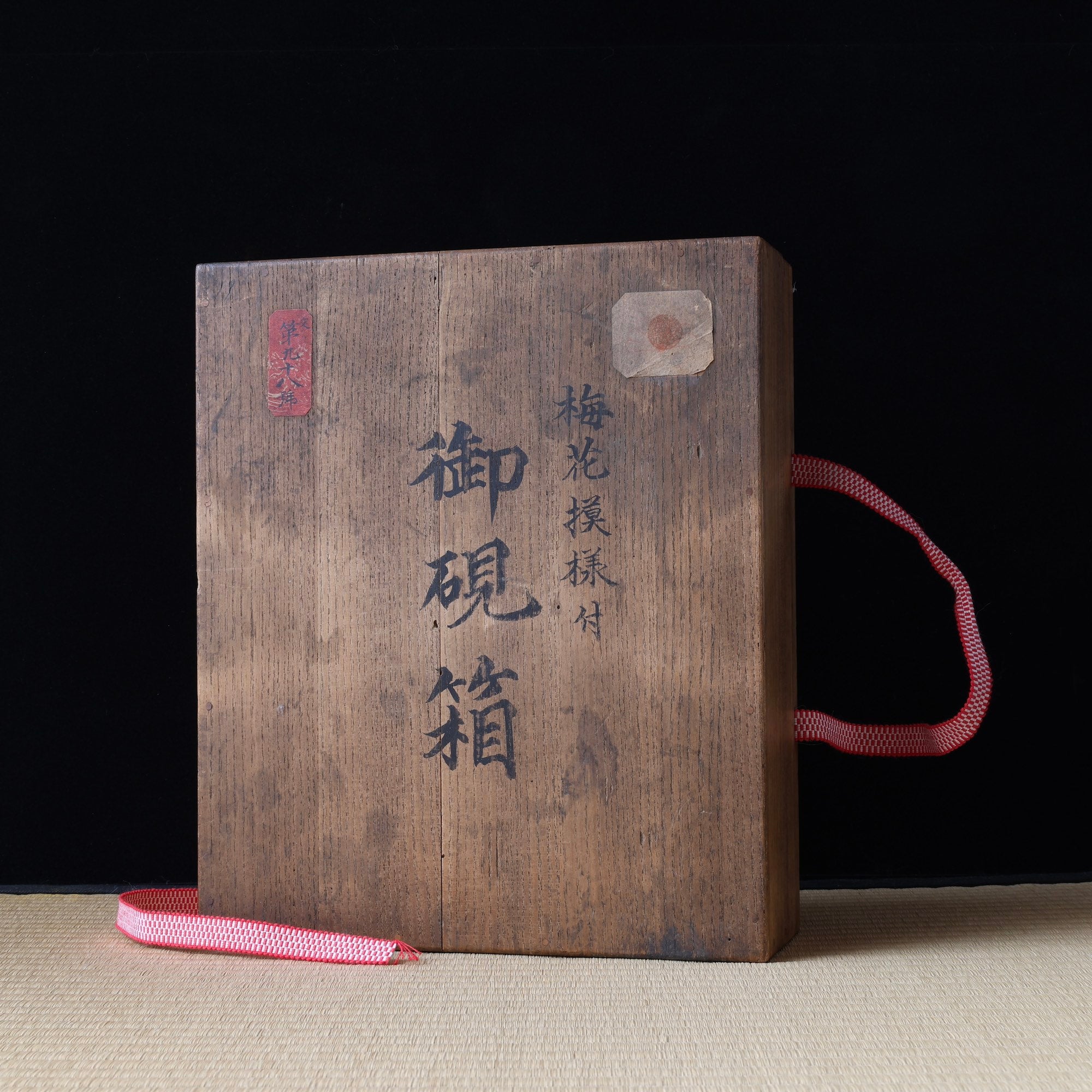
Imperial urushi lacquer, gold and mother-of-pearl suzuribako (Japanese writing box), with ume (plum blossom) decoration
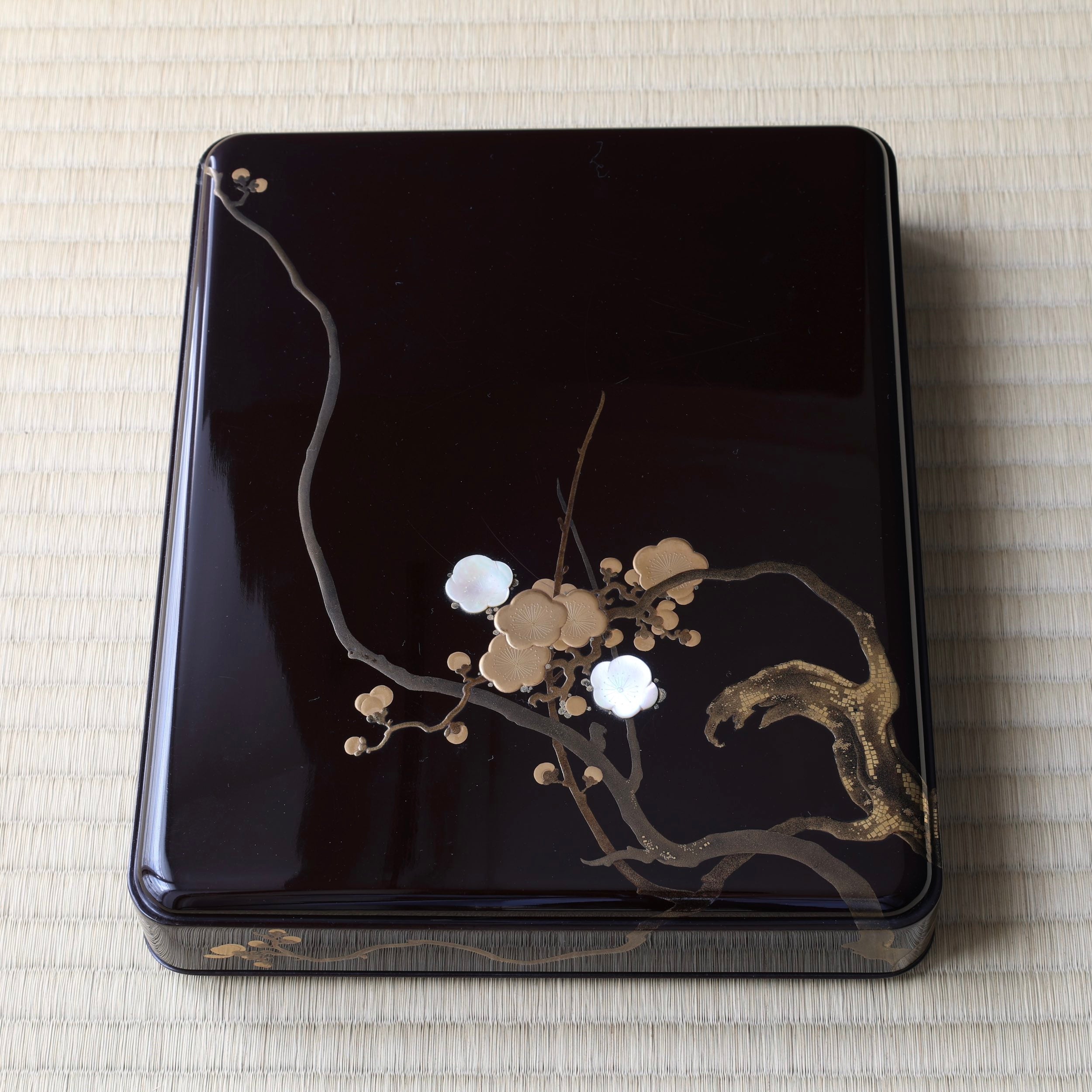
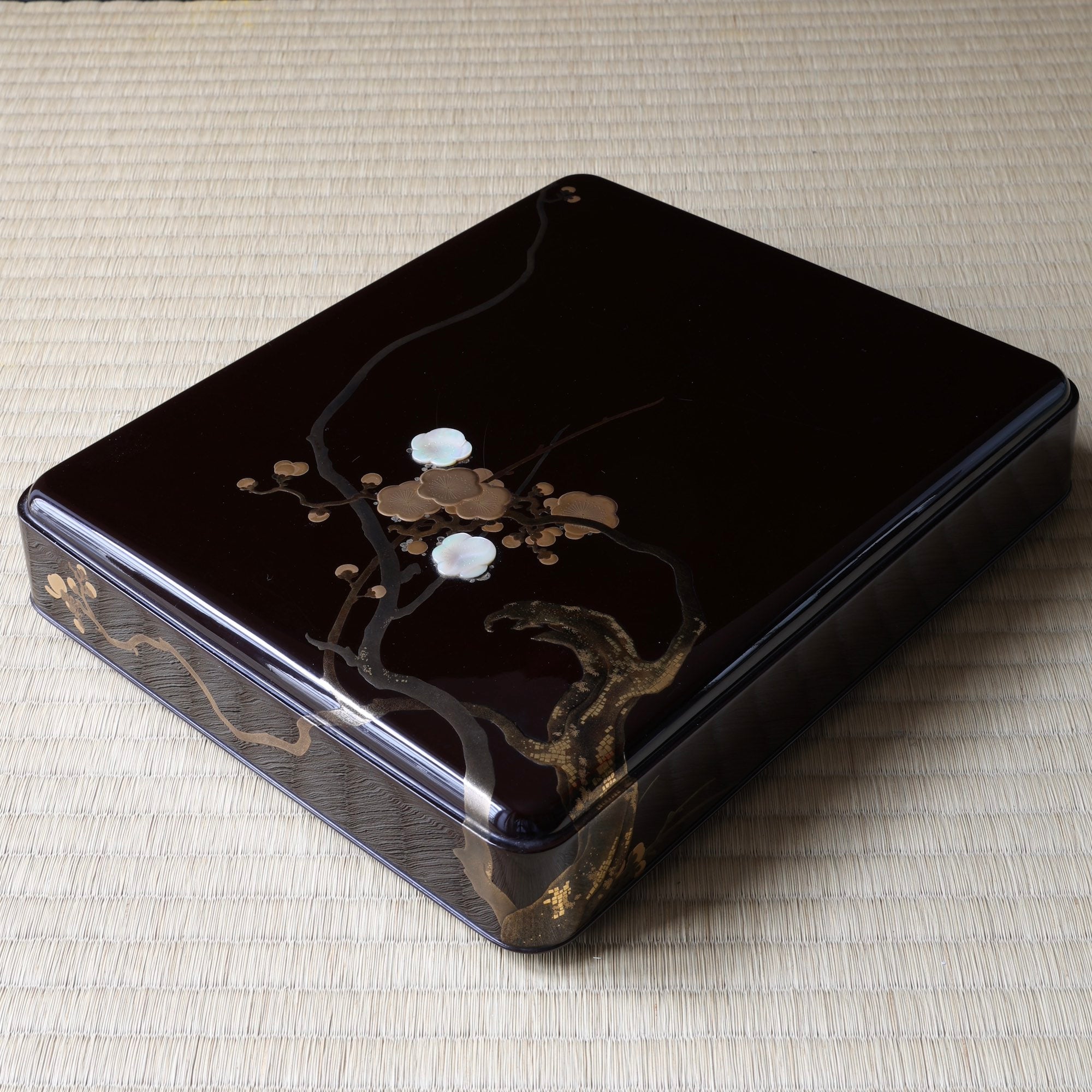
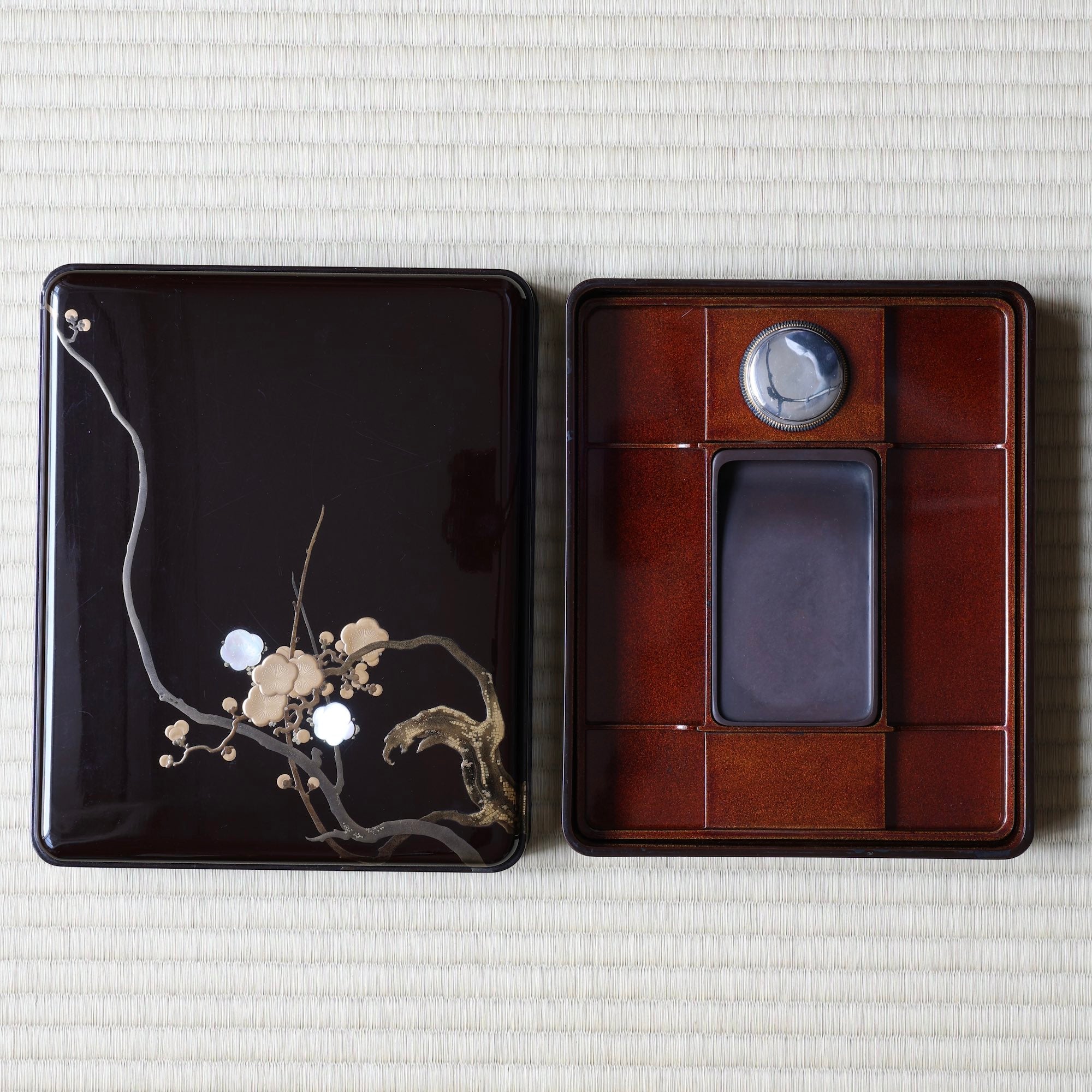
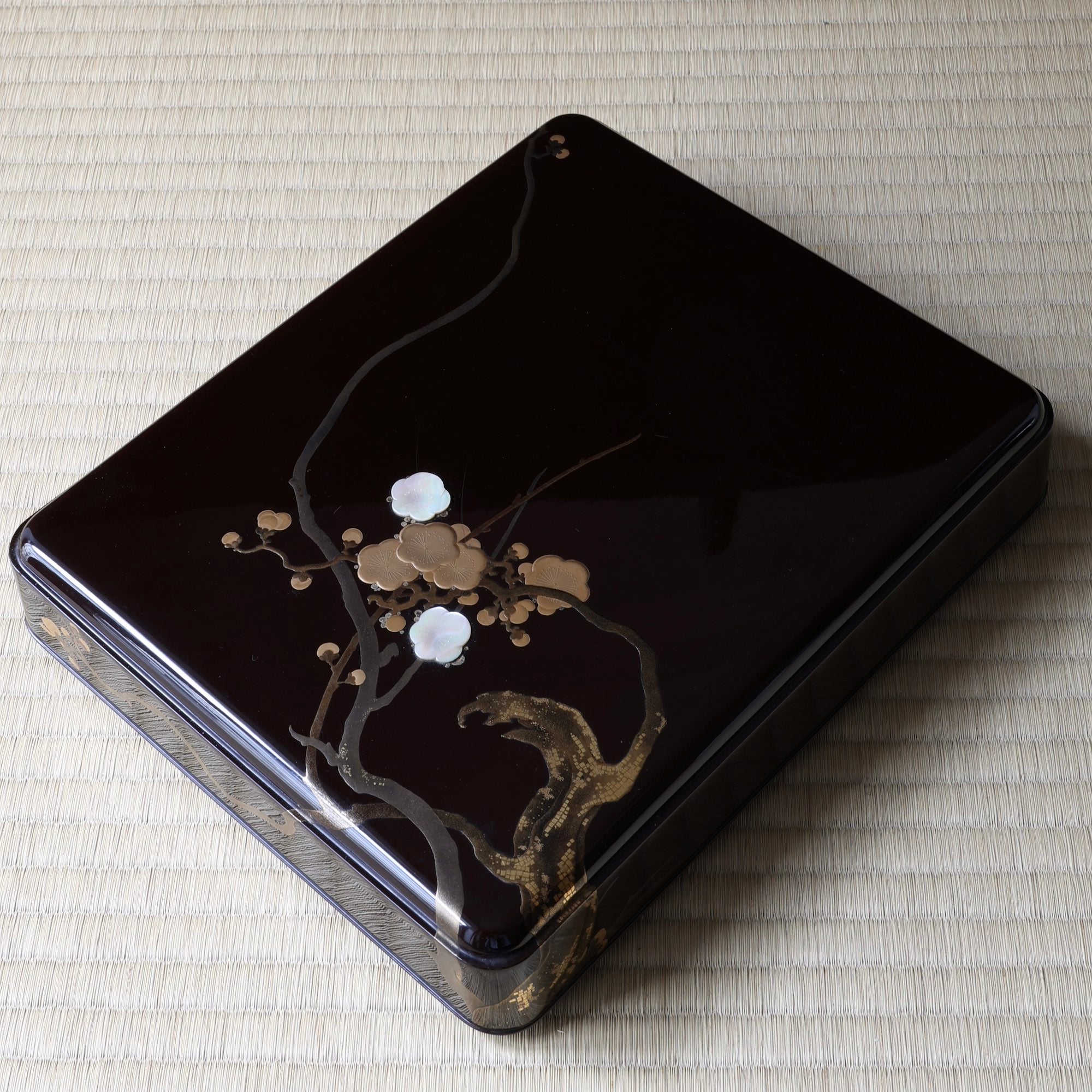
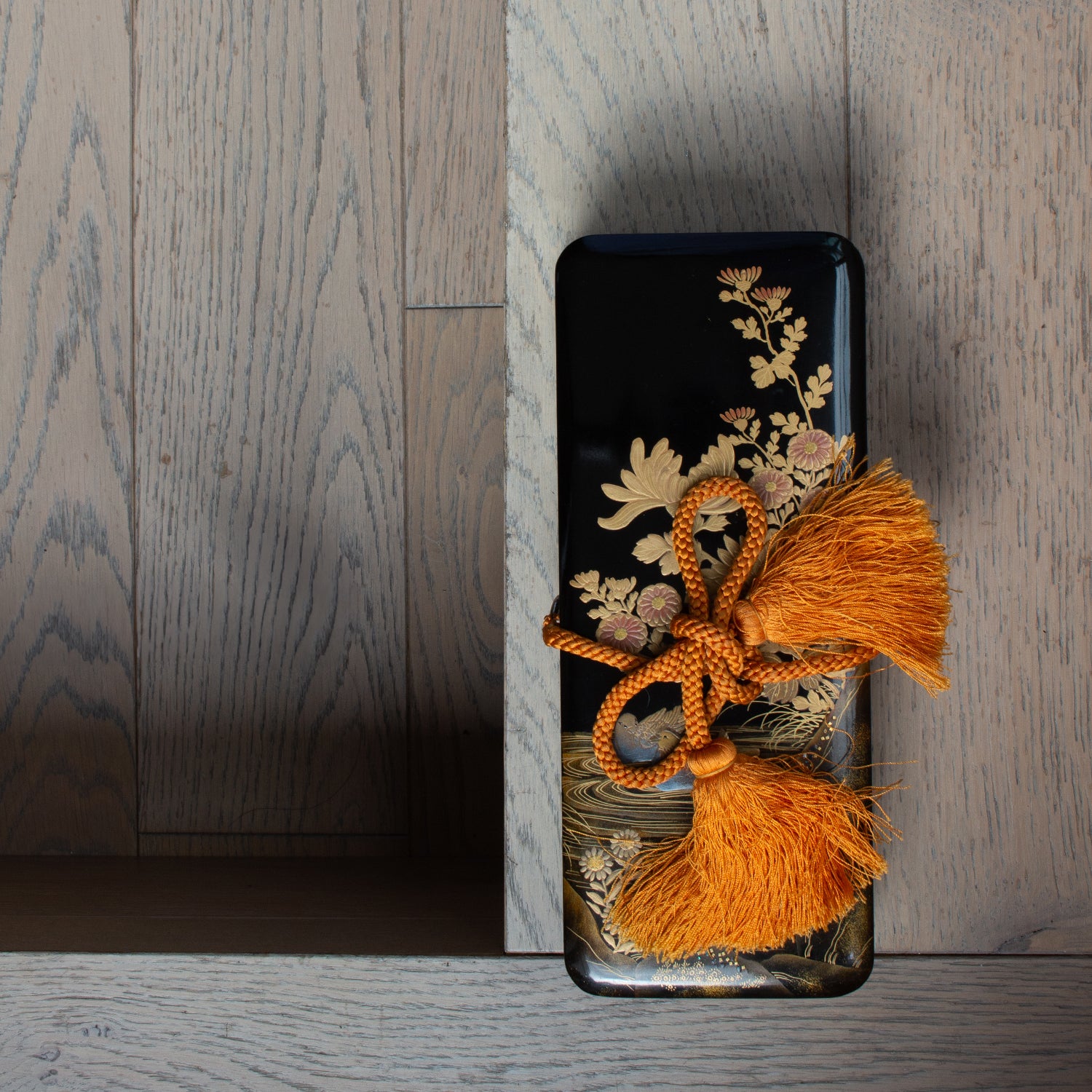
This exceptional black urushi lacquer suzuribako (Japanese writing box) was presented in October 1916 by the Crown Prince of Japan, later Emperor Taishō, to a member of the Japanese imperial family during an official imperial tour of the Hokuriku coast. Preserved in its original tomobako (protective wooden box) bearing this historical handwritten inscription, this piece combines a particularly refined set of techniques: taka maki-e (raised gold powder decoration), kirikane (cut gold inlays), white mother-of-pearl, and nashiji lacquer (gold-dusted ground). The ume (plum blossom) decoration unfolds with remarkable mastery of space on a deep black surface with subtle reddish-brown reflections. The balance of the composition, the delicacy of the gold work, and the excellent state of preservation of the entire piece testify to its very high level of execution.
Historical Context
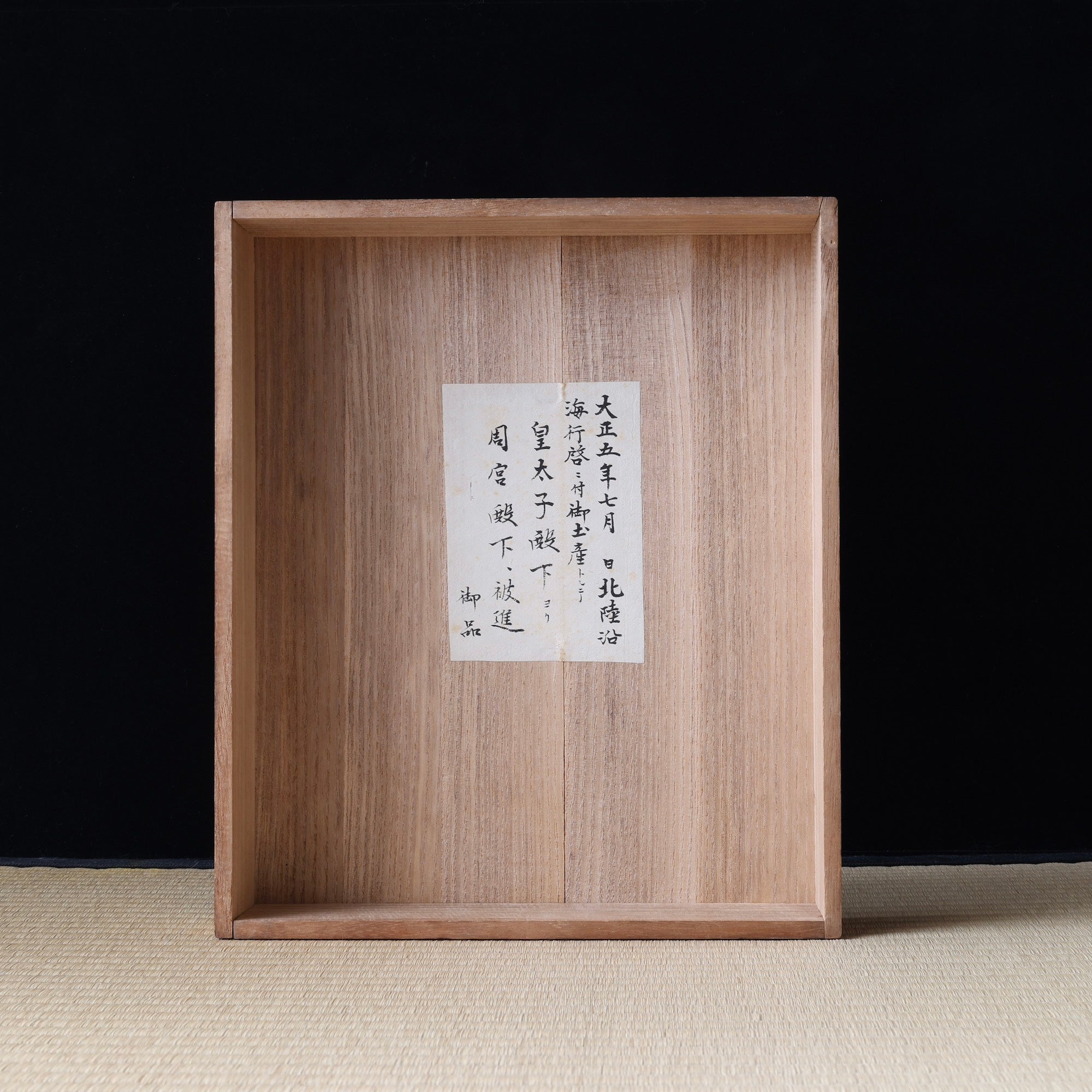
The inscription inside the lid of the tomobako indicates that this suzuribako was presented in October 1916 by Crown Prince Yoshihito, later Emperor Taishō, to a member of the Japanese imperial family referred to as Shū no Miya. The text also states that this presentation took place during an official imperial tour of the Hokuriku coast.
Hokuriku corresponds to an ancient historical region located on the Sea of Japan coast, including the present-day Ishikawa, Toyama, and Fukui prefectures. This region holds a major place in the history of Japanese decorative arts, and more specifically in lacquerware. Kanazawa and Wajima, two of Japan's most renowned historical centers for maki-e and urushi lacquer arts, are located precisely in this area.
In the early 20th century, imperial tours were important political and cultural events. The objects presented in this context were of a particularly high level of execution, intended to represent local artistic refinement to the imperial aristocracy.
Decoration and Techniques
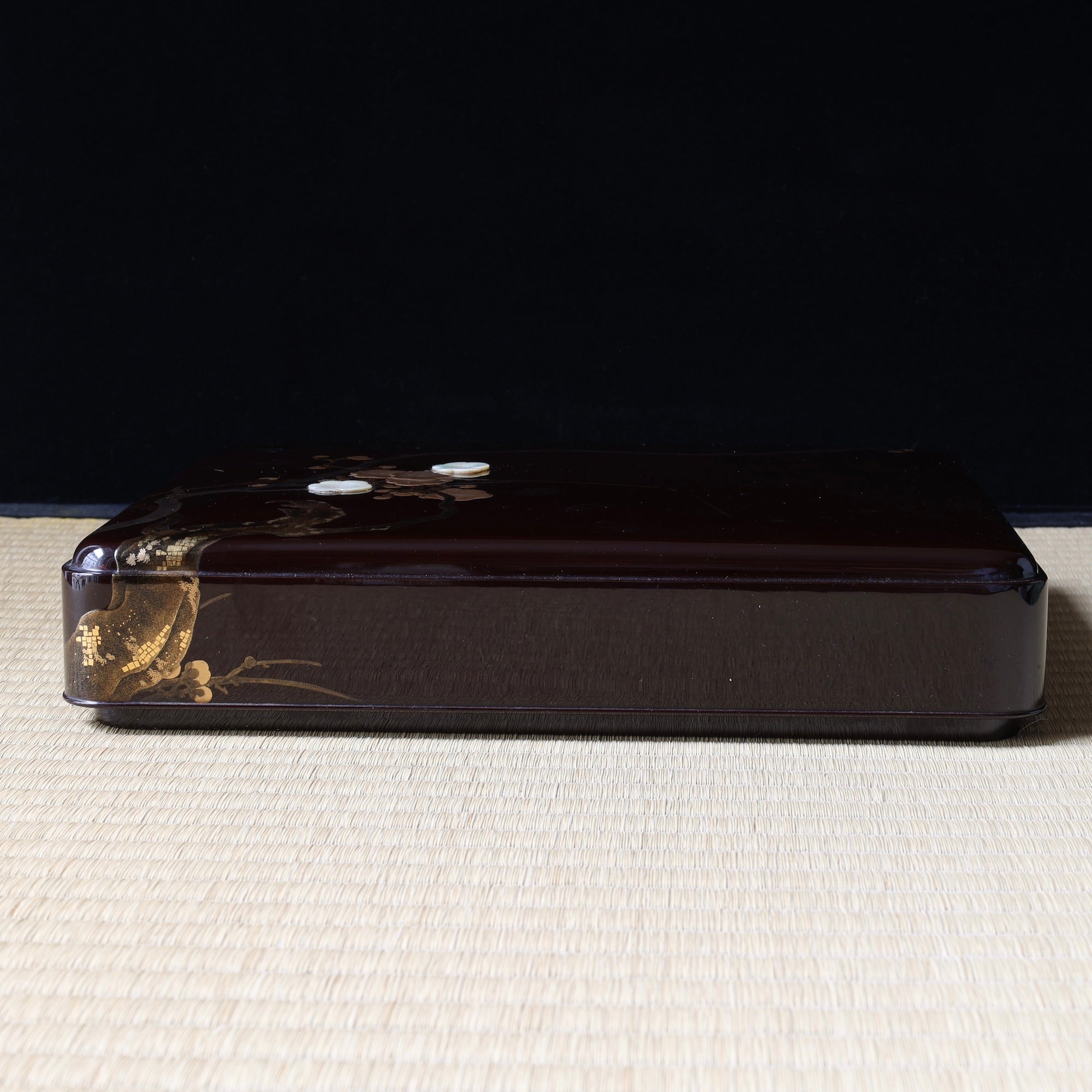
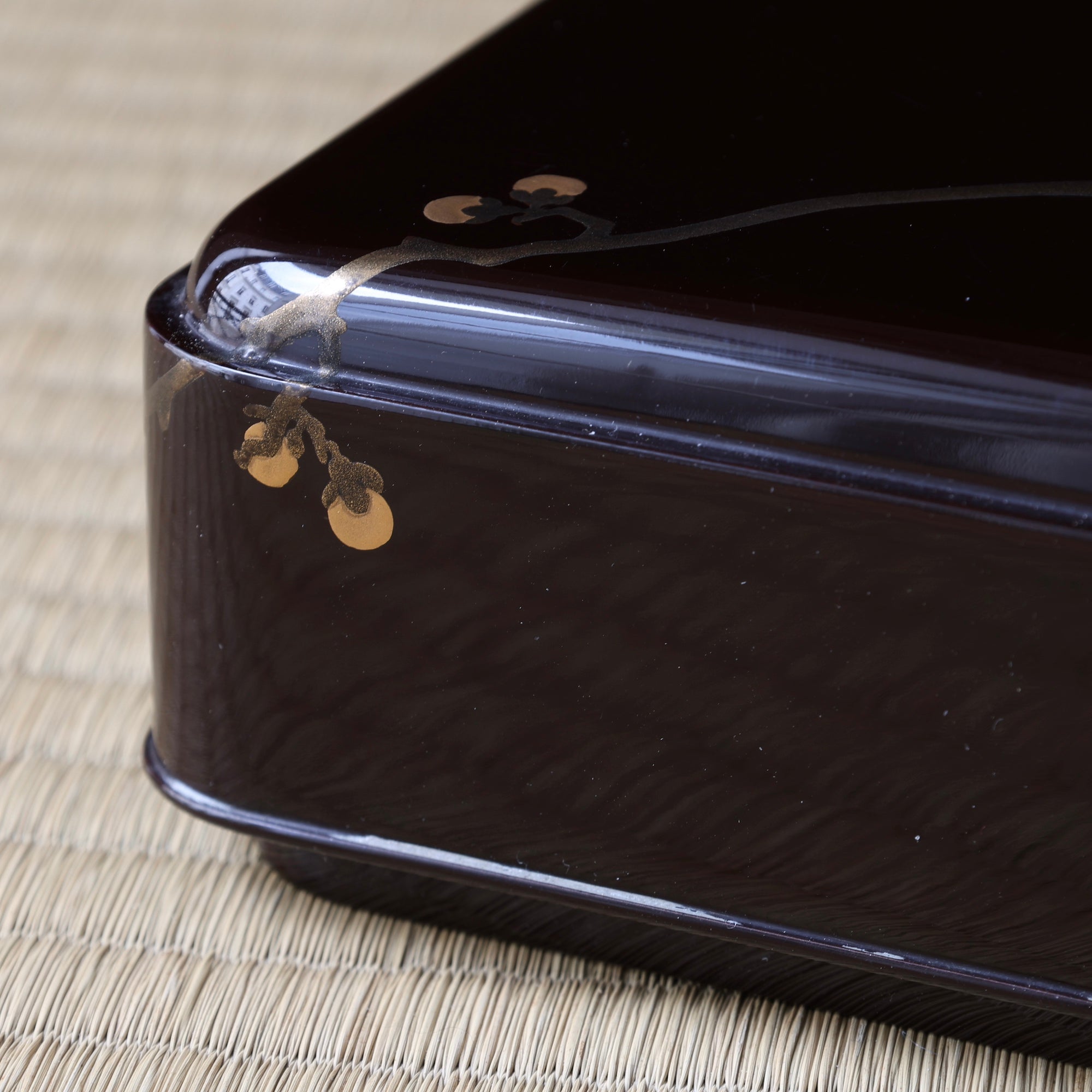
This box is made of wood covered with numerous layers of Japanese urushi lacquer. The exterior surface features a black background that, at certain angles of light, reveals subtle reddish-brown reflections, giving the lacquer a very particular depth.
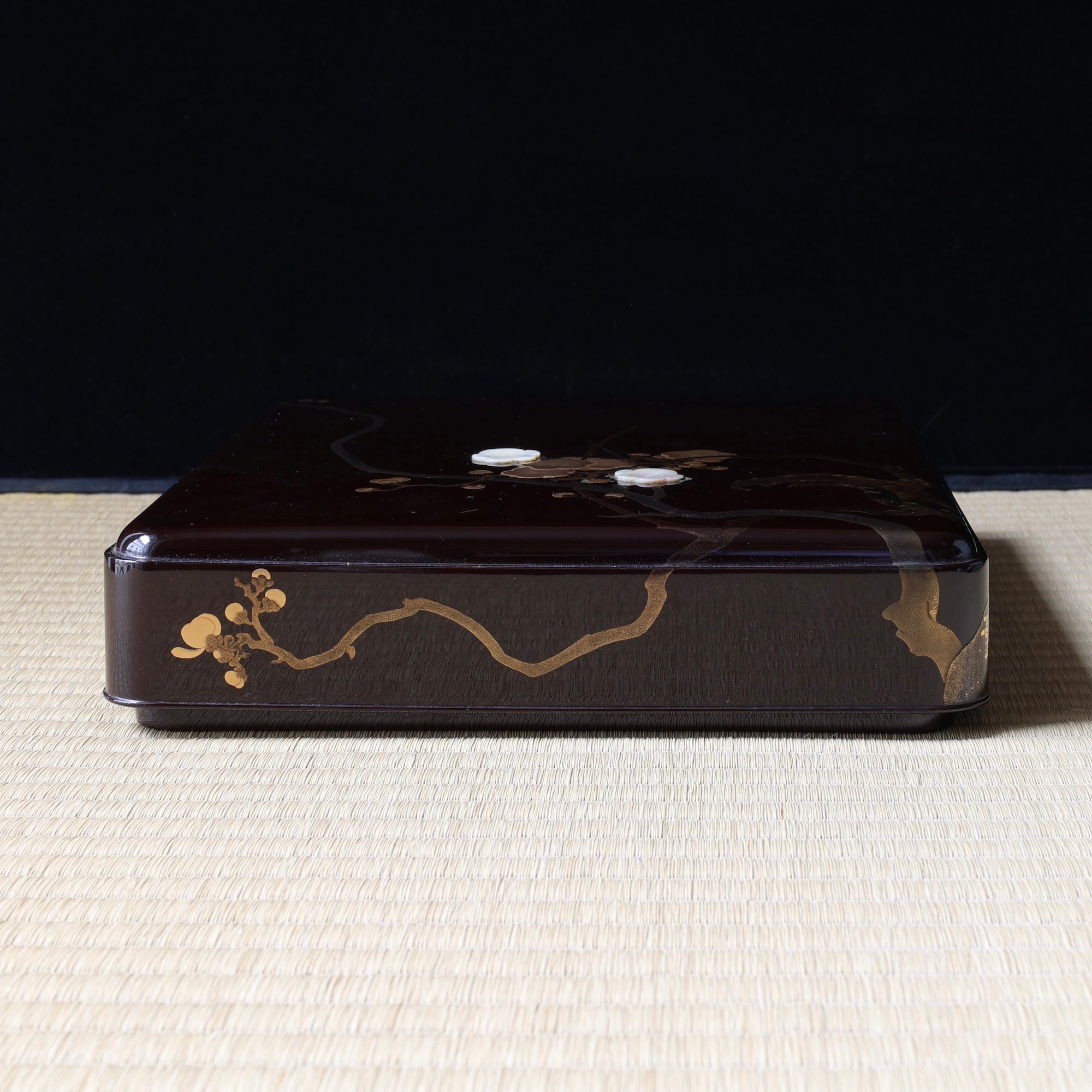
The decoration depicts an ancient branch of ume (plum blossoms), a tree associated with renewal, perseverance, and winter elegance in Japanese culture. The composition is deliberately asymmetrical and minimalist, enhancing the graphic power of the branch and the overall balance.
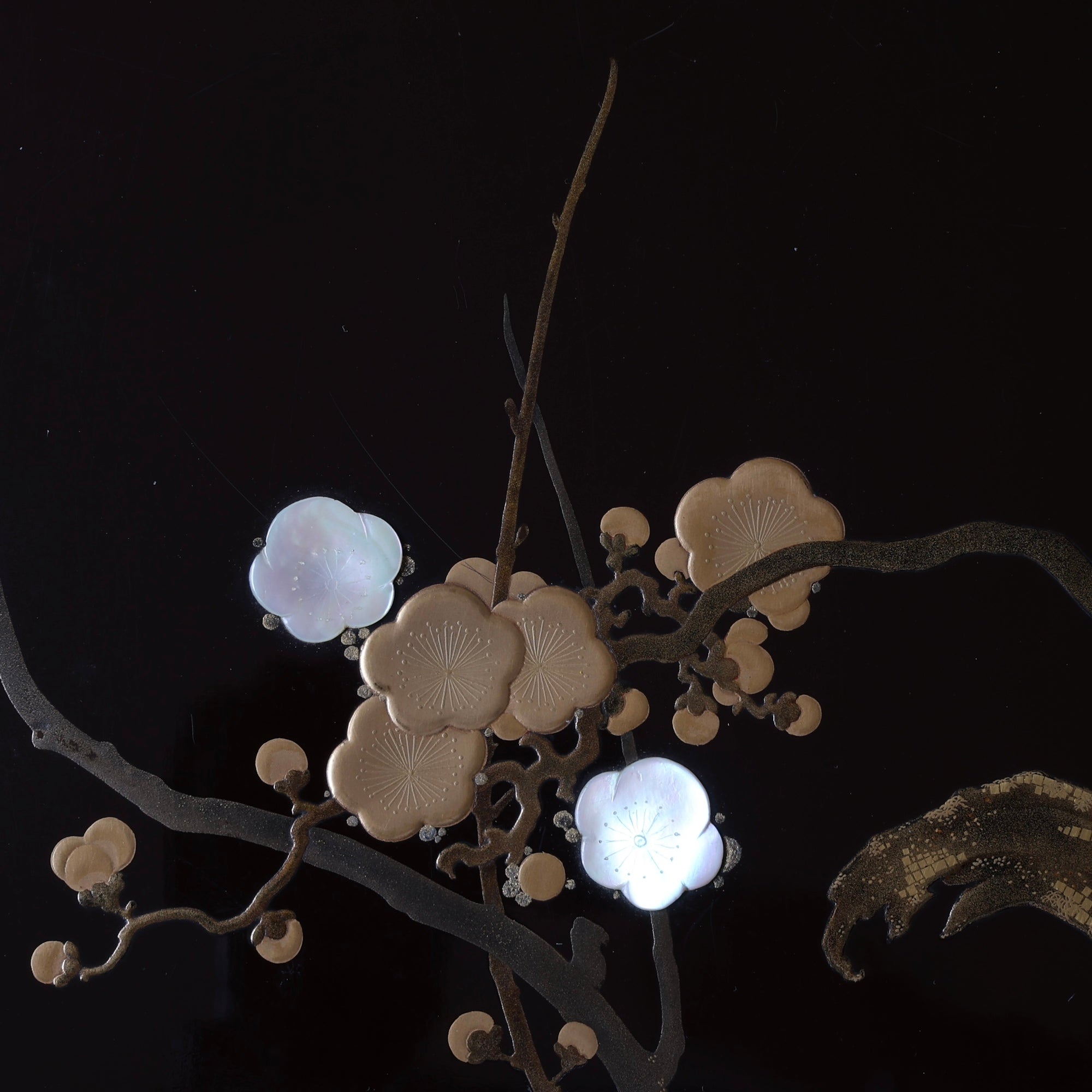
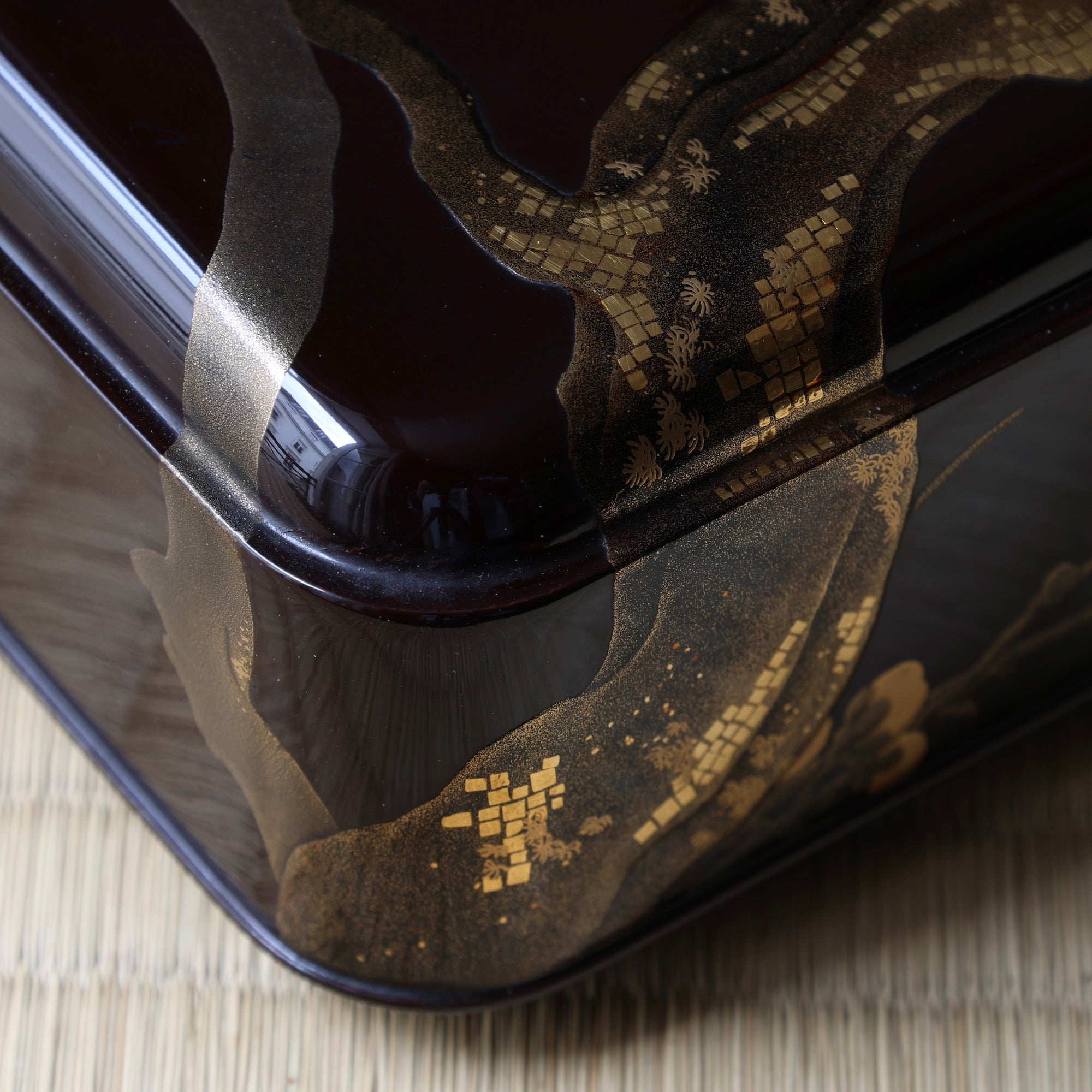
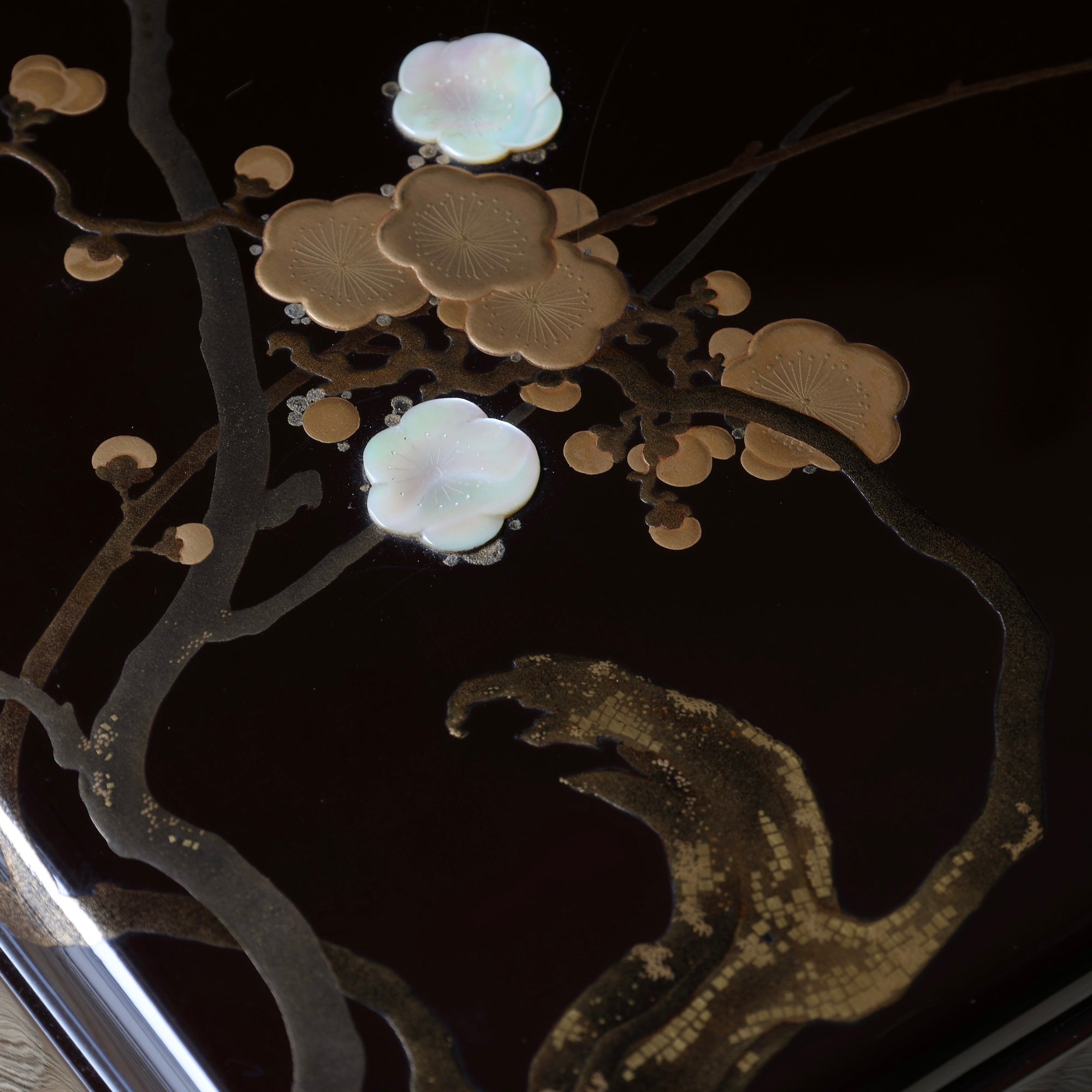
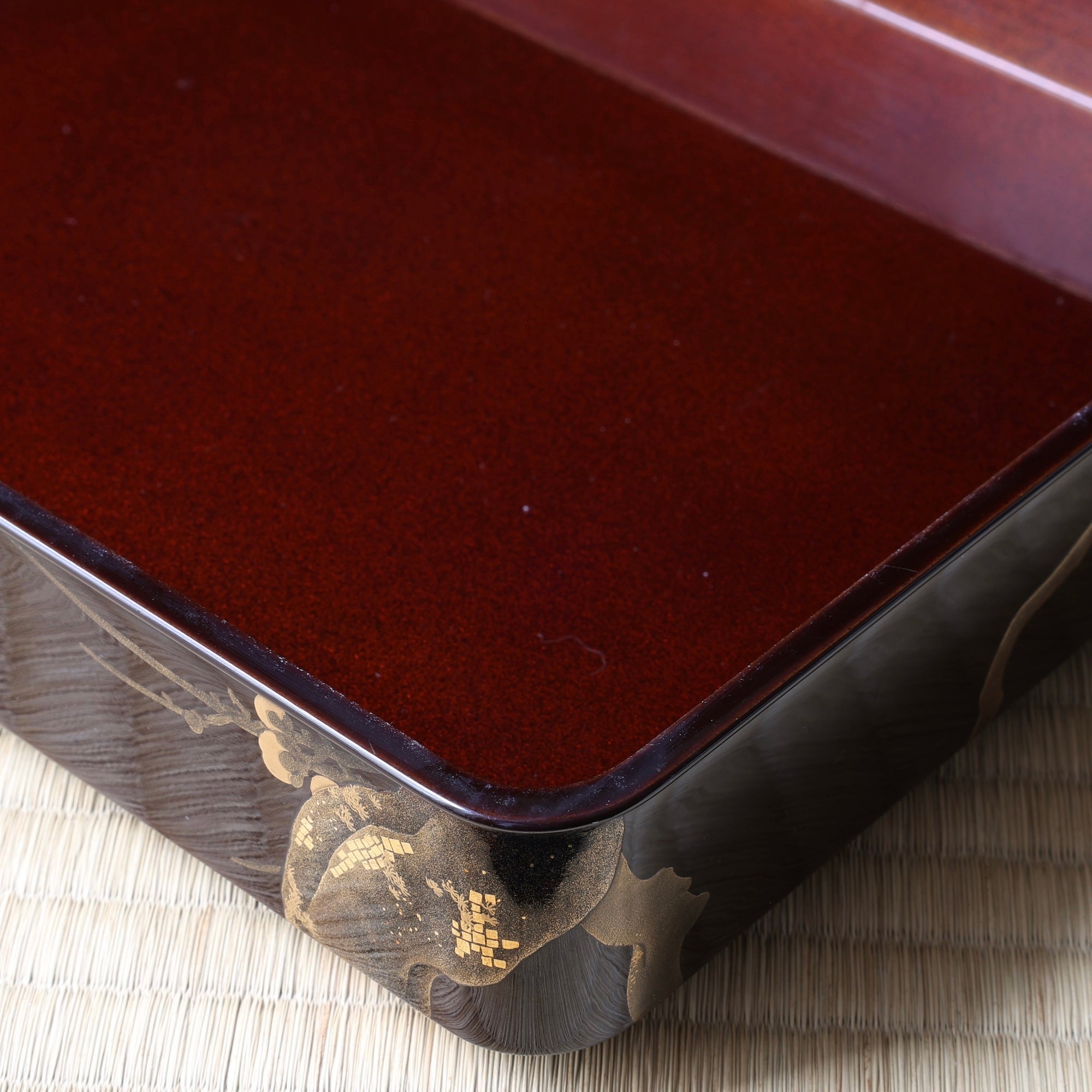
The main flowers are made using taka maki-e (raised gold powder decoration). The volumes are achieved through successive layers of lacquer before applying gold powder, creating a delicate and particularly well-controlled relief. Some flowers are inlaid with shirochogai (white mother-of-pearl), whose iridescent reflections provide very subtle luminous variations.
The trunk features remarkable kirikane (cut metal inlays) decoration, composed of very small, individually applied gold squares. This extremely meticulous work enlivens the surface of the decoration with discreet geometric variations and creates subtle plays of light depending on the viewing angle.
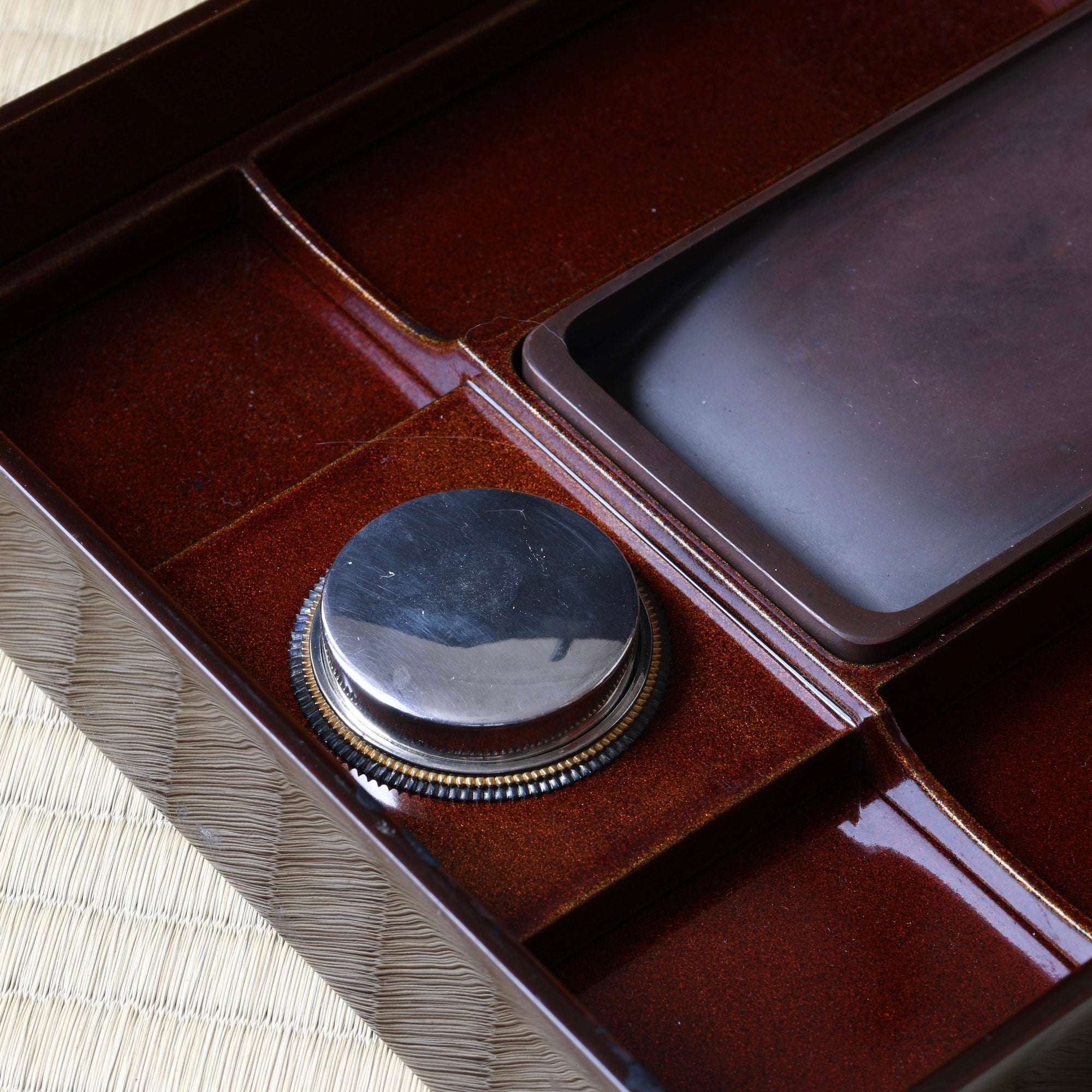
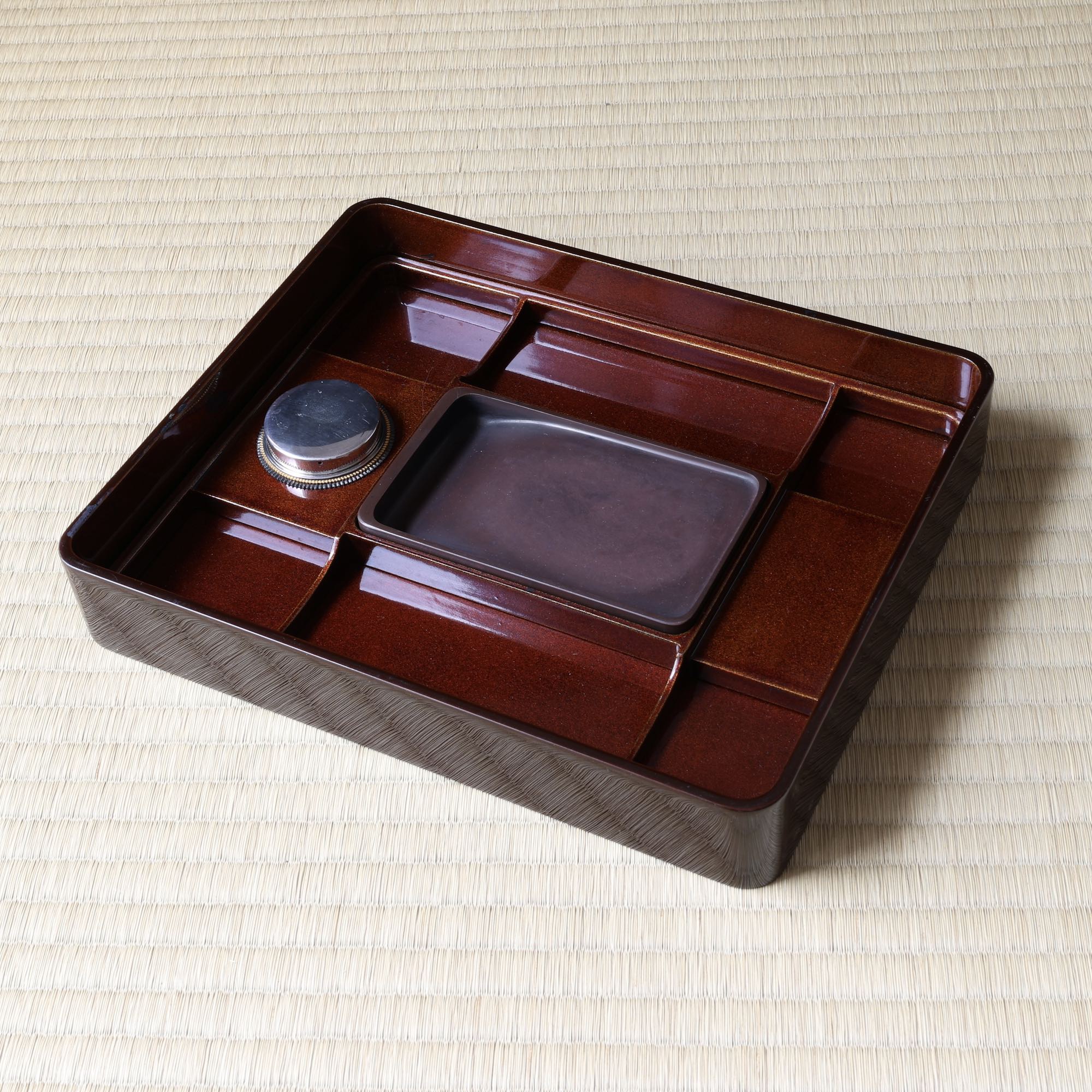
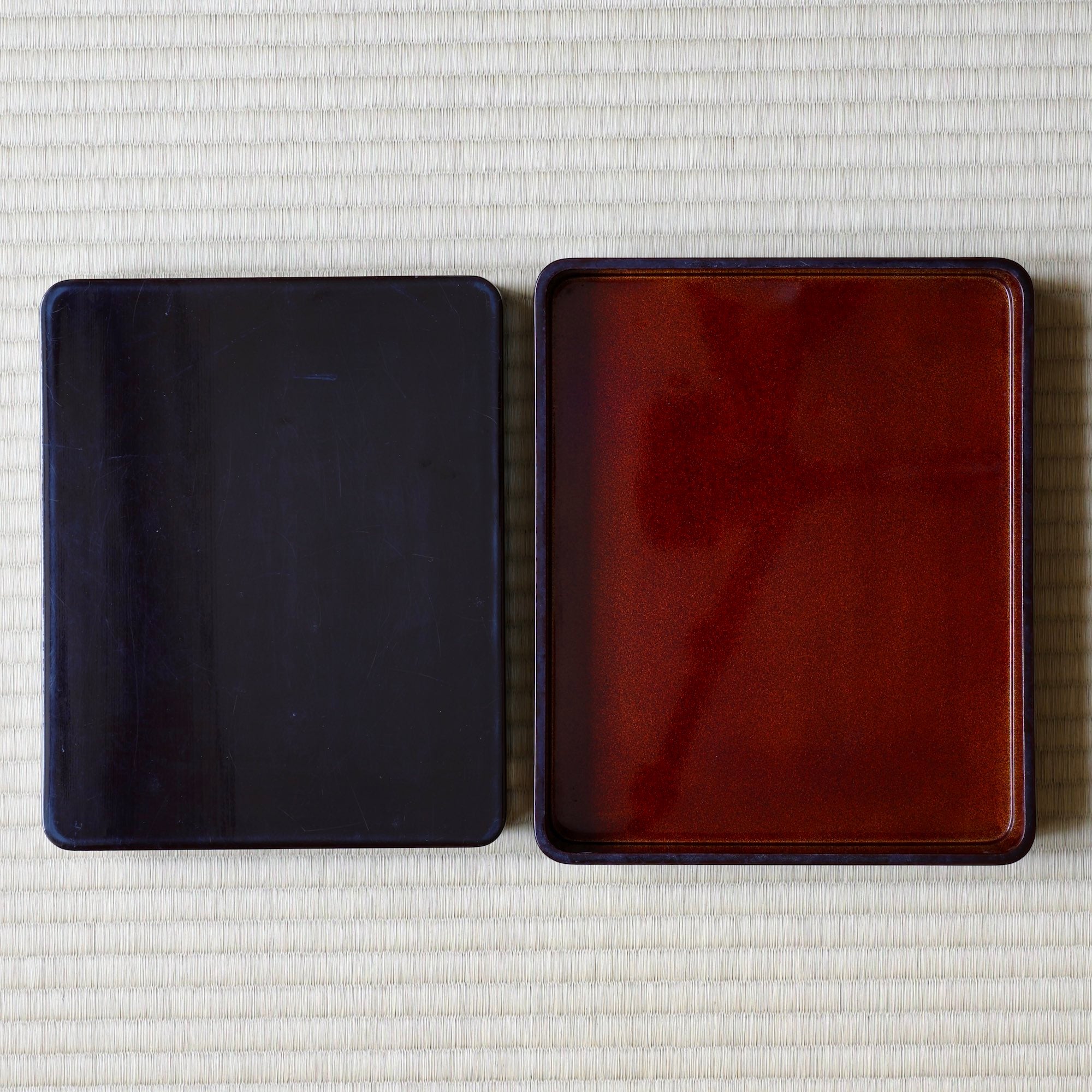
The interior of the suzuribako also features particularly refined work. The compartments are covered with kuro nashiji lacquer (black ground dusted with gold), a technique that involves dispersing very fine metallic particles in the lacquer to produce a deep, slightly shimmering surface.
The suzuribako still retains its suzuri (ink stone) and its suiteki (water dropper) made of silver, used to moisten the solid ink when preparing for writing, all in perfect condition, the interior and tools having probably never been used.
The general style of this box is particularly representative of an important aesthetic evolution at the beginning of the Taishō era. Unlike the very dense compositions frequently found in older lacquerware, this suzuribako here favors space, asymmetry, and decorative restraint. This simplification of forms and this controlled use of emptiness give the piece a surprising modernity today despite its age.
Form and Use
The suzuribako is a box intended for the practice of Japanese calligraphy. It was used to store the instruments necessary for writing, including brushes, solid ink, an ink stone, and accessories related to ink preparation.
In aristocratic and scholarly Japanese circles, high-quality suzuribako also served as prestige objects intended to demonstrate the cultural refinement of their owner.
Presentation
This piece is accompanied by its original tomobako protective wooden box bearing the name of the work as well as a handwritten inscription detailing the historical context of the presentation of this suzuribako within the Japanese imperial family.
The sanadahimo (woven cord) accompanying the box was added more recently.
Place of Manufacture
Japan, Ishikawa Prefecture
Period
1916, Taishō era (1912 - 1926)
Dimensions
Length 26 cm - Width 21 cm - Height 5.5 cm
Weight
Suzuribako + tomobako: 1.7kg
Materials
Wood, urushi lacquer, gold powder, mother-of-pearl
Condition
In very good condition despite its age. Small scratches on the lid, one of the borders, and the outer bottom visible depending on the light's orientation, but which remain discreet. This suzuribako can be presented in Paris by appointment for its acquisition (contact@atelierikiwa.com).
© Atelier Ikiwa – Laurence Corteggiani. Photos and texts protected. All reproduction forbidden without authorization.
KNOW-HOW
Traditional Japanese lacquer, urushi, comes from the sap of the lacquer tree (Rhus Verniciflua), which flows after incision of the bark. It is a very precious material, a tree will give a maximum of 200ml of sap in its life, which is worked by specialized craftsmen. It takes many operations, slow and meticulous, and several months of work to bring real lacquer objects to life. It is the oldest craft in Japan! Initially used to protect and waterproof objects, this immutable craft has become an art of extreme sophistication. If you want to know more about the art of Japanese lacquer, you can read our dedicated article > .
SHIPPING AND PAYMENT OPTIONS
Shipping
Free shipping in mainland France for purchases over €200. Shipping with Colissimo, delivery to your home or a pick-up point, package delivered against signature or unique code for valuable items. Orders are generally dispatched within 2 business days, except for fine art photographs, which are printed on demand, and special cases that will be announced in the banner at the top of the site (e.g., in case of absence). Learn more >
Payment options
Secure card payment with Shopify Payments and 3D Secure technology.
Visa, MasterCard, American Express, Cartes Bancaires, PayPal, Apple Pay, Shop Pay, and Klarna.
Klarna: Pay in 3 interest-free installments or within 30 days, for purchases up to €1,500, subject to Klarna's approval. You will be redirected to Klarna to log in or create an account and confirm your payment.
PayPal: You will be redirected to PayPal to log in and confirm payment. New users can create an account during checkout.
Your invoice will be sent with your order.
Returns and exchanges
14 days to change your mind. Learn more >
CARE INSTRUCTIONS
Clean with a very soft cloth to avoid scratches, soaked in a little warm water if necessary (never soak your lacquer objects). No microwave, dishwasher, dryer. Do not expose to direct sunlight for a long time (risk of discoloration). If the atmosphere is very dry and very hot, and to avoid the risk of cracking, you can place a glass filled with water next to your lacquer object.
Choose options
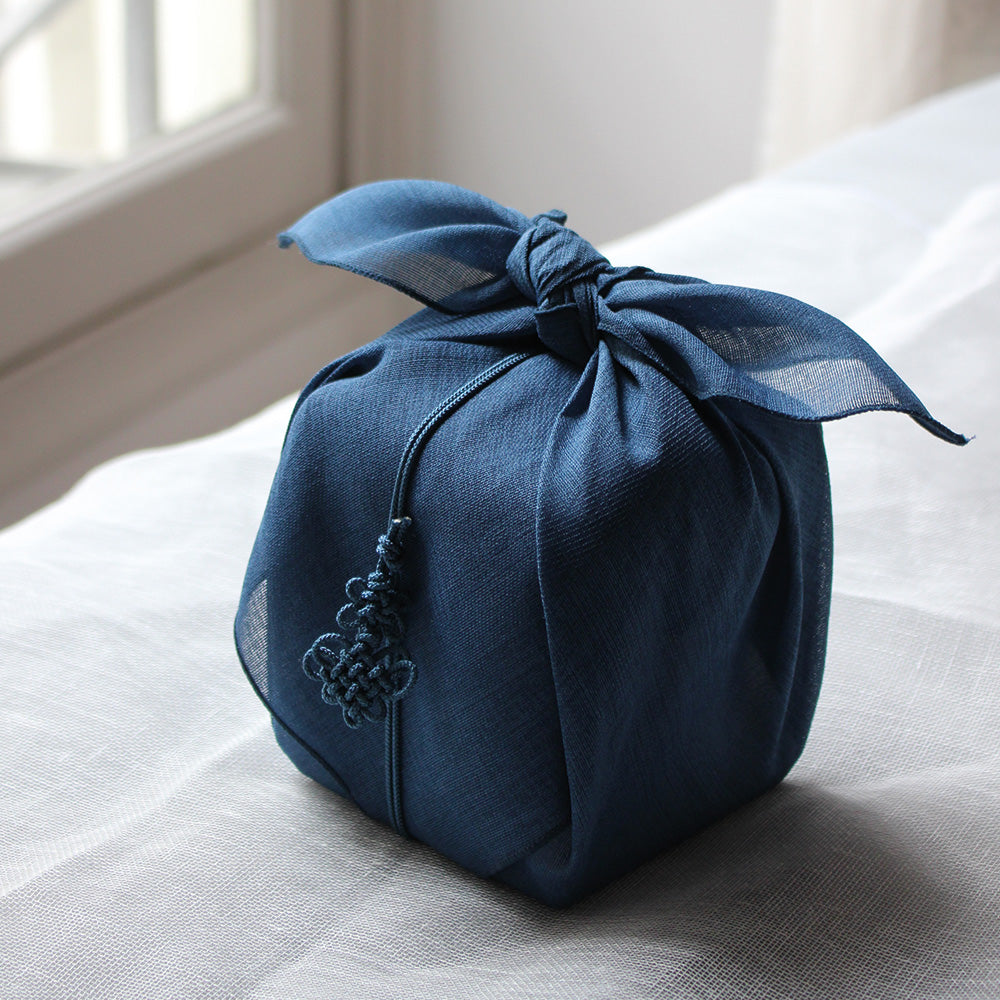
The art of wrapping
The exceptional items are wrapped in a beautiful fabric beautifully knotted using the little-known art of Korean pojagi and decorated with a delightful maedup (Korean ornamental knot). Details and conditions >
WRAPPING
Exceptional items are wrapped in textiles tied according to the Korean pojagi art