

Hagi ceramic vase from Masanao Kaneta
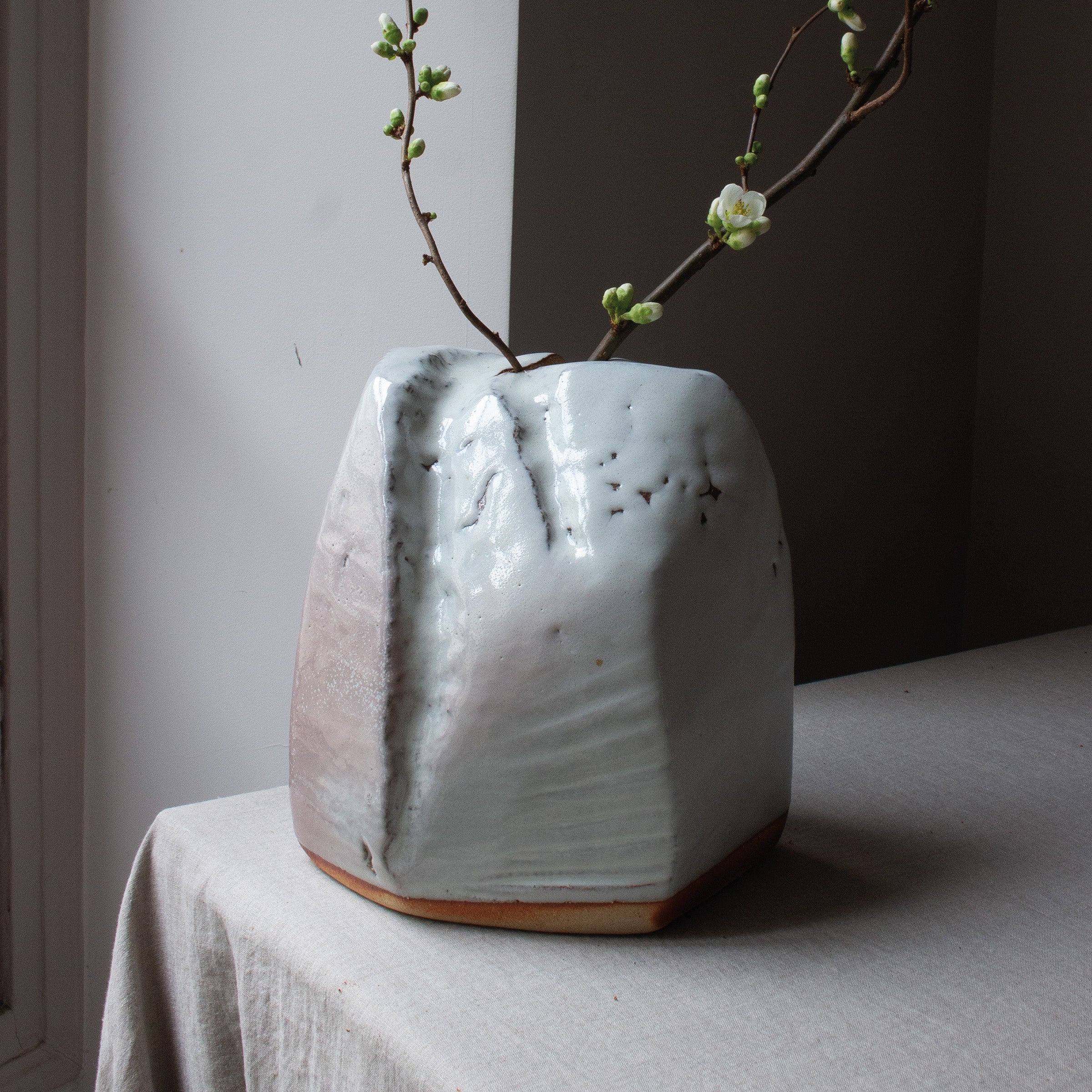
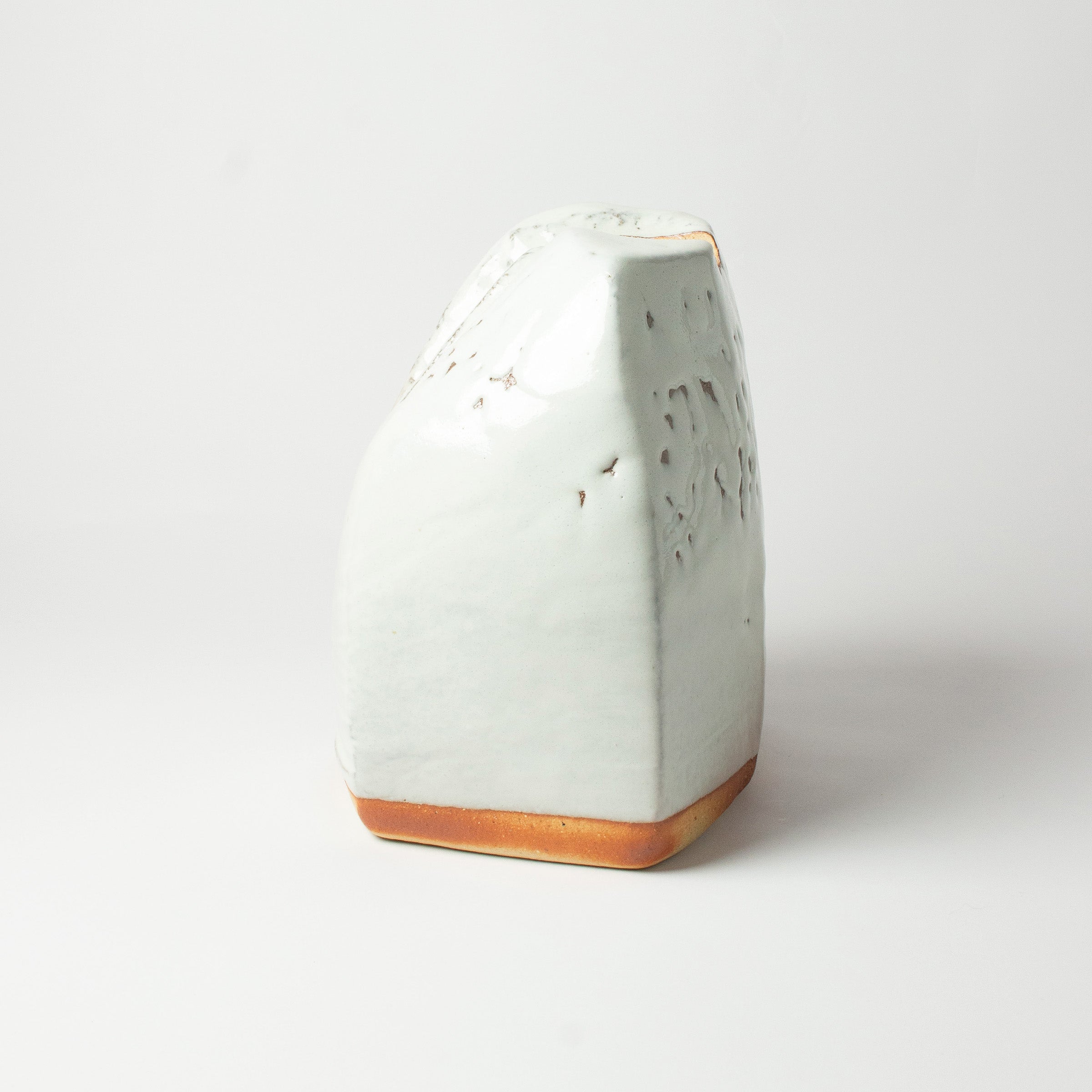
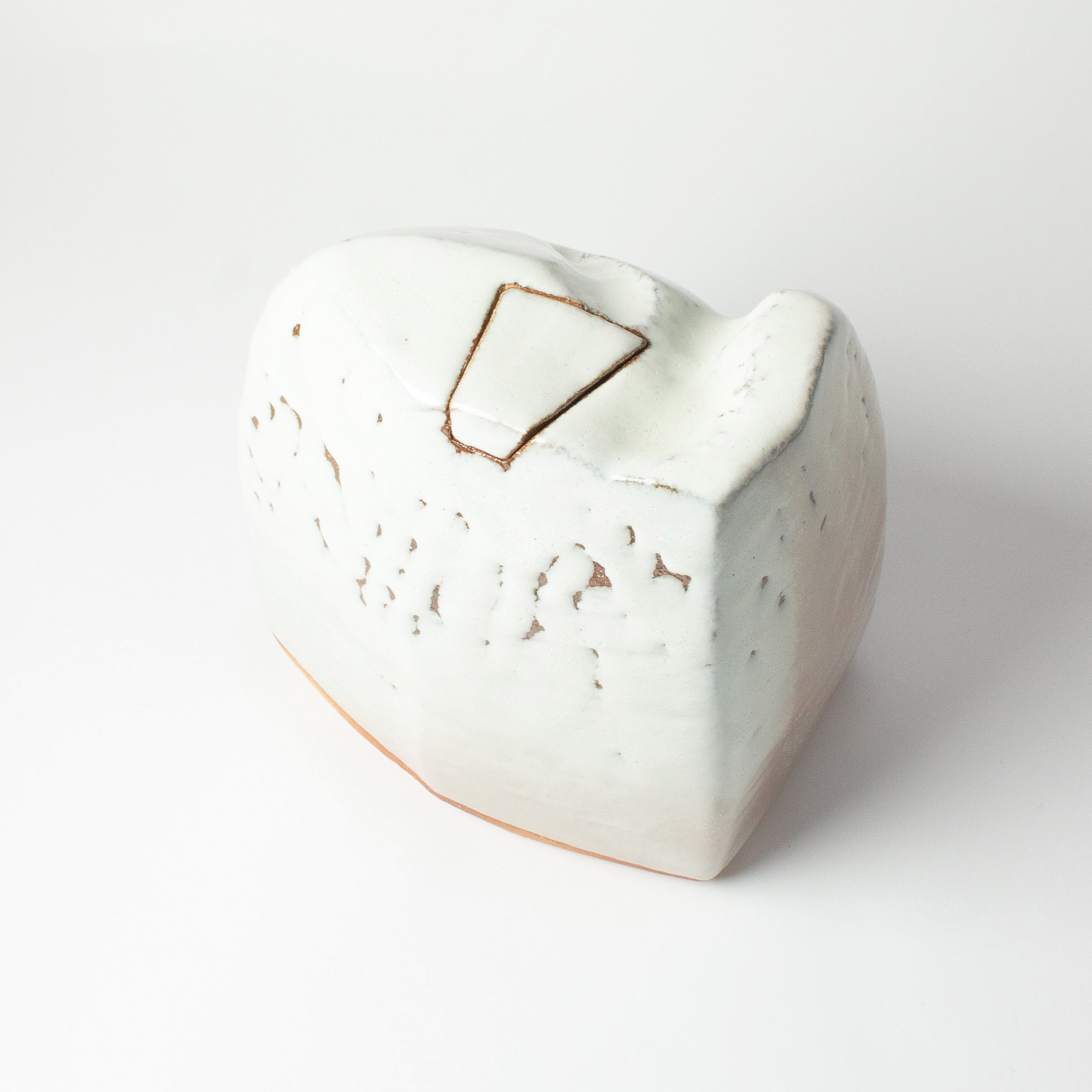
This large, heavy Hagi ceramic vase was made by Masanao Kaneta, the eighth generation in a line of Hagi ceramicists. Born in 1953, he studied sculpture at the University of Tsukuba before joining the family kiln Tenchōzan, where he perpetuates and reinvents the tradition of Hagi-yaki.
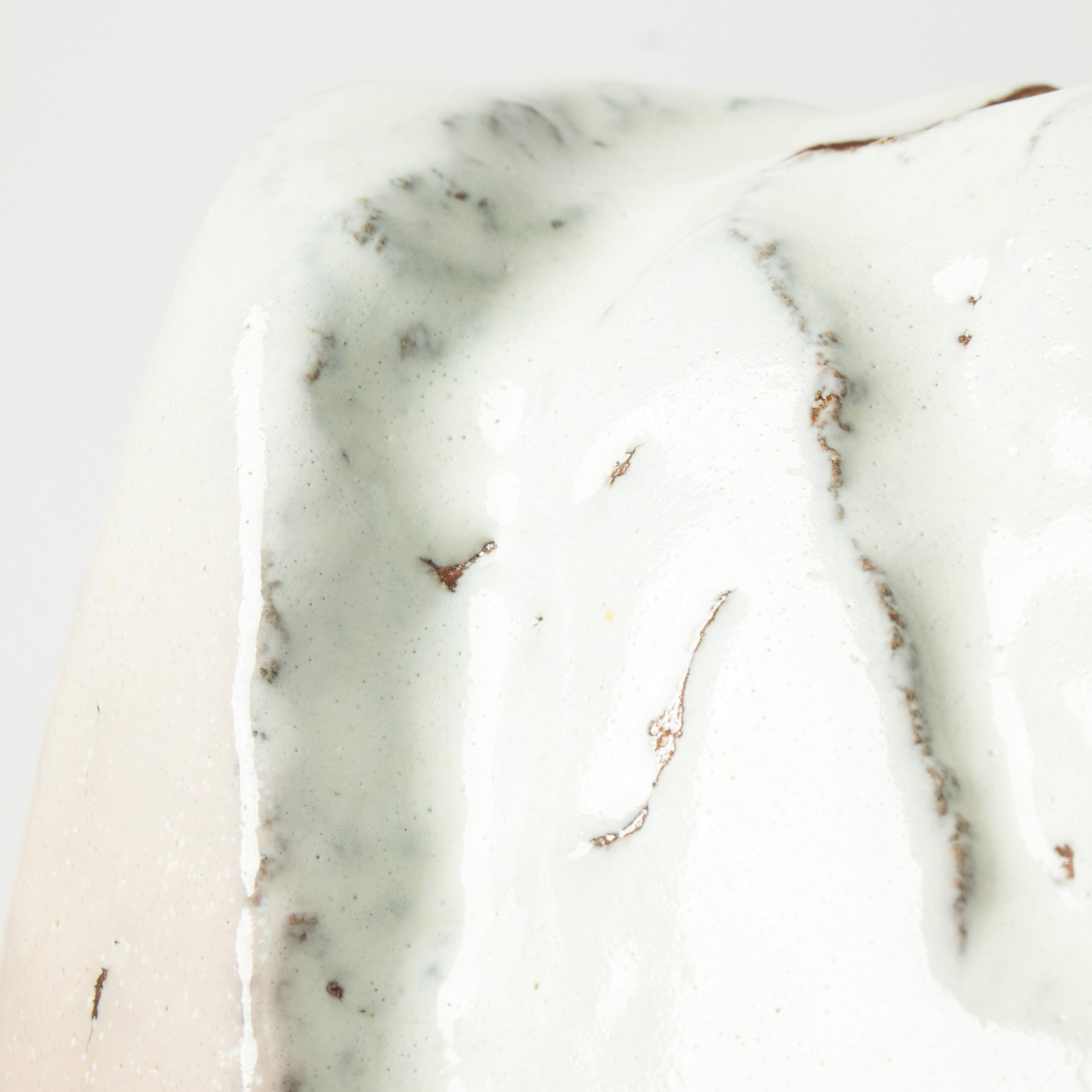
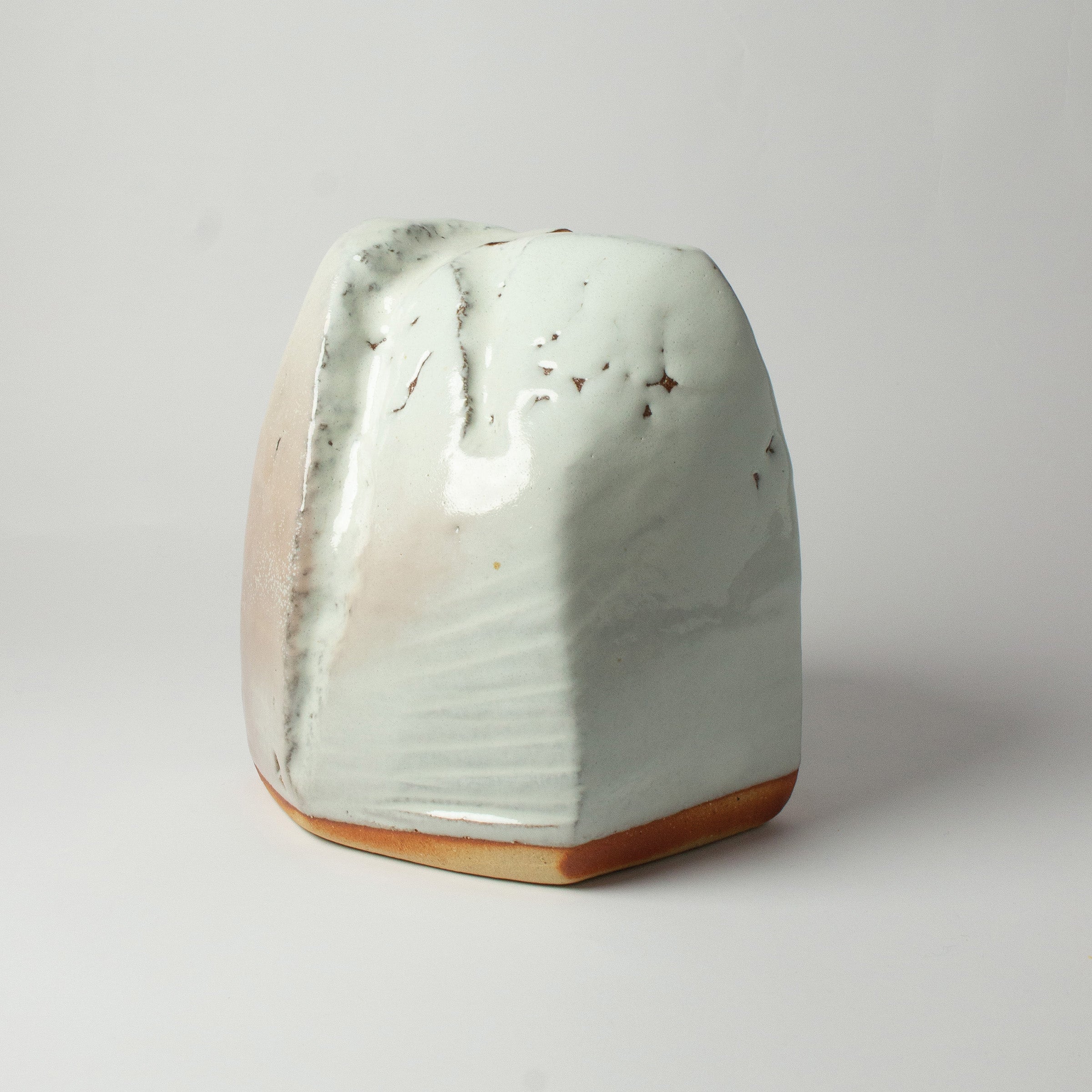
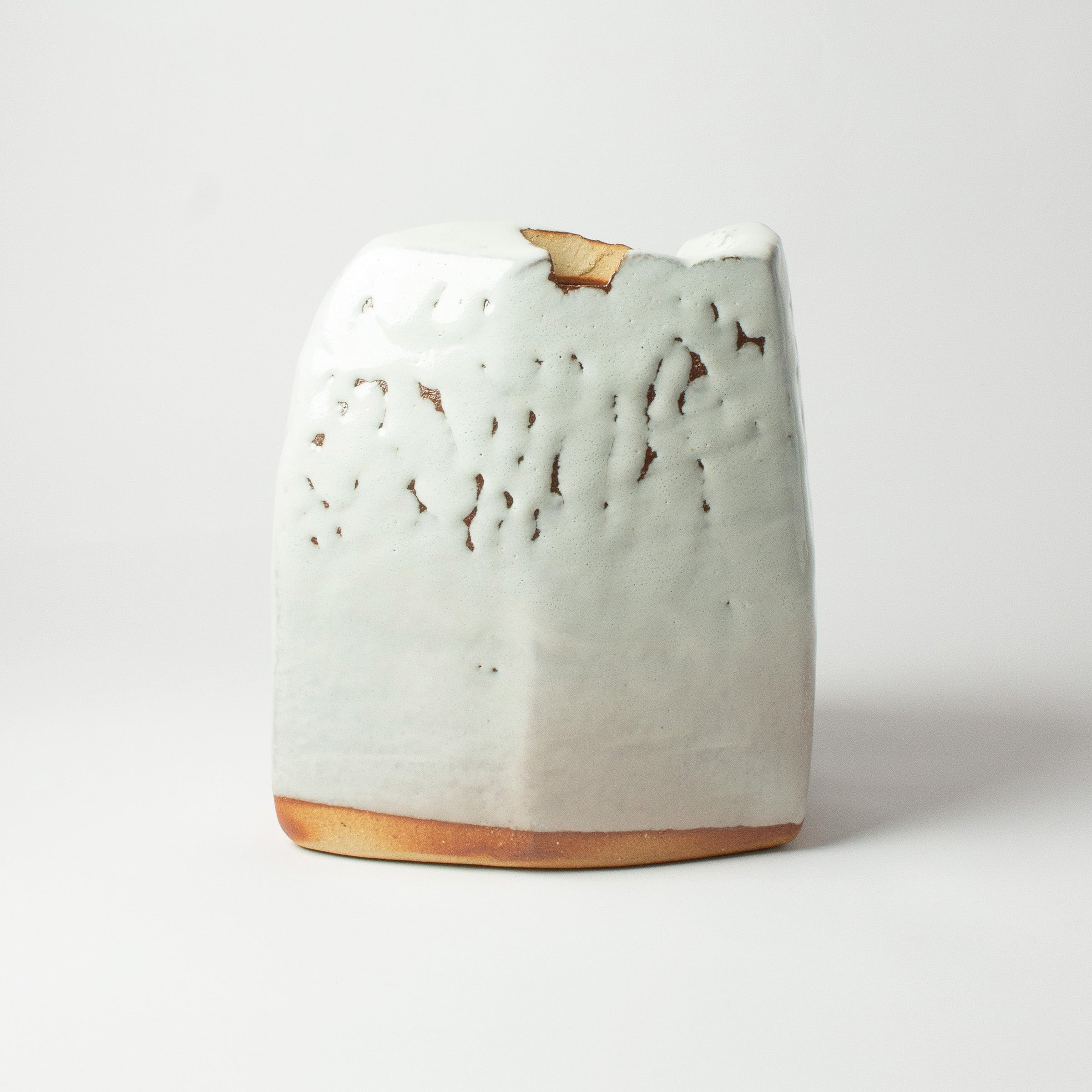
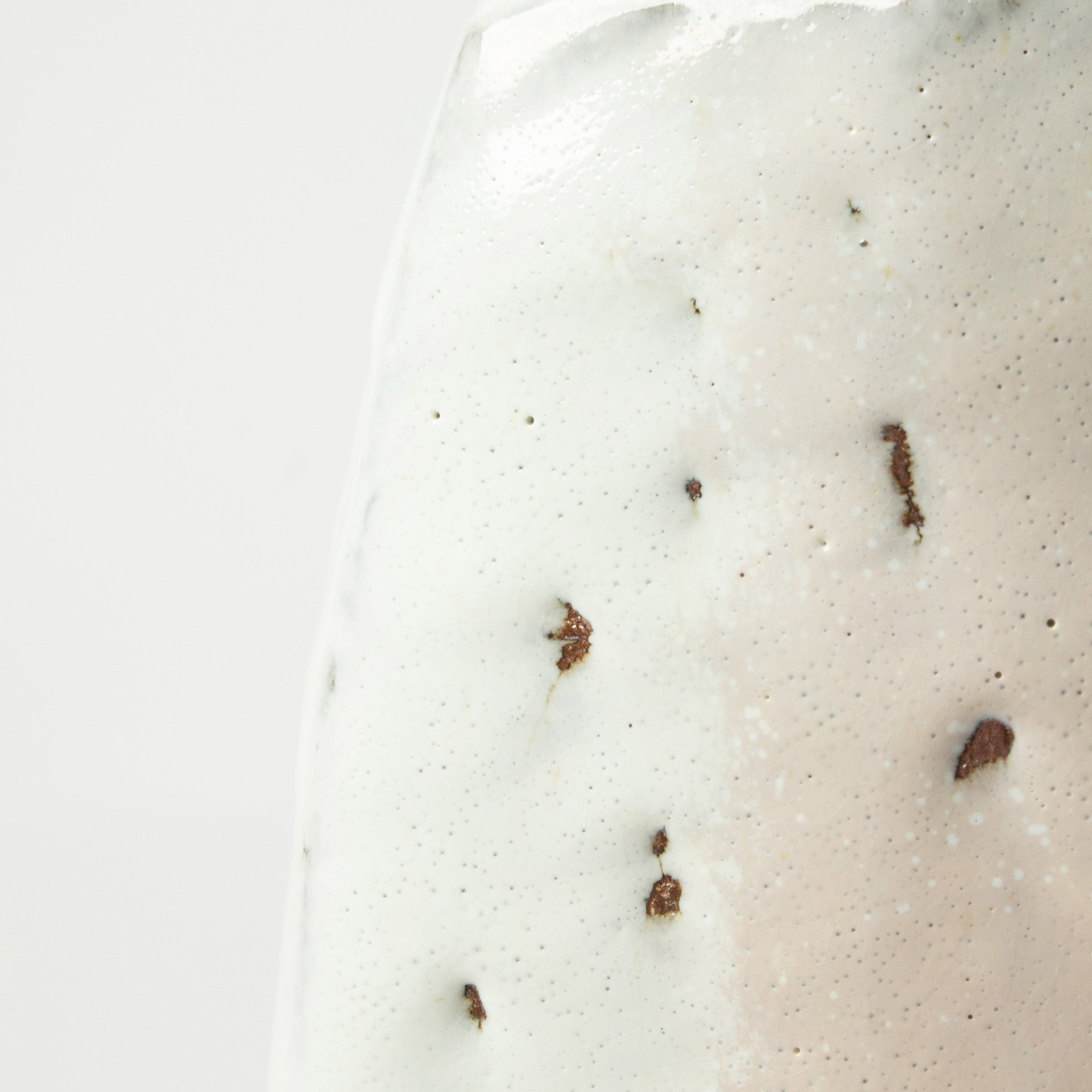
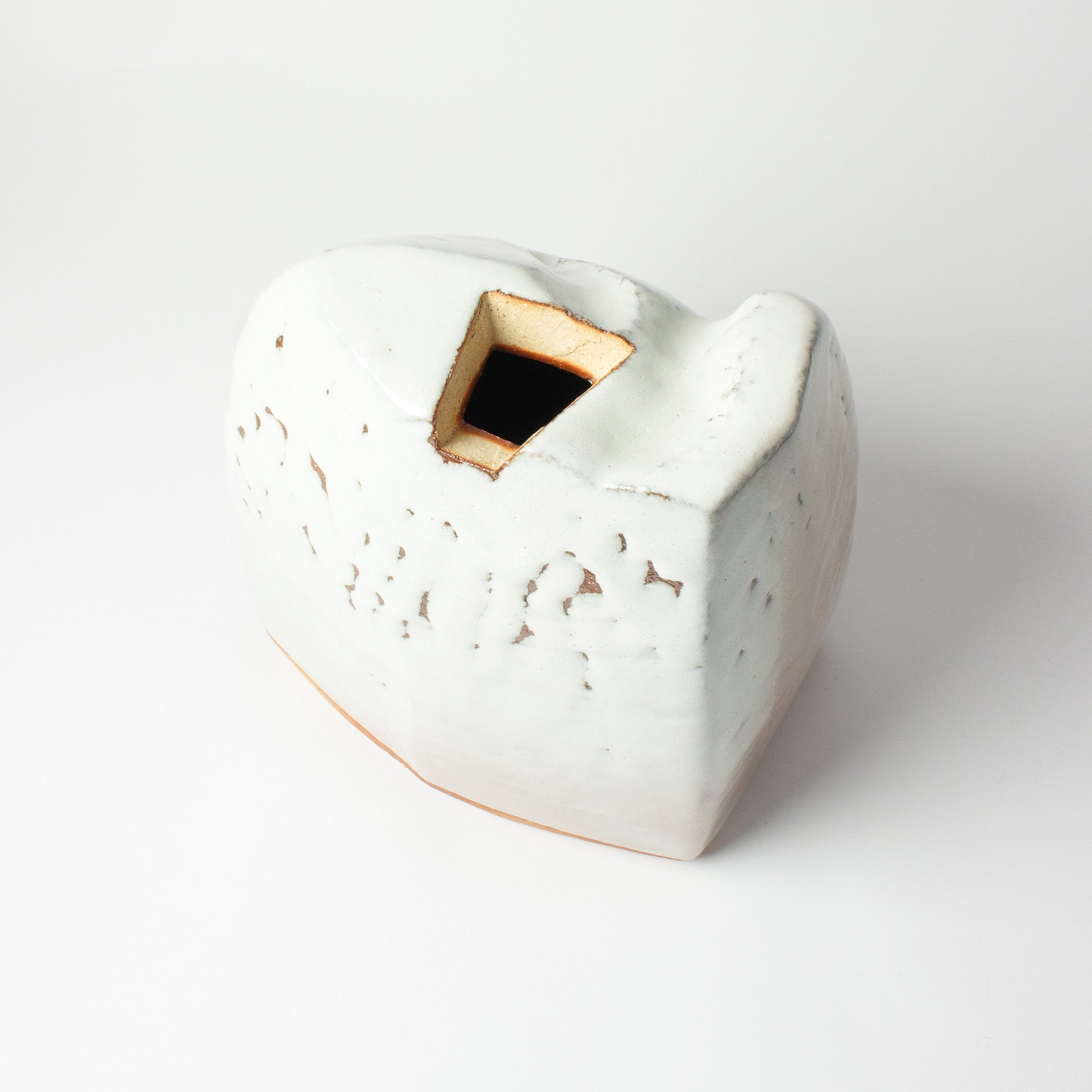
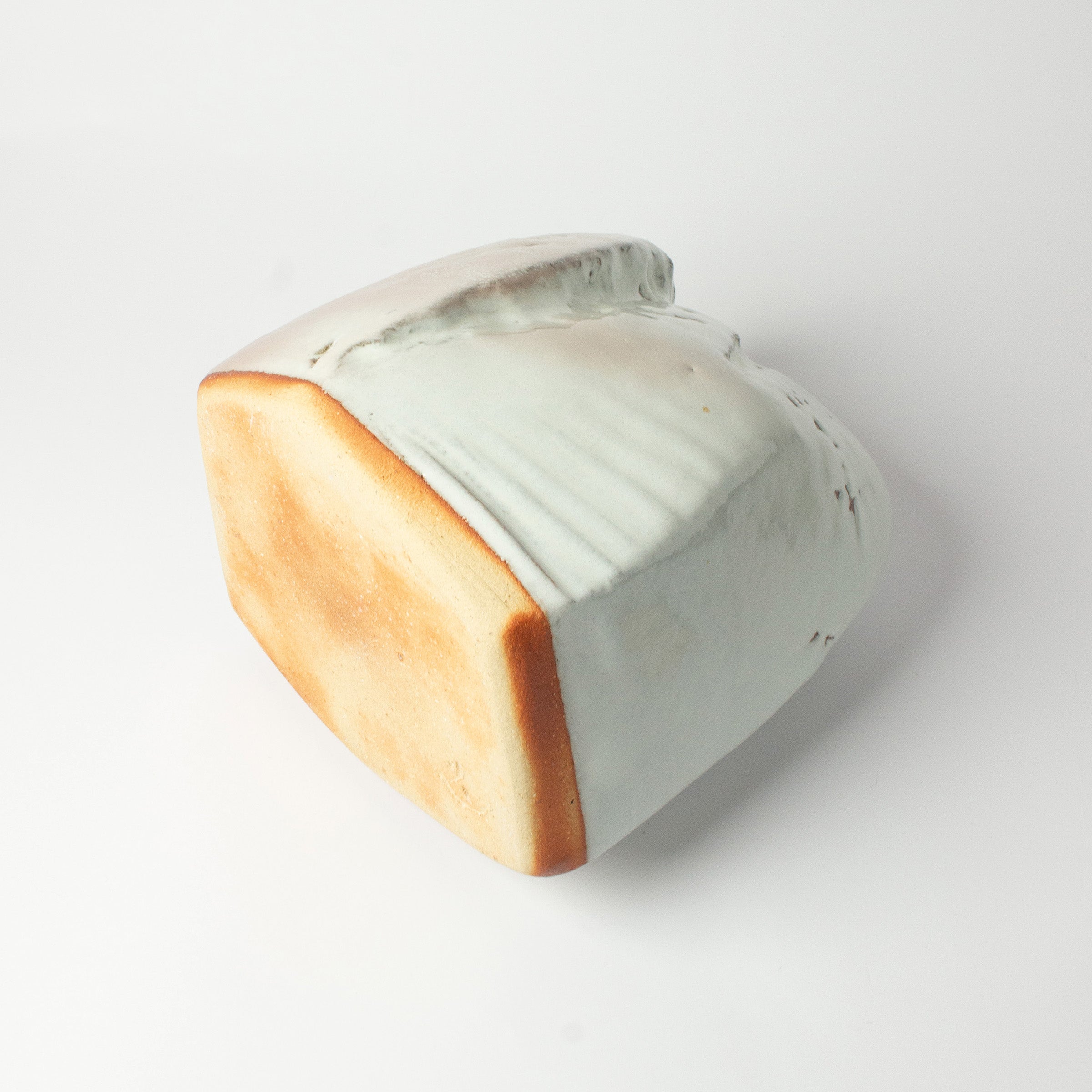
This vase features an irregular sculptural shape, achieved through the kurinuki technique, which involves directly sculpting a block of clay to create a unique silhouette. It rests on a contrasting hexagonal base, accentuating its contemporary character. Its surface is covered in white enamel, the subtle variations of which are the result of yōhen, a transformation effect due to kiln firing. Some parts of the vase reveal beige shades and natural oxidation marks, creating a rich visual texture. Unusually, it comes with a small lid to close the opening of the vase, allowing it to become a true sculpture.
Tenchōzan Kiln, run by the Kaneta family, is located in Hagi, Yamaguchi Prefecture. It specializes in Hagi-yaki, a style of ceramics known for its subtle glazes and distinctive absorption of liquids. The pieces are fired in a noborigama, a traditional staircase kiln that allows for a gradual rise in temperature, giving the ceramics their unique texture and patina.
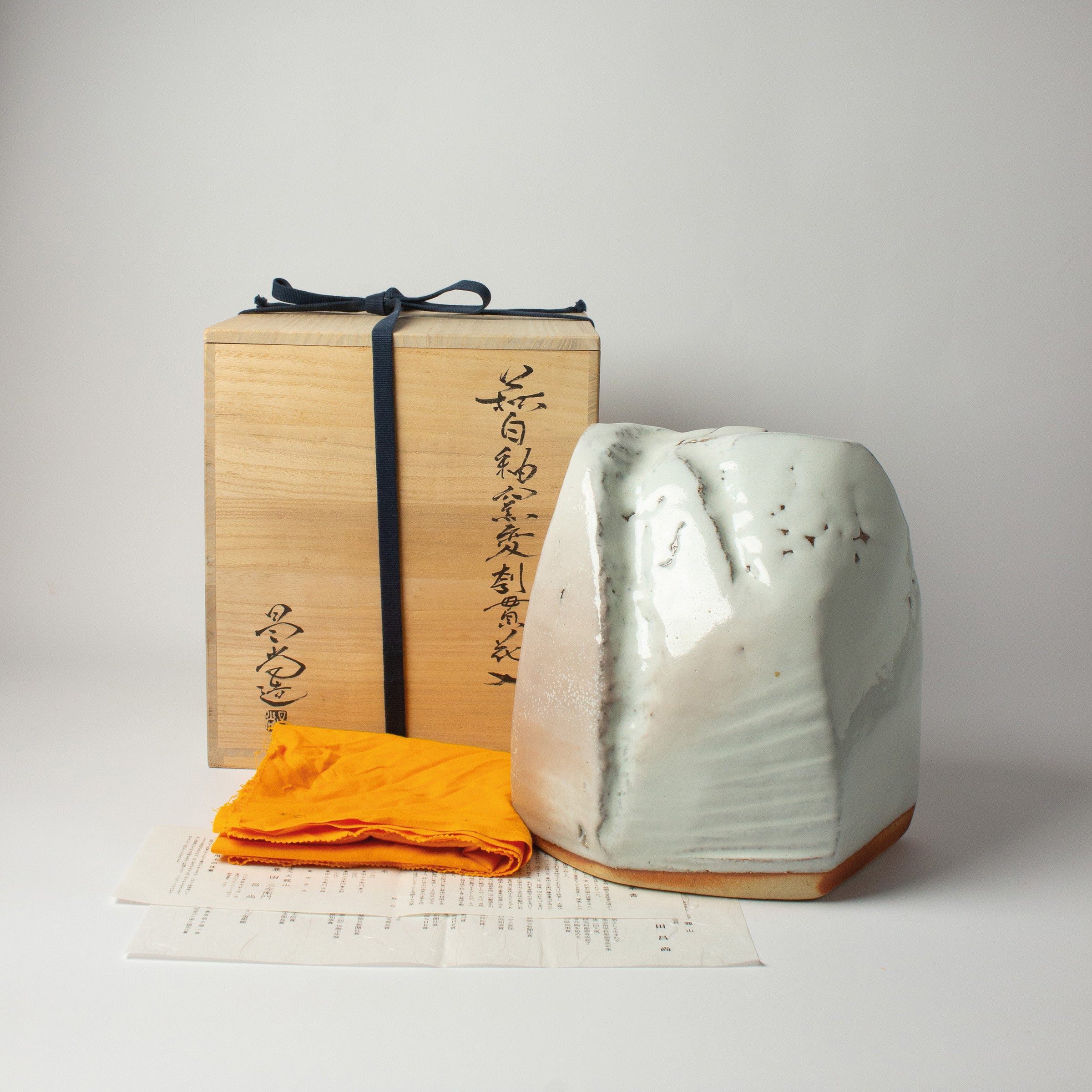
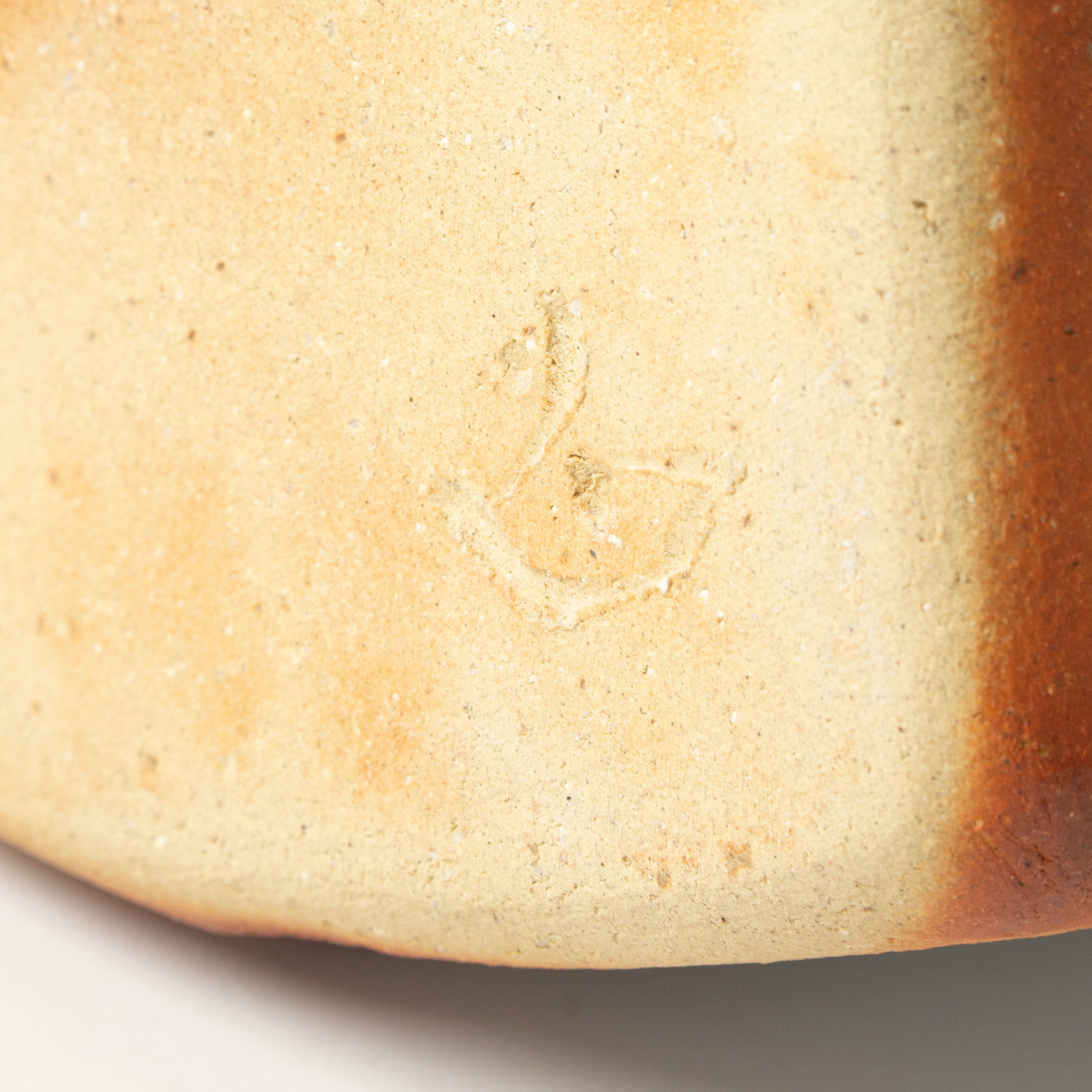
This vase is signed at its base and comes with its original wooden box (tomobako), signed by the craftsman as well as his seal, guaranteeing its authenticity. A document (shiori) with the ceramist's profile is also included as well as a tomonuno, the protective cloth with the ceramist's official seal.
| PLACE OF MANUFACTURE | JAPAN |
| DIMENSIONS | Height 24.5 cm - Length 20cm - Width 19cm |
|
WEIGHT |
5.8kg (vase + box) |
| MATERIALS | Ceramic |
| STATE | In very good condition |
© Atelier Ikiwa – Laurence Corteggiani. Photos and text protected. All reproduction prohibited without authorization.
KNOW-HOW
Japanese ceramics, born more than 10,000 years ago, are a dialogue between earth and fire, a quest for harmony through imperfection.
With a wide variety of high-quality raw materials, such as rich clays and natural glazes, each region has developed its own techniques, reflecting the identity of its terroir.
Hand-crafted, these vases, made using the most precious Japanese ceramic techniques, bear the imprint of a master craftsman who is the heir to a thousand-year-old tradition. This living art embodies the essence of Japan, where history and nature unite in beauty.
Although deeply rooted in tradition, these exceptional Japanese ceramic vases, signed by very big names, have a resolutely contemporary spirit while preserving their authenticity, incredibly decorative and wonderfully timeless sculptural pieces.
DELIVERY AND PAYMENT OPTIONS
Shipping
Free shipping in mainland France for purchases over €200. Shipping with Colissimo, choice of Home delivery or Relay Point, package delivered against signature or unique code for valuable items. Orders are generally sent within 2 business days, except for art photographs which are printed on demand and special cases which will be announced in the banner at the top of the site (e.g., in case of absence). Learn more >
Payment Options
Secure card payment with Shopify Payments and 3D Secure technology.
Visa, MasterCard, American Express, Cartes Bancaires, PayPal, Apple Pay, Shop Pay and Klarna.
Klarna: pay in 3 interest-free installments or within 30 days, for purchases up to €1,500, subject to Klarna's approval. You will be redirected to Klarna to log in or create an account and confirm your payment.
PayPal: You will be redirected to PayPal to log in and confirm the payment. New users can create an account during checkout.
Your invoice will be sent with your order
Returns and Exchanges
14 days to change your mind. Learn more >
CARE INSTRUCTIONS
Handle with care. Rub gently with a soft cloth. Do not place near a heat source.
Choose options
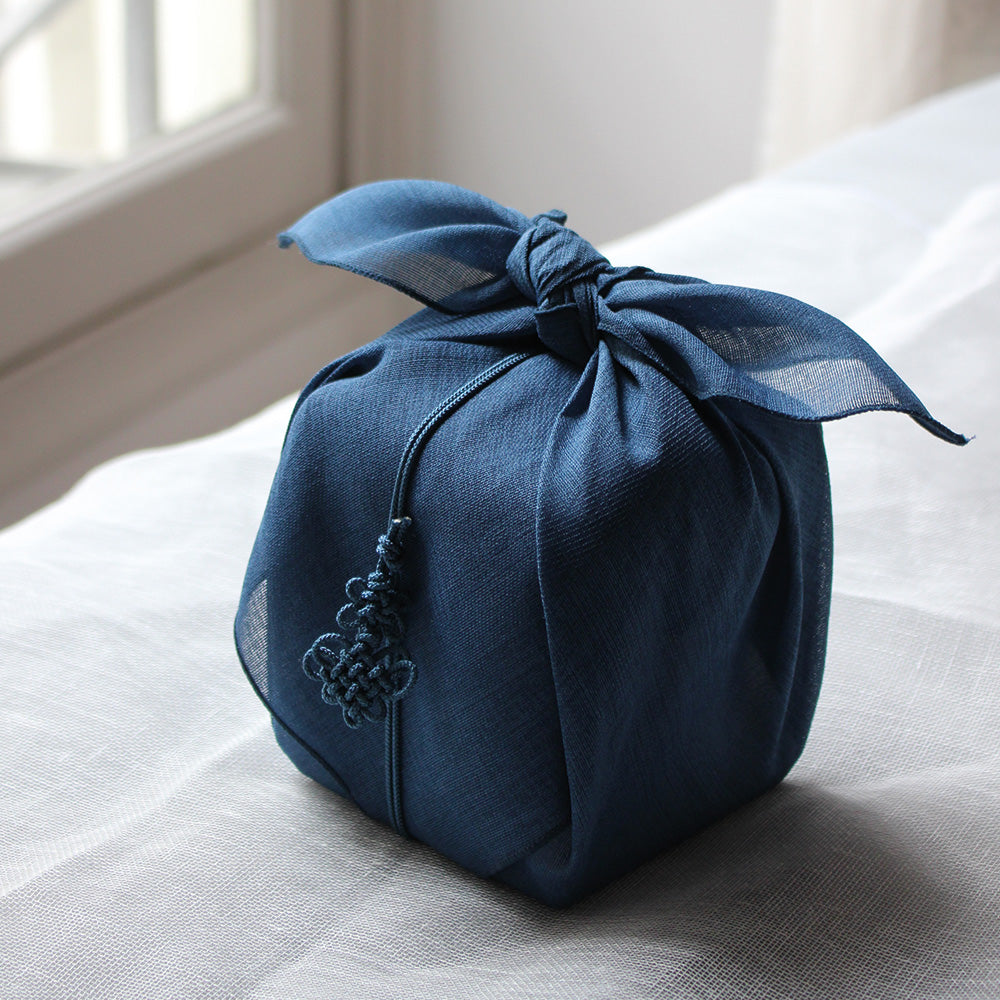
The art of wrapping
The exceptional items are wrapped in a beautiful fabric beautifully knotted using the little-known art of Korean pojagi and decorated with a delightful maedup (Korean ornamental knot). Details and conditions >

WRAPPING
Exceptional items are wrapped in textiles tied according to the Korean pojagi art