



Seihakuji celadon porcelain vase with persimmons by Manji Inoue, Living National Treasure
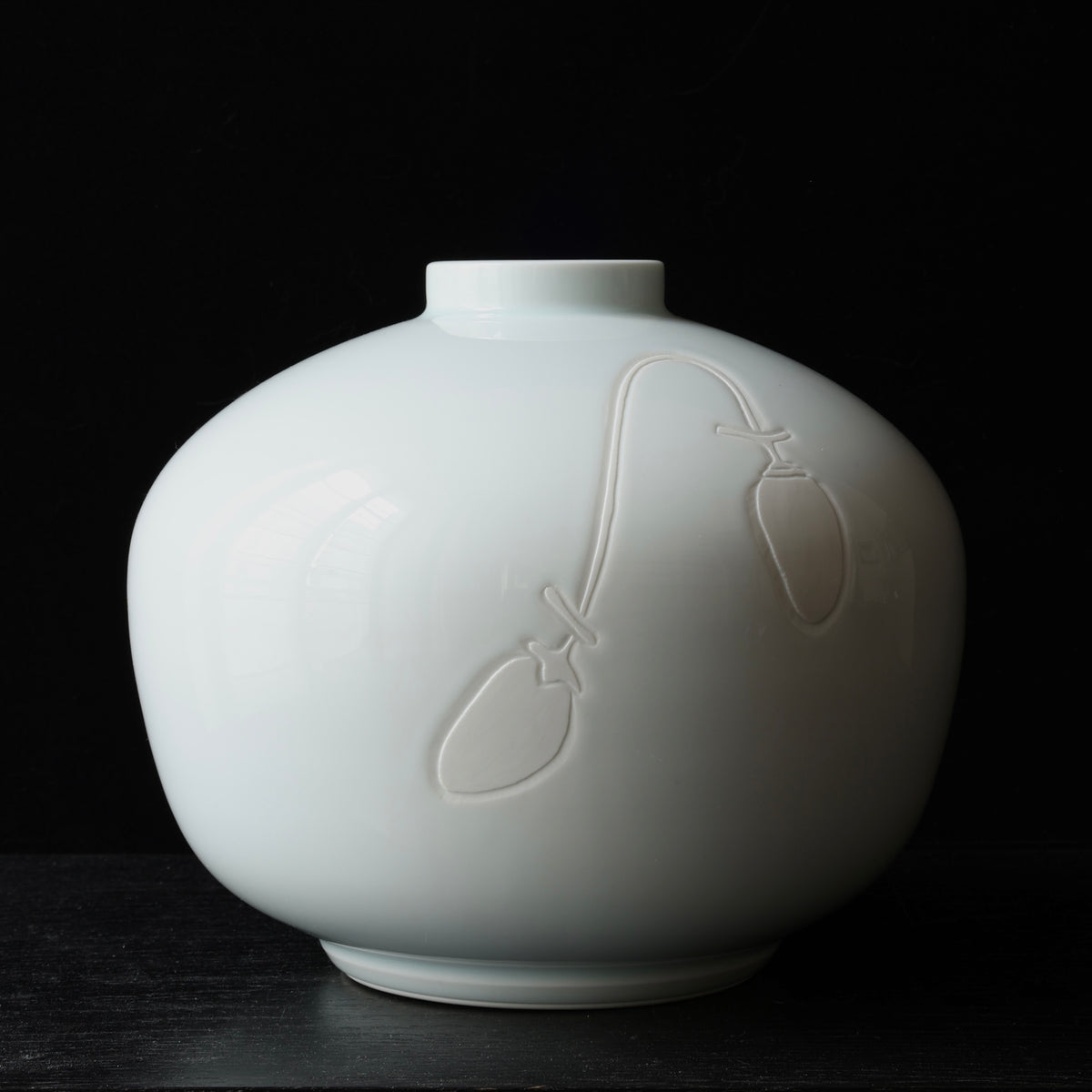
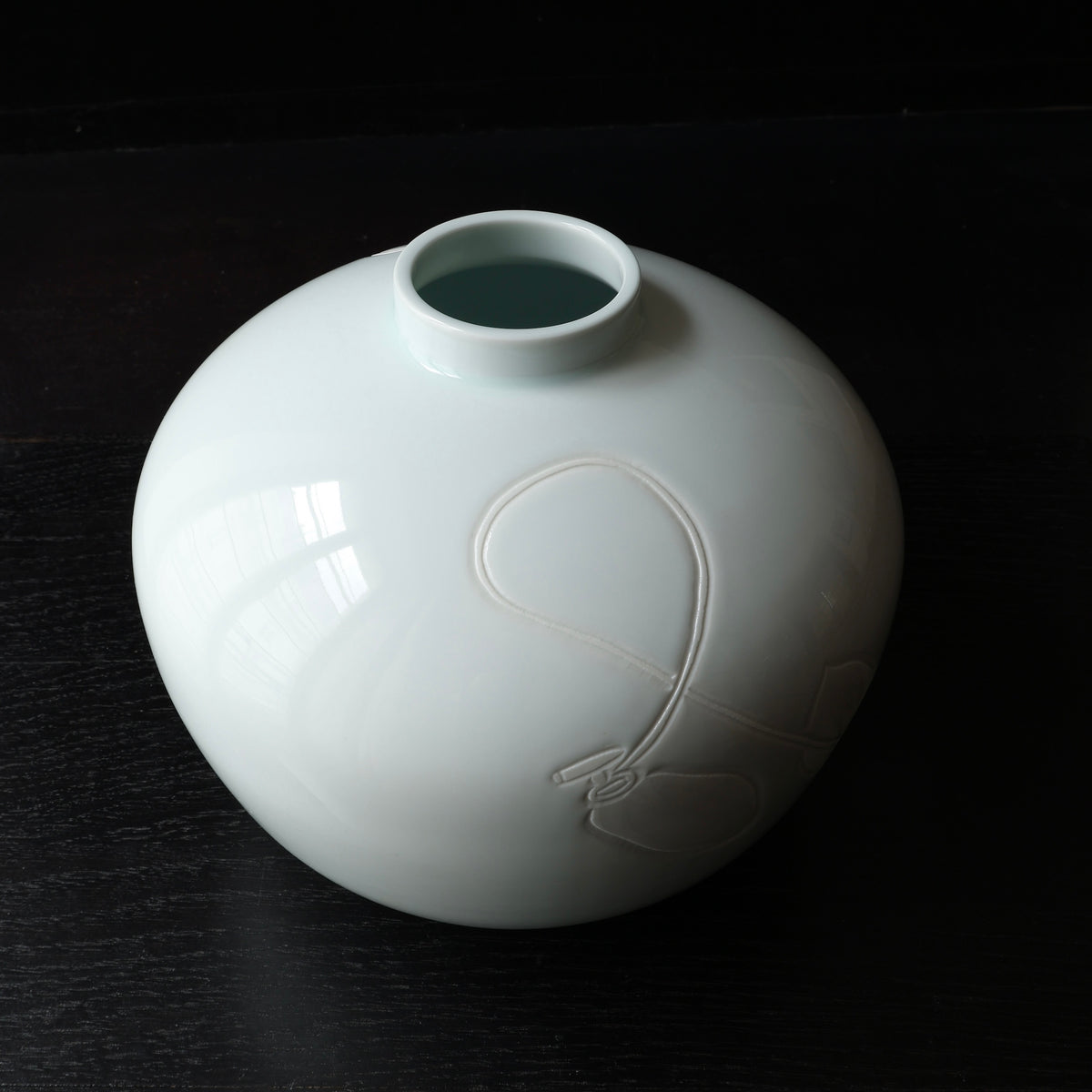
This seihakuji celadon porcelain vase by Manji Inoue, designated a Living National Treasure of Japan in 1995, masterfully illustrates the refined work of the celebrated ceramicist from Arita. The vase's ample and perfectly balanced form highlights the softness of the celadon porcelain, while the engraved persimmon motifs provide a very contemporary aesthetic directly integrated into the surface of the piece. Through the sobriety of its lines, the finesse of its reliefs, and the exceptional quality of its porcelain, this work fully attests to the aesthetic language developed by Inoue Manji around formal purity and the treatment of light.
The Ceramicist
Manji Inoue (1929–2025), born in Arita, is a major figure in Japanese ceramics, renowned for his mastery of porcelain and his delicate engraved motifs. Evolving within the tradition of Arita-yaki (Arita porcelain), he stands out for a style that is both refined and deeply rooted in Japanese cultural heritage. His minimalist approach highlights the purity of the porcelain, magnified by subtle, hand-engraved patterns.
In 1995, Manji Inoue was designated a Living National Treasure of Japan, a prestigious distinction reserved for artisans who embody excellence in a traditional art and ensure its transmission. This title highlights not only his technical mastery but also his essential role in the preservation of Japan's ceramic heritage.
His works are now held in numerous important collections and are sought after by international collectors. His engraved porcelains, in particular, occupy a unique place in his body of work due to their balance between technical virtuosity, formal sobriety, and decorative subtlety.
Technique and Decoration
This vase perfectly illustrates the engraved porcelain work developed by Manji Inoue using white porcelain and seihakuji (pale celadon). The form is thrown with extreme precision before being reworked at length to achieve this organic and perfectly taut silhouette, whose curves accentuate the diffusion of light across the surface.
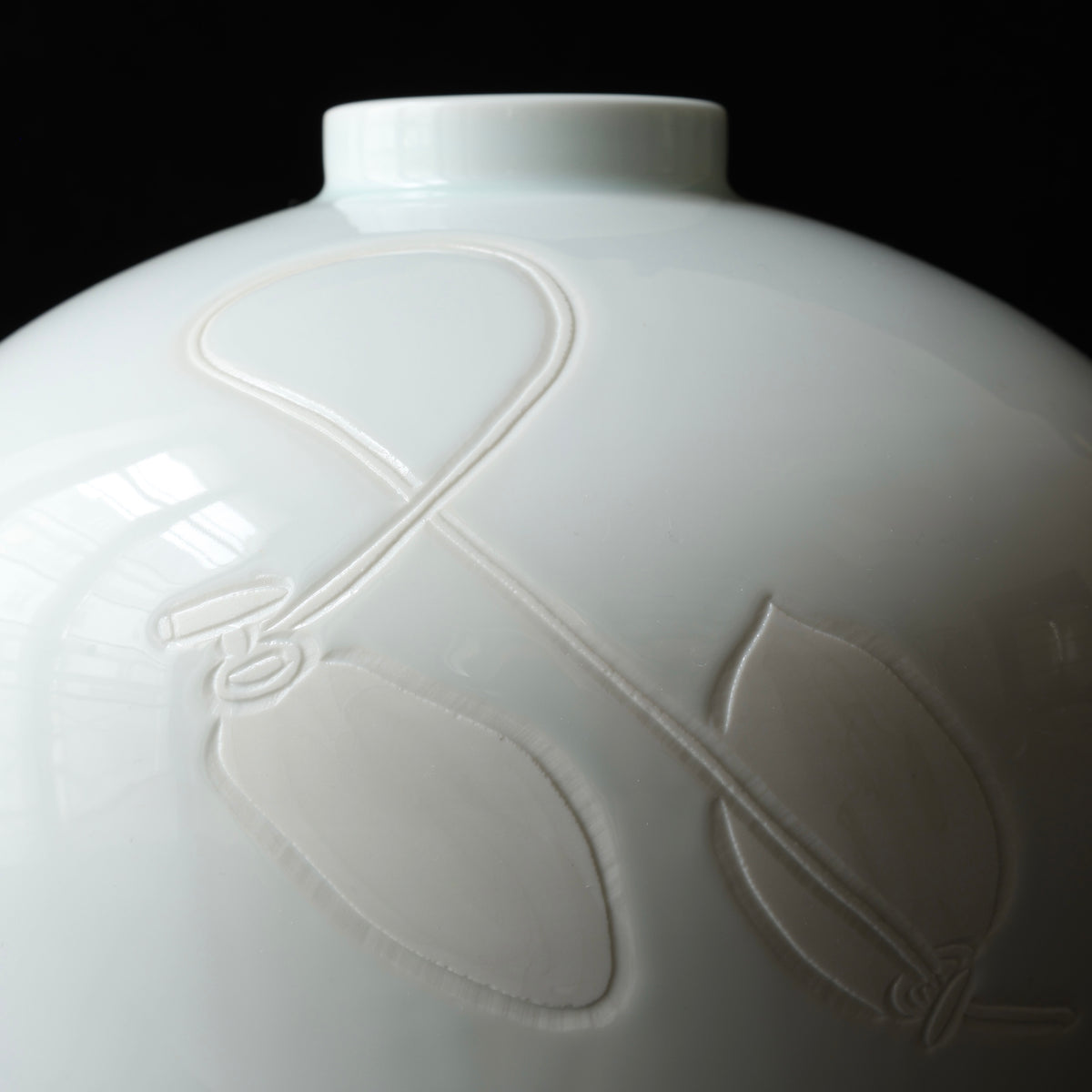
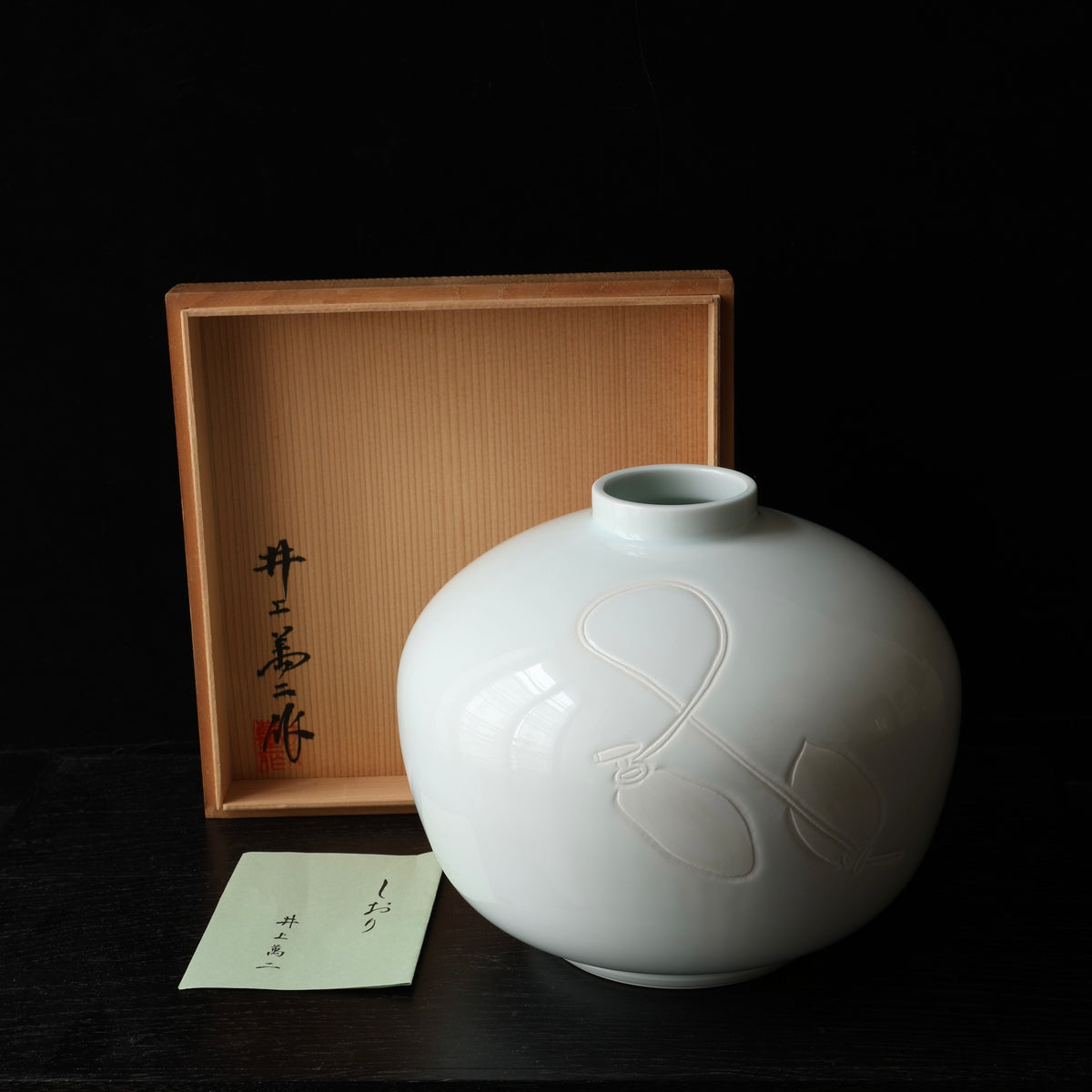
The persimmon decoration is an example of chōmon (engraved decoration), an emblematic technique of Inoue Manji’s work. The patterns are carved directly into the porcelain at a stage when the material still retains a slight flexibility. The ceramicist delicately sculpts the outlines of the motifs to create a slight relief that remains intentionally discreet. Certain parts of the decoration are left without the seihakuji glaze, thus preserving the natural whiteness of the porcelain. This contrast between the celadon areas and the white reserves allows the patterns to emerge with great subtlety.
The seihakuji glaze, which is particularly fine and slightly translucent, reveals the variations in the depth of the decoration and accentuates the engraved reliefs without ever weighing down the surface. The entire vase rests on a highly controlled balance between form, material, and light, which is characteristic of Manji Inoue’s work.
The persimmon motif, associated with autumn in Japanese aesthetics, introduces a discreet seasonal reference that harmonizes with the overall sobriety of the piece.
Presentation
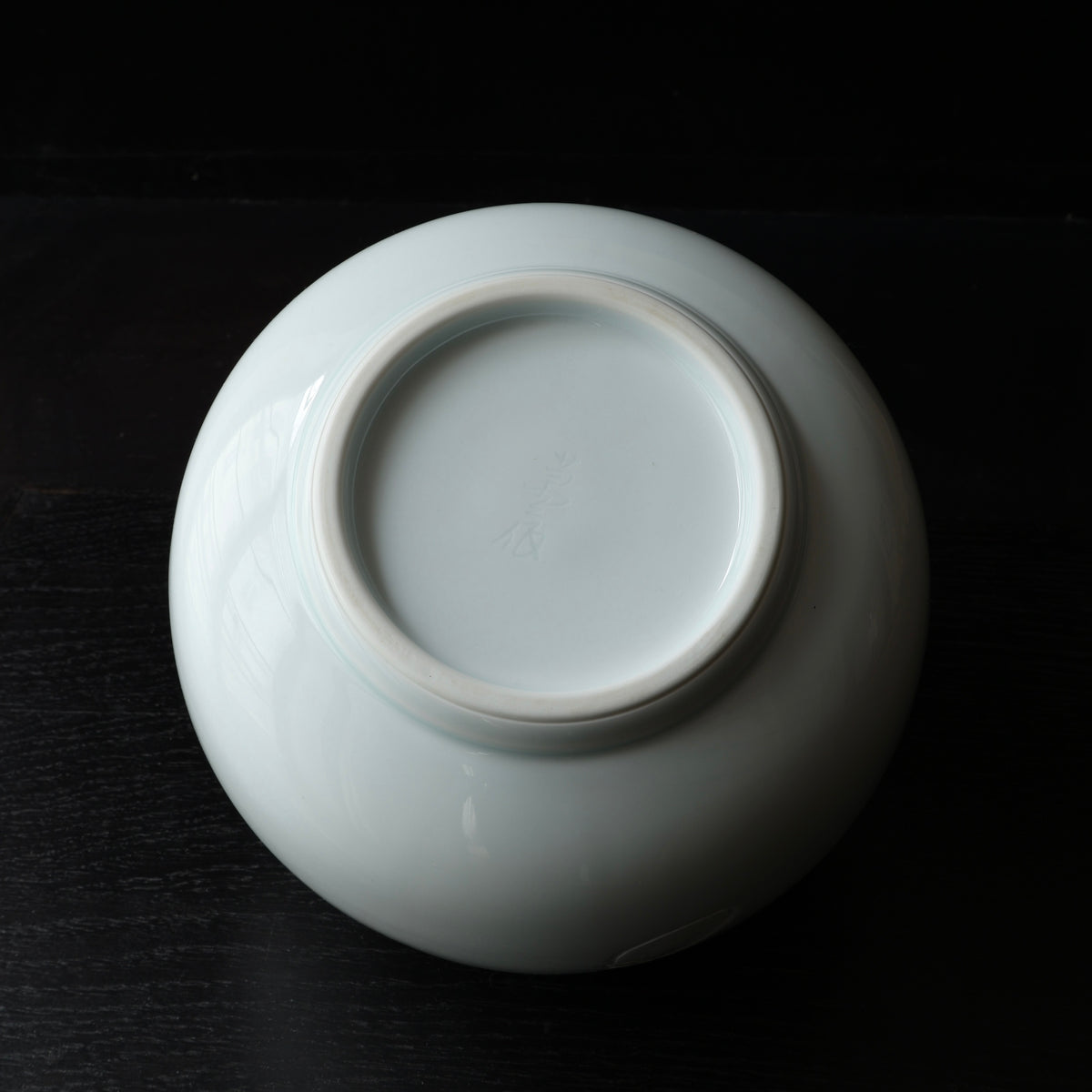
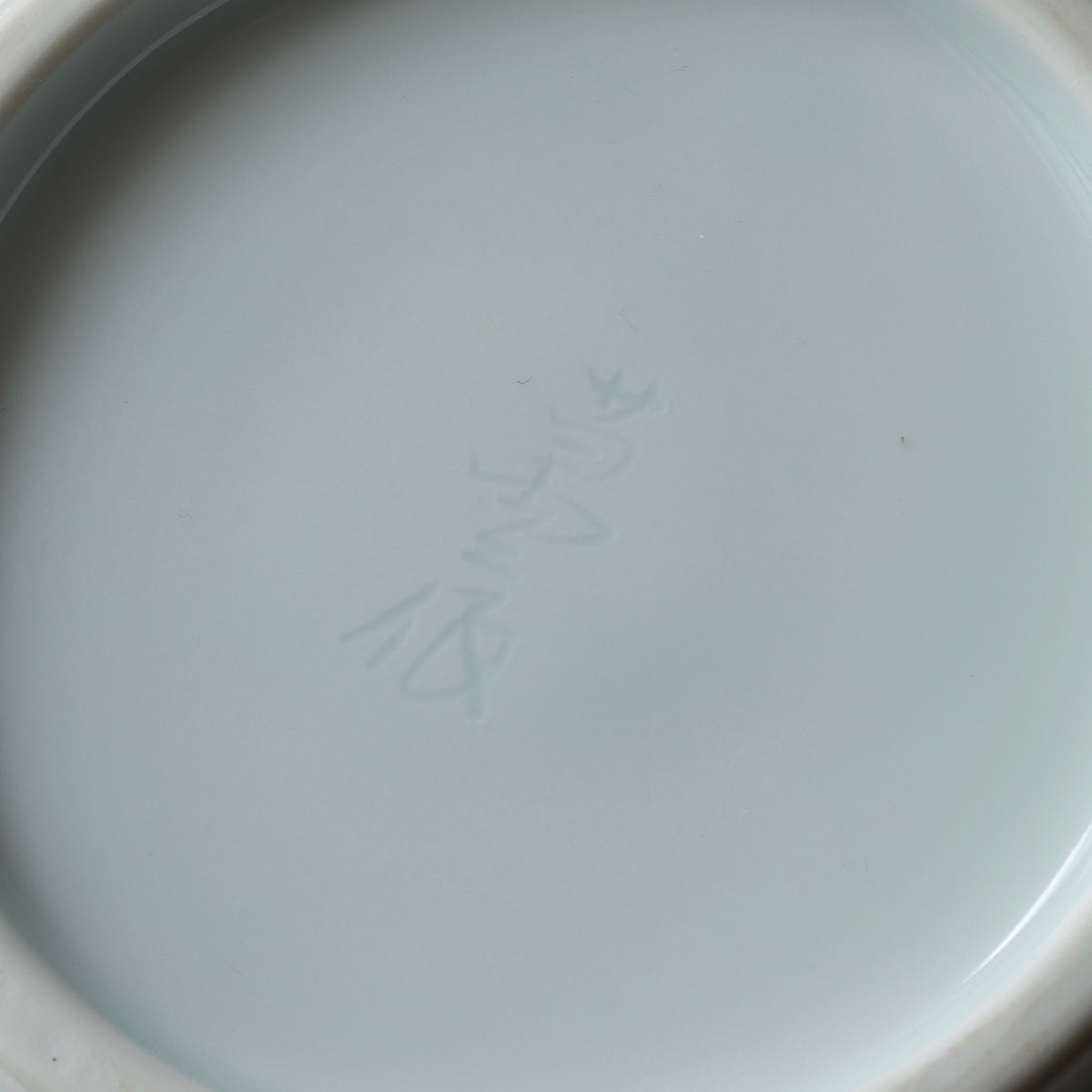
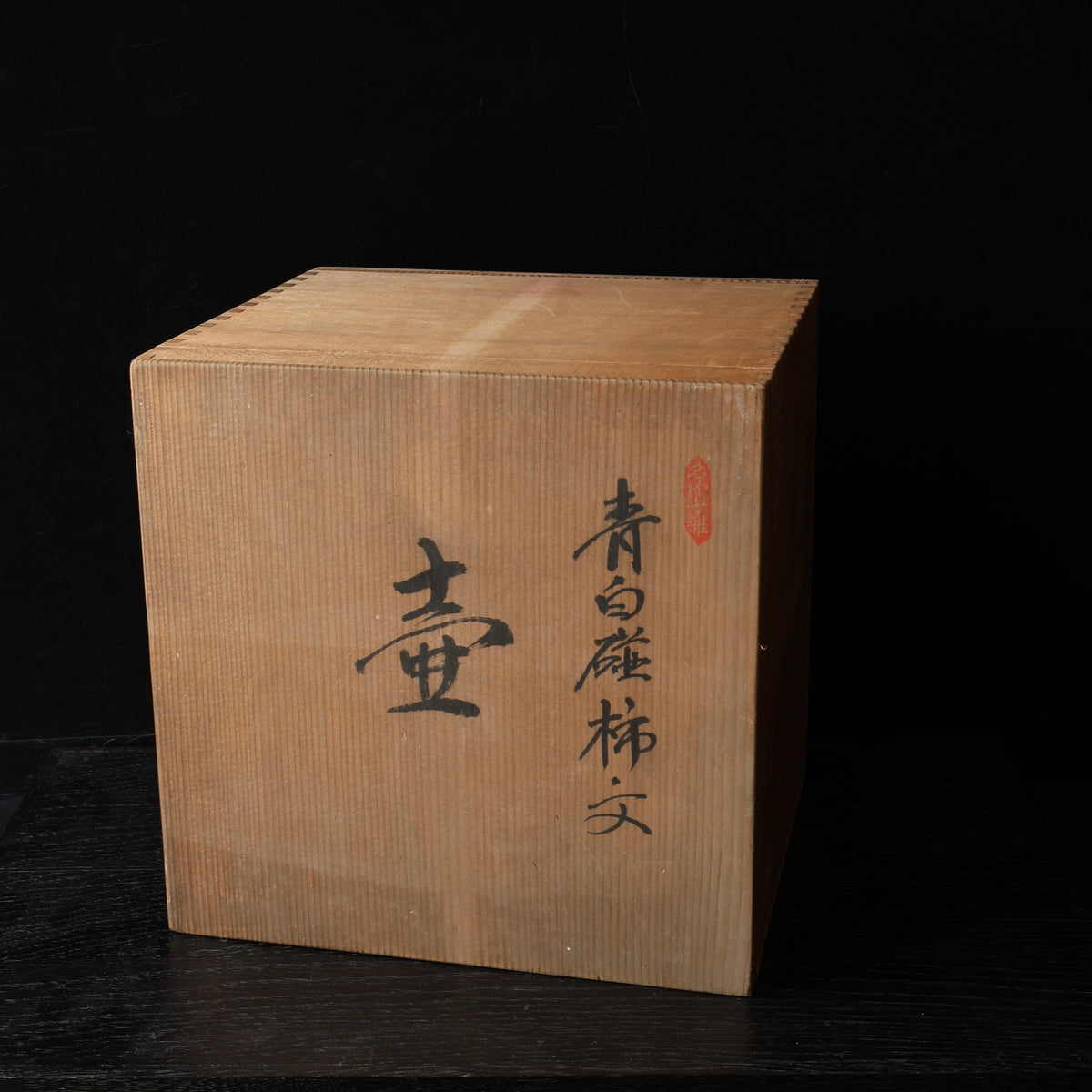
This vase is signed by the ceramicist on its base. It is accompanied by its wooden tomobako storage box signed by the artist, which also bears the ceramicist’s seal and the title of the work, as well as an information document (shiori) detailing the ceramicist's profile.
Practical Information
Place of Manufacture
Japan (Arita)
Dimensions
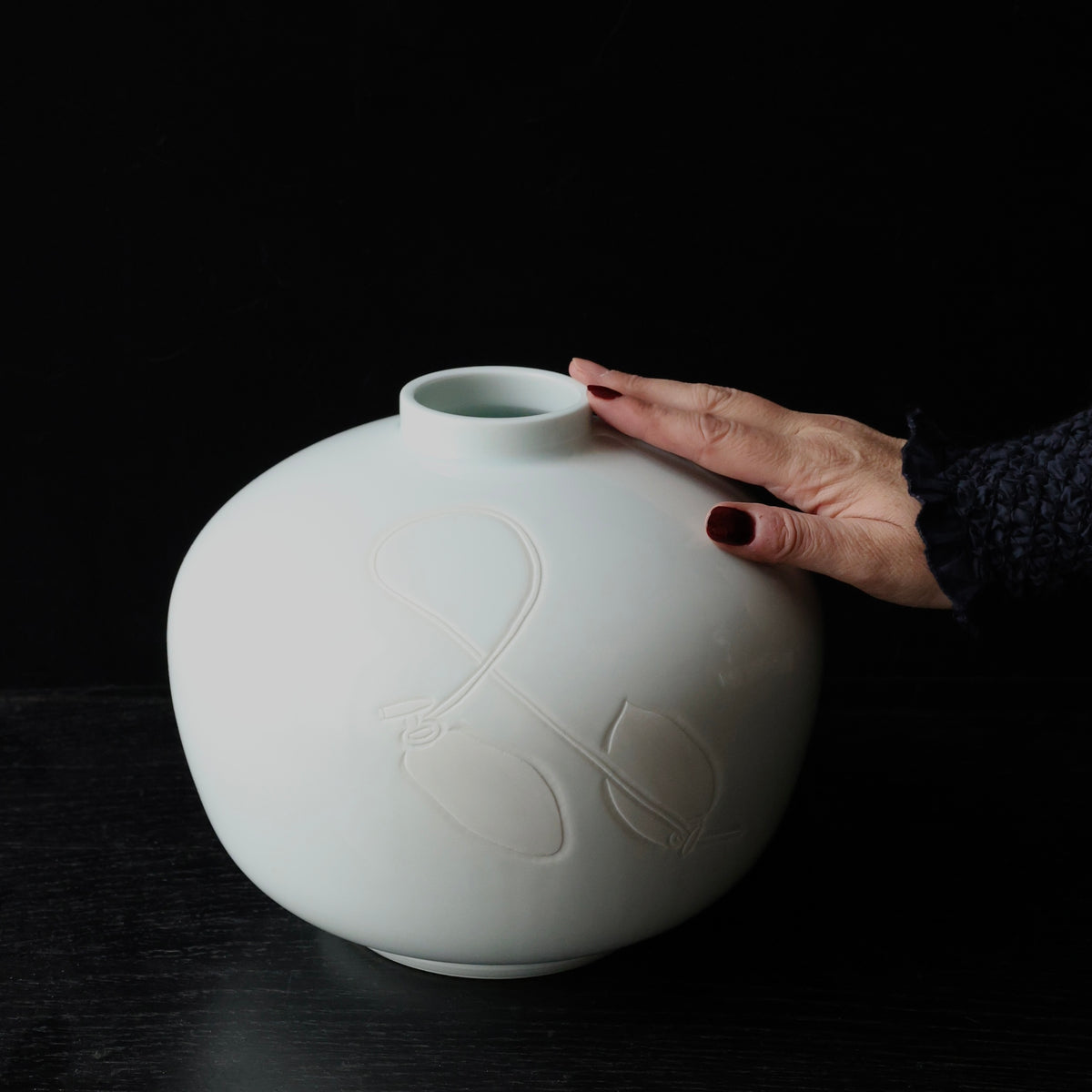
Diameter 24 cm - Height 21 cm
Weight
Vase + box: 3.7 kg
Materials
Celadon porcelain
Period
Late Shōwa era (1926 - 1989)
Condition
Very good condition. The tomobako box shows some stains and discoloration, bearing witness to its role in protecting the vase over time.
© Atelier Ikiwa – Laurence Corteggiani. Photos and text protected. All reproduction prohibited without authorization.
KNOW-HOW
Japanese ceramics, born more than 10,000 years ago, are a dialogue between earth and fire, a quest for harmony through imperfection.
With a wide variety of high-quality raw materials, such as rich clays and natural glazes, each region has developed its own techniques, reflecting the identity of its terroir.
Hand-crafted, these vases, made using the most precious Japanese ceramic techniques, bear the imprint of a master craftsman who is the heir to a thousand-year-old tradition. This living art embodies the essence of Japan, where history and nature unite in beauty.
Although deeply rooted in tradition, these exceptional Japanese ceramic vases, signed by very big names, have a resolutely contemporary spirit while preserving their authenticity, incredibly decorative and wonderfully timeless sculptural pieces.
DELIVERY AND PAYMENT OPTIONS
Shipping
Free shipping in mainland France for purchases over €200. Shipping with Colissimo, choice of Home delivery or Relay Point, package delivered against signature or unique code for valuable items. Orders are generally sent within 2 business days, except for art photographs which are printed on demand and special cases which will be announced in the banner at the top of the site (e.g., in case of absence). Learn more >
Payment Options
Secure card payment with Shopify Payments and 3D Secure technology.
Visa, MasterCard, American Express, Cartes Bancaires, PayPal, Apple Pay, Shop Pay and Klarna.
Klarna: pay in 3 interest-free installments or within 30 days, for purchases up to €1,500, subject to Klarna's approval. You will be redirected to Klarna to log in or create an account and confirm your payment.
PayPal: You will be redirected to PayPal to log in and confirm the payment. New users can create an account during checkout.
Your invoice will be sent with your order
Returns and Exchanges
14 days to change your mind. Learn more >
CARE INSTRUCTIONS
Handle with care. Rub gently with a soft cloth. Do not place near a heat source.
Choose options
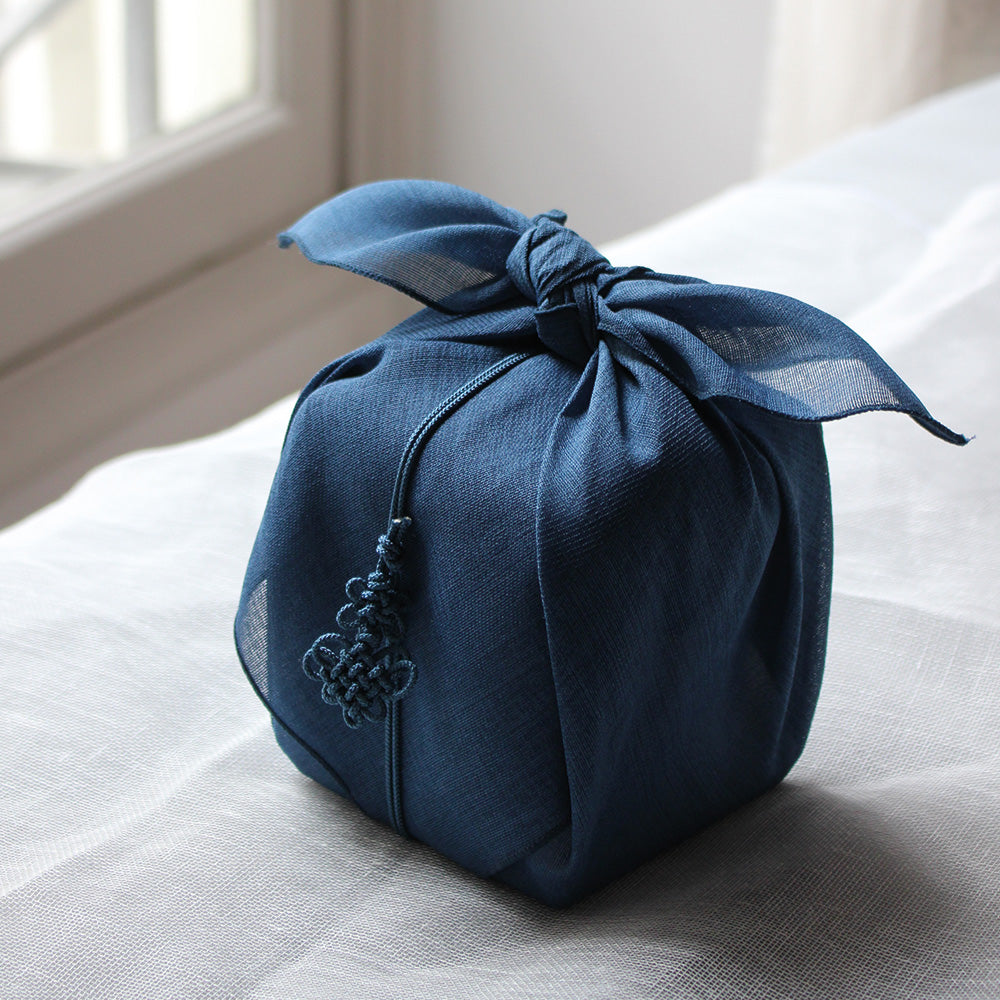
The art of wrapping
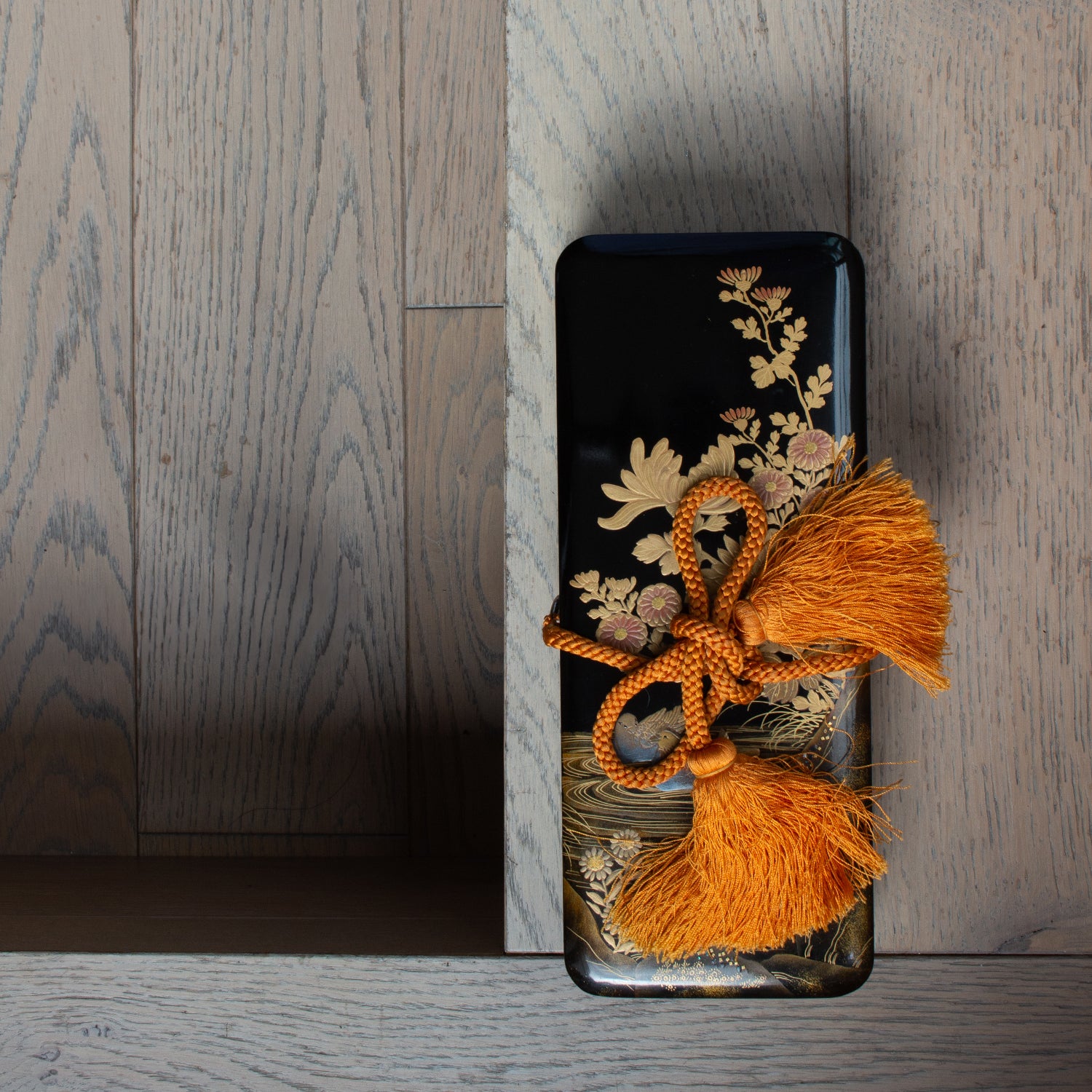
The exceptional items are wrapped in a beautiful fabric beautifully knotted using the little-known art of Korean pojagi and decorated with a delightful maedup (Korean ornamental knot). Details and conditions >

WRAPPING
Exceptional items are wrapped in textiles tied according to the Korean pojagi art