

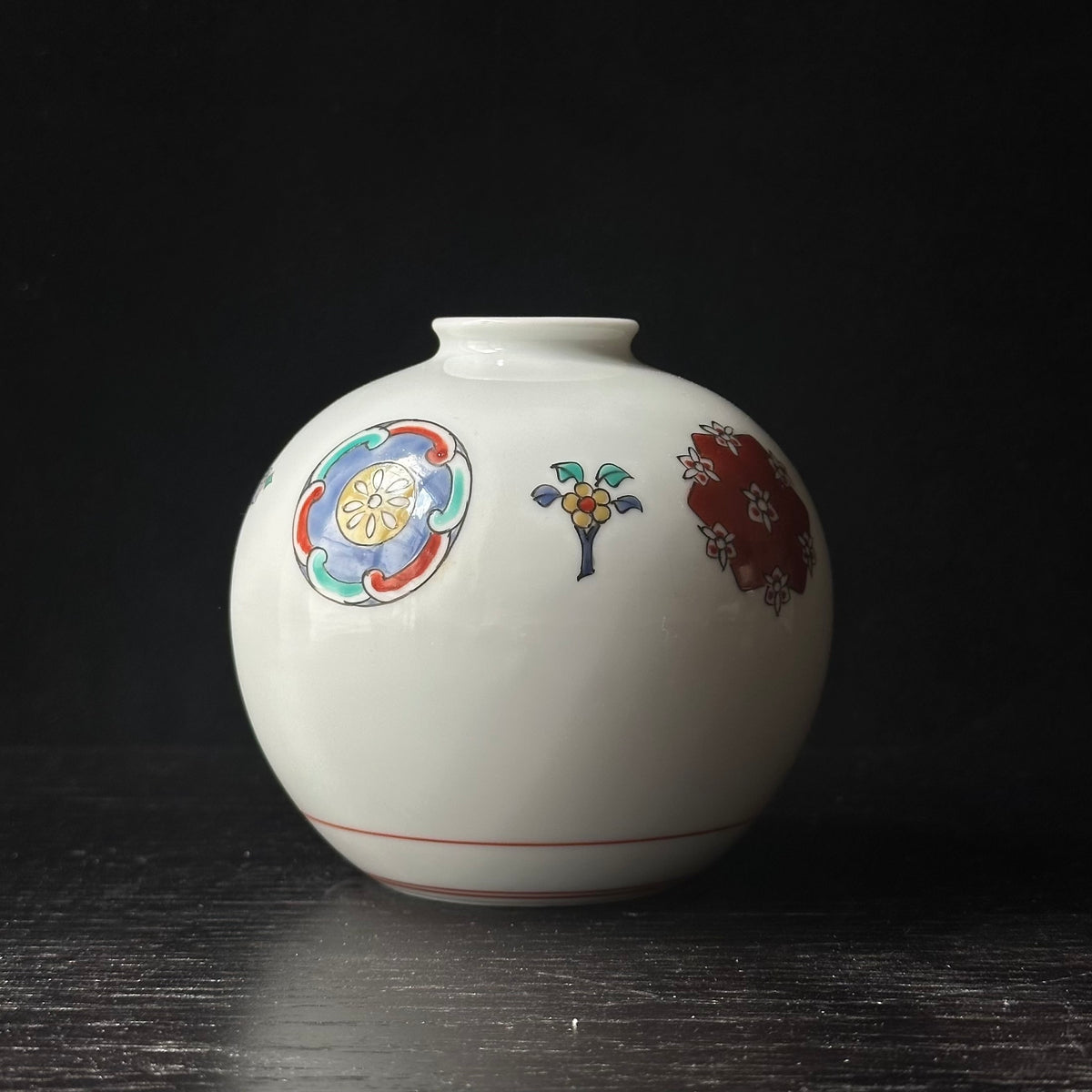


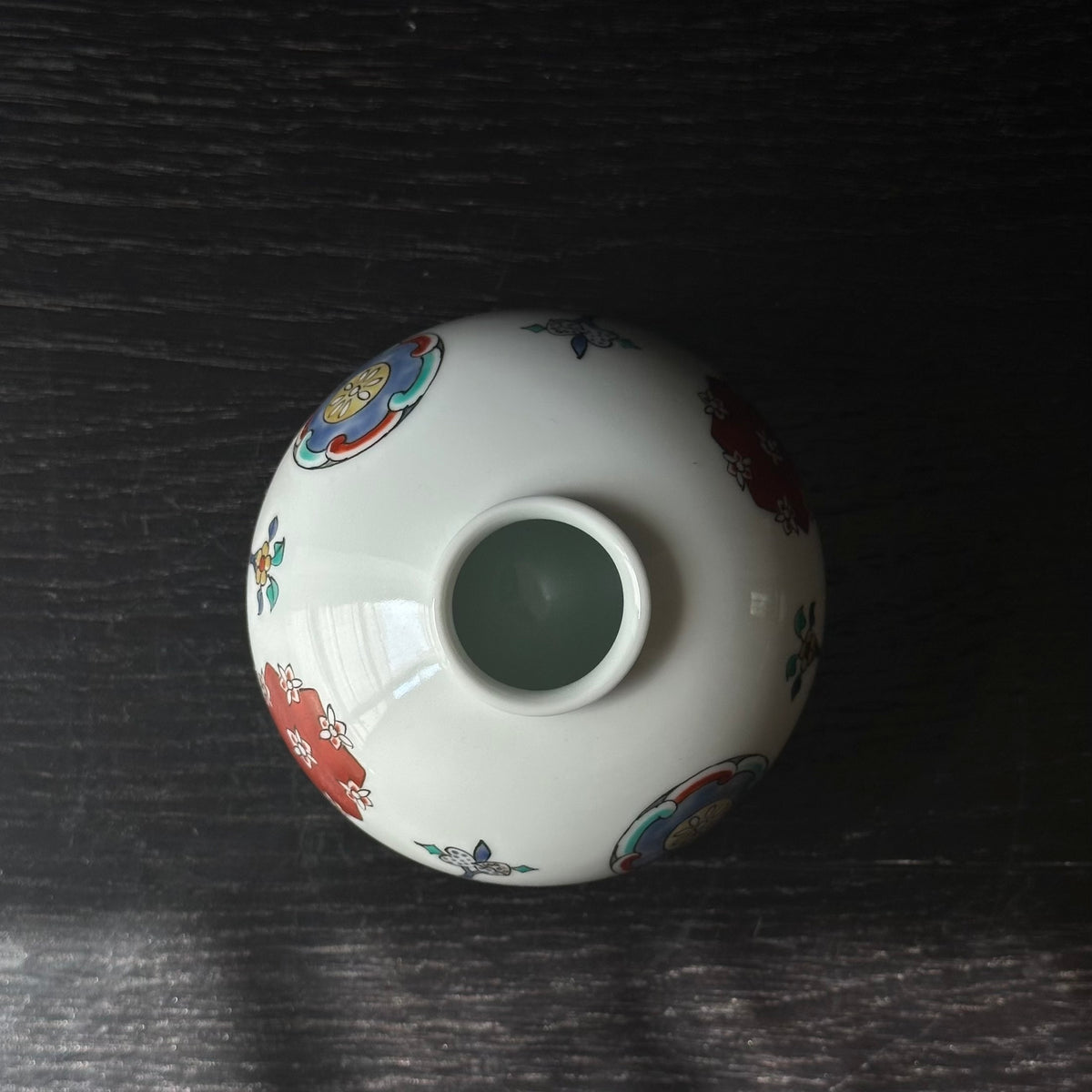
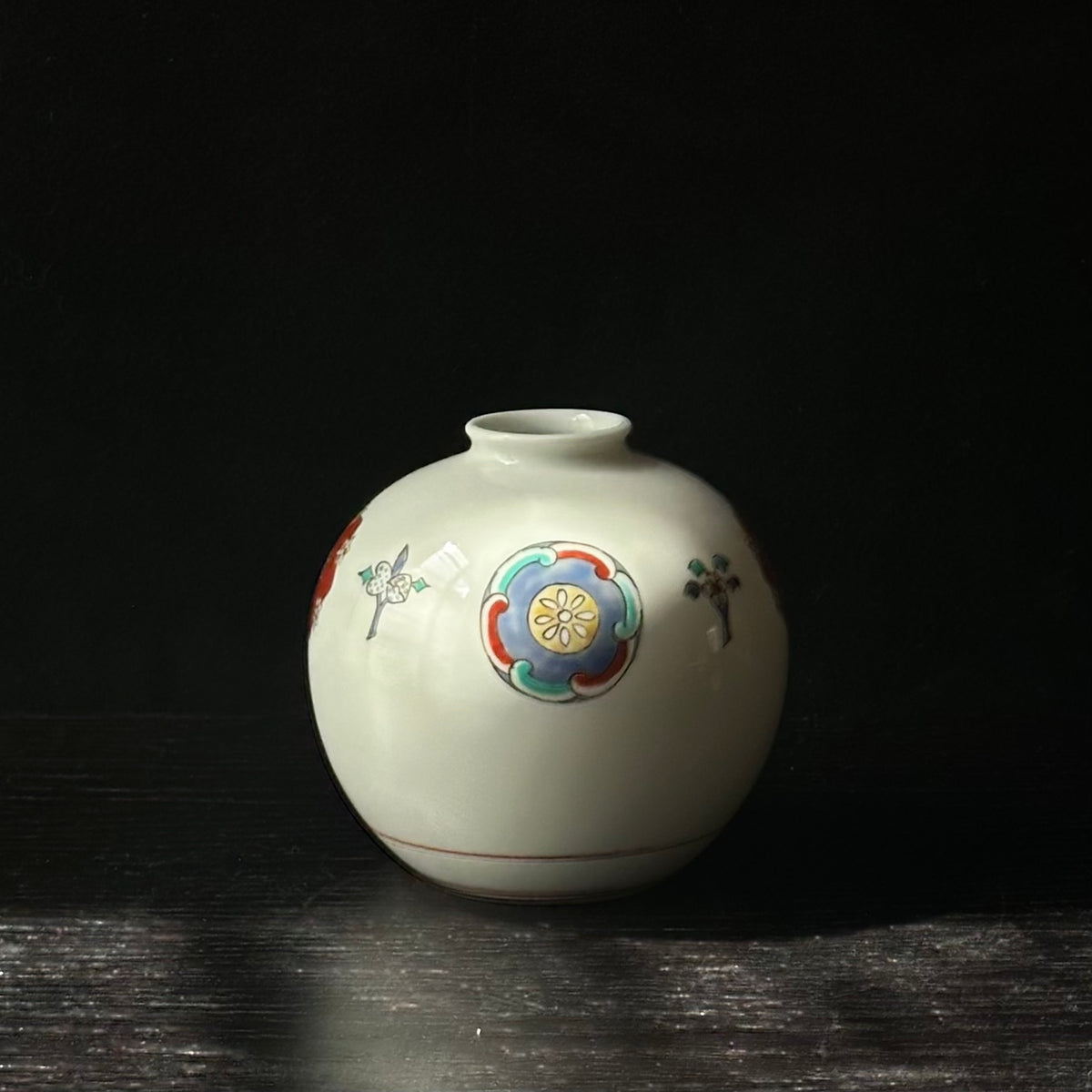
Kakiemon porcelain vase with Hanamaru (floral medallions) decoration by Sakaida Kakiemon XIII
This small Arita porcelain vase is a creation of the Kakiemon workshop under the direction of the 13th generation, led by Sakaida Kakiemon XIII (1906–1982), one of the great names in 20th-century Japanese porcelain. As heir to a tradition born in the 17th century, the Kakiemon house is celebrated for the refinement of its polychrome decorations, the vibrancy of its colors, and the balance of its compositions. Adorned with delicate floral medallions, this Shōwa-era vase illustrates the elegance and mastery of the skills perpetuated in the workshops of this prestigious lineage.
The Ceramicist
Born in 1906 in Arita, Saga Prefecture, as Shibuo Sakaida, Sakaida Kakiemon XIII (1906–1982) succeeded his father in 1963 at the head of one of the oldest and most famous lines of Japanese porcelain makers. Along with his father, Sakaida Kakiemon XII, he played a decisive role in the revival of nigoshide, a milky-white porcelain characteristic of 17th-century Kakiemon creations, the technique for which they successfully reconstructed in 1953. In 1971, nigoshide was recognized as an Important Intangible Cultural Property of Japan, and Sakaida Kakiemon XIII presided over the association responsible for its preservation. His commitment to passing on this heritage earned him the Medal of Honor with Purple Ribbon in 1972, and subsequently the Order of the Rising Sun in 1978. He also renewed traditional motifs by developing compositions inspired by the observation of nature. His work and his leadership at the Kakiemon house helped restore the prestige of this porcelain-making tradition, both in Japan and abroad.
Technique and Decoration
The Kakiemon style appeared in the 17th century in Arita, in present-day Saga Prefecture. It occupies an essential place in the history of Japanese porcelain. Its refined polychrome decorations met with immense success in Europe as early as the Edo period and influenced major European manufactories. Its aesthetic favors balanced compositions, leaving significant space for white surfaces.
The iro-e technique, a polychrome decoration created using enamels applied over the glaze and then fixed during a second, lower-temperature firing, allows for the achievement of clear, luminous colors.
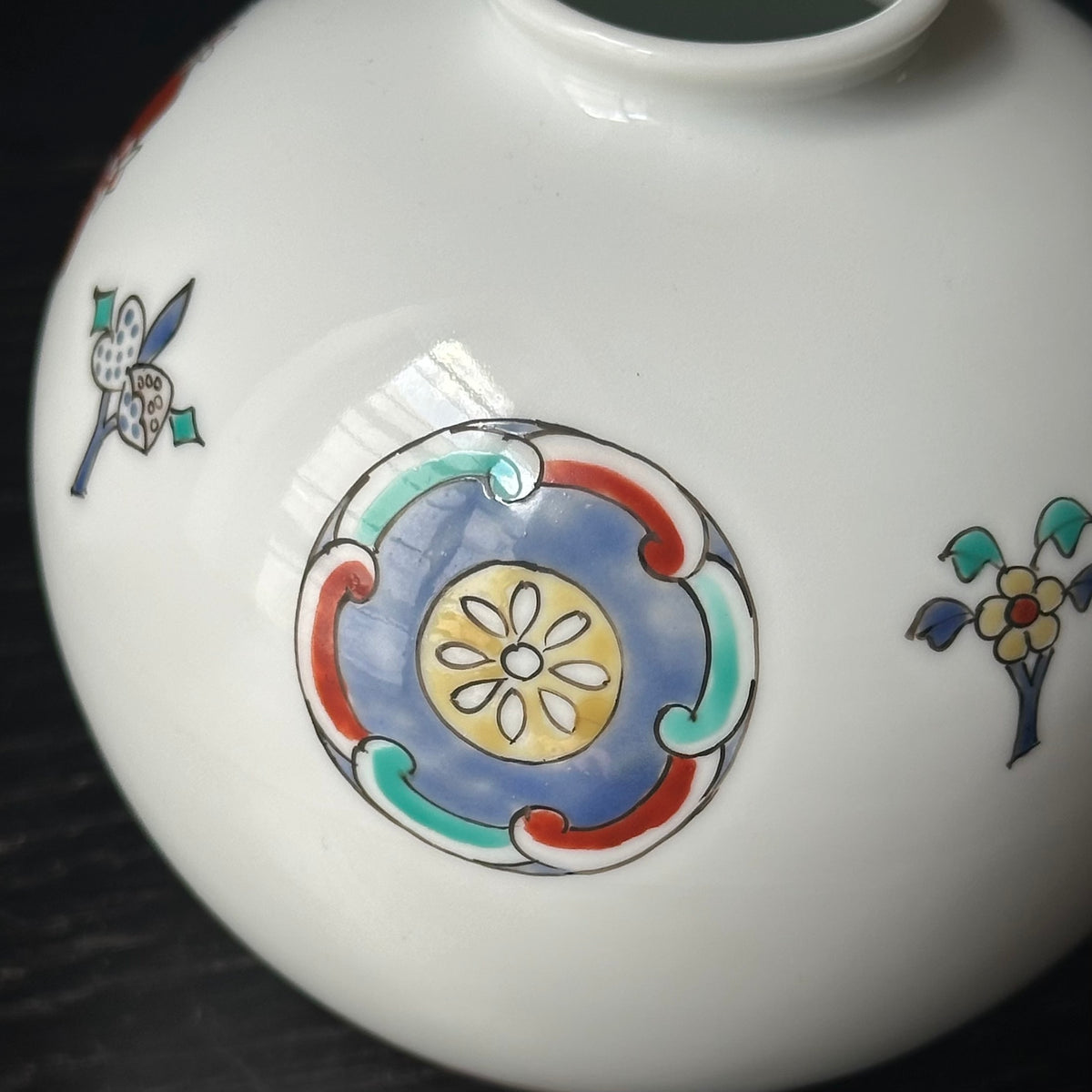
Crafted in the Kakiemon workshop under the 13th-generation leadership, this vase features a hanamaru design—floral motifs arranged in circular medallions. On the white porcelain, compositions of flowers and foliage follow one another in a palette of orange-red, green, blue, and yellow. The globular shape, topped by a short neck, harmoniously complements this decoration characteristic of the Kakiemon house.
Place of Manufacture
Japan (Arita, Saga Prefecture)
Presentation
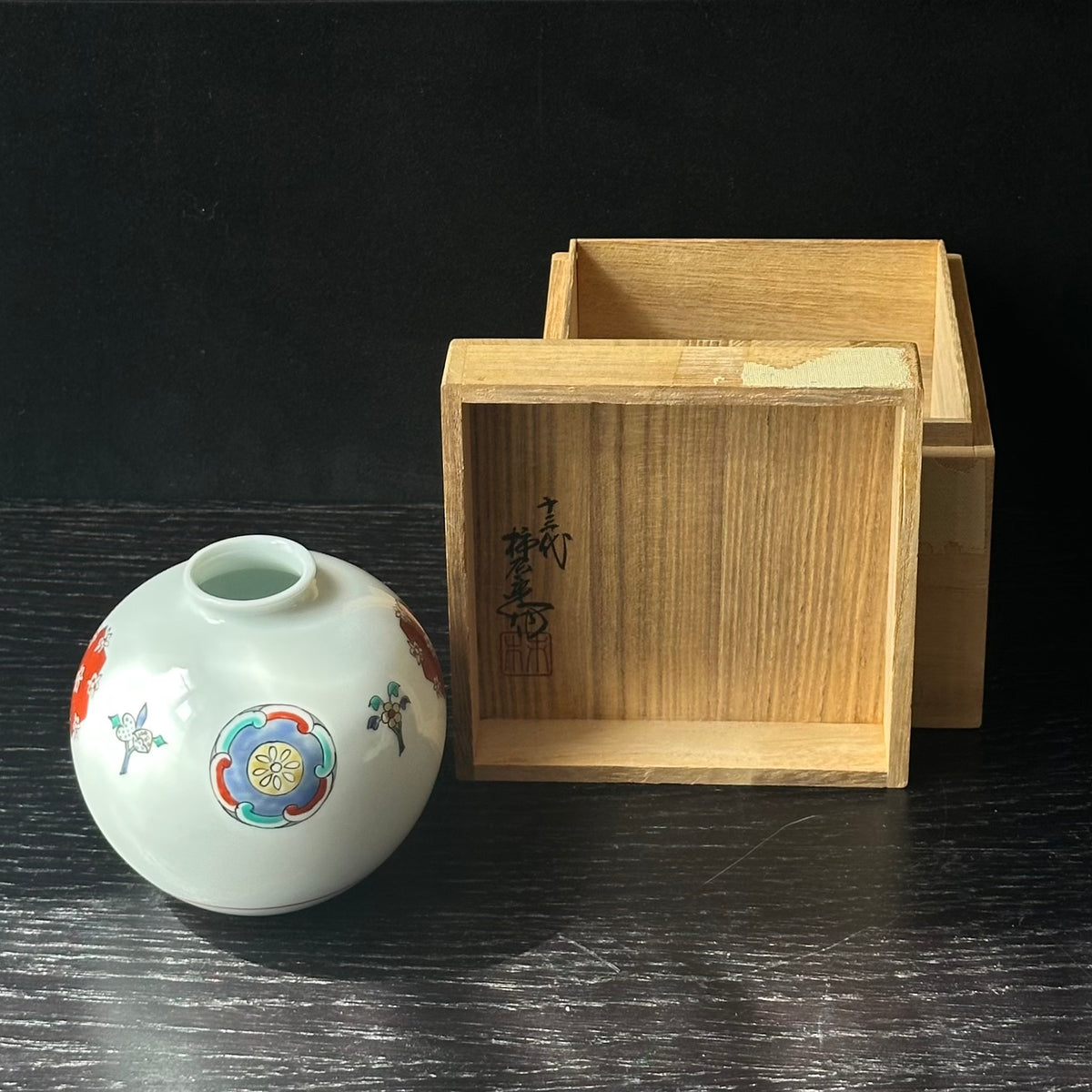
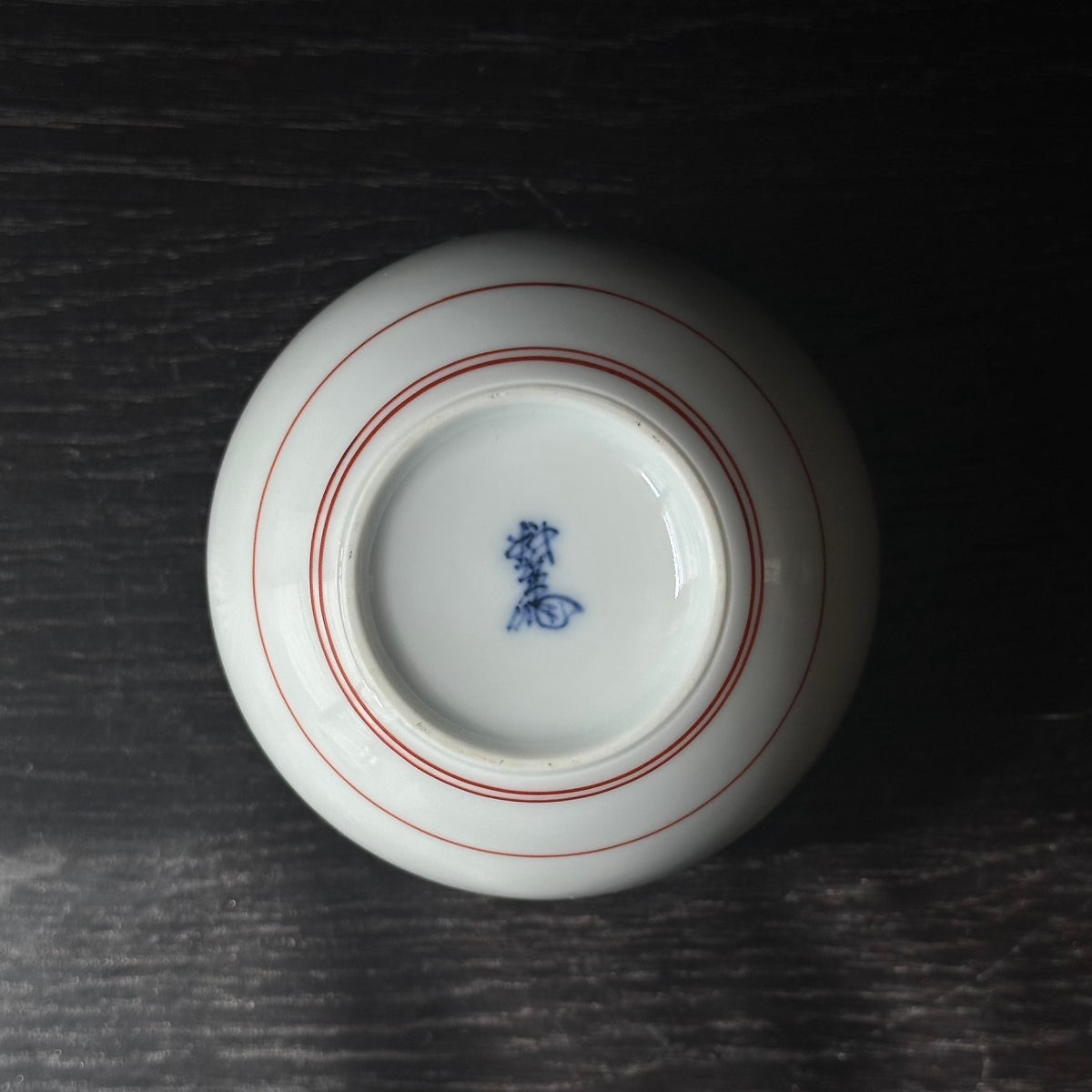
The vase is presented in its tomobako (a wooden box made to accompany the work), bearing an inscription in the name of Sakaida Kakiemon XIII, a seal, and the name of the work. The vase also bears the Kakiemon signature on its base. The tomobako shows some wear related to its age, but has perfectly fulfilled its protective role.
Dimensions
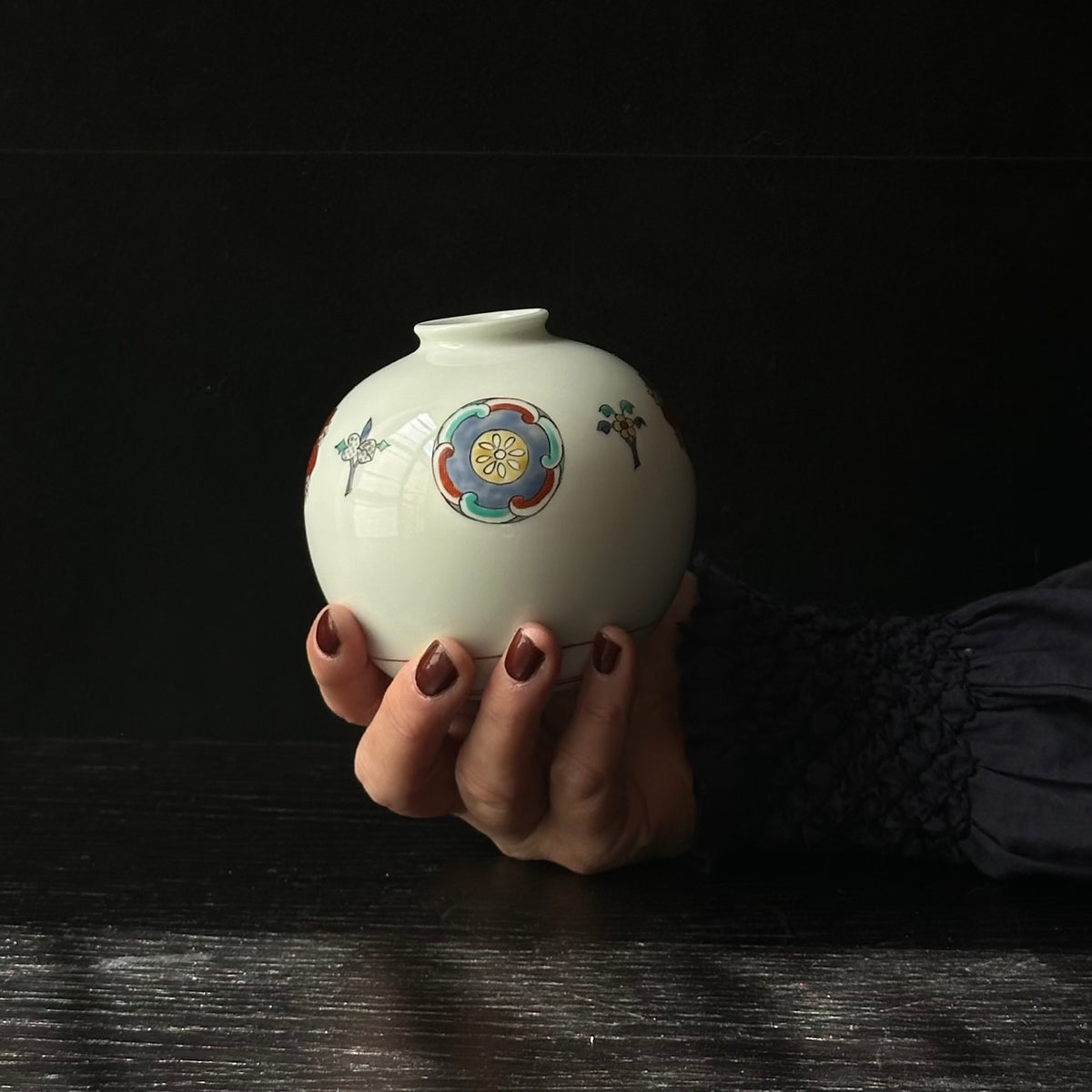
Height 10 cm - Diameter 10 cm
Weight
438 g
Materials
Porcelain
Period
Shōwa Era (1926–1989)
Condition
Very good condition. The tomobako box shows some staining and discoloration, testifying to its role in protecting the vase over time.
Care Instructions
After use, empty any water and allow to air dry. Avoid thermal shock and abrasive products. Wipe with a soft cloth. Not suitable for dishwasher, oven, or microwave.
© Atelier Ikiwa – Laurence Corteggiani. Photos and texts protected. All reproduction prohibited without permission.
DELIVERY AND PAYMENT OPTIONS
Shipping
Free shipping in mainland France for purchases of €200 or more. Shipped with Colissimo, you can choose home delivery or a pickup point. Parcels are delivered against signature or a unique code for valuable items. Orders are generally dispatched within 2 business days, except for fine art photographs, which are printed on demand, and special cases, which will be announced in the banner at the top of the website (e.g., in case of absence). Learn more >
Payment Options
Secure card payment with Shopify Payments and 3D Secure technology.
Visa, MasterCard, American Express, Cartes Bancaires, PayPal, Apple Pay, Shop Pay, and Klarna.
Klarna: Pay in 3 interest-free installments or within 30 days, for purchases up to €1,500, subject to Klarna's acceptance. You will be redirected to Klarna to log in or create an account and confirm your payment.
PayPal: You will be redirected to PayPal to log in and confirm payment. New users can create an account during checkout.
Your invoice will be sent with your order.
Returns and Exchanges
14 days to change your mind. Learn more >
Choose options

WRAPPING
Exceptional items are wrapped in textiles tied according to the Korean pojagi art