
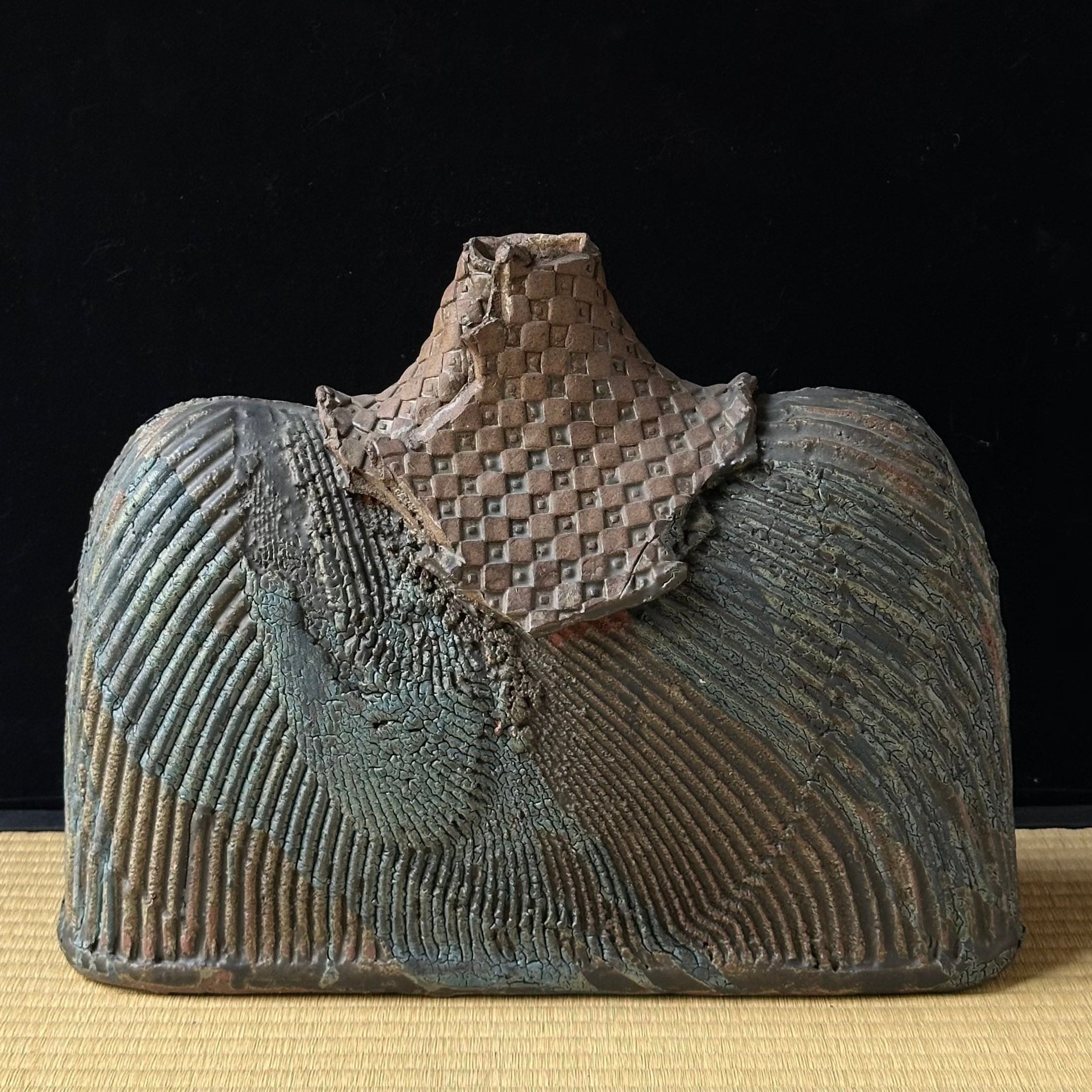
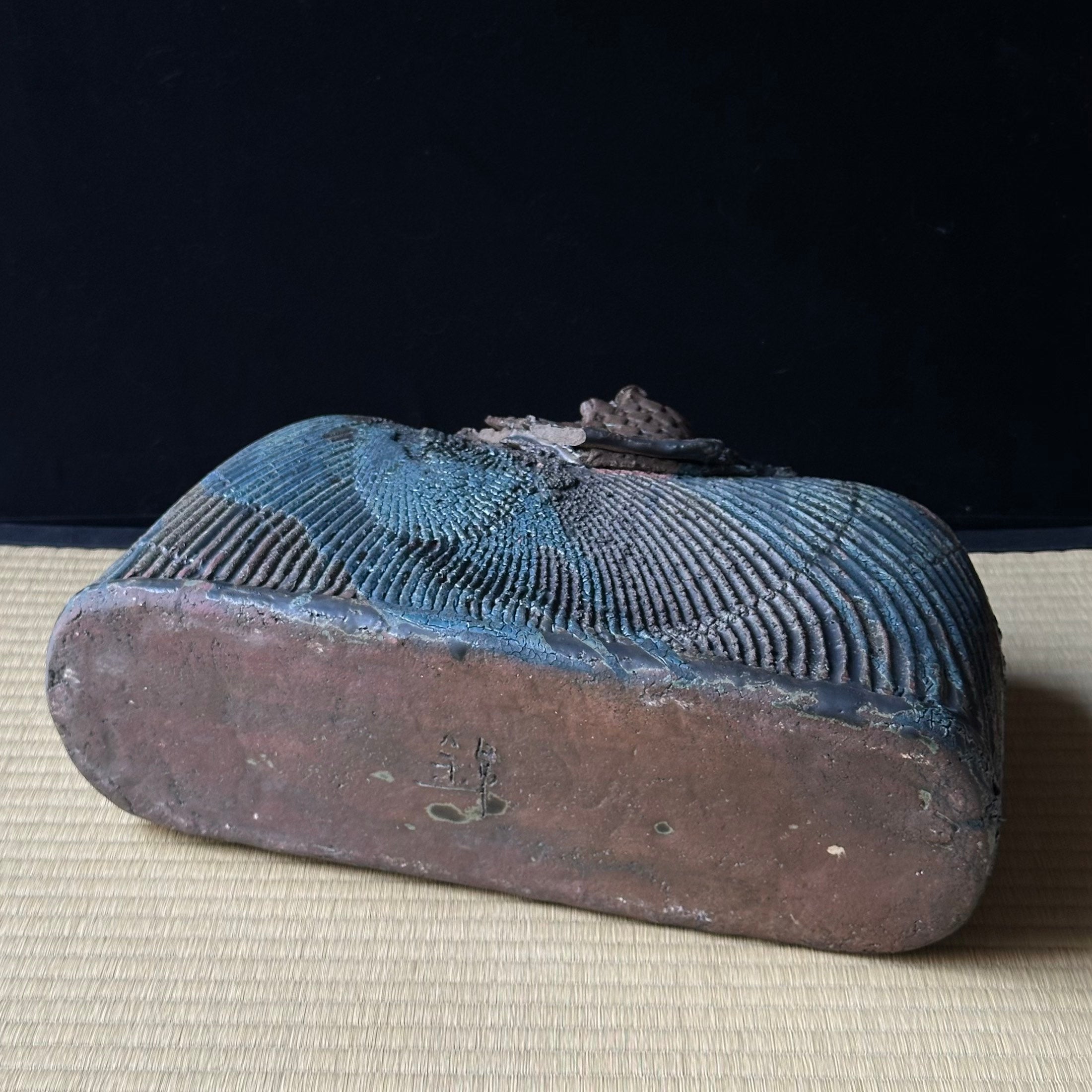
Large ceramic henko vase by Kinpei Nakamura
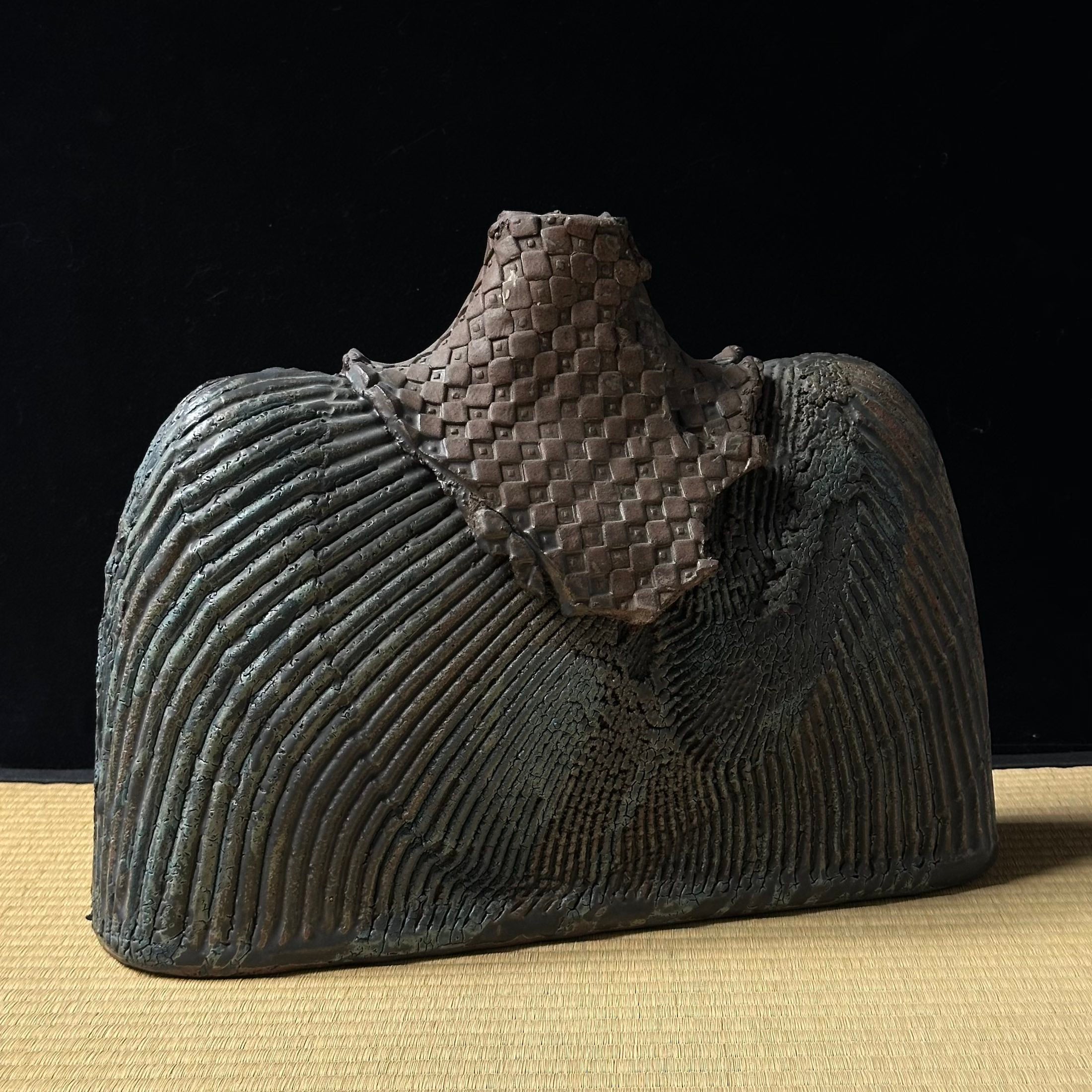
This spectacular piece by Kinpei Nakamura is part of the oeuvre of a major figure in contemporary Japanese ceramics. A renowned figure for having profoundly renewed the language of the vase in Japan since the second half of the 20th century, Nakamura has developed a body of work in which ceramics become a true field of sculptural experimentation. With its ample form and monumental presence, this vase also evokes the spirit of Jomon pottery, a long period of Japanese prehistory famous for its hand-modeled ceramics with powerful reliefs and highly animated surfaces. In this piece, this ancient heritage is reinterpreted in a resolutely contemporary language, also informed by sculpture and modern abstraction.
The ceramist
Kinpei Nakamura, born on June 13, 1935, in Kanazawa, Ishikawa Prefecture, is one of the leading figures in contemporary Japanese ceramics. The son of ceramicist Baizan II Nakamura, he grew up in an environment deeply connected to the traditions of ceramics and tea culture. He initially studied sculpture at Kanazawa College of Arts and Crafts before dedicating himself fully to ceramics after settling in Tokyo.
From the 1960s onwards, he developed a personal style that moved away from classical regional traditions to explore ceramics as an autonomous sculptural form. His time in the United States in the late 1960s reinforced his interest in contemporary international ceramics and in forms stemming from modern abstraction.
A professor at Tama Art University in Tokyo for many years, where he headed the craft department, he later became professor emeritus. His 1993 exhibition, Tokyo yaki (Tokyo ceramics), received the Minister of Education's prize. His work is now held in several important public collections, including the 21st Century Museum of Contemporary Art in Kanazawa and the Kure Municipal Museum of Art.
The technique and the decor
This vase illustrates the sculptural approach characteristic of Kinpei Nakamura's work. The form is constructed by hand modeling, using a method that prioritizes the building of volume.
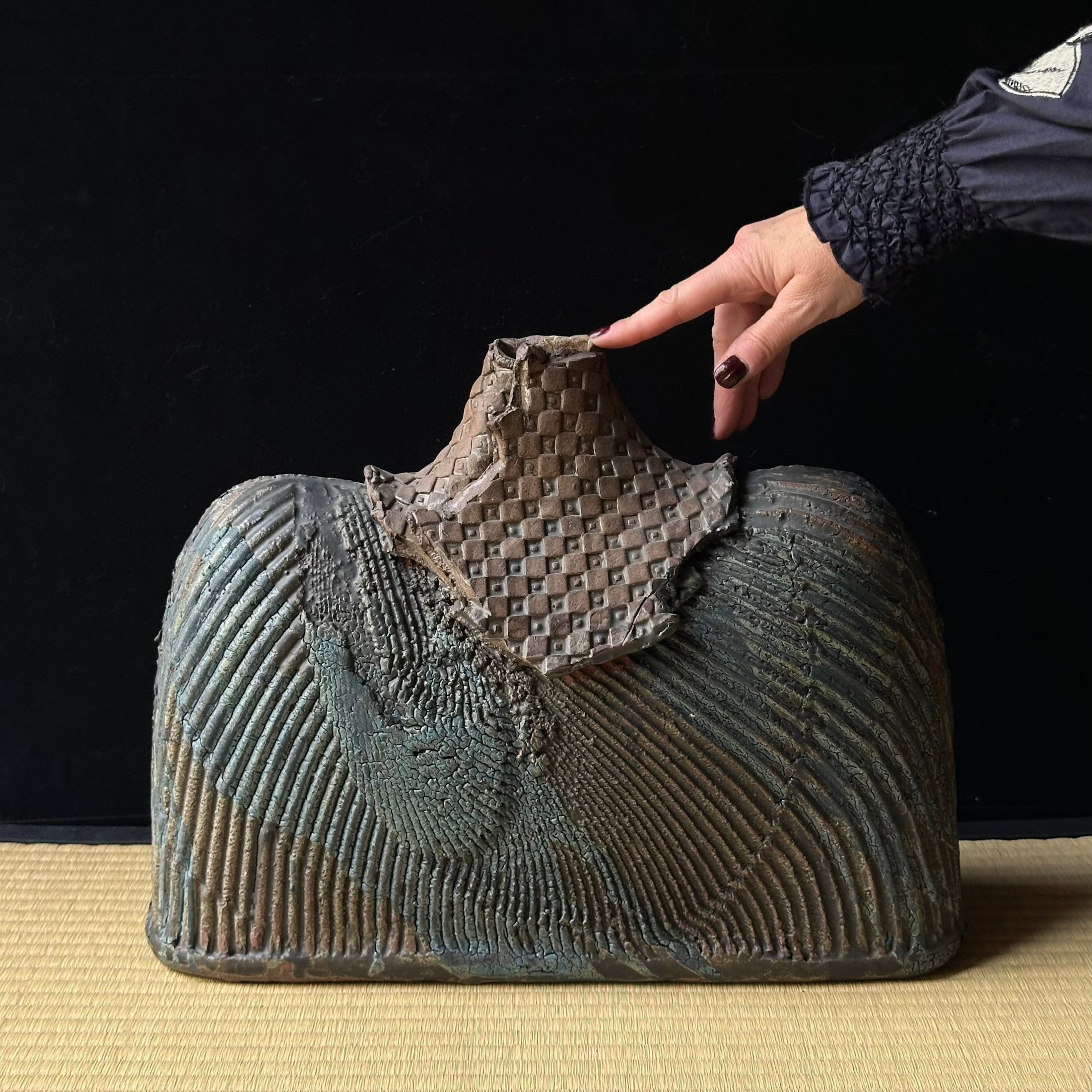
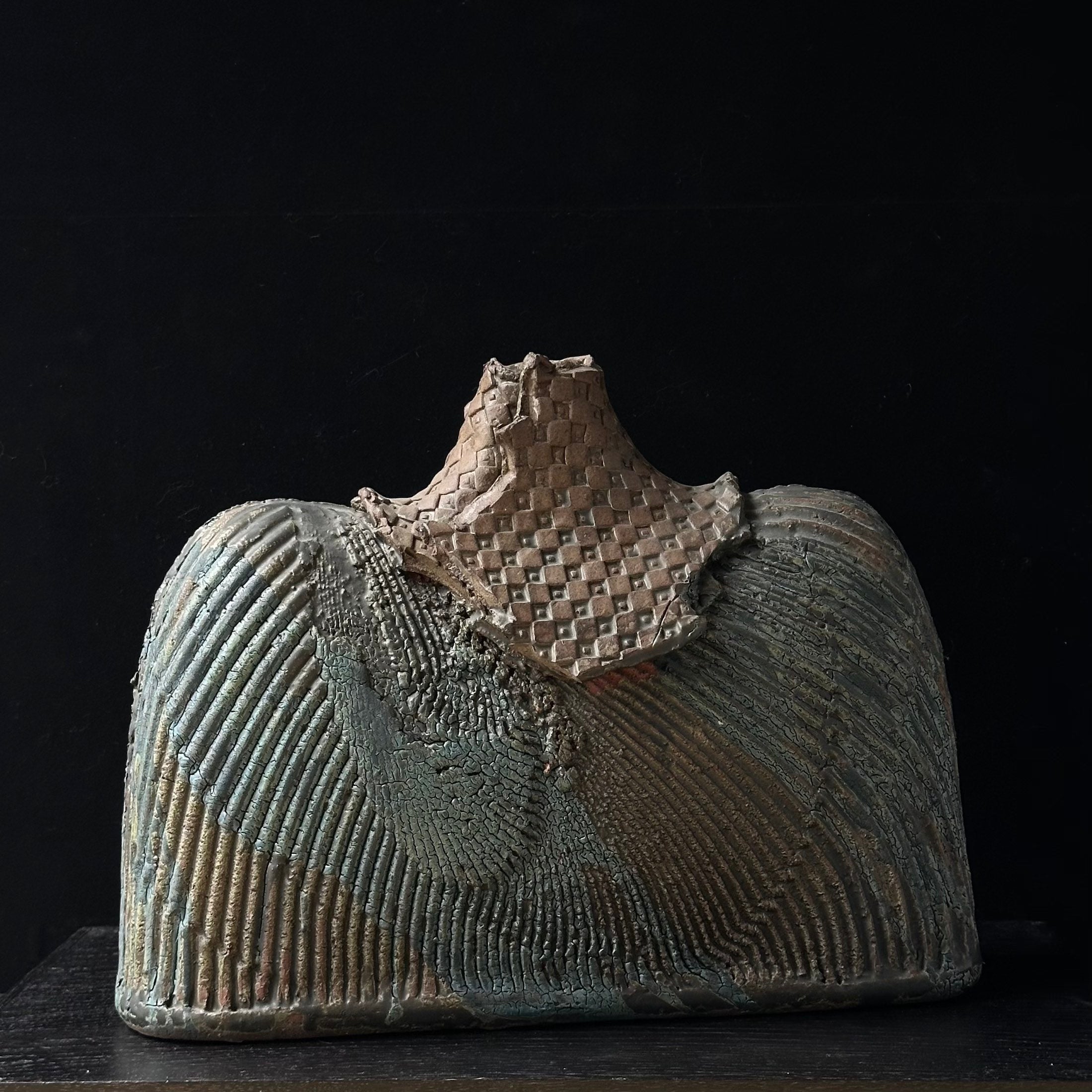
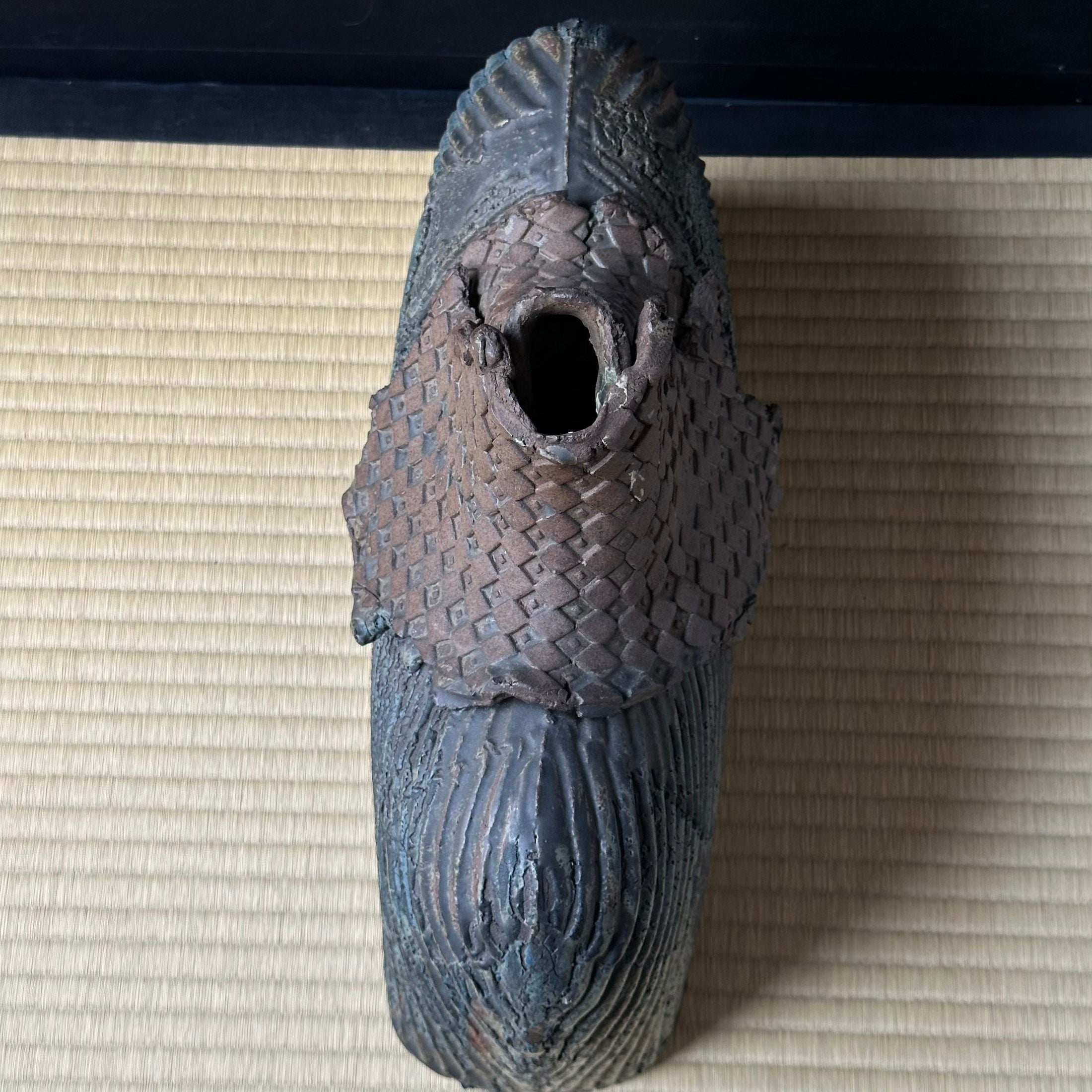
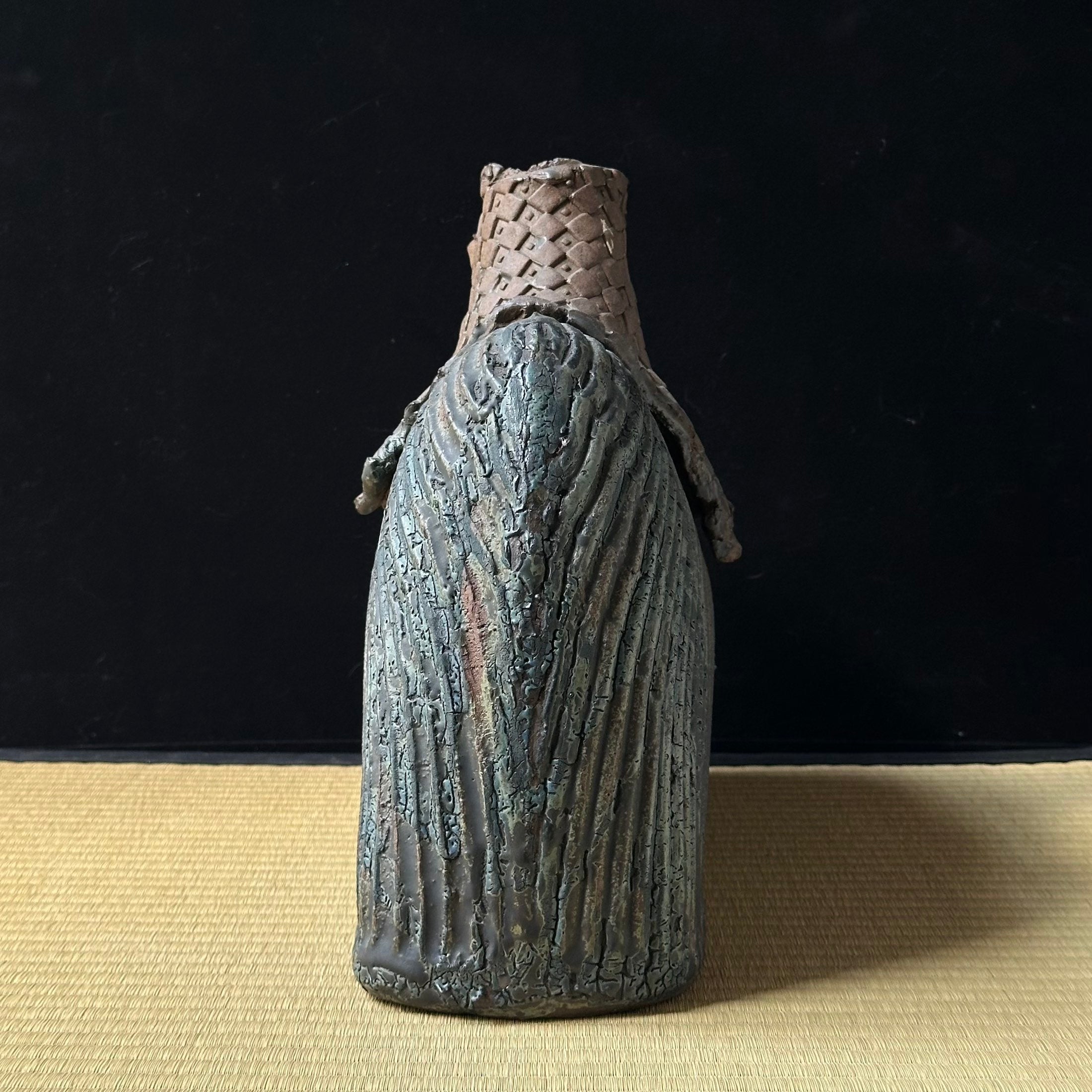
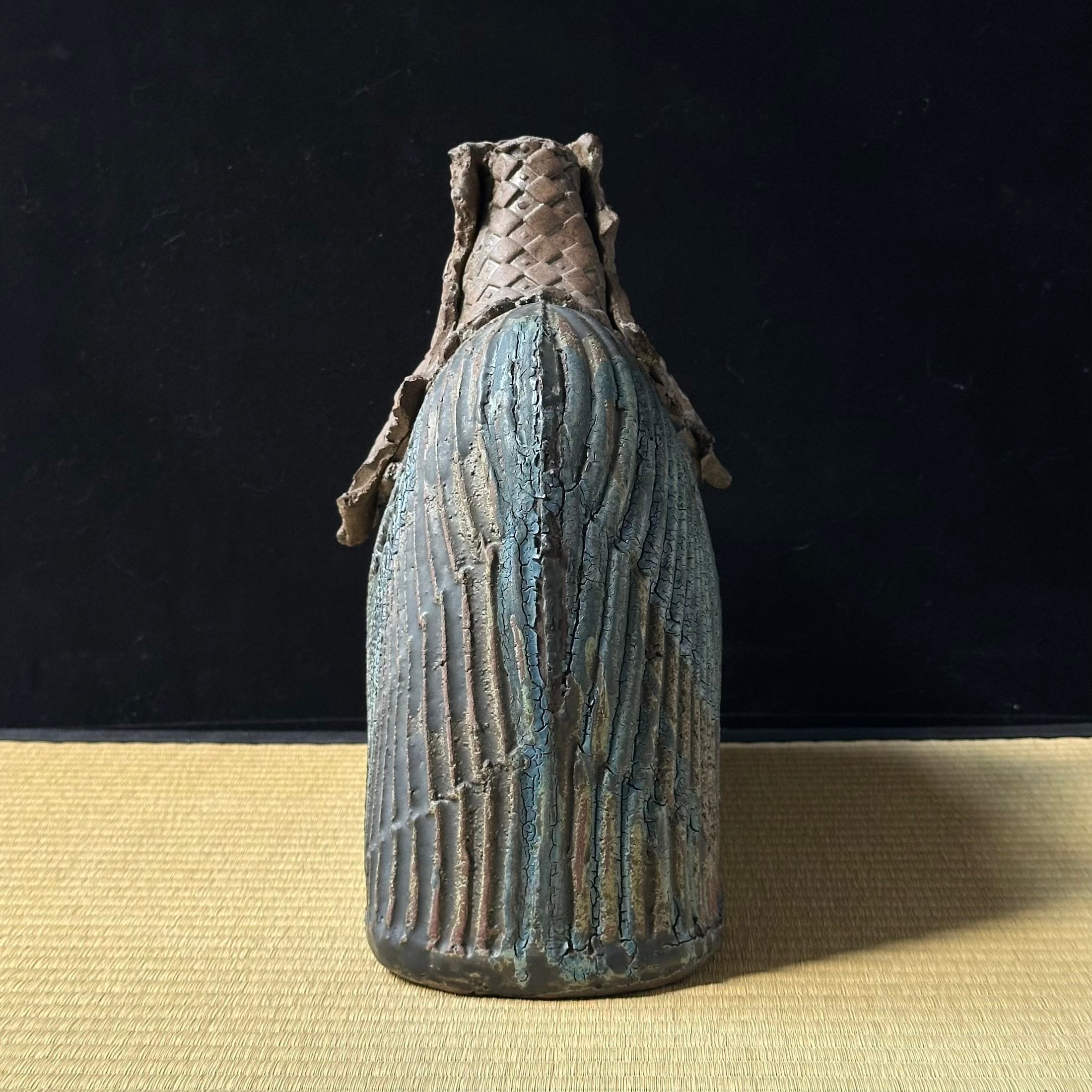
The vase is composed of several clay elements shaped separately and then assembled to form the overall volume. This construction in different parts creates a very wide and flattened silhouette, typical of the henko (flat vase), while giving the piece an almost architectural presence.
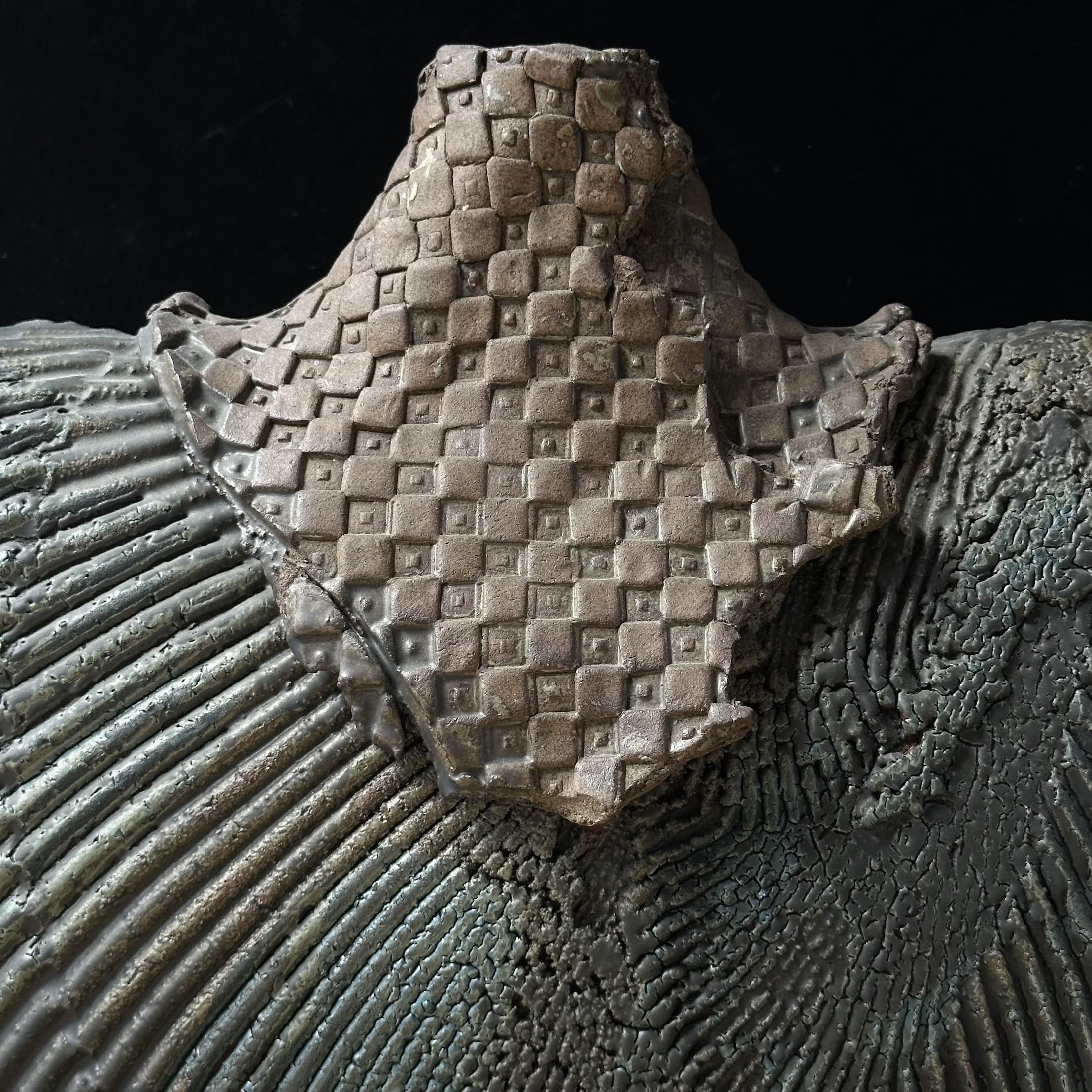
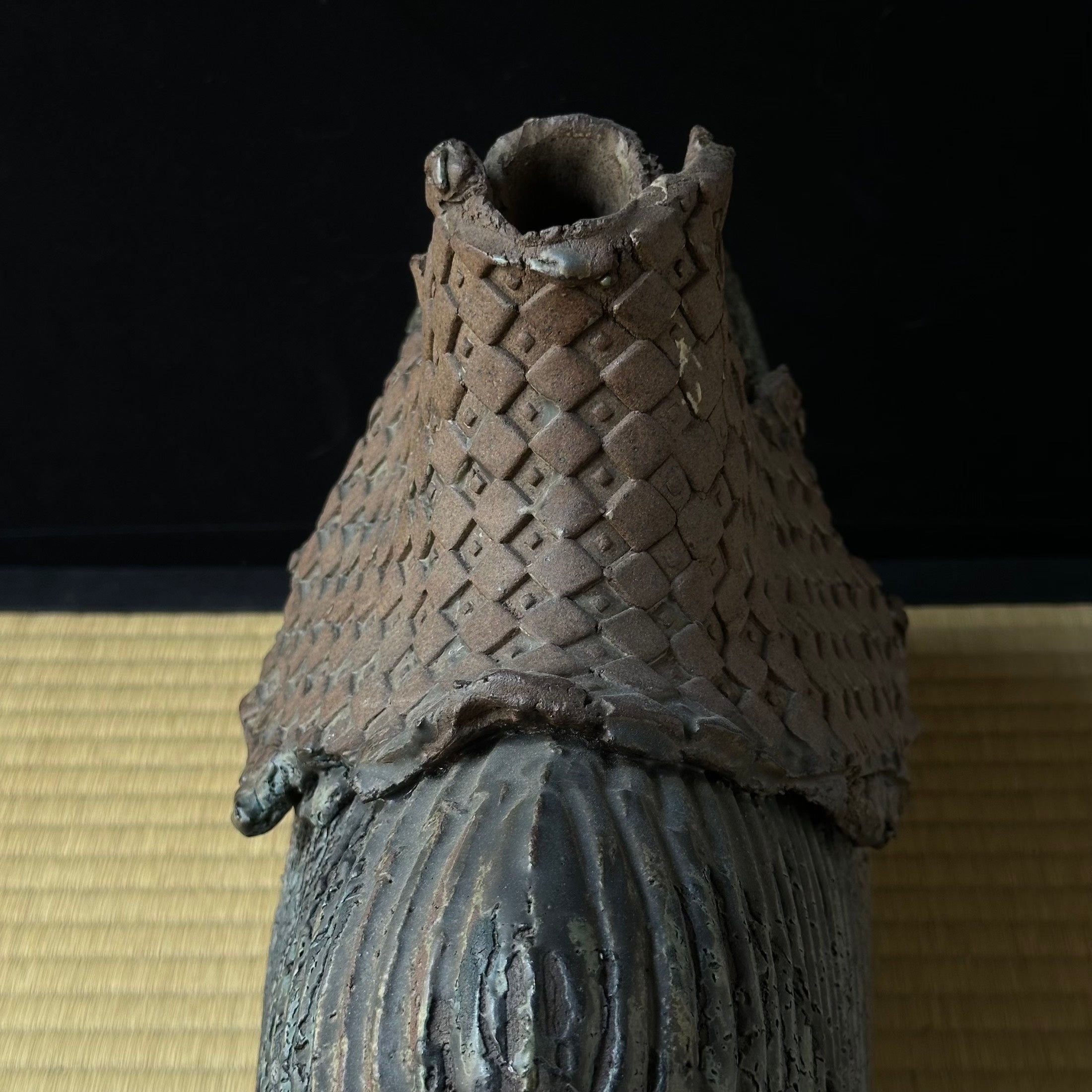
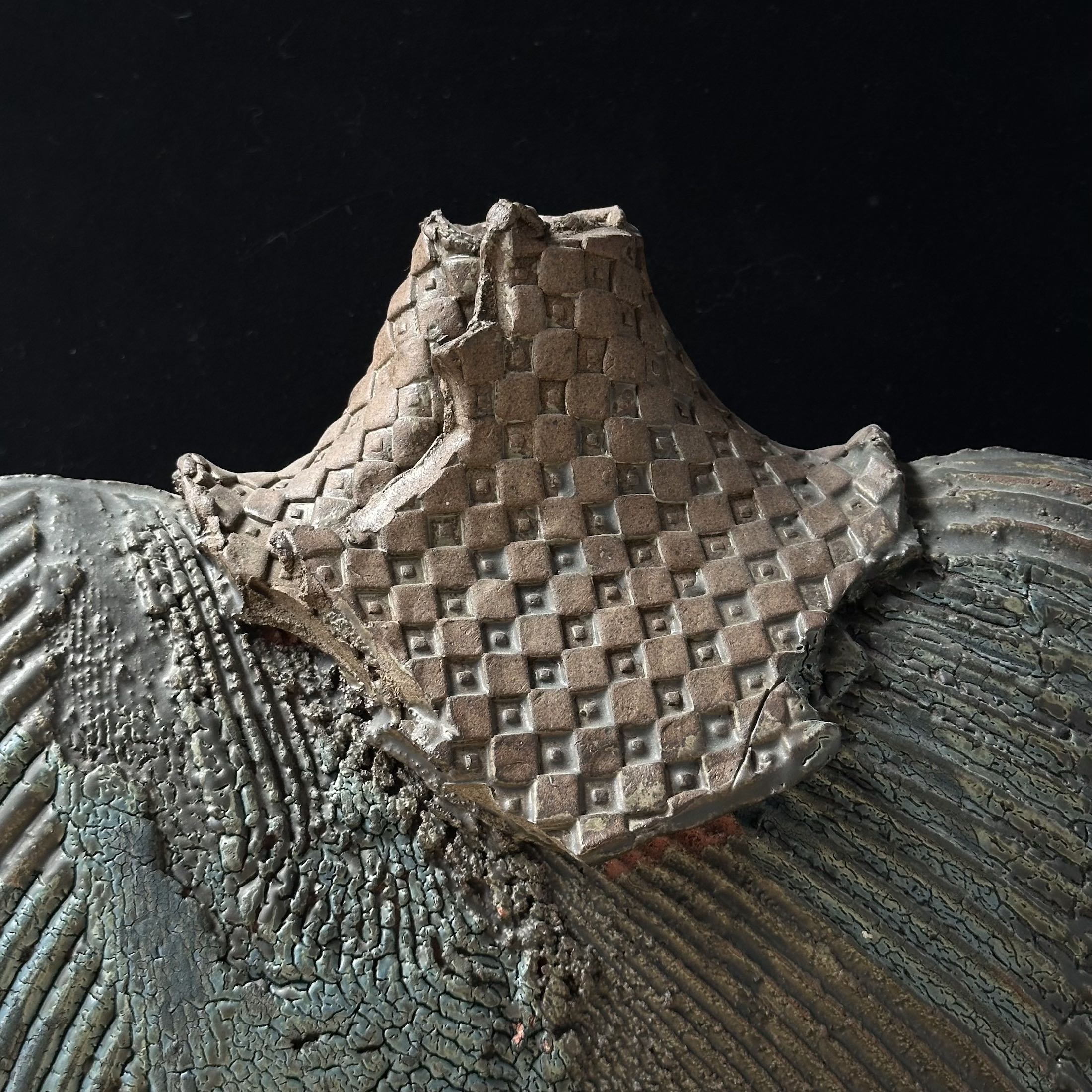
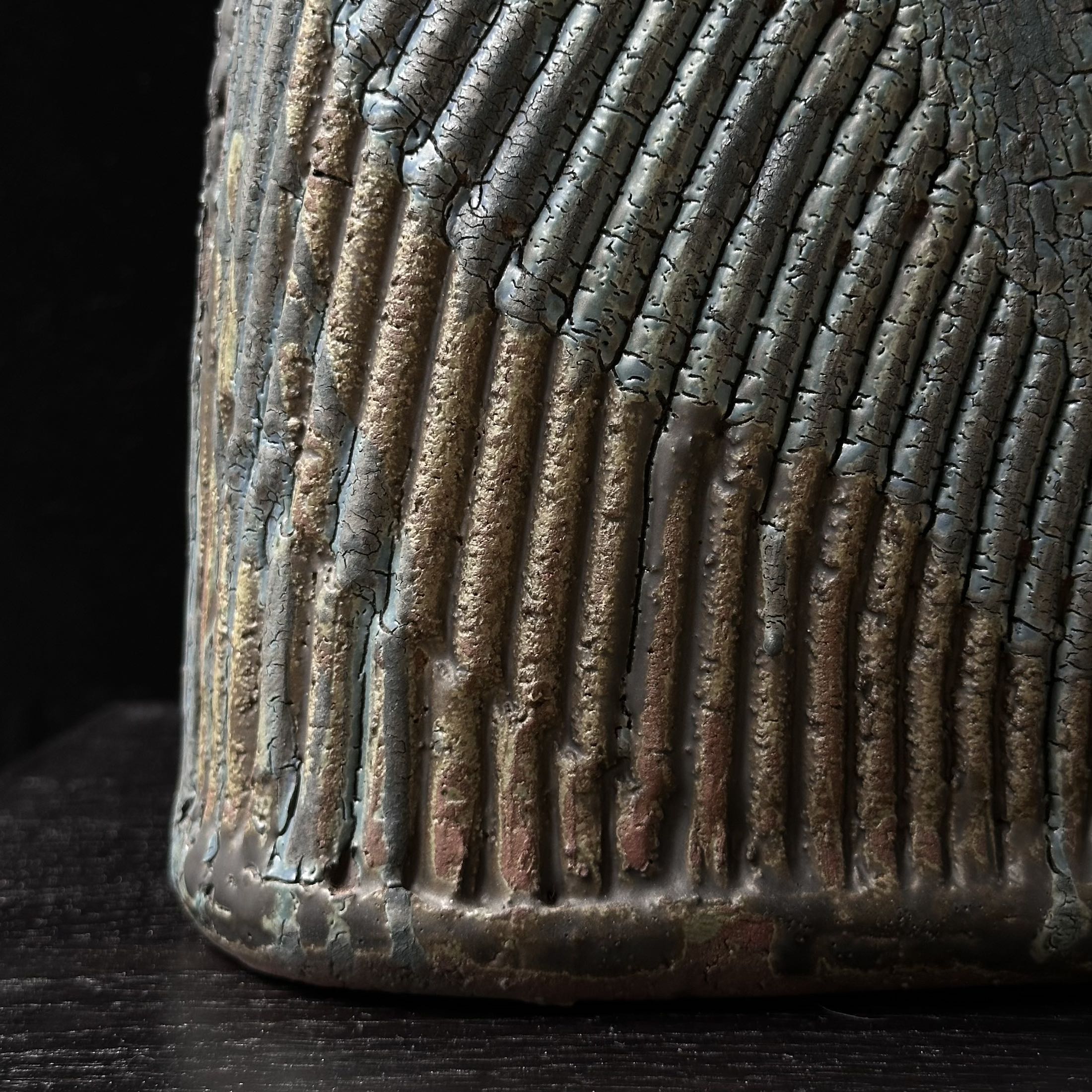
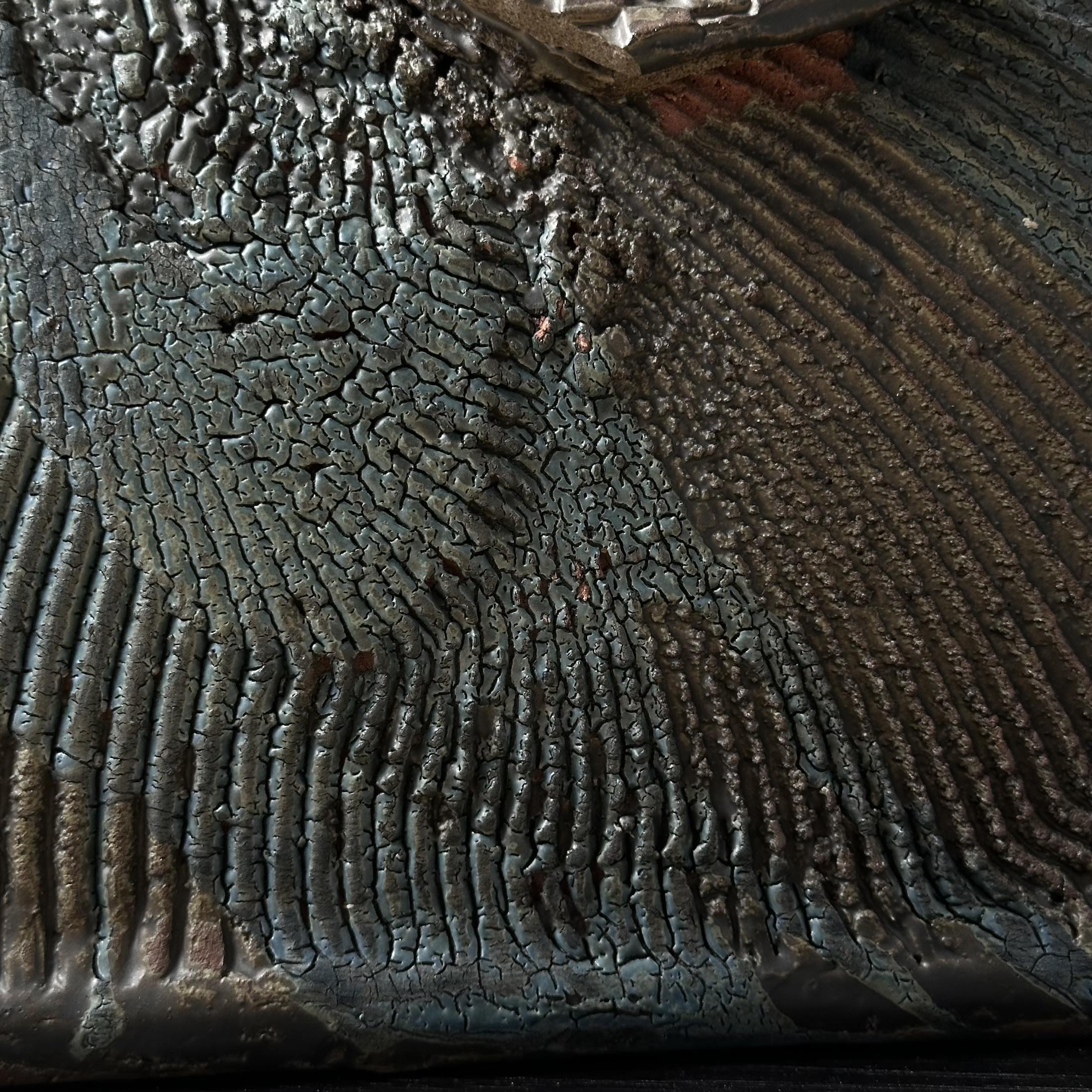
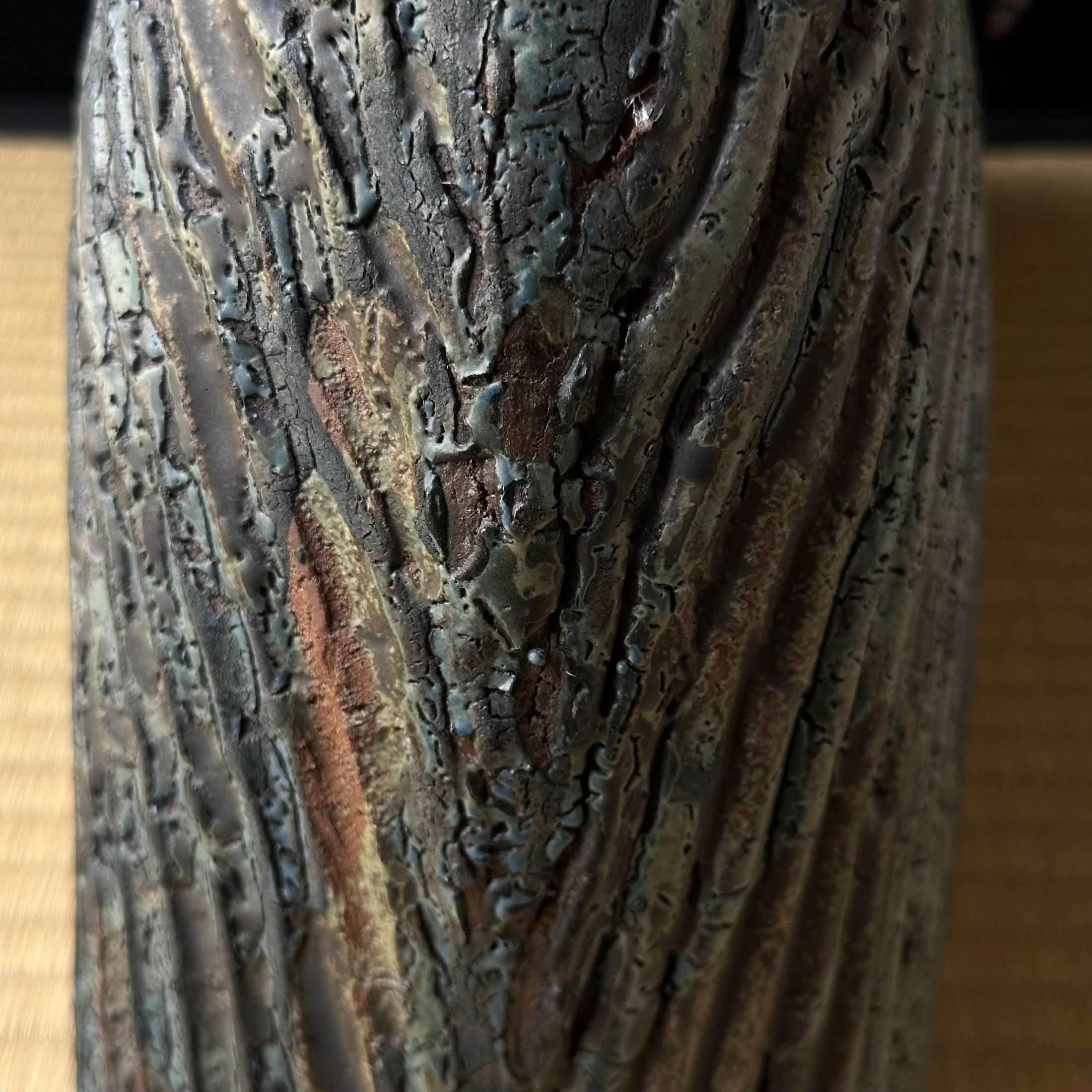
The surface is deeply animated by a dense network of vertical striations that run the length of the vase. These powerful reliefs give the material a distinctive texture and accentuate the object's sculptural strength. Around the short neck, a geometric checkerboard pattern structures the upper part of the vase and introduces a visual contrast to the freer rhythms of the body.
Through the vigor of its reliefs and the intensity of its surface, the work evokes the aesthetics of Jomon pottery, a prehistoric phase of Japanese ceramics known for its powerfully modeled decorations and expressive textures. For Nakamura, this reference is not an archaeological imitation but a plastic reinterpretation in a contemporary language marked by the influence of sculpture and abstraction.
Presentation
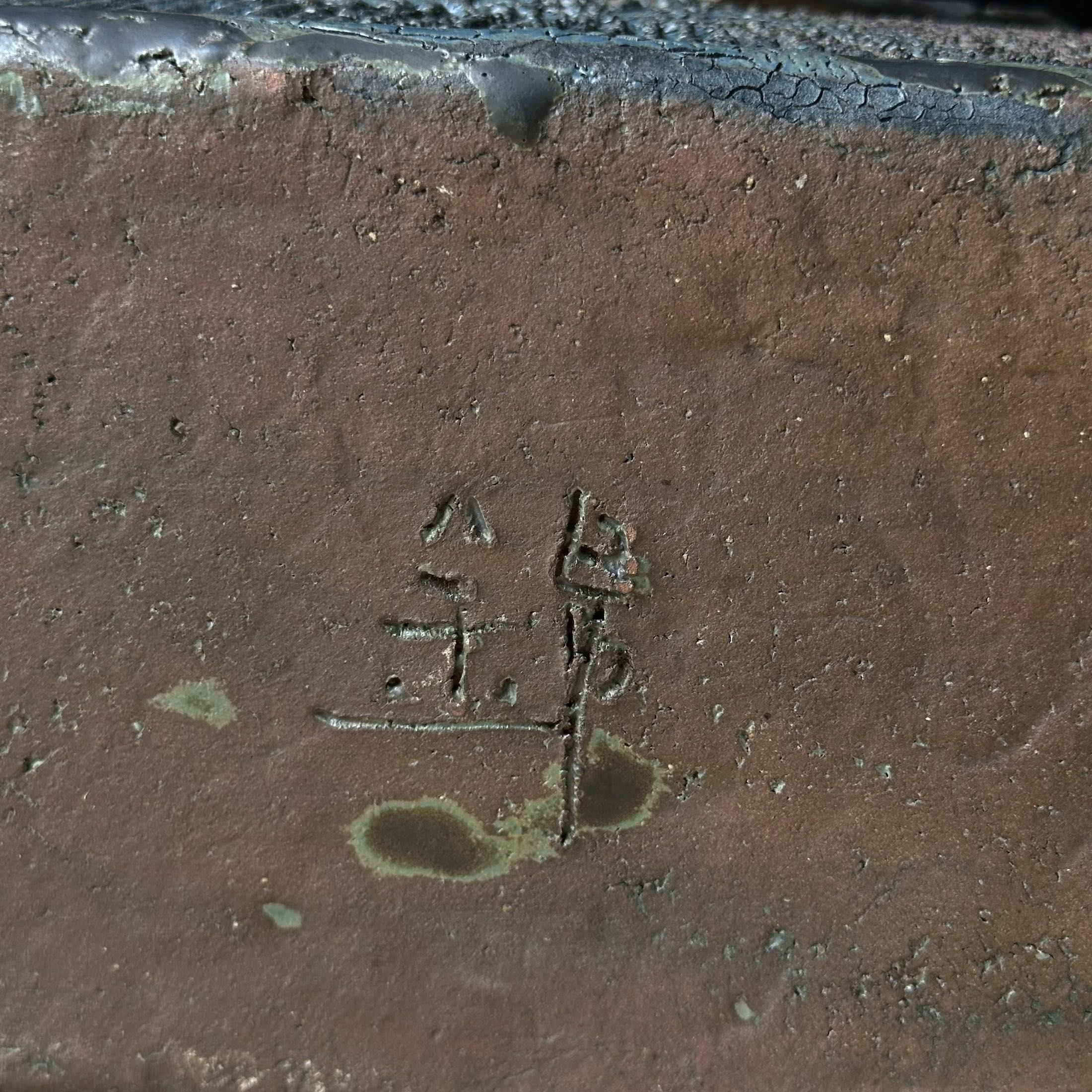
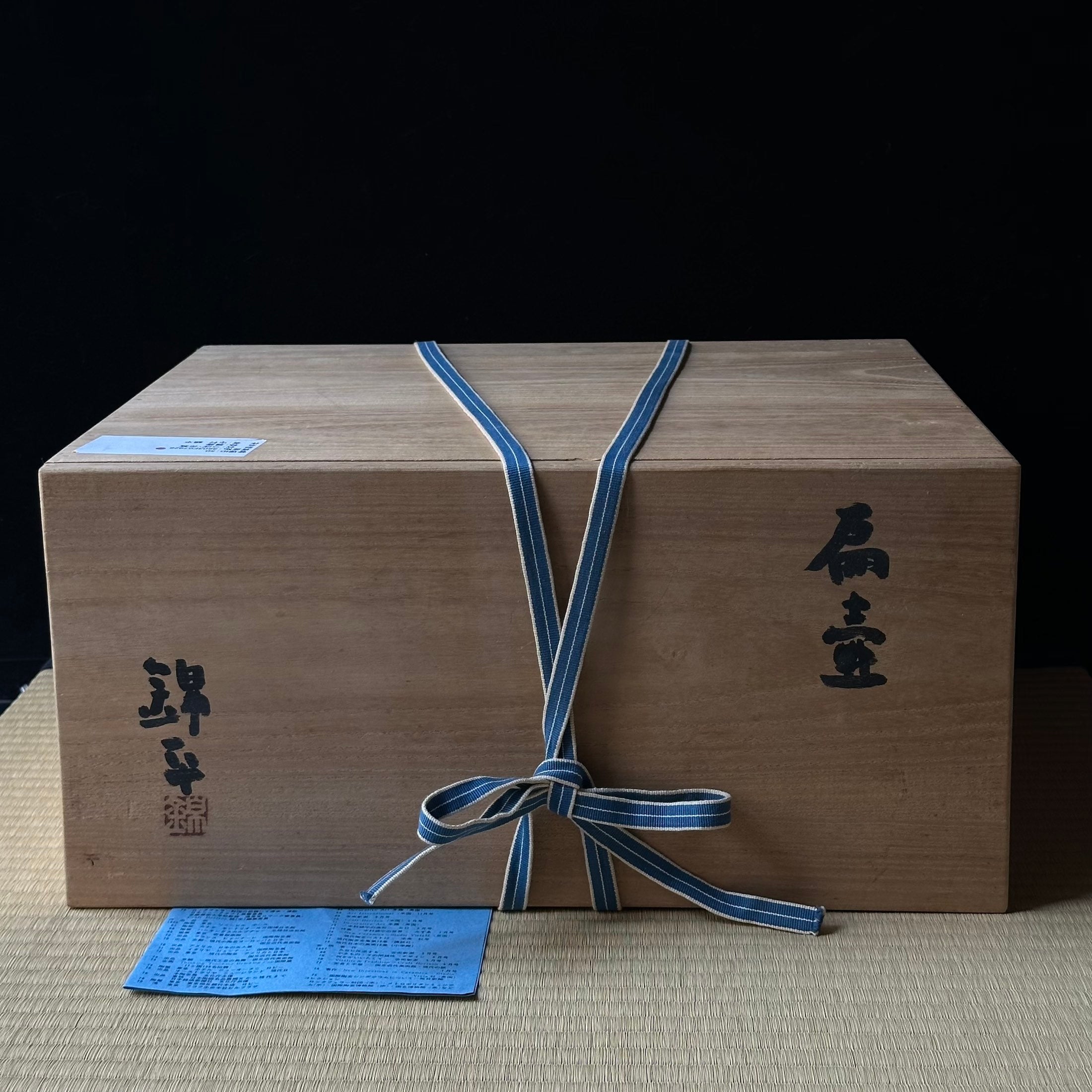
This vase is signed by the ceramist on its base. It comes with its tomobako (wooden box) also signed by the artist and bearing the title of the work (henko - flat vase), as well as an informational document (shiori) detailing the ceramist's profile.
Practical information
Place of manufacture
Japan (Tokyo)
Dimensions
Height 33 cm - Width 40 cm - Depth 13 cm
Weight
Vase + box: 12kg
Materials
Ceramic
Period
Early 1980s
Condition
This piece shows some signs of age consistent with its age, which fully contribute to its spectacular character.
© Atelier Ikiwa – Laurence Corteggiani. Photos and text protected. All reproduction prohibited without authorization.
KNOW-HOW
Japanese ceramics, born more than 10,000 years ago, are a dialogue between earth and fire, a quest for harmony through imperfection.
With a wide variety of high-quality raw materials, such as rich clays and natural glazes, each region has developed its own techniques, reflecting the identity of its terroir.
Hand-crafted, these vases, made using the most precious Japanese ceramic techniques, bear the imprint of a master craftsman who is the heir to a thousand-year-old tradition. This living art embodies the essence of Japan, where history and nature unite in beauty.
Although deeply rooted in tradition, these exceptional Japanese ceramic vases, signed by very big names, have a resolutely contemporary spirit while preserving their authenticity, incredibly decorative and wonderfully timeless sculptural pieces.
DELIVERY AND PAYMENT OPTIONS
Shipping
Free shipping in mainland France for purchases over €200. Shipping with Colissimo, choice of Home delivery or Relay Point, package delivered against signature or unique code for valuable items. Orders are generally sent within 2 business days, except for art photographs which are printed on demand and special cases which will be announced in the banner at the top of the site (e.g., in case of absence). Learn more >
Payment Options
Secure card payment with Shopify Payments and 3D Secure technology.
Visa, MasterCard, American Express, Cartes Bancaires, PayPal, Apple Pay, Shop Pay and Klarna.
Klarna: pay in 3 interest-free installments or within 30 days, for purchases up to €1,500, subject to Klarna's approval. You will be redirected to Klarna to log in or create an account and confirm your payment.
PayPal: You will be redirected to PayPal to log in and confirm the payment. New users can create an account during checkout.
Your invoice will be sent with your order
Returns and Exchanges
14 days to change your mind. Learn more >
CARE INSTRUCTIONS
Handle with care. Rub gently with a soft cloth. Do not place near a heat source.
Choose options
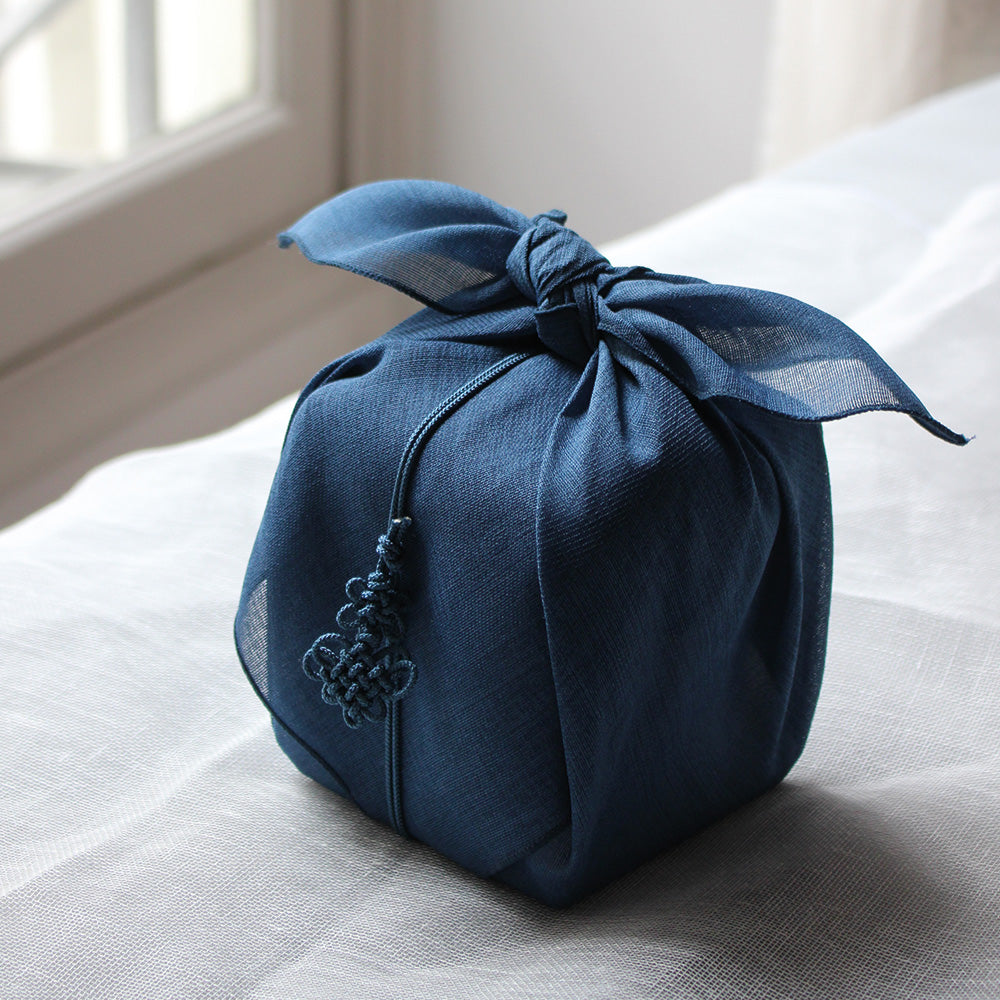
The art of wrapping
The exceptional items are wrapped in a beautiful fabric beautifully knotted using the little-known art of Korean pojagi and decorated with a delightful maedup (Korean ornamental knot). Details and conditions >
WRAPPING
Exceptional items are wrapped in textiles tied according to the Korean pojagi art