

Yusuke Miyazaki sometsuke ceramic mentor vase
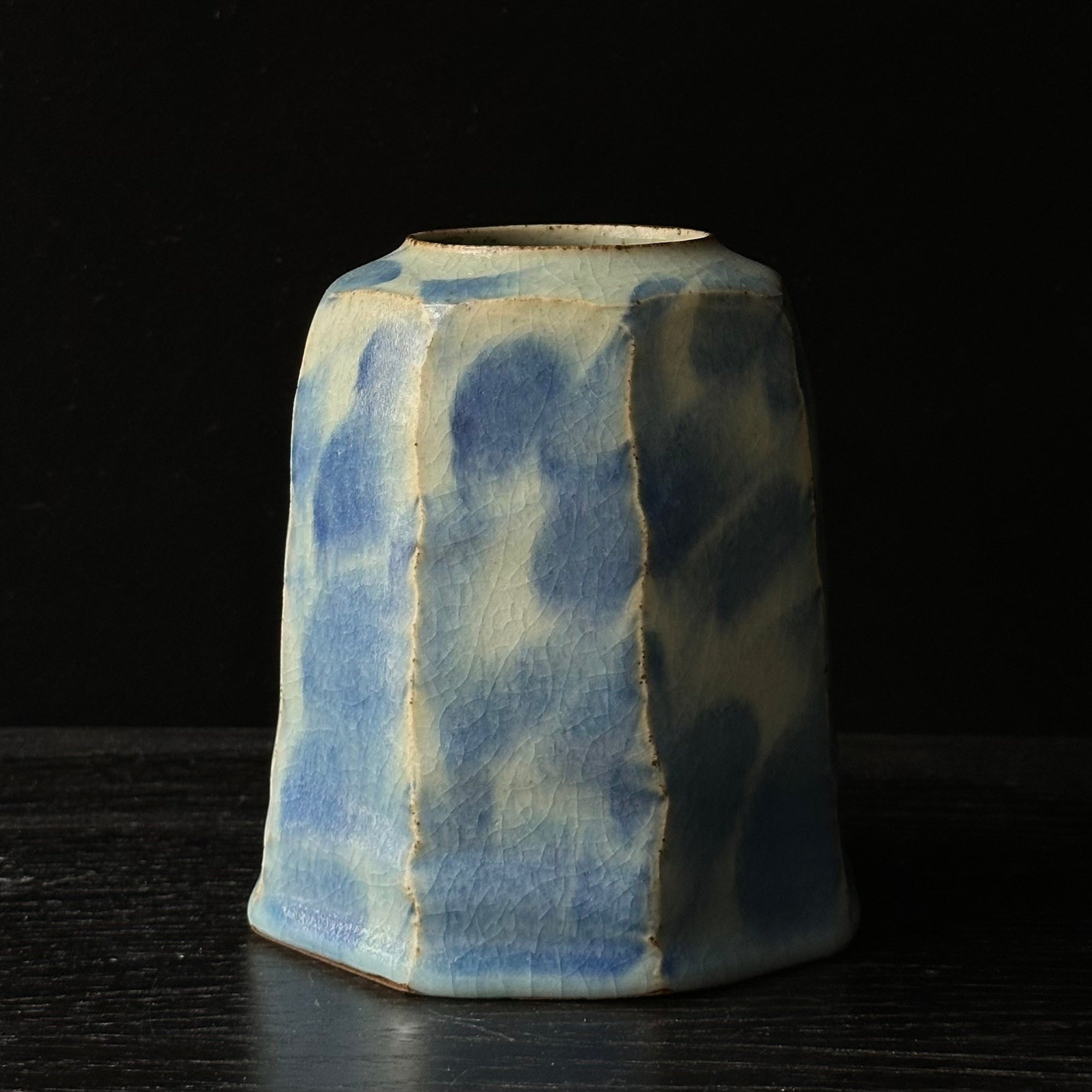
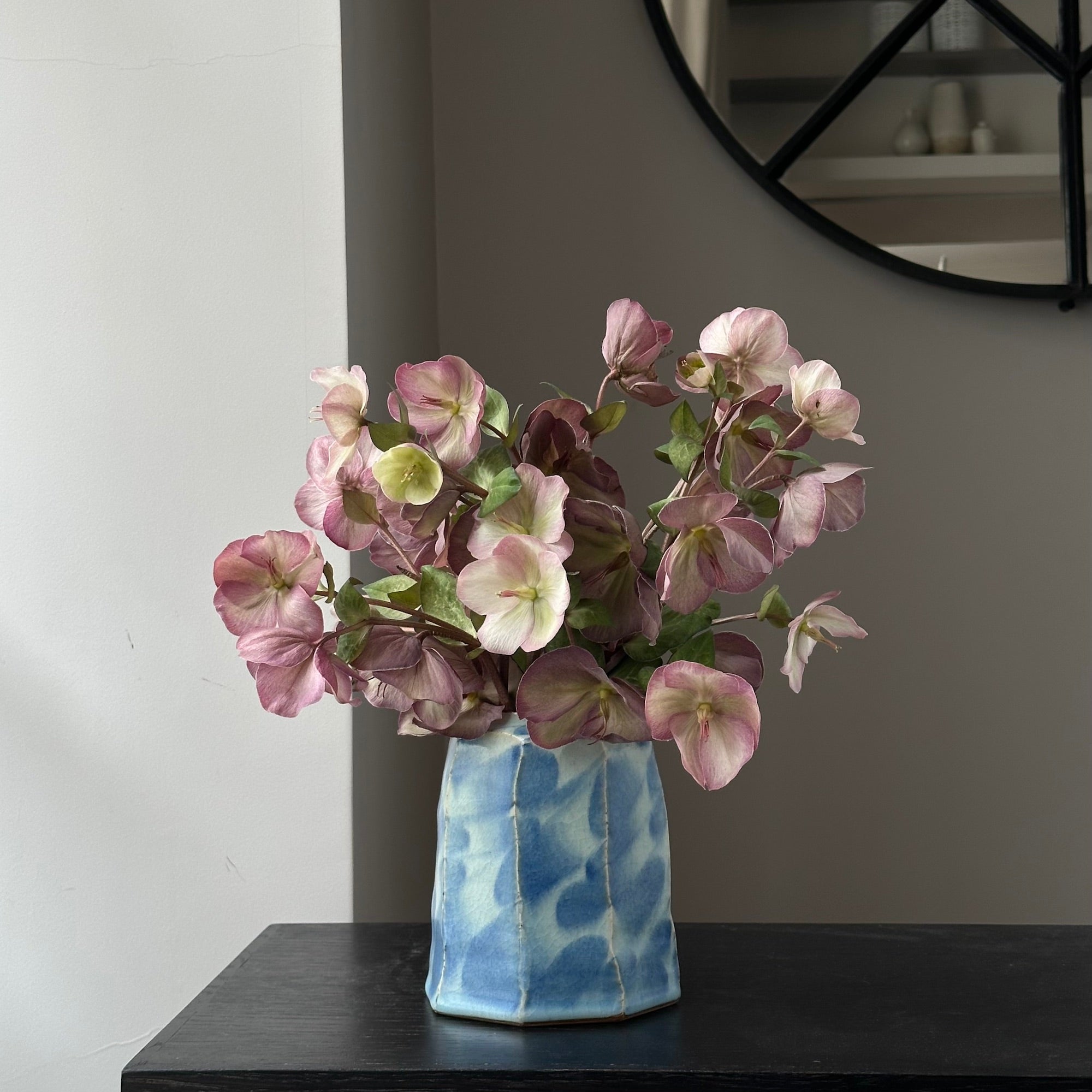
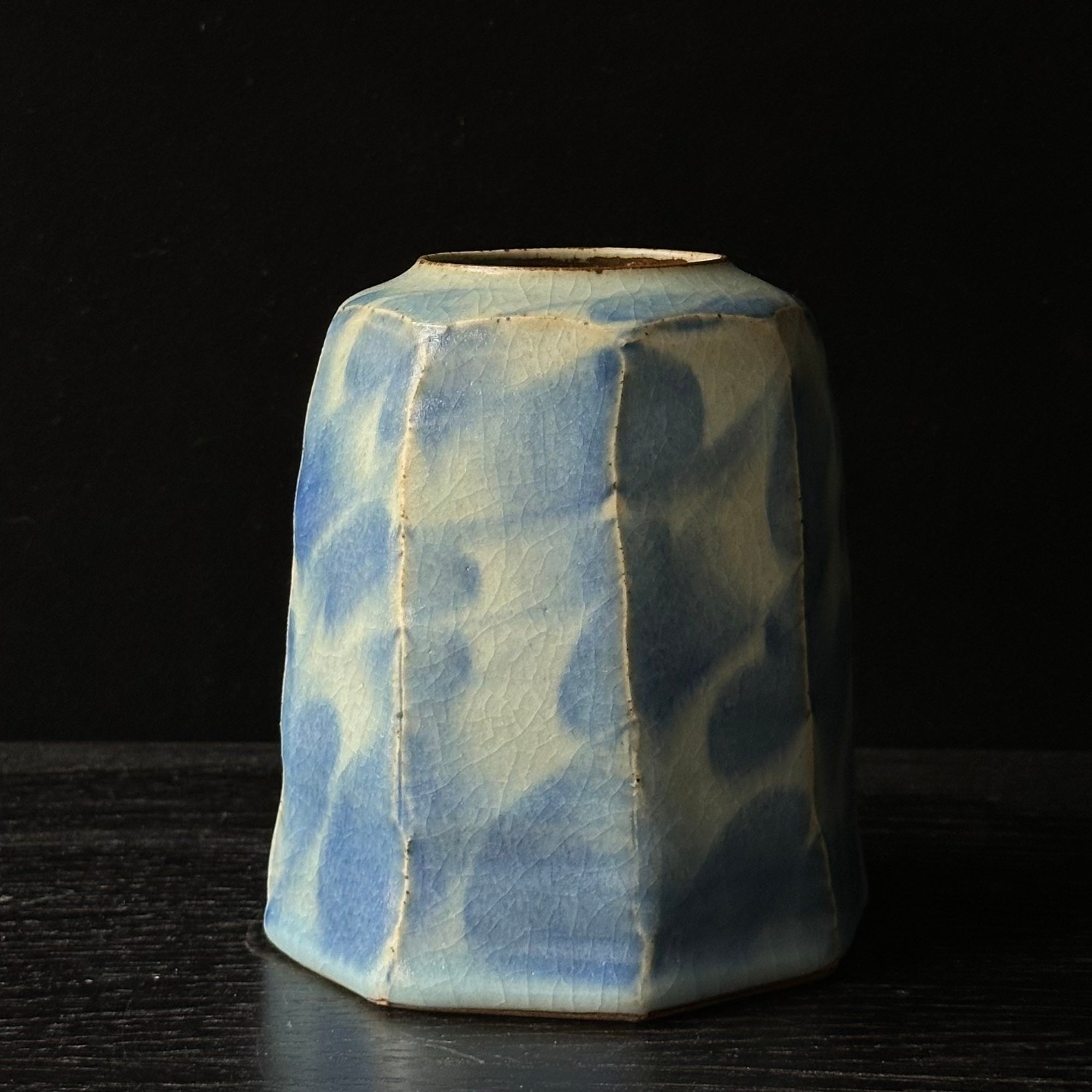
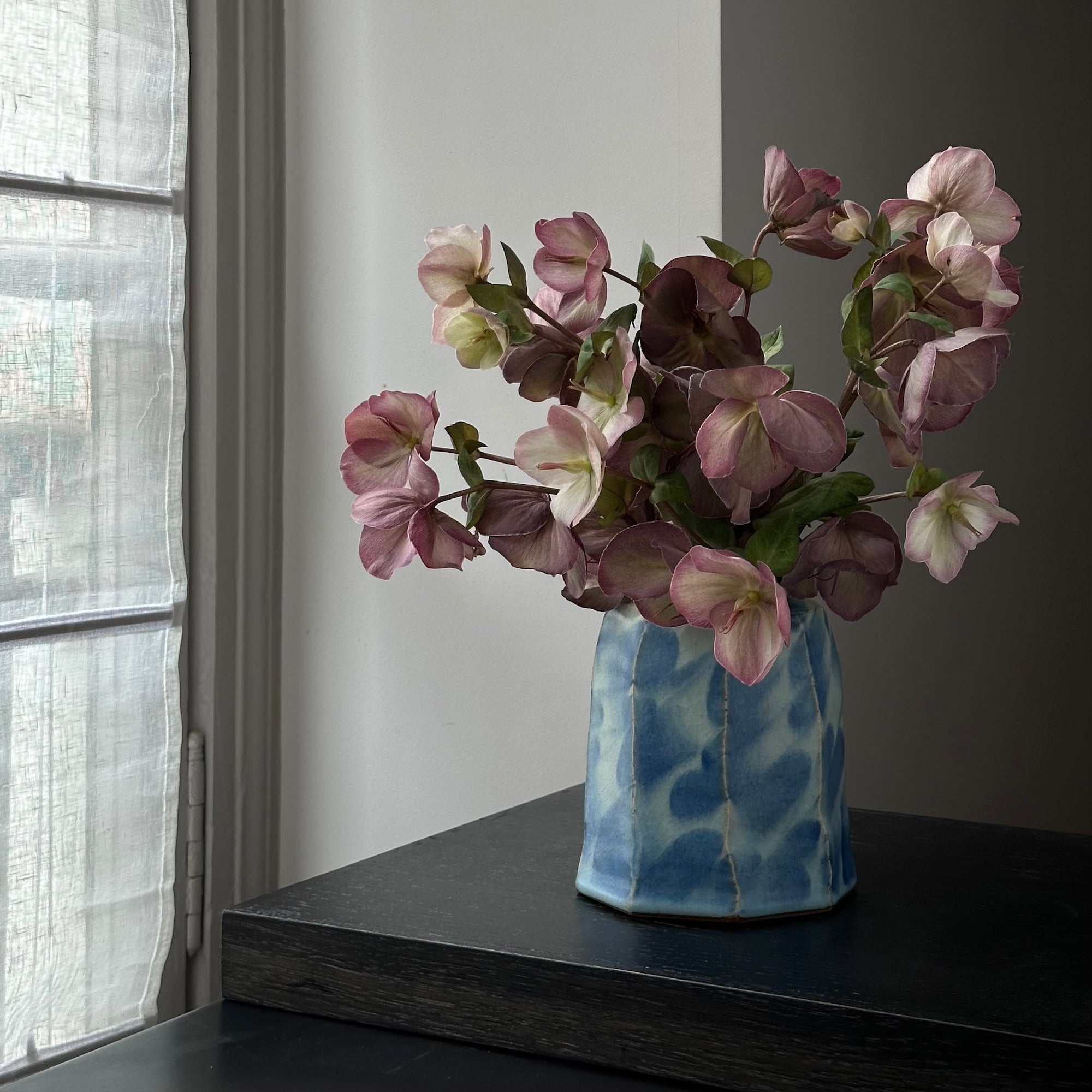
This piece by Yusuke Miyazaki is part of the Kyūshū no tōji (Kyushu ceramics) tradition, with the Saga region being one of its major centers. Through its sometsuke (underglaze blue) decoration and its mentori hanaire (faceted vase) shape, this vase expresses a classic Japanese aesthetic, both structured and sensitive. The balance between the faceted surfaces and the variations of blue gives it an elegant presence, suitable for both floral arrangements and as a standalone object.
The ceramist
Yusuke Miyazaki was born in 1954 in Ureshino, Saga Prefecture, a region historically linked to Japan's great ceramic traditions. He quickly became involved in traditional arts, with his first selection at the Nihon Dentō Kōgei Ten (Japanese Traditional Arts Exhibition) in 1974, at the age of twenty, followed by numerous selections thereafter.
He became a member of the Nihon Kōgei Kai (Japanese Crafts Association) in 1978. His work was also presented at the Nihon Tōgei Ten (Japan Ceramics Exhibition), as well as in international exhibitions from the 1970s. In 1981, he received the Governor's Prize at a major exhibition of Western Japan ceramics.
Settling in the Saga region where he established his own kiln, he developed personal research into traditional techniques, particularly sometsuke. His work has been presented in Japanese institutions and has been exhibited internationally, including an exhibition and the acquisition of his works by the British Museum in the early 2000s.
Technique and decoration
Yusuke Miyazaki's work is part of the sometsuke tradition, an underglaze decoration technique using cobalt oxides applied to the clay before firing. This technique, deeply linked to the ceramics of the Saga region, allows for the creation of rich blues, revealed after the application of a transparent glaze and firing.
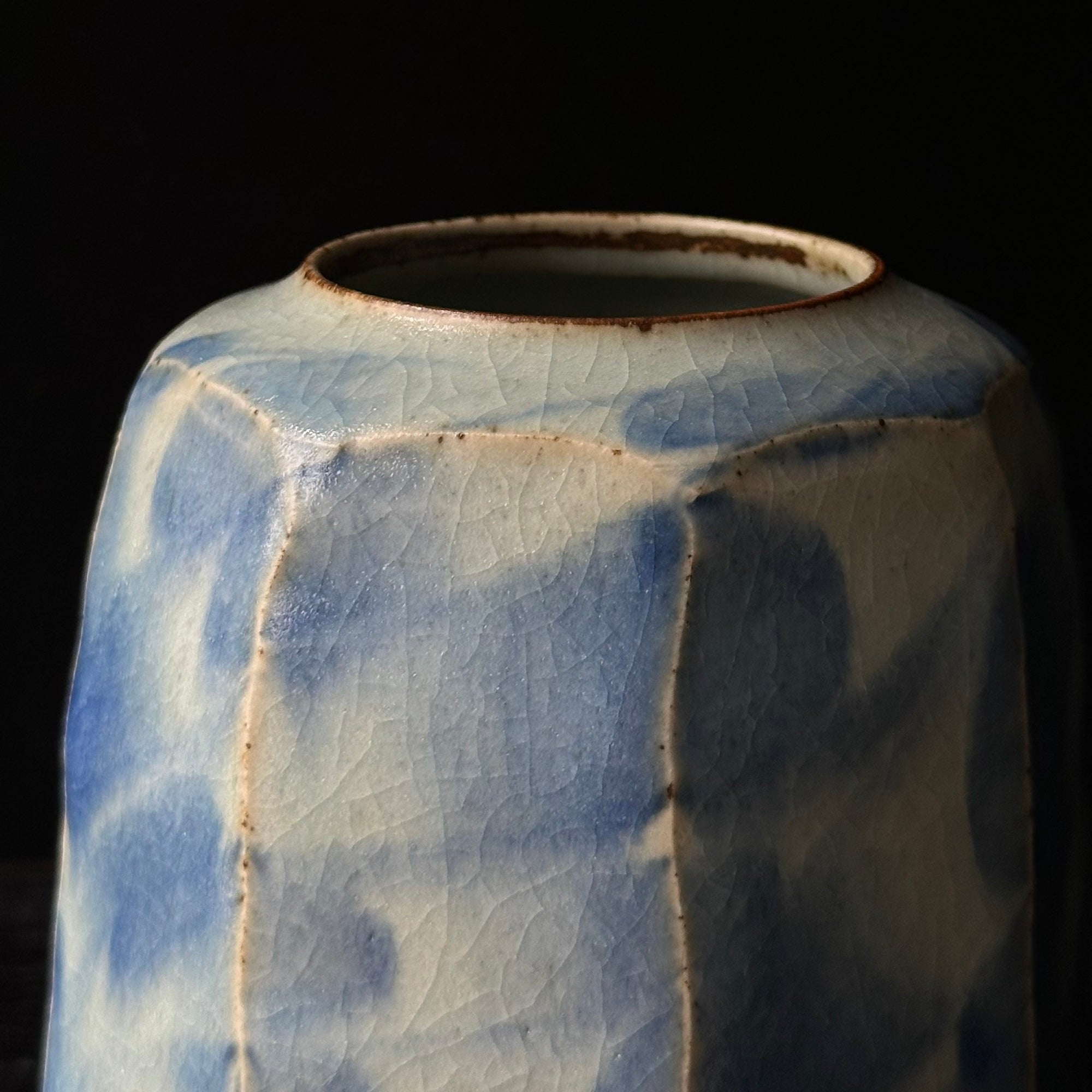
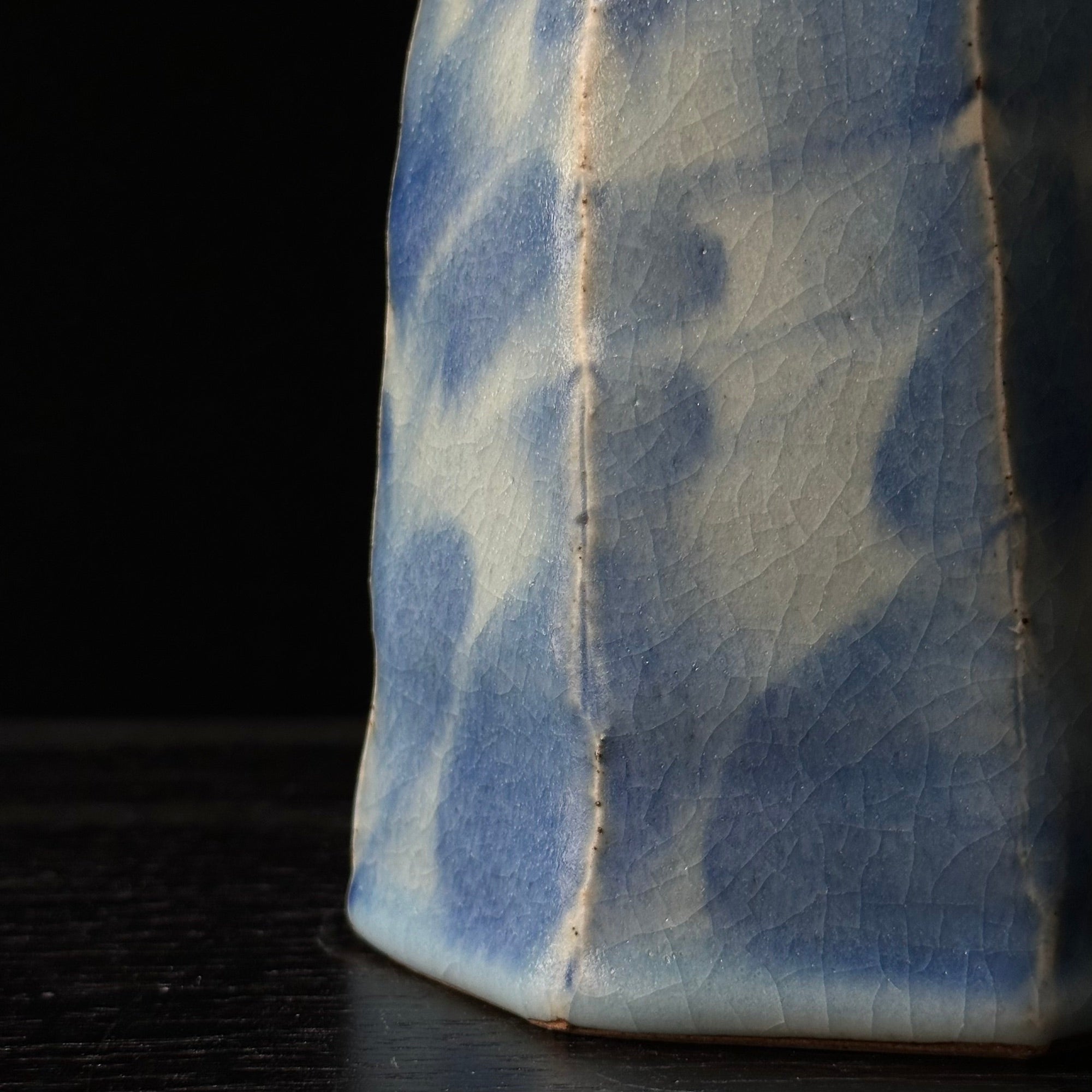
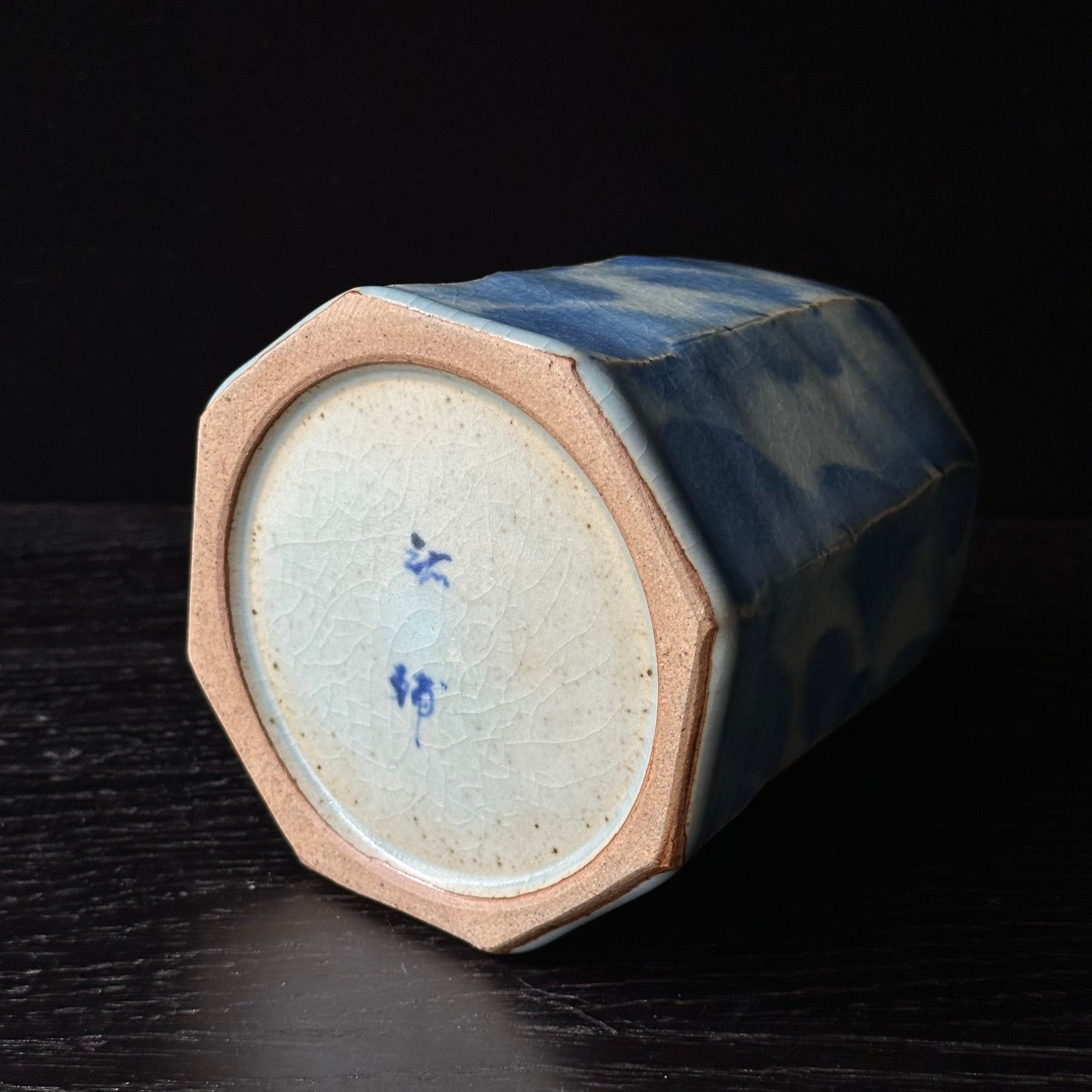
On this piece, the decoration is freely applied to the different faces of the vase, exploiting the mentori structure. The cobalt areas subtly diffuse under the glaze, creating soft transitions between the blues and the lighter reserves. The surface also features a fine network of natural crazing, revealing the tension between the glaze and the ceramic body.
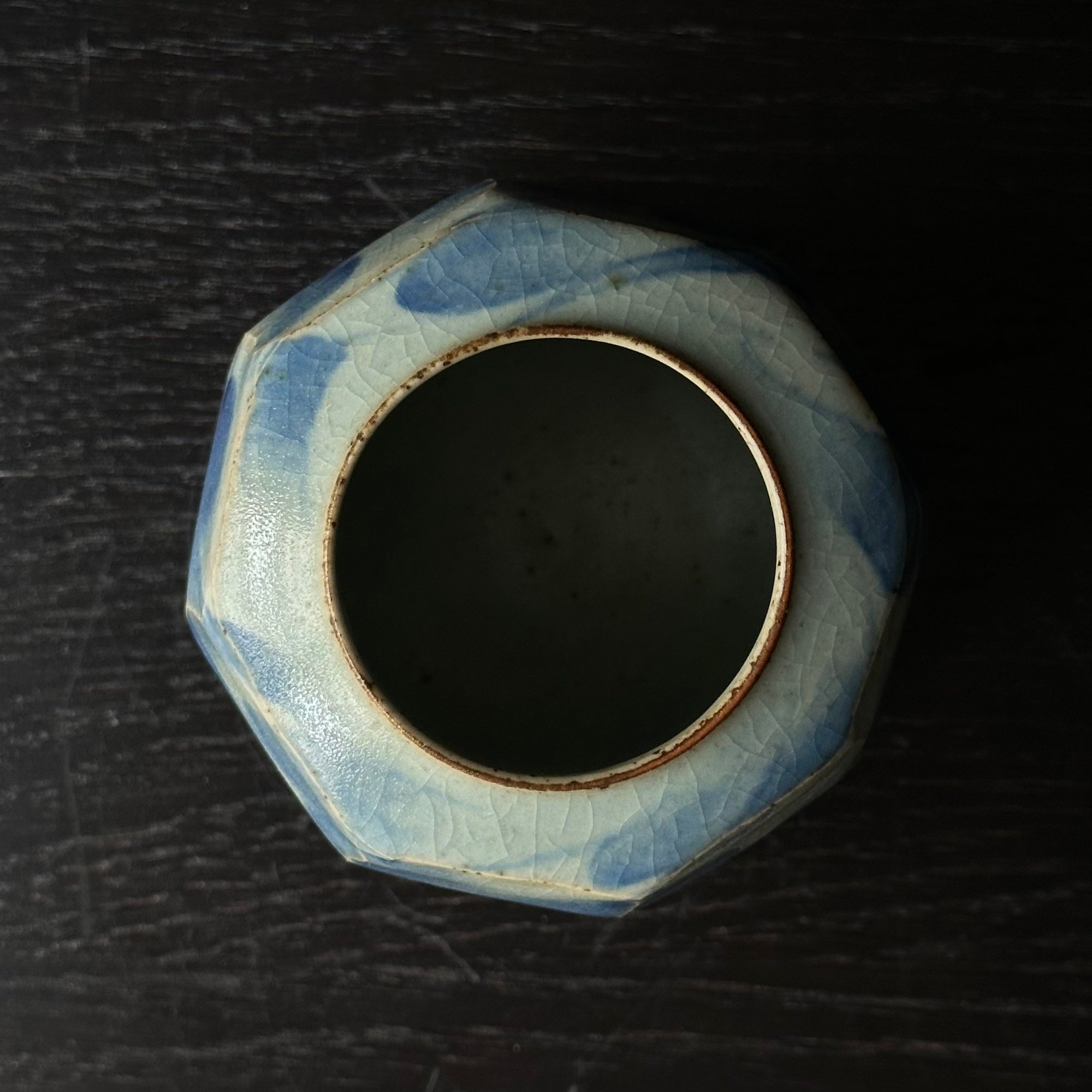
The shaping highlights vertical facets, achieved by throwing and then reworking, giving the vase a rhythmic structure that catches the light differently depending on the angle. This construction reinforces the reading of the decoration, with each face becoming a space for variation of the motif.
Presentation
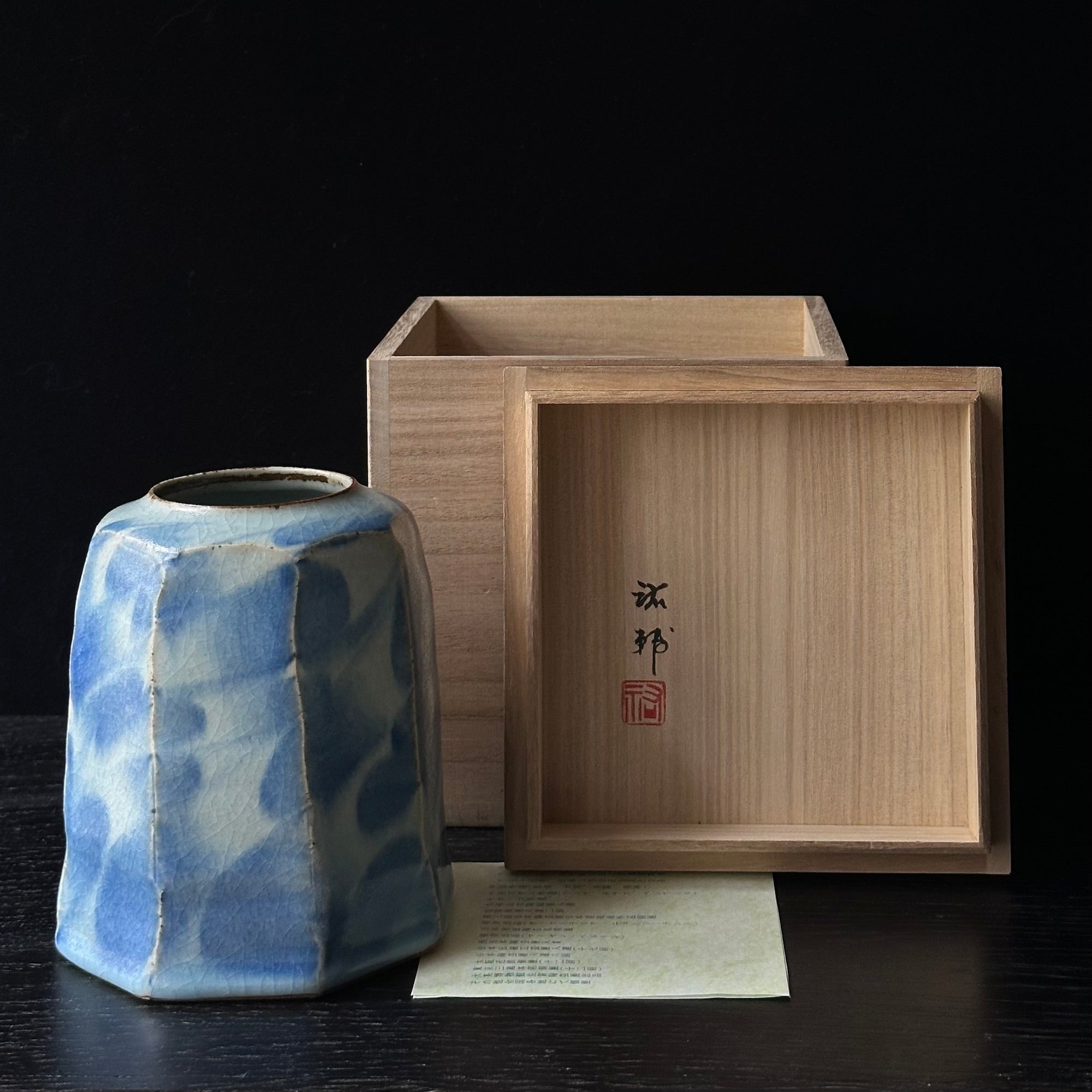
This vase is signed by the ceramist on its base. It comes with its tomobako wooden box, signed by the ceramist, with his seal and the title of the work. An information document (shiori) detailing the ceramist's profile completes the set.
Practical information
Place of manufacture
Japan, Saga
Dimensions
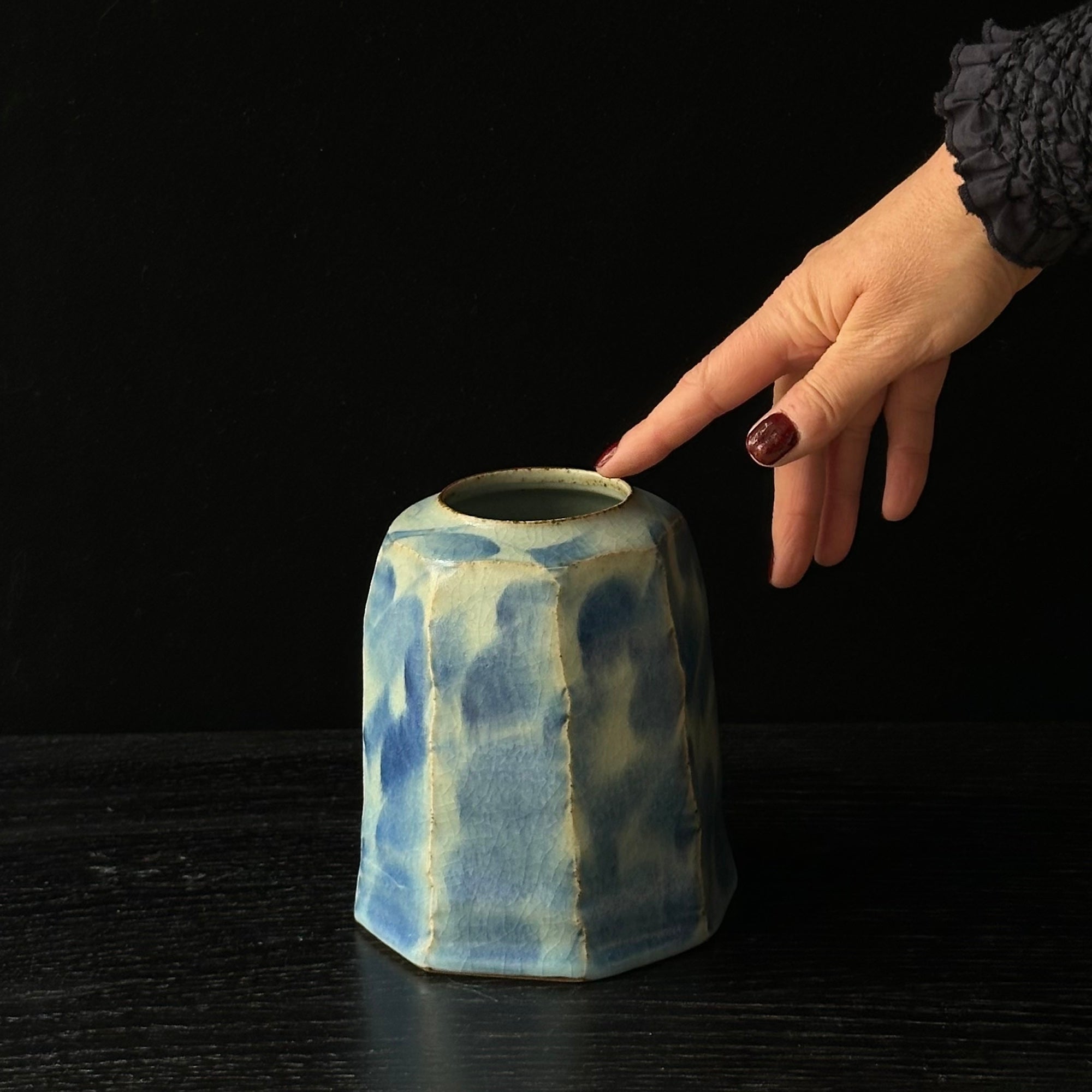
Height 15 cm - Diameter 13 cm
Weight
1.3 kg
Materials
Ceramic
Period
Heisei Era (1989 - 2019)
Condition
In good condition
© Atelier Ikiwa – Laurence Corteggiani. Photos and text protected. All reproduction prohibited without authorization.
KNOW-HOW
Japanese ceramics, born more than 10,000 years ago, are a dialogue between earth and fire, a quest for harmony through imperfection.
With a wide variety of high-quality raw materials, such as rich clays and natural glazes, each region has developed its own techniques, reflecting the identity of its terroir.
Hand-crafted, these vases, made using the most precious Japanese ceramic techniques, bear the imprint of a master craftsman who is the heir to a thousand-year-old tradition. This living art embodies the essence of Japan, where history and nature unite in beauty.
Although deeply rooted in tradition, these exceptional Japanese ceramic vases, signed by very big names, have a resolutely contemporary spirit while preserving their authenticity, incredibly decorative and wonderfully timeless sculptural pieces.
DELIVERY AND PAYMENT OPTIONS
Shipping
Free shipping in mainland France for purchases over €200. Shipping with Colissimo, choice of Home delivery or Relay Point, package delivered against signature or unique code for valuable items. Orders are generally sent within 2 business days, except for art photographs which are printed on demand and special cases which will be announced in the banner at the top of the site (e.g., in case of absence). Learn more >
Payment Options
Secure card payment with Shopify Payments and 3D Secure technology.
Visa, MasterCard, American Express, Cartes Bancaires, PayPal, Apple Pay, Shop Pay and Klarna.
Klarna: pay in 3 interest-free installments or within 30 days, for purchases up to €1,500, subject to Klarna's approval. You will be redirected to Klarna to log in or create an account and confirm your payment.
PayPal: You will be redirected to PayPal to log in and confirm the payment. New users can create an account during checkout.
Your invoice will be sent with your order
Returns and Exchanges
14 days to change your mind. Learn more >
CARE INSTRUCTIONS
Handle with care. Rub gently with a soft cloth. Do not place near a heat source.
Choose options
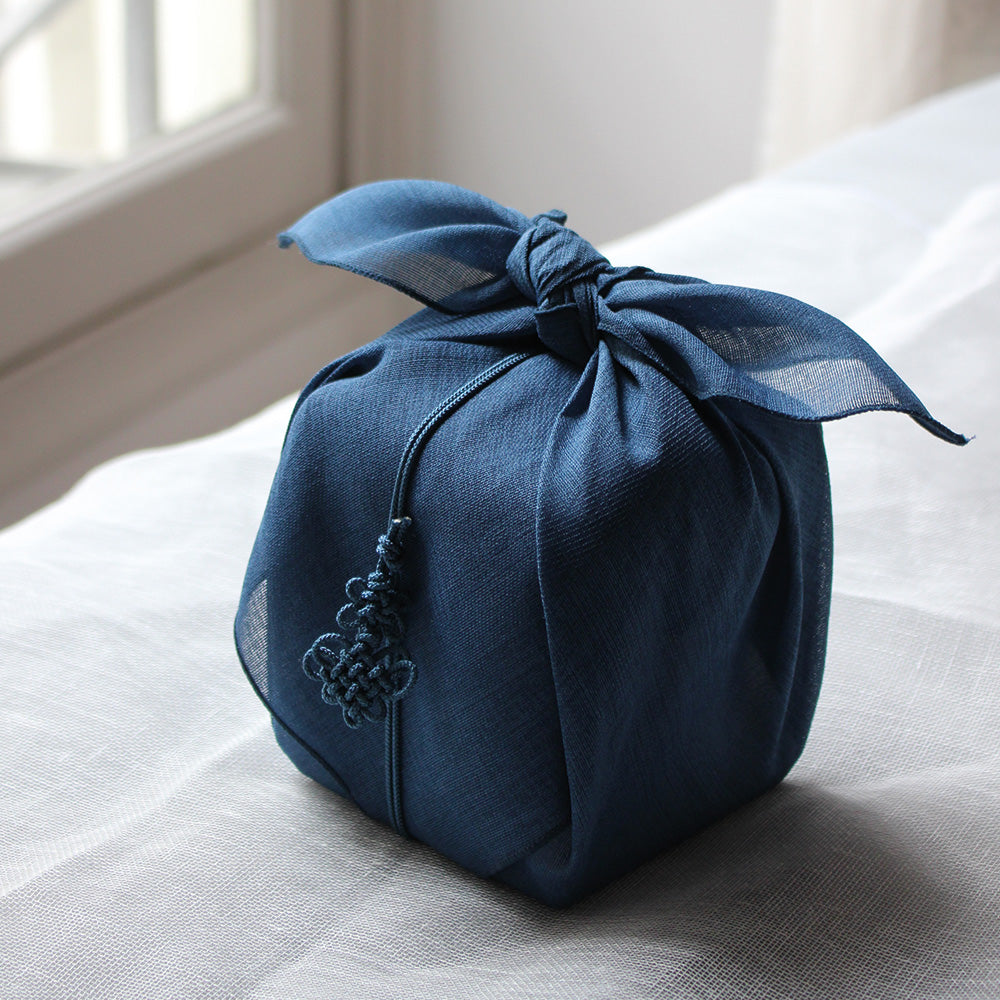
The art of wrapping
The exceptional items are wrapped in a beautiful fabric beautifully knotted using the little-known art of Korean pojagi and decorated with a delightful maedup (Korean ornamental knot). Details and conditions >

WRAPPING
Exceptional items are wrapped in textiles tied according to the Korean pojagi art