

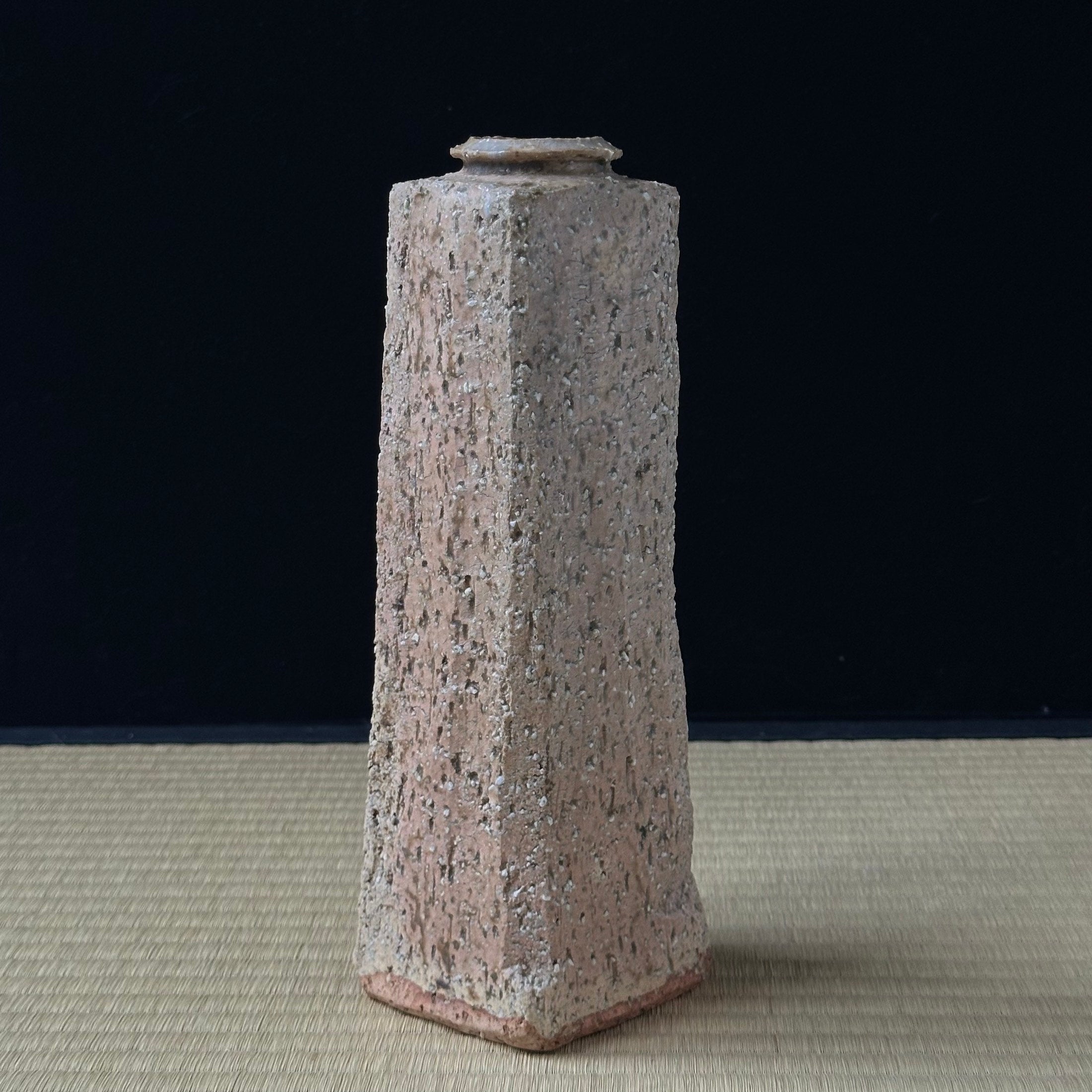
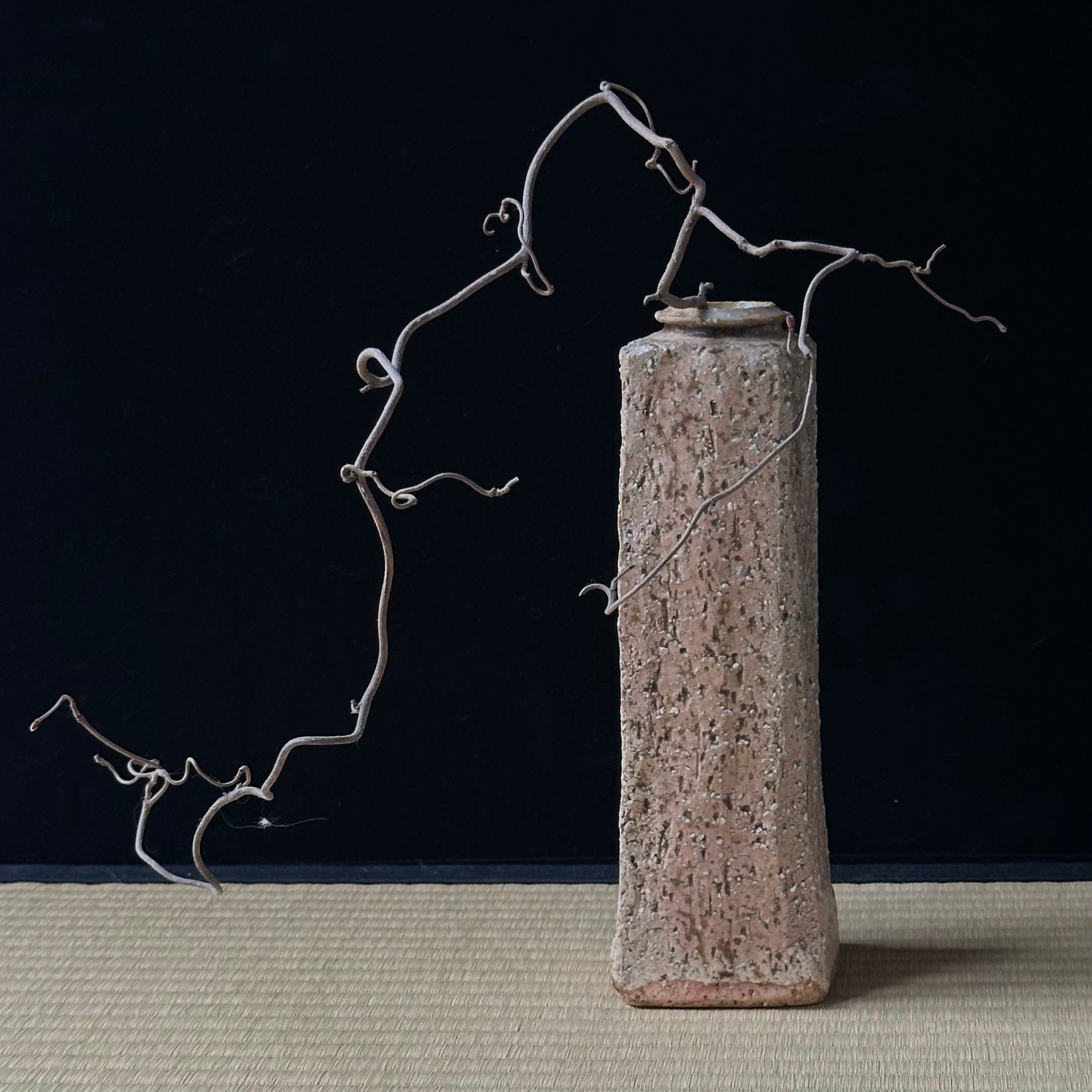
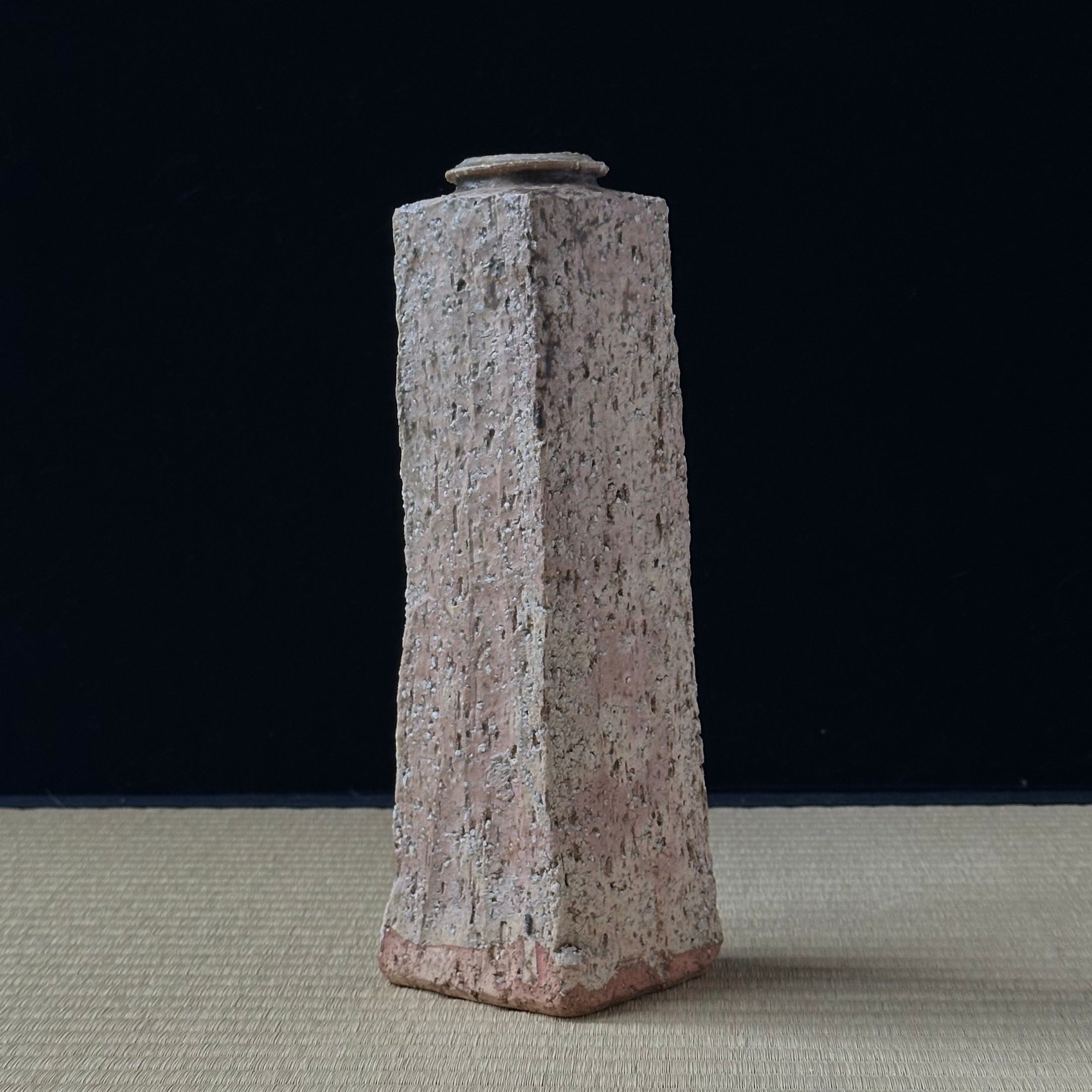
Hagi yaki ceramic shihō hanaire vase by Tobei Tahara
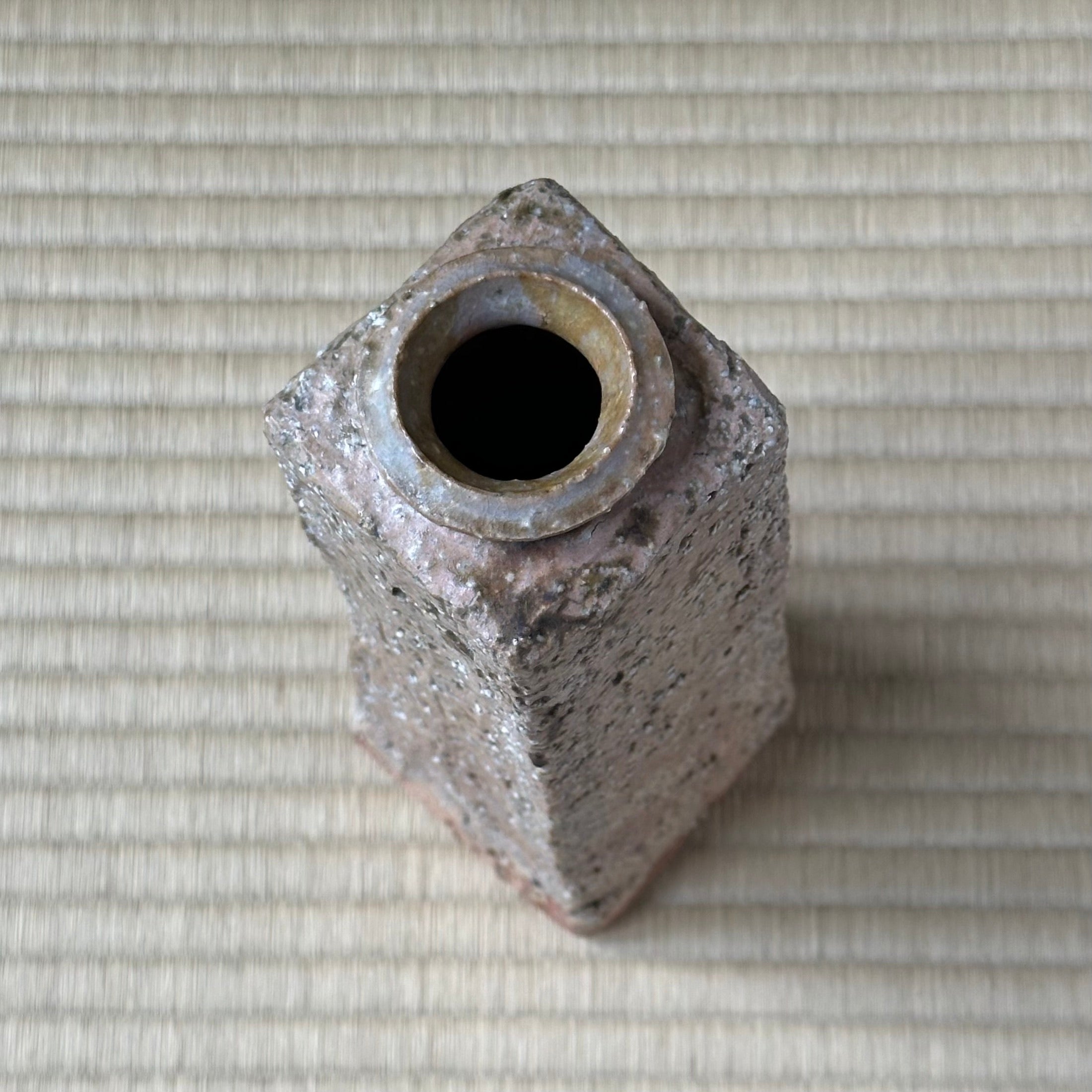
This piece by master ceramicist Tobei Tahara XII belongs to the grand tradition of Hagi ware (Hagi pottery), one of the most refined expressions of Japanese ceramics. Heir to a historical lineage of potters established since the Edo period in the Hagi region of Yamaguchi Prefecture, Tahara develops a style deeply rooted in this tradition while imbuing it with a highly personal presence. Through its architecturally structured shihō hanaire (square vase) form and the mineral texture of its surface, this vase fully expresses the wabi-sabi aesthetic, where the simplicity of form and the materiality of the clay reveal a discreet and timeless beauty.
The ceramist
Tobei Tahara XII (1912-1991), whose real name was Genjiro Tahara, was born in Nagato, Yamaguchi Prefecture, in the heart of the Hagi region, a major center of Japanese ceramics. The second son of Tobei Tahara X, he belonged to a line of ceramicists whose origins date back to the beginning of the Edo period and which constitutes one of the historical families of Hagi yaki.
After attending Yamaguchi High School, his career was marked by World War II. Mobilized in 1944 and sent to Manchuria, he was interned in Siberia after the end of the conflict before returning to Japan in 1948. Upon his return, he took over the family pottery business when his older brother, Tobei Tahara XI, found himself without a successor.
In 1956, he officially adopted the name Tobei Tahara XII, becoming the heir to this prestigious lineage of Hagi potters whose origins date back to the early Edo period. Recognized for the quality of his work and his commitment to the Hagi yaki tradition, he was admitted in 1972 as a full member of the Nihon Kogei Association (Japan Craft Association). In 1981, Yamaguchi Prefecture designated him as a holder of intangible cultural heritage for Hagi pottery.
The technique and the decor
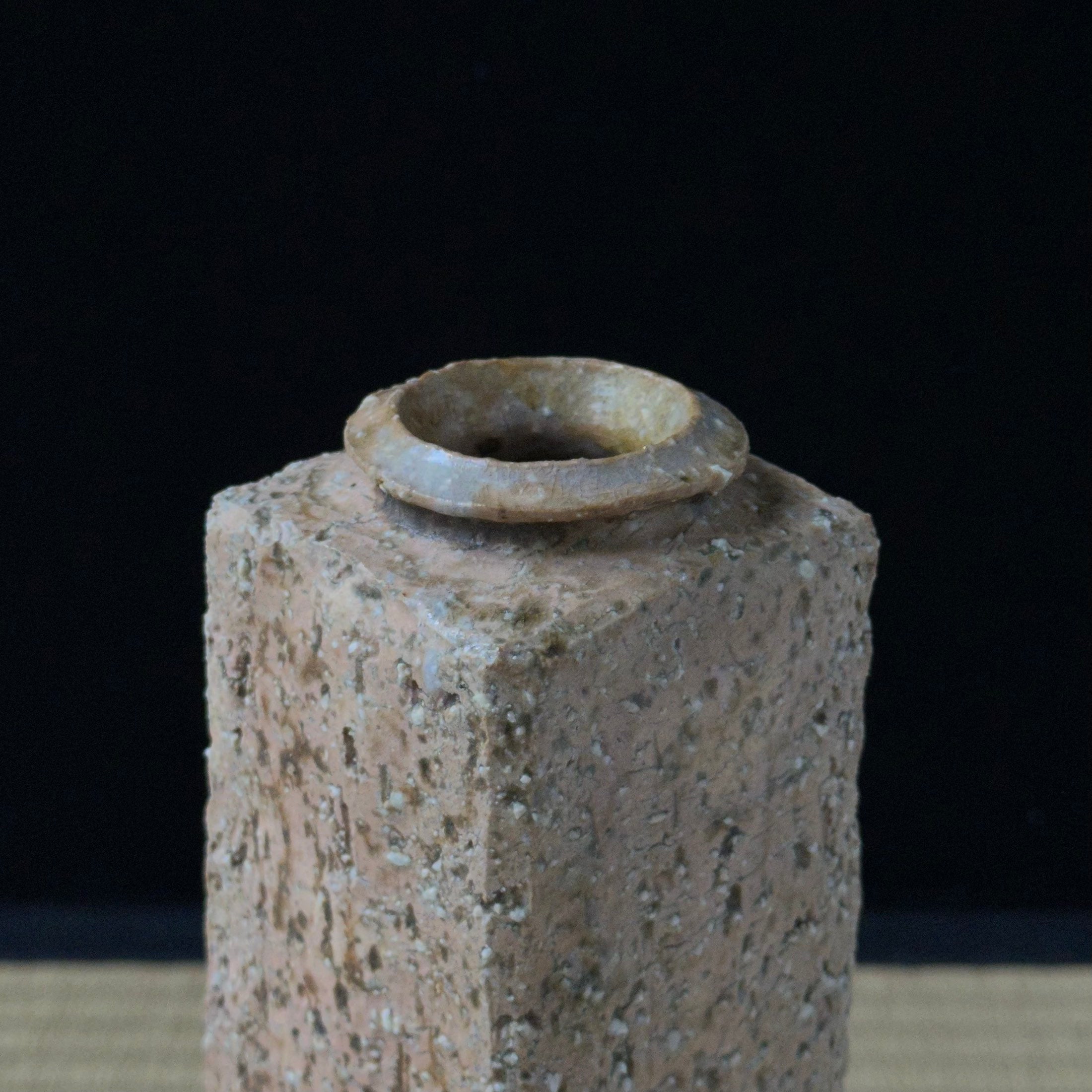
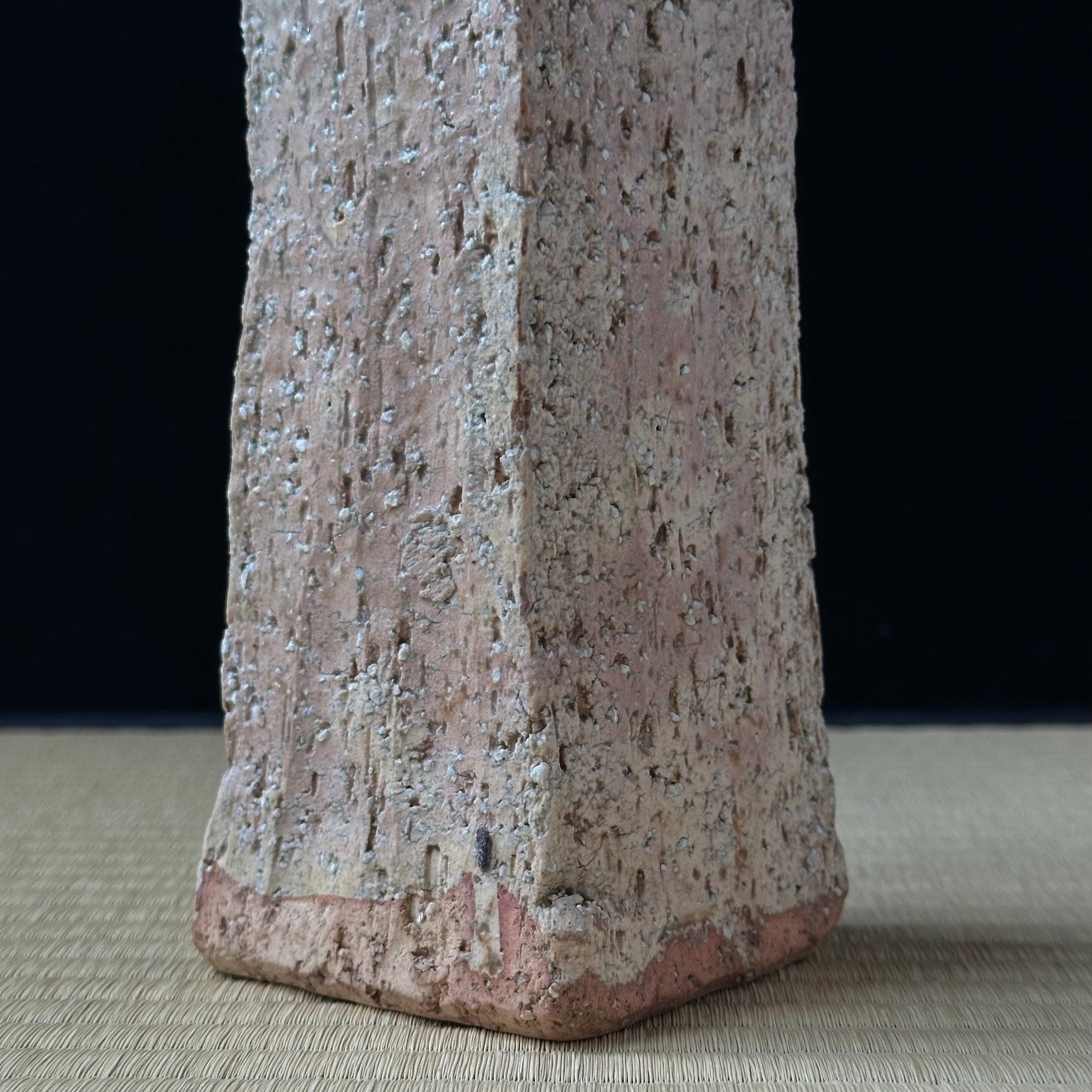
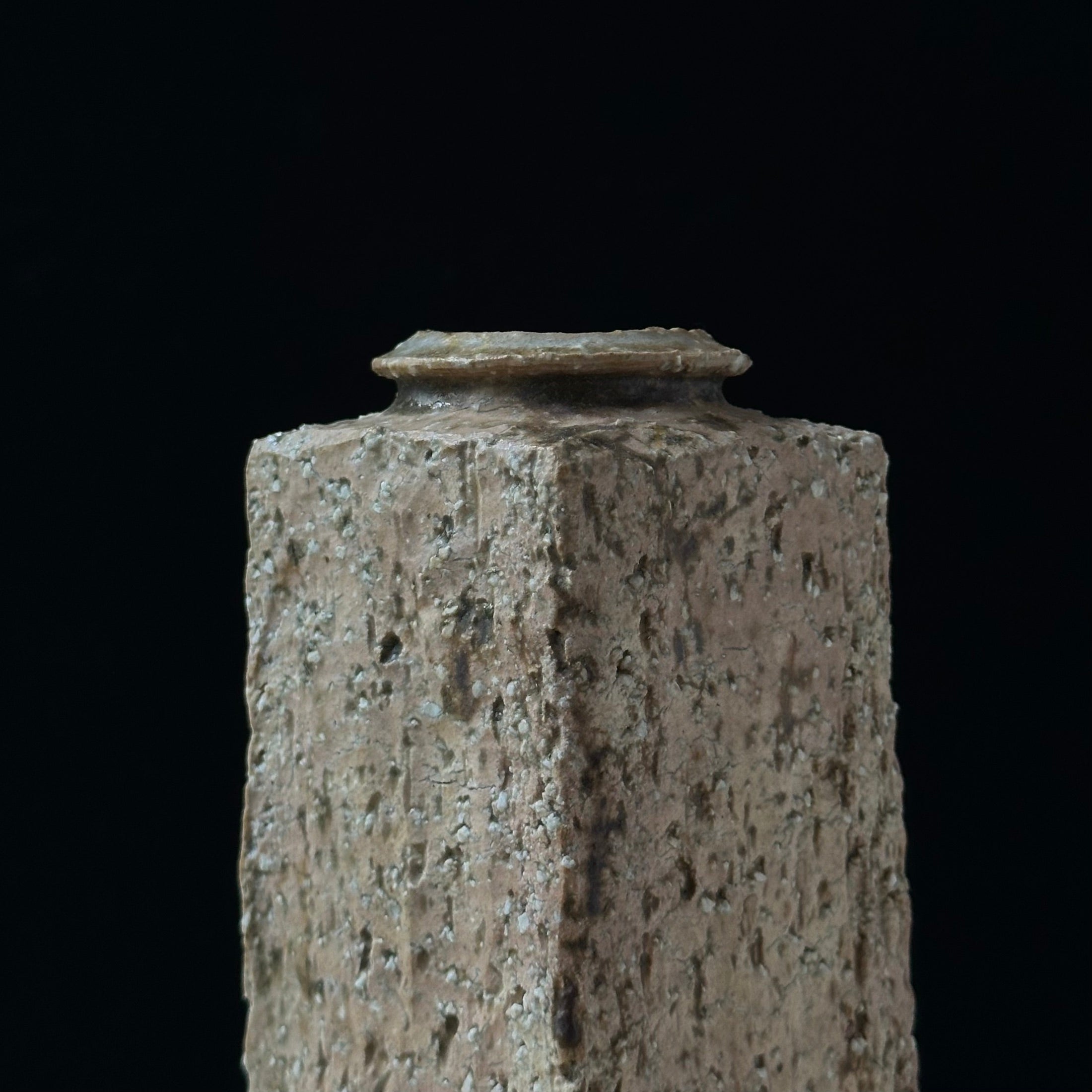
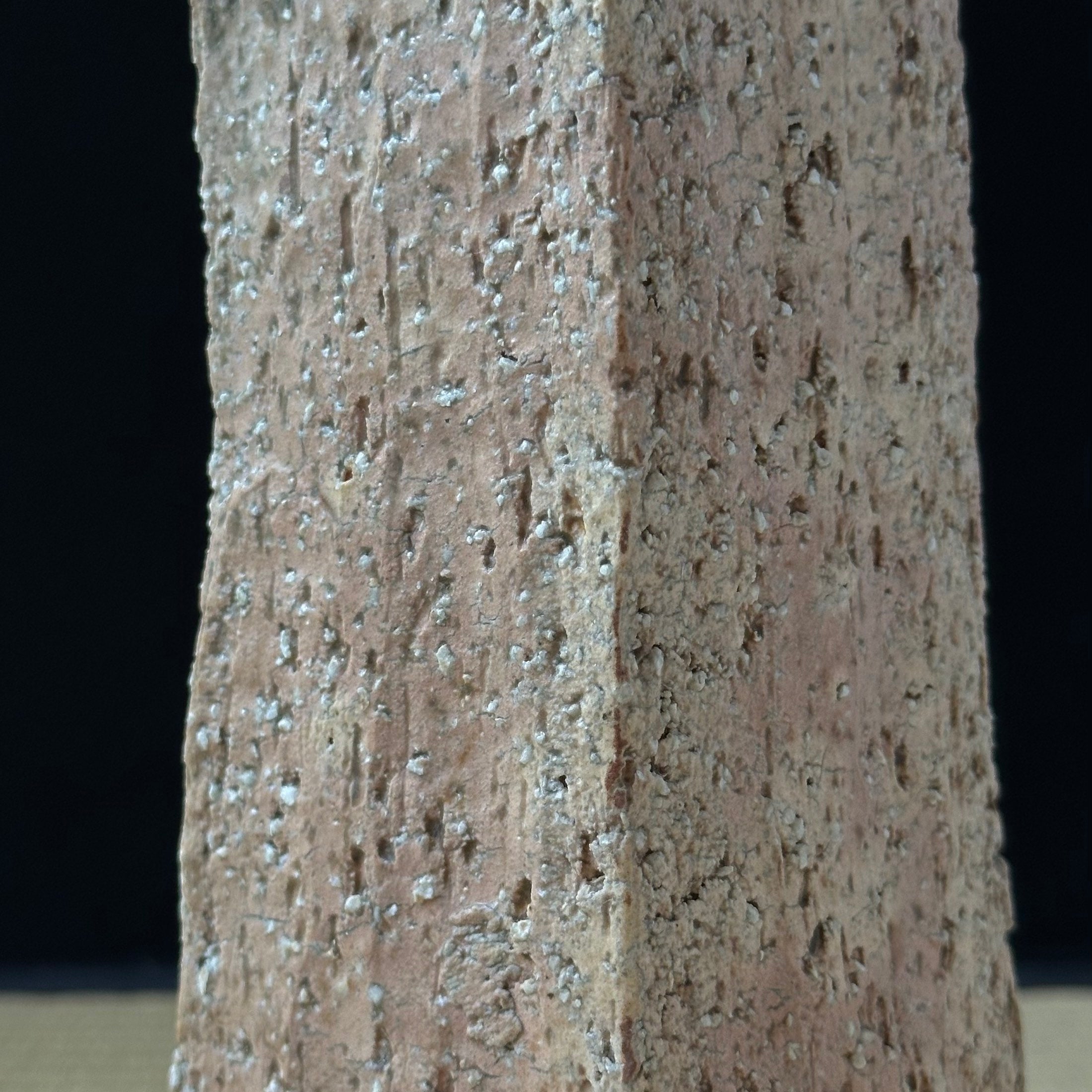
This piece exemplifies the characteristic qualities of Hagi yaki (Hagi pottery), renowned for its vibrant, porous surfaces that evolve slowly with time and use. The vase is crafted from a clay rich in visible mineral particles, whose inclusions create a distinctive, granular, and irregular texture.
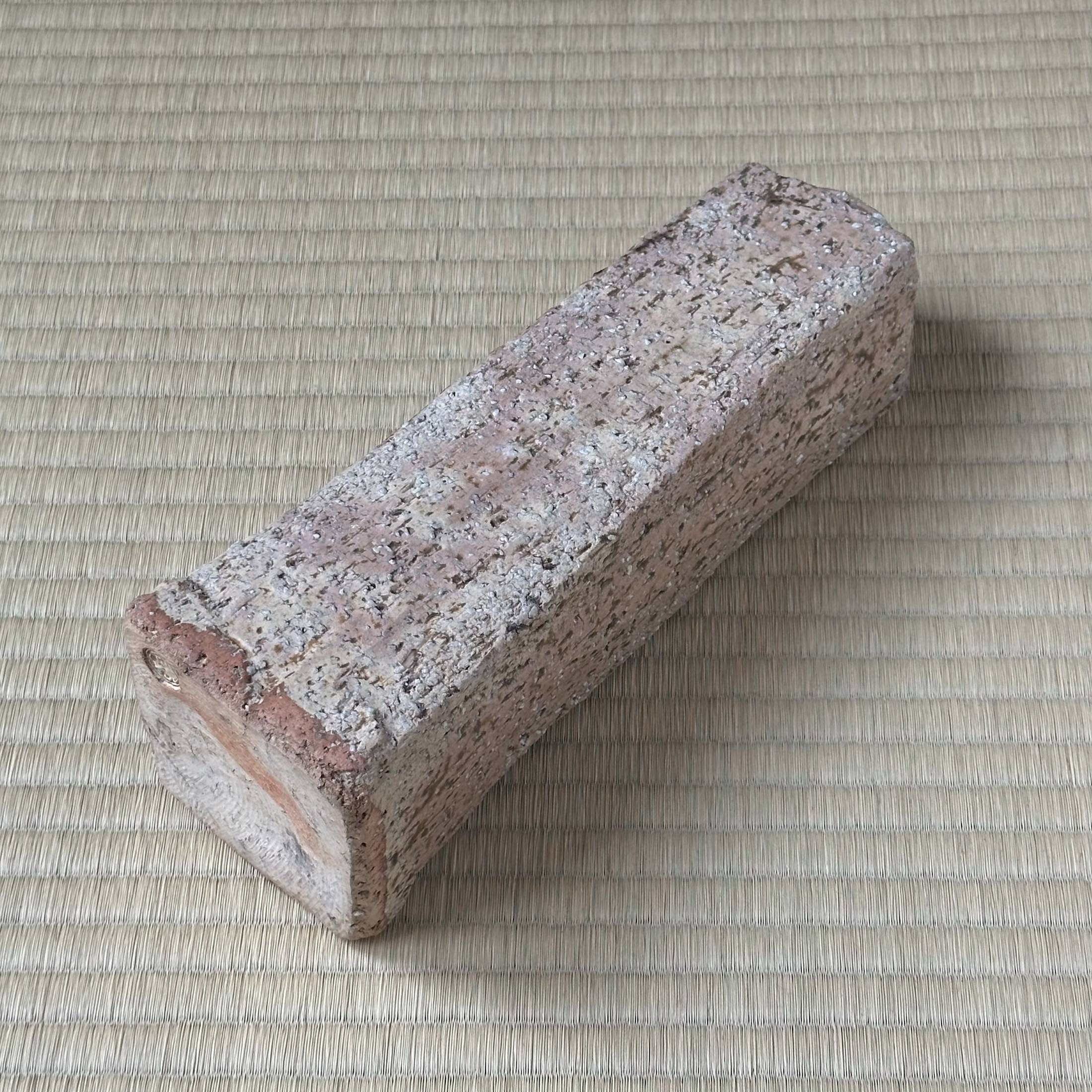
The carefully sculpted square shape features pronounced edges that structure the volume and accentuate the impression of verticality. The deliberately rough surface reveals the shaping techniques and the mineral composition of the clay. During firing, this material develops subtle variations in color, giving this vase its elegant character.
This treatment highlights the very essence of Hagi yaki, where the relationship between clay, fire and time produces a living surface, destined to slowly transform over the years.
Presentation
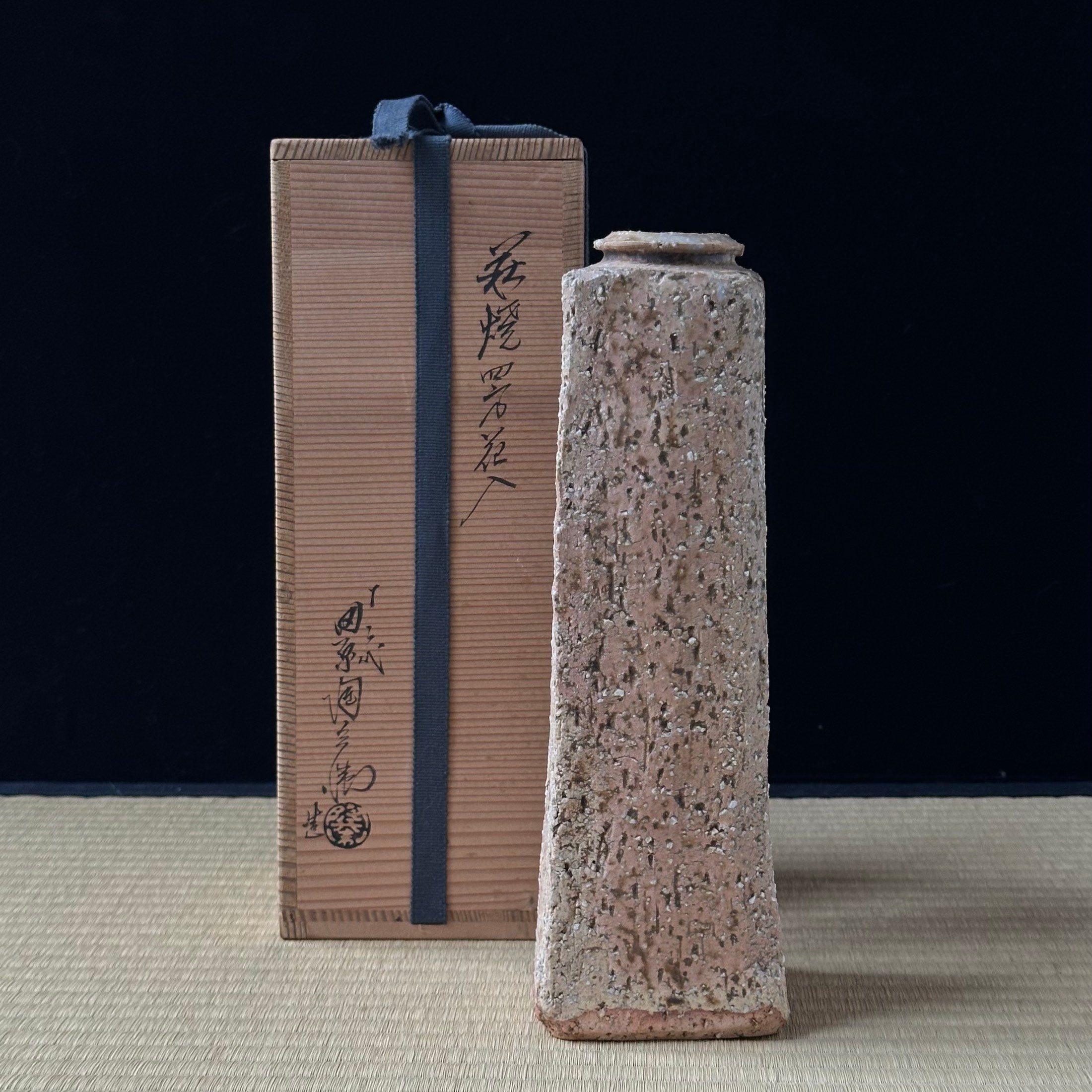
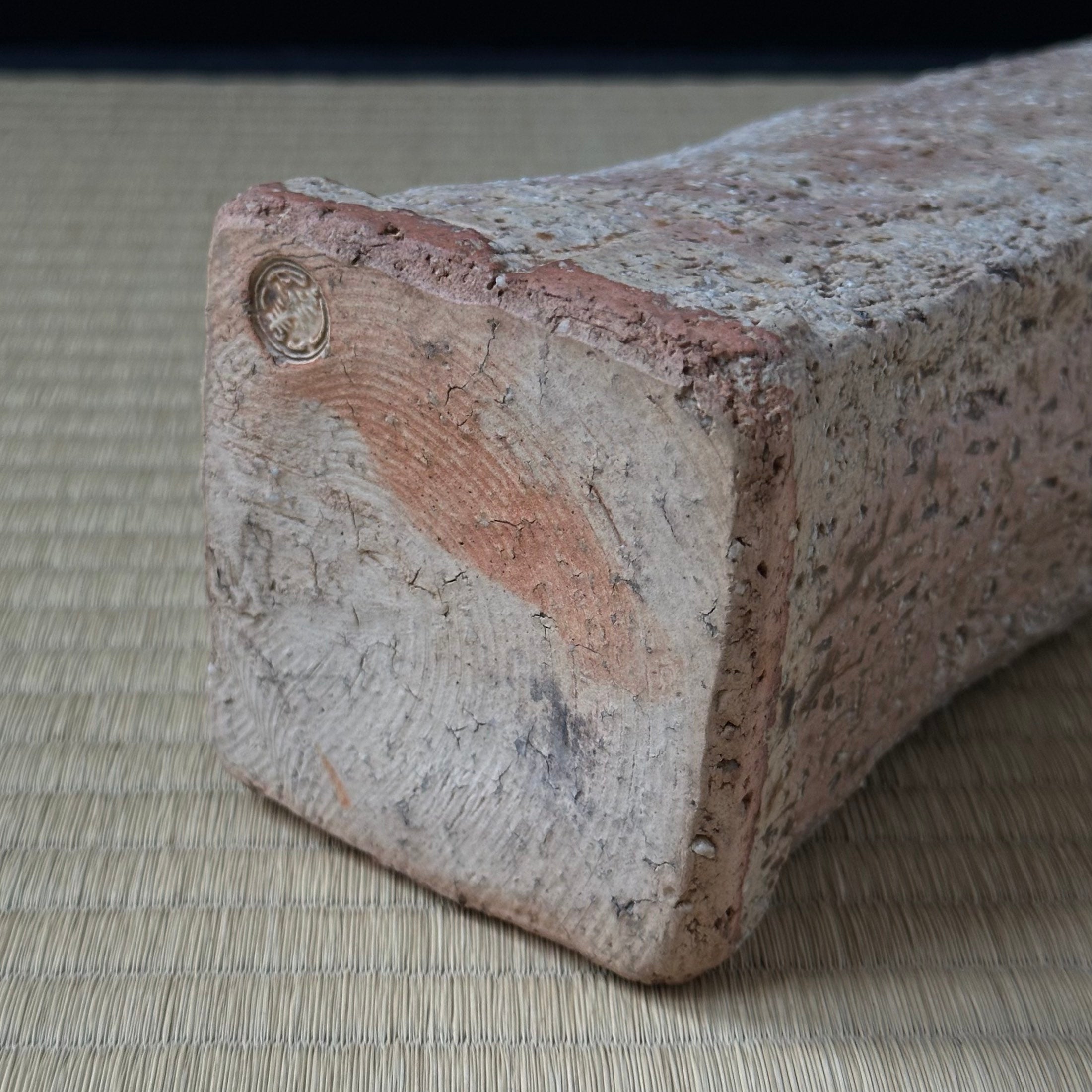
The piece is signed by the ceramist on its base. It comes with its original wooden box, also signed by the artist.
Practical information
Place of manufacture
Japan, Hagi region, Yamaguchi prefecture
Dimensions
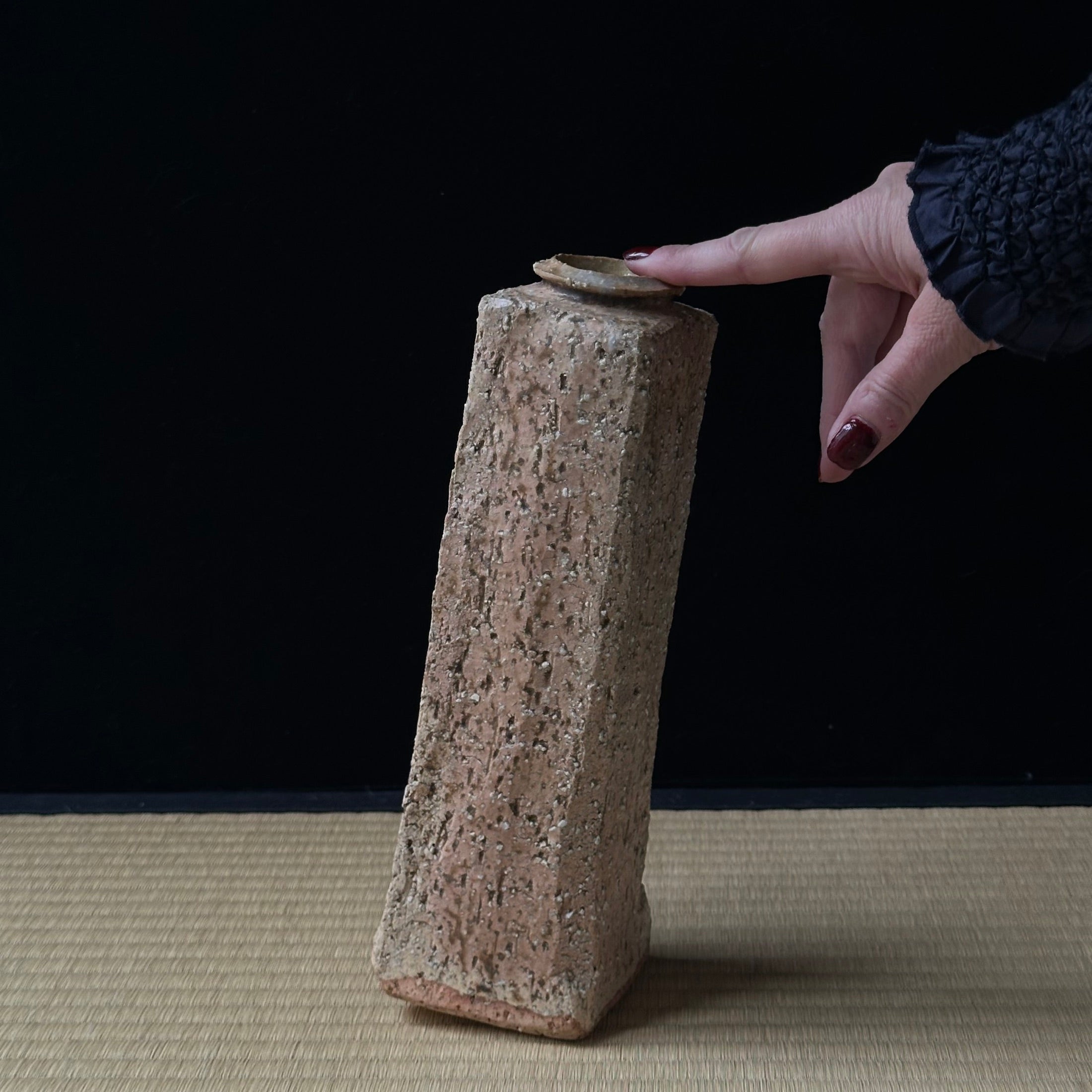
Height 26.5 cm - Width 8.5 cm - Depth 8.5 cm
Weight
Vase + box: 1.7kg
Materials
Sandstone, Hagi yaki (Hagi ceramic)
Period
Shōwa era (1926 - 1989)
Condition
In good condition
KNOW-HOW
Japanese ceramics, born more than 10,000 years ago, are a dialogue between earth and fire, a quest for harmony through imperfection.
With a wide variety of high-quality raw materials, such as rich clays and natural glazes, each region has developed its own techniques, reflecting the identity of its terroir.
Hand-crafted, these vases, made using the most precious Japanese ceramic techniques, bear the imprint of a master craftsman who is the heir to a thousand-year-old tradition. This living art embodies the essence of Japan, where history and nature unite in beauty.
Although deeply rooted in tradition, these exceptional Japanese ceramic vases, signed by very big names, have a resolutely contemporary spirit while preserving their authenticity, incredibly decorative and wonderfully timeless sculptural pieces.
DELIVERY
Delivery
Free delivery in mainland France for purchases over €200. Orders are generally dispatched within 2 working days, except in special cases, as indicated in the banner at the top of the website.
Precious items are wrapped in beautiful fabric, beautifully knotted according to the precious Korean art of pojagi. Some exceptions apply, especially if the items are large. Learn more >
Detailed delivery information is available via this link >
Your invoice will be sent by email
Payment methods
By card (Stripe operator): Visa, MasterCard, Discover, American Express.
Secure card payment with 3D Secure.
By PayPal, Apple Pay, Google Pay and Shop Pay
Returns and exchanges
14 days to change your mind.
CARE INSTRUCTIONS
Handle with care. Rub gently with a soft cloth. Do not place near a heat source.
Choose options
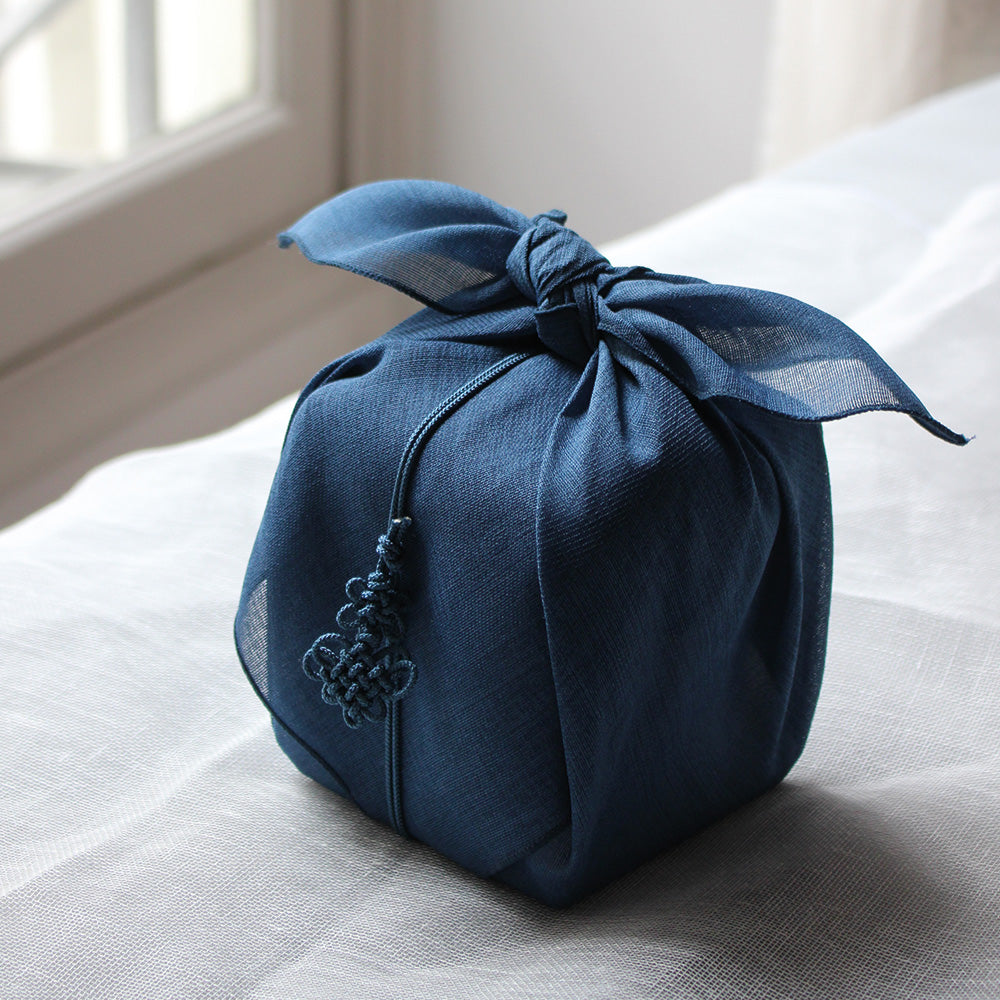
The art of wrapping
The exceptional items are wrapped in a beautiful fabric beautifully knotted using the little-known art of Korean pojagi and decorated with a delightful maedup (Korean ornamental knot). Details and conditions >

WRAPPING
Precious objects are wrapped in textiles tied using the Korean art of pojagi.