
In Kyunghee’s studio, white porcelain and the rhythm of gesture
We are in Suwon, a few kilometres south of Seoul, on a warm Korean summer day. Through the car window, avenues lined with tall buildings unfold in a long ribbon that seems to stretch uninterrupted from the capital. And yet Suwon is a world apart, a historic city that still bears the remarkable traces of a turbulent past, far too often overlooked by the usual tourist routes.

© Photo Kyunghee Shin
In the calm of a residential neighbourhood of low-rise buildings, where nature quietly finds its way in lending the place an almost cinematic atmosphere, Kyunghee Shin welcomes us into her light-filled studio. The whiteness and softness of the space echo her work: porcelain. Yet within the luminous monochrome of this immaculate studio, which reveals itself all at once, it is a large painting hanging on the wall, one she has created herself, that first draws the eye. An explosion of colour, at once gentle and bold, contemporary and rooted in tradition, depicting cats. “These are my cats !” she tells us with a hint of mischief.

© Photo Kyunghee Shin
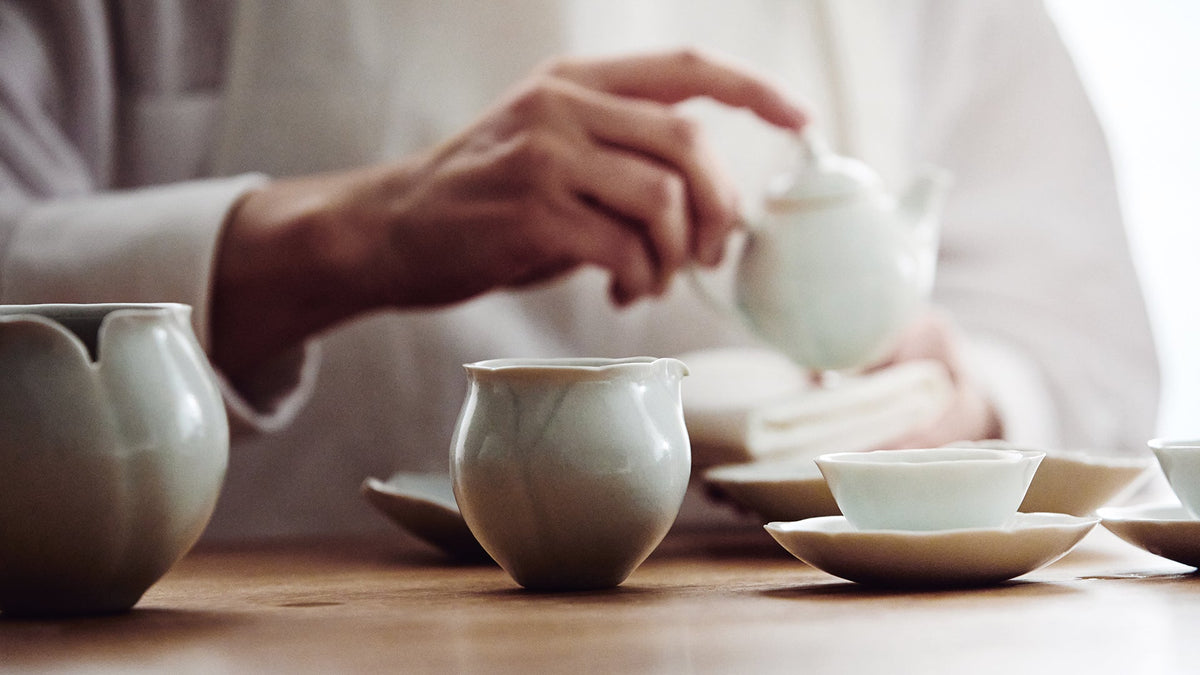
Meeting Kyunghee does not begin with discussions of material, technique, firing or inspiration. It begins with taking the time to sit together over tea. This attention to gesture, to the way the objects she has created come to life slowly, in a full awareness of the moment and a generosity of sharing, reveals far more than any factual description what truly animates her work.

© Photo Kyunghee Shin
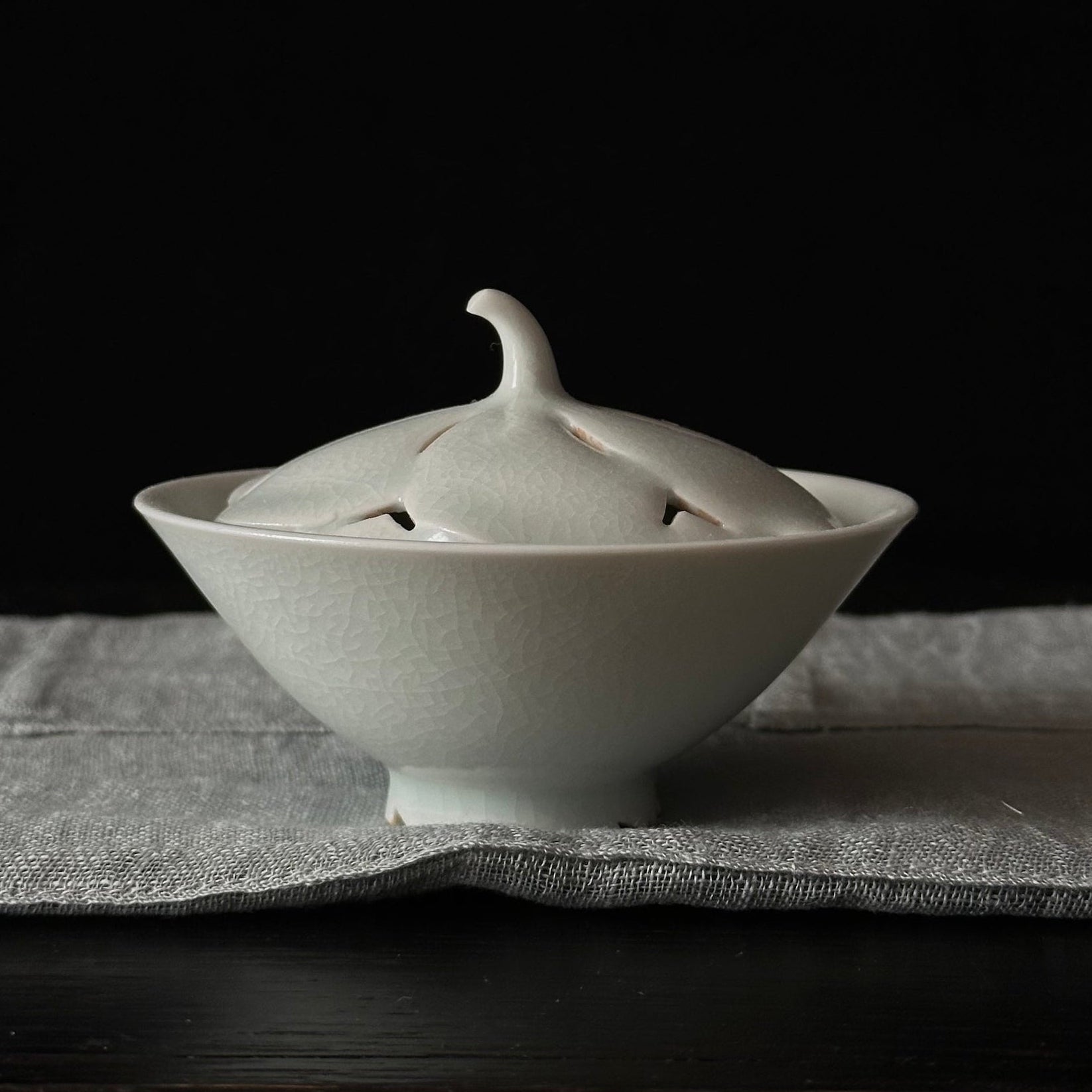
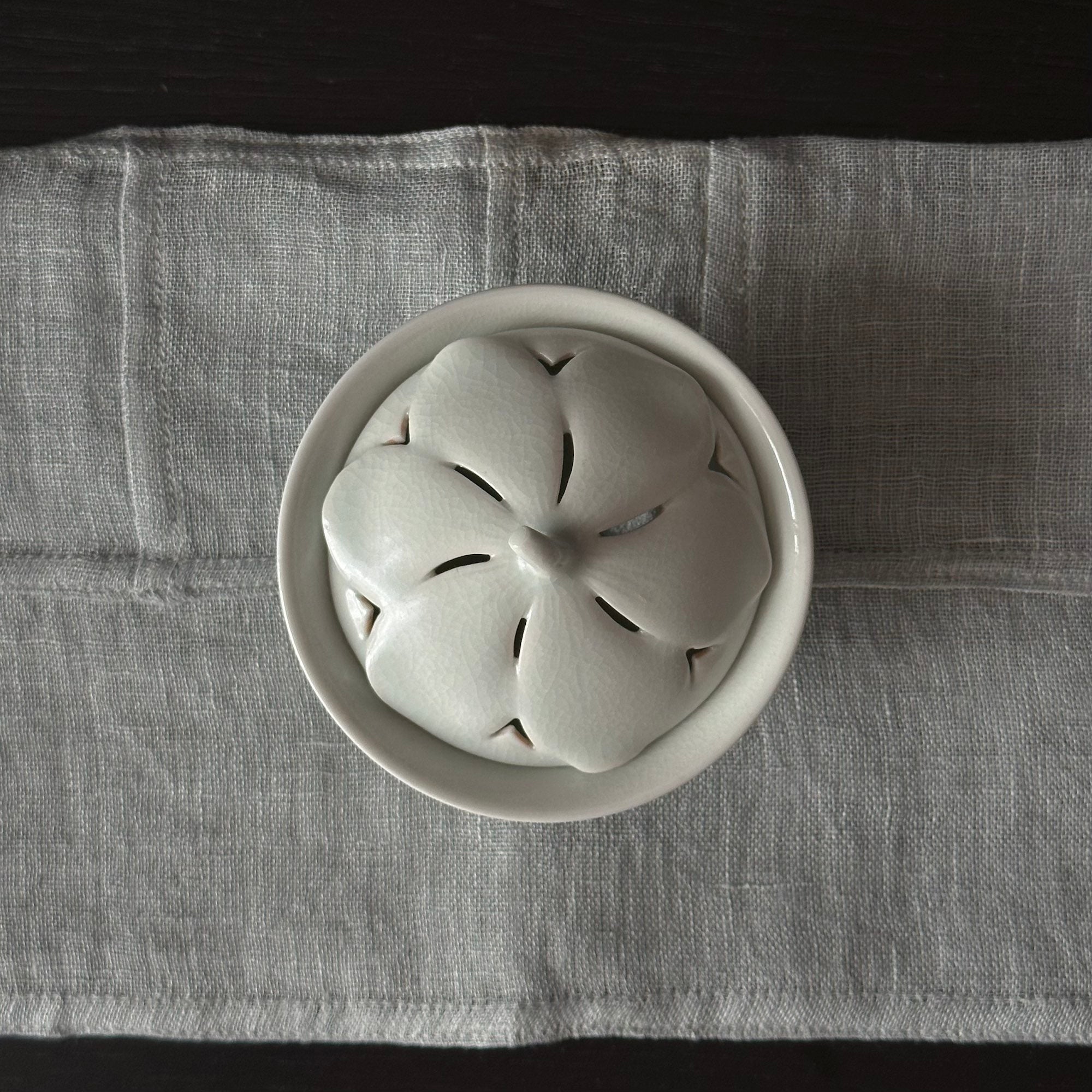
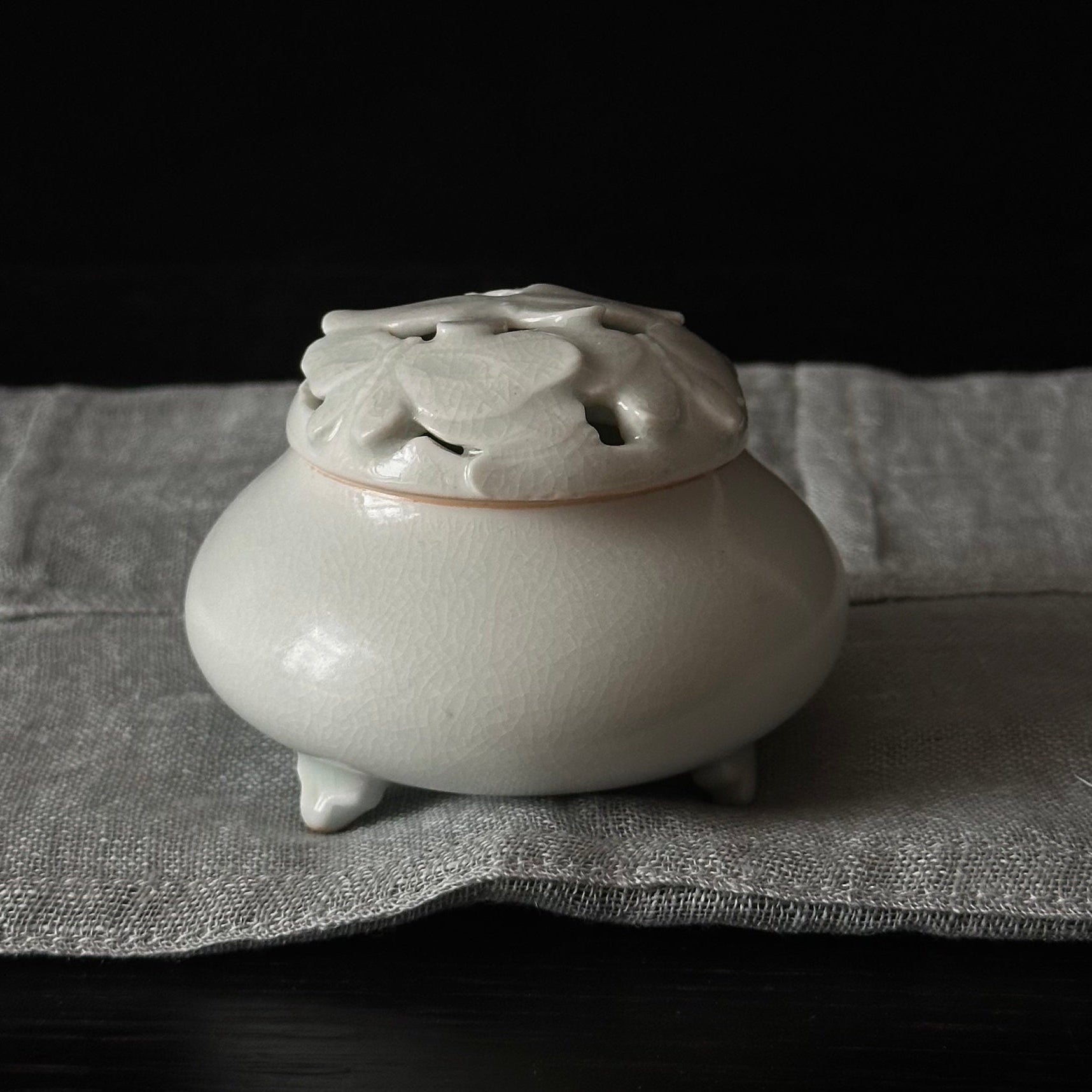
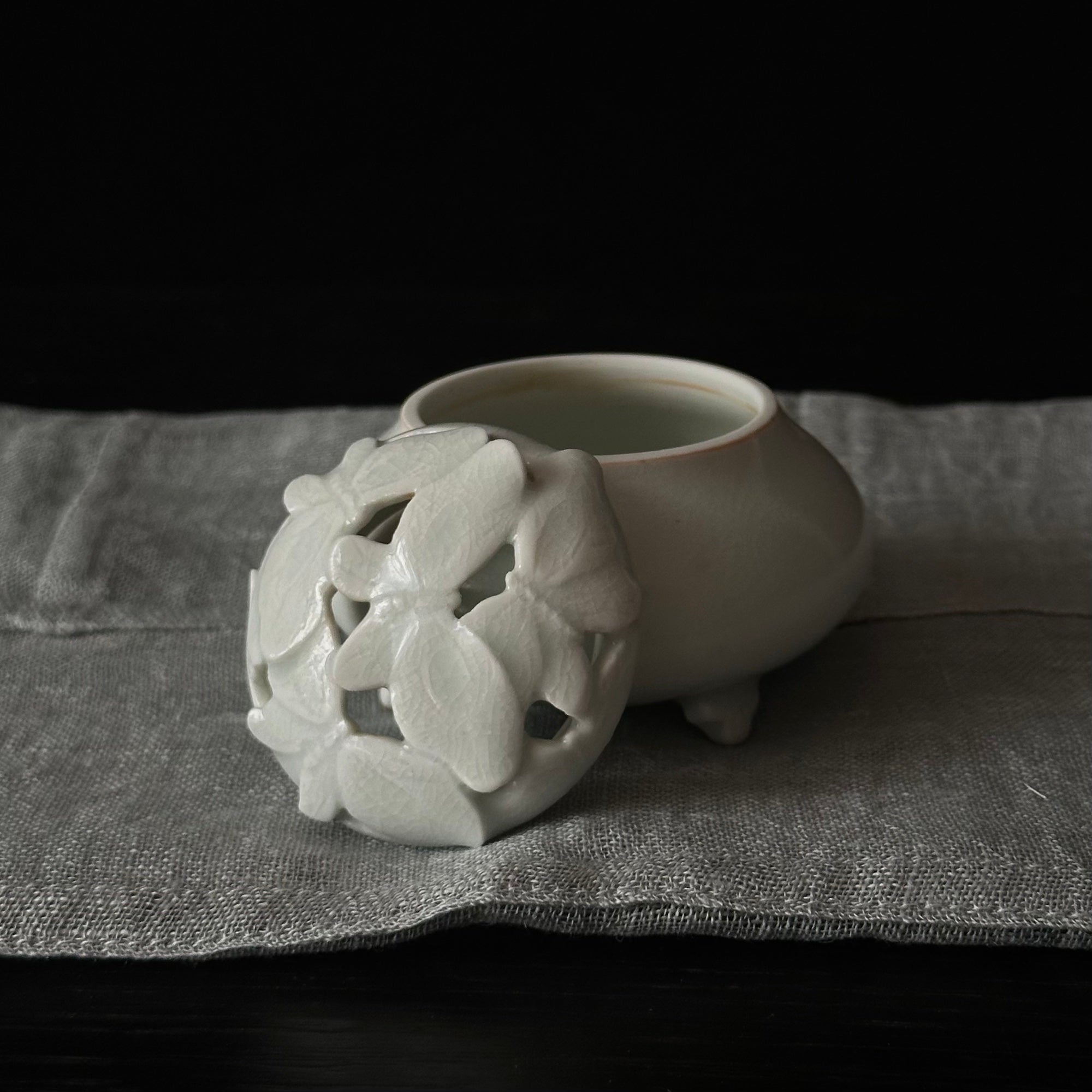
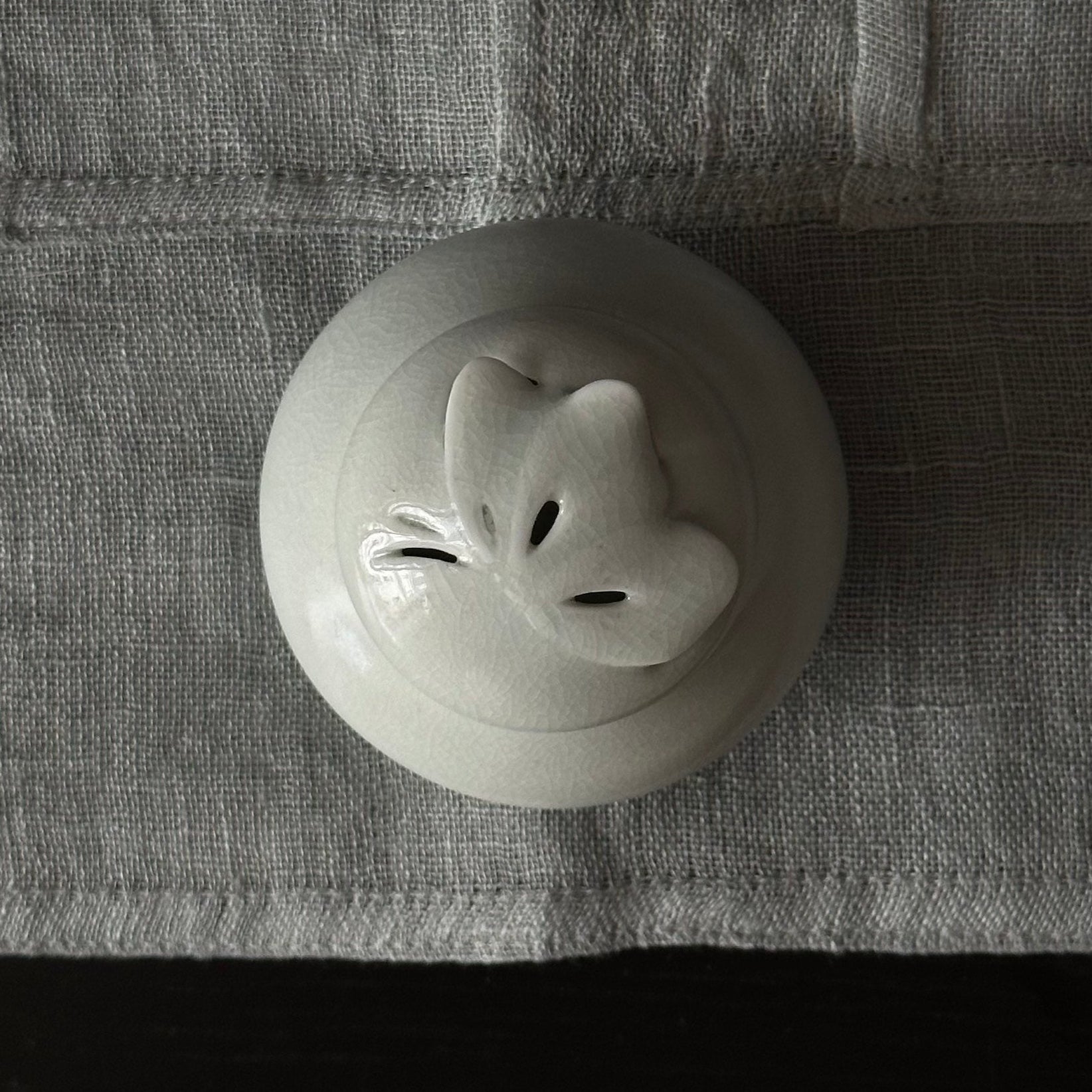
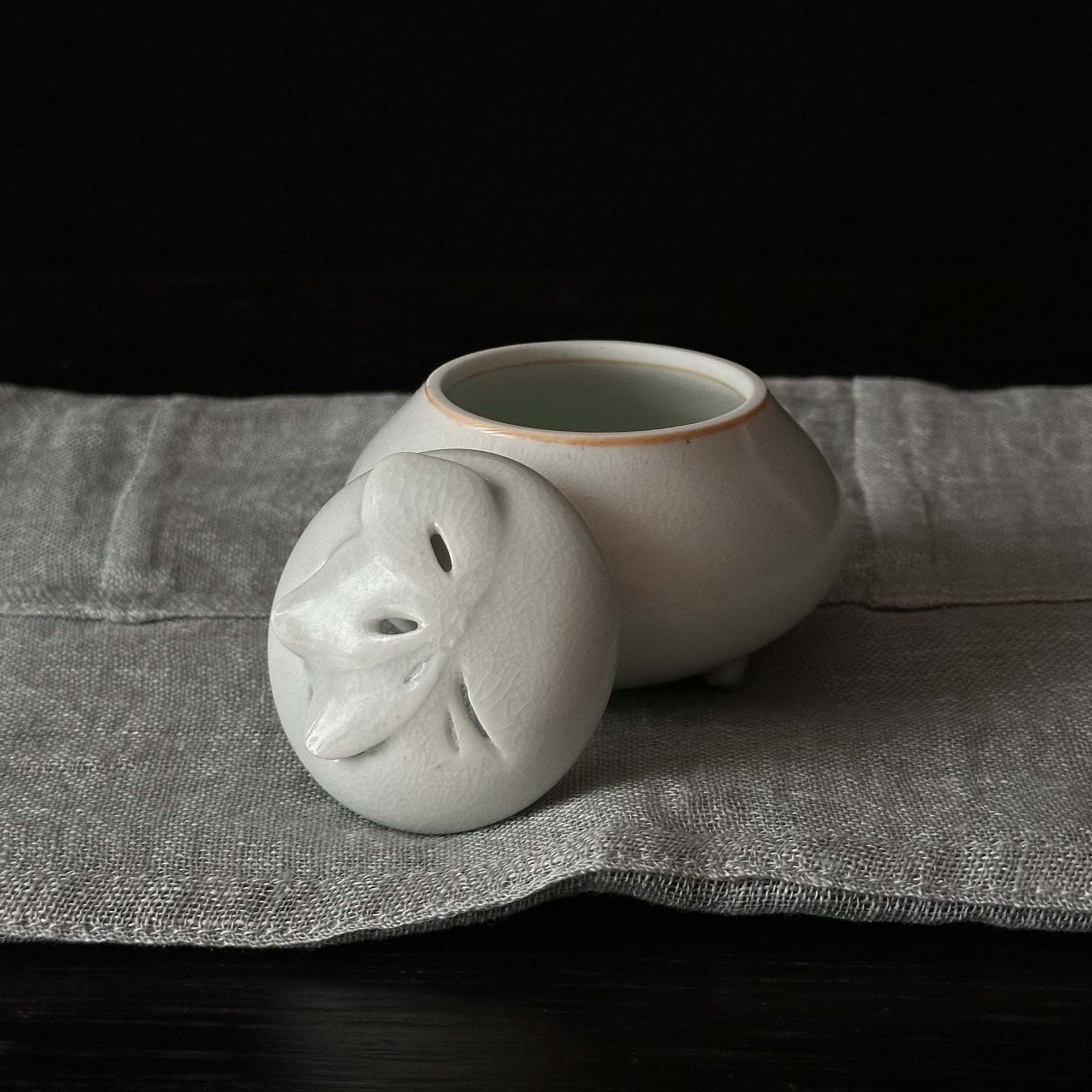
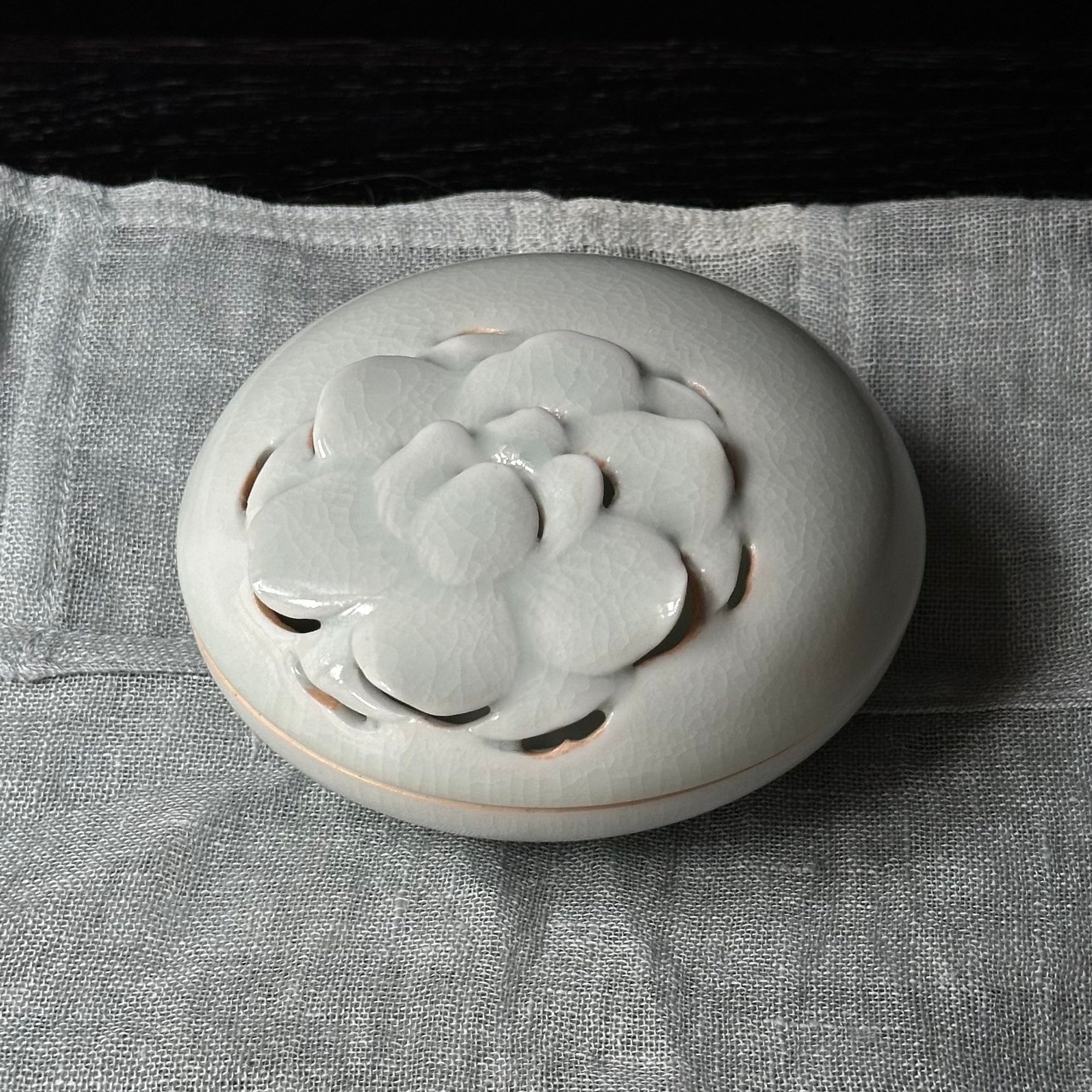
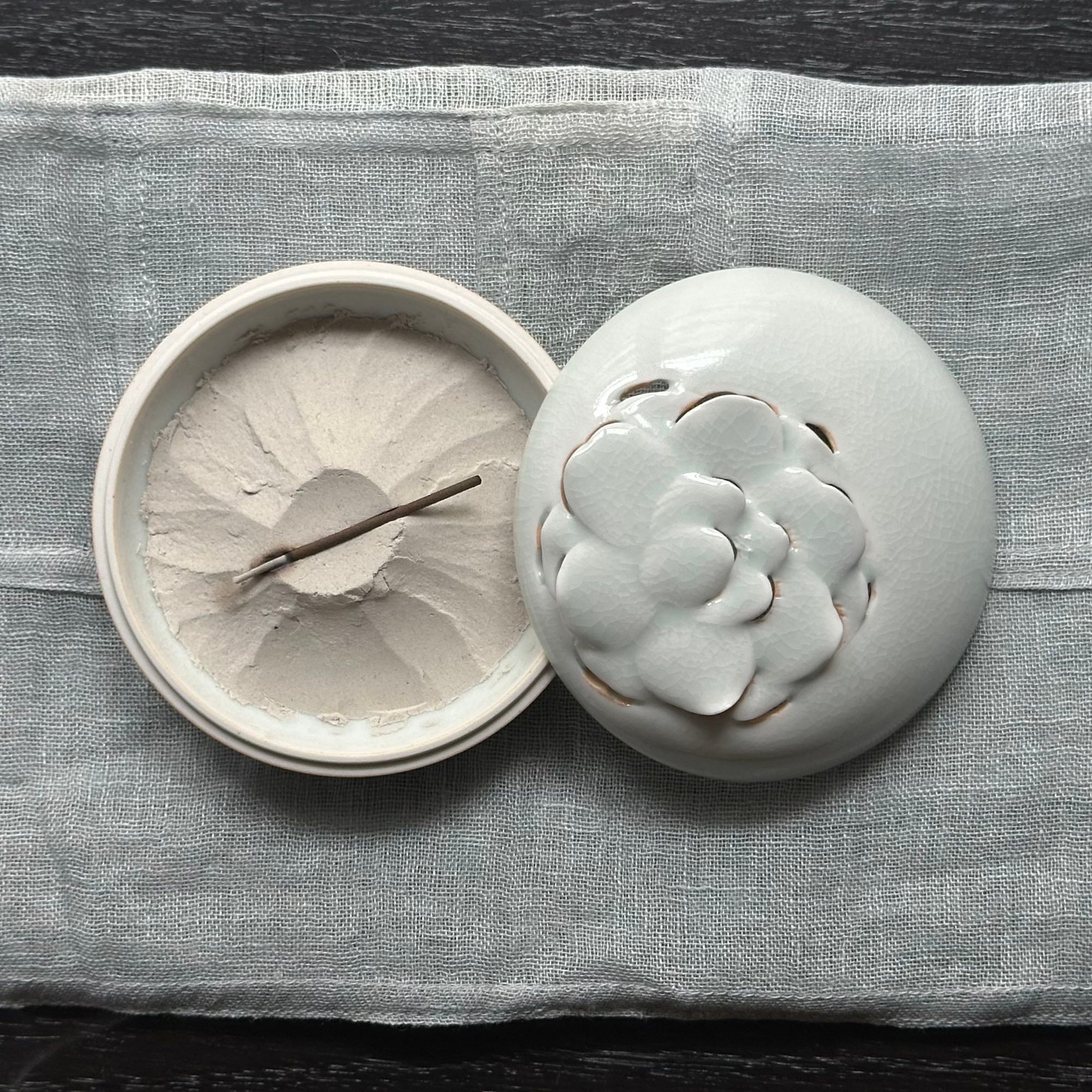
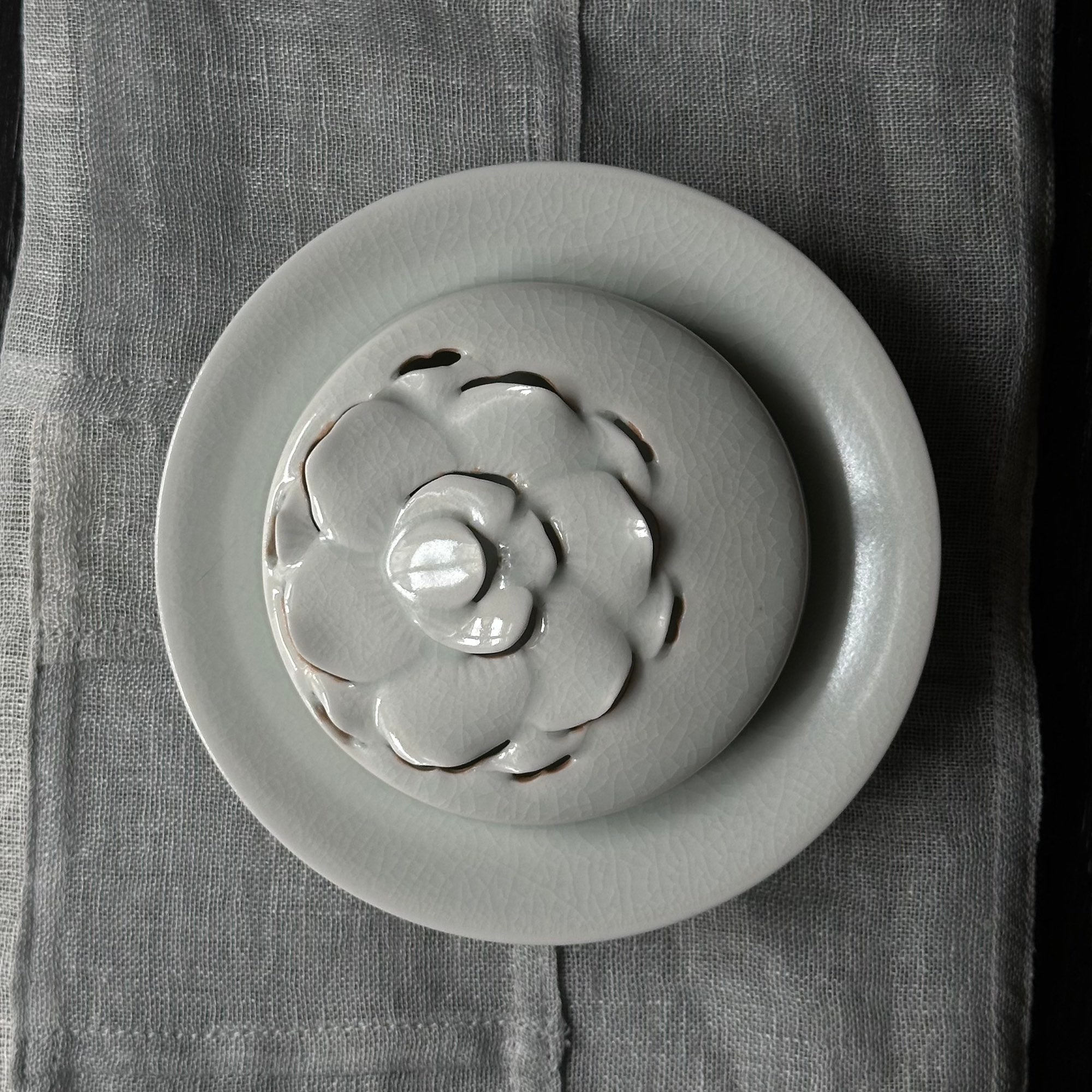
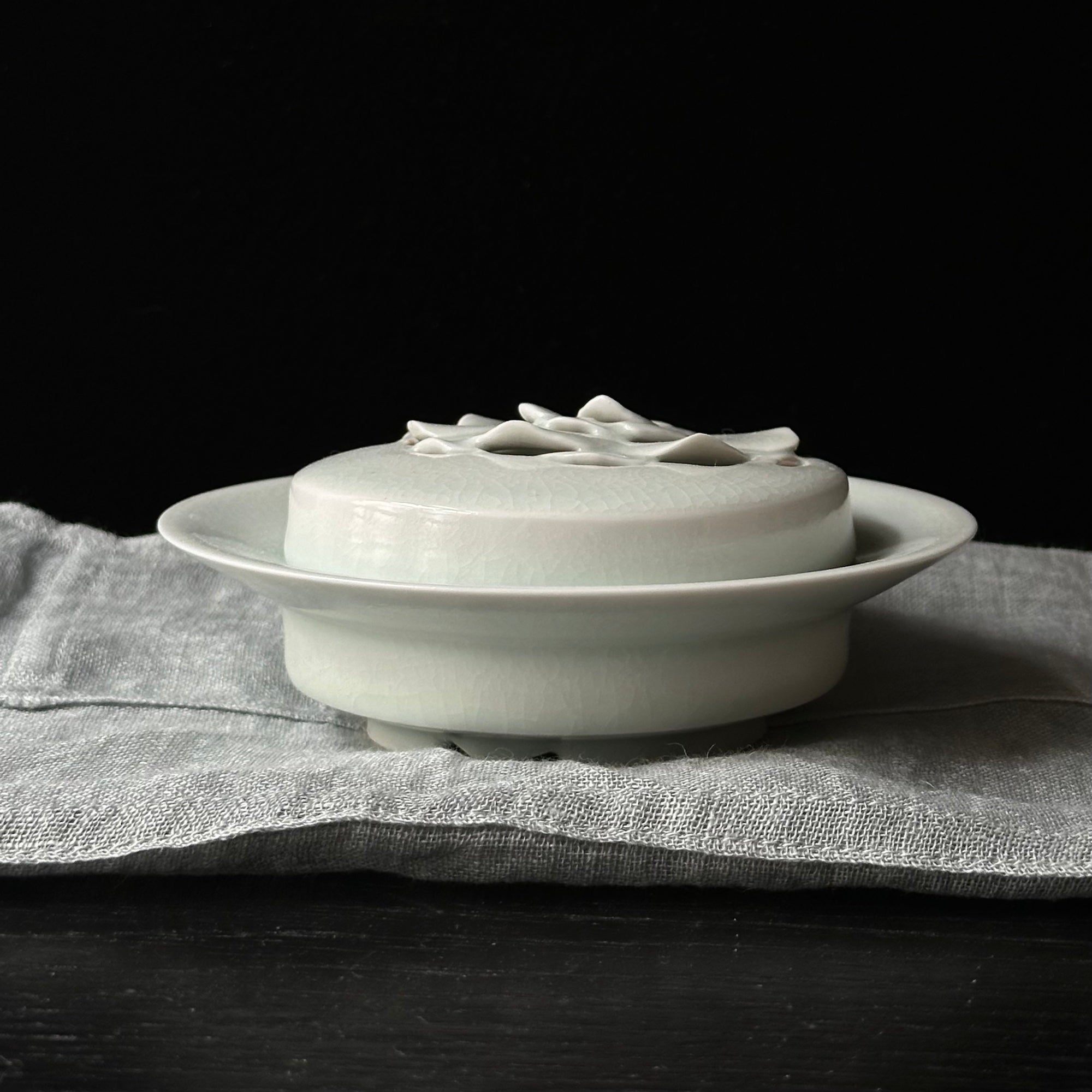
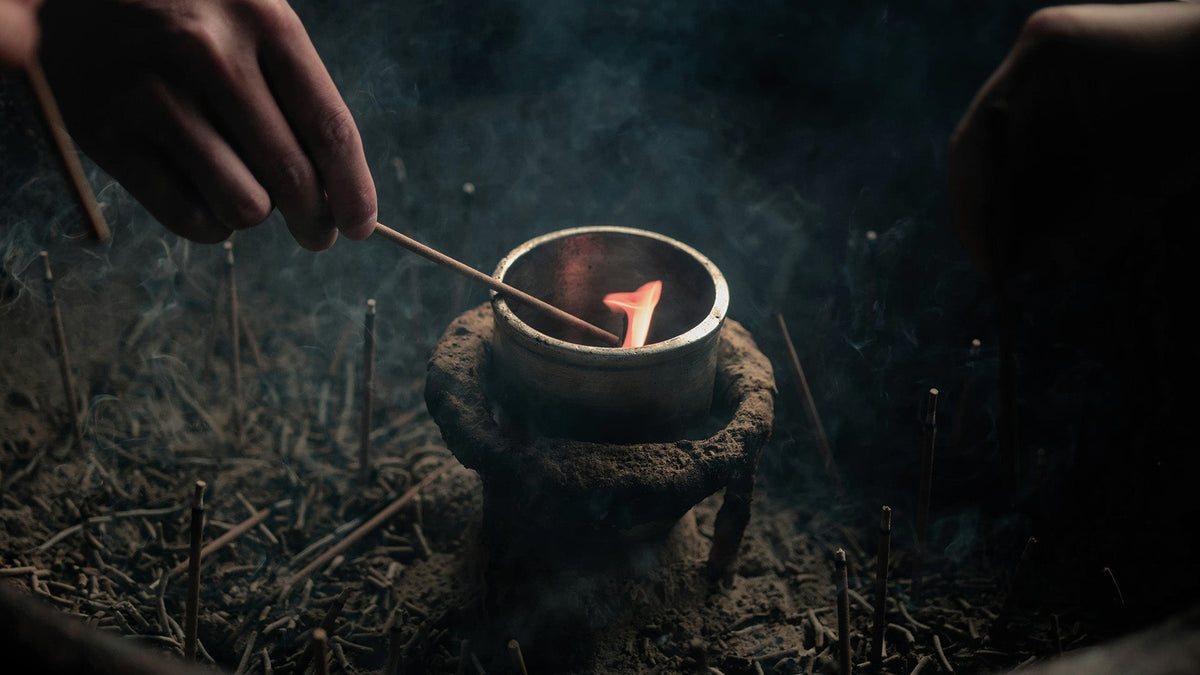
In the small teapot into which she gently places the tea leaves, in that suspended moment while the infusion develops, in the round cups so soft they settle naturally in the palm of the hand, in the flowers and insects that appear everywhere, sculpted directly into the porcelain and seeming to come alive through gesture, in the delicate pastry placed on an elegant plate, in the incense burner releasing the fine wisps of smoke from a stick resting on immaculate ash, while its lid, set aside, reveals the extraordinary carving of a peony that seems to come alive as the conversation unfolds.

© Photo Kyunghee Shin
The whiteness that surrounds us is not an aesthetic choice; it is a form of harmony that begins with objects made to be used, objects that carry within them the ability to slow time, to let the moment unfold, to allow conversation to wind its way as though we had always known one another.

© Photo Kyunghee Shin
Of course, there is the unmistakable presence of Korean white porcelain, baekja, and its remarkable history, a source of inspiration for Kyunghee, an inheritance that Korea alone can claim in its purity, its elegance, its balance of form and the subtle reflections of a white that reveals countless nuances.

© Photo Kyunghee Shin
Yet while Kyunghee draws from this heritage, her work is resolutely contemporary, perfectly attuned to everyday life. Rounded, enveloping forms that nestle into the hands, objects one never tires of observing, so refined and delicate they seem almost unreal. Peonies, lotus flowers, cosmos and butterflies are sculpted directly during the forming process, while the material is still soft.

© Photo Kyunghee Shin
It is meticulous, precise and irreversible work, which, after a long firing of around thirteen hours at very high temperatures of approximately 1,265 degrees Celsius, gives the objects a distinctive luminosity. On closer inspection, subtle variations in tone emerge, a mysterious white that tells different stories depending on the way it is seen, alongside fine crackles that trace delicate pathways where heritage and elegance meet, where the artist’s gesture meets the quiet softness of her personality.

© Photo Atelier Ikiwa
For this first collaboration with the highly talented Kyunghee Shin, we invite you to discover a selection of porcelain incense burners she has created, objects that are both decorative and functional, designed to help slow time through the grace of gesture. Discover the selection.

© Photo Atelier Ikiwa et photo de couverture © Kyunghee Shin