

White porcelain incense burner with peony design by Kyunghee Shin
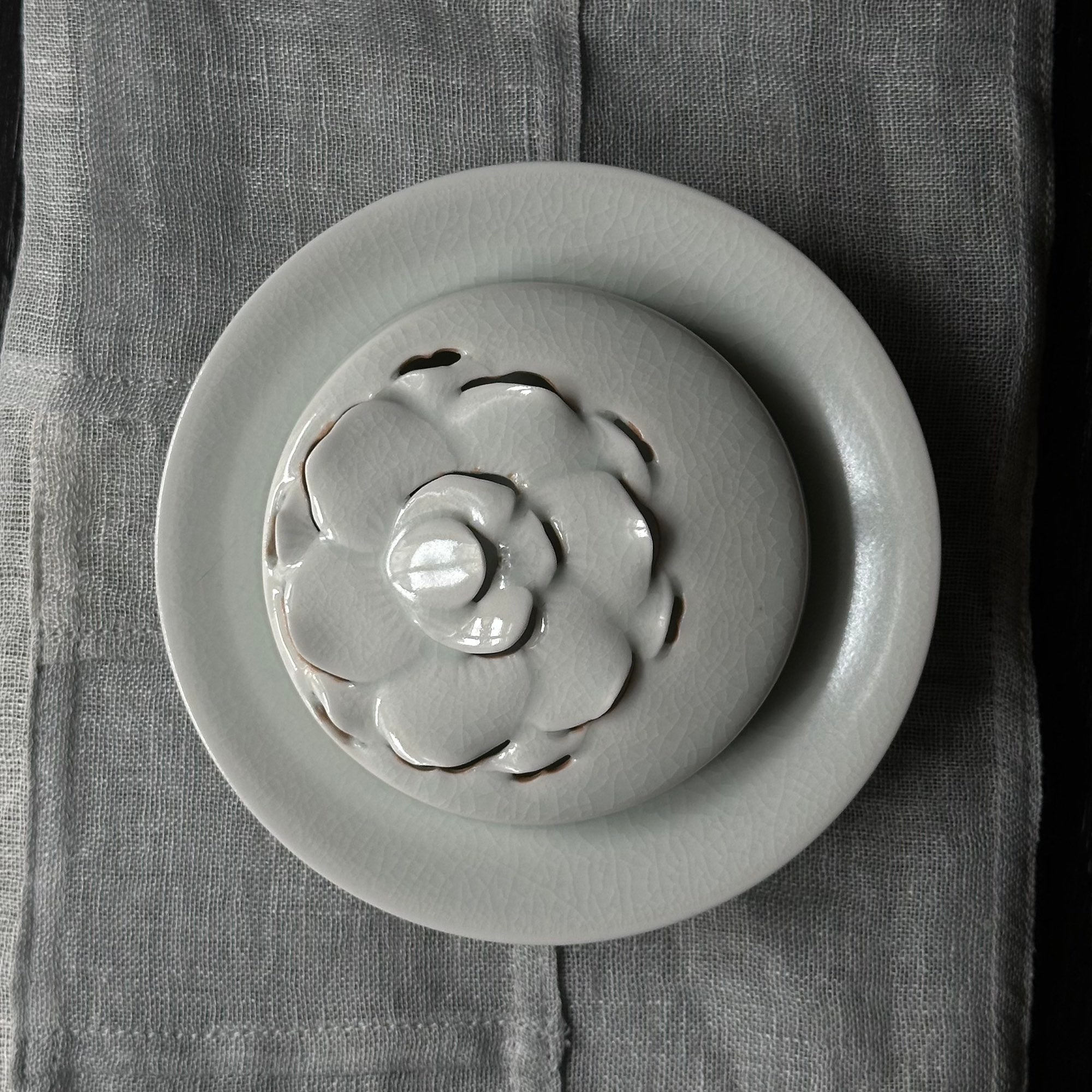
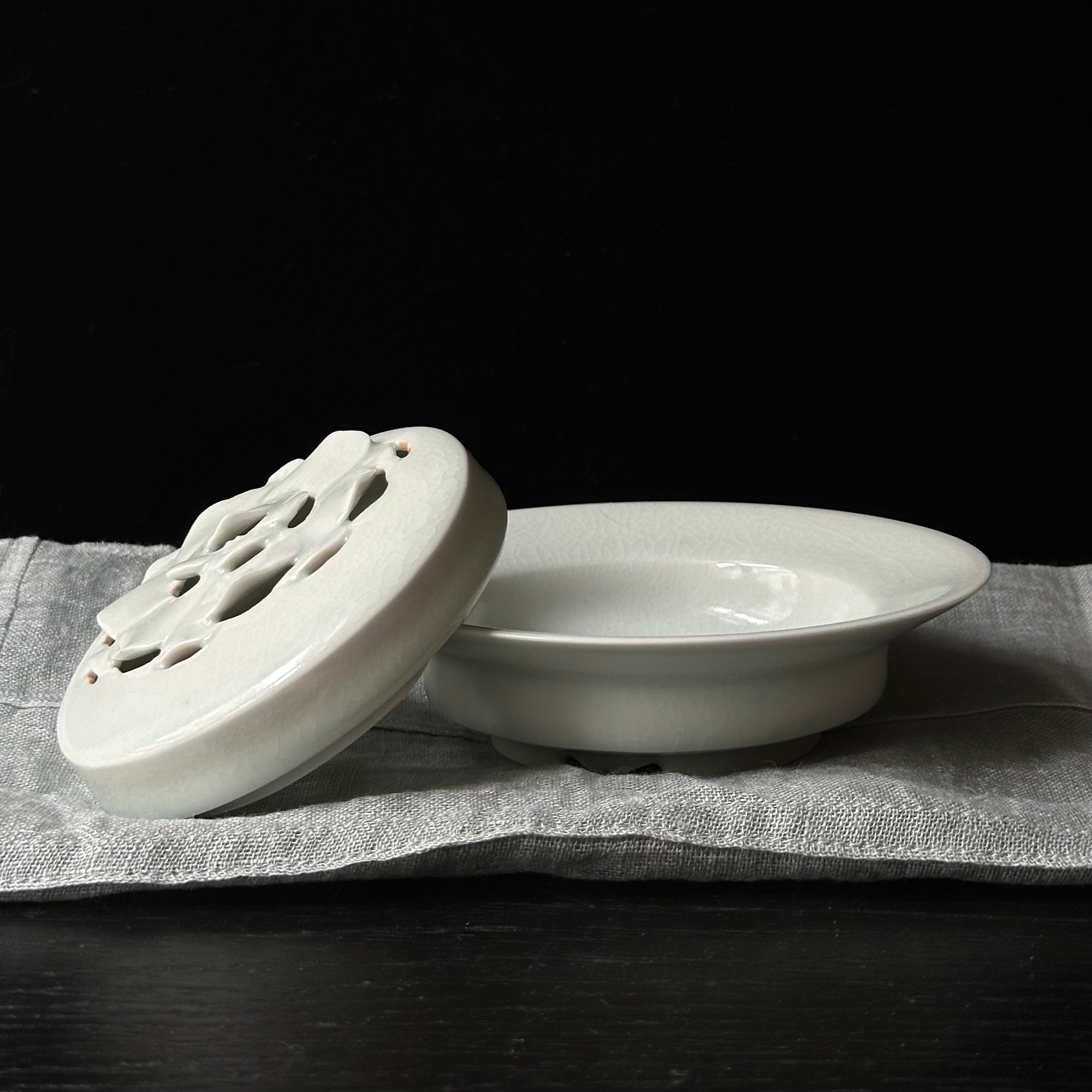
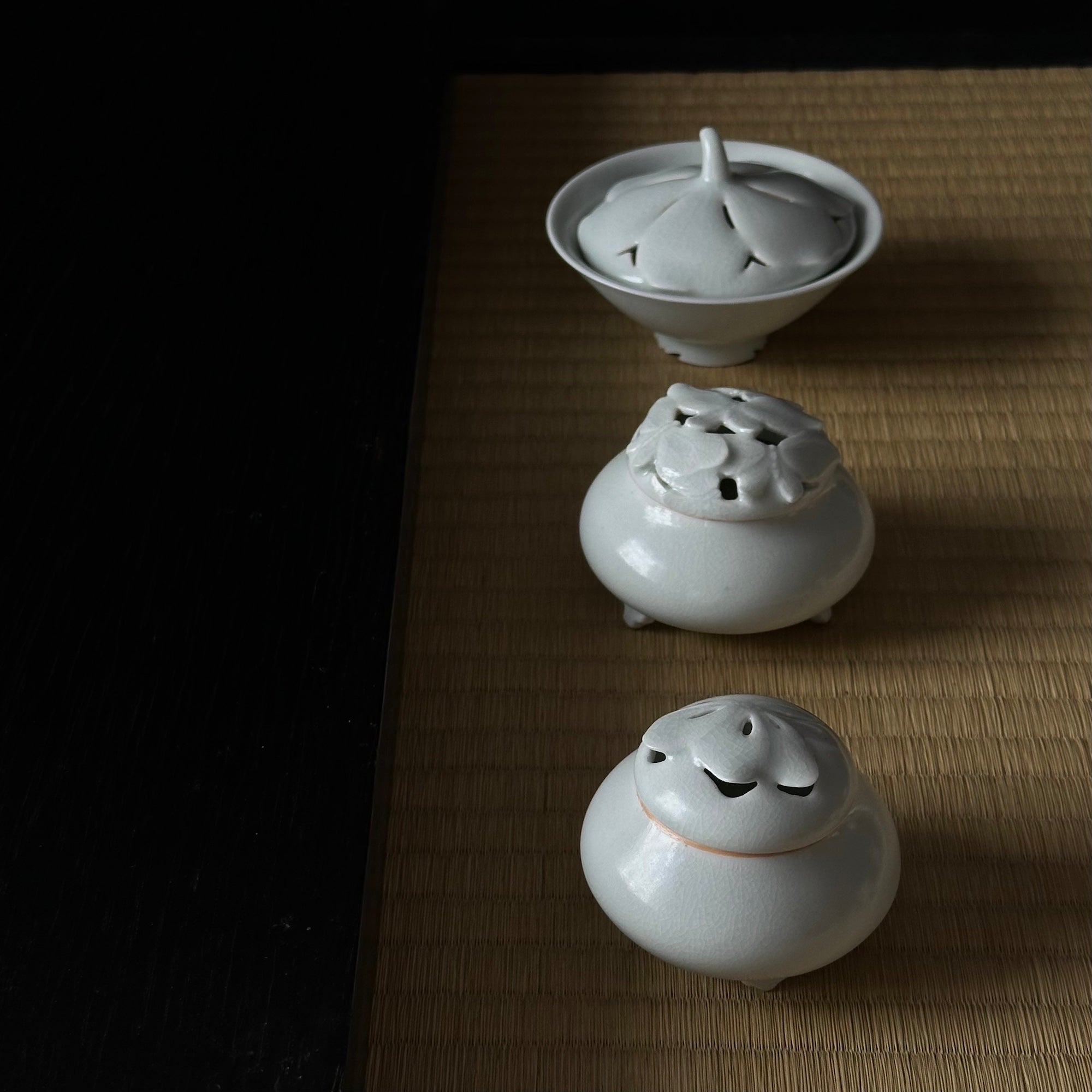
This white porcelain incense burner by contemporary Korean ceramist Kyunghee Shin is part of a tradition where beautiful objects accompany a gesture, a chosen moment, an attention to things. The purity of the material, combined with a superb sculpted peony decoration, gives this piece a presence of rare elegance. Used daily or as an object of contemplation, this incense burner invites you to slow down and enjoy a moment in which the gesture and the object naturally find their place.
The artist
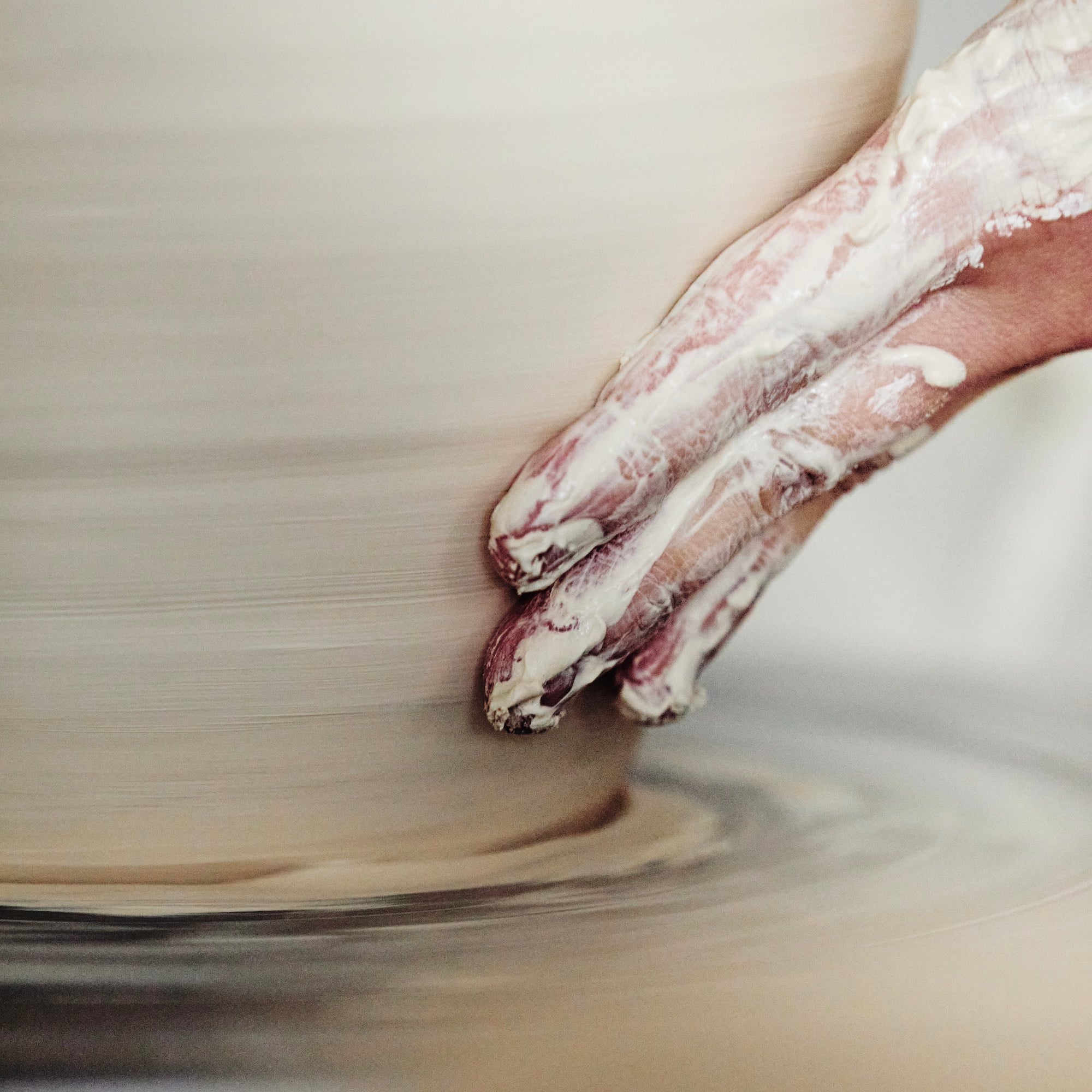
Kyunghee Shin is a contemporary Korean ceramist who works with white porcelain from her studio in Suwon. Her work is characterized by a very fine attention to material and gesture, with pieces slowly shaped, in which form and decoration are born together. She draws inspiration from observing nature and flowers, notably the lotus, Korean peony, and cosmos, which she brings to life directly in the still-pliable porcelain through delicate and meticulous sculpting.
Her objects are designed to be held, with a focus on softness, organic forms, and an enveloping presence. This approach echoes the heritage of baekja, Korean white porcelain, through an emphasis on surface, light, and a great restraint in decoration. Kyunghee develops a personal language, rooted in daily use and a direct relationship between the object, the hand, and the space it inhabits. Her work has been featured in numerous exhibitions, particularly in Korea and Japan. To learn more about Kyunghee's work, you can read our dedicated article.
Technique and decoration
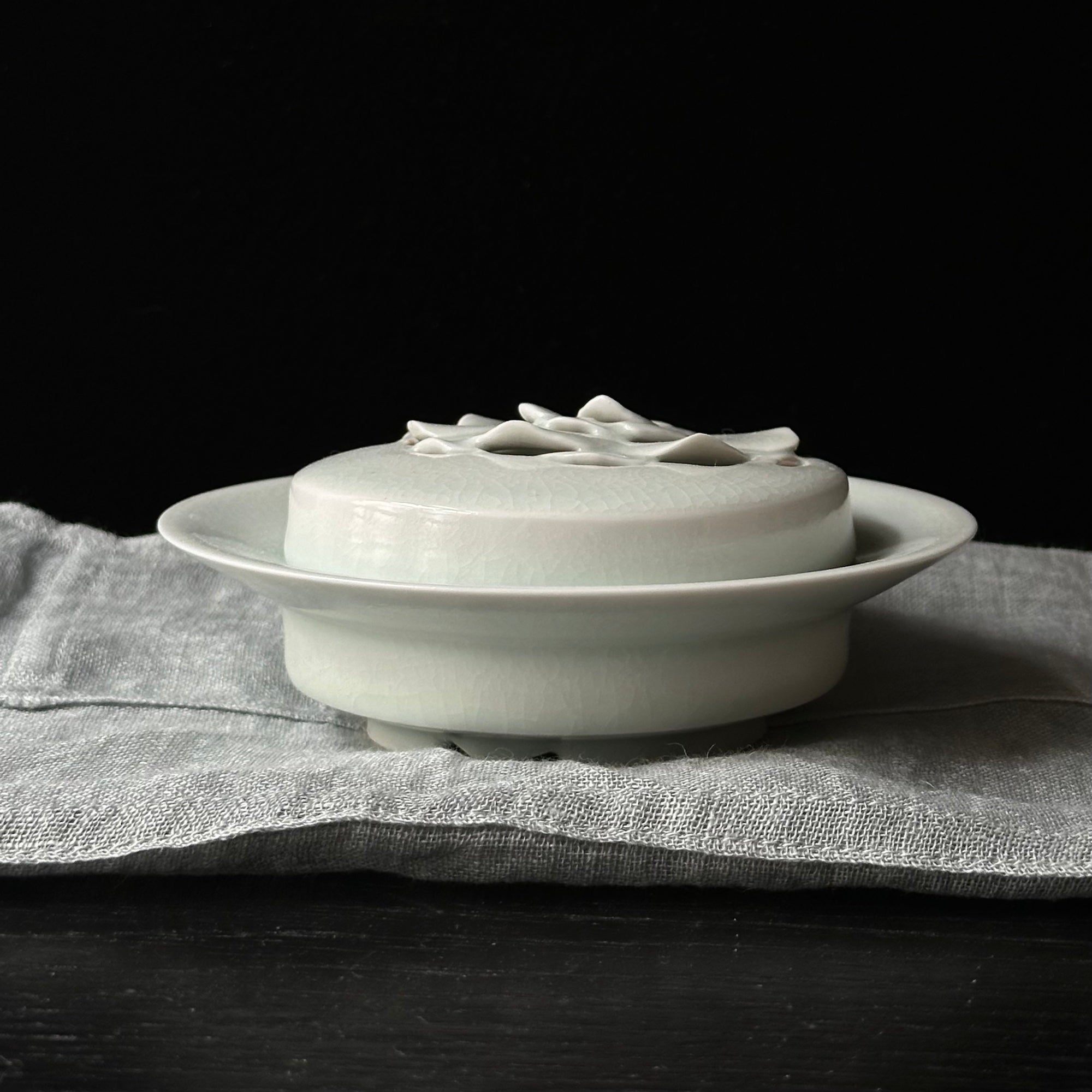
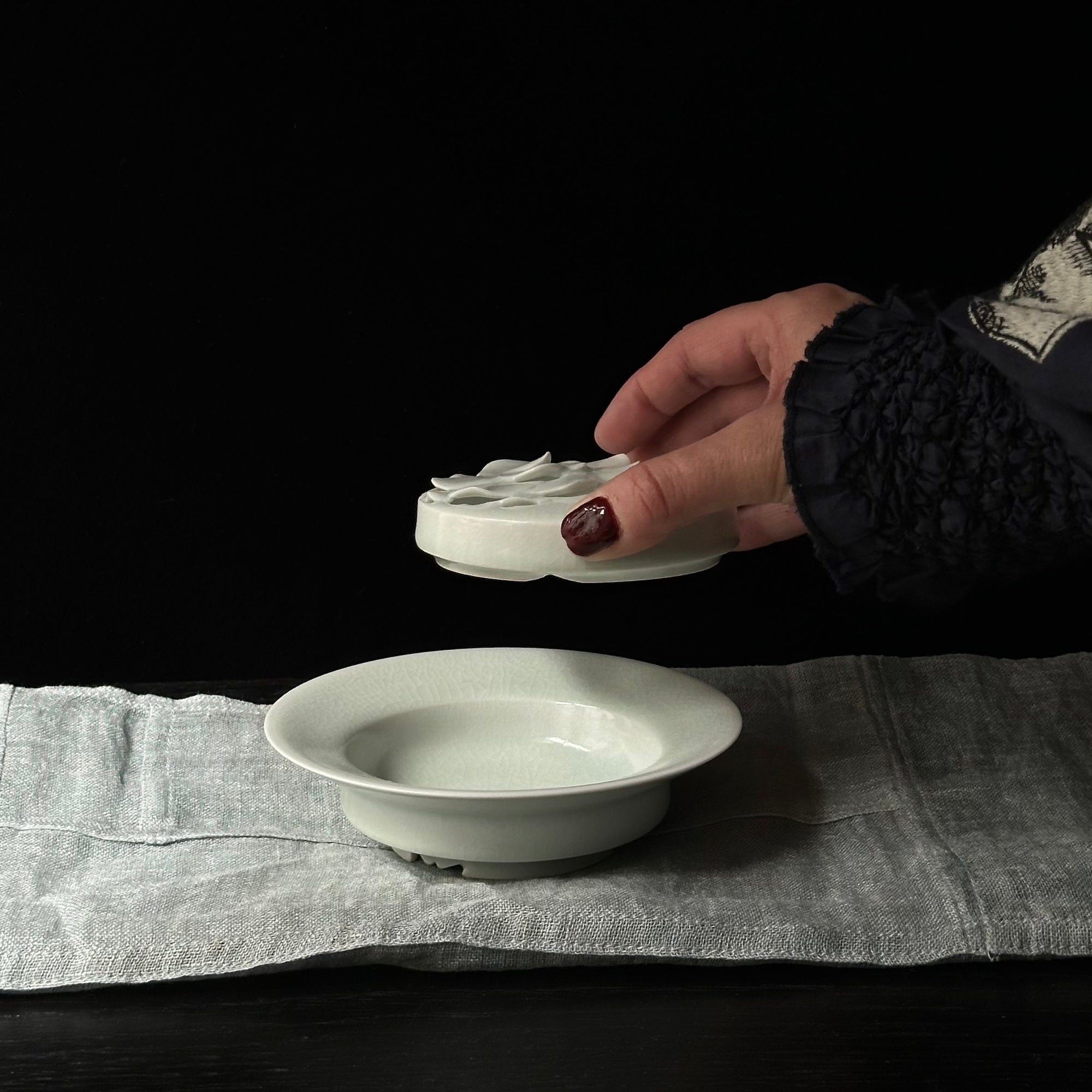
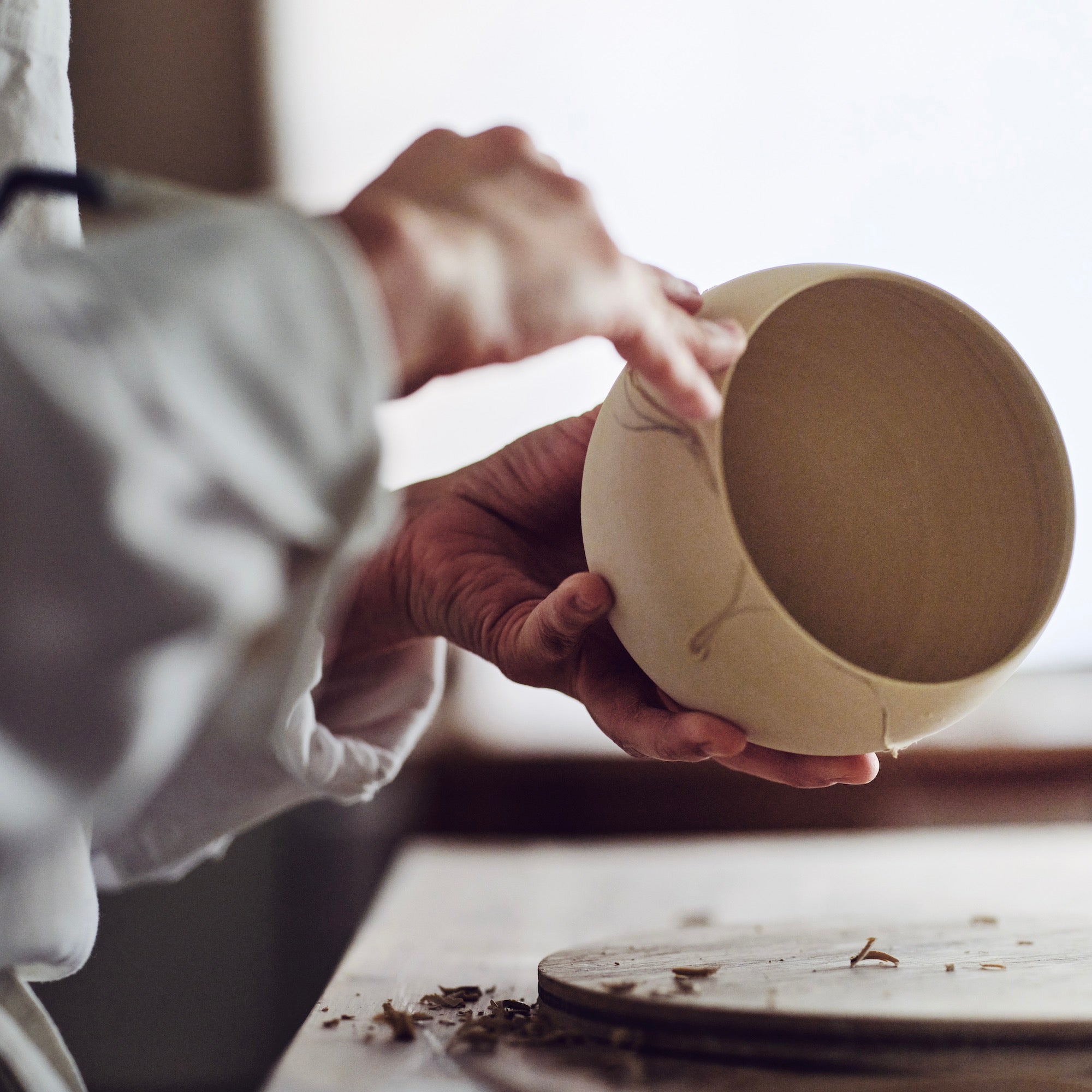
This incense burner is made of porcelain, hand-shaped and then fired at a very high temperature (around 1265 degrees), according to a demanding process that requires great mastery of the material. The piece consists of two distinct elements, a body and a lid, which give it a calm and balanced presence. The body, slightly flared and gently rounded, rests on small discreet feet that ensure perfect stability.
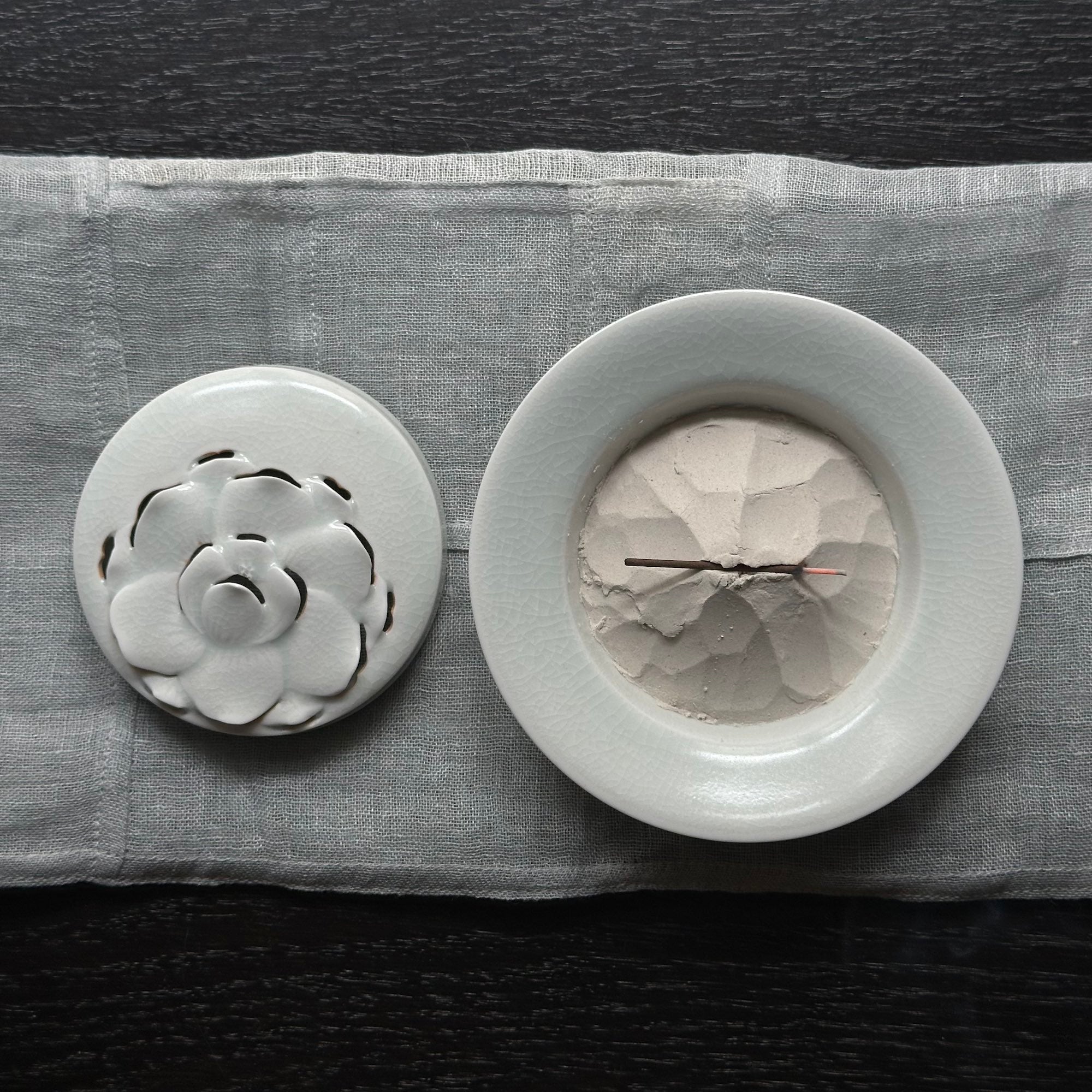
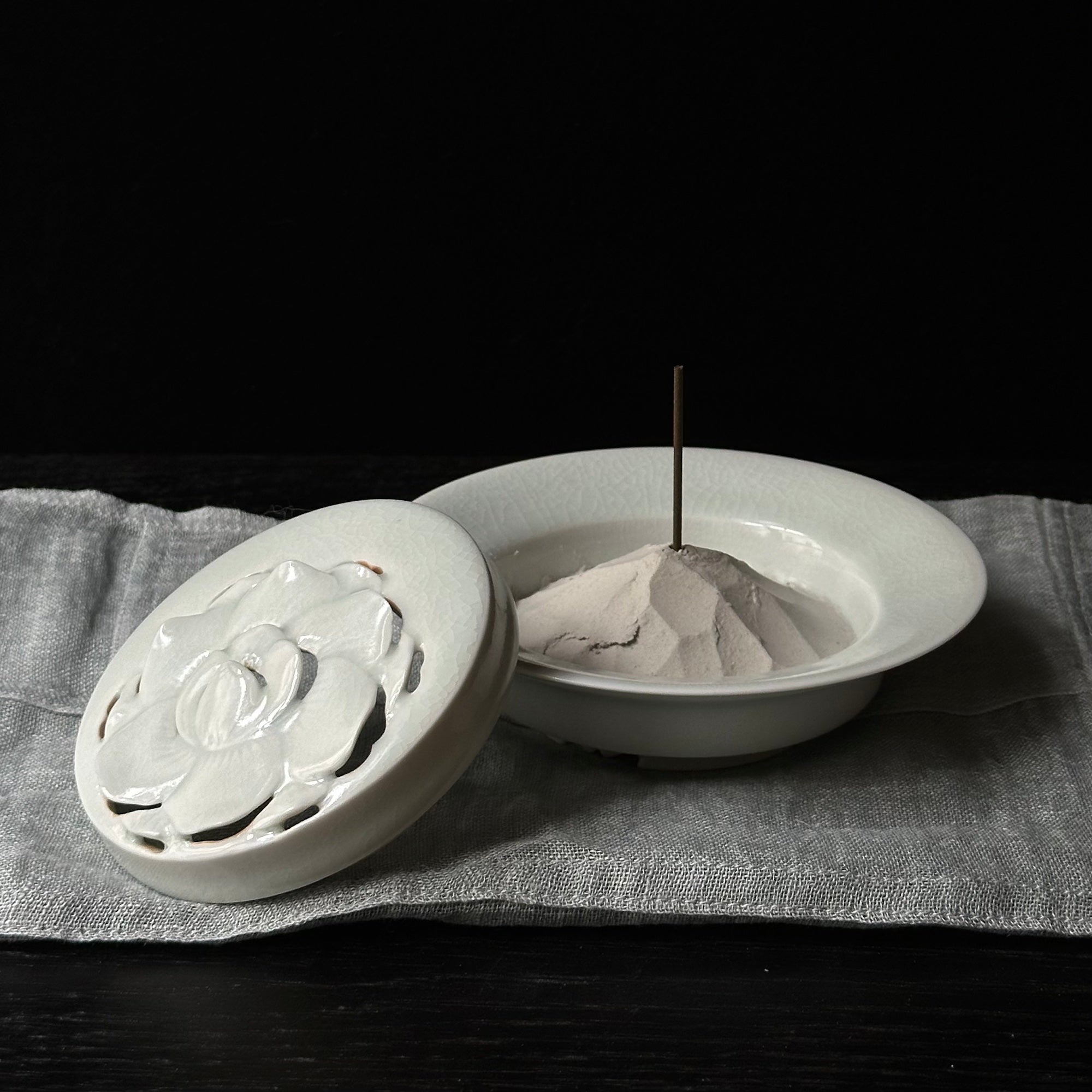
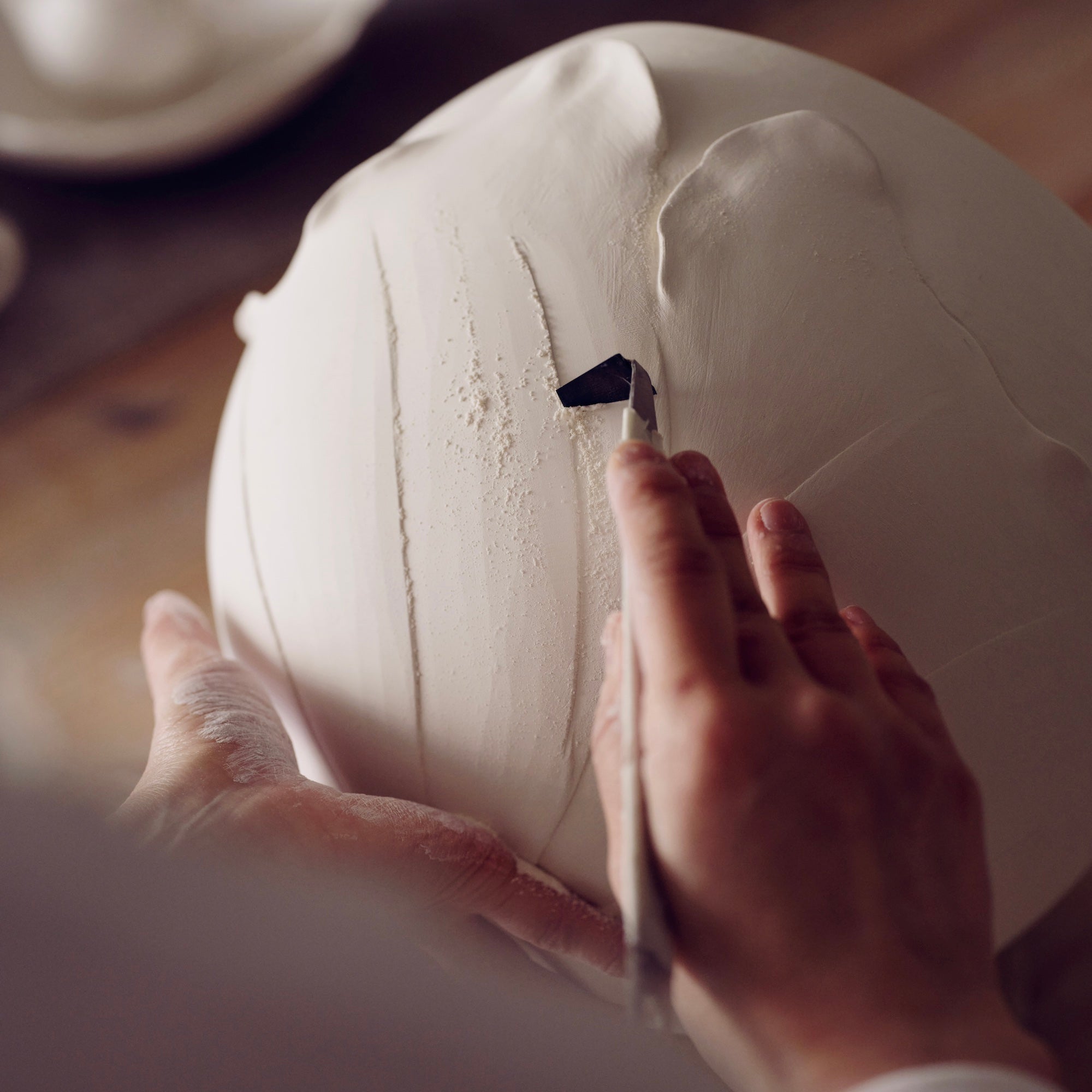
The lid extends this construction. The peony is sculpted directly into the still-pliable porcelain during the shaping process. Each petal is hand-modeled, with a precise gesture that allows no re-working and fully engages the volume. The flower is thus integrated into the form, naturally following its curves. The peony, deeply rooted in Korean culture, holds an important place in Kyunghee's work.
The porcelain reveals a very pure, fine whiteness, animated by a slight crackle that catches the light and highlights the depth of the surface. The ensemble is part of the sensibility of baekja, Korean white porcelain, where technical mastery and restraint in decoration give birth to pieces of great elegance.
Usage
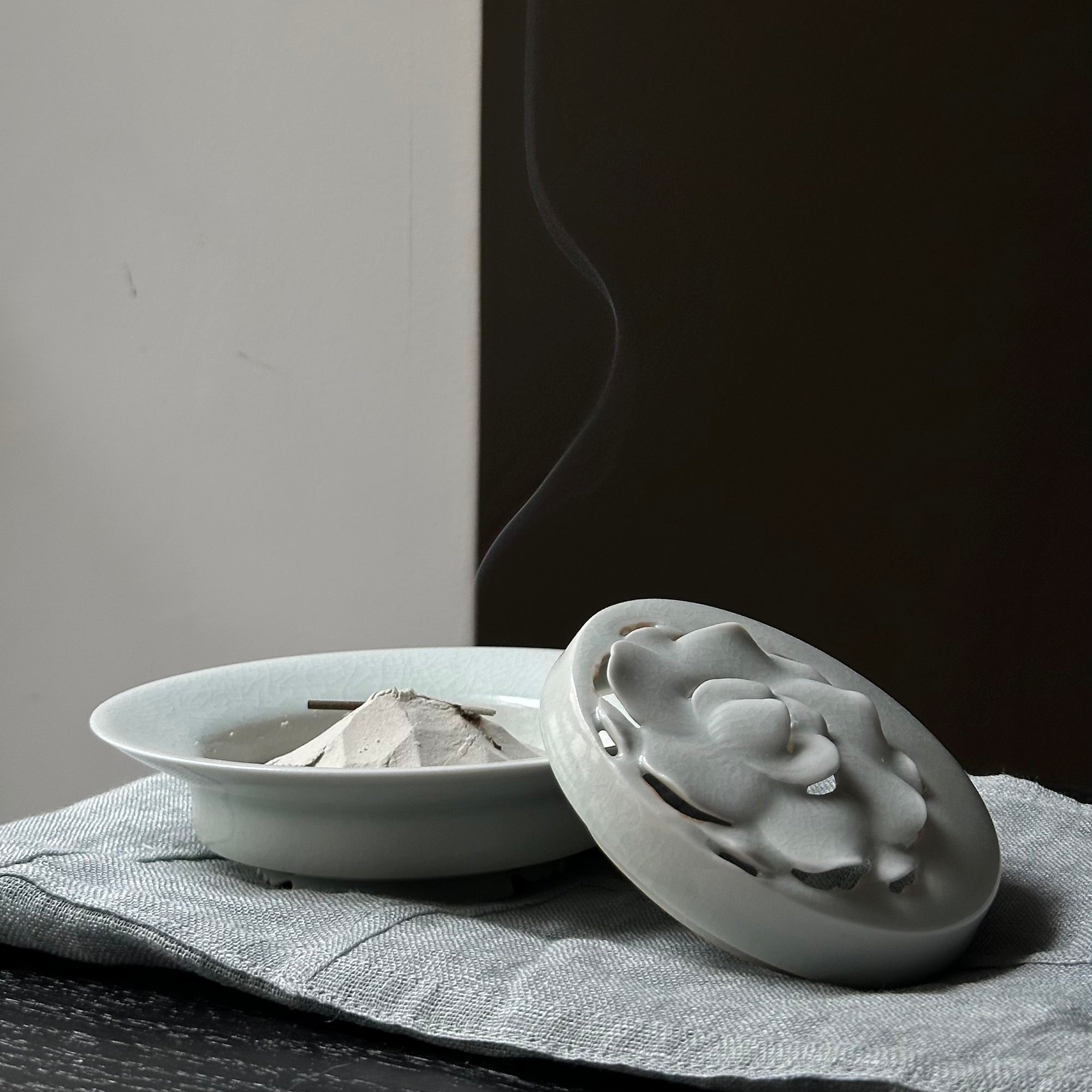
This incense burner is designed to hold ash, which is gently smoothed to obtain a regular surface. This gesture prepares the object and sets a rhythm, a particular attention to the moment.
The incense can then be used in two ways. A stick can be planted vertically in the ash or laid flat, directly on the surface (for short sticks). During burning, the lid can be left open, or closed when the incense is laid flat on the ash.
Burning gradually leaves a mark on the porcelain. It develops a patina, subtly changing its hue. This transformation is part of the object's use and aligns with the spirit of wabi-sabi, where time and use contribute to the beauty of the piece. To maintain its pristine whiteness, the lid can be left open during burning.
Once the incense has burned, the residues naturally blend with the ash. The ash can then be smoothed again, continuing the gesture. The incense burner can also be used as a simple incense holder or as a decorative box.
Presentation
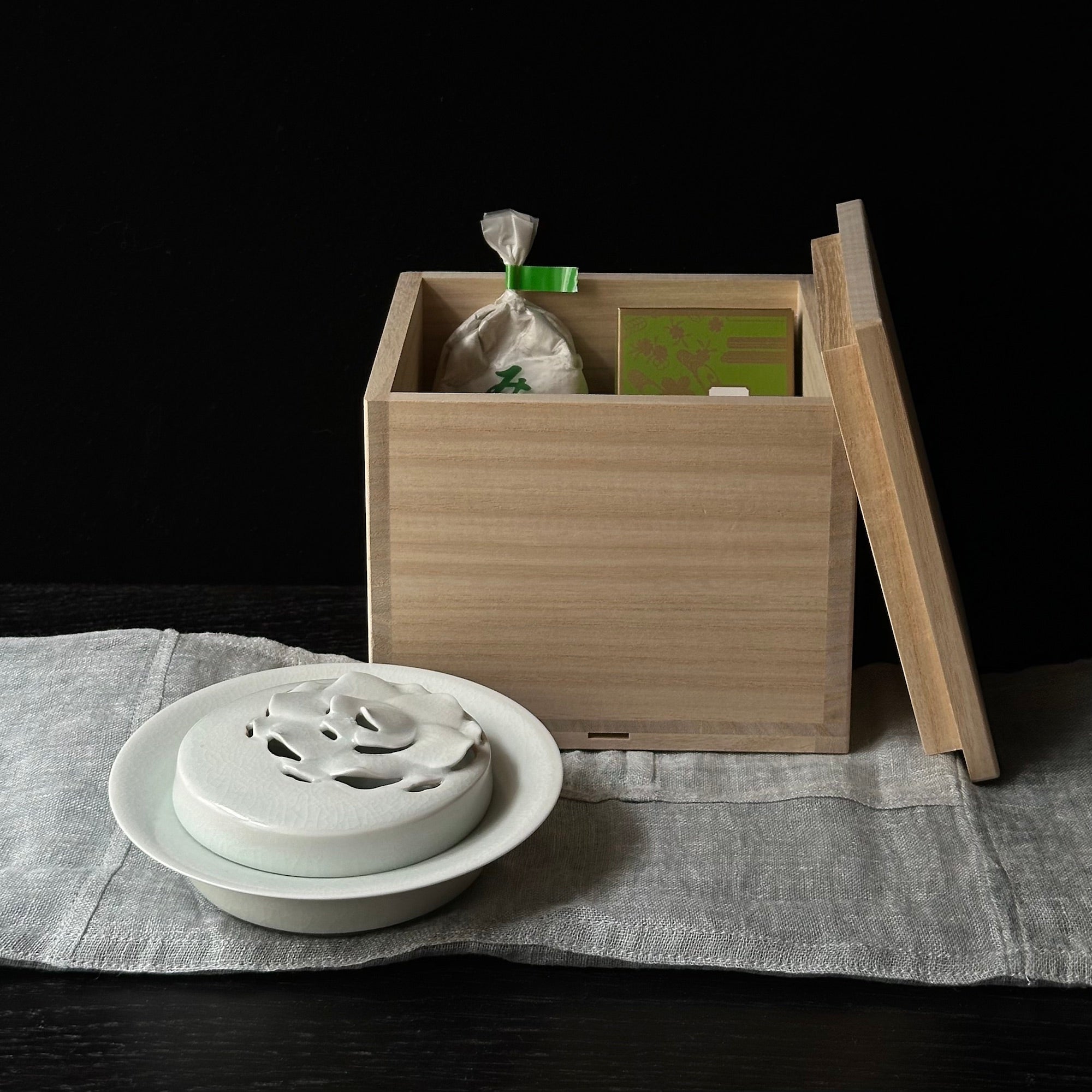
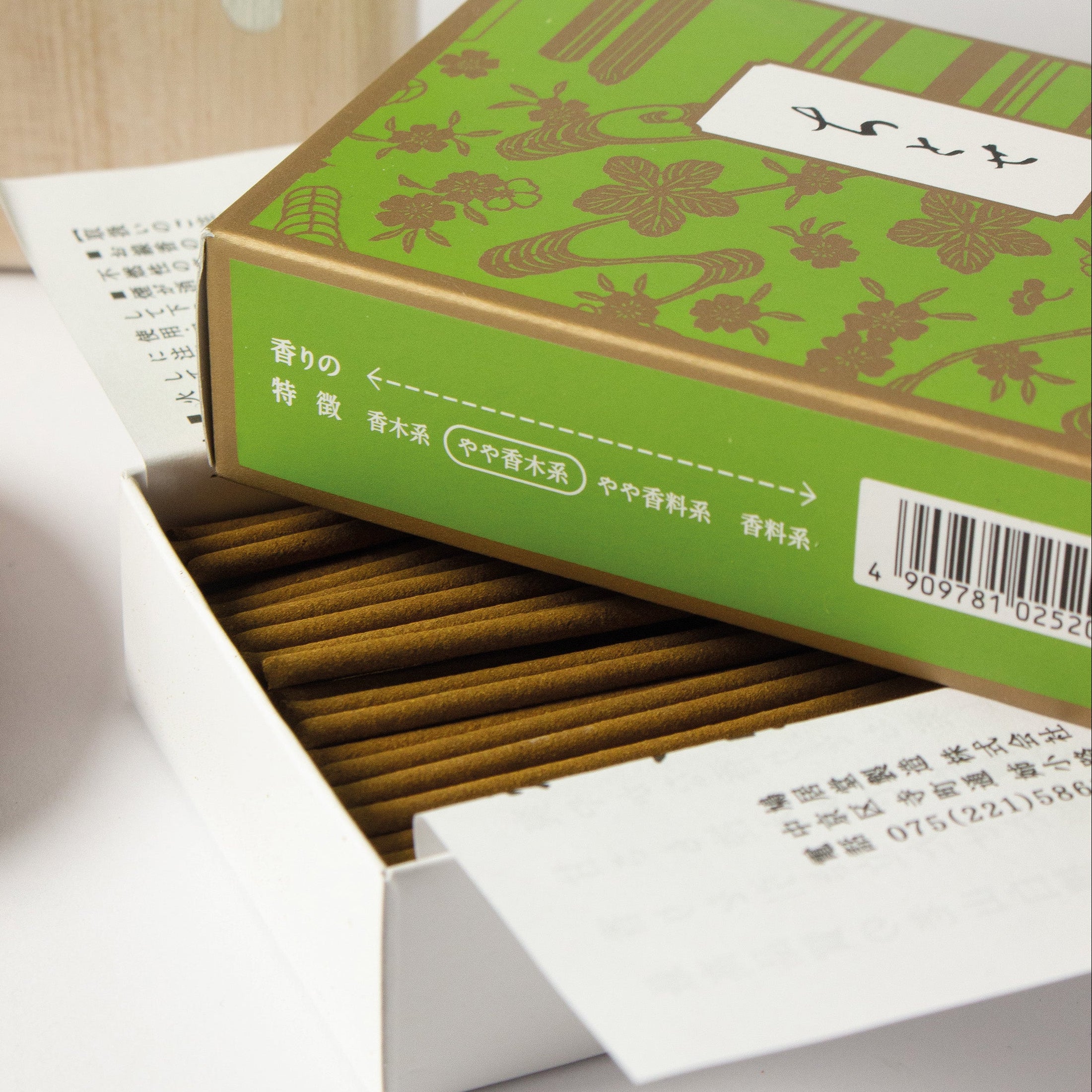
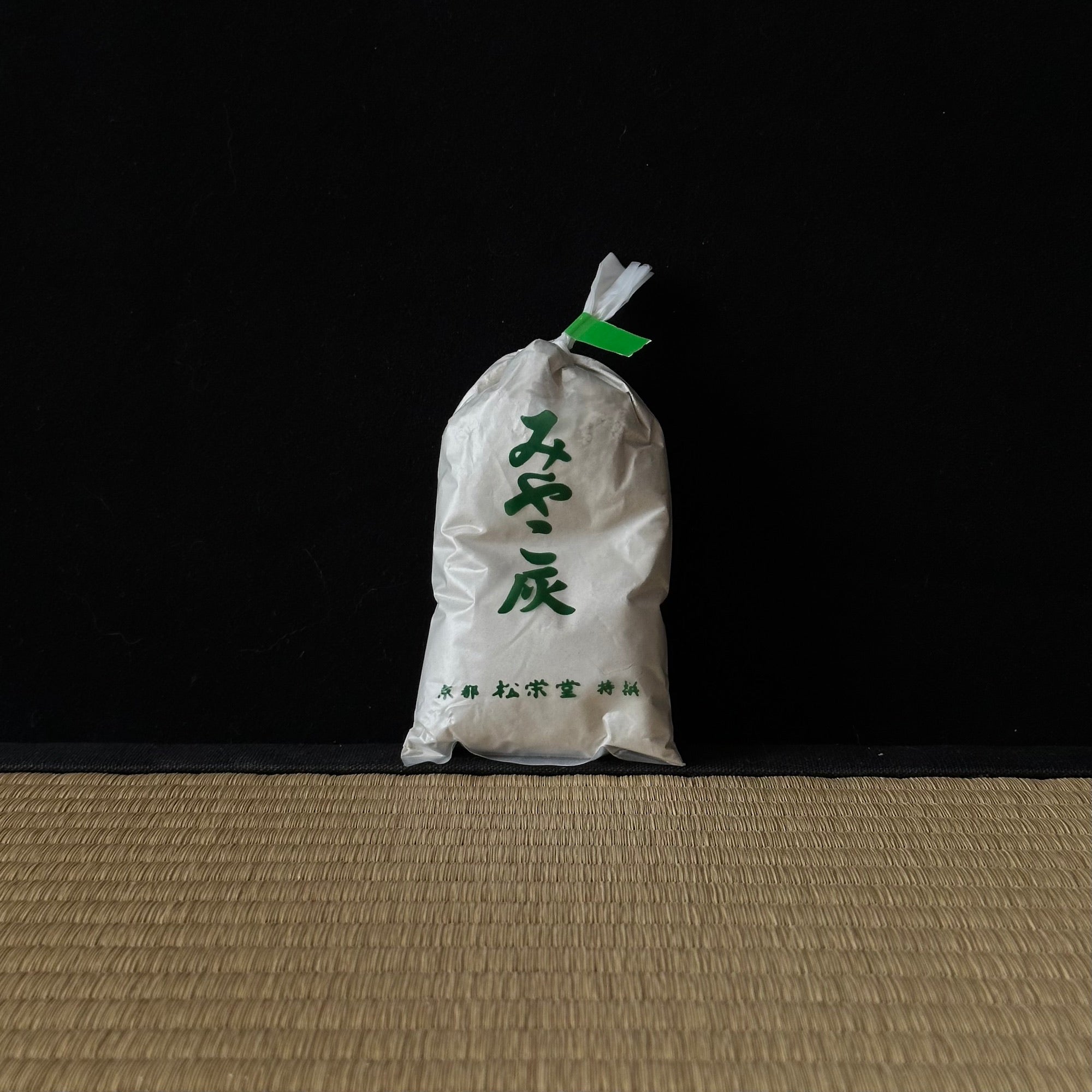
This incense burner is presented in a beautiful Japanese paulownia wood box. It comes with a sachet of ash (from Japan), as well as a box of traditional Japanese incense with 145 short sticks (9cm long), each burning for approximately 15 minutes. This subtle incense, with its main note of calming and soothing sandalwood, evokes the atmosphere and tranquility of Kyoto temples. It was created by Kyukyodo, a venerable stationery and incense house established in Kyoto in 1663. These elements elegantly accompany Kyunghee's incense holder, forming a whole designed to gently integrate into daily life.
Practical information
Place of manufacture:
Suwon (South Korea)
Dimensions:
Diameter 13cm - Height 5.5cm
Weight:
Incense burner alone: 285gr
Materials:
Incense burner: Porcelain; box: paulownia wood
Care instructions:
It is possible to use the incense burner with the lid closed when the incense is laid flat on the ash. The combustion will then gradually patinate the porcelain. This transformation is natural, but to maintain its pristine whiteness, it is necessary to leave the lid open, away from the smoke during the burning of the incense.
Incense should always be placed on a stand and supervised; do not leave children unsupervised nearby. To light a stick, bring a flame to the end and wait for the incense to ignite, then gently blow to extinguish the flame. Make sure to position the stick upright in the incense holder so that the ashes fall into the container. Extinguish the incense if you need to leave. Keep out of reach of children.
© Atelier Ikiwa – Laurence Corteggiani. Photos and texts protected. All reproduction prohibited without permission.
DELIVERY AND PAYMENT OPTIONS
Shipping
Free shipping in mainland France for purchases of €200 or more. Shipped with Colissimo, you can choose home delivery or a pickup point. Parcels are delivered against signature or a unique code for valuable items. Orders are generally dispatched within 2 business days, except for fine art photographs, which are printed on demand, and special cases, which will be announced in the banner at the top of the website (e.g., in case of absence). Learn more >
Payment Options
Secure card payment with Shopify Payments and 3D Secure technology.
Visa, MasterCard, American Express, Cartes Bancaires, PayPal, Apple Pay, Shop Pay, and Klarna.
Klarna: Pay in 3 interest-free installments or within 30 days, for purchases up to €1,500, subject to Klarna's acceptance. You will be redirected to Klarna to log in or create an account and confirm your payment.
PayPal: You will be redirected to PayPal to log in and confirm payment. New users can create an account during checkout.
Your invoice will be sent with your order.
Returns and Exchanges
14 days to change your mind. Learn more >
Choose options

WRAPPING
Exceptional items are wrapped in textiles tied according to the Korean pojagi art