
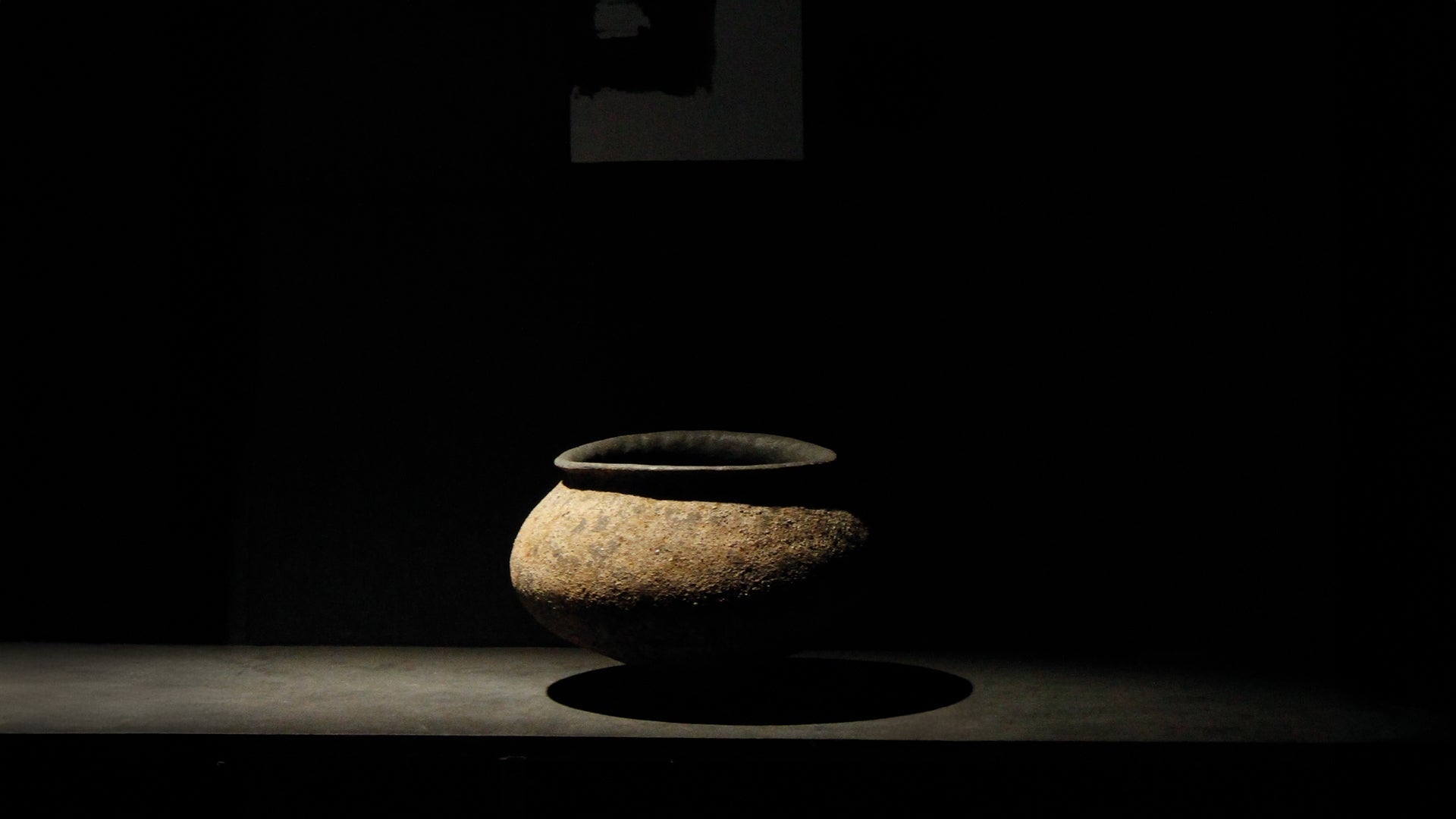
Kazari, the Art of Display and Decoration in Japan
In Japan, decoration is not limited to an aesthetic addition placed on an already finished object. It stems from a deeper gesture, concerning how an object appears in a place, at a given moment, for a specific person. The term kazari allows us to grasp this very Japanese specificity, encompassing textiles as well as ceramics, tea, or food presentation.
This shift in perspective significantly changes how objects are perceived. It is no longer about considering them as isolated forms, but as elements that take their place within a situation. A vase, a box, a natsume, or a dish are understood not only by themselves but also by their use, their season, their context, and the person observing them. From this perspective, an object can be something that is used, observed, and staged simultaneously, with these different dimensions contributing together to its meaning.

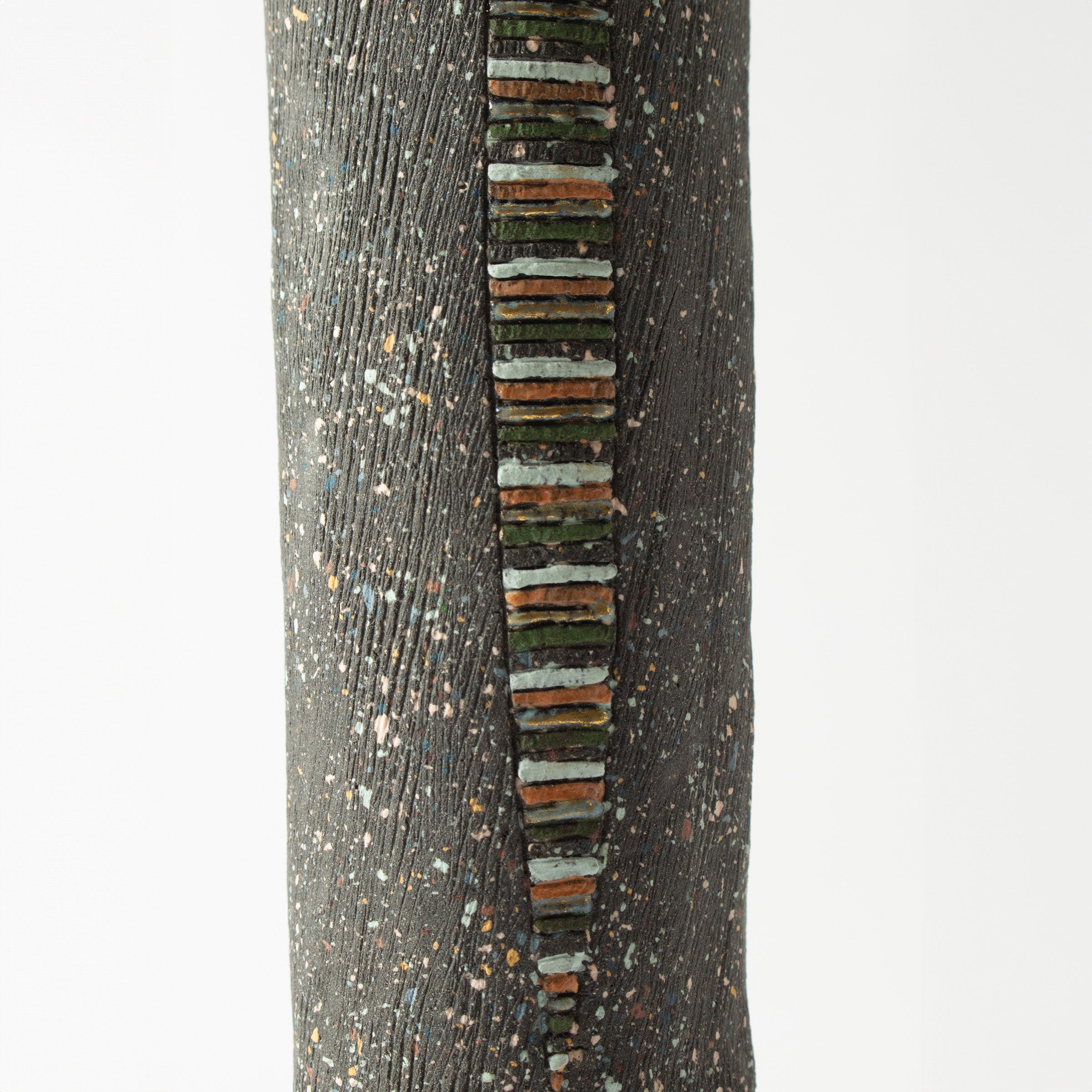
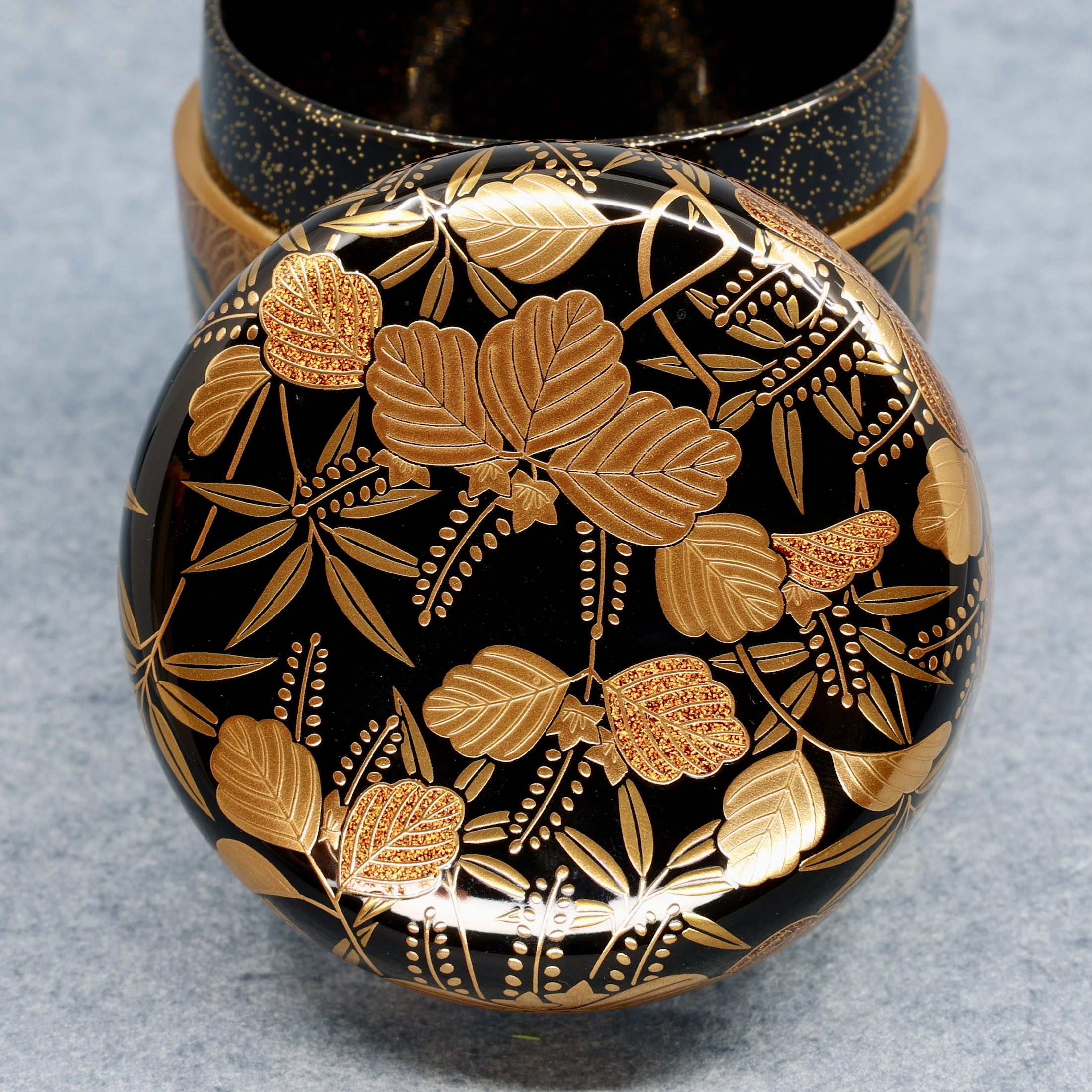
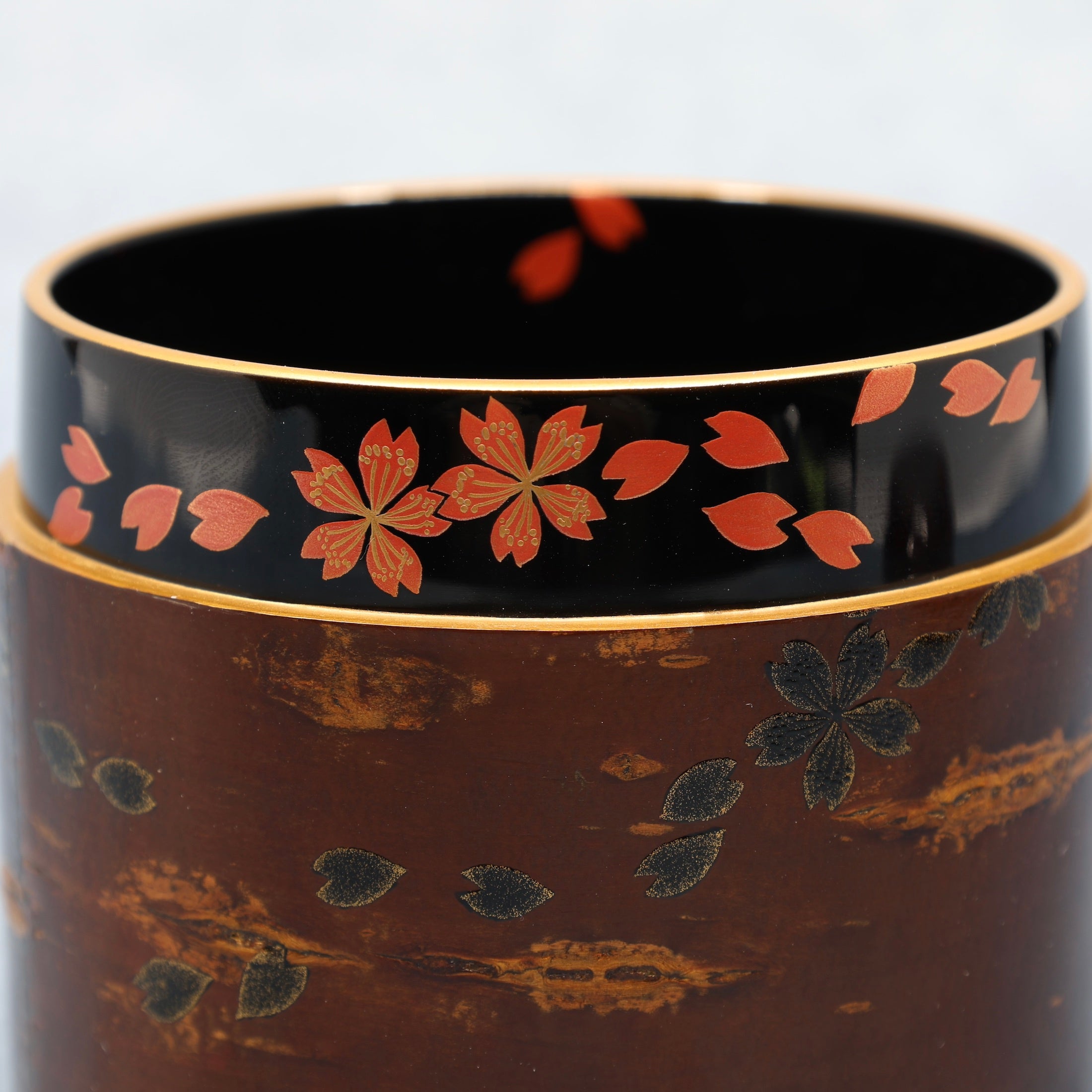
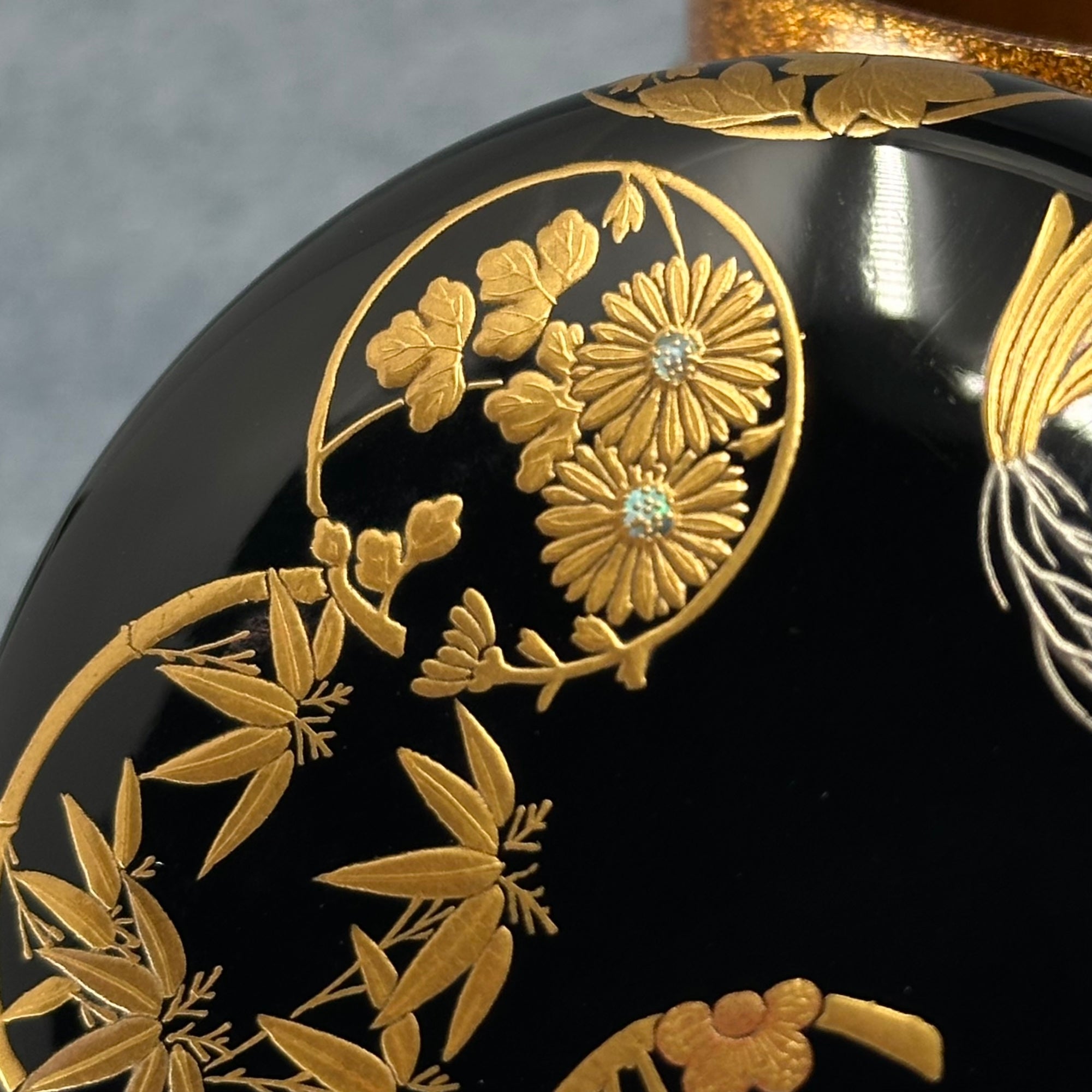
Interior detail - credit: Atelier Ikiwa
Kazari: contemplating art before the word "art"
The word bijutsu, now translated as “art,” appeared in Japan at the end of the 19th century, in a context of opening to the West and World’s Fairs, during which Japan first “presented itself to the world.” It was created to correspond to the European notion of “fine art.” Before that, there was no direct equivalent. People spoke instead of painting, lacquer, or ceramics, without seeking to group these practices under a single category.
In this context, the notion of kazari offers a more suitable interpretation. The term appears in the earliest Japanese poetic texts, where it notably refers to adorning hair with flowers. This point is important because it relates to something living, linked to the body and the season.
What characterizes kazari is that it is an action: to decorate is to make appear, to connect, to organize a presence in a space. This idea permeates all Japanese arts.
The distinction between art and craft, as it developed in the West, long held little meaning in Japan. The separation between "fine arts" and "applied arts" assumes that some objects are autonomous and others are linked to a specific use. However, within a logic like that of kazari, this opposition becomes less relevant. Objects, whether in lacquer, ceramic, or textile, are simultaneously used, observed, and presented. Their value does not depend on a hierarchy between disciplines, but on how they fit into a situation.
It is understandable why it is often more pertinent to speak of "performative" art. The object is not just looked at; it participates in an experience. It provokes a reaction, engages the imagination, and invites the viewer to complete what they see. Part of this experience relies on memory and personal associations, which enrich what the object suggests without ever showing everything.

Interior Scene with Books and Writing Implements - Credit: H. O. Havemeyer Collection, Bequest of Mrs. H. O. Havemeyer, 1929
From the everyday to the exceptional, the space of kazari
This way of thinking is based on a distinction between the concepts of ke and hare. Ke corresponds to the everyday, to what is repeated. Hare, on the other hand, refers to special moments, celebrations, important encounters, situations where a difference is marked.
Decoration intervenes precisely in this space: it is not permanent; it serves to transform a moment, to signal attention, to create a particular situation. The same place can thus be modified according to the season, the occasion, or the guest one receives. It is this transition from the ordinary to something rarer, almost intensified, that gives kazari its full scope.
The matsuri, or festivals, make this very visible. They introduce a form of intensity into daily life, with colors, gestures, and rhythms that break with the ordinary. Flowers play a central role, chosen not only for their appearance but for their season, their fragrance, and what they evoke at a precise moment of the year.
This relationship to time is central; it explains why Japanese decoration does not seek to produce a lasting effect, but rather to correspond to a given situation. This logic is found in simple gestures, such as placing a branch in a vase or choosing a motif for a tea object.
An art of movement and presence
In textiles, this idea is very clear. Patterns are not designed to be seen motionless; they are conceived to accompany the body's movement. A flower placed on the lower part of a kimono transforms as the person walks. It shifts, partially disappears, then reappears. The decoration thus depends on the gesture; it varies with movement, with the body's rhythm.
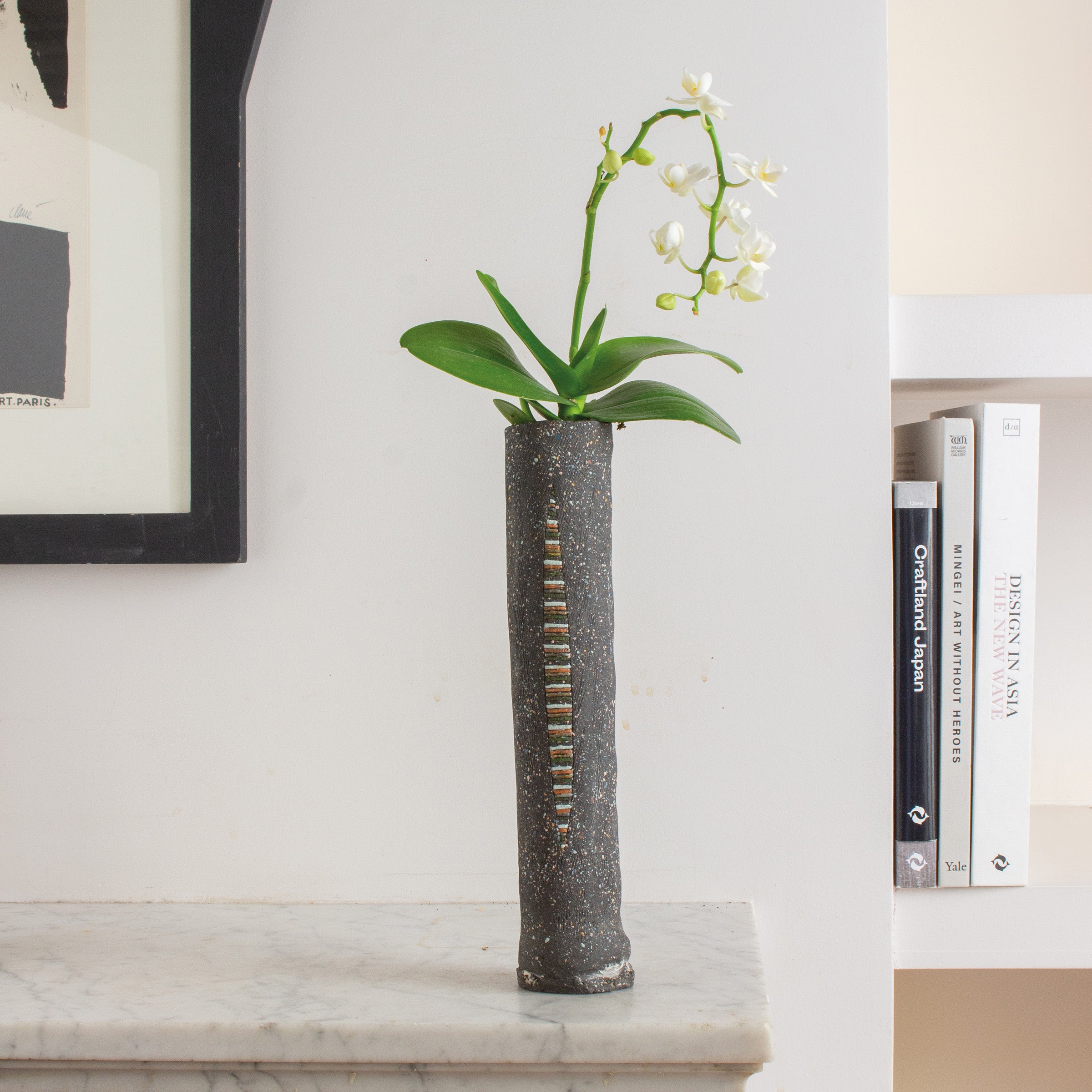
This way of conceiving patterns also helps to better understand the objects we look at today. A ceramic vase, for example, is not just an autonomous form. It is linked to what it will hold: a branch, a few flowers, sometimes a simple stem is enough to make the whole work.
These objects do not seek to impress. Their interest lies rather in their precision. They find their place in a composition, and it is this relationship that gives them their strength.

Moyō hinagata miyako no nishiki - Credit: Watson Library copy: William Alexander Smith Fund
Tea, an accomplished form of kazari
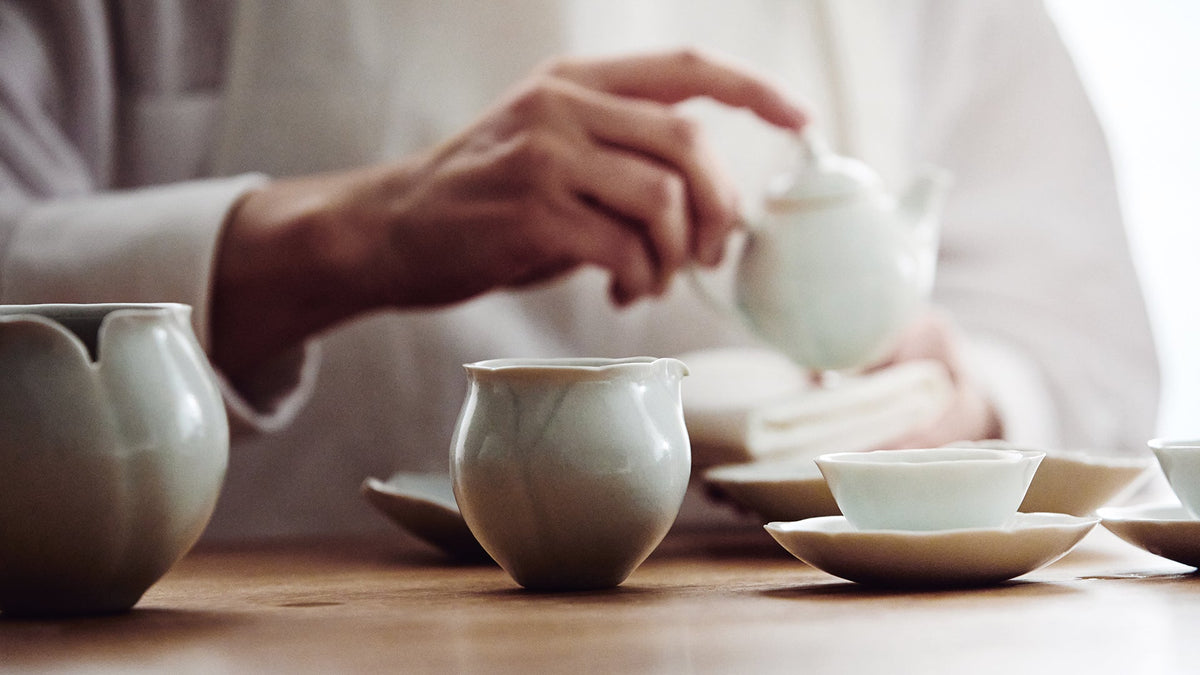
The practice of tea makes this logic particularly clear. It relies on a balance between objects, gestures, and environment. Nothing is left to chance, but nothing is fixed either.
Each element is chosen for a specific situation: the bowl, the natsume, the vase, the scroll unrolled in the tokonoma, the flower—everything is considered together. This composition exists only for the duration of the encounter.
Decoration, here, does not consist of enriching a space but of adjusting the elements to each other. The gaze circulates, without an obvious dominant point, but with overall coherence.
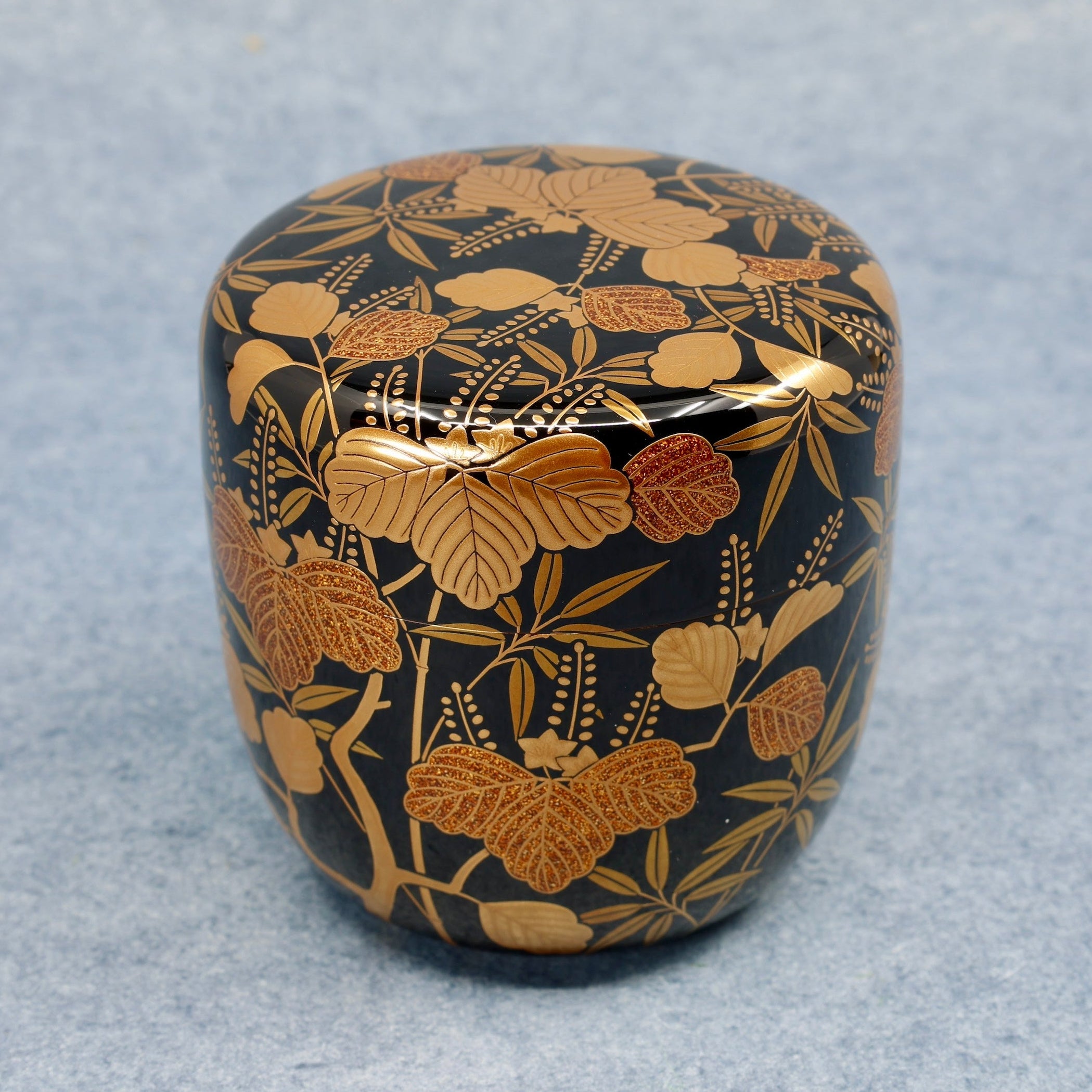
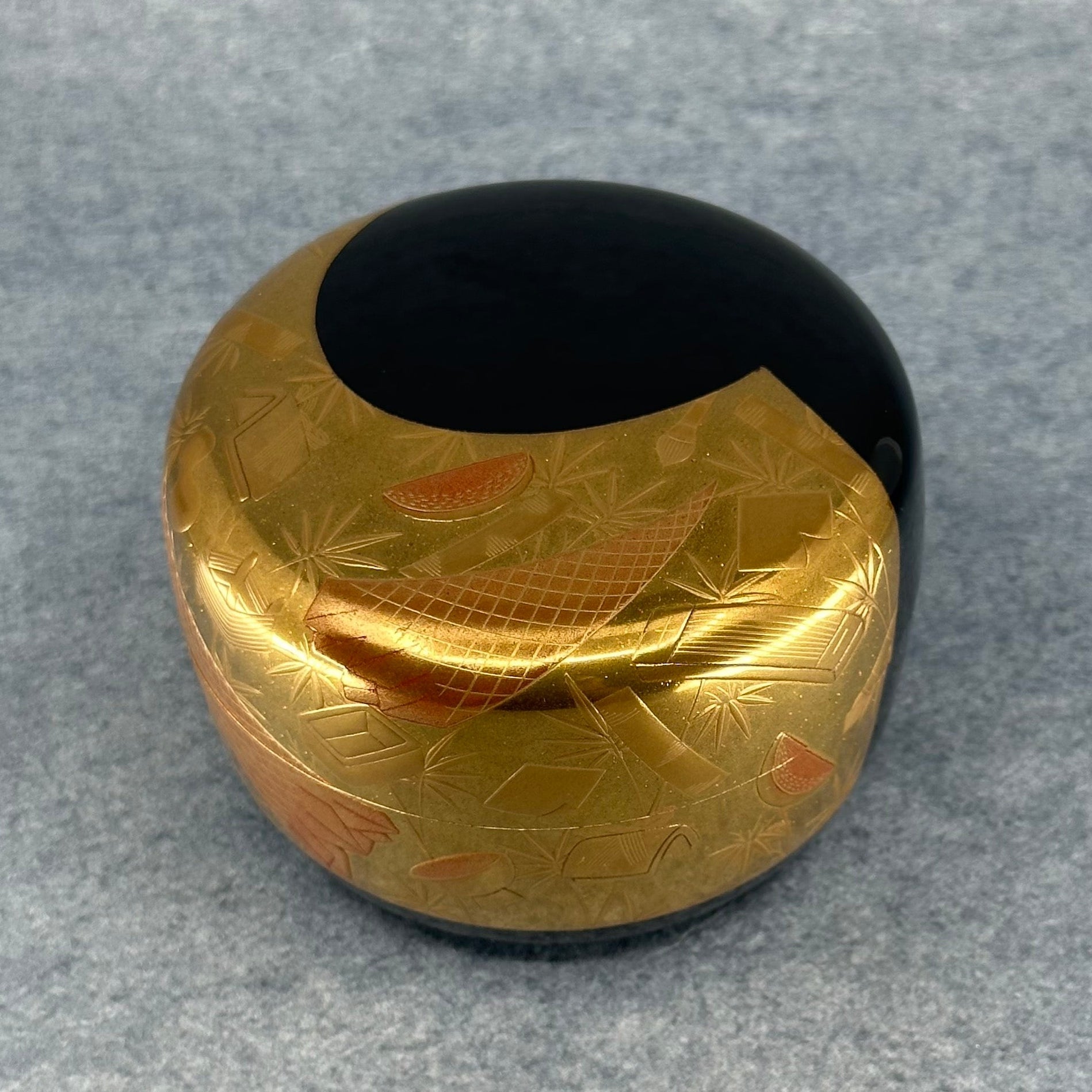
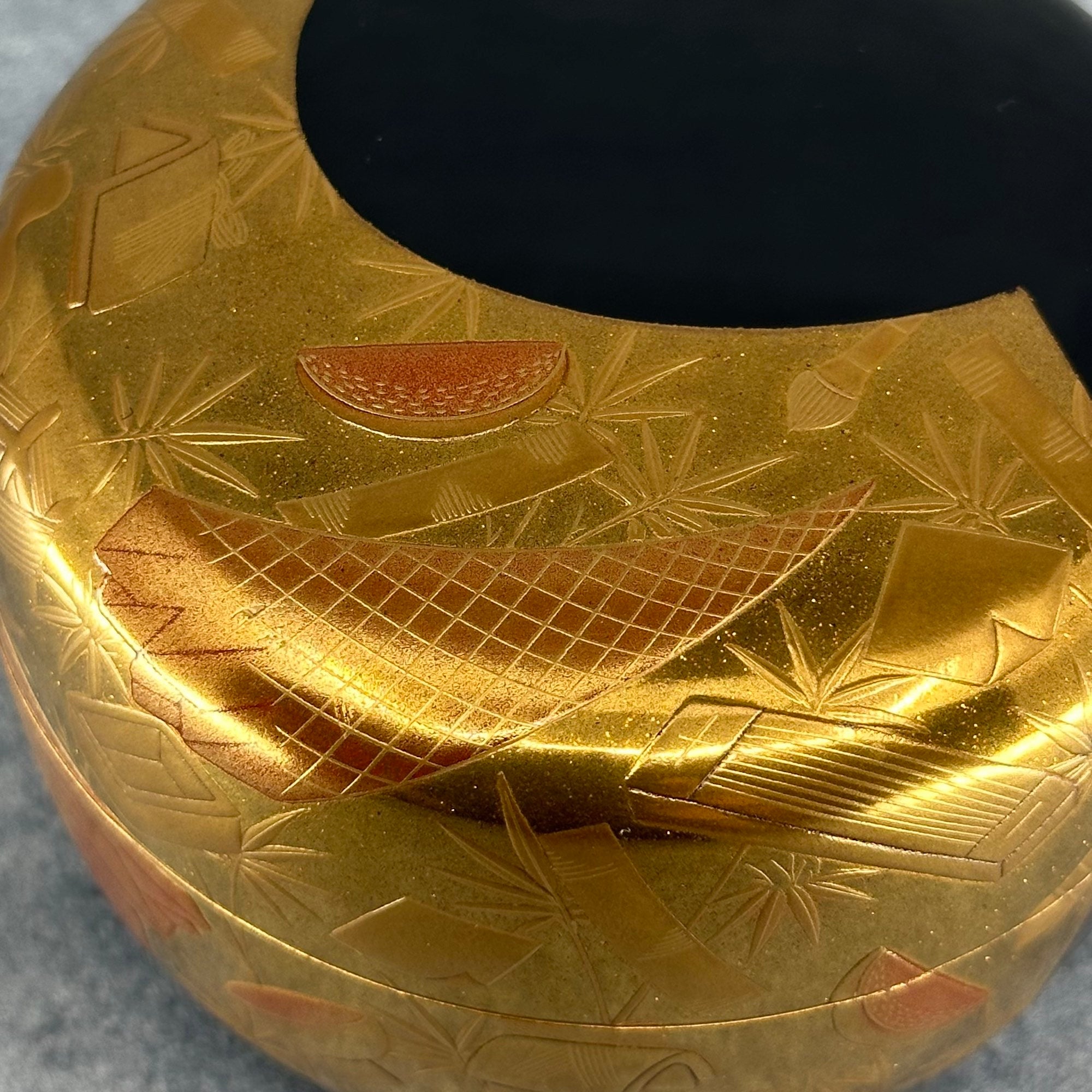
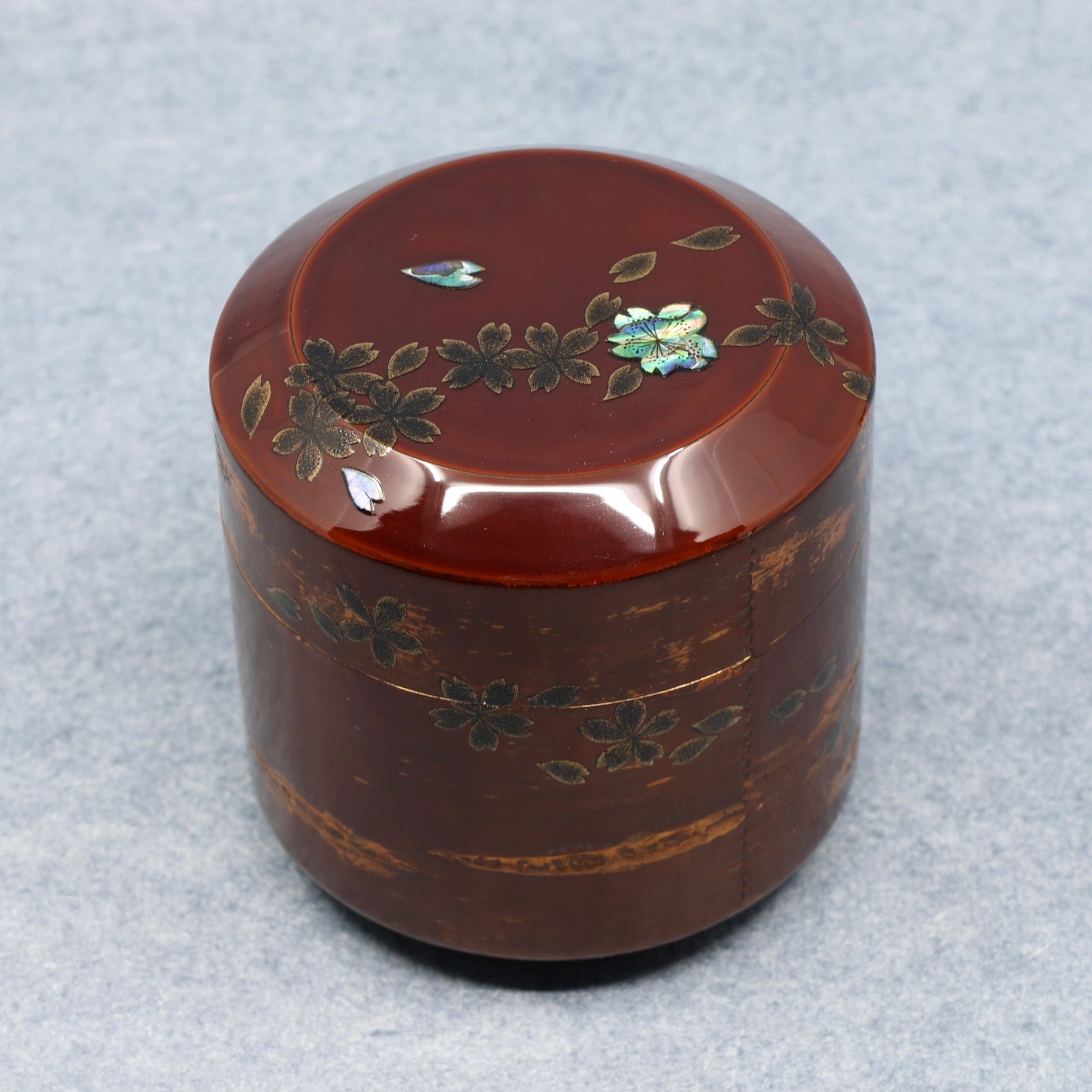
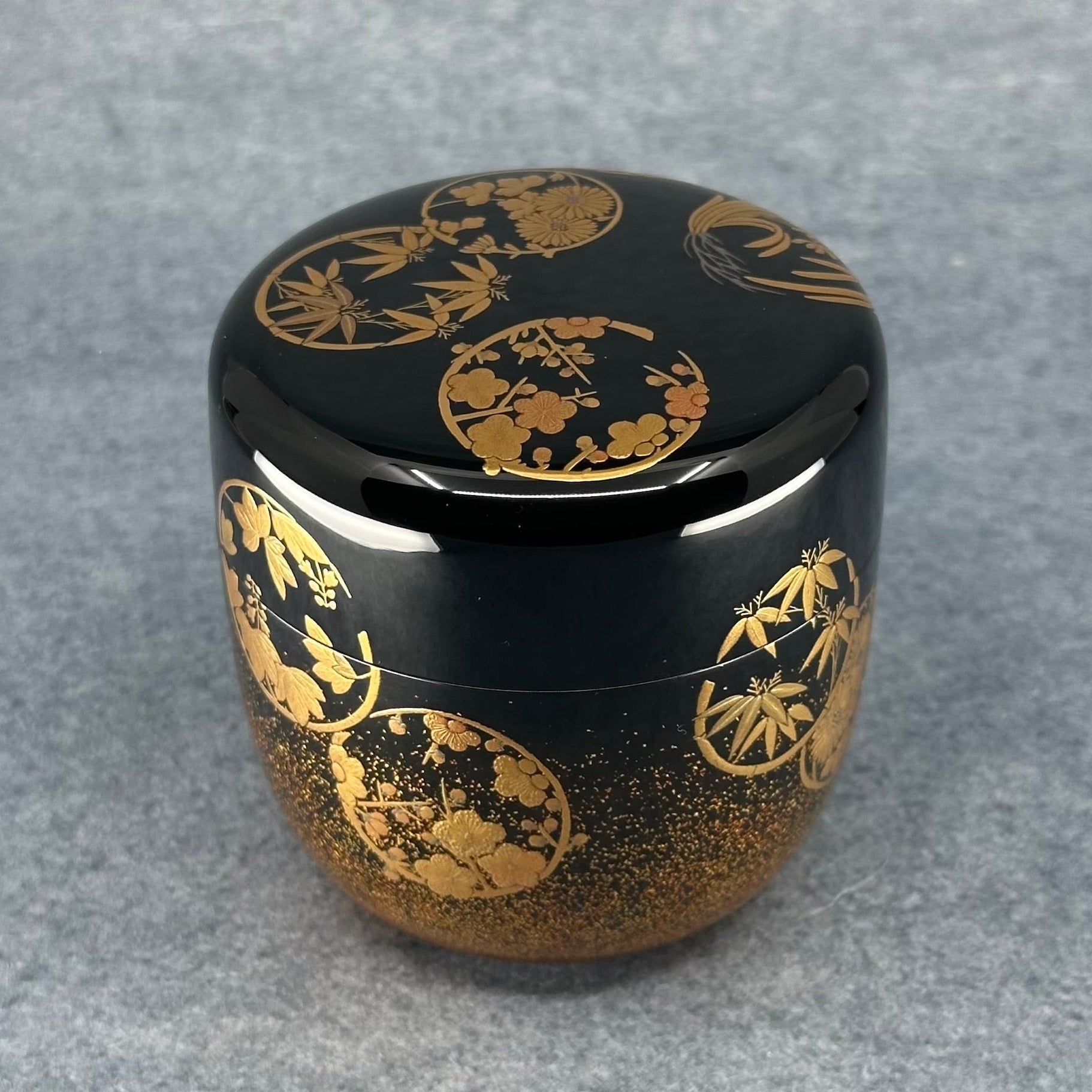
The natsume is a good example. It is a small object, which may seem very simple at first glance, but whose proportions, materials, and patterns are crafted with precision, in variations ranging from minimalist purity to the most spectacular sophistication, concentrating all the savoir-faire of exceptional art craftsmanship. Its form, the depth of lacquer, and its decoration are chosen according to a moment, a season, an intention. It can be observed for itself, but also appreciated within the context of tea, where it takes on another dimension.

Natsume, tea boxes - credit: Atelier Ikiwa
The circulation of forms and patterns
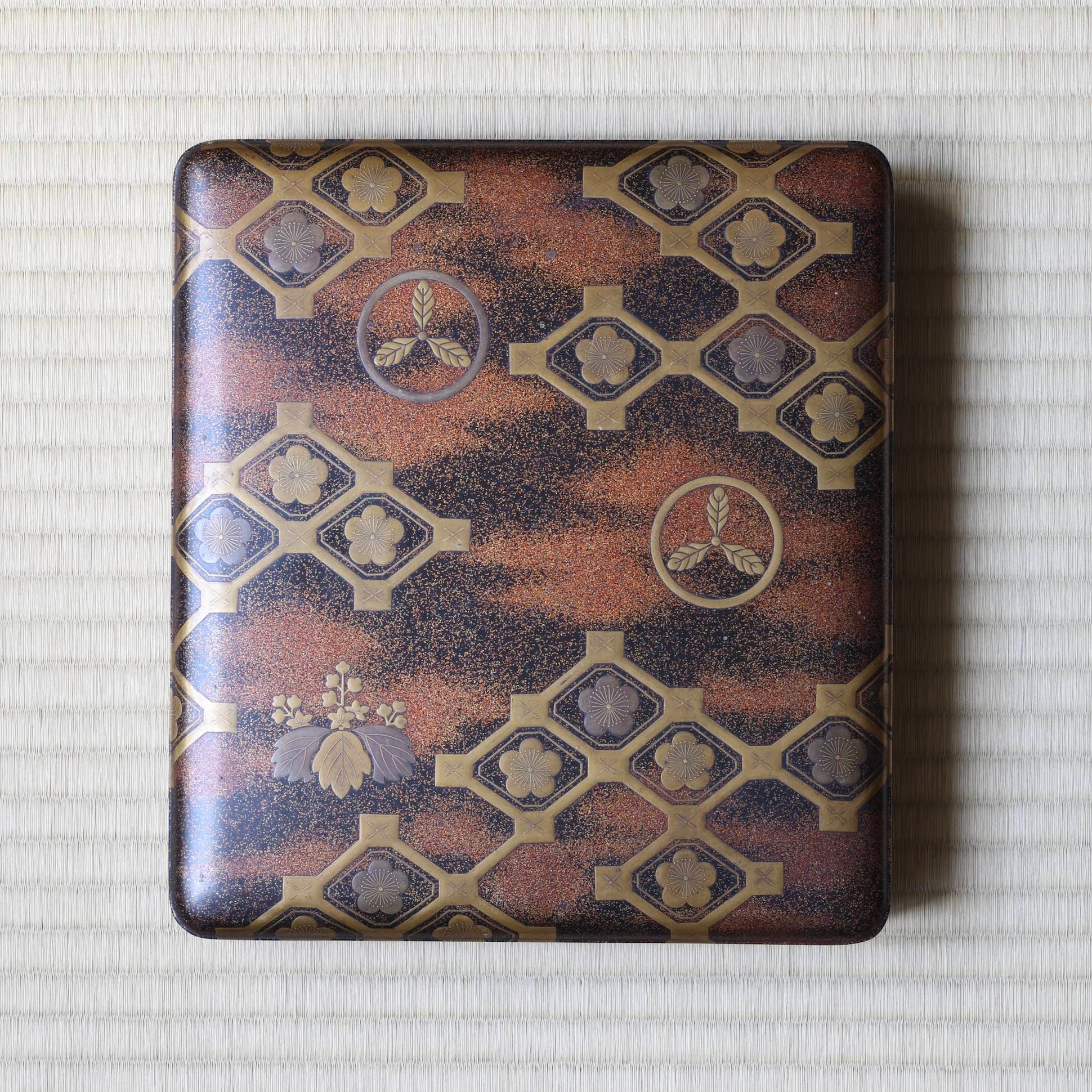
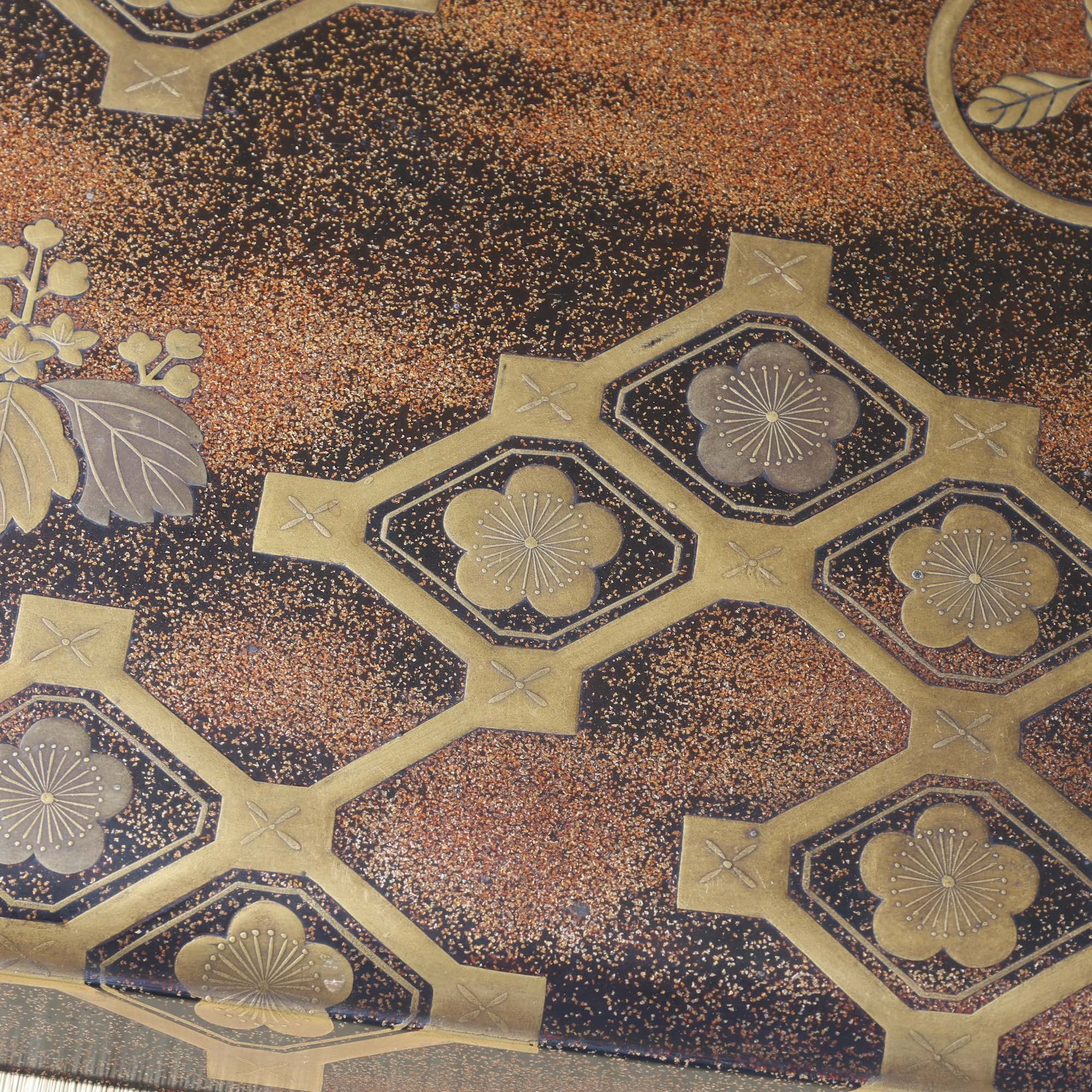
An important aspect of kazari concerns the circulation of forms between different media; patterns are not confined to a single medium. They move from textiles to ceramics, from prints to lacquer.
Textile pattern books, called hinagata-bon, played a key role in this dissemination. They served both as catalogs and sources of inspiration. Artisans and patrons found compositions, patterns, and ideas they could adapt.
This principle has not disappeared. Contemporary Japan remains marked by a highly developed culture of magazines and specialized publications. There are journals for almost all fields, offering models, methods, and examples to follow. Their role is not so different from that of the hinagata-bon; they continue to circulate forms and ways of seeing.
Thus, patterns migrate from one medium to another; a design conceived for a textile can be reproduced on a plate, adapted to a box, transformed onto a lacquered surface. Each time, its meaning subtly changes.
It then becomes clear that an object is never completely isolated; it is part of a whole of forms and references that echo each other.

Hinagata chō (Model Book) - Credit: Fletcher Fund, 1938
To present, adjust, address
The question of presentation is based on an important notion, that of kata, which can be translated as "form" or "framework." The principle is simple: one begins by defining a structure, then incorporates a certain freedom within it.
Manuals of arrangement, developed as early as the Middle Ages, clearly demonstrate this approach. They do not fix every detail but provide guidelines. They indicate what is appropriate in a given situation.
The Kundaikan Sochoki is a famous example. It describes how to organize a space to receive a guest, which objects to choose, how to arrange them. But above all, it reminds us that decoration is not meant to last.
An arrangement is tied to a moment; it can change according to the season, the occasion, or the person being received. The manner of presentation always depends on this relationship. This implies that the value of an object does not solely reside in its inherent qualities; it also depends on how it is used and presented.

Tagasode (“Whose Sleeves?”) - Credit: H. O. Havemeyer Collection, Gift of Mrs. Dunbar W. Bostwick, John C. Wilmerding, J. Watson Webb Jr., Harry H. Webb, and Samuel B. Webb, 1962
Looking at objects differently
Approaching Japanese arts through kazari changes how objects are viewed. Decoration is no longer a mere addition; it participates in organizing a space, creating a moment, and forming a type of relationship.
A dish takes on another dimension when used. A bowl changes depending on what it contains. A vase is appreciated differently depending on what it holds. A natsume can be viewed for itself, but also for the place it occupies within a whole.
What might seem discreet then becomes more significant. The object is part of a relationship between material, time, and gaze.
Perhaps this is a useful way to approach these pieces today. Not as isolated objects, but as forms capable of organizing a space, marking a season, and altering the perception of an interior.
Thanks to Nicole Rousmaniere for illuminating this fascinating subject during a brilliant lecture at the Victoria & Albert Museum in London in March 2026. This lecture is the primary source for this article, as is Nicole Rousmaniere's book "Kazari, decoration and display in Japan."
© Atelier Ikiwa – Laurence Corteggiani. Photographs and texts protected. All reproduction prohibited without authorization.