


Natsume (Japanese tea caddy) in lacquer and gold, with a kai-awase (shell game) design by Kashō Yoshita
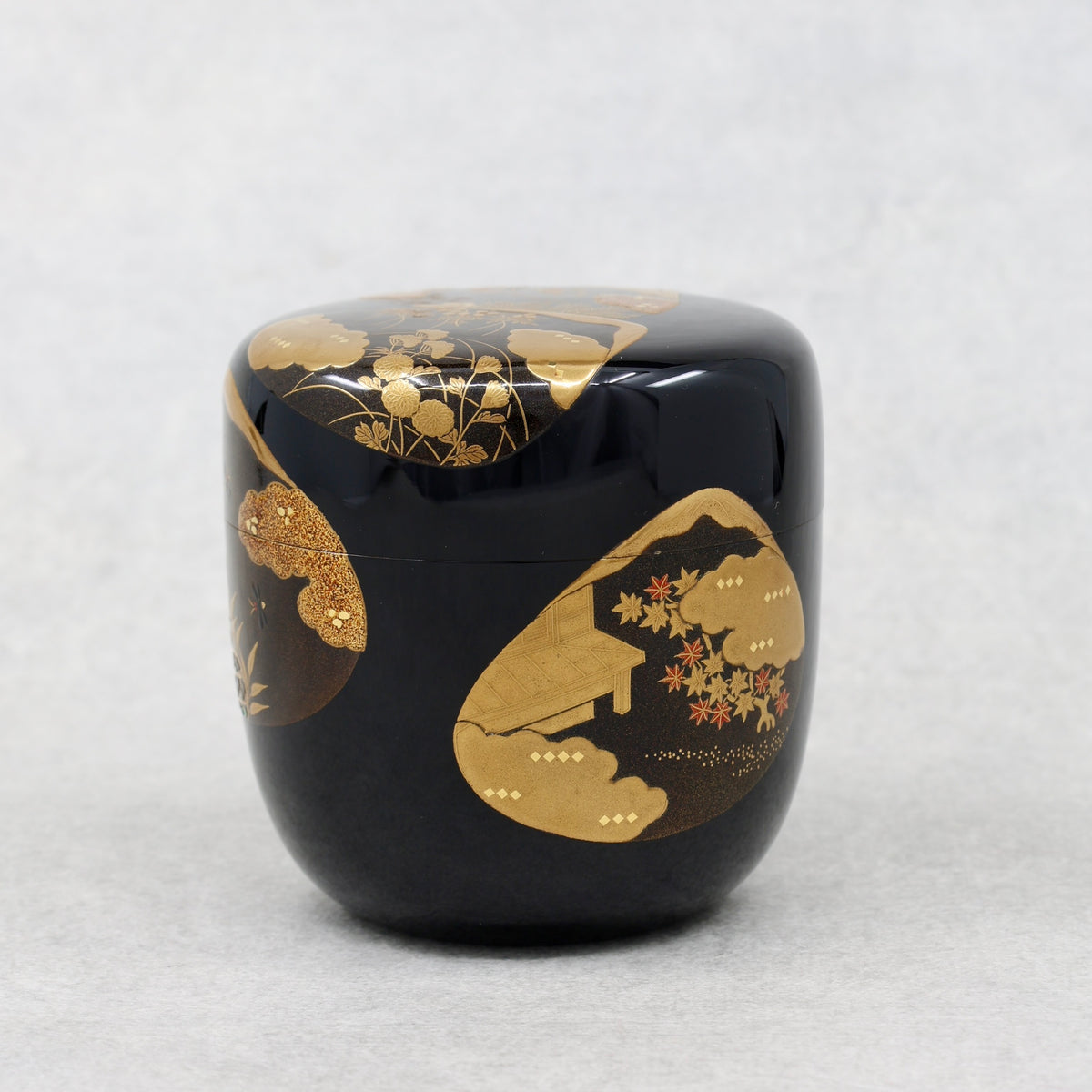
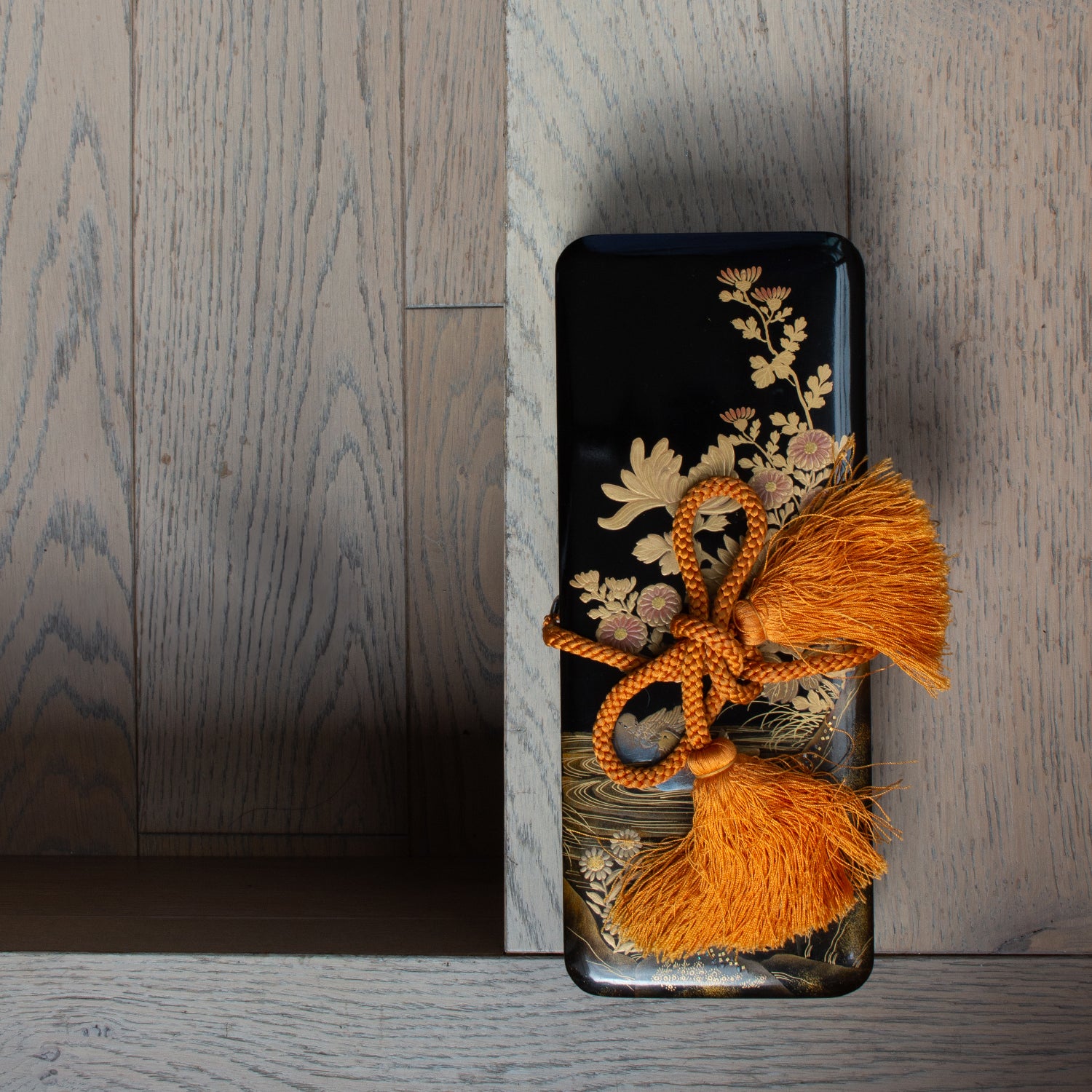
This natsume (a box used to hold matcha powder during the Japanese tea ceremony) is an exceptional work by Kashō Yoshita, a master lacquerer from Ishikawa Prefecture renowned for his mastery of Japanese maki-e. On deep, lustrous black urushi lacquer, a sumptuous gold and mother-of-pearl decoration evokes the traditional Japanese game of matching shells. The extreme finesse of its execution, the richness of the techniques employed, and the contrast between the brilliance of the gold and the mirror-black finish make this natsume a work of exceptional artistic quality.
The Artisan
Kashō Yoshita, born in 1940 in Komatsu, Ishikawa Prefecture, is a Japanese master lacquerer renowned for his work in maki-e (decoration with gold or silver powder). The son of lacquerer Eisaku Yoshita, he began training at the age of fifteen under the master Kōhō Nakauchi. Specializing in objects for the tea ceremony, he developed a personal style inspired by classic Japanese motifs and the aesthetics of the Rinpa school. His work has been honored with several important awards, notably the NHK President’s Award at the National Exhibition of Lacquerware in 1990 and the Japan Traditional Arts Society Award in 1993. He was officially recognized as a traditional artisan in 1998 and later honored by Ishikawa Prefecture in 2007 for his technical excellence. Founder of the Kashō workshop in Yamanaka Onsen, he exhibited his works in prestigious Japanese department stores, including Mitsukoshi, and is highly regarded among lacquerers in the world of chanoyu (the Way of Tea).
Decoration and Techniques
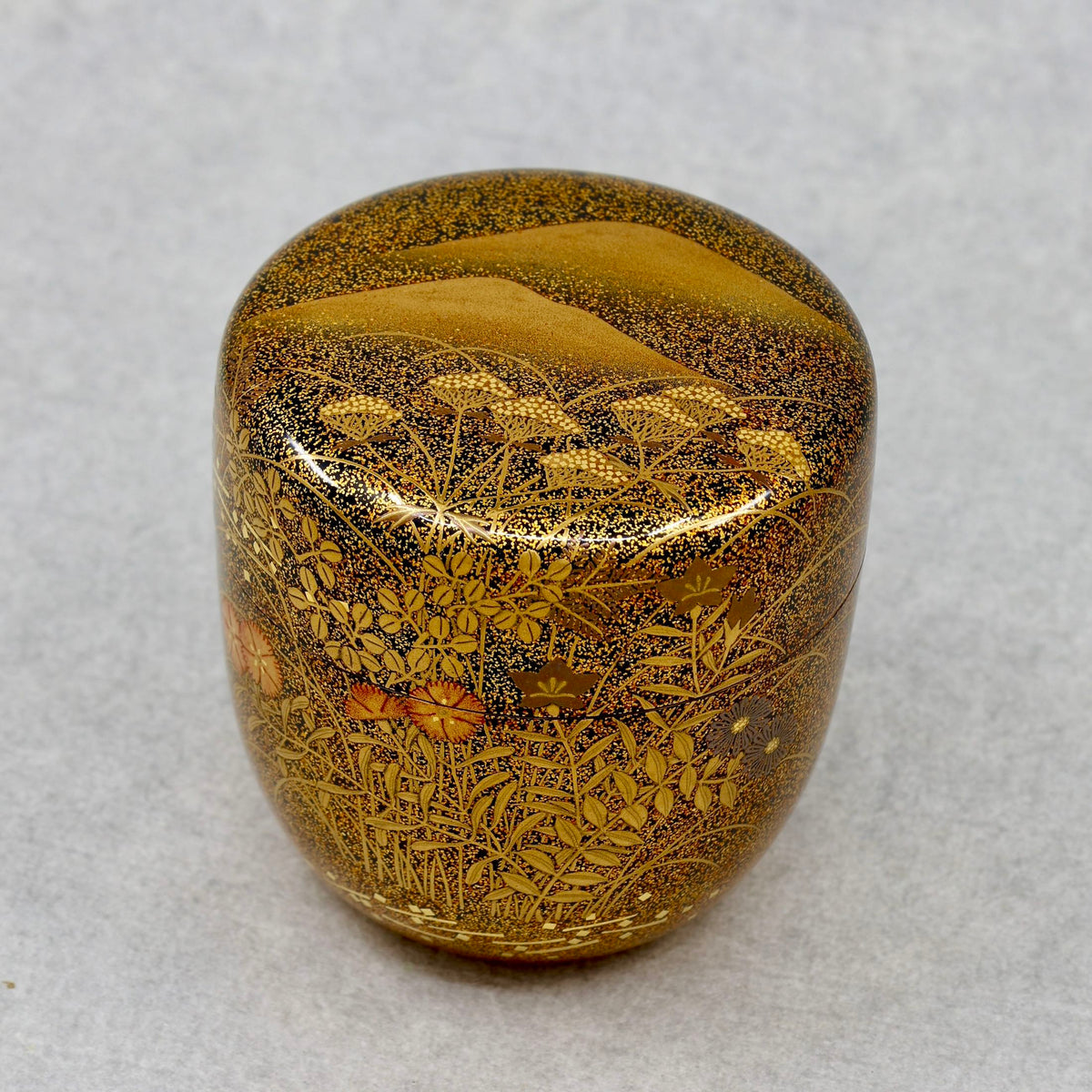
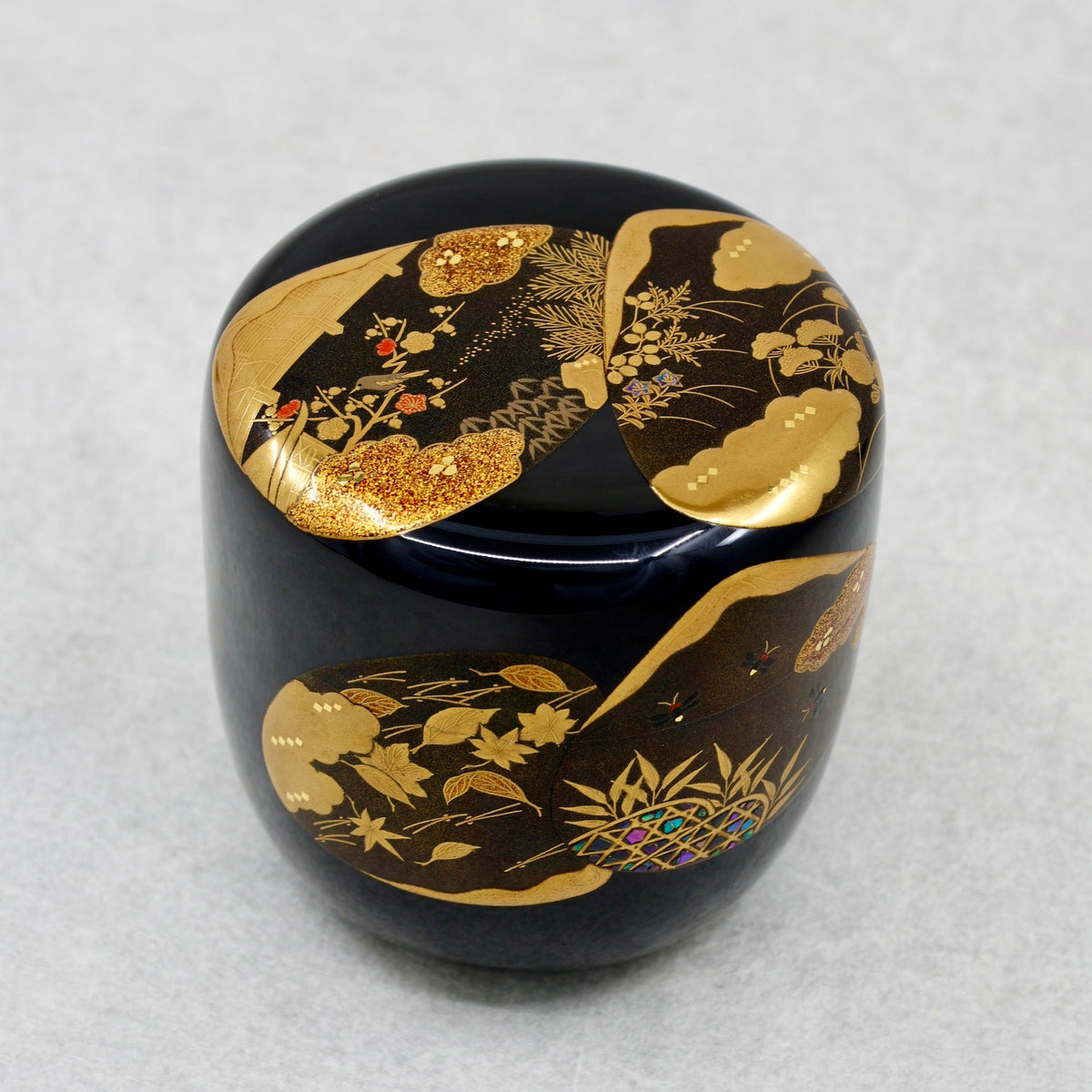
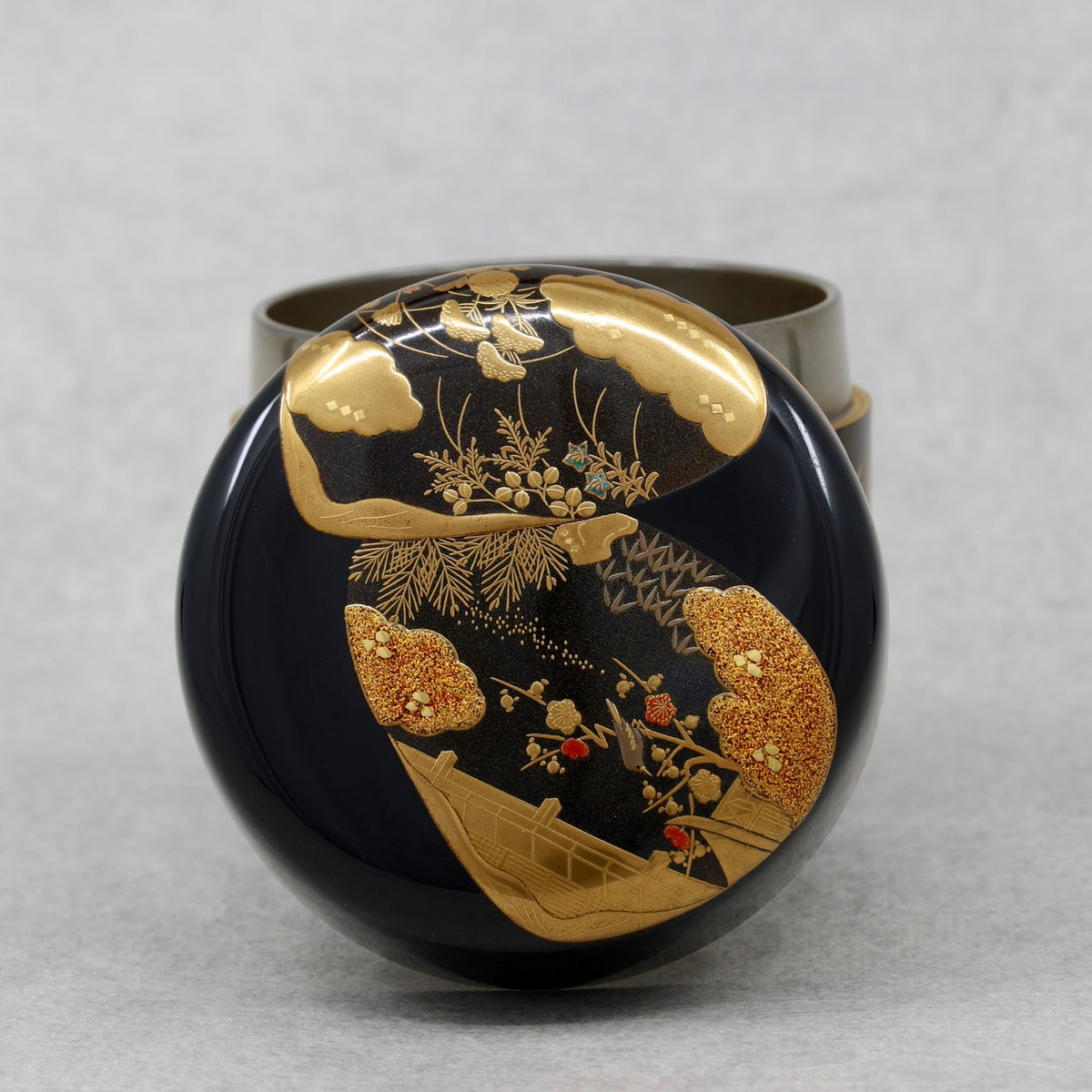
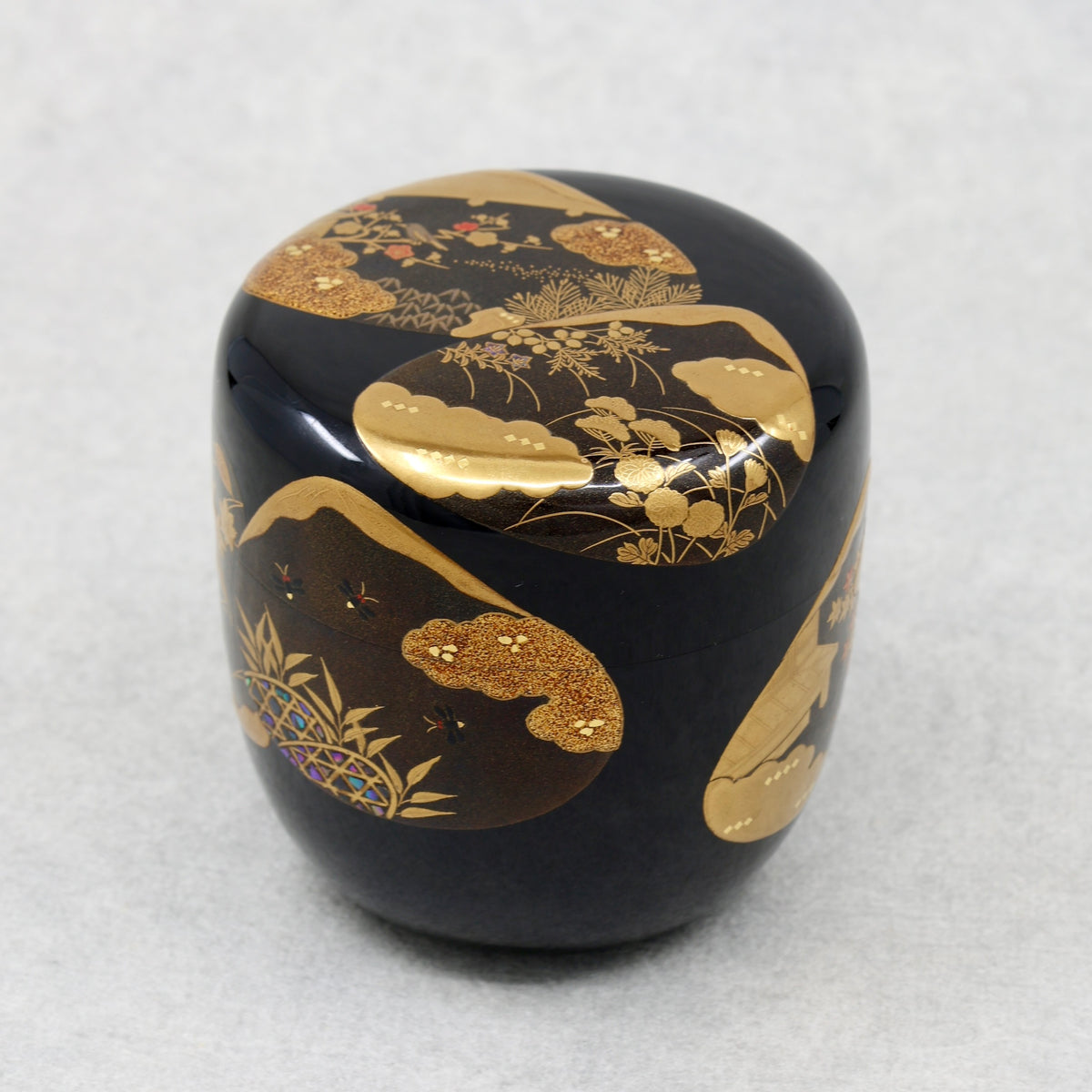
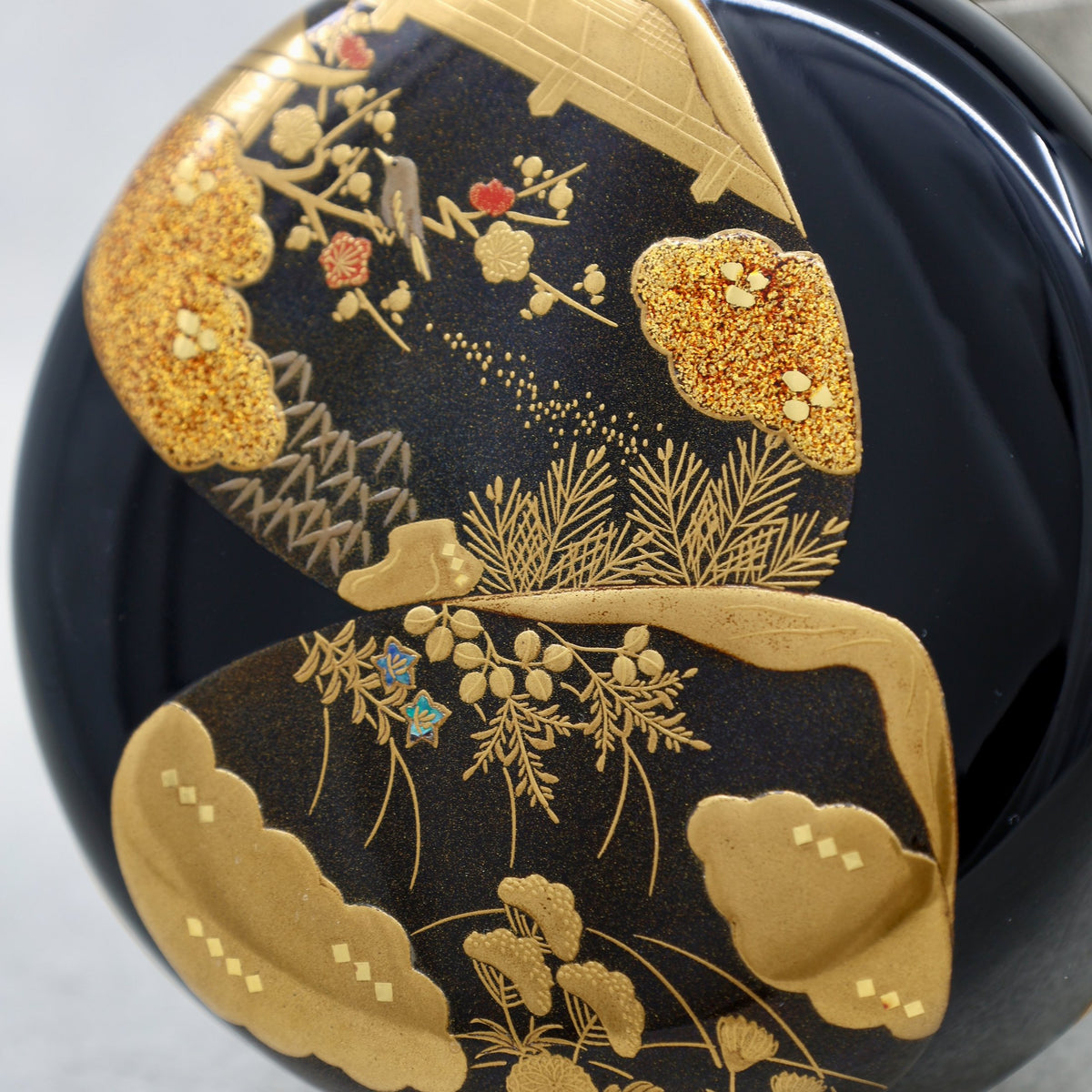
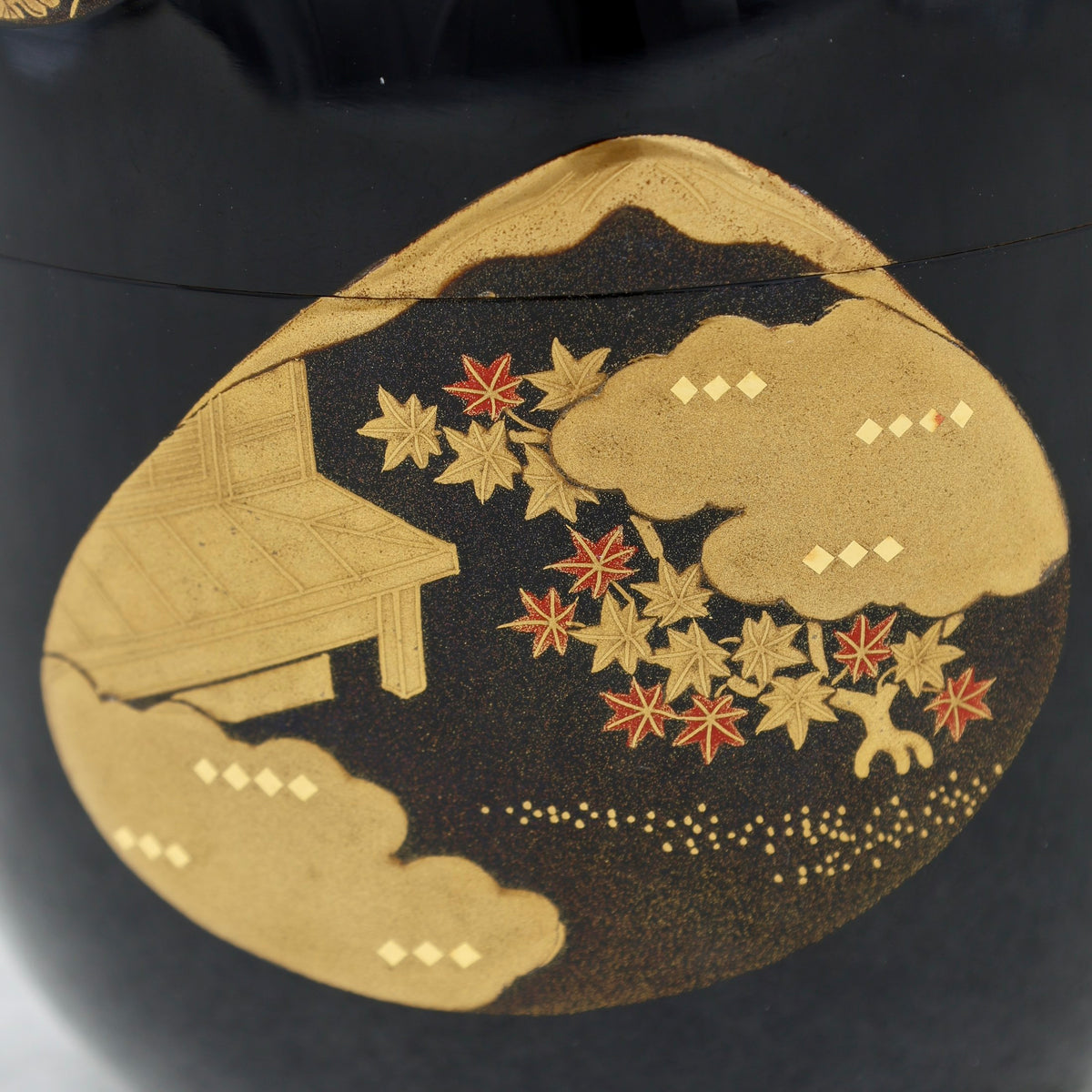
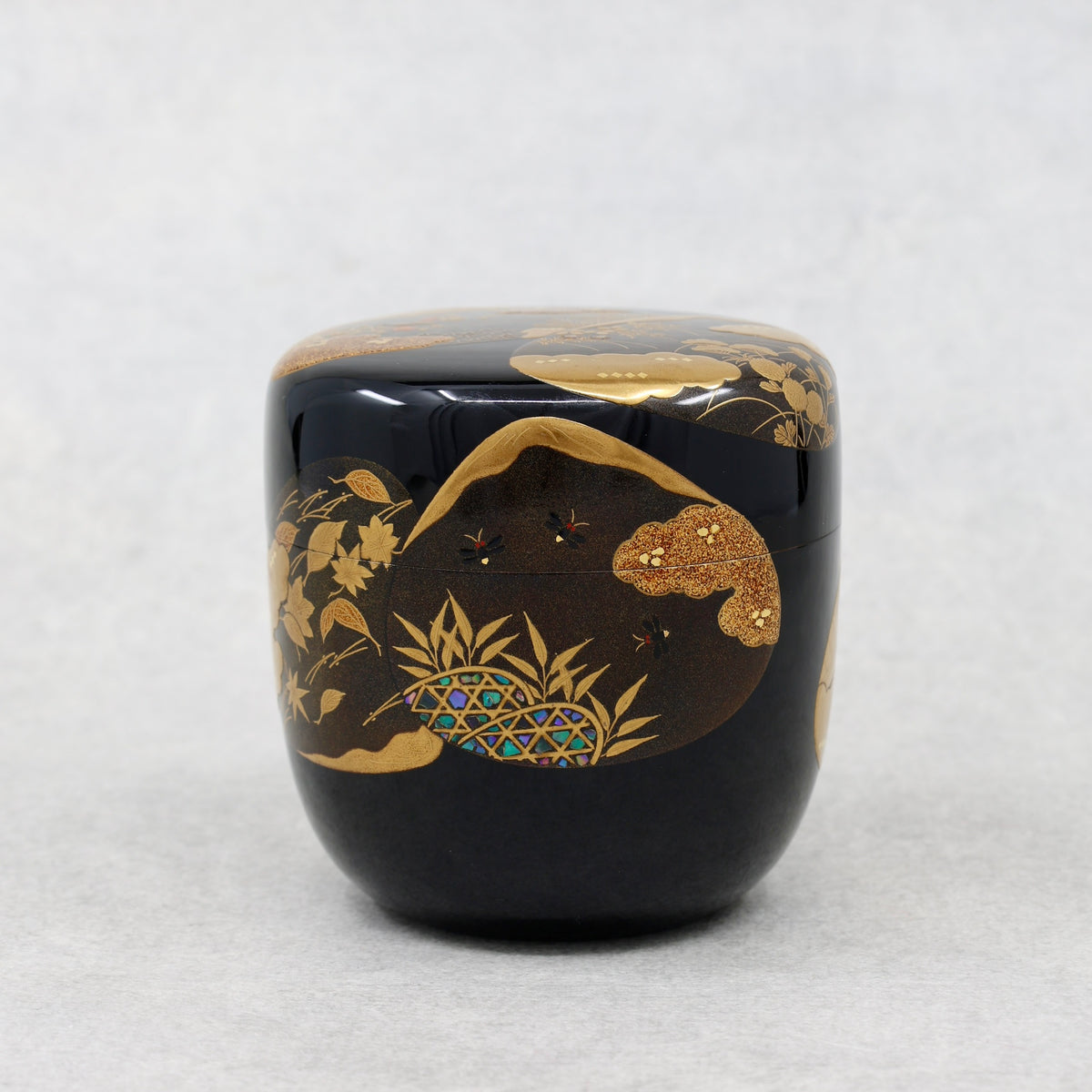
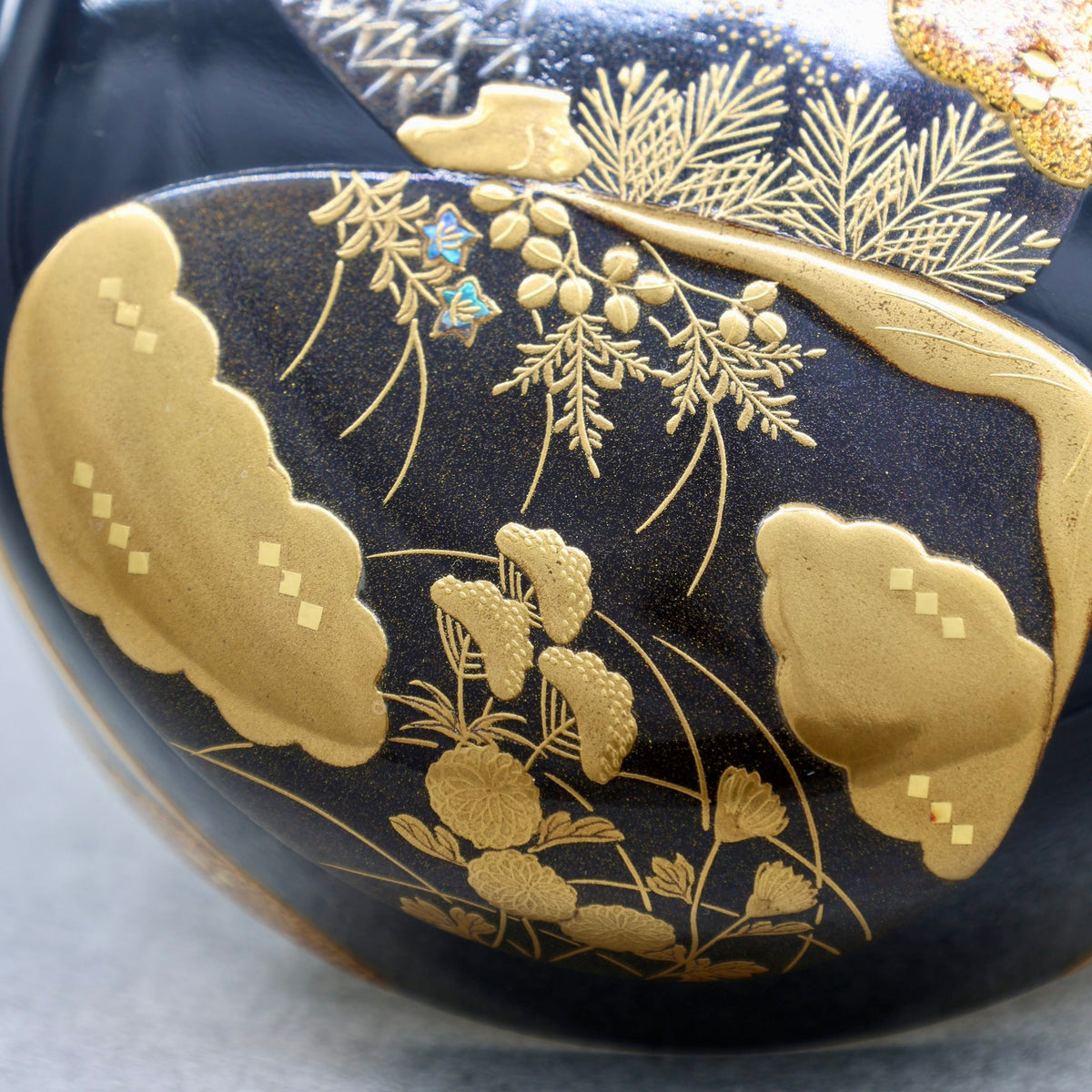
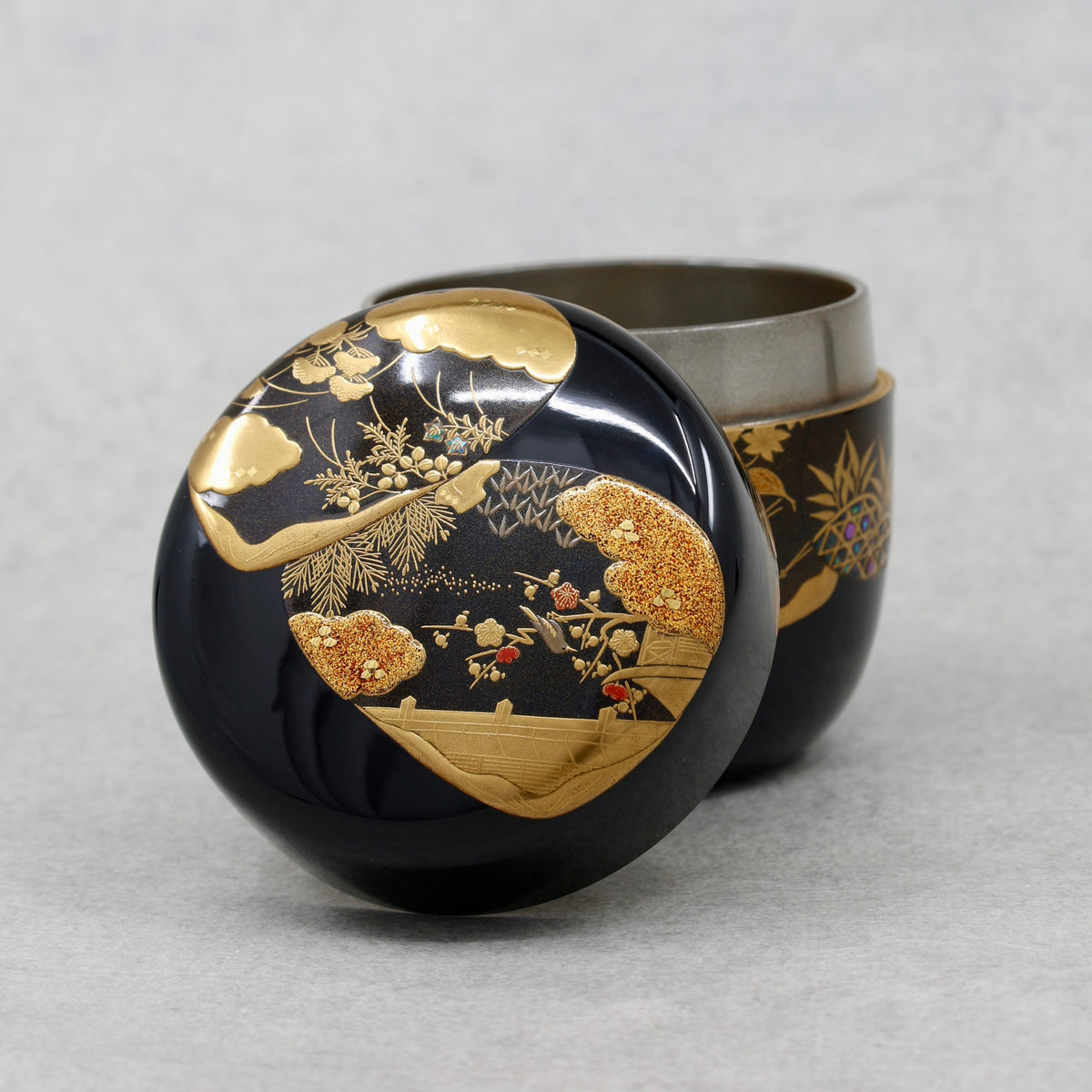
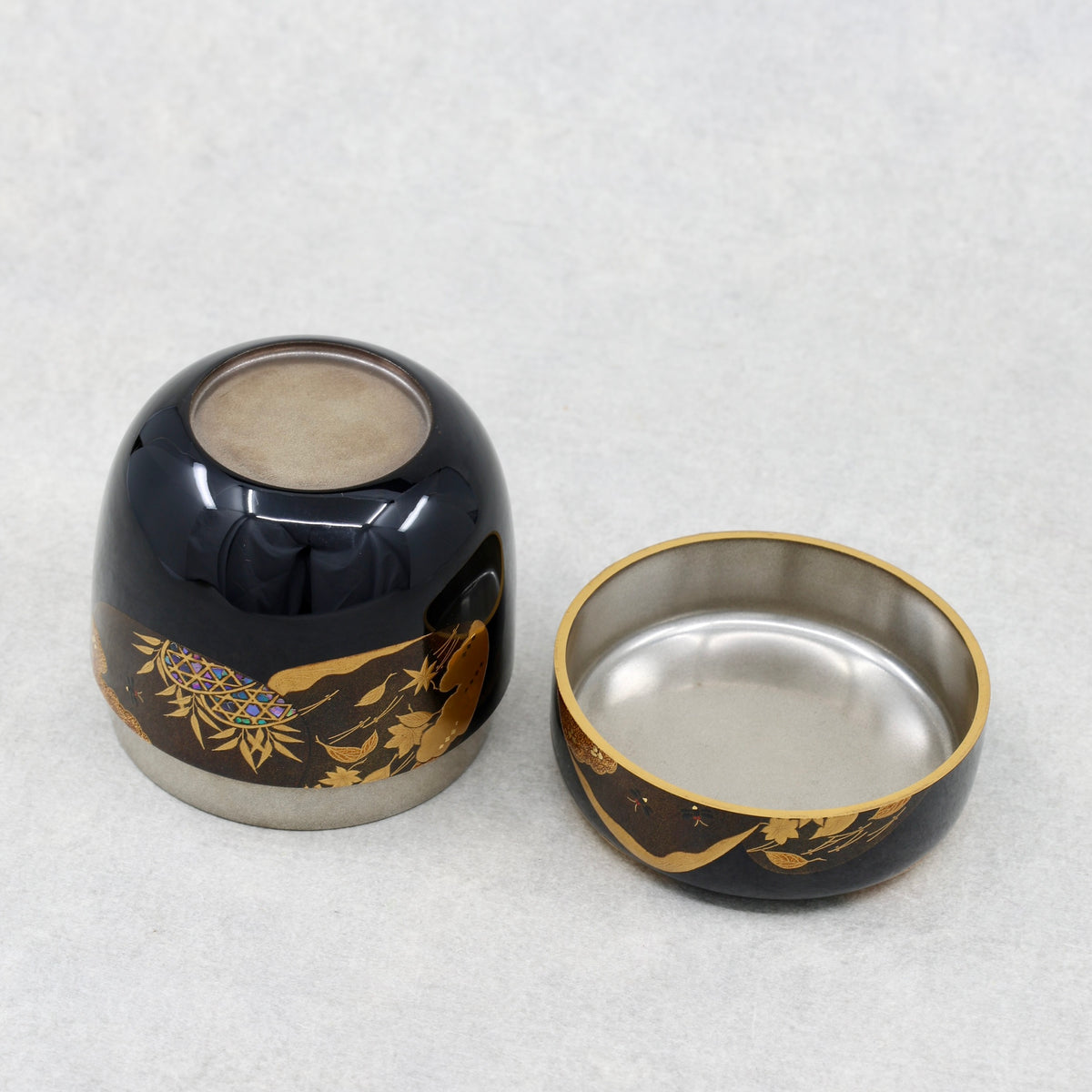
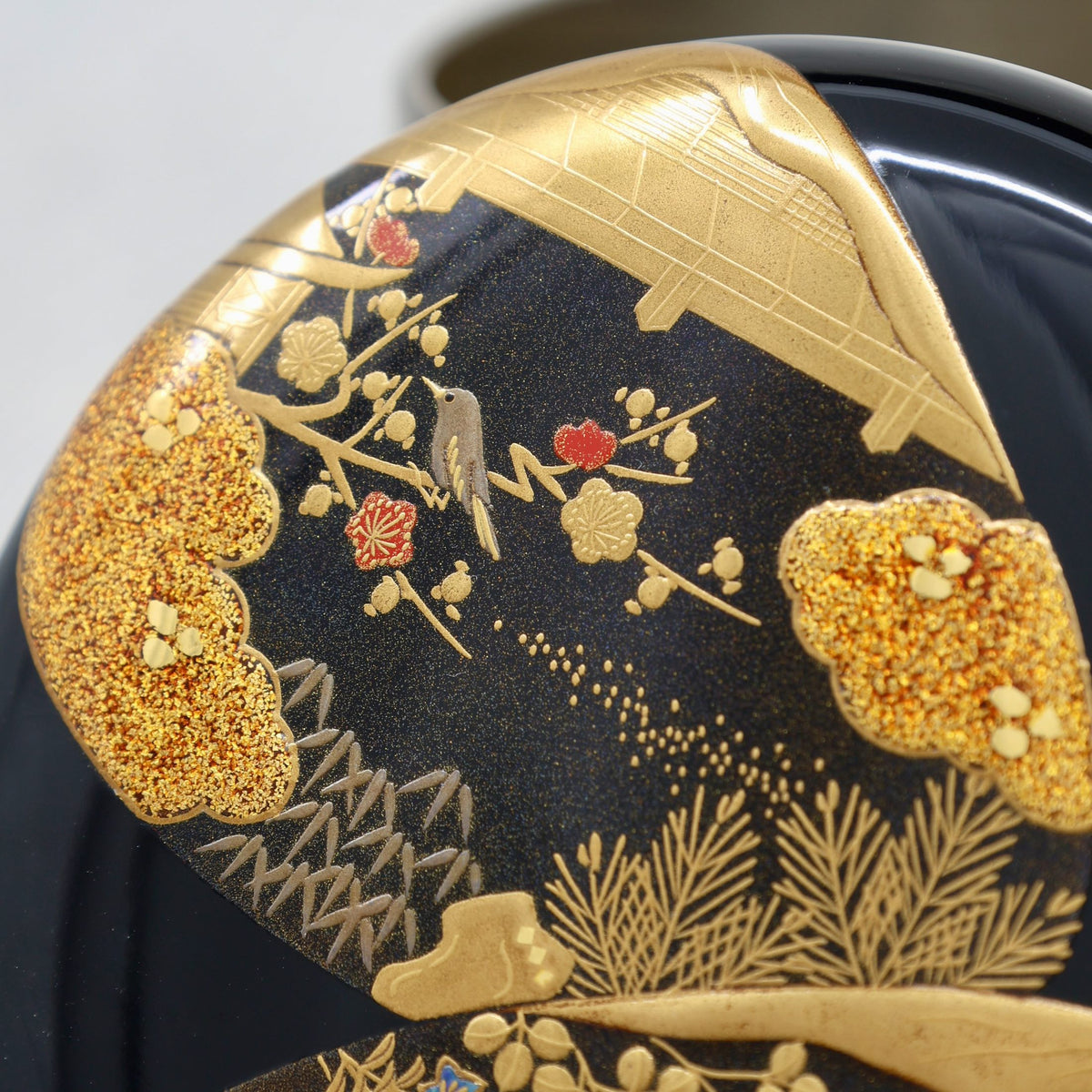
This natsume combines several Japanese urushi lacquer techniques, executed with exceptional precision and finesse. The maki-e decoration combines hiramaki-e (flat gold powder decoration) and takamaki-e (raised decoration), with the varying thicknesses creating subtle effects of volume. The gold powders, sometimes densely applied and at other times delicately dispersed in nashiji (a gold-powdered background), alternate with broad areas of gold and extremely fine details. Small geometric kirikane inlays (thin gold leaves cut into squares or rectangles), touches of colored lacquer, and raden (mother-of-pearl) inlays complete this particularly elaborate composition.
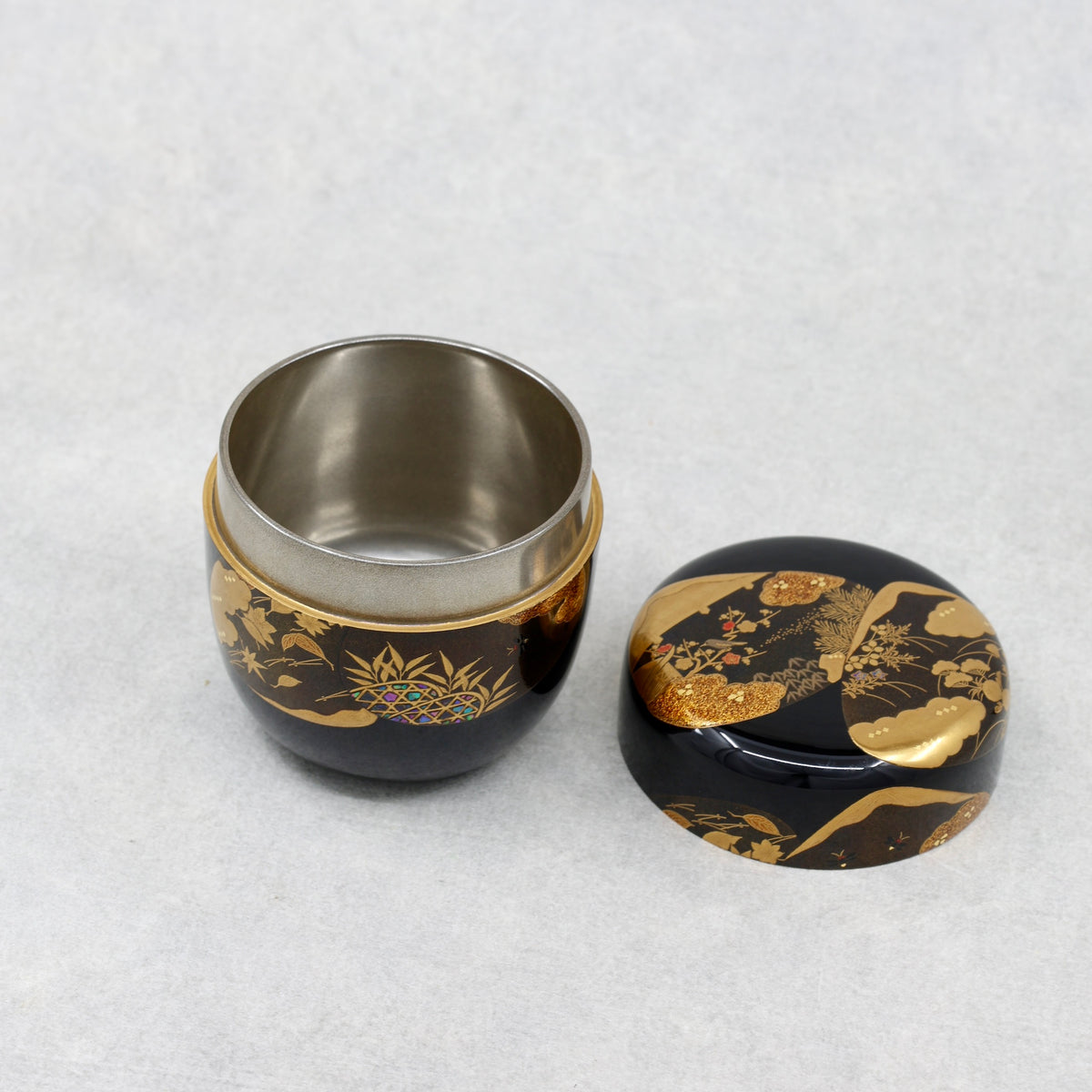
The decoration depicts hamaguri (Japanese clam shells), whose surfaces feature delicate plant and landscape scenes. They reveal flowering plum branches, pines, bamboo, maples with red leaves, flowers, and fine grasses, as well as elements of traditional architecture. The mother-of-pearl inlays add small touches of light to these miniature landscapes. The motifs unfold across the lid and body of the natsume, each shell forming a distinct composition on the roiro black urushi lacquer background (mirror finish), whose brilliance accentuates the contrast with the gold.
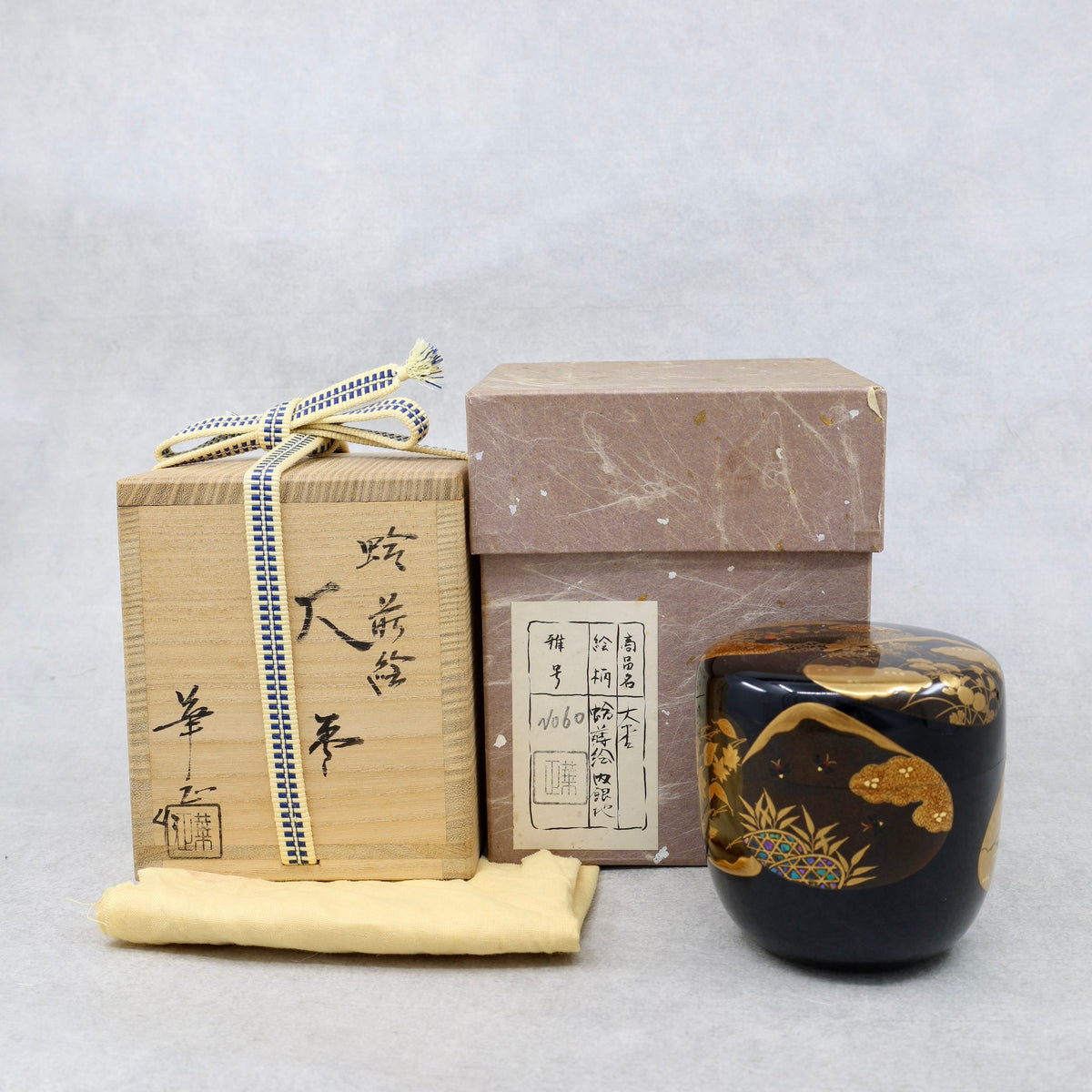
This decoration refers to kai-awase (the game of matching shells), an aristocratic pastime that emerged during the Heian period, which involved finding the two halves of the same shell from among many pairs. The inner surfaces were often decorated with refined paintings depicting landscapes, flowers, or scenes inspired by classical literature. The shells, whose two valves fit together perfectly, also became a symbol of union and fidelity in Japanese tradition. On the tomobako accompanying this natsume, the artisan has inscribed hamaguri maki-e, designating the shell decoration made with gold powder.
The interior of the natsume is entirely covered with ginji (a silver background made with silver powder), whose luminous finish contrasts with the depth of the black exterior lacquer. The diversity of techniques, the precision of the drawing, and the mastery of the various textures testify to the exceptionally high level of execution of this work.
Form and Use
This ōnatsume (large natsume) is used in the Japanese tea ceremony to hold the matcha powder intended for the preparation of usucha (light tea). Its traditional form and balanced proportions highlight the richness of the decoration that unfolds across its entire surface.
Presentation
This natsume is accompanied by a niju bako (double box) comprising a tomobako (wooden protective box) bearing the name of the work, the artisan’s signature and seal, as well as an outer cardboard box. A tomonuno (protective cloth) marked with the artisan’s seal also accompanies the piece.
Place of Manufacture
Japan, Yamanaka Onsen, Ishikawa Prefecture
Period
Heisei Era (1989–2019)
Dimensions
Diameter 7.5 cm - Height 7.5 cm
Weight
Natsume alone: 75 g
Natsume with boxes: 272 g
Materials
Wood, urushi lacquer, gold and silver powders, cut gold leaves, colored lacquers, mother-of-pearl
Condition
Very good condition
Reflections from the lacquer and decoration may create misleading visual effects in photographs. Any actual defects, if they exist, are systematically noted in the product listing (under the “Condition” section) so that you can make your decision with complete confidence.
© Atelier Ikiwa – Laurence Corteggiani. All photographs and text are protected. Reproduction without permission is prohibited.
KNOW-HOW
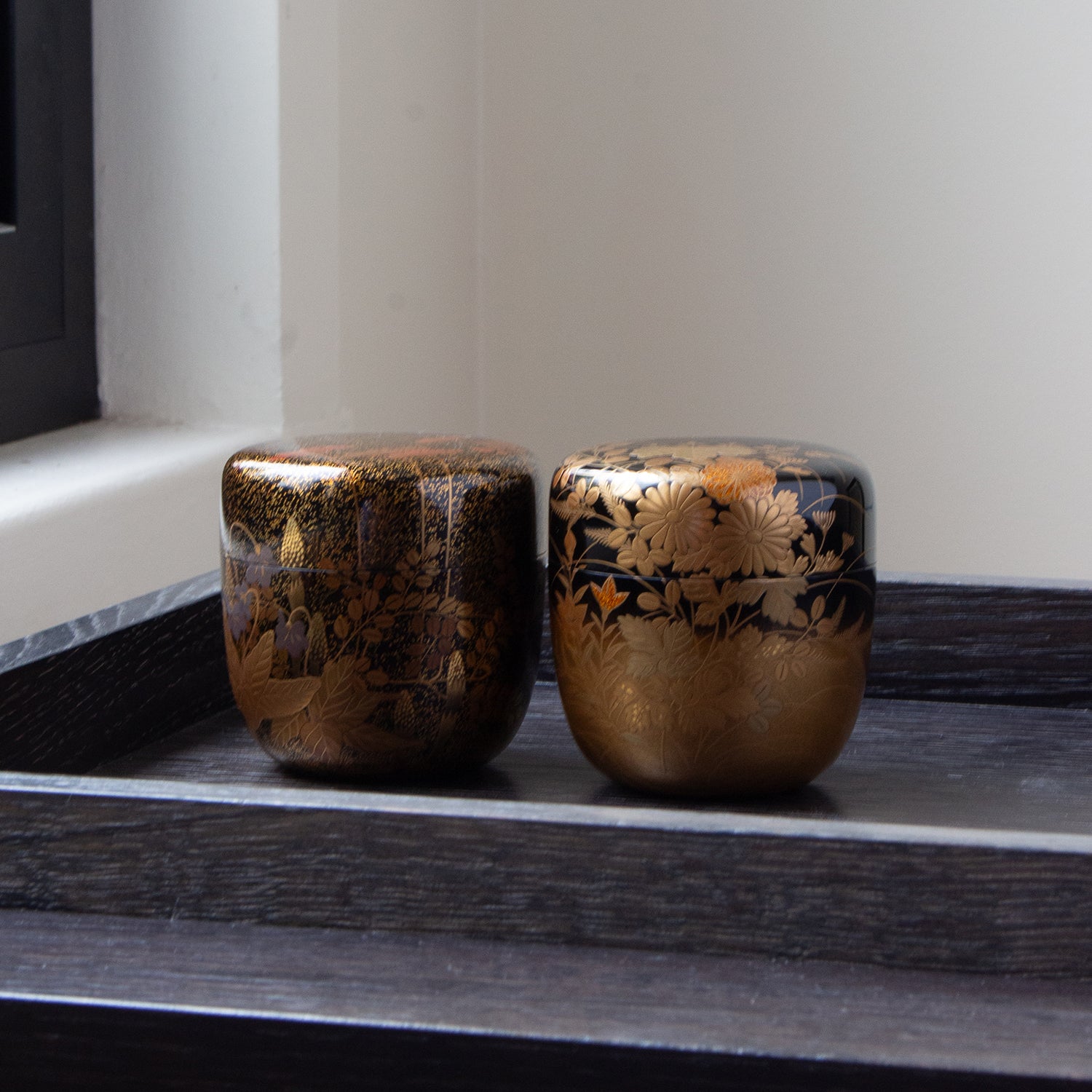
Natsume (棗) are small boxes with few variations in shape and dimensions (which are codified), and which are made of Japanese urushi lacquer, welcoming the matcha tea powder during the traditional Japanese tea ceremony (chanoyu and sadō). They are magnificent objects that can be used for tea or superb decorative pieces to collect and to position individually or grouped on a pretty tray or in a display case. Modern productions are more often made of resin and not lacquer, and of molded wood powder or plastic. We only offer authentic traditional natsume in real Japanese urushi lacquer made according to the rules of the art. These objects are rare and precious, they are likely to increase in value. Read our article on natsume >
Traditional Japanese lacquer, urushi, comes from the sap of the lacquer tree (Rhus Verniciflua), which flows after incision of the bark. It is a very precious material, a tree will give a maximum of 200ml of sap in its life, which is worked by specialized craftsmen. It takes many operations, slow and meticulous, and several months of work to bring real lacquer objects to life. It is the oldest craft in Japan! Initially used to protect and waterproof objects, this immutable craft has become an art of extreme sophistication. If you want to know more about the art of Japanese lacquer, you can read our dedicated article > .
DELIVERY AND PAYMENT OPTIONS
Shipping
Free shipping in metropolitan France for purchases over €200. Shipping with Colissimo, choice of home delivery or relay point, parcel delivered against signature or unique code for valuable items. Orders are generally dispatched within 2 business days, except for fine art photographs, which are printed on demand, and special cases which will be announced in the banner at the top of the site (e.g., in case of absence). Learn more >
Payment options
Secure card payment with Shopify Payments and 3D Secure technology.
Visa, MasterCard, American Express, Bank Cards, PayPal, Apple Pay, Shop Pay, and Klarna.
Klarna: Pay in 3 interest-free installments or within 30 days for purchases up to €1,500, subject to Klarna's approval. You will be redirected to Klarna to log in or create an account and confirm your payment.
PayPal: You will be redirected to PayPal to log in and confirm payment. New users can create an account during checkout.
Your invoice will be sent with your order.
Returns and exchanges
14 days to change your mind. Learn more >
CARE INSTRUCTIONS
Clean with a very soft cloth to avoid scratches, soaked in a little warm water if necessary (never soak your lacquer objects). No microwave, dishwasher, dryer. Do not expose to direct sunlight for a long time (risk of discoloration). If the atmosphere is very dry and very hot, and to avoid the risk of cracking, you can place a glass filled with water next to your lacquer object.
Choose options
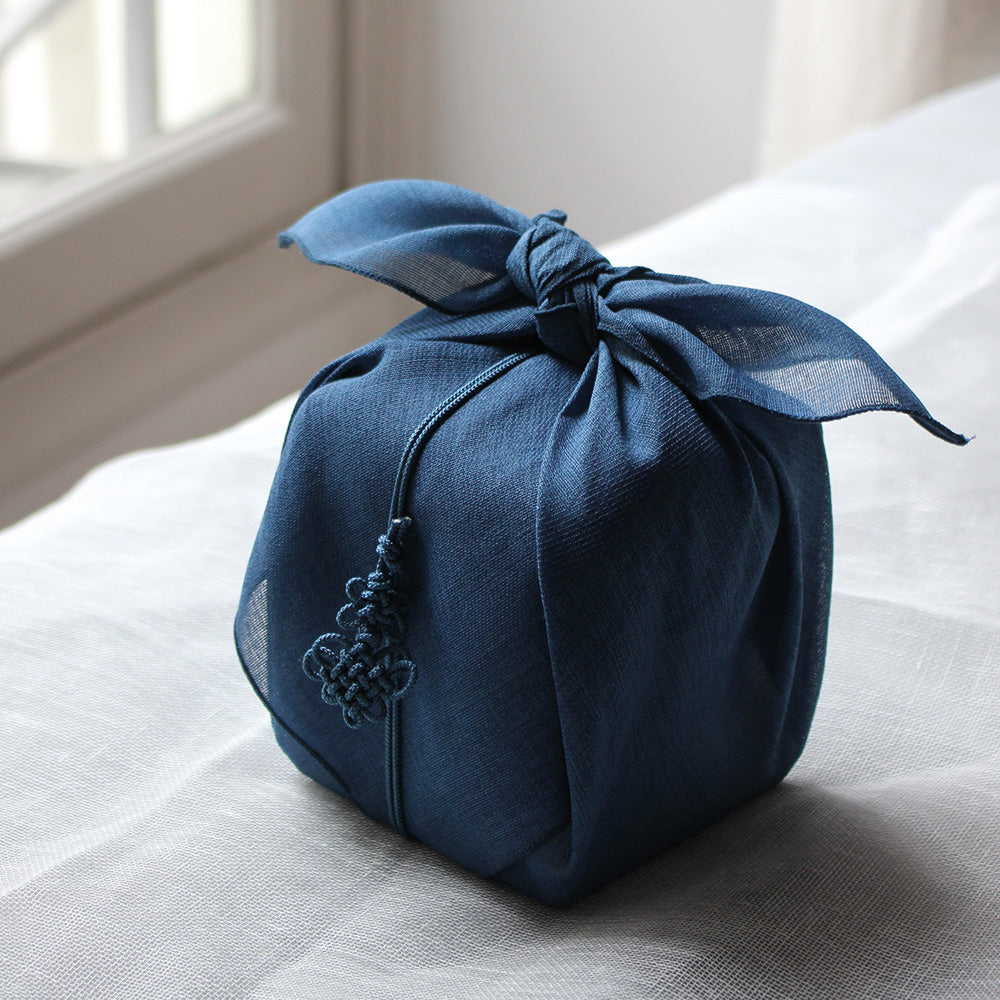
The art of wrapping
The exceptional items are wrapped in a beautiful fabric beautifully knotted using the little-known art of Korean pojagi and decorated with a delightful maedup (Korean ornamental knot). Details and conditions >
WRAPPING
Exceptional items are wrapped in textiles tied according to the Korean pojagi art